


Gray King Comforter: A Complete Buyer’s Guide for 2026


The bedroom looked almost finished. The walls were calm, the furniture was in place, and the gray palette seemed like the safe choice. Then the new comforter arrived, and the problem became obvious: it either covered the bed unevenly, felt too warm by midnight, or made the room look flat instead of restful.
A gray king comforter can solve all three problems, but only when fit, fabric, fill, and styling work together. That matters especially in West Texas and Southeastern New Mexico, where dry heat, cool nights, dust, and strong air conditioning can make a poorly chosen comforter uncomfortable across the seasons. The right purchase starts with the mattress, not the color.
Measuring Your Bed and Matching the Right King Size
A king comforter should be chosen only after the mattress has been measured. Pull back the existing bedding and use a fabric tape to record the mattress width, length, and thickness. Include a pillow-top, topper, or thick mattress pad in the thickness measurement because every added layer reduces the visible drop over the sides.
A standard Eastern King mattress measures 76 by 80 inches, while a California King measures 72 by 84 inches. The California King is narrower and longer, so it suits taller sleepers and rooms where a slightly narrower footprint works better. Bedding dimensions follow those mattress differences, but brands don't use perfectly identical measurements. A size guide from Sleep Foundation's comforter size reference notes that comforter charts can vary from 90 to 108 inches wide and 86 to 108 inches long, making the product label more important than the word “king” alone.
Practical rule: Measure the mattress, then compare the exact comforter dimensions. Never assume every King comforter has the same drop.
Use mattress depth to calculate coverage
Mattress depth determines how much fabric must fall below the top surface. A low-profile frame may need less width than a tall bed with a pillow-top mattress, topper, and visible footboard. Note the headboard clearance, footboard height, and whether the bed sits on a low-profile or standard frame before selecting regular or oversized bedding.
Solo sleepers can usually tolerate a shorter overhang. Co-sleepers generally benefit from 12 to 18 inches of drop per side, particularly when both people pull the bedding during the night. That added coverage reduces exposed sides and makes the bed feel less competitive.
| Mattress Type | Mattress Size (in) | Comforter Size to Buy | Best For |
|---|---|---|---|
| Eastern King | 76 x 80 | Standard King, with exact dimensions checked | Most King bedrooms |
| California King | 72 x 84 | California King, with longer length verified | Taller sleepers and narrower rooms |
| Deep Eastern King | 76 x 80, plus added mattress depth | Oversized King when available | Pillow-top mattresses, toppers, and generous side drop |
For a more detailed mattress reference before shopping, the ultimate guide to mattress sizes helps separate mattress measurements from bedding measurements. The distinction matters. A comforter that's too short can leave the foot exposed, while one that's too wide may pool heavily on one side or interfere with a footboard.
Choosing the Right Fabric for Your Sleep Style and Climate
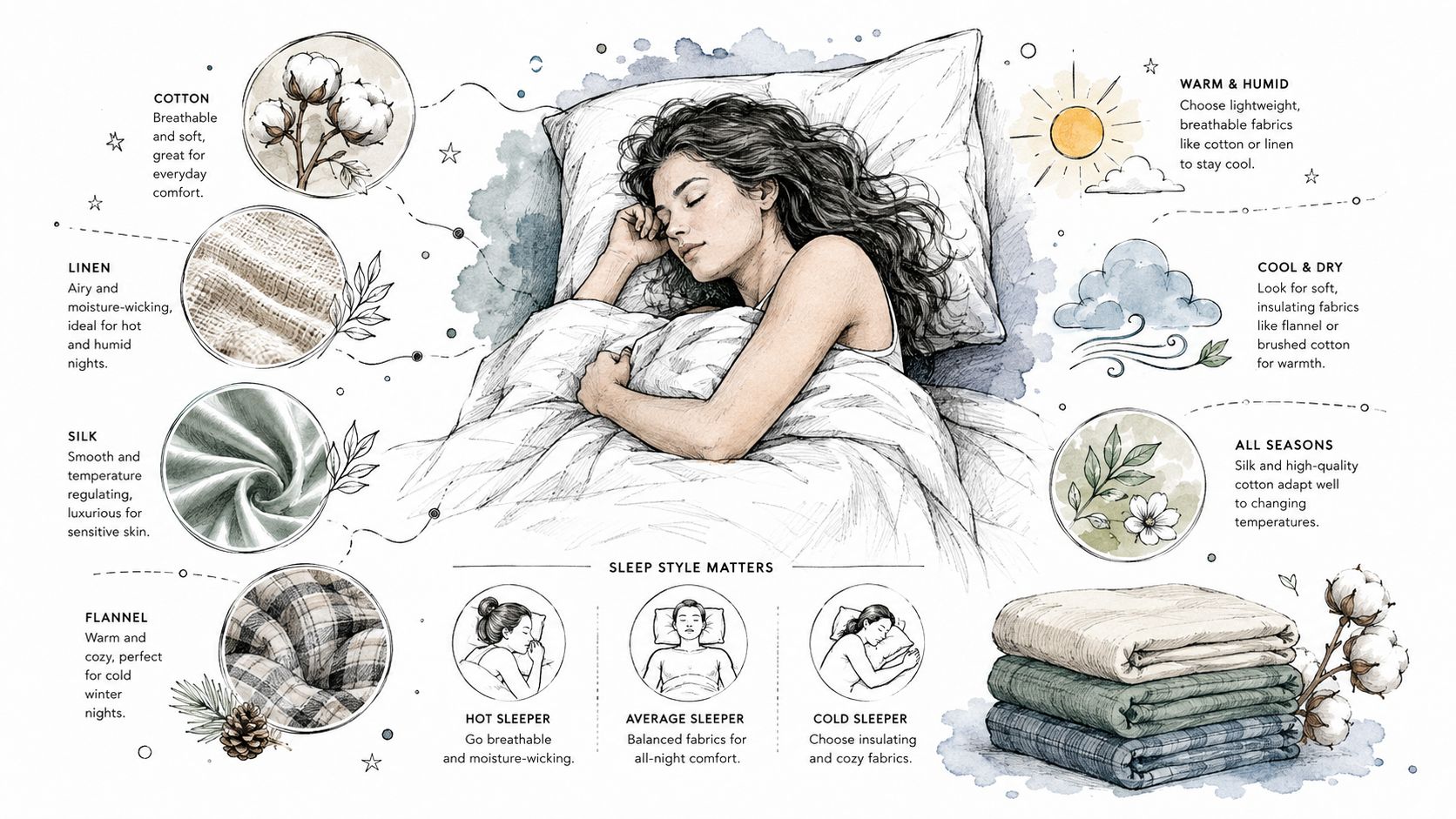
Fabric controls how a gray comforter breathes, drapes, resists wrinkles, and feels against the skin. Color comes later. In West Texas and Southeastern New Mexico, a comforter often needs to handle hot afternoons, cool nights, dry air, dust, and heavily cooled bedrooms without becoming either clammy or overly insulating.
Cotton percale is the strongest all-around choice for hot sleepers. Its crisp, breathable hand feels lighter and less clingy than brushed synthetics. Cotton sateen has a smoother surface and subtle sheen, with a slightly warmer feel that works well for sleepers who want softness without a heavily plush finish. One gray cotton-sateen example uses 230-thread-count fabric, 100% polyester fill, and a 75-ounce fill weight, while other mass-market gray King sets use 106 to 186 thread count and 54 to 65 ounces of filling. Those examples illustrate why fabric and fill should be evaluated separately, as documented in this gray King comforter set example.
Match the shell to the room
Linen is the best choice for aggressive breathability. It releases heat quickly, softens with washing, and fits bedrooms where summer nights feel hot but temperatures fall sharply after sunset. Its natural texture also keeps gray from looking too smooth or cold.
Microfiber and brushed polyester resist wrinkles and feel soft immediately, but they tend to hold more warmth. They make sense for cool-season use, guest rooms, or bedrooms kept heavily air-conditioned. Households with pets or allergies may prefer tightly woven cotton or a cotton blend because a dense surface is easier to keep clean than a loose, open weave.
The outer fabric's GSM can help reveal construction quality. Under 90 GSM generally feels flimsy, while 110 to 150 GSM typically indicates a more substantial year-round shell. Buyers who want a softer cotton foundation can also explore 100% Pima cotton sheets and coordinate the sheet layer with the comforter's breathability.
For this region, the clearest recommendations are:
- Hot sleepers: Cotton percale or linen with a lighter fill.
- Mixed sleepers: Cotton sateen with moderate fill and a removable cover.
- Cold-season users: Microfiber or brushed polyester when wrinkle resistance and warmth matter most.
- Pet households: Tightly woven cotton or a smooth, washable blend.
Decoding Fill Types, Thread Count, and Fill Weight
A product label reveals more than the marketing photograph, but only if the shopper separates shell quality from insulation. Thread count describes the density of the outer fabric's weave. For cotton, 200 to 400 thread count is a practical range because it balances softness and airflow. Thread counts above 600 can indicate multi-ply yarns, which may create a denser, warmer hand rather than better breathability.
Fill type sets the comforter's character. Down clusters provide strong warmth with relatively little weight, but they need careful laundering. Down-alternative polyester offers a similar loft at a lower price and suits households seeking a hypoallergenic construction. Wool regulates temperature across seasons, though it feels noticeably heavier than many synthetic fills.
Read the warmth dial correctly
Fill weight is the most useful warmth indicator, particularly when comparing products made from the same general category. It should be read alongside fill type, shell fabric, stitching, and the room's temperature. A low fill weight in a dense synthetic shell may feel warmer than expected, while breathable cotton can make a moderate fill feel more adaptable.
The following framework keeps the choice practical:
| Fill Type | Warmth Level | Weight | Best Climate |
|---|---|---|---|
| Down clusters | High warmth for low weight | Light relative to insulation | Cold rooms and sleepers who dislike heavy bedding |
| Down-alternative polyester | Moderate to high, depending on fill weight | Moderate | Allergy-conscious homes and flexible budgets |
| Wool | Balanced seasonal regulation | Noticeably heavier | Mixed climates and sleepers who prefer substantial bedding |
Choose fill weight before thread count
Eight to 12 ounces suits mild climates and layered beds. Fourteen to 18 ounces works better in cold bedrooms, while 20 ounces or more is winter-weight construction. These ranges should be treated as shopping guidance, not a substitute for the manufacturer's warmth rating.
A gray comforter for a dry, hot climate should usually begin with the lighter end of the fill spectrum. Add a breathable throw or blanket when needed instead of buying an overly insulated comforter that can't be made cooler. Lower fill weights generally suit moderate climates and layered beds, while higher fill weights retain more heat and increase the chance of overheating in an already warm bedroom.
Thread count then fine-tunes the feel. A hot sleeper should prioritize breathable cotton construction over an impressive thread-count number. A cold sleeper who wants a smoother hand can choose sateen, brushed polyester, or a heavier fill, provided the comforter still fits the mattress correctly.
Styling a Gray Comforter Without a Sterile Look
Flat gray looks cold only when it sits alone on a bare bed. The comforter isn't the problem. The missing texture, warmth, and contrast are the problem.
Charcoal gray creates depth and works with lighter walls, pale wood, and warm metals. Dove gray feels softer and more relaxed, especially beside natural linen. Mid-tone gray is the easiest foundation because it supports both light and dark accents without dominating the room.
Build contrast through touch
Pair charcoal or dove gray with nubby linen Euro shams and a chunky knit throw in camel or rust at the foot of the bed. Add two to three pillows in mixed scales, using a solid, stripe, and small geometric pattern rather than a row of identical squares.
Matte brushed cotton, Belgian linen, and velvet pillow covers warm the arrangement more effectively than shiny satin. Satin reflects light and can make a neutral bed feel slick or decorative in the wrong way. Textured surfaces create shadows, which gives gray the visual depth that a flat solid color lacks.
Wood and rattan are valuable counterpoints. A wood or rattan headboard keeps the room grounded, while brass or aged-bronze lamps introduce warmth without forcing the palette into a bright color scheme. A nearby art selection can provide the same balance. For broader guidance on using oversized wall pieces to anchor a room, large canvas art for living room offers a useful resource that can inform bedroom scale and color decisions as well.
Use one repeatable bedroom formula
The most reliable arrangement is:
Gray comforter + linen shams + textured throw + wood tones + one patterned pillow.
That formula works with charcoal, dove, and mid-tone gray because it combines a quiet foundation with varied surfaces and one controlled visual interruption. The patterned pillow should repeat a color already present in the throw, headboard, rug, or artwork. Without that connection, the pattern looks added at the last moment.
A comforter set can simplify the foundation. One gray King set, for example, includes a comforter measuring 108 by 92 inches and two King pillow shams measuring 20 by 36 inches, as shown in this King comforter set product description. Even then, the room still needs a warmer accent and a tactile layer. Matching shams establish order, but they don't create the complete design.
Care and Maintenance That Actually Extends Comfort
Dry climates create a specific maintenance challenge. Static, dust, and uneven fill can make a gray comforter look tired before the fabric has worn out. A consistent routine protects the shell, keeps the fill distributed, and prevents the comforter from becoming a dust collector.
The non-negotiable rules are simple:
- Use a duvet cover: It limits direct contact with skin oils, dust, and pet hair, which reduces how often the insert needs deep washing.
- Air the comforter: Place it outside for 30 minutes every four to six weeks in low humidity, away from harsh direct sunlight.
- Vacuum monthly: Use an upholstery attachment with light pressure so the surface sheds dust without pulling at the fabric or stitching.
Wash according to construction
Down and down-alternative comforters belong in a front-loading washer on a gentle cycle with mild detergent. An agitator can stress the fill and shell, while excess detergent can leave residue that affects loft. Oversized cotton comforters can often go into a home machine when they fit loosely rather than being compressed into the drum.
Drying matters as much as washing. Tumble dry on low with clean tennis balls to help break up clumps and restore loft. The comforter must be fully dry before returning to the bed because hidden moisture can create odor and uneven fill.
Care guidance for delicate natural fibers also benefits from understanding washing and drying cashmere, particularly the broader principles of low agitation, gentle handling, and controlled drying. A comforter isn't cared for exactly like cashmere, but fragile fibers respond poorly to heat and rough treatment.
Adjust the routine for dry air
During winter, a bedroom humidifier can reduce excessive static and help prevent fibers from becoming brittle in the driest homes. A light spritz of fabric refresher can refresh the surface between washes, but it shouldn't replace laundering or ventilation.
For off-season storage, wash and dry the comforter completely, fold it without forcing sharp creases, and place it in a breathable cotton bag. Plastic traps moisture and restricts airflow, so it shouldn't be used for long-term storage. Rotate seasonal bedding only after the stored piece has been cleaned and thoroughly dried.
Where to Shop and Why Local Showrooms Help
For a gray King comforter, shopping channel changes the quality of the decision. The buyer needs to judge three things that photographs often conceal: the exact gray undertone, the hand of the shell, and the actual weight of the fill.
Start with a local showroom
A local showroom is the strongest first stop for shoppers in the Permian Basin region. Customers can touch cotton, microfiber, and textured weaves; place gray shades beside real furniture and flooring; and compare light gray, dove, charcoal, and mid-tone options under practical room lighting. They can also feel whether a comforter has airy loft or dense insulation, which a product photograph can't communicate.
The showroom also exposes fit issues early. A shopper can bring mattress measurements, explain whether the room runs hot, and ask about King versus California King sizing before choosing a pattern or accessory. For buyers furnishing a bedroom in Lubbock, Hobbs, or Ruidoso Downs, the local furniture store guide can help identify a convenient place to see bedroom pieces and bedding-related room solutions in person.
Compare the other channels carefully
Online specialty retailers provide broader fabric and construction selection. They work well for buyers who already know the required dimensions, preferred shell, and target warmth. Product pages should be checked for exact measurements, fill type, fill weight, care instructions, and the complete contents of a set.
Direct-to-consumer brands can offer attractive pricing, but return policies deserve close attention. A comforter that feels too warm, looks blue-gray instead of neutral gray, or has insufficient side drop may not be a good fit. A short return window, restrictive packaging requirement, or return shipping charge can turn a seemingly convenient purchase into an expensive mistake.
Department stores and big-box retailers remain useful for budget-focused shoppers, but fill quality varies widely. A low price may reflect lighter construction, a less breathable shell, or minimal information on the label. The buyer should compare specifications rather than relying on the set's styling photograph.
Miller Waldrop Furniture & Decor offers showroom support alongside bedroom furniture and sleep-focused products, including a gray King duvet and sham set and a lightweight King or California King comforter option. The practical decision rule is simple: if two comforters remain tied, a 15-minute showroom visit will usually resolve the choice faster than another hour of online reviews.
Miller Waldrop Furniture & Decor can help shoppers compare bedroom furnishings, mattress solutions, and bedding-related options for the dry-climate needs of West Texas and Southeastern New Mexico. Visit Miller Waldrop Furniture & Decor with the mattress measurements and preferred warmth level, then get in-person guidance on a gray King comforter setup that fits, feels comfortable, and works with the room.