


Finding the Best Wood for Tables A Practical Home Guide

When you start looking for the perfect wood for a table, you'll hear a few names pop up again and again: oak, walnut, and maple. There's a good reason for that. These classic hardwoods have earned their reputation by offering a fantastic mix of durability, natural beauty, and the strength to handle years of daily life. Choosing one is a powerful way to equip the heart of your home for generations of memories.
Finding the Perfect Wood for Your Table
Choosing a new table is about so much more than just finding a place to eat. It's about selecting the future centerpiece for family dinners, holiday feasts, and those quiet morning coffees. This guide is your tool to make that choice with total confidence, transforming what can feel like an overwhelming decision into an exciting one.
We'll start by introducing the top contenders for the best table woods, breaking down what makes each one a great option. This is your starting point—a way to understand the real differences between them. Armed with this knowledge, you'll be empowered to appreciate the finer details and pick a table that truly fits your life.
Why the Right Wood Matters
The wood you choose sets the stage for everything else—your table's personality, how long it will last, and how much care it will need. Getting these three things right is the secret to finding a piece you'll love for decades.
- Durability and Hardness: A table in a busy house needs to stand up to scratches, dings, and the occasional spill. Hardwoods are naturally tougher, which is why they're the go-to for active families.
- Aesthetic and Style: The grain pattern and color of the wood have a huge impact on a room's vibe. A bold, open grain can feel rustic and grounded, while a smooth, dark wood often reads as more modern and formal.
- Lifestyle Fit: Be honest about your daily life. A family with young kids has very different needs than a couple looking for an elegant dining table they'll only use on special occasions.
Oak: The Timeless Champion
For generations, oak has been the undisputed king of woods for building dining tables, and it all comes down to its incredible strength and classic good looks. It's no surprise that hardwoods, led by oak, make up a massive 61.9% share of the entire global wooden furniture market. Oak's impressive hardness makes it far more resilient than softwoods, so you won't have to worry as much about dents and dings from everyday use.
Your table is a silent witness to your life's most cherished moments. Choosing the right wood ensures it will be strong enough to hold those memories for generations to come.
Before you get your heart set on a specific wood, though, make sure the table itself is the right scale for your room. To help you nail the measurements, here’s our complete dining room table size guide to empower your decision. With over 70 years of experience helping families in Lubbock, Hobbs, and Ruidoso Downs, we at Miller Waldrop are here to help you find that perfect forever piece.
A Closer Look at the Top Hardwoods
Let's get past the generalities and really dig into the distinct personality each of the top hardwoods brings to a table. Think of woods like Oak, Walnut, Maple, and Cherry as having their own unique stories to tell through their grain, color, and texture. Figuring out which story resonates with you is the real secret to finding a piece that doesn't just fill a space, but truly belongs in your home.
You’ll start to see how the bold, familiar grain of Oak can anchor a rustic room, giving it a sense of history and strength. On the other hand, the deep, luxurious tones of Walnut create a sleek, sophisticated feel perfect for modern or mid-century designs. We'll translate the technical stuff—like hardness ratings—into what it actually means for your life. This way, you can see a table not just as furniture, but as a functional work of art that fits the way you live.
Oak: The Resilient Classic
For a family table, it's hard to beat Oak. It’s the quintessential choice, known for its incredible strength and a prominent grain pattern that practically shouts durability. It generally comes in two varieties: Red Oak, which has a warmer, pinkish hue and a wild, swirling grain, and White Oak, which is more golden-brown with a straighter, calmer grain.
With a Janka hardness rating of around 1,290 lbf (pounds-force), Oak is a beast when it comes to resisting dents and scratches. That makes it the hero of a bustling kitchen or dining room where homework, craft projects, and lively family meals are the daily routine. Its distinct grain is also a master of disguise, hiding the minor wear and tear that inevitably comes with a well-loved table.
Walnut: The Sophisticated Statement
If Oak is the sturdy workhorse, Walnut is the refined thoroughbred. It’s a top contender for upscale tables, celebrated for its rich, dark chocolate tones and complex grain that can be straight, wavy, or even burled. Premium hardwoods like walnut are a big reason the global wooden furniture market is valued at over USD 461.84 billion.
Walnut strikes that perfect balance between show-stopping beauty and real-world strength. Its Janka hardness of 1,010 lbf makes it plenty durable for daily life while still feeling elegant. In fact, studies on furniture lifecycle show that a quality walnut table can hold onto 85% of its aesthetic appeal even after two decades—a feat softer woods just can't match.
This quick visual guide really helps break down the key differences between our top wood choices.
Seeing them side-by-side makes it obvious how each wood’s unique grain and hardness level fits different household needs and styles.
Maple: The Smooth Minimalist
For those who love clean lines and subtle beauty, Maple is the clear winner. It's one of the hardest domestic woods you can get for furniture, boasting a Janka rating that can top 1,450 lbf. This incredible density makes it one of the absolute best choices for tables in high-traffic, heavy-use areas.
Its grain is usually very fine and straight, which creates a smooth, uniform look that’s perfect for modern and minimalist interiors. Maple's natural creamy white color has a subtle golden hue that can brighten up any room. It also takes stains beautifully, so it can be customized to match just about any color scheme. For more on how different woods perform, this guide on the best wood species for cabinets gives a great breakdown of durability and appearance.
When choosing a hardwood, you're selecting the backdrop for your life's most important moments. Its character should reflect yours—whether it’s resilient and bold, or smooth and sophisticated.
Cherry: The Graceful Chameleon
Cherry is loved for its warm, reddish-brown color that does something magical over time: it deepens and grows richer with age and exposure to light. This beautiful aging process, called developing a patina, means a cherry table actually becomes more stunning and personal as the years go by.
It's a bit softer than Oak or Maple, with a Janka rating around 950 lbf, but Cherry is still a solid hardwood that's more than suitable for dining tables that see regular, careful use. Its fine, straight grain is smooth to the touch and gives off an elegant, almost formal vibe.
Now that you know these nuances, you're ready to walk into one of our showrooms not just to look at tables, but to connect with the wood itself. You have the knowledge to pick the one with the perfect blend of personality and resilience for your life. When you’re ready, come visit our showroom to see—and feel—the difference for yourself.
Matching Your Table Wood to Your Lifestyle
A table isn't just a piece of furniture; it's the backdrop for your life. That's why choosing the right wood goes way beyond just picking a color you like. The real secret is to match the material to how you actually live. Here’s how you can choose a wood that can handle your family's unique rhythm, whether that’s chaotic, calm, or somewhere in between.
Think of it this way: you wouldn't wear silk gloves for a day of gardening. In the same way, the wood you choose should be perfectly suited for the job it's going to do every single day. Taking a moment to think about its future life in your home is the key to finding a table you'll love for decades.
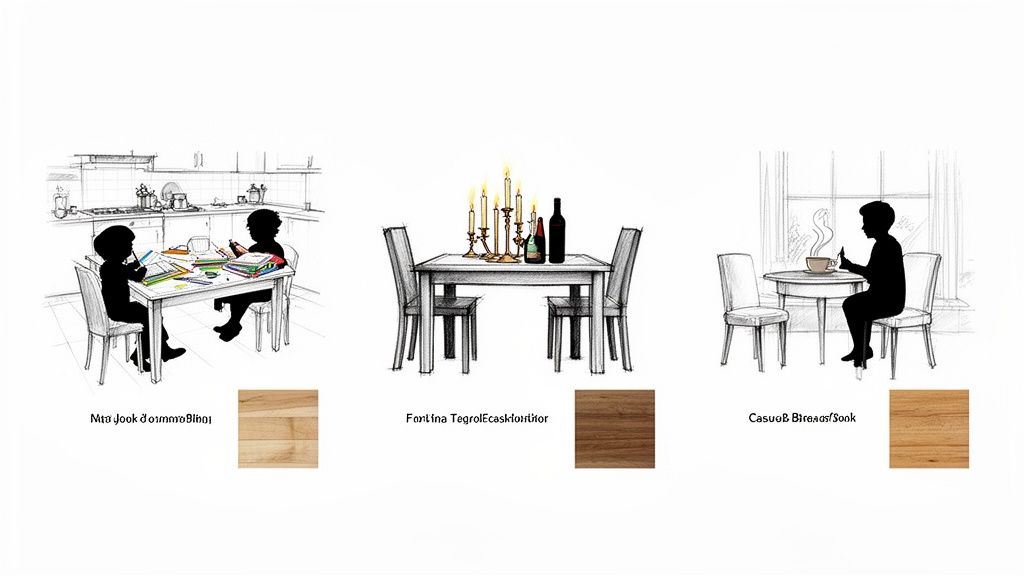
For the Bustling Family Hub
Is your kitchen or dining table the command center of your home? We're talking homework, board games, frantic weekday breakfasts, and big, messy family dinners. If this sounds familiar, durability isn't just a feature; it's a requirement. You need a wood that can take a beating from dropped forks and runaway art projects and still look fantastic.
For this kind of high-traffic environment, dense hardwoods are your best allies.
- Oak: Famous for its prominent grain and impressive hardness, oak is a master at hiding the little dings and scratches of daily life. It’s a wonderfully forgiving wood that just builds more character over time.
- Maple: As one of the hardest woods you can get, maple offers a smooth, incredibly tough surface. Its tight, less porous grain also gives you a slight edge against spills if you wipe them up quickly.
These workhorse woods are built for a life lived to the fullest, ensuring your table remains a beautiful, reliable centerpiece through years of happy chaos.
For Sophisticated Entertaining
Maybe you're dreaming of a dining room that's reserved for elegant dinner parties, holiday feasts, and more formal get-togethers. Here, your priorities shift a bit. Durability still matters, of course, but the wood’s aesthetic—its rich color, unique grain, and overall vibe—takes center stage. You're creating an atmosphere.
For these special spaces, you want woods with captivating character.
- Walnut: With its deep, chocolatey tones and swirling grain, walnut immediately brings a sense of luxury to a room. It’s the perfect choice for an anchor piece that gets people talking.
- Cherry: The real magic of cherry is how it gets better with age. Its warm, reddish color deepens over the years, developing a beautiful patina that tells the story of every meal shared around it.
These woods help you craft a space that feels special, setting the perfect mood for making memories.
Your table choice is a direct reflection of your lifestyle. Empower yourself by selecting a wood that is not only beautiful but is also perfectly engineered for the life you live around it.
For the Casual Kitchen Nook or Breakfast Corner
Not every table is a battlefield. For smaller, cozier spots like a breakfast nook or a quiet corner of the kitchen, the focus is more on warmth and charm. These tables are for the quieter moments—a morning coffee, a quick solo lunch, or a chat with a friend.
While a solid hardwood is always a good idea, you might not need the heavy-duty resilience of oak or maple. This is a great chance to explore other woods or focus on a style that creates an inviting feel. For example, the intimate design of round kitchen tables often pairs perfectly with a wood that feels approachable and warm, enhancing that casual, lived-in vibe.
No matter your daily routine, there’s a wood that’s right for you. The first step is always an honest look at your needs. When you're ready to find that perfect fit, our team at Miller Waldrop is here to help connect your lifestyle to the ideal table—one that will serve your family beautifully for generations.
Getting to Know the Lingo: A Wood Furniture Cheat Sheet
Shopping for a quality table can feel like you've walked into a woodworking class by mistake. You'll hear words like "Janka hardness," "grain pattern," and "veneer" tossed around, but what do they really mean for the table you'll be gathering around for years to come?
Think of this as your personal translator. Getting a handle on these terms is the key to choosing with confidence, asking the right questions, and knowing exactly what makes one table a better investment than another.
Hardness: How Well Does It Resist Life?
One of the first things you'll hear about is the Janka hardness rating. Don't let the name intimidate you. It's just a simple score that tells you how well a wood resists dents, dings, and scratches. The higher the number, the tougher the wood.
A dense wood like Maple, for instance, has a Janka rating around 1,450 lbf, making it a fantastic choice for a busy dining table. On the other end, a softer wood like Pine sits closer to 400 lbf, giving it a more rustic, lived-in feel that will show its history over time. For a piece that sees daily action, a higher Janka score means less stress over dropped keys or energetic kids.
Grain Pattern: The Wood’s Unique Fingerprint
The grain pattern is all about the natural lines and textures you see on the surface—it’s the wood's visual personality. This one detail has a massive impact on the table's overall style.
- Open or Prominent Grain: Woods like Oak have a bold, textured grain with a very distinct pattern. This look feels rustic and traditional, and it's a champion at hiding minor wear and tear.
- Closed or Subtle Grain: Woods like Maple or Cherry have a much finer, smoother grain. The lines are less noticeable, creating a clean, sleek look that leans more formal or modern.
Understanding the grain helps you match the table's character to your room's vibe, whether you're going for cozy and classic or clean and contemporary.
Wood Stability: Fighting Back Against the Elements
Wood stability is a critical, but often overlooked, trait. It simply describes how much a piece of wood will expand, contract, or warp when the humidity and temperature change. If you live anywhere in West Texas or New Mexico, you know how much our climate can swing—this is a big deal.
A stable wood is your best defense against the environmental stresses that can cause furniture to crack or warp over time. It ensures your investment stays beautiful and functional, season after season.
Hardwoods are generally more stable than softwoods, but some are better than others. A well-built table from a stable wood will hold its shape and integrity for generations, making it a truly reliable centerpiece for your home.
Finishes: The Table’s Protective Shield
The finish is the clear topcoat applied to the wood. Think of it as the table’s shield, its first line of defense against spills, stains, heat, and everyday scratches. A great finish doesn’t just protect the wood; it enhances its natural beauty and makes it far easier to clean. To really understand your options, learning the different types of hardwood finishes is key to choosing the right level of protection.
Construction: Solid Wood vs. Veneers
Finally, you need to know how the table was actually built. You'll almost always run into two main types: solid wood and veneers.
- Solid Wood: This is exactly what it sounds like. The table is made from thick, solid planks of wood. It offers incredible durability and longevity, and best of all, it can be sanded down and refinished multiple times throughout its very long life.
- Veneer: This involves bonding a thin layer of a beautiful, high-quality wood to a core made of a different material (like plywood or MDF). A well-made veneer gives you the look of an expensive wood for less, and it can be extremely stable.
Knowing the difference helps you understand the value and long-term potential of the piece in front of you. Armed with this vocabulary, you’re ready to choose the perfect wood table with an expert’s eye. When you're ready to see these concepts up close, stop by a Miller Waldrop showroom. Our team can walk you through our collection and help you feel the difference that quality materials make.
How to Care for Your Solid Wood Table
When you bring a solid wood table into your home, you're not just buying furniture—you're investing in a future heirloom. Protecting its beauty is far simpler than most people think. A few simple habits are all it takes to keep it looking just as stunning as the day it arrived.
This isn't about adding another chore to your to-do list. It’s about knowing how to care for your investment so you can actually enjoy it, worry-free, through all the dinner parties, homework sessions, and late-night talks to come.
Daily and Weekly Cleaning Routines
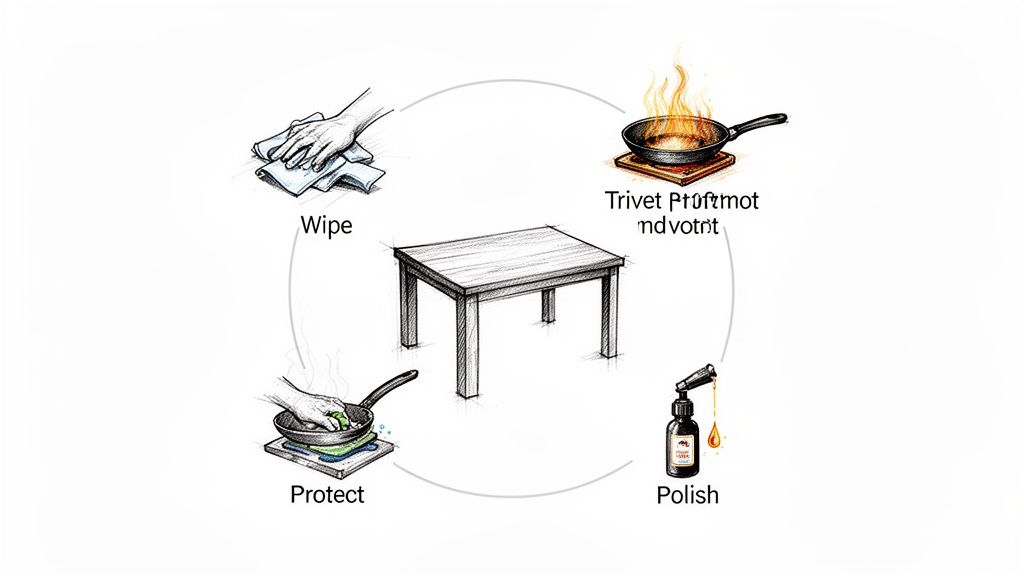
The best long-term care starts with consistent, gentle cleaning. Your first line of defense is simply dusting every day or two. This prevents tiny, abrasive particles from settling on the surface and causing micro-scratches over time. All you need is a quick pass with a soft, dry microfiber cloth.
For light smudges or fingerprints, dampen a cloth with a little water, wipe gently, and immediately follow up with a dry cloth. The golden rule is to never let water sit on the wood surface. Moisture is the enemy of a good finish and can damage the wood underneath if left unchecked.
Your wood table is built for life, but its finish needs your help to stay strong. Think of regular cleaning not as a chore, but as a simple act of preservation that defends your investment against the wear and tear of a well-lived life.
Tackling Spills and Preventing Damage
Accidents are inevitable, but a quick response can stop a small spill from becoming a permanent mark. The instant something spills, blot it up with a clean, absorbent cloth. Try not to wipe, as that just spreads the liquid around.
Of course, preventing damage in the first place is always the easier path. Here’s how you can keep your table looking its best.
- Use Coasters and Placemats: They are your table's best friends, creating a crucial barrier against moisture rings and heat from hot plates.
- Avoid Direct Sunlight: Just like our skin, wood can be damaged by too much sun. Prolonged exposure can fade the color and dry out the finish. If your table sits by a window, think about using blinds or curtains during the sunniest part of the day.
- Lift, Don't Drag: Get into the habit of lifting objects instead of sliding them across the surface. This one small change prevents countless scratches.
For a deeper dive, our guide on how to care for wood furniture is packed with more expert tips.
Polishing and Long-Term Maintenance
You might be surprised to learn that you shouldn’t polish your table very often. Over-polishing can actually create a cloudy, dull buildup on the finish. A good rule of thumb is to polish just two to four times a year to restore its luster and add a bit of protection.
The key is using the right product. Look for a high-quality, silicone-free furniture polish. Why no silicone? It can create a film that’s tough to remove and can cause major headaches if you ever need to have the table refinished down the road.
When it's time to polish, just apply a small amount to a soft cloth and wipe in the direction of the wood grain. That's all it takes to bring out that beautiful, even sheen and ensure your table becomes the family treasure it was meant to be.
Bringing Your Vision Home with an Expert Partner
You've done the hard part. Now you know the difference between oak and walnut, and you can confidently walk into a showroom knowing exactly what to look for. Turning that knowledge into the perfect table for your home is the fun part, and finding a partner you trust makes all the difference.
That’s where you can rely on us. For over 70 years, we've helped families in Lubbock, Hobbs, and Ruidoso Downs find those perfect pieces that become the heart of their homes. Our team isn't just here to sell you a table; they're design experts who can help you choose the tool that will become the backdrop for homework, holiday dinners, and a thousand everyday moments.
More Than a Store—A Lifelong Partner
We get it—a good table is a big decision and a real investment. The whole experience should feel supportive, not stressful. Think of us as your guide through the process, making sure the table you pick is one you'll be happy with for years, even decades, to come.
Your home tells your story. Our job is to help you find the beautiful, lasting pieces that become a part of it, so you can feel confident in every choice you make.
We've already curated a selection of tables that meet our high standards for craftsmanship. That means we’ve done the vetting for you, so you can just focus on finding a piece you truly love.
Your Dream Table is Within Reach
Of course, style is just one piece of the puzzle. Budget and logistics matter just as much. We’ve built our business around making quality furniture accessible, which is why we stand by our Low Price Promise and offer flexible financing options. You shouldn't have to compromise on quality to get the table you want.
Ready to see how the right wood can completely change a room? We’d love for you to stop by one of our showrooms in Lubbock, Hobbs, or Ruidoso Downs. There’s nothing like seeing and feeling the different grains and finishes in person. Let our team help you find the table that’s waiting to become a part of your family's story.
To get a little inspiration before you come in, why not Explore our curated collection of high-quality dining tables and see what catches your eye?
Still Have Questions? Let's Talk Tables.
Even after you've narrowed down your choices, a few questions can still pop up. It's completely normal. Let's walk through some of the most common things people ask when they're trying to find that perfect table. Think of this as the final checklist before you make a confident decision.
What’s the Toughest Wood for a Dining Table?
If you’re looking for a table that can handle the chaos of daily life, you really can't beat hardwoods like Oak and Maple. Oak is the classic workhorse for a reason—it’s exceptionally hard and stubborn when it comes to dents and scratches. This makes it a fantastic choice for families with kids or anyone who uses their dining room for more than just formal dinners.
Maple is right up there with it. It’s incredibly strong and has a fine, dense grain that gives it a smooth, almost indestructible surface. Both of these woods are built to last for generations, not just years. They're a smart investment if you want a true "forever" table.
Is Engineered Wood a Decent Choice?
Engineered wood, like MDF or particleboard with a veneer on top, definitely has its place. It's a great way to get a stylish look without the solid wood price tag. Plus, it’s very stable and less likely to warp with changes in humidity, which is a nice perk.
But there's a trade-off. It simply doesn't have the same long-term durability as solid wood. The surface can be vulnerable to moisture damage, and if that veneer gets a deep scratch or a chip, it's very difficult to repair convincingly. For a piece you hope to pass down one day, solid wood is still the way to go.
When you invest in a quality wood table, you're not just buying furniture; you're acquiring the future centerpiece for family gatherings and cherished memories.
How Can I Spot a Quality Wood Table?
You don't have to be a master carpenter to spot a well-made table. Here’s how you can look for the signs of good craftsmanship.
- Look at the connections: Check how the legs and apron are joined. Sturdy joints like dovetail or mortise-and-tenon are a hallmark of quality.
- Give it a (gentle) shake: A good table should feel heavy and solid. There should be absolutely no wobble or give.
- Inspect the finish: Run your hand over the surface. It should feel smooth and even, with no rough patches, bubbles, or drips.
Here at Miller Waldrop Furniture & Decor, we've already done the hard work of vetting our brands for quality, so you can focus on finding the style you love. We’d love for you to come visit our showroom and see—and feel—the difference for yourself.