


Gray Comforter Set King: How to Choose the Perfect Fit


You buy a gray comforter set king because it should be the easy part of the bedroom. Then the box arrives, the comforter sits too high on the mattress, the sides look skimpy, and the bed still feels unfinished. The fix is not choosing a prettier gray. The fix is choosing the right dimensions, fill, and drape for the bed already in the room.
Why Most King Comforter Purchases Go Wrong
The biggest mistake is trusting the word king instead of checking the actual cut. A king bed footprint is typically 76 inches by 80 inches, but king comforters are sold in different sizes across brands, so one set can look generous while another barely clears the mattress.
A comforter that looks fine on a low-profile frame can look short on a tall foundation, a pillow-top mattress, or a bed with a thick topper. That's why a buyer needs to judge the whole bed stack, not just the mattress label. The comforter has to cover the top surface, then hang down far enough to look intentional from the side.
Practical rule: measure the bed from floor to top surface before buying. If the comforter only seems “king enough” on paper, it probably won't look right in the room.
That's the reason neutral bedding searches often lead people into the same trap. Gray is popular because it works with many interiors, but the color won't fix a bad fit. For readers who want broader textile care context, Peppervale's soft bamboo towels advice is a useful reminder that home textiles work best when material, care, and sizing are considered together.
The smartest approach is simple. Check the exact comforter measurement, compare it with mattress height, and decide whether the bed needs standard coverage or more generous drape. If the bed has a deeper profile, a standard king label is not enough information. The comforter has to be judged as a finished visual layer, not just a category name.
King Comforter Dimensions and Fit Guidelines
A standard king mattress measures 76 inches by 80 inches, but the comforter must exceed that footprint to create real side drop and foot coverage. Many shoppers use an 8 to 12 inch hang as the practical threshold, which means the comforter has to be wide enough to move past the mattress edge even after the bed is made. That's the difference between a bed that looks dressed and one that looks undersized.
Comforter size also changes with brand and bundle type. One gray king set is listed at 104 inches by 92 inches, another gray king comforter is 90 inches by 104 inches with 2 king shams sized around 20 inches by 36 inches, and another listing shows 96 inches by 110 inches. Those differences matter because the same “king” label can produce very different coverage.
King Comforter Size Comparison
| Retailer/Brand | Comforter Dimensions | Set Pieces | Best For |
|---|---|---|---|
| Target gray king set | 104" x 92" | 3-piece | Standard king beds needing solid coverage |
| IKEA gray king set | 90" x 104" | 2 king shams included | Beds where length and pillow proportion matter |
| Amazon gray king set | 96" x 110" | Comforter set with matching pieces | Shoppers wanting extra length and fuller drape |
| Rough Linen sizing guidance | 106" wide by 90" to 100" long is the practical target | N/A | Beds that need balanced side drop and foot coverage |
| Coma Inducer gray king set | 112" x 98" | 2 king shams | Larger beds and taller profiles |
| My Bobs gray king set | 96" W x 110" D x 1.5" H | 9-piece | Buyers wanting a coordinated room package |
The table makes the point clearly. Some king comforters are built for generous drape, while others are sized more conservatively. That's why a shopper should measure the bed, then read the tag, then compare both against the room. For a practical measuring reference, the internal bed sheet measurements guide helps connect sheet fit with comforter coverage.
Fit takeaway: if the mattress is deep, the bed frame sits high, or a topper is in play, favor the larger end of the king range instead of the smallest one.
For readers comparing bedding widths and quilt-style proportions, the 2026 king quilt size reference is helpful context. The same rule applies. Exact inches matter more than the label on the package.
Choosing the Right Fabric and Fill for Your Climate
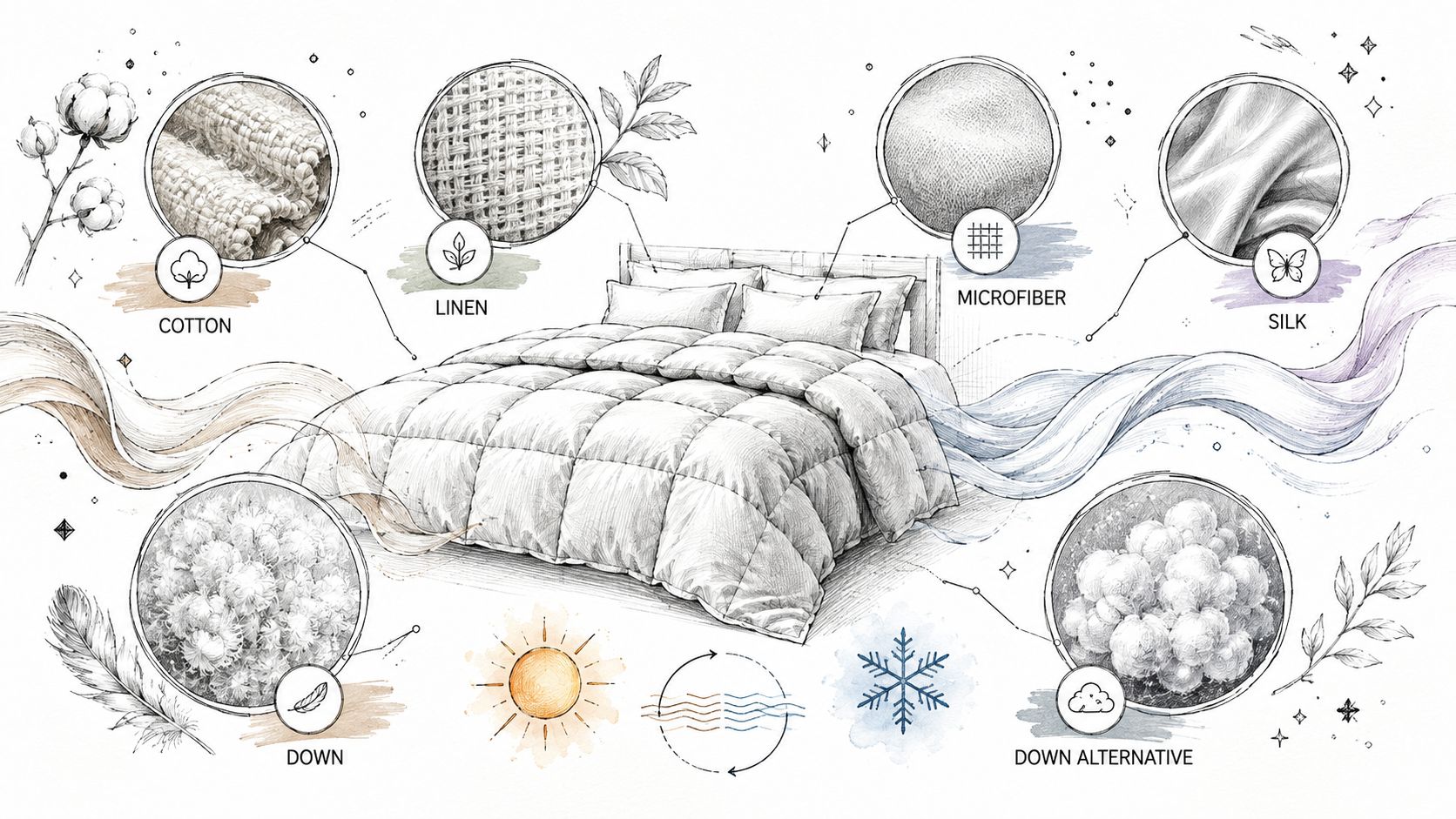
Gray solves the color problem, but fabric solves the comfort problem. Microfiber feels soft and usually offers easy care, which is why it shows up often in gray king bedding. Cotton blends tend to breathe better, which matters in warm climates or for sleepers who run hot. Down-alternative fills are a strong choice for households that want loft without using traditional down.
Match the fabric to how the room is used
A bedroom in a hotter, mixed-season climate needs more than a pretty cover. Breathability matters when the air conditioner cycles on and off, and easier cleaning matters in homes with pets or allergy concerns. A reversible comforter can also stretch the life of the bedding look because it gives the room a second finish without changing the whole set.
OEKO-TEX certification appears in this category because buyers are paying closer attention to material standards, not just appearance. That doesn't make every certified set automatically better, but it does give shoppers one more way to judge what's going against the skin. The right call depends on whether the room needs warmth, airflow, or easier washability.
Choose microfiber for easy maintenance, cotton blend for airflow, and down-alternative for a fuller feel without the same care demands as traditional down.
Gray shade also changes how practical the bedding feels day to day. Lighter gray tends to soften pet hair and dust visually, while darker gray can look richer but may show lint faster. That's why fabric and shade should be chosen together, not separately. If a household wants a low-stress setup, a medium gray in a washable fabric is usually the safest move.
The most honest rule is this. Buy for the room's temperature, the sleeper's sensitivity, and the amount of upkeep the household will manage. If those three things line up, the comforter gets used. If they don't, it stays folded at the foot of the bed.
Selecting the Perfect Gray Shade for Your Bedroom
A gray comforter can look calm in one bedroom and cold in another. In a room with white walls and dark wood furniture, a warm gray softens the contrast and keeps the bed from feeling stark. In a bedroom with black metal accents and minimal decor, a cooler gray keeps the palette crisp and modern.
A room with honey oak or walnut furniture usually benefits from gray that has a little warmth in it. That keeps the bedding from fighting the wood tone. A room with painted furniture, chrome lamps, or a platform bed can handle a cooler gray because the room already leans clean and structured. For more room-pairing ideas, the internal bedroom color scheme ideas page is a good companion reference.
Natural light changes the result. Morning light can make gray look lighter and bluer, while evening lamps can make the same fabric feel deeper and softer. That's why a swatch seen under store lighting is only part of the decision. If the room has strong daylight, the gray should still look balanced when the sun is bright.
A practical way to choose is to match the comforter to the most dominant surface in the room. If the headboard is a statement piece, keep the gray quieter. If the furniture is plain, the gray can carry more visual weight. That's especially useful in homes with mixed finishes, where the bedding has to bridge wood, paint, and metal without looking busy.
The best gray is the one that supports the room instead of competing with it. Soft gray works when the bedroom needs calm. Sharper gray works when the room needs structure. The color should feel deliberate the moment the bed is made.
Layering and Styling Your King Bed Like a Designer
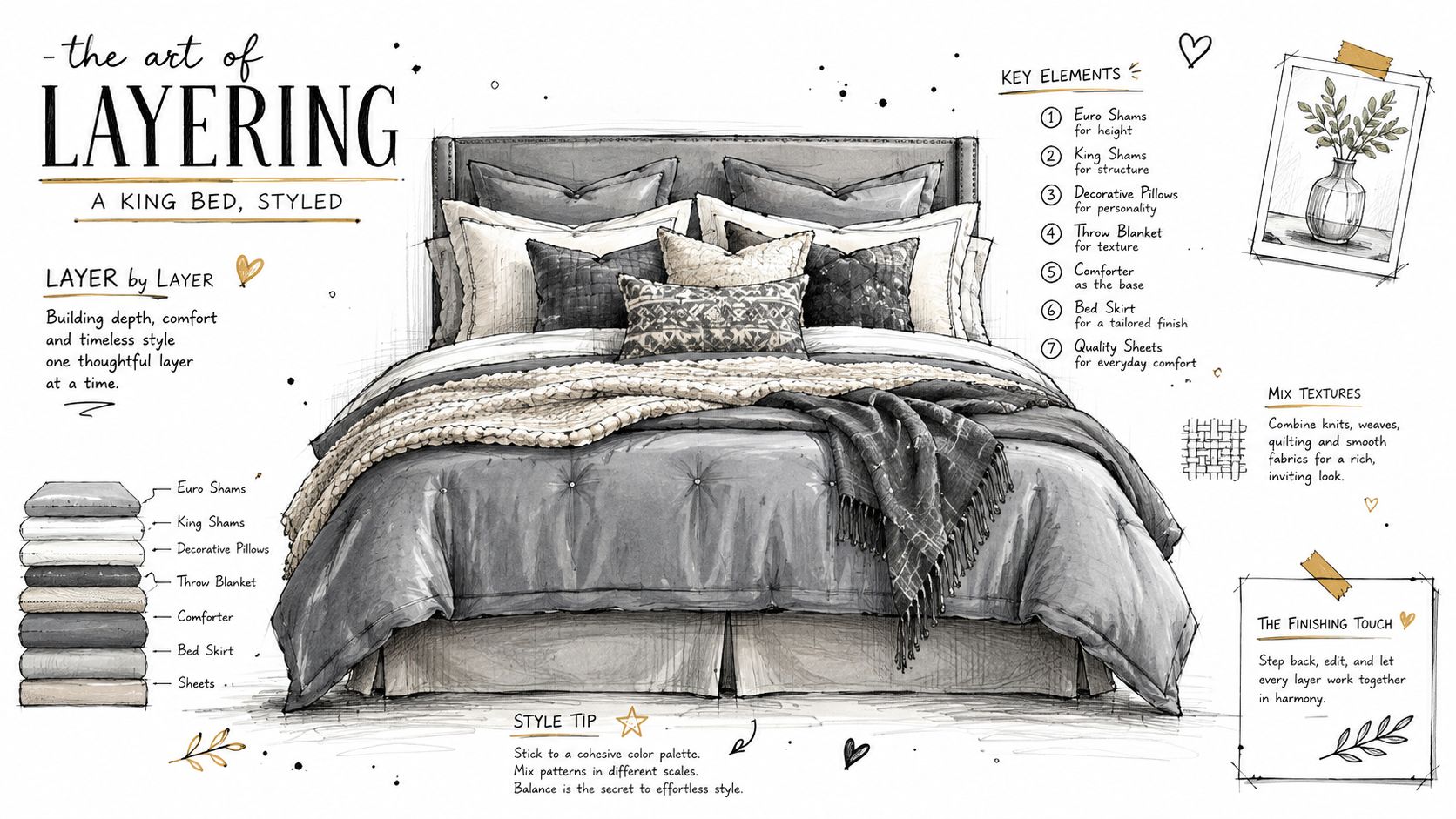
A king bed looks finished when the layers have scale. Start with the comforter, then add king shams, then use pillows to create height and width that fit the larger bed surface. On a king, small pillows usually disappear visually, which is why the bedding needs pieces sized for the mattress, not scaled down from a smaller room.
Build the bed in proportion
A 3-piece gray king set is the simplest route. It covers the basics, but it relies on the room already having strong furniture and a clean layout. A 7-piece or 9-piece bundle creates a more coordinated look because it includes more of the pieces that make a bed feel complete. The larger packages work especially well when the room needs sheets, shams, and a finished frame all at once.
The styling rule is straightforward. Keep the largest visual layer nearest the mattress, then use smaller pieces to break up the rectangle. A throw at the foot of the bed adds contrast, especially if the comforter is a flat, solid gray. Mixed textures matter more than extra color. A smooth comforter with a nubby throw or a crisp sham with a softer pillow cover gives the bed depth without making it busy.
Design rule: on a king bed, scale beats quantity. One oversized, well-proportioned layer usually looks better than several small pieces fighting for attention.
Accent colors should stay controlled. White gives gray a clean edge. Wood tones make gray feel warmer. Deep blue or charcoal can add contrast, but only if the rest of the room stays quiet. If the goal is a calm bedroom, keep the palette tight and let texture do the work.
The best styling move is to treat the bed like a whole composition. The comforter should anchor it, the shams should widen it, and the final throw or pillow should keep it from looking flat. That's the difference between bedding that merely covers a mattress and bedding that shapes the room.
Caring for Your Gray King Comforter Set
Care starts with the label, not with guesswork. Microfiber usually tolerates simple washing better than more delicate fabrics, while cotton blends often reward gentle cycles and proper drying. If the comforter is bulky, the washer should never be packed so tightly that water and detergent can't move through the fill.
For households that want a practical cleaning reference, Tumble Laundry's duvet cleaning guide is a helpful companion when sorting out bedding maintenance. The same logic applies here, use enough space, avoid harsh treatment, and let the bedding dry thoroughly before it goes back on the bed.
Keep the fabric looking good longer
Gray holds up best when it's washed before stains set. Spot-clean small marks quickly, shake out dust and pet hair often, and rotate the comforter if the household uses seasonal bedding. Over time, pilling and fading usually come from rough washing and high heat, not from the color itself.
Store the comforter clean and fully dry. Compression for long periods can flatten loft, especially in down-alternative fills. If the bedding starts to smell stale or lose shape, airing it out before storage helps more than stuffing it into a tight closet space.
Protect the fill by drying it completely and giving it room to loft back up before the next use.
For a broader bedding care reference, the internal complete guide to bedding, mattress protectors, and comforters is a useful next step. The main point is simple. Good bedding lasts when the household treats it like a textile investment, not a disposable layer.
Why Shopping In-Store Beats Online Bedding Guesswork
A king comforter can look right online and still fail in the bedroom. The shape may be off, the drape may stop short, and the gray may shift warm or cool once it meets your walls, rug, and headboard. In a showroom, the shopper can judge the fabric in real light, feel the weight in hand, and see whether the set suits the bed already in place.
Miller Waldrop Furniture & Decor offers shoppers a place to compare bedding with the rest of the bedroom instead of guessing from a screen. The store's family-owned legacy of over 70 years, serving Lubbock, Texas, Hobbs, and Ruidoso Downs, New Mexico since 1952, supports a more guided buying process. That matters when the primary problem is fit and confidence, not lack of options.
A good showroom conversation prevents returns because it answers the questions product pages usually skip. Does the gray work with the headboard finish? Is the set too short for the bed height? Does the material feel better for a hot sleeper or for a room that stays cool? Those details decide whether the comforter looks finished or awkward after delivery.
Shoppers who want more control can also ask about coordinated bedroom pieces, custom-order options, and in-person guidance for matching bedding to existing furniture. A local store gives the buyer a real look at the fabric, a real sense of the drape, and a clearer answer before money changes hands. The store can also help confirm whether the comforter reaches the sides of the mattress the way it should, which is where many “king” purchases go wrong.
If a gray king comforter set needs to fit a real bedroom, not a product photo, Miller Waldrop Furniture & Decor can help narrow the choices and make the decision easier. Visit Miller Waldrop Furniture & Decor to explore bedroom options, compare styles in person, and choose bedding that fits the bed, the room, and the way the household lives.