


Your Guide to Care of Teak Furniture


Keeping your teak furniture looking its best is a rewarding process, and it all comes down to simple, consistent care. This guide is designed to empower you with the knowledge to protect your investment and ensure it lasts for years, whether you love the warm, honey-gold of new teak or prefer the classic, silvery patina it earns over time. With these techniques, you can confidently maintain the beauty of your furniture.
Your Essential Guide to Timeless Teak Furniture

Consider this your go-to resource for maintaining the natural elegance of your teak pieces. We've designed this guide to give you the confidence to care for your furniture, helping you make the right choices for your home and lifestyle. You've chosen furniture known for its incredible strength and lasting appeal; now, you have the power to keep it that way.
Teak is a remarkable hardwood. It’s packed with natural oils that act as a built-in defense system against water, rot, and even pests. This natural resilience is exactly why it's a favorite for everything from dining room tables to outdoor loungers. With just a bit of attention, your teak furniture can easily become a family heirloom.
Understanding Your Teak's Journey
The first step in your teak care journey is making a choice: do you want to maintain that original golden-brown color, or will you let it age into a graceful silver-grey? There's no right or wrong answer here—it’s all about creating the look you envision for your space.
This guide will walk you through everything you need to know, from the basics to the finer points:
- The fundamental principles of teak care.
- Simple but effective cleaning techniques for regular upkeep.
- The pros and cons of sealing versus letting it weather naturally.
- Restoration tips to bring a tired piece back to its former glory.
The demand for high-quality teak isn't slowing down, and proper maintenance is what preserves its value. In fact, well-cared-for teak can retain up to 80% of its original price even after a decade—a true testament to its durability.
Your furniture is part of your home's story, witnessing family dinners, quiet morning coffees, and every moment in between. This guide gives you the knowledge to preserve not just the wood, but the memories it holds.
By understanding what makes this wood so special, you're better equipped to make smart decisions that keep your furniture looking stunning. Whether you're choosing new items or caring for old favorites, learning about the most essential outdoor furniture pieces can help you create a beautiful and lasting space.
Ready to become the hero of your home's story? Let's give you the confidence to maintain your teak beautifully. And if you ever have questions, our design experts at Miller Waldrop are always here to support you.
Choosing Your Teak Finish: Weathered Patina or Golden Luster?

When you invest in teak furniture, one of the first big decisions you get to make is about its future appearance. Are you going to let it age gracefully into a distinguished silver-grey, or will you work to preserve that vibrant, honey-gold glow it had on day one?
There’s absolutely no wrong answer here. It all comes down to your personal style and how you wish to invest your time in upkeep. This choice sets the stage for your entire care of teak furniture routine, so let's break down what each path entails so you can choose wisely.
The Allure of the Silver Patina
Opting to let your teak weather naturally is the easiest route by far. When you leave it to the elements, the surface oils slowly oxidize, and the sun's rays work their magic. This process gradually transforms the wood from its warm, golden state to a beautiful, sophisticated silvery-grey.
It's important to know this isn't rot or decay—it's a natural protective shield. The silver patina is purely a surface-level change and has zero effect on the wood's structural integrity. Deep within the grain, teak's legendary oils are still hard at work, warding off pests and preventing rot.
Why you might love the weathered look:
- Low Maintenance: This is the set-it-and-forget-it approach. Your main job will be a simple cleaning now and then to wash away dust, pollen, or any mildew that might pop up.
- A Perfect Aesthetic Match: That silvery finish looks incredible with coastal, rustic, or modern farmhouse decor. It just feels relaxed and timeless.
- Proven Durability: You’re essentially letting the wood do what it was designed to do—protect itself.
Here in West Texas and Southeastern New Mexico, our intense sun really speeds up this silvering process. A brand-new dining set left in direct sunlight can start to show significant weathering in just a few months and often achieves its full patina in under a year.
Maintaining the Golden Glow
If you fell in love with that rich, warm color of new teak, you can absolutely keep it looking that way. Preserving the golden finish means actively protecting the wood from UV rays and moisture, which are the very things that cause it to go silver. This is a more hands-on role, but the results are stunning.
The key is to arm yourself with a high-quality teak sealer. Think of it as sunscreen for your furniture. A good sealer creates a protective barrier that blocks UV light and stops oxidation, all while letting the wood breathe.
The choice to maintain the golden look is a commitment to a regular ritual of care. It’s an incredibly rewarding process that keeps your furniture looking as vibrant as the day you brought it home.
The process usually involves giving the furniture a thorough cleaning, letting it dry completely, and then applying a coat or two of sealer. In our sunny climate, this is typically an annual job. If you skip a year, the silvering will begin, and you'll need to clean and likely sand the furniture before you can seal it again.
Comparing Teak Finishes: Weathered Patina vs. Oiled Luster
Making the right choice is a lot easier when you can see the pros and cons side-by-side. It’s all about balancing the look you love with the maintenance you’re willing to perform.
| Attribute | Natural Silver Patina | Oiled/Sealed Golden Finish |
|---|---|---|
| Maintenance Level | Low: Requires an occasional cleaning to remove surface dirt and mildew. | Moderate: Requires annual cleaning and reapplication of a sealer. |
| Aesthetic | Elegant, weathered, rustic, coastal. | Warm, vibrant, classic, polished. |
| Effort | Let nature take its course. | Actively preserve the original look. |
| Cost | Minimal—just the cost of cleaning supplies. | Annual cost of sealer and any application tools. |
It's interesting to see how attitudes toward furniture care have changed. Back in 2005, historical data shows that only about 35% of teak owners were using specialized care products. Fast forward to 2023, and that figure has soared to 65%, a shift largely driven by better consumer education. You can explore more about these market trends to see how care practices have evolved.
Ultimately, you are in the driver's seat. Whether you choose the path of graceful aging or decide to maintain that timeless vibrance, you can ensure your teak furniture remains a beautiful, lasting part of your home for years to come.
A Practical Cleaning Ritual for Your Teak
Regular, proper cleaning is the absolute foundation for keeping your teak furniture looking its best. This isn't just about a quick wipe-down; it's a routine that stops dirt, mildew, and general grime from building up and obscuring the wood's beautiful character. Think of it less as a chore and more as a way to connect with your furniture, restoring its beauty for another season of use.
A good, thorough cleaning brings the wood back to life, empowering you to make your patio or deck feel fresh, inviting, and ready for making memories with family and friends.
Getting Your Cleaning Kit Together
Before you start scrubbing, gathering the right supplies will make the job much easier and more effective. You don't need a lot, but the right tools are crucial for getting the best results without accidentally damaging the wood.
Here’s a simple list of what you'll want to have on hand:
- A Gentle Cleaner: For a light, routine wash, a bucket of warm water with a dash of mild dish soap works great. For tackling tougher grime or mildew, a dedicated water-based teak cleaner is the way to go.
- Soft-Bristle Brushes: This is key. Always use a brush with soft, non-metallic bristles. A stiff brush, and especially a wire one, will scratch and tear at the soft surface grain of the teak, leaving behind a fuzzy, splintered texture that's a headache to fix.
- Clean, Lint-Free Cloths: A few microfiber cloths are perfect. They’re great for applying cleaning solutions and wiping everything down without leaving any fuzz behind.
- A Garden Hose: You'll need this for rinsing. And here's a critical point: never, ever use a pressure washer. That high-powered spray is far too aggressive; it can strip away the teak’s natural protective oils and cause permanent damage to the wood grain.
With these simple tools, you’re ready to give your furniture the care it deserves.
The Right Way to Scrub
Now that your gear is ready, it's time to clean. Your technique here is just as important as the cleaner you use. Rushing or scrubbing the wrong way can do more harm than good.
First things first, give the entire piece of furniture a good rinse with your garden hose. This knocks off any loose dirt and pre-wets the wood, which helps keep the cleaning solution from soaking in too quickly and creating dark spots.
Next, apply your cleaner. If you're using simple soapy water, be generous with it. If you're using a specialized teak cleaner, just follow the directions on the bottle—they usually recommend letting it sit for a few minutes to work its magic on the grime.
The most important part of the process is to scrub gently, always moving in the same direction as the wood grain. If you scrub against the grain, you risk lifting the wood fibers, which creates that rough, unpleasant texture. Following the wood's natural lines is the secret to a deep clean that doesn't harm the furniture.
For stubborn areas, like a patch of mildew or a greasy food stain, apply a bit more cleaner, let it sit for another minute or two, and then give it a gentle scrub. You’ll be surprised how easily most spots lift with a little patience. As you finish a section, rinse it thoroughly with the hose to wash away all the soapy, dirty water before it has a chance to dry and leave a film.
For some broader tips that apply to other pieces in your home, our guide on how to care for wood furniture has some great pointers that build on these techniques.
Common Cleaning Mistakes to Steer Clear Of
Knowing what not to do is just as important as knowing what to do. Many well-meaning furniture owners make simple mistakes that can unfortunately shorten the life of their teak.
Here are a few common pitfalls to avoid:
- Using Harsh Chemicals: Stay away from bleach, ammonia, and other aggressive household cleaners. They are way too harsh for teak and will strip the wood of its natural oils, causing it to become dry and brittle.
- Cleaning in Direct Sun: Trying to clean furniture under the blazing West Texas sun is a bad idea. The heat causes your cleaning solution to evaporate almost instantly, leaving behind a sticky, soapy residue that’s tough to get off. It’s best to work on an overcast day or find a shady spot.
- Skipping the Final Dry: After a final, thorough rinse, use a clean towel to wipe off as much excess water as you can. Then, let the furniture air dry completely, which can take up to 24 hours. Getting it bone-dry is especially critical if you plan on applying a sealer or protector afterward.
You can find more in-depth advice by checking out these expert tips for cleaning antique wooden furniture. By following these straightforward steps and avoiding common errors, you're setting your teak up for a long, beautiful life outdoors.
How to Restore and Refinish Your Teak
Sometimes, even with the best care, teak furniture starts to look a little tired. Maybe it's stained, the weathering is uneven, or it just doesn't have that "pop" anymore. This is where teak's best quality truly shines—it’s one of the few woods you can fully restore, bringing it right back to its original glory.
Think of this process as a complete renewal. You’re not just cleaning it; you’re hitting the reset button and actively extending its life. The difference proper care makes is staggering. In fact, some studies show that neglect can slash the lifespan of outdoor teak pieces by up to 60%. It’s no surprise the global market for teak furniture restoration hit USD 800 million in 2023. People are invested in keeping these pieces beautiful, and you can see more about this in the full research on teak furniture trends.
Assessing the Need for Sanding
Before you break out the power tools, the first and most important step is figuring out if sanding is even necessary. You don't want to jump the gun and remove healthy wood if a deep clean will do the trick.
Get up close and really look at the surface. Is it just caked with dirt, or is the wood itself feeling rough and almost fuzzy? Often, a good scrub is all it takes to cut through the grime and mildew, revealing perfectly good wood underneath.
You'll probably need to sand in a few specific situations:
- Rough or Fuzzy Texture: If you run your hand over the wood and it feels splintered or has a raised, fuzzy grain, it's time for a light sanding. This can happen after years of harsh weather or if someone got a little too aggressive with a pressure washer.
- Deep Stains: For those stubborn stains that have soaked deep into the wood—like dark water rings or old grease spots—sanding is often the only way to get them out.
- Uneven Weathering: If your furniture has aged into a blotchy, inconsistent patina instead of that uniform silver, sanding will even everything out for a fresh start.
Before you even think about sanding, though, always start with a thorough cleaning.
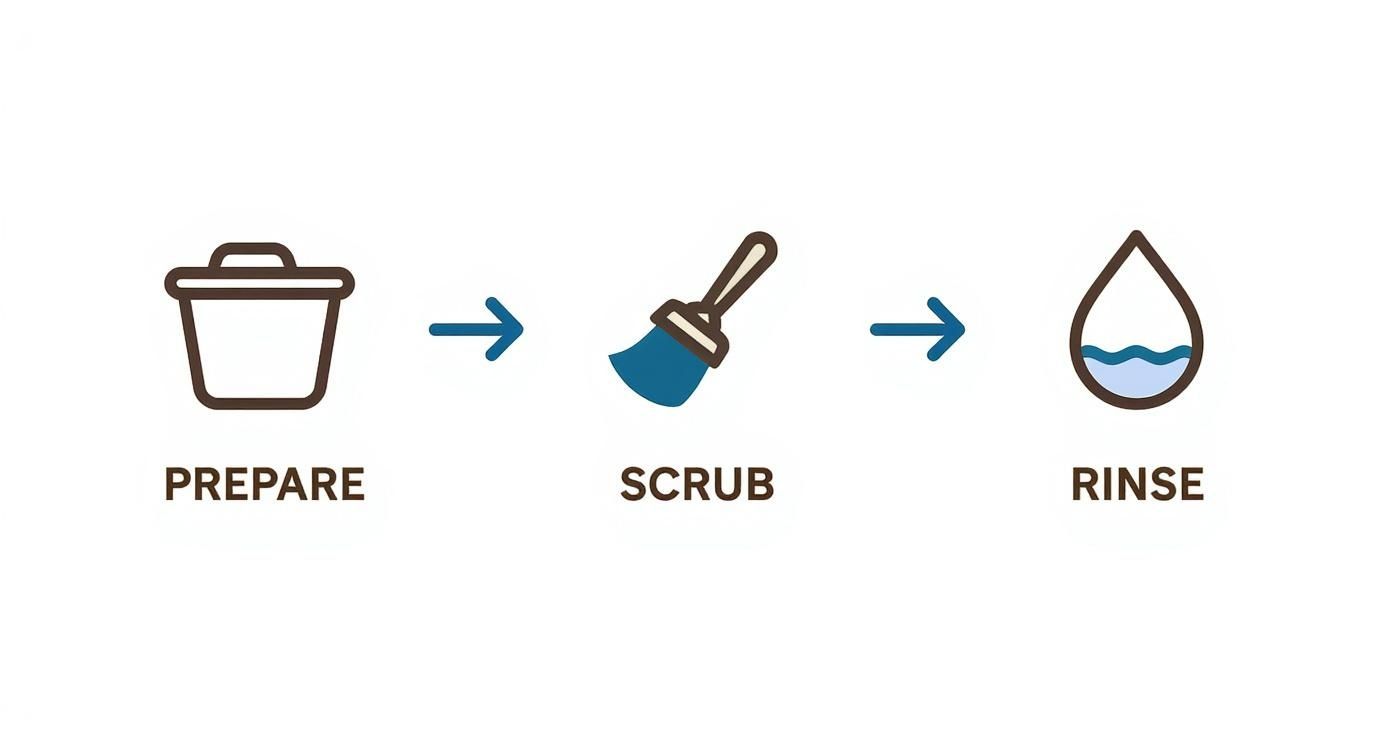
As you can see, preparing, scrubbing, and rinsing is the foundation for any restoration work you do.
Mastering the Art of Sanding
Okay, so you’ve decided sanding is the way to go. The key here is finesse, not force. You’re just trying to remove a paper-thin layer of weathered wood to get to the fresh, golden teak hiding right underneath.
First, get the right gear. You'll want fine-grit sandpaper. I always recommend starting with 120-grit and then finishing with an even finer 220-grit for a surface that’s silky smooth to the touch. Stay away from coarse grits; they’ll just leave deep, ugly scratches. An orbital sander is a lifesaver for big, flat areas like a tabletop, but for chair arms, legs, and intricate spots, you can't beat good old-fashioned hand-sanding.
The golden rule? Always sand with the grain. Follow the wood’s natural lines, whether you’re using a power sander or a block. This prevents cross-grain scratching and gives you that professional, finished look. Use light, even pressure—let the sandpaper do the work. Once you're done, wipe every surface with a tack cloth to pick up all that fine dust.
There's something incredibly rewarding about restoring teak. You really connect with the piece and feel a sense of accomplishment as you watch that beautiful, warm wood re-emerge.
Applying the Final Protective Coat
With your furniture now perfectly smooth, clean, and dust-free, it's time for the final, most important step: the protective finish. This is what's going to shield that freshly exposed wood from the elements and lock in its final look.
This brings you right back to that big decision: do you want the warm golden look or the distinguished silver patina?
- For a Natural Silver Patina: The easiest option! You don't have to do a thing. Just let nature take its course. The freshly sanded wood will begin to gradually weather, developing that classic silver-grey color over the next few months.
- For a Golden Finish: This is the moment to apply a high-quality teak sealer. A good sealer is like sunscreen for your furniture, blocking the UV rays and moisture that trigger the silvering process.
To apply it, grab a clean, lint-free cloth. Work in thin, even coats, and once again, always move with the grain. Let that first coat dry completely (check the can, but it's usually about an hour), then apply a second thin coat for the best possible protection. If you need help choosing the right tool for the job, our guide to the best teak sealers and protectors is a great place to start.
Restoring your teak furniture is more than just a weekend project; it's an act of preservation. By following these steps, you’re not just making it look new again—you’re ensuring it remains a cherished part of your home for years to come. And if the job feels a bit too big, remember that the experts here at Miller Waldrop are always happy to give advice or help you find the right tools.
Protecting Your Teak Through the Seasons
Teak's legendary strength is no secret, but even the toughest wood benefits from a smart seasonal game plan. Here in West Texas, that means being ready for the intense sun and the occasional chilly snap. A little bit of planning in the spring and fall is the real secret to keeping your teak looking fantastic for years to come.
This isn’t about some complex, all-day project. It's about a few key moves that protect your investment and keep your patio ready for every family get-together.
Gearing Up for the Off-Season
When the weather starts to cool, the main goal is simply to shield your teak from months of unnecessary exposure. While teak can certainly handle the elements, giving it a break prevents a winter's worth of grime from building up and minimizes wear and tear.
The single most important decision here is your choice of cover. It feels intuitive to reach for a plastic tarp, but that’s one of the biggest mistakes you can make. Plastic traps moisture right against the wood, creating a humid environment that’s a perfect breeding ground for mold and mildew.
Instead, always choose breathable, water-resistant furniture covers. They’re designed to block rain, sleet, and debris while still letting air circulate, which is crucial for keeping the wood dry and healthy. If you have room in a garage or a shed, that’s even better, but a quality cover is the next best thing.
A Simple Seasonal Checklist
You can think of seasonal care as a "wake-up" call in the spring and a "tuck-in" routine for the fall. Getting into this simple rhythm makes teak furniture care feel less like a chore and more like a habit.
The Spring Wake-Up:
- Inspect and Uncover: Pull off the covers and give everything a good look. Check for any new stains or mildew spots that might have popped up over the winter.
- A Good Annual Wash: This is the perfect time for a gentle cleaning. You'll wash away any dust and grime that settled during storage, giving you a fresh start for the sunny season.
- Check the Finish: If you prefer the golden, sealed look, see how it's holding up. A good test is to splash a little water on it. If it doesn't bead up anymore, it’s time to reapply your protector.
The Fall Tuck-In:
- Clean Before Covering: Never put your furniture away dirty. A final cleaning removes summer's dust, pollen, and any leftover BBQ sauce. Storing it clean prevents those little spots from becoming permanent stains.
- Make Sure It's Bone-Dry: This is critical. After cleaning, let the furniture air dry completely—give it at least 24-48 hours. Storing damp wood, even under a breathable cover, is an open invitation for mildew.
- Cover and Secure: Drape your breathable covers over each piece and make sure they're cinched down. You don't want a strong winter wind to send them flying into your neighbor's yard.
Taking just a couple of hours each spring and fall saves you from dealing with much bigger headaches later on. This simple habit is the cornerstone of keeping your furniture beautiful and protecting the value of your investment.
These seasonal tips are part of a bigger picture. For a closer look at protecting all your wood pieces from daily life, our ultimate guide to protecting wood furniture from scratches and stains has even more great advice.
Knowing how to handle the changing seasons means your teak won't just survive—it will thrive. If you ever have questions about the best covers or storage tricks for our unique climate, just ask. Our team at Miller Waldrop is always here to help you get it right.
Answering Your Top Teak Care Questions
Even the best guides can't cover every specific scenario. When you've invested in quality furniture, you want to be sure you're making the right calls. Let's dig into some of the most common questions we get from folks just like you, with clear answers to help you care for your teak like a pro.
How Often Should I Really Be Cleaning My Teak Furniture?
For basic upkeep, a light cleaning once or twice a year is usually plenty to handle everyday dust and grime. A good routine is a quick wash in the spring to get it ready for patio season, and another before you tuck it away for the winter.
Of course, life happens. If your furniture lives under a messy tree that drops leaves and pollen, or if you notice the first signs of mildew, it’s best to clean it as soon as you can. And if you’ve opted to keep that honey-gold color with a protective finish, you'll need to give it a thorough cleaning before each new coat, which is typically an annual job.
Is It Okay To Use a Pressure Washer on Teak?
You'll get a hard "no" on this one. While it seems like a quick and easy solution, a pressure washer is just too powerful for teak. The high-pressure stream blasts away the wood's natural protective oils and can shred the soft grain.
You'll end up with a fuzzy, splintered surface that’s a real pain to fix—if it can be fixed at all. The right way is the gentle way: a soft-bristle brush, a proper cleaning solution, and a regular garden hose. A little bit of elbow grease now will save you a lot of heartache later and ensure your furniture lasts for decades.
Remember, the goal is to clean the surface, not gouge the dirt out. A pressure washer treats wood like it’s a concrete driveway, but teak is a natural material that needs a gentler touch to maintain its beauty and integrity.
What's the Real Difference Between Teak Oil and Teak Sealer?
This is a great question, and it's a point of confusion for many. People often use these terms interchangeably, but they do completely different jobs. Knowing the difference is crucial for getting the results you want.
-
Teak Oil: Think of this as a temporary cosmetic treatment. It's usually a mix of linseed or tung oil and solvents that soaks into the wood, replenishing some of the oils and bringing back that warm, golden color for a little while. The downside? It offers almost no UV protection and can sometimes even feed mildew growth. It also evaporates quickly, meaning you'll be reapplying it several times a year to keep up the look.
-
Teak Sealer: This is your long-term protection. Instead of just soaking in, a sealer forms a durable barrier on the surface of the wood. This barrier shields it from moisture and blocks the UV rays that cause the wood to turn gray. Sealers last much longer—a full year, in most cases—and many have mildew inhibitors built right in. It's simply a more robust, lower-maintenance choice for preserving your investment.
I Just Unboxed My New Teak and It Has Oily Spots. Is Something Wrong?
Nope, that’s not a defect—it’s actually a great sign! Seeing oily patches on brand-new teak means you've got a high-quality piece that's rich in the natural, protective oils that make this wood so amazing. These oils sometimes rise to the surface right after the milling process.
You don't need to do a thing. Just let the furniture sit out in the sun for a few weeks, and those spots will even out and disappear on their own as the wood weathers. If they bother you, a gentle wipe with a clean, dry cloth is all it takes. Think of it as proof that you got the good stuff.
At Miller Waldrop Furniture & Decor, we believe caring for your furniture should be satisfying, not stressful. If you ever run into a problem or just need some advice tailored to our West Texas climate, our team is always here to help you protect your pieces for a lifetime of enjoyment. We invite you to explore our showroom or browse our complete collection of outdoor furniture online to find the perfect tools to create your ideal outdoor oasis.