

How to Steam Clean a Couch the Right Way

Ready to give your couch a deep clean that goes beyond just the surface? You'll start by giving it a good vacuum, tackling any obvious stains, and then methodically using an upholstery steam cleaner. The trick is to use overlapping strokes so you don't oversaturate any single spot.
But before you do anything, the most critical first step is to check your couch's cleaning code. This little tag is your roadmap to preventing any accidental damage to the fabric, empowering you to clean like a pro.
Your Guide to a Fresh and Spotless Sofa
Let's dive into restoring the heart of your living room. Giving your couch a good steam clean is so much more than a weekend chore; it's about reclaiming your space and creating a healthier, more inviting home for your family. Think of this guide as your battle plan for defeating deep-seated dirt, allergens, and mystery odors for good.
Consider us your trusted ally in furniture care. We'll walk you through everything from decoding those confusing fabric codes to the final fluff of the cushions. By the end, you'll have the know-how to protect your investment and achieve a professional-level clean all on your own.
The Power of Steam Cleaning
Steam cleaning is one of the most effective, non-toxic ways you can deep clean your upholstery. The high-temperature steam is a powerful tool in your hands.
- It sanitizes everything. The heat zaps bacteria, dust mites, and other allergens that can cause odors and irritate your sinuses.
- It breaks down deep-down grime. Hot vapor works its way into the fabric fibers, loosening and lifting stubborn dirt without relying on a ton of harsh chemicals.
- It brings your fabric back to life. A good steam can restore the texture and appearance of tired-looking upholstery, making the colors pop again.
This method has absolutely exploded in popularity. In fact, the global steam cleaners market was valued at USD 3.45 billion in 2023 and is expected to climb to USD 6.02 billion by 2032. It's clear that people are focusing more on true sanitation, and steam is a proven way to get there.
Before you jump in, it helps to get a solid overview. This guide on how to clean your sofa upholstery like a pro is a great starting point.
Your couch is where life happens—movie nights, afternoon naps, you name it. Learning how to properly care for it doesn't just extend its life; it empowers you to make your entire home healthier and more comfortable.
This guide is designed to give you the confidence to do the job right. And if you ever run into a stain that just won't budge or you're nervous about a delicate fabric, our team at Miller Waldrop is always here to offer expert advice and professional upholstery care.
Preparing Your Couch for Its Steam Treatment
A truly deep clean doesn’t start when you turn the steamer on. The prep work you do beforehand is what really makes the difference between just pushing dirt around and actually getting rid of it for good. If you skip these crucial first steps, you risk trapping grit and grime in the fibers, which only makes the whole job harder.
First things first: give that couch a serious vacuuming. Don’t just do a quick pass over the cushions. Grab the crevice tool and get deep into every single seam, corner, and fold. You’ll be amazed at what’s hiding under the cushions—crumbs, pet hair, dust bunnies, you name it. Getting all that loose stuff out of the way lets the steam penetrate the fabric and attack the deep-down oils and dirt.
Tackling Stains and Testing Fabric
Once the surface is clear, it’s time to zero in on any specific spots or stains. This is where your attention to detail will pay off, because your couch's fabric will determine what you can and can't do. Before diving in, you can learn more by understanding how stain removers work so you can choose the right tool for the job.
Now for the golden rule: always spot-test your cleaning solution. Find a hidden spot—the back of the sofa skirt or the underside of a cushion are perfect—and dab a tiny amount of your cleaner. Wait a few minutes, then press a clean white cloth against it. If any color comes off or the fabric looks discolored, stop right there.
This simple test is your best friend. It takes maybe five minutes but can save you from accidentally causing permanent damage to your upholstery. It’s the key to cleaning with confidence.
This isn’t just a friendly tip, it's an essential part of the process that puts you in control. Every fabric reacts differently to moisture and cleaners. If you're not sure what kind of material you're dealing with, our guide on everything you need to know about upholstery materials is a great resource.
After your spot test comes back clean, you can pre-treat the stains. Gently blot the cleaner onto the spot with a clean cloth. Never, ever rub! Rubbing can spread the stain and damage the fabric fibers. Always work from the outside of the stain toward the center. This pre-treatment helps break down the stain, making it much easier for the steam cleaner to lift it out completely.
By doing the prep right, you’re not just cleaning your couch—you’re restoring it. And if you’re thinking about a future upgrade, you can explore our living room furniture collections, designed to provide your family with durable and timeless style.
Mastering Your Steam Cleaning Technique
This is where the real work begins—and where you’ll see the biggest transformation. Having the right machine is half the battle, but knowing how to use it is what separates a so-so job from a truly deep clean that brings your couch back to life.
Think of your steam cleaner less like a vacuum and more like a high-powered extractor. The idea isn't to soak the fabric but to use hot steam to loosen and lift away the grime. Before you even think about touching the main cushions, find a hidden spot—the back of the sofa or under a skirt—to do a test run. This gives you a feel for the machine's rhythm and power without any high-stakes consequences.
Finding Your Rhythm
The key here is a steady, consistent motion. You'll want to use long, straight strokes that slightly overlap, almost like you're mowing a lawn or painting a wall. This technique ensures you get even coverage and avoid leaving behind any tell-tale streaks or missed patches.
It's tempting to move slowly, thinking you're getting a deeper clean, but resist that urge. Lingering too long in one spot forces excess moisture deep into the fabric and padding. That can lead to a much longer drying time and, in some cases, stubborn water spots. Keep the machine moving at a comfortable, deliberate pace.
For those awkward spots—the armrests, the welting along the seams, and those tight corners—it's time to bring in the attachments. Your cleaner likely came with smaller tools designed for this very purpose. They give you the precision to get into every nook and cranny without oversaturating the fabric.
Proper couch prep is the foundation for a successful steam clean. This simple flow shows the non-negotiable first steps.
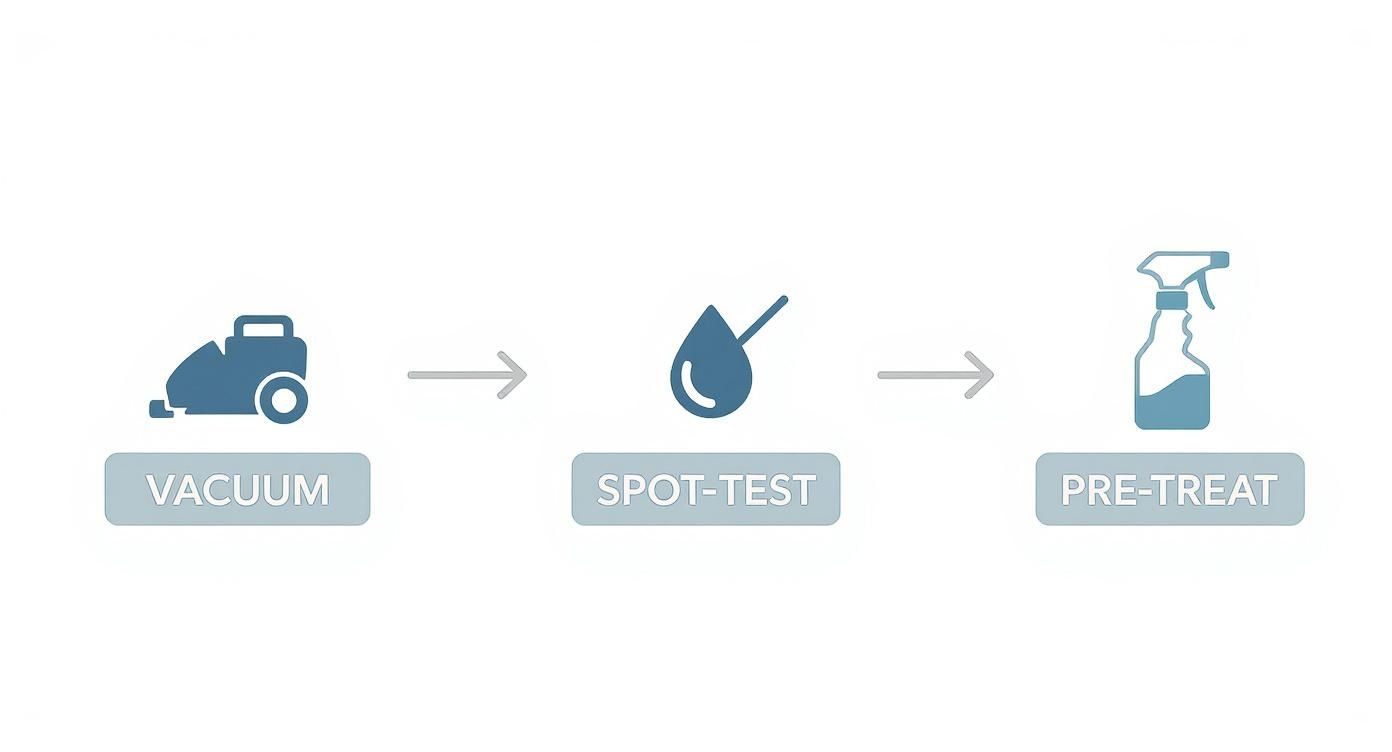
Getting these initial tasks done means the steam can go to work on the deep-down dirt instead of just pushing surface debris around.
The Professional Benchmark
There’s a reason the professional upholstery cleaning market is booming. It was valued at an incredible USD 55.16 billion in 2022, and upholstery is its fastest-growing segment. This isn't just a luxury service anymore; it's driven by families with kids and pets who need a reliable way to keep their homes healthy and clean.
Experts can remove approximately 98% of pollutants and dirt from fabrics, a powerful benchmark that informs the best DIY techniques. By adopting a methodical approach, you can get remarkably close to these professional results.
This process is about more than just appearances; it’s about creating a healthier home. The high-temperature steam from your cleaner is a fantastic sanitizer, killing off bacteria, dust mites, and other allergens that have made a home deep in your couch fibers. For a deeper look at different cleaning methods, see our guide on the best way to clean upholstery.
Remember, you're in control here. Every pass you make with the steam cleaner is a step toward reviving your furniture. By following these techniques, you're not just cleaning—you're taking charge of your home's comfort and well-being.
Post-Cleaning Care for Lasting Freshness
You’ve put in the elbow grease, and your couch is looking miles better. But don't break out the throw pillows just yet. The final phase—proper drying—is what separates a good DIY job from a great one. Getting this right is critical for preventing mildew and bringing back your fabric’s original feel.
Your top priority is to get that couch bone-dry as quickly as you can. Any lingering dampness is an open invitation for musty smells and mildew, which can undo all your hard work. The best tool for the job? Good, old-fashioned air circulation.
Creating the Ideal Drying Environment
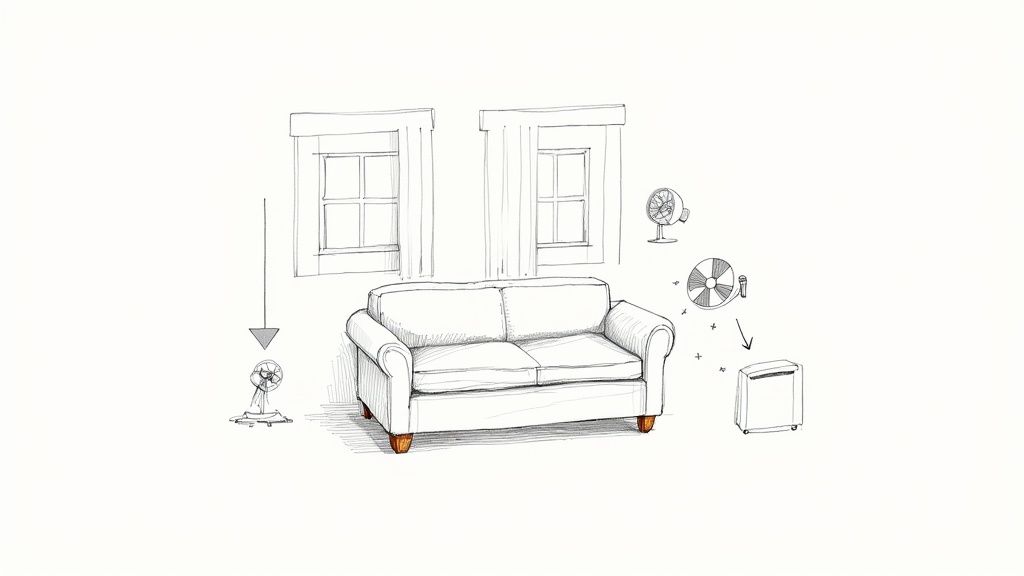
First thing's first: get some air moving. Crack open windows on opposite sides of the room to get a nice cross-breeze going. Then, bring in the reinforcements. Set up a couple of box fans and aim them directly at the couch from different angles. This constant airflow is what will wick moisture away from the fabric, cutting your drying time significantly.
If you’re dealing with a humid day, a dehumidifier is your secret weapon. Place it near the couch to pull moisture not just from the upholstery, but from the air itself.
It might be tempting to grab a hairdryer or point a space heater at the couch to speed things up, but resist the urge. Direct, concentrated heat can shrink delicate fibers, lock in water spots, and even melt synthetics. Airflow and a little patience are your best friends here.
To see if it's ready, press a clean, dry paper towel firmly into the densest parts of the couch, like the cushion corners and deep seams. If the towel picks up any hint of moisture, it needs more time. Trust me, it’s far better to wait a few more hours than to sit on a couch that's still secretly damp on the inside.
The Final Touch for a Professional Look
Once the couch is completely dry to the touch, you might notice the fabric looks a bit flattened or matted down. That's totally normal after a deep clean. The final step is to bring that plush texture back to life.
Using a soft-bristled upholstery brush, gently sweep the fabric in a single, uniform direction. This simple motion fluffs up the fibers and realigns the nap, giving your couch that fresh-from-the-showroom look. It’s a small detail that makes a huge difference, making the fabric feel as good as it looks.
These finishing touches are what lock in the results of your hard work. For more tips on keeping all your pieces looking their best, check out our furniture maintenance and care guide. A little bit of know-how is all it takes to make your favorite furniture last for years.
Knowing When to Call in the Pros
Being able to steam clean your own furniture is a fantastic skill. It puts you in control and lets you handle life's little messes as they happen. But part of being a smart DIYer is knowing your limits—and the limits of your equipment.
Sometimes, a situation just calls for a professional touch. It’s not about giving up; it’s about protecting your furniture. Pros come armed with commercial-grade machines and a whole arsenal of cleaning solutions that consumer-grade steamers simply can't match. Think of it as calling in the cavalry for the really tough battles.
Signs It's Time for an Expert
You've got this, but sometimes the smartest move is to pick up the phone. Here’s when to consider calling a professional:
- You're dealing with delicate or tricky fabrics. Materials like silk, velvet, or any fabric with that dreaded ‘X’ code are best left to the experts. One wrong move with heat or water can lead to permanent water spots, color bleeding, or shrinking. It’s just not worth the risk.
- The stain just won't budge. You’ve pre-treated, you’ve blotted, you’ve done everything right, but that stubborn stain is still there. Professionals have specialized spot treatments and know-how to identify and break down tough stains (like old wine or ink) without damaging the fabric.
- You suspect water damage or mold. If a couch has been water-damaged from a leak or shows signs of mold or mildew, a home steam cleaner won't cut it. Pros use powerful extraction tools to pull moisture from deep within the cushions and have antimicrobial treatments to safely kill mold spores.
- The furniture is valuable or an antique. For a cherished heirloom or a high-end designer piece, the risk of a DIY mishap is simply too high. Let an insured professional take on the responsibility. You’ll have peace of mind, and your investment will be protected.
It's clear homeowners are increasingly turning to professionals to protect their furniture investments. The global market for upholstery cleaning services was valued at USD 43.23 billion in 2023 and is expected to climb to USD 57.34 billion by 2030. That's a lot of people who understand the value of a professional clean. You can read more about these upholstery market trends and see why expert care is becoming so popular.
Here at Miller Waldrop, our job is to empower you. That means giving you the confidence to clean your own furniture, but it also means helping you recognize when our professional services are the safer, smarter choice. We're here to ensure your furniture looks amazing for years to come.
Staring down a tough stain or a delicate fabric? Contact the Miller Waldrop team for expert advice and professional upholstery care. And if you're thinking it might be time for a fresh start, explore our living room furniture collections, curated for durability and timeless style.
Got a Few Lingering Questions?
It's totally normal to have some questions before you dive in. Even the most detailed guide can't cover every specific scenario, and it's always smart to double-check before you start a project like this. We've gathered some of the most common questions we hear, so you can get started with total confidence.
Let's clear up those last few uncertainties.
How Often Should I Really Be Steam Cleaning My Couch?
For most homes, a good, deep steam clean every 12 to 18 months is a solid baseline. That’s usually enough to combat the everyday buildup of dust, oils, and life in general.
But you have to consider your own home. Is your sofa the family's main hub? A favorite spot for pets and kids? If so, you'll want to ramp that up. For high-traffic households, especially where allergies are a concern, cleaning every 6 months is a much better game plan. It keeps that deep-down grime and potential allergens from ever getting a foothold.
The best way to stretch the time between deep cleans? Simple, consistent upkeep. Vacuuming your couch weekly with the upholstery attachment is a game-changer. It gets rid of all that surface-level stuff before it has a chance to get ground in.
Can I Just Use My Clothes Steamer?
Please don't. I know it seems like a clever shortcut, but it's a recipe for disaster. A clothes steamer is built for one thing: releasing steam. It has zero extraction or suction capability, which is the most critical part of an upholstery cleaner.
Without that suction, you're just blasting hot water into the fabric. You'll oversaturate the couch in no time, and all that moisture gets trapped deep in the cushions. This can lead to nasty water stains, mildew growth, and a problem far worse than a few dirty spots. Stick with a machine designed for the job.
My Couch Is Still Soaking Wet Hours Later. What Did I Do Wrong?
First off, take a breath. A little dampness after a few hours is perfectly fine. If it feels truly wet, it just means you got a little too enthusiastic with the steam on your cleaning passes.
The fix is pretty simple. Grab your machine and go back over the wettest spots using only the suction function—no steam this time. You'll be surprised how much excess water it pulls out. Once you've done that, it's all about airflow. Open the windows, fire up some ceiling fans, and if you have a portable fan, aim it directly at the sofa. This will cut your drying time way down.
Is It Really Necessary to Use Distilled Water?
Honestly, yes. It's a small step that makes a big difference. The tap water in your home is full of minerals like calcium and magnesium, and over time, they build up inside your steam cleaner's heating element and tubes. This "scale" can cause clogs and seriously shorten the life of your machine.
Those same minerals can also leave behind a faint, chalky residue on your upholstery as the water dries, sometimes making the fabric feel a bit stiff. A gallon of distilled water is a cheap investment that protects both your couch and your cleaner.
With these tips in your back pocket, you’re more than ready to bring your couch back to life. And when you're ready for your next home project—whether it's a new end table or a full living room refresh—the team at Miller Waldrop Furniture & Decor is always here to help you find the perfect pieces. Take a look at our stunning living room furniture collections and discover furniture built to be lived in and loved.