

The Ultimate Dining Room Table Size Guide for Your Home

Choosing the right dining table can feel like a high-stakes puzzle, but you can solve it by focusing on two key things: the size of your room and the number of people you want to gather around it. With this guide, you have the power to select a table that feels custom-made for your space and lifestyle.
Let's start with the most important rule of thumb: you'll want to leave at least 36 inches of clearance on all sides of your table. This is the magic number that empowers everyone to slide their chair back and walk around without bumping into walls or other furniture. It's the foundation for a dining space that feels comfortable and works for your real life.
Find Your Perfect Dining Table Size Instantly
Picking a dining table isn't just about filling an empty space; it's about setting the stage for everything from quiet weekday dinners to lively holiday feasts. The right size table brings a sense of balance to the room, creating a space that feels intentional and welcoming. Too big, and the space feels stuffy and cramped. Too small, and it can look lost and insignificant.
Think of yourself as the hero of your home's story. You know how you live and what you want the room to feel like. Our role is to provide you with the tools and practical know-how to make that vision a reality, ensuring your choice is one you'll love for years.
The whole process really comes down to balancing three key elements: your room's dimensions, your desired seating, and that all-important clearance space.
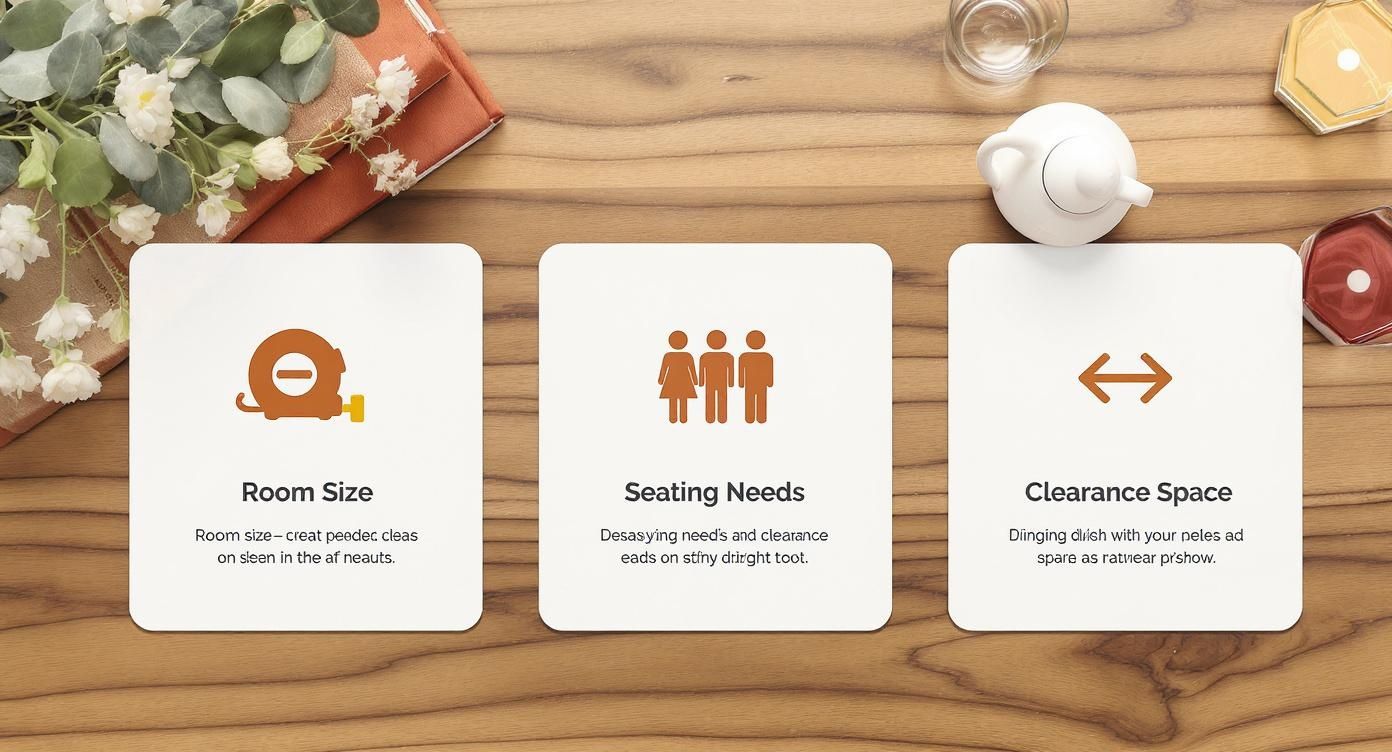
As you can see, these factors are all connected. You can't decide on one without thinking about the others. It's this interplay that empowers you to create a functional, beautiful dining area.
Key Factors for Your Success
Before we get into the nitty-gritty of shapes and measurements, let’s lock down the core concepts. These principles will guide you, whether you're working with a grand formal dining room or a cozy breakfast nook.
- Seating Capacity: Start by thinking about your everyday life versus your "special occasion" life. How many people eat at the table daily? And how many do you host for birthdays or holidays? This will help you decide if a fixed-size table works or if an extendable one is the perfect tool for your hosting needs.
- Room Flow and Clearance: This is the big one. The most critical measurement isn't the table, but the breathing room around it. You need enough space for people to get in and out of their seats easily and for someone to walk behind them without making everyone squeeze in.
- Table Height: While we're focusing on length and width, don't forget about height! It’s crucial for comfort. For a deep dive into that topic, here’s how you can master it with our ultimate guide to dining table heights.
The goal is to create a dining area that feels intentional, not accidental. By planning for clearance and seating from the start, you ensure every meal is enjoyed in a space that feels both welcoming and effortlessly functional.
A dining table is so much more than a piece of furniture—it’s where you build connections. With the right planning, you can choose a piece that perfectly fits both your room and your lifestyle.
Quick Guide to Table Size and Seating Capacity
To make things a bit easier, here’s a simple chart that gives you a starting point for matching table size to your seating needs. These are common dimensions that work well in most homes.
| Seats | Rectangular Table Size (Inches) | Round Table Diameter (Inches) |
|---|---|---|
| 4 | 36–48 L x 36 W | 36–48 |
| 6 | 60–72 L x 36 W | 48–60 |
| 8 | 84–96 L x 42 W | 60–72 |
| 10 | 108–120 L x 48 W | 72–84 |
| 12 | 120+ L x 48 W | 84+ |
Remember, these are just guidelines! The specific design of the table base and chairs can influence how many people fit comfortably. Always check the manufacturer's recommendations.
Measure Your Dining Space Like a Pro
Before you even start browsing for a dining table, the single most important action you can take is to get to know your room. This isn't just about grabbing a tape measure; it's about seeing your space with a designer's eye. Think of it as creating a blueprint for all the great meals and conversations to come.
Taking the time to measure properly turns abstract numbers into a concrete plan. It’s the difference between guessing and knowing, and it empowers you to bring home a table that feels like it was made for the space—welcoming, balanced, and perfectly functional.
Step 1: Get the Lay of the Land
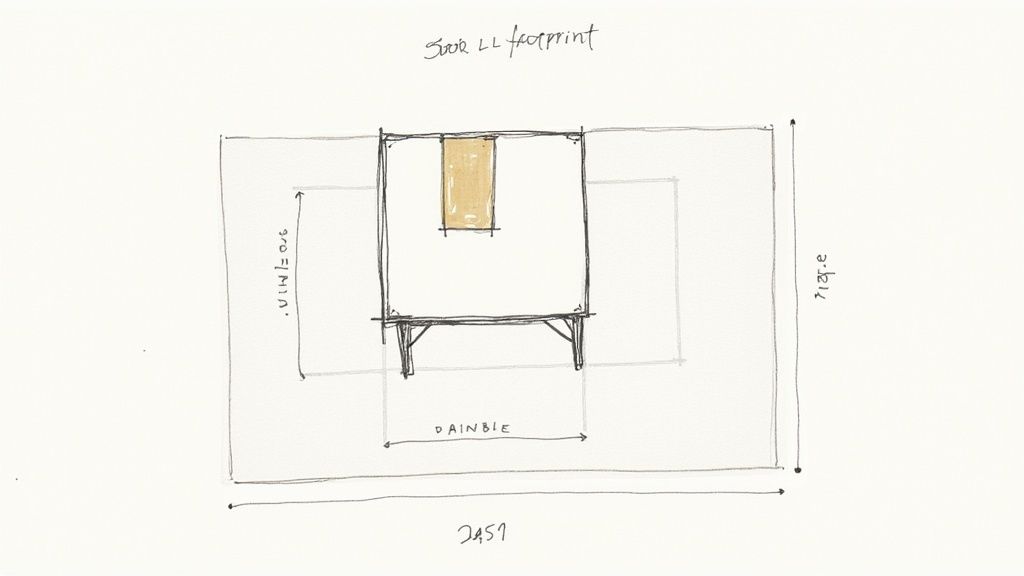
First things first: measure the entire room from wall to wall. Get both the length and the width and jot them down on a quick sketch. It doesn’t have to be a masterpiece—just a simple rectangle with the numbers clearly marked.
This gives you the total canvas you're working with. It's the starting point for every decision that follows.
Step 2: Map Out Your Obstacles
Now, let's get real about your room. It’s not just an empty box. You have doorways, windows, and maybe a sideboard or a bar cart that aren't going anywhere. Accounting for these is critical for creating a room that actually flows.
On your sketch, mark anything that could get in the way:
- Doorways and Entry Points: Don't forget to account for the door swing! Make sure it can open all the way without bumping into a chair.
- Existing Furniture: Note where your buffet or console table sits. And a pro tip—measure how far out its doors or drawers open. You’ll be glad you did.
- Architectural Features: Got a fireplace, built-in shelves, or awkward support columns? Mark them down, as they'll definitely eat into your usable floor space.
- Walkways: Think about how people move through the room. A main pathway needs a generous 48 inches of clearance so someone can easily walk behind a seated guest.
If you’re working with less square footage, here's how you can find small space dining room ideas to maximize every inch.
Step 3: Find Your True "Usable Footprint"
Okay, you’ve got your room dimensions and your obstacles mapped out. Now it's time to find the actual area where your table can live. This is your "usable footprint," and the golden rule here is the 36-inch clearance.
Simply subtract at least 36 inches (that's 3 feet) from each wall where you plan to have chairs. So, for a 12-foot by 15-foot room, your usable footprint for the table and chairs shrinks to roughly 6 feet by 9 feet.
Pro Tip: This is my favorite trick. Use painter's tape to outline a potential table's dimensions right on your floor. This makes the numbers tangible. You can physically walk around the "table" and get a real feel for the clearance and flow before you commit to anything.
This simple, hands-on test is the best way to avoid that all-too-common mistake of buying a table that looks perfect in a massive showroom but completely overwhelms your room at home.
With a solid plan in hand, you can now shop with total confidence. You'll know exactly what size to look for, which can open up great options like the Parker Extendable Dining Table—a smart piece that can adapt from cozy weeknight dinners to larger holiday feasts.
Ready to take the next step? Bring your measurements and your sketch into one of our showrooms in Lubbock, Hobbs, or Ruidoso Downs. Our design experts would love to help you find the perfect table to bring your vision to life.
Choose the Right Table Shape for Your Lifestyle
The shape of your dining table does a lot more than just fill a space. It sets the tone for every meal, directs the flow of traffic in the room, and ultimately defines how you host. Think of it as choreographing your future dinner parties—the shape you pick influences the entire experience.
Each shape brings its own personality and practical advantages to the table. A long, stately rectangular table feels perfect for big, lively gatherings, while an intimate round table encourages everyone to lean in and share stories. Your room's dimensions and your family's lifestyle are the two key ingredients in finding that perfect match.
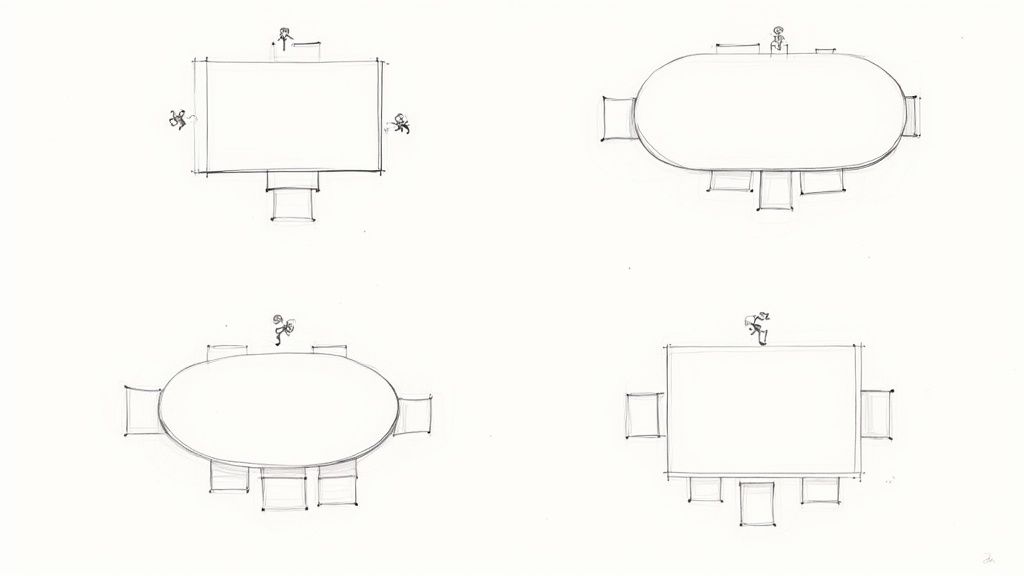
The Classic Rectangular Table
There’s a reason rectangular tables are the undefeated champions of the dining world. They’re incredibly versatile and a natural fit for long, narrow rooms, letting you seat the most people without cramping the walkways on either side. If you have a big family or you're the go-to host for holidays, a rectangular table is almost always the most efficient choice for your space.
Its linear shape creates a clear sense of order and formality, but it’s just as comfortable in a casual, open-concept space. Plus, those straight sides mean you can easily push it against a wall when you need to free up floor space—a real lifesaver in multi-purpose rooms.
The Intimate Round Table
When it comes to creating a cozy, conversational vibe, nothing beats a round table. There’s no head of the table, so everyone feels equally included, making it perfect for sparking connection over dinner. This shape is a brilliant fix for smaller, square-shaped rooms where a rectangular table would just feel clunky.
The lack of sharp corners is another huge win, especially in tighter spaces or breakfast nooks, because it makes it so much easier to move around. If your goal is a welcoming hub for family chats and close-knit dinners, here’s how you can explore our curated collection of round kitchen and dining tables to find a style that invites everyone to pull up a chair.
The Flexible Oval Table
An oval table is a fantastic compromise, blending the best features of both rectangular and round designs. You get the generous length for seating a crowd, much like a rectangle, but the curved edges soften its presence and make navigating around it a whole lot smoother.
This "best of both worlds" approach is a game-changer in rooms that are also thoroughfares—those rounded corners mean no more bruised hips. While rectangles still dominate the market, oval tables are surging in popularity for their social, space-saving benefits. Their ability to improve flow in tight urban homes while still encouraging conversation is a huge part of their appeal.
An oval table visually takes up less room than a rectangle of the same length, creating the illusion of more space. It’s a classic designer’s trick for getting maximum seating with a lighter, more airy feel.
The Cozy Square Table
Square tables foster a wonderful sense of balance and intimacy, making them ideal for smaller groups of four. Just like a round table, the square shape puts everyone at an equal distance from one another, which makes conversation flow naturally. They slot beautifully into square rooms, creating a clean, symmetrical look.
A square table can be a striking modern centerpiece. Just be aware that larger square tables can sometimes make it hard for people to talk to the person directly across from them, which is why they work best for seating up to eight people at most. Beyond just shape, here's how you can find general advice on home furnishings to pull the whole room together.
Ultimately, the right shape is the one that lets you create the dining experience you’ve always imagined. Think about how you really live. Are you hosting grand holiday feasts or cherishing quiet weeknight meals? Answering that will point you straight to the perfect table. And if you’re still stuck, our design experts are always here to help you map out your room and find a table that fits your home and your life.
How to Make Sure Everyone Has a Seat at the Table
A stunning dining table might be the star of the room, but the real measure of success is how comfortable your guests are. This is your chance to craft an experience. Let's get into the nitty-gritty of spacing to make sure everyone feels welcome and has plenty of room to relax.
At the heart of it all is a simple guideline designers live by: the "elbow room rule." It's your secret to turning a potentially cramped setup into a comfortable gathering. Once you understand this, you'll know exactly how many people can truly fit at any table, no more guessing games.
The Elbow Room Rule: Your Go-To Guideline
So, what is this magic number? The industry standard suggests giving each person 24 to 30 inches of space along the edge of the table. Think of it as a personal bubble that gives everyone enough room to eat without bumping elbows and to turn and chat without feeling squeezed.
It's pretty straightforward to apply. Take a 72-inch rectangular table, for instance. If you aim for 24 inches per person, you can comfortably fit three people down each side (72 ÷ 24 = 3). Feeling generous? Go for a more luxurious 30 inches per person, which would mean two people on each side with plenty of extra space.
This simple measurement is the key to a better dining experience. It lets you see past a manufacturer's "seats 6-8" tag and figure out how a table will actually work for your family and friends.
Nailing this rule sets the stage for a great meal where every seat feels like the best one in the house.
Don't Forget: Chair Width Can Change Everything
While the elbow room rule is a solid starting point, the chairs you pick have a huge say in the final headcount. A sleek, armless chair might only take up 18 inches of space, but a plush, upholstered armchair could easily command 24 inches or more.
Bigger chairs eat up more real estate. If you’ve fallen for a set of substantial, cozy chairs, you’ll have to account for their wider footprint. This might mean seating one or two fewer guests to make sure everyone can actually pull their chair in and out without a struggle.
It’s a perfect reminder that everything in a dining room works together. Here's how you can strike that perfect balance with our complete guide on how to choose dining room chairs.
The Unsung Hero: The Table Base
Before you make a final decision, take a peek underneath the table. The base design is one of those details that's easy to miss but can make or break your seating arrangement.
- Pedestal Bases: A single, central pedestal is a seating-maximizer's dream. With no legs at the corners to get in the way, you have total freedom to place chairs anywhere, giving everyone ample legroom. They're a fantastic choice for round and oval tables.
- Trestle Bases: Trestles work much like pedestals, but with two supports near the ends instead of one in the middle. They offer incredible legroom along the long sides of a table.
- Four Legs: The classic four-legged table is sturdy and timeless, but those legs create fixed seating zones. You can't comfortably stick a chair right on a corner, which definitely limits your flexibility.
By thinking through the elbow room, the width of your chairs, and the style of the table base, you're in complete control. You'll be able to move beyond the guesswork and confidently choose a table that truly promises connection and comfort for every guest, every time.
The Secret Weapon for Hosts: The Extendable Dining Table
If you love to entertain, you know the feeling. One minute, it’s a quiet dinner for two; the next, you’re planning a holiday feast for the whole family. An extendable dining table is the ultimate design chameleon, ready for whatever life throws at it. It’s the perfect tool that keeps your dining room feeling spacious day-to-day while always being ready for a crowd.
This is the kind of table that lets you be the hero of the party. Forget scrambling for extra chairs or squeezing people in. With an extendable table, you can confidently invite those extra guests, knowing your space can expand in just a few moments. It transforms your dining room from a fixed spot into the true, dynamic heart of your home.
Finding Your Perfect Fit
Extendable tables aren't one-size-fits-all; they use different mechanisms to create that extra space. The right one for you really comes down to your lifestyle and how often you'll be hosting.
- Drop-in Leaves: This is the classic, time-tested method. You simply pull the two halves of the table apart and manually place one or two panels (the "leaves") in the center. It's an incredibly sturdy and reliable option, especially great for those big, once-or-twice-a-year gatherings.
- Butterfly Leaves: If you want something a bit more seamless, a butterfly leaf is a brilliant solution. The leaf is actually stored right inside the table. You just slide the top open, and the leaf unfolds from the middle like a butterfly's wings. It’s a fantastic choice for quick, easy changes.
- Drop-Leaf or Gateleg: These are the superstars of small-space living. Hinged sections on the sides of the table lift up and are propped in place by a swinging "gateleg." This design offers incredible flexibility, allowing a table to go from a slim console against the wall to a full dining surface.
How to Measure for an Extendable Table
Measuring for an extendable table requires thinking in two modes: everyday life and party time. You need to plan for the table's footprint both when it’s closed and when it's fully opened up for guests. Nailing both measurements is the key to a room that always feels right.
Start by measuring your room to find the ideal size for the table in its closed state, making sure you leave at least that golden 36 inches of clearance around it. Then, do it again, but this time using the table's fully extended dimensions. Will people still be able to pull out their chairs without hitting a wall? Can you walk around the table easily? Picturing both scenarios is crucial.
Planning for both the smallest and largest footprint is what makes an extendable table a brilliant solution instead of a clumsy obstacle. This foresight is what separates a truly functional dining space from a frustrating one.
It's no surprise that this kind of adaptable furniture is becoming more popular. We're seeing extendable dining tables that can go from a comfortable 75 inches to over 110 inches, reflecting a global demand for versatility. While this trend is big in dense urban areas where every square foot counts, it’s also a hallmark of North American homes where making spaces multifunctional is a top priority. You can dive deeper into these dining table market trends to see how our needs are shaping furniture design.
A piece like the Parker Extendable Dining Table is a perfect example of how smart engineering can empower you to host any event with style. If you’re ready to find a table that grows right along with your guest list, come visit one of our showrooms. Our design experts would love to help you find the perfect extendable piece to make every gathering a memorable one.
Putting It All Together: Layout and Lighting
You've done the hard work. You’ve measured your space, picked the perfect table shape, and accounted for all your future guests. Now comes the fun part: layering in the final elements that turn a simple dining area into a truly welcoming room.
Think of your table as the star of the show. The rug and the lighting are its essential supporting cast, making sure it gets the spotlight it deserves. This is where you move beyond the pure numbers and into the art of creating atmosphere, pulling the whole look together with confidence.
Anchor the Room with the Right Rug
A great rug does more than just add color; it anchors your entire dining set, defining the space and adding a welcome layer of softness. But get the size wrong, and you're in for a world of frustration, with chair legs constantly catching on the edge every time someone sits down or gets up. It's a classic design mistake, but you can easily avoid it.
Here’s the golden rule: The rug needs to be big enough for all four chair legs to stay on it, even when the chairs are pulled out.
Getting this right is surprisingly simple:
- Start with your table's dimensions.
- Add at least 24 inches—but ideally 30 inches—to every side.
- Let's do the math: If your table is 42 by 72 inches, you'll want a rug that's at a minimum 90 by 120 inches (that's a standard 8' x 10' rug). This buffer gives everyone plenty of room to move their chairs in and out without a snag.
This one calculation ensures your setup is as functional as it is beautiful, creating a stable, polished foundation for countless meals to come.
Set the Mood with Perfect Lighting
The right light fixture is the jewelry of a dining room. It’s the focal point that draws the eye, sets the mood, and completes the picture. But the most beautiful fixture in the world won't look right if it's in the wrong spot.
Always hang your chandelier or pendant light directly over the center of your table—not the center of the room. This focuses the light right where you need it, creating an intimate glow for meals and conversation. As a rule of thumb, the bottom of the fixture should hang between 30 and 36 inches above the tabletop. This is the sweet spot that provides great light without blocking anyone's view across the table.
Centering the light on the table forges a powerful visual connection. It’s a designer’s trick that makes the entire dining arrangement feel more intentional, balanced, and complete. It's a small detail that makes a huge impact.
The desire to create these inviting, functional homes is a big reason the dining table market continues to grow. In North America especially, there's a strong culture of home-making and a need for flexible furniture that works for family dinners, holiday gatherings, and even the occasional work-from-home day. You can learn more about the future of the global dining table market and its projected growth.
You’re now equipped with everything you need to map out a dining space that fits your home and your life perfectly. You’ve planned, you’ve measured, and you’ve visualized what’s possible. All that's left is the most exciting step: making it a reality.
We invite you to stop by one of our showrooms in Lubbock, Hobbs, or Ruidoso Downs to experience the quality of our dining collections for yourself. Better yet, schedule a consultation with our design experts. They can help you pull all these final details together and create a dining room you'll absolutely love for years to come.
Your Dining Table Questions, Answered
Even after doing all the measuring, a few questions often pop up right before you make a final decision. Think of this as the last step—clearing up those lingering doubts so you can choose a table you'll be happy with for a long time.
We get these questions all the time, so let's walk through them.
What’s the Absolute Minimum Space I Need Around My Table?
For basic comfort, aim for at least 36 inches of clearance between your table's edge and the nearest wall or piece of furniture. This gives everyone enough room to slide their chair back and stand up without bumping into things.
If your dining area is also a major walkway, you’ll want to bump that up to 48 inches. That extra foot of space is a game-changer, allowing people to walk behind a seated person without anyone having to squeeze by.
How Do I Figure Out the Right Rug Size?
The golden rule for a dining room rug is simple: all chair legs should stay on the rug, even when the chairs are pulled out.
Here’s the trick: measure your tabletop, then add 24 to 30 inches to each side. This ensures no one’s chair leg gets snagged on the edge of the rug when they scoot back. It's a small detail that makes a huge difference.
A well-sized rug doesn't just look good; it anchors the entire dining set, making the space feel complete and preventing wobbly, half-on, half-off chairs.
Can I Really Put a Rectangular Table in a Square Room?
Yes, you absolutely can! In a larger square room, a long rectangular table can look dramatic and is fantastic for seating a crowd. It can make the space feel more formal and grand.
The only time to be cautious is in a smaller square room. In that case, a square or round table usually feels more balanced and keeps walkways open. No matter the shape, always go back to your clearance measurements—they should be your final guide.
You now have everything you need to find the perfect dining table for your home. At Miller Waldrop Furniture & Decor, our goal is to empower you to create spaces you truly love living in. Take a look at our collection, including versatile options like the Parker Extendable Dining Table, and start bringing your vision to life.