


How to Choose Dining Room Chairs A Definitive Guide


Choosing the right dining room chairs is about more than just filling a space. It’s about creating the perfect setting where your life happens—a spot that feels comfortable, works for your family, and truly reflects your style. You have the vision, and it all begins with two simple things: understanding your space and defining what you need. By taking a few key measurements first, you empower yourself to make a choice that guarantees a perfect fit, allowing people to move freely and sit comfortably.
Your Blueprint for the Perfect Dining Chair
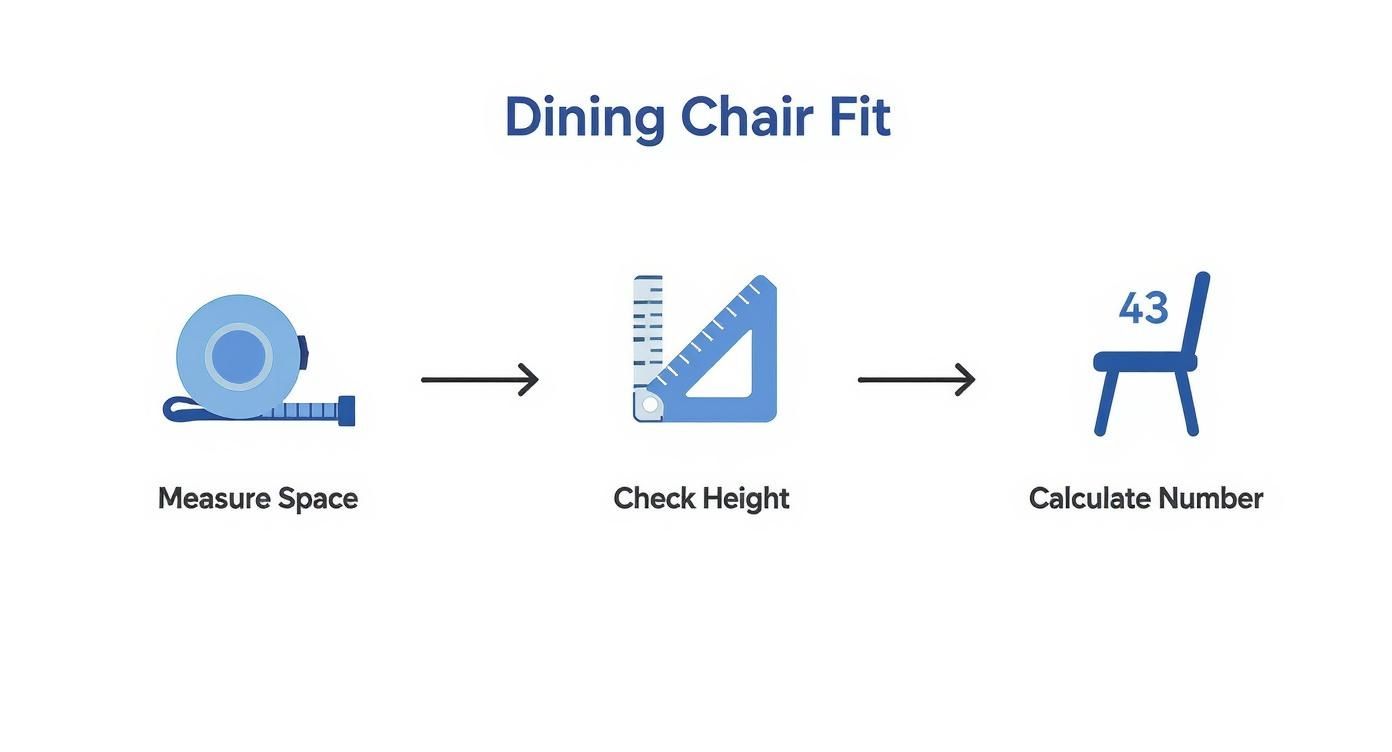
Before you even start scrolling through beautiful chair styles, the smartest first step is to create a simple blueprint of your dining area. Don't worry, you don't need to be an architect. It's really just about getting a handle on the practical dimensions that will guide your choices.
Getting this right from the start saves you from the headache of falling for chairs that are too big for the room, too small for the table, or just plain awkward. Think of it as your secret weapon. It shifts you from being a hopeful shopper to an informed buyer, armed with the exact numbers you need to choose with confidence.
Start with Your Dining Table
Your dining table is the heart of the room, so your chairs need to work with it in both scale and style. Honestly, the relationship between your table and chairs is the most important piece of the comfort puzzle you're solving.
- Measure Table Height: Most dining tables are between 28 and 30 inches high, measured from the floor to the top of the table. This number is your starting point for figuring out the right seat height.
- Figure Out Seating Capacity: You need to know how many people you can realistically seat. A good rule of thumb is to allow 24 to 26 inches of elbow room per person. So, for a 72-inch rectangular table, you could easily fit three chairs along each side.
- Don't Forget the Legs: This is a classic mistake! Always measure the distance between the table legs, not just the overall length of the tabletop. That's the actual space you have for tucking chairs in. Pedestal tables are a great solution because they give you more flexibility without corner legs getting in the way.
The Golden Rules of Chair Spacing
Once you have your table’s measurements down, it’s time to think about how the chairs will actually function around it. Proper spacing is what makes a dining area feel welcoming instead of cramped. It’s how you can transform a simple meal into a genuinely great dining experience.
A key principle here is leaving enough room between the chair seat and the table itself. Most dining chairs have a seat height between 18 and 20 inches, which is the sweet spot for standard tables. This provides just the right amount of legroom for most people. For a deeper dive into these kinds of design standards, you can find a wealth of information from sources like Britannica.
Key Takeaway: You're looking for a gap of about 10 to 12 inches between the top of the chair seat and the bottom of the tabletop (or the apron, if it has one). This gives you plenty of legroom without feeling like you're a kid at the grown-ups' table.
To make this even easier, here's a quick reference guide to keep on hand.
Essential Dining Chair Measurement Guide
This table breaks down the most important measurements and spacing rules to ensure your chairs fit perfectly with your table and within your room.
| Measurement | Standard Guideline | Why It Matters |
|---|---|---|
| Seat Height | 18-20 inches | This pairs with standard 28-30 inch tables for comfortable legroom. |
| Seat-to-Table Clearance | 10-12 inches | Guarantees enough space for legs without feeling too low or too high. |
| Elbow Room per Chair | 24-26 inches | Prevents guests from bumping elbows and feeling crowded during meals. |
| Room Clearance | 36 inches (min.) | Allows people to easily pull out their chairs and walk behind them. |
Getting these numbers right is the foundation for a dining space that's not only beautiful but also truly functional for your everyday life and special occasions.
Planning for Room to Breathe
Finally, step back and look at the chair’s relationship with the whole room. Chairs need space—space to be pulled out from the table and space for people to walk behind them when someone is seated.
As a rule, try to leave at least 36 inches of clearance between the edge of your table and the nearest wall or piece of furniture. This is the magic number that lets guests get in and out of their seats without making everyone else shuffle around.
With these measurements in your back pocket, you're ready for the fun part: exploring styles! You now have the knowledge to pick chairs that not only look fantastic but will fit your home and your life just right. To see how these principles come together in a real design, you can explore beautiful and versatile options like the Canadel Core Dining Upholstered Chair.
What's Your Dining Room's Real Job? Style and Function
Your dining chairs aren't just for sitting—they’re a huge part of your home’s personality and have to keep up with your daily life. Before you get lost in the sea of styles, take a minute to think about what really happens in your dining space. Nailing this down is the secret to choosing chairs you’ll be happy with for years, not just for a season.
Are you hosting long, formal holiday dinners where everyone lingers for hours? Or is your dining table ground zero for messy toddler meals, homework sessions, and impromptu conference calls? The answer will point you toward very different chairs. The function of your space is the blueprint; your style choices are built right on top of it.
Matching Chairs to Your Home's Vibe
Once you’ve figured out the practical side of things, the fun begins. Here’s how you can find chairs that feel like they truly belong in your home, creating a look that’s seamless and thoughtful. You don't have to be a designer to pull this off—it’s just about knowing what you like.
Not sure where to start? Here are a few popular styles and what to look for:
- Modern Minimalist: Think clean lines, simple shapes, and a calm, neutral color palette. Chairs made from molded plastic, sleek metal, or light wood fit perfectly here.
- Rustic Farmhouse: This look is all about warmth and comfort. You'll see lots of distressed wood, woven textures, and classic designs like spindle-back or cross-back chairs.
- Traditional Elegance: If you love ornate details and rich materials, this is for you. Look for chairs with carved legs, high backs, and luxurious fabrics like velvet or brocade.
- Mid-Century Modern: A fan favorite for a reason. This style is known for its organic curves, tapered legs, and cool mix of wood and man-made materials. It’s effortlessly stylish and surprisingly practical.
If you want to dig deeper into different aesthetics, our guide on the 7 Dining Room Styles to Fit Every Home is a great place to get inspired and really pinpoint your personal taste.
Try Making a Mood Board
Sometimes all the ideas swirling in your head can feel a bit chaotic. A mood board is an incredibly helpful tool you can use to get clear on your vision. It lets you see how different colors, textures, and shapes play together before you pull the trigger.
You can go old-school with a corkboard and magazine clippings or create a digital one on a site like Pinterest. It’s easy to do:
- Start Pinning (or Clipping): Gather images of dining rooms, chairs, tables—anything that catches your eye. Don’t overthink it!
- Look for a Pattern: After a bit, step back and look for common threads. Are you always drawn to upholstered seats? Do you favor dark wood or light metal frames?
- Define Your Palette: Pull the main colors and materials from your favorite images. This will help you create a cohesive color story for your space.
This simple exercise takes the guesswork out of designing. It turns those abstract ideas into a concrete plan, giving you the confidence to make choices that truly reflect you.
For those who value both a distinct look and lasting quality, it can be really inspiring to explore options like elegant Italian seating, which often showcases an incredible fusion of style and function.
Thinking about your needs and visualizing your style is easily the most creative part of finding the right dining chairs. Once you have that direction, you're ready to find pieces that aren't just furniture, but a central part of your home's story.
Decoding Materials, Durability, And Comfort
The material you choose for your dining chairs is where the rubber really meets the road. It’s the critical intersection of function, comfort, and style, determining not just how a chair looks, but how it holds up to spilled wine, messy eaters, and the simple passage of time.
Getting a handle on the basics of different materials is the single best thing you can do to choose chairs you’ll love for years, not just for a season. After all, a bustling family kitchen has completely different demands than a formal dining room saved for holidays. Here’s a walkthrough of the most common options so you can pick the right one with confidence.
The World of Upholstery: Comfort Meets Style
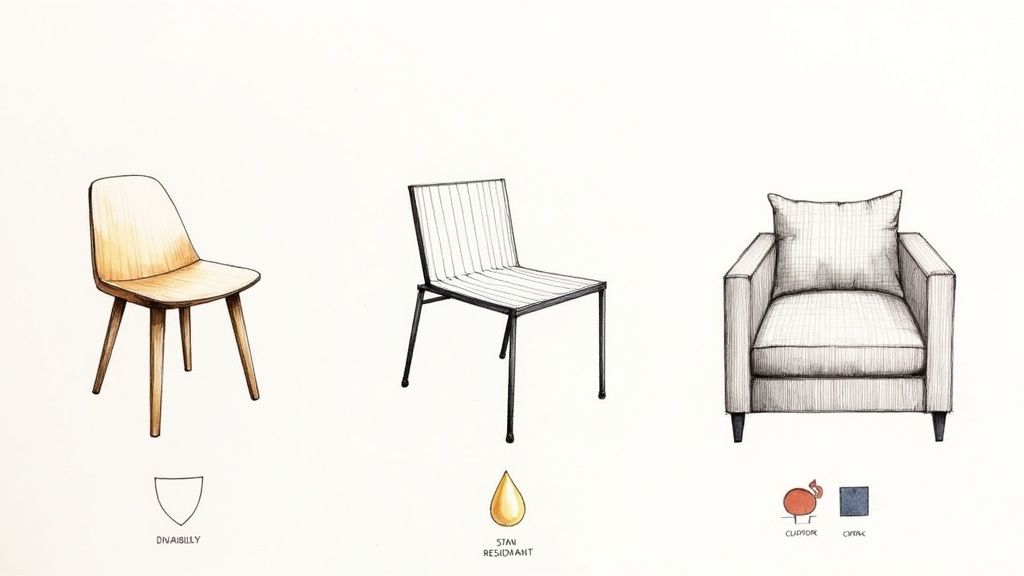
Let’s be honest: if you dream of long, lingering dinner parties filled with hours of conversation, upholstered chairs are your best friend. Nothing beats the soft, supportive feel of a cushioned seat and back.
But not all fabrics are created equal. Performance fabrics are a godsend for homes with kids or pets, while a delicate linen might be perfect for a quieter, adults-only space. The trick is to match the fabric to your real life.
- Performance Fabrics: These are the superheroes of the upholstery world. Engineered to resist stains, moisture, and fading, they’re perfect for busy families. Spills often bead right on the surface, giving you time to clean them up before they soak in.
- Linen and Cotton: For a more relaxed, airy vibe, you can't go wrong with natural fibers. They bring a beautiful, casual texture to a room, but they are more absorbent and prone to staining if not treated.
- Velvet and Leather: If you want to dial up the drama and sophistication, these are your go-to options. Velvet adds rich color and a plush feel, while leather is incredibly durable, easy to clean, and develops a gorgeous patina over time.
Feeling confident about your fabric is key. For a more detailed breakdown, you can explore our guide on everything you need to know about upholstery materials. It’s packed with insights to help you choose a material you'll love living with.
Solid Wood: The Timeless Classic
There's a reason solid wood chairs have been a staple for centuries—they’re built to last. They bring a natural warmth and unmatched strength to the table, fitting in everywhere from a rustic farmhouse to a sleek, modern dining room.
Hardwoods like oak, walnut, and maple are known for their incredible durability. A well-made wooden chair isn't just a purchase; it's an investment that can be passed down for generations. Softer woods like pine are beautiful but can be more prone to dents and scratches, so keep that in mind.
Metal: Modern and Industrial Edge
Metal chairs inject a totally different kind of energy into a dining space. They’re often lighter and more streamlined than their wooden counterparts, making them a perfect match for industrial, minimalist, or contemporary decor.
From powder-coated steel in a bold color to sophisticated brushed aluminum, metal offers clean lines and serious durability. It’s also a fantastic way to create visual contrast when paired with a classic wooden table.
Choosing the right material often comes down to weighing these different factors against your lifestyle. To make it a bit easier, here’s a quick-glance table comparing the most popular options.
Dining Chair Material Comparison
| Material Type | Durability | Maintenance Level | Best For… |
|---|---|---|---|
| Solid Wood | High to Very High | Low to Medium | Timeless appeal, long-term investment, family-friendly homes. |
| Metal | Very High | Low | Modern, industrial, and minimalist styles; high-traffic areas. |
| Performance Fabric | High | Low | Homes with kids, pets, and frequent entertaining. |
| Leather | Very High | Medium | Sophisticated and classic looks; develops a beautiful patina over time. |
| Velvet | Medium | High | Formal dining rooms, adding a touch of luxury and drama. |
| Linen/Cotton | Low to Medium | Medium | Casual, coastal, or farmhouse aesthetics; less-frequented spaces. |
Ultimately, the best material is the one that fits seamlessly into your daily life while reflecting the style you love. Whether it's the easy cleanup of a performance fabric or the enduring character of solid wood, you can find the right choice to complete your room.
How to Perfectly Match Chairs to Your Dining Table
Think of your dining room as a beautifully composed piece of music. The table and chairs are the lead instruments, and the way they harmonize sets the tone for the entire space. It’s the single most important relationship in the room, and getting it right is what makes a dining area feel truly special. The good news? You don't have to be a seasoned designer to pull it off.
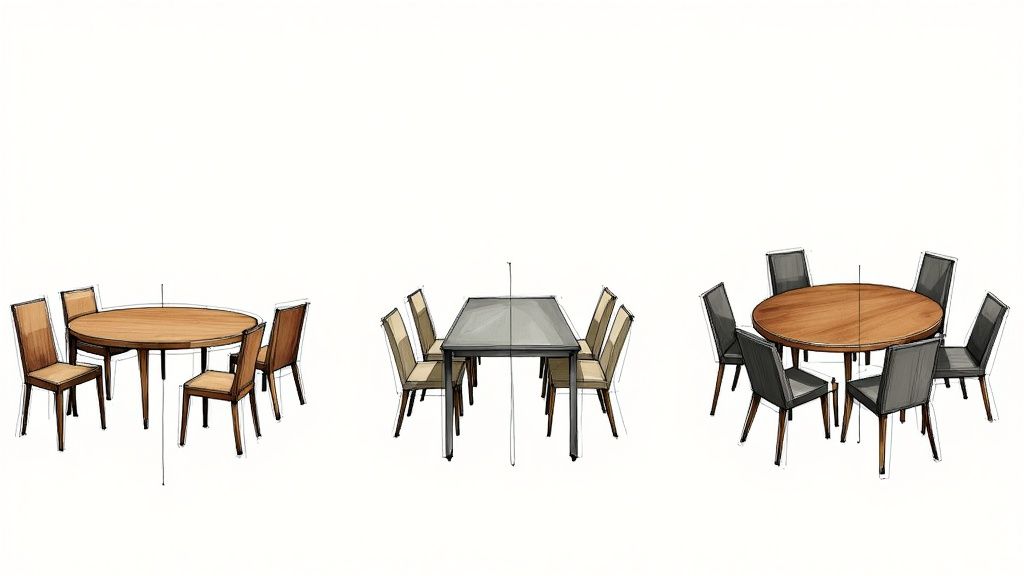
There are really three ways you can approach this. You can opt for a perfectly matched set for that classic, unified feel. You could create a more curated, complementary pairing. Or, you can go bold with an eclectic mix that’s all your own. It's all about making an intentional, balanced choice.
The Three Core Pairing Strategies
What story do you want your dining set to tell? Is it one of quiet elegance, thoughtful curation, or creative energy? Nailing down your strategy from the start makes every other decision that much easier.
-
The Unified Set: This is the most straightforward and foolproof method. Buying a table and chairs as a complete set guarantees a cohesive look right out of the gate. The finish, materials, and style are all designed to work together, creating a polished aesthetic that just feels right.
-
The Complementary Pair: Here’s where you can get a bit more creative. The goal is to choose chairs that share a key element with the table. Maybe it’s a similar wood tone, the same design era (like Mid-Century Modern), or a shared detail like curved legs. This approach results in a layered, designer look that feels harmonious without being too "matchy-matchy."
-
The Eclectic Mix: This one is for the confident decorator. Mixing and matching different styles opens up a world of possibilities for a truly personalized space. The secret to success? Find a common thread to tie it all together—like a consistent color palette or keeping all the chairs at the same height—to keep the look intentional, not chaotic.
Design Insight: An eclectic mix works best when it feels deliberate. For instance, you could gather different chair styles and paint them all the same color for an instant sense of unity. Or, try pairing a rustic, live-edge table with sleek, modern chairs for a powerful and interesting contrast.
Mastering Scale and Proportion
No matter which strategy you choose, getting the scale and proportion right is non-negotiable. This is what separates a room that feels professionally designed from one that feels slightly… off. The chairs should never overpower the table, but they shouldn't get lost, either.
It all comes down to visual weight. A heavy, solid wood table with thick legs needs chairs with a similar presence to feel balanced. On the other hand, a delicate glass-top table would look completely overwhelmed by bulky, fully upholstered armchairs. You're aiming for a visual conversation where both pieces have an equal voice.
And it doesn't stop there. This principle extends to the whole room. Making sure other elements, like your lighting, are properly sized is just as crucial for creating an inviting atmosphere. A great guide on the proper chandelier height above your dining table can be a huge help.
Real-World Pairing Inspiration
Let's look at how these ideas play out in a couple of common scenarios you might face at home.
-
Scenario 1: Softening an Industrial Look
Let’s say you have a fantastic industrial table made of reclaimed wood and dark metal. To soften its hard edges and make it more inviting, pair it with soft, fully upholstered chairs in a warm, neutral fabric. The contrast in texture adds instant comfort and sophistication. -
Scenario 2: Energizing a Traditional Space
Maybe you inherited a classic, dark wood pedestal table. Instead of pairing it with equally traditional chairs (which can feel a bit dated), inject some modern energy. Try sleek, molded plastic chairs or minimalist metal ones in an unexpected pop of color. This tension between old and new is what makes a space memorable.
People are increasingly looking for dining furniture that delivers both style and comfort. It’s a major trend, with the global dining chairs market valued at about USD 6.2 billion in 2023 and projected to climb to USD 9.3 billion by 2032. This growth is all about the desire for beautiful, livable spaces.
Ultimately, the perfect pairing starts with understanding your table's personality. Once you know its style and scale, you can confidently choose chairs that either complement it beautifully or contrast with it boldly. If you’re just starting your search, our guide on how to choose a dining room table can help you find the perfect centerpiece to build your vision around.
Bringing Your Vision to Life with Miller Waldrop
You've done the hard work—measuring the room, pinning down your style, and figuring out what materials will hold up to your family's daily life. Now for the fun part: turning that vision into something you can actually sit on. This is where your plans and your purchase finally meet, and you find those perfect chairs that will host family dinners for years to come.
This final step is all about trusting your senses. A chair might look incredible online, but how does it actually feel? Is it as solid as you hoped? Is the fabric something you want to touch every day? It’s time to move from theory to reality and make a choice you’ll feel great about.
The Importance of the In-Person Test Drive
Reading about dimensions and materials is a great start, but nothing beats sitting in the chair yourself. It's the only way to truly know if it's comfortable and well-built, two things a picture on a screen can never tell you. You wouldn't buy a car without a test drive, right? The same logic applies here—you need to know how it feels before you commit.
When you stop by one of our showrooms in Lubbock, Hobbs, or Ruidoso Downs, you’re not just browsing. You’re completing the most important piece of your research. This hands-on step is what will give you the confidence to choose based on real-world comfort, not just a pretty photo.
Here’s what to look for when you're in the showroom:
- Feel the Materials: Run your hand over the upholstery. Is the leather as soft as you imagined? Is the performance fabric smooth or scratchy? Touch the wood—does it feel sturdy and well-finished?
- Check for Stability: Give the chair a little shake. A quality chair will feel completely solid, with no wobbling or creaking. That’s your first clue to good craftsmanship.
- Experience the Ergonomics: Don't just perch on the edge—sit back and relax for a few minutes. Is the backrest supportive? Does the seat depth feel right for your legs? Try to imagine sitting through a long, relaxed meal without shifting around.
Your Vision, Custom-Made
So, what happens if you have a very specific vision you can't seem to find on the floor? Maybe you’ve fallen in love with a chair's shape but wish it came in a different fabric, or you need a wood finish that’s a perfect match for your antique table. Your search doesn’t have to end there.
Think of our custom-order options as your personal design toolkit. You don't have to settle for "good enough" when you can build the exact chair you've been dreaming of. We work with leading brands to provide a huge range of fabrics, finishes, and other custom touches.
This is more than just buying furniture; it's about creating it. Our design services are here to guide you through all the possibilities so the final product truly fits your home and your style.
Our design team knows our collections inside and out. They can help you sort through all the options to find that perfect combination. Whether you need a specific shade of blue to match your drapes or a super-durable finish for a busy kitchen, we're here to help make it happen.
The Perfect Starting Point
For example, a versatile piece like the Canadel Core Dining Upholstered Chair makes a fantastic canvas. It has a timeless design and is incredibly comfortable, but we can help you customize the fabric and finish to make it uniquely yours. Our team will walk you through every option to ensure it’s the perfect fit.
You’ve done your homework and your vision is clear. Now you’re ready for that final, confident step. We’d love for you to visit a Miller Waldrop showroom. Come on in, take a seat, and let our team help you bring your beautifully designed dining room to life.
Common Questions About Choosing Dining Chairs
Even after you've measured, planned, and picked a style, a few last-minute questions always seem to surface. It's completely normal. Getting these details sorted is the final step before you can feel truly confident in your choice.
Let's walk through some of the most common questions we get from customers in our showrooms. Think of it as a final check to make sure every box is ticked.
How Many Chairs Should I Buy?
This all comes down to your table. The golden rule is to give each person about 24 to 26 inches of space. This isn't just about fitting the chair; it's about giving everyone enough elbow room to eat comfortably.
Here’s a quick reference to get you started:
- A 48-inch long table is perfect for 4 people.
- A 60-72 inch long table comfortably seats 6.
- An 80-87 inch long table can accommodate 8.
One pro tip: always measure the space between the table legs. That’s your true available space, and it can be surprisingly different from the tabletop's total length. For round tables, a 42-48 inch diameter is great for four, while a 60-inch diameter works well for six to eight guests.
Should I Choose Armchairs or Side Chairs?
Ah, the classic debate! This one is a balancing act between luxurious comfort and practical space-saving. Your choice really hinges on your room's layout and how you envision your dinner parties.
-
Side Chairs (Armless): These are the workhorses of the dining room. Their sleek, armless design means you can fit more people around the table and they slide neatly underneath when not in use. They're the go-to for smaller spaces or for maximizing seating on the long sides of a table.
-
Armchairs: Nothing beats an armchair for a long, relaxed meal where the conversation flows for hours. They provide fantastic support and have a commanding presence. We often see them used as "captain's chairs" at either end of a rectangular table. Just remember to measure! You need at least 7 inches of clearance between the top of the arms and the bottom of your table apron so they can tuck in.
A fantastic solution we often recommend is to mix and match. Place armless side chairs along the sides and anchor the setting with two beautiful armchairs at the ends. It's a look that feels both balanced and sophisticated.
How Do I Know if a Chair is Truly Comfortable?
Comfort is personal, but there are a few objective things to look for. A seat depth between 20 and 24 inches is ideal—it lets you sit all the way back while still supporting your legs. For width, look for a seat that’s 18 to 22 inches wide to give you enough room to shift around.
Of course, the materials matter immensely. A padded seat and a supportive backrest are non-negotiable for anyone who loves to host. But honestly, the only way to really know is to take a seat. The "sit test" is the ultimate decider. It's the only way to feel if the back angle supports you properly and if the cushion density is just right for you.
You now have all the tools you need to choose the perfect dining chair. You know how to measure your space, define your style, and pick materials that will stand the test of time, empowering you to make the best choice for your home.
At Miller Waldrop, we believe your home should be a place you're proud of. Our design experts are here to be your partners, whether you're looking for the perfect set on our floor or want to create something custom. Come explore our collection, including stunning pieces like the versatile Canadel Core Dining Upholstered Chair, and let us help you build the dining room you've always wanted.