


Best Rated Hot Tubs: A Complete Buying Guide for 2026


Jacuzzi leads the 2026 trust ranking for hot tubs with a 106.7 score, and Hot Spring Spas follows closely at 105.9. Those two numbers matter because buyers rarely start with jet counts, they start with confidence that the brand will hold up over years of use.
A homeowner in West Texas can feel that pressure fast. One model looks great online, another promises stronger massage, a third says it's easier to install, and the prices swing from modest to luxury territory. The hard part isn't finding a hot tub, it's finding the one that stays comfortable, affordable, and practical after the novelty wears off.
| Feature | Budget Models | Premium Models | Why It Matters |
|---|---|---|---|
| Jet system | Fewer jets, simpler plumbing | More targeted jets with stronger layout design | Jet placement affects comfort more than raw count |
| Power setup | Often 120V or plug-and-play | Often 240V hardwired with dual pumps | Stronger performance needs more electrical capacity |
| Insulation | Basic cabinet or partial insulation | Full-foam insulation and better covers | Heat retention shapes operating cost |
| Installation | Easier delivery and faster setup | More site prep and electrical work | Setup can change the true total cost |
| Ownership effort | Lower entry cost, often simpler care | Better materials, but more complex systems | Maintenance and longevity matter over time |
Why Choosing a Hot Tub Feels Overwhelming
A couple in Lubbock walks into a showroom after a long week, and every spa looks close enough to work. One has more jets, one has brighter lighting, one has a bigger shell, and another promises easier installation. The problem is that the visible differences often have less impact on daily satisfaction than the hidden ones, like insulation quality, electrical needs, and whether the spa fits the climate.
That's why the first mistake is shopping by features alone. A buyer can fall in love with a long spec sheet and still end up with a tub that costs more to run, needs more setup than the yard can handle, or doesn't match the way the family soaks.
Practical rule: choose the spa that fits the home first, then compare comfort features.
For a lot of West Texas and Southeastern New Mexico households, the question is whether the hot tub will work on the property without turning into a construction project. A pad that isn't ready, access that's too tight for delivery, or a foundation that needs extra planning can change the whole purchase. For readers sorting through those basics, PA and NJ hot tub base options from Firm Foundations is a useful reference point for thinking through support and placement before ordering.
The best approach is simple. Start with the space, the electrical setup, the climate, and the family's actual soaking habits, then narrow the field from there. That method cuts through showroom noise and makes the phrase best rated hot tubs mean something real instead of just sounding impressive.
Understanding How Hot Tub Ratings Work
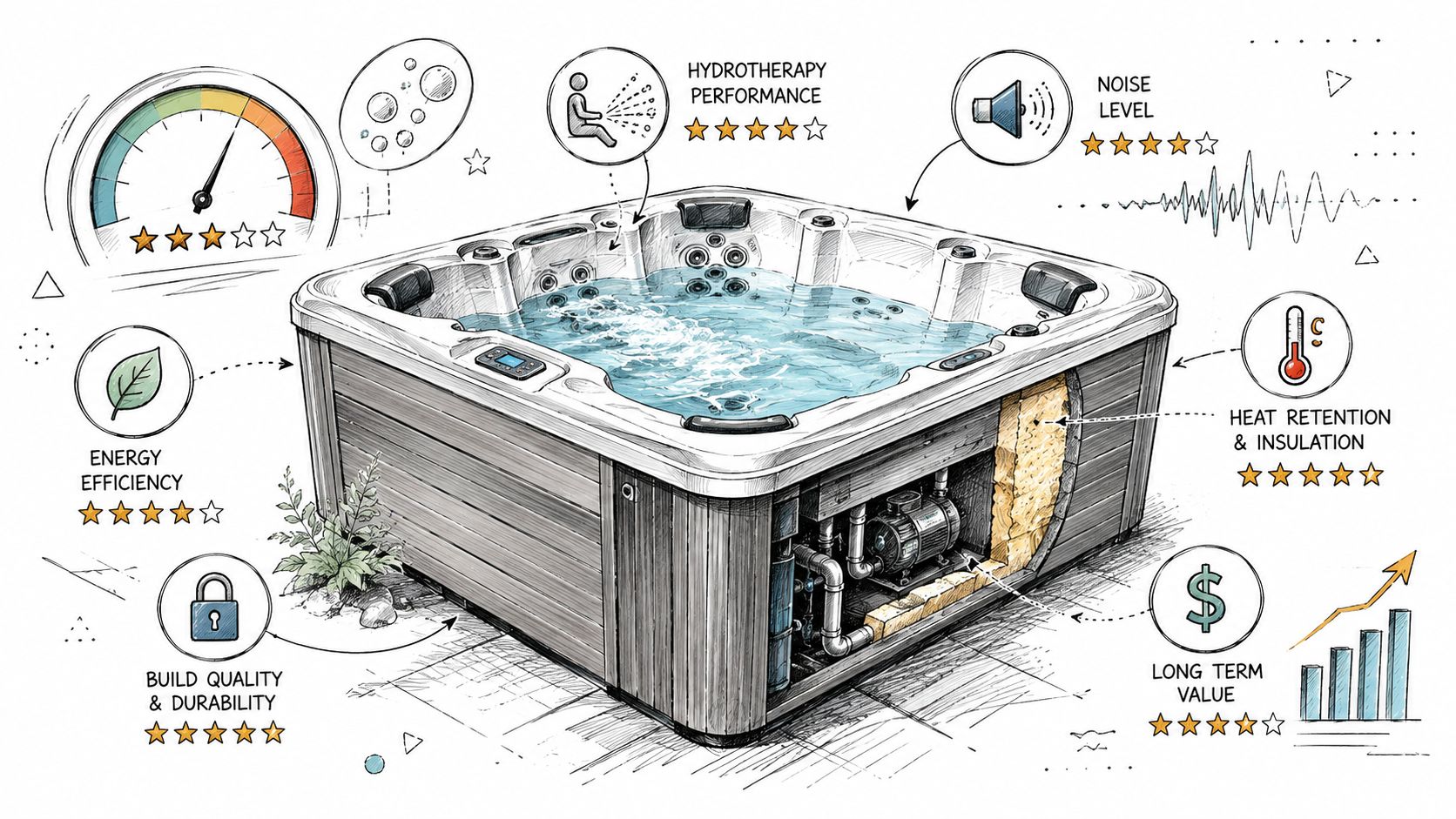
A rating only matters if the buyer knows what it measures. In the 2026 America's Most Trusted Hot Tub Study, Jacuzzi ranked #1 with a trust score of 106.7, followed by Hot Spring Spas at 105.9, Sundance Spas at 102.4, Bullfrog Spas at 102.1, and Caldera Spas at 102.0. The top five were separated by only 4.7 points, which points to a tight premium segment instead of a runaway leader. Jacuzzi received a five-star trust rating, Hot Spring Spas got four stars, and the next three brands each received two stars (Lifestory Research's 2026 America's Most Trusted Hot Tub Study).
Trust scores are only the starting line
That trust ranking matters because brand trust is often where shoppers begin when they're trying to define the best rated hot tubs. It is not a sales number, and it does not measure how warm the water stays on a cold night or how the jets feel across the lower back. It does show which names consumers associate with credibility and perceived quality.
Market scale matters too. There are about 7.3 million hot tubs in the U.S., the global hot tub market was valued at $5.48 billion in 2023, and it is projected to reach $6.68 billion by 2029. That kind of mature, fragmented market helps explain why ratings carry so much weight, especially with roughly 4,500 hot tub retailers in the U.S. and buyers facing a long ownership cycle (ConsumerAffairs hot tub statistics).
Ratings only help when they separate reputation from actual ownership fit.
What strong ratings usually include
A credible hot tub rating usually blends several things together. Brand reputation matters, but so do technical performance, energy efficiency, durability, and the practical side of ownership, like how much maintenance a family can realistically handle. For buyers, that means a rating should be read as a signal, not a verdict.
The smartest readers compare what a rating leaves out. A hot tub can be trusted by buyers and still be a poor fit if the electrical requirements do not match the home, the shell is hard to service, or the insulation is not suited to hot days and cool nights. In West Texas and Southeastern New Mexico, those trade-offs show up fast on the utility bill and during installation planning. A rating opens the door, but it does not finish the decision.
Key Features That Separate the Best Rated Hot Tubs
A buyer can get distracted by jet count fast, especially when one spec sheet looks busier than another. The better question is how the jet design works with the pump architecture, because strong models usually combine a thoughtful jet layout with enough pump power to keep pressure consistent where the body needs it. In practice, that often matters more than chasing a crowded array of jets. A tub with fewer well-placed jets can feel better than a flashy model with a packed but unfocused layout.
Performance that users can actually feel
The strongest hydrotherapy setups are built around placement, not just numbers. Seats should direct pressure to the shoulders, back, or legs without forcing the user to fight the controls, and the layout should make it easy to move from gentle soaking to a more targeted massage. That is why the better models usually pair multiple pumps with zone design instead of relying on jet count as the main selling point.
The ownership cost matters just as much. Buying guides point to full-foam insulation, insulated bases, and well-fitted covers as the features that help hold heat and reduce operating cost, while some premium portable spas advertise 40% to 60% energy-efficiency improvements through design features such as ThermaCore walls and EnergySense lids. In West Texas, that difference shows up quickly because hot days, cool nights, and wind can make a weak cabinet work harder than buyers expect.
Feature comparison that matters in the real world
A useful way to judge a tub is to ask what each feature does during ownership.
- Shell and cabinet construction: Better materials hold up longer, which matters over years of regular use.
- Control system: Simple controls are easier for families, while smarter systems can make temperature and filtration management more convenient.
- Pump setup: More capable systems usually support deeper massage and better customization.
- Insulation package: This often affects monthly operating cost more than a higher jet count does.
- Warranty coverage: Strong coverage can signal manufacturer confidence, but only if the terms are clear.
Electrical planning matters too, especially for homes where the spa will be hardwired. A model that looks affordable on the showroom floor can cost more once you factor in the right circuit, access, and installation details, and that is where local code requirements start shaping the actual budget. The same goes for backyard placement. A spa that fits the lifestyle but fights the property layout usually becomes more trouble than it is worth.
Owners also keep a hot tub for an average of 7.5 years. Over that span, a well-insulated spa that is easy to service often proves more satisfying than a louder spec sheet. Buyers who think beyond the brochure usually end up happier with the tub they can live with, not just the one they can brag about. For a backyard setup that includes seating, a piece like the Columbus Outdoor Barstool can help the space work as a real gathering area. For smaller yards, water features suited to Arizona climate can also show how a spa fits into the rest of the outdoor plan without crowding it.
Matching Hot Tub Types to Your Lifestyle
A couple trying to fit a spa onto a compact patio has different needs than a large household planning a backyard retreat. The right choice depends on how permanent the installation should be, how much electrical work the property can support, and whether the priority is family time, hydrotherapy, or low-maintenance soaking. Hot tub type matters more than brand language once those questions are on the table.
Portable and plug-and-play models work well for buyers who want a simpler path into ownership. They are easier to place, easier to move, and often fit homes where the property layout or electrical setup does not support a harder installation. A family building a larger gathering area may prefer a more permanent setup, especially if the tub will sit near outdoor seating like the Columbus Outdoor Barstool, which helps the backyard function as a real social space.
For smaller yards and design-conscious spaces, water features suited to Arizona climate from R.E. and Sons Landscaping also show how a spa can fit into a broader outdoor plan without crowding the yard. In West Texas and Southeastern New Mexico, that planning matters because the best setup is the one that respects the space you have and the electrical work you are willing to support.
Choose the type that matches the household
A few patterns come up again and again.
- First-time buyers: Simpler systems reduce stress and help the family learn what they value.
- Therapy-focused users: Targeted jet placement and ergonomics matter more than visual flash.
- Families with frequent guests: Seating layout and durability should outrank novelty features.
- Renters or seasonal users: Lower-commitment models often make more sense than a highly permanent installation.
The right match usually becomes clear once the household is honest about how the spa will be used. If the goal is easy setup and lower complexity, a portable path is usually the better fit. If the long-term plan is a permanent outdoor room, the buyer should think about structure, access, service needs, and electrical code requirements from the beginning.
That also affects the hidden cost of ownership. A spa that looks flexible in the showroom can become difficult to live with if it asks for more electrical work, more upkeep, or more service access than the property can comfortably provide. The most successful backyard setups are the ones that fit daily life, not just the first weekend after delivery.
Reading the Fine Print Beyond Jet Counts
A tub with 180 jets sounds powerful, but that number does not tell the full story. If the system needs more electrical work, runs hotter on the utility bill, or makes maintenance harder, the buyer can end up with a spa that looks better on paper than it feels in practice. The smartest shoppers read the fine print before they compare the headline features.
The hidden costs show up in ordinary ownership, not just at delivery. Energy use, water treatment, filter replacement, and seasonal upkeep all shape what the tub really costs to live with over the average ownership span noted earlier. A lower-jet model with better insulation can be the more practical buy if the home sits in a hot climate or faces unpredictable utility rates.
Bottom line: the cheapest spa at checkout can become the most expensive one to own.
A local install can change the math in ways showroom tags never show. If the property also needs layout work for the patio or deck, Guelph Deck Builders hot tub deck tips show why access, support, and circulation around the spa should be planned before delivery day. That same planning helps avoid the trap of buying for features that are hard to live with once the tub is in place.
The questions that cut through marketing
Buyers should ask a few direct questions before getting distracted by extras.
- What does the electrical setup require? A spa that sounds ideal may need more work than the property can reasonably support.
- How easy is water care? A complicated system can add time and frustration every week.
- What happens when parts wear out? Service access matters more than decorative features.
- How much heat will the cabinet hold? Poor retention shows up as higher operating cost.
- Is the comfort layout usable? A seat count means little if the body never lands where it should.
Best rated hot tubs should be judged like appliances, not just patio accessories. A good spa has to fit the household's budget, maintenance habits, and climate conditions for years, not weeks. In West Texas and Southeastern New Mexico, that also means checking electrical code, service access, and how often the shell and cover will be exposed to sun, dust, and wind. A showroom favorite can still be the wrong buy if the hidden ownership costs keep climbing after installation.
For buyers who want to keep the outdoor space usable after dark, pairing the spa with a practical gathering spot can help the whole yard work better. A compact fire feature, such as this black outdoor fire pit table, can make the setup more comfortable without turning the area into a maintenance project.
Local Considerations for West Texas and Southeastern New Mexico
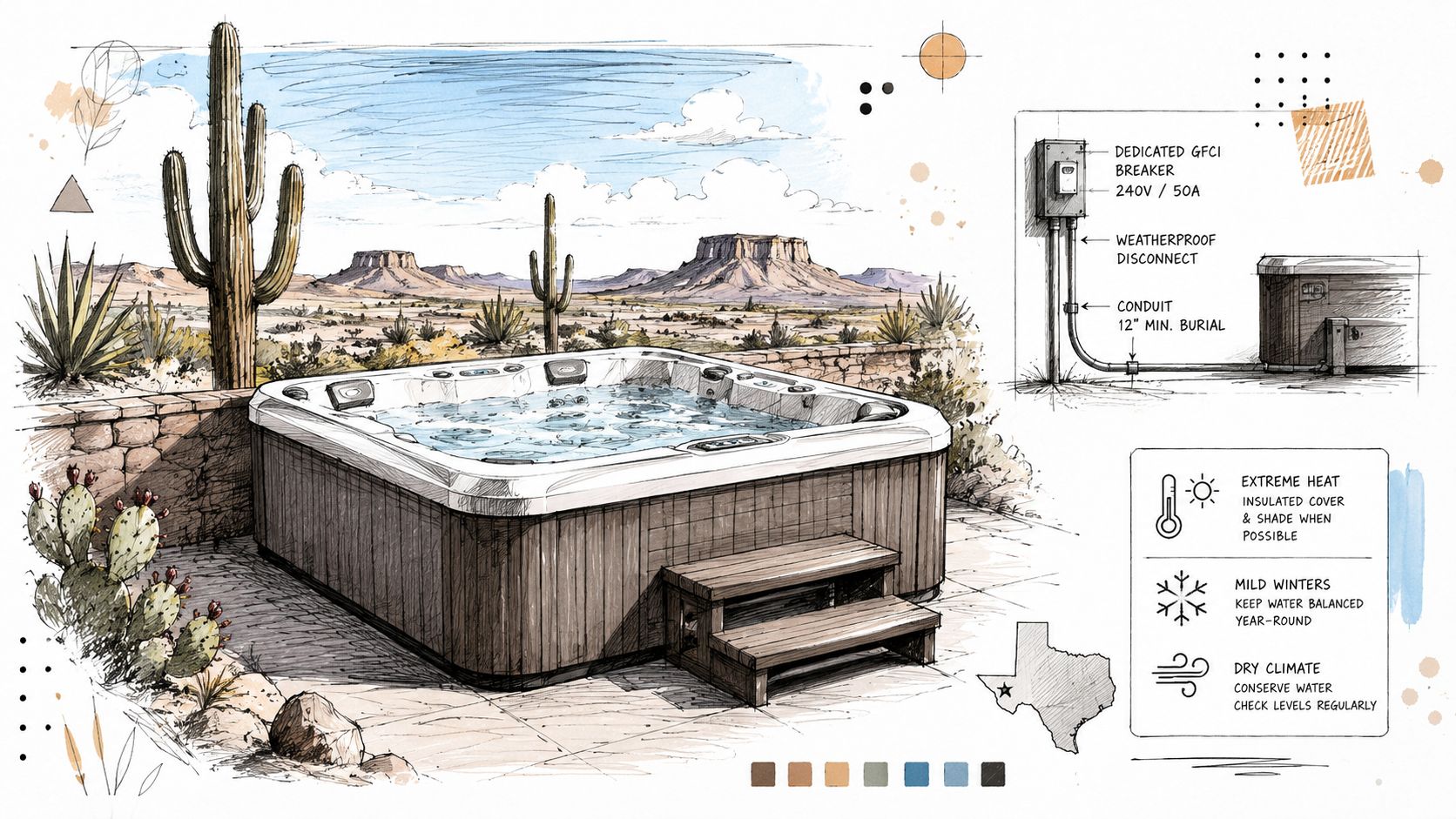
A spa can look like a simple backyard upgrade until the local conditions start working on it. In West Texas and Southeastern New Mexico, sun, wind, dust, hard water, and sharp temperature swings all affect how often the tub needs attention and how long it stays comfortable to use. The hidden cost is not just the purchase price, it is the steady upkeep that keeps the unit ready without turning weekends into maintenance days.
Installation and code come first
Electrical planning sets the tone before the first soak ever happens. The National Electrical Code requires GFCI protection for all 120V and 240V hot tub circuits, and receptacles within 10 feet of the inside walls of a spa or hot tub must follow the same protection rules for safety (Cal Spas electrical safety guidance). A separate code summary also says a dedicated disconnect device must be outside the dwelling unit, disconnects are prohibited within 1.5 m of the tub, and GFCI devices are not permitted within 3 m of the hot tub unless installed behind a permanent barrier (2026 safety codes update summary). A spa can fit the yard and still be delayed if the wiring plan does not match the code.
That is why the first dealer conversation should focus on the site. Delivery access, pad readiness, and panel capacity often matter more than the model name on the brochure. A homeowner who checks those items early can avoid extra labor, surprise delays, and the cost of fixing a layout that should have been planned from the start.
Water care needs local discipline
Hot tub water chemistry has narrow ranges, and the local water makes those ranges harder to hold. pH should stay around 7.2 to 7.8, sanitizer levels for chlorine are commonly maintained at 1 to 3 ppm or 2 to 4 ppm depending on the manufacturer, and total alkalinity is often kept around 80 to 120 ppm or 80 to 150 ppm (Rosenberry Rooms hot tub maintenance guide). In an area where mineral content can push water out of balance, drifting outside those ranges can cut sanitizer performance and raise the risk of irritation or scaling.
Care also affects how the spa fits into the rest of the yard. A deck or patio needs enough room for safe entry, cover handling, and routine access to the cabinet, especially when the tub sits near other outdoor furniture. If you are mapping out that space, the layout advice in Guelph Deck Builders hot tub deck tips can help you think through spacing, access, and how the spa will work with the rest of the area. For a compact seating option near the tub, a piece like this Camille Black Outdoor Fire Pit table can fit the setting without crowding maintenance access.
The right local dealer should be ready to talk through maintenance, service, and installation in plain terms. That includes how often the water will need attention, what the cover will face in direct sun, and how dust or wind may change care routines. In this climate, convenience is part of ownership, not an extra.
Your Next Steps Toward the Perfect Hot Tub
A hot tub purchase usually goes wrong for one of three reasons, the buyer trusts a showroom feel more than long-term ownership costs, skips the electrical plan, or picks a spa that does not fit the way the household relaxes. The better path is simple. Check the ratings, confirm the install requirements, and weigh how the tub will perform in West Texas heat, dust, and cold snaps in Southeastern New Mexico. That is where a good-looking spa turns into a smart one.

Local experience matters because the hidden costs usually show up after delivery, not before. Miller Waldrop Furniture and Mattress has been a trusted, family-owned business since 1952, serving Lubbock, Texas and Hobbs and Ruidoso Downs, New Mexico with over 70 years of expertise in home furnishings. That kind of guidance helps families sort through the actual trade-offs, like insulation quality, service access, and whether the spa will hold up to strong sun, wind, and mineral-heavy water.
What to do before buying
Start with the space, then move to the wiring. Measure the pad or deck, check how the cover will open, and confirm that the electrical setup matches the spa you are considering before you commit to a model. If the site is not ready, the best-rated tub on paper can become expensive in practice.
From there, compare the pieces that affect ownership more than the brochure language does. Insulation, cabinet access, warranty support, and how often the water will need attention matter more than a short list of features. In this climate, dust, heat, and winter temperature swings all affect how hard a spa has to work and how much care it will need over time.
For shoppers who want a practical starting point, the selection at Miller Waldrop Furniture & Decor makes it easier to move from research to a real plan. Use it to narrow the field, then talk through installation, placement, and daily use with someone who understands what works in local homes. A careful choice now saves frustration later.
If you are ready to turn research into a workable setup for your home, talk with a team that understands local yards, climate, and the details that shape outdoor living. The right choice is not just about the spa itself. It is about the full cost of owning it, using it, and keeping it comfortable year after year.