


Organic Modern Furniture: A Complete Guide

The sectional has started to sag, the room feels unfinished, and every inspiration board seems to pull in a different direction. Scandinavian furniture looks too spare, farmhouse pieces feel too layered, and strictly modern designs can make a family room feel more like a showroom than a home.
Organic modern furniture offers a calmer middle path. It keeps modern design's clean lines and useful proportions, then softens them with curved silhouettes, visible wood grain, natural stone, and fabrics that invite touch. The result can feel curated without feeling cold, grounded without becoming heavy.
The style also deserves closer inspection before purchase. “Organic” may describe a rounded shape inspired by nature, not a verified claim about materials, emissions, labor, or sourcing. A thoughtful buyer needs both a visual framework and a procurement checklist.
Why Organic Modern Furniture Feels Like the Calm Middle Path
Organic modern furniture works because it resolves a common decorating conflict. Pure minimalism can look polished but unforgiving, while heavily layered traditional rooms can feel visually busy. Organic modern interiors preserve the order of contemporary design while introducing warmth through natural materials and softened forms.
Start with structure, then soften it
A modern foundation usually relies on clear lines, honest proportions, and furniture that serves a practical purpose. Organic modern design keeps those qualities but replaces some hard geometry with rounded sofa arms, turned legs, arched backs, and irregular tabletops. A rectangular room may still contain a sleek media console, but a curved chair or oval coffee table prevents the arrangement from feeling rigid.
The word “organic” originally described forms inspired by natural contours, not an eco-certification. That distinction matters. A sculptural chair may look nature-inspired while still containing engineered foam, composite wood, or a heavily treated fabric. The appearance can be organic even when the construction requires further investigation.
Notice the emotional balance
The strongest rooms in this style create contrast without conflict:
- Curated, not sterile: A limited palette and clear furniture placement keep the room orderly.
- Warm, not cluttered: Wood grain, woven fibers, and tactile upholstery add character without requiring many accessories.
- Grounded, not heavy: Low profiles and open space maintain visual lightness.
- Comfortable, not careless: Soft edges and generous seating support daily use while retaining a composed appearance.
The style's roots connect to mid-century modern furniture, whose clean forms and practical construction still influence today's interiors. For homeowners developing the look, Miller Waldrop's organic modern design guide offers another place to evaluate furniture shapes, finishes, and room proportions.
A successful room doesn't need every piece to be curved or pale. It needs a deliberate relationship between line, material, color, texture, and function. Those building blocks make the aesthetic easier to recognize and easier to adapt.
Where Organic Modern Furniture Comes From
Organic modern furniture grew from mid-century modern design rather than from a recent beige-room trend. The movement gained popularity in the United States after World War II and generally spans roughly 1945 to 1969, with a widely cited golden age from about 1947 to 1965. An earlier milestone came in 1940, when the Museum of Modern Art held the “Organic Design in Home Furnishings” competition. Charles Eames and Eero Saarinen won, helping establish fluid forms and molded-plywood experimentation as important directions in furniture design, as described in this history of mid-century modern design.
Why molded forms changed the conversation
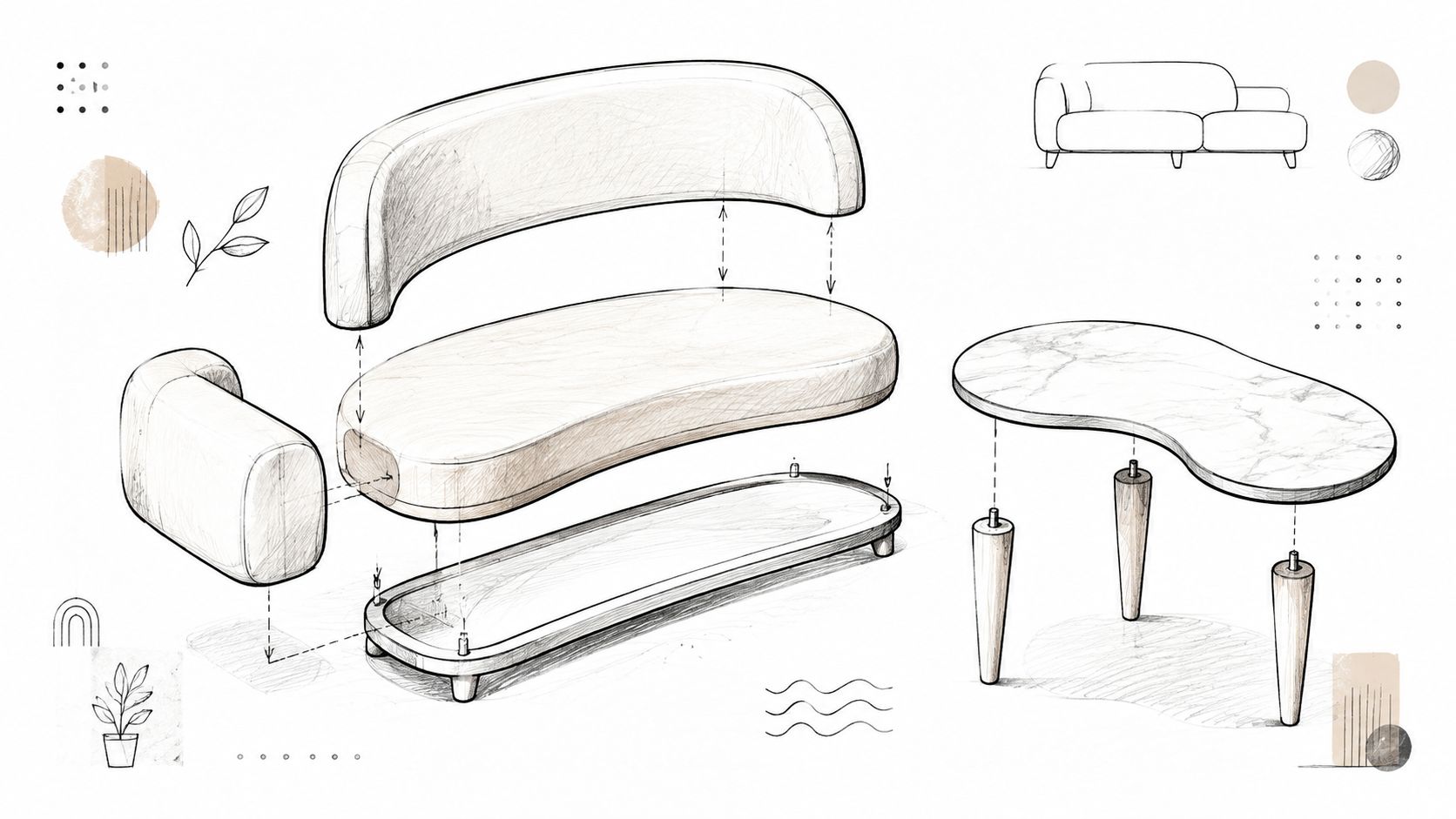
Postwar designers explored materials that could support the human body while remaining practical for everyday homes. Molded plywood, fiberglass, bent tubular steel, and later molded plastic made it possible to move beyond boxy furniture without giving up function or repeatable production.
The tulip base, womb-like seating form, and molded plywood chair each express that approach. Their construction remains efficient, while their contours feel more welcoming because they follow the body or echo natural shapes. A curved back supports the sitter differently from a straight slab. A pedestal base can also make a dining or coffee table appear less visually crowded.
Scandinavian designers extended this warmth through material choice and craftsmanship. Solid teak, birch, and other woods introduced visible grain and tactile variation while preserving a restrained appearance. Their influence remains visible in preferences for white oak, walnut, ash, cane, and softly sculptural upholstery.
Modern descendants, not replicas
Current organic modern furniture is a contemporary continuation, not a museum recreation. New pieces may pair updated joinery, performance fabrics, modular construction, and clearer sourcing information with the human-centered forms developed during the mid-century period.
That history explains the style's familiar yet current character. Modernism supplies the discipline, while wood, stone, woven material, and curves make that discipline more comfortable to live with.
The label still requires checking. A nature-inspired shape does not confirm low emissions, repairable construction, or responsible sourcing. Review the materials, finish, adhesives, replacement options, and sourcing details before treating an organic modern piece as a responsible purchase.
The Four Building Blocks of the Style
A showroom or product listing becomes easier to evaluate when organic modern furniture is reduced to four visible qualities. Silhouette, material, color, and texture work together, but each answers a different question. Silhouette asks how the piece is shaped. Material addresses what it's made from. Color establishes its visual temperature. Texture determines how much depth the room has.
1. Silhouette
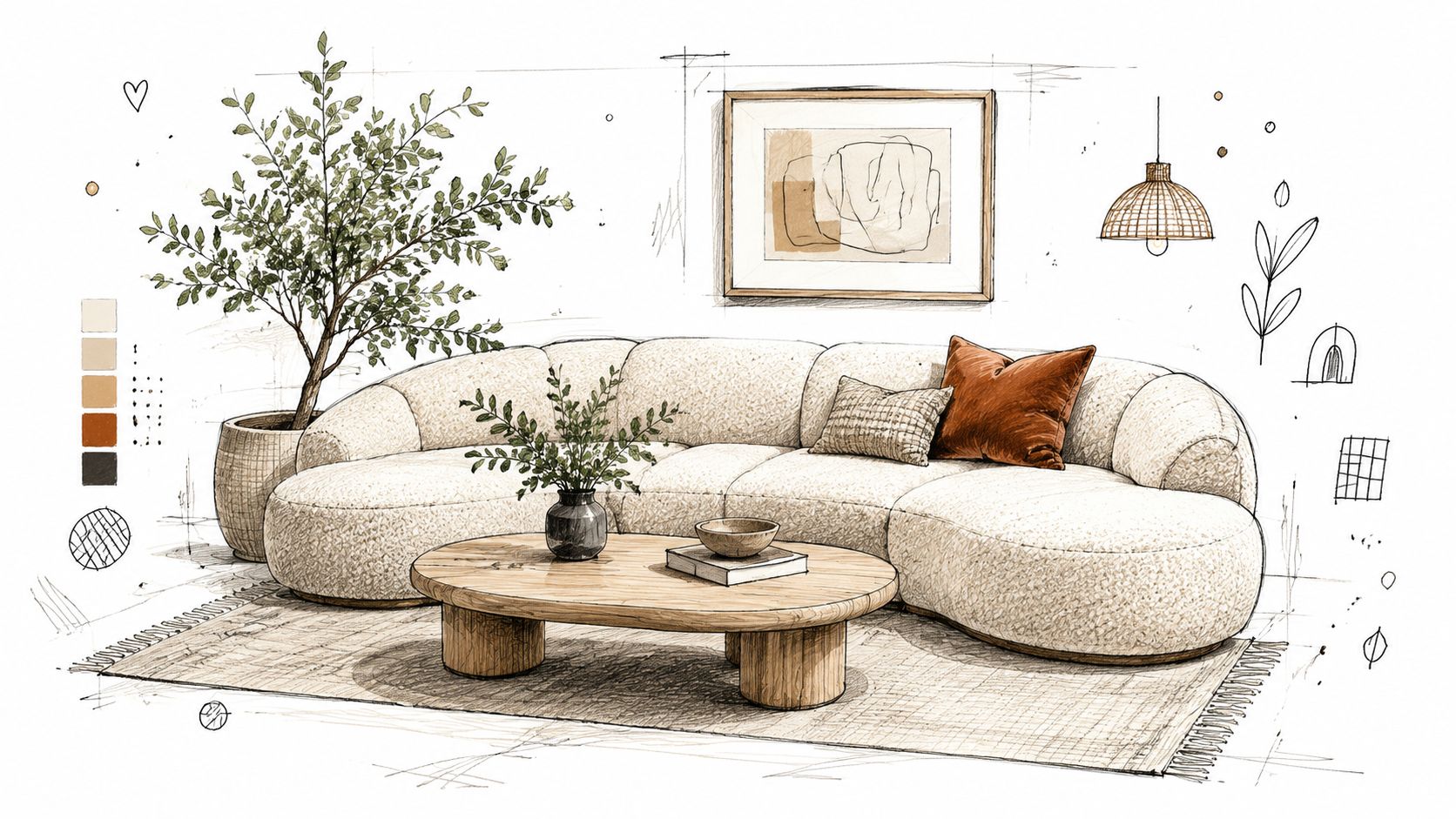
Look first at the outline. Rounded sofa arms, arched backrests, kidney-shaped tables, tapered legs, and gently irregular forms soften the strict rectangle. Kidney and boomerang shapes feel connected to nature because they avoid perfect geometry, but they still need enough structure to support comfortable use.
A curved sofa can make a seating arrangement feel more conversational. A round or oval table can reduce the sense of sharp corners in a walkway. However, curves aren't automatically practical. They can consume more floor area and may complicate placement in narrow rooms, so the shape must serve the floor plan.
2. Material
Natural materials give the style its physical credibility. Common choices include:
- Wood: White oak, walnut, teak, and ash with visible grain.
- Woven surfaces: Cane and rattan for airiness and pattern without loud color.
- Upholstery: Bouclé, linen, leather, and other fabrics selected for touch as well as appearance.
- Stone: Travertine and honed marble, especially where matte variation is preferable to high-gloss shine.
Material honesty doesn't require every surface to be raw. It means the finish should reveal something real about the material rather than imitate it with a glossy or overly distressed treatment.
3. Color
The palette usually stays quiet, but quiet doesn't mean flat. Warm white, sand, taupe, clay, mushroom, sage, and charcoal allow the wood tone to lead. A darker accent can give pale upholstery and light walls a visual anchor.
Color should also respond to existing floors, cabinetry, and daylight. A warm oak may blend smoothly with clay and oat tones, while charcoal can outline a pale room without overwhelming it.
4. Texture
Texture supplies depth when pattern is restrained. Nubby bouclé beside smooth leather, woven cane beside matte stone, and raw-looking wood beside soft linen create contrast that can be felt as well as seen.
Lighting completes this tactile composition. For homeowners renovating a kitchen or adjoining living area, a resource on unique lighting for kitchen remodels can help connect organic shapes and natural finishes across adjacent rooms.
Quick test: If a piece satisfies at least three of the four pillars, it can usually support an organic modern room. If it satisfies only the color requirement, it may simply be a neutral piece.
Room-by-Room Styling That Works
Organic modern furniture should follow each room's activity. A curved chair can look sculptural yet obstruct a walkway, while a pale sofa may suit the palette but fail under daily use. Begin with the room's main task, select one defining piece, then add furnishings that support its function and the room's circulation.
Living room
Start with a low-profile, deep-seated sofa in bouclé or performance linen. Its lower height keeps sightlines open, and the generous seat supports reading, conversation, and relaxed family use. Balance it with a chunky travertine or white oak coffee table, then place a curved lounge chair opposite a rectangular rug.
The rug gives the arrangement a clear base. The chair and table soften that structure through rounded forms and natural surfaces. A low media console or closed storage unit keeps electronics and daily clutter contained, preserving the room's quiet feel.
Dining room
A live-edge or softly rounded oak table brings warmth and movement to a dining area. Pair it with molded cane-back chairs when the room needs visual air, or bouclé-upholstered seating when it needs more softness.
Keep the tabletop restrained. A felted wool runner and one ceramic vase can finish it without hiding the wood grain. If the dining area connects to the living room, repeat one wood tone or neutral shade so the zones relate without making every item identical.
Bedroom
Use a quieter reading of the style here. A platform bed in white oak or walnut supplies a substantial anchor, while organic cotton or linen bedding in clay and oat tones keeps the surface relaxed. Rounded nightstands soften sharp corners and provide useful storage without ornate detail.
Lighting should stay warm and low-glare. One woven bench, ceramic lamp, or tactile throw often adds more character than many small decorative objects.
Home office
A solid wood desk grounds a home office without making it feel formal. Combine it with a sculptural task chair, a jute rug, and a felt acoustic panel that absorbs sound while maintaining the subdued palette.
Plants add life, but the room should not depend on them for personality. A guide to large cacti and succulent gardens can help homeowners select plant forms that complement a clean-lined room rather than crowd it.
Scale and circulation
A furniture plan must fit the path as well as the photograph. Leave 30 to 36 inches of walkway around major routes, keep visible legs under seating where possible, and let one sculptural piece lead each room.

Room rule: Curves should improve movement or comfort, not merely fill space. Measure doorways, wall lengths, and clearance before choosing a rounded sectional or large table, then confirm that the piece's materials and certifications support the calm appearance you want.
How to Verify the Organic Claims Before You Buy
A furniture label can describe a look without proving anything about safety or sourcing. Words such as natural, eco, sustainable, and organic deserve follow-up questions, especially when a piece combines wood veneer, composite panels, foam, adhesives, and treated textiles.
The first step is to separate visual claims from documented claims. A rounded oak table may have an organic modern silhouette, but the buyer still needs to know whether the wood is solid or veneered, where it was milled, and what finish was applied.

Look for meaningful documentation
For composite wood, U.S. TSCA Title VI requires finished composite-wood products and panels used in furniture to meet formaldehyde emission limits aligned with California CARB ATCM Phase II. The maximum limits are 0.05 ppm for hardwood plywood, 0.09 ppm for particleboard, 0.11 ppm for MDF, and 0.13 ppm for thin MDF, according to this CARB and EPA comparison table.
For textiles, GOTS requires at least 95% certified organic raw materials for a product to qualify as fully GOTS-certified, while the standard also includes worker-protection requirements related to toxins and forced or child labor, as explained in this organic furniture certification guide. OEKO-TEX can help buyers investigate textile-related chemical testing, while recognized indoor-air certifications can provide further documentation for finished products.
Ask questions that reveal construction
A short conversation in a showroom can expose more than a broad marketing phrase. Buyers should ask:
- Wood source: Where was the wood milled, and is the piece solid wood, veneer, plywood, MDF, or particleboard?
- Frame construction: Is the upholstered frame made from kiln-dried hardwood?
- Cushion content: What density and fill materials are inside the cushions?
- Finish: Which finish was used, and is product documentation available?
- Repair options: Can the store order replacement cushions, slipcovers, or hardware?
- Joinery: Are components screwed, doweled, or mechanically joined, or are they mainly glued and pinned?
A piece that smells strongly of solvent in a showroom deserves additional caution. Unfinished MDF or particleboard hidden beneath veneer, mystery foam, and inaccessible glued construction can make future repair difficult.
For a deeper explanation of wood selection, buyers can review this guide to choosing hardwood for longevity and style. Modular and repairable pieces often offer a more resilient ownership path than fully upholstered constructions that cannot be opened or serviced.
Procurement principle: Ask for paperwork, not reassurance. Organic modern furniture should feel substantial in the hand and transparent in its construction, not merely attractive in a photograph.
Care and Maintenance That Protects Your Investment
Organic modern furniture looks strongest when maintenance preserves the material rather than masking it. Solid wood, upholstery, stone, and woven surfaces each need a different routine, so owners should avoid treating the entire room with one multipurpose product.
Solid wood
Dust solid wood weekly with a soft microfiber cloth. Once a month, use a barely damp cloth and mild soap, then dry the surface promptly. Oiled walnut or white oak may need conditioning every six to twelve months with a food-safe hardwax oil, provided the manufacturer approves that treatment.
Direct sun can shift wood color, and heating vents can dry it unevenly. Silicone polishes may leave residue or complicate refinishing, so they're better avoided. More detailed guidance appears in this wood furniture care resource.
Upholstery
Rotate loose cushions weekly so one area doesn't carry all the wear. Vacuum with an upholstery attachment on low suction, blot spills immediately, and arrange professional cleaning every 12 to 18 months when the fabric and manufacturer allow it.
Performance fabrics often tolerate water-based cleaners, while bouclé and linen may require dry methods. The correct approach depends on the cleaning code, so owners should check the care label before applying moisture.
For everyday seating, abrasion resistance also matters. The Martindale rub test commonly classifies fabrics as decorative at 6,000 to 10,000 rubs, light domestic use at 10,000 to 15,000, general domestic use at 15,000 to 25,000, heavy duty at 25,000 to 30,000, and commercial use at 30,000 or more, according to this fabric performance guide. A family sofa should typically target the 15,000 to 25,000 range, while high-traffic rooms may benefit from 25,000 or more.
Stone, cane, and rattan
Seal travertine or marble when purchased and annually when recommended. Use coasters beneath ceramics and clean stone only with pH-neutral stone soap. Abrasive or acidic cleaners can damage a honed surface.
Cane and rattan need gentle vacuuming with a brush attachment. Indoor humidity between 40% and 55% can help reduce cracking. A seasonal schedule keeps care manageable: dust and vacuum regularly, inspect finishes and joints during seasonal changes, and address stains or loose hardware before small issues become expensive repairs.
Bringing It All Together With a Local Design Partner
Choosing organic modern furniture becomes lower risk when a local design team can evaluate the room, the materials, and the practical constraints together. Miller Waldrop Furniture & Decor operates three curated showrooms serving Lubbock, Texas, Hobbs, New Mexico, and Ruidoso Downs, New Mexico, where shoppers can see finished furniture, compare upholstery and wood finishes, and discuss custom-order options.
A consultation can begin with room photos, floor plans, doorway measurements, and a description of household routines. The design team can then shape a room-by-room plan around the four principles already established, selecting silhouettes that fit the floor plan, materials that suit the maintenance demands, and colors that work with existing floors and walls.
Custom ordering is useful when a standard sofa, dining table, or storage piece misses the required dimensions. Shoppers can discuss fabrics, finishes, and configurations rather than forcing a room to accommodate an unsuitable piece. White-glove delivery, trade pricing for designers, and care guidance for new purchases extend the relationship beyond the sale.
Appointments should include measurements, photos taken from each room corner, door and hallway dimensions, and a list of must-keep furnishings. Custom lead times vary by item and construction, so the showroom team can explain expected timing before an order is placed. That preparation gives homeowners a clearer route from inspiration to a furnished room that looks calm and functions well.
Miller Waldrop Furniture & Decor offers curated living room, dining room, bedroom, and home office furnishings, along with design guidance and custom-order options for organic modern spaces. Visit Miller Waldrop Furniture & Decor with room measurements and photos to begin choosing pieces that combine natural warmth, practical durability, and documented construction.