

Sleeper Sofa Dimensions: A Practical Measurement Guide

A sleeper sofa often solves one problem and creates another. It gives a room a guest bed without dedicating the whole space to a bed, but many shoppers find out too late that the piece they loved in the showroom behaves very differently once it opens at home.
That's a challenge with sleeper sofa dimensions. A sleeper has a living-room size and a guest-bed size, and both matter. A sofa can look perfectly scaled when it's closed, then take over the room when the mechanism is pulled out.
The safest way to shop is to treat a sleeper sofa like a two-mode piece of furniture. Measure for seating, measure for sleeping, and measure the path it has to travel before delivery day. A simple dimensions guide for living room furniture can help establish the room's baseline before getting into sleeper-specific planning with living room furniture dimensions.
Table of Contents
- The Sleeper Sofa Dilemma Why Dimensions Matter Most
- Decoding Sleeper Sofa Sizes And Types
- The Art of Measuring Your Space for a Perfect Fit
- Beyond Size The Mattress Dimension You Cannot Ignore
- Your Pre-Purchase and Delivery Checklist
- Find Your Perfect Dual-Purpose Solution
The Sleeper Sofa Dilemma Why Dimensions Matter Most
A common scenario plays out the same way. A homeowner finds a sleeper sofa with the right fabric, the right arm style, and the right color. It fits the wall nicely, leaves room for a coffee table, and looks like the answer to a guest-room problem. Then the bed opens, the walkway disappears, and the room suddenly feels jammed.
That mistake usually starts with one assumption. People shop the closed sofa and forget the open footprint.
A sleeper sofa isn't judged by one measurement. It has to work in its everyday role as seating, and it also has to function when someone sleeps on it. If either mode fails, the purchase feels compromised. A sofa that looks balanced but blocks circulation when opened won't feel practical for long.
Practical rule: If the room only works when the bed stays folded away, the sleeper sofa is too large for that space.
This is why sleeper sofa dimensions matter more than they do with a standard sofa. The visible frame only tells part of the story. The hidden mechanism changes how far the piece projects into the room, how nearby tables and rugs behave, and whether guests can move comfortably around the bed.
The good news is that this is a solvable problem. With the right measurements, a clear idea of sleep needs, and attention to delivery access, a shopper can choose a piece that works every day and still welcomes overnight guests without turning the room into an obstacle course.
Decoding Sleeper Sofa Sizes And Types
Sleeper sizing starts with the mattress inside the frame, not just the outer silhouette. That's why the size label can be helpful, but it isn't enough by itself. A queen sleeper refers to the bed format first. The sofa frame around it will always be larger.
According to this sleeper sofa size guide, twin sleepers feature a bed about 39 inches wide, full sleepers about 54 inches wide, and queen sleepers about 60 inches wide. The same guide notes that a queen sleeper sofa typically measures about 78 to 90 inches wide, with a closed depth around 36 to 40 inches and an open depth that can extend to nearly 96 inches.
Standard Sleeper Sofa Dimensions at a Glance
| Sleeper Type | Typical Sofa Width | Mattress Size | Sleeps | Best For |
|---|---|---|---|---|
| Chair or Twin Sleeper | Varies by model | About 39 inches wide | One person | Offices, compact guest corners, smaller rooms |
| Full Sleeper | Varies by model | About 54 inches wide | One to two people, depending on comfort expectations | Guest rooms, dens, occasional overnight use |
| Queen Sleeper | About 78 to 90 inches wide | About 60 inches wide | Two adults | Main living rooms, frequent guest use |
| King or Sectional Sleeper | Varies by configuration | Larger format, often tied to sectional design | Two or more, depending on layout | Large multi-use spaces |
The queen category has become the benchmark for many households because it usually strikes the best balance between everyday seating and overnight function. It's large enough to serve as a primary sofa in many living rooms, but it doesn't automatically mean every room can support it.
What the label tells you and what it doesn't
The size label gives a rough sense of who can sleep on the sofa. It doesn't tell the whole story about how it sits in a room.
A shopper should read every dimension in two groups:
- Closed dimensions: These determine wall fit, traffic flow, and how the sofa lives day to day.
- Open dimensions: These determine whether the bed can deploy without hitting tables, media furniture, or opposite seating.
- Sleep surface dimensions: These determine what guests experience overnight.
The biggest shopping error is assuming the mattress size and the sofa width are nearly the same. They aren't. The arms, frame, cushions, and mechanism all add bulk. That's why a sleeper that sounds compact on paper can still feel substantial in person.
Another useful distinction is capacity. Some sleepers can seat more people than they can sleep comfortably. That's not a flaw. It's just a reminder that seating scale and sleep scale don't always match.
A sleeper sofa should be chosen for the job it does most often. If it's a sofa every day and a bed occasionally, seating comfort leads. If it hosts overnight guests often, bed comfort moves to the front of the decision.
The Art of Measuring Your Space for a Perfect Fit
Most sleeper sofa problems show up before the furniture even arrives. They start with incomplete measuring. A shopper may confirm the wall width, then skip the open bed depth, or forget to account for a tight turn near the front door.
A better approach is to measure in three passes. One for the closed position, one for the open position, and one for the route into the home.
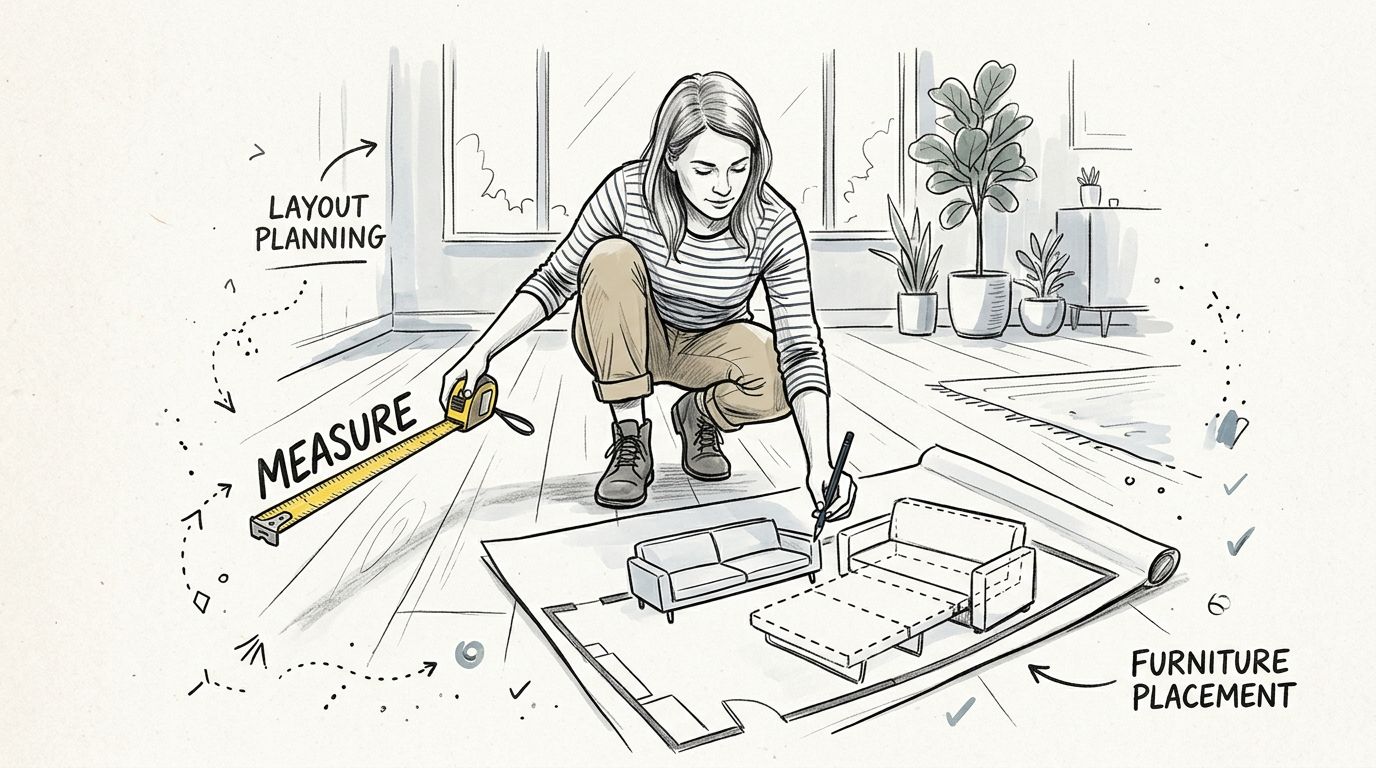
Measure the resting position first
Start with the sofa where it will live most of the time. Measure the wall width, the depth available in the room, and the distance to nearby furniture.
Include details people often miss:
- Baseboards and trim: They can reduce usable depth along the wall.
- Radiators, vents, and outlets: These can affect final placement.
- Light switches and drapery stack-back: They matter if the sofa sits close to windows or corners.
The closed size should allow normal circulation without the room feeling pinched. If the sofa already feels oversized in its closed state, the sleeper function won't fix that.
Tape out the sleeping zone
Sleeper sofa dimensions involve practical considerations. A typical sleeper sofa can go from about 36 to 40 inches deep when closed to about 85 to 96 inches deep when opened, and planning guidance often recommends at least 42 inches of clear floor space in front of an opened sleeper for comfortable movement, as noted in this guide to sleeper sofa sizing and clearance.
Painter's tape on the floor works well here. Mark the closed footprint first, then tape the open footprint so the room can be seen in both modes.
Check these points while the layout is taped:
- Walkway clearance: Can someone move past the bed without squeezing?
- Table conflict: Do coffee tables, benches, or ottomans need to be relocated every time?
- Door swing: Will nearby doors still open fully?
- Night use: Can a guest reach a lamp, outlet, or path to the bathroom without climbing over furniture?
Check the delivery path before purchase
A room can be perfectly measured and still fail on delivery day if the sofa can't get through the house. Measure the full path from the exterior door to the final room. That includes entry width, hallway turns, stair landings, and interior doorways.
A few details deserve extra attention:
- Tight corners: Measure both width and turning space.
- Ceiling drops or light fixtures: These matter when movers rotate a large piece.
- Apartment access: Elevators, shared hallways, and entry restrictions can limit what gets inside.
For households coordinating a move at the same time, practical logistics matter too. A useful primer on truck capacity is Posch & Silva's article on understanding 4.5 tonne truck sizes, especially when planning how furniture, boxes, and access timing fit together.
For a step-by-step measuring method, this guide on how to measure for a sectional couch is also helpful because the same room-planning discipline applies to sleepers with complex footprints.
Beyond Size The Mattress Dimension You Cannot Ignore
The size label on a sleeper sofa doesn't guarantee a comfortable night's sleep. Two models can both be called queen sleepers and still feel very different once a guest lies down.
That difference usually comes from the usable sleep surface, the mattress build, and the support system underneath it.
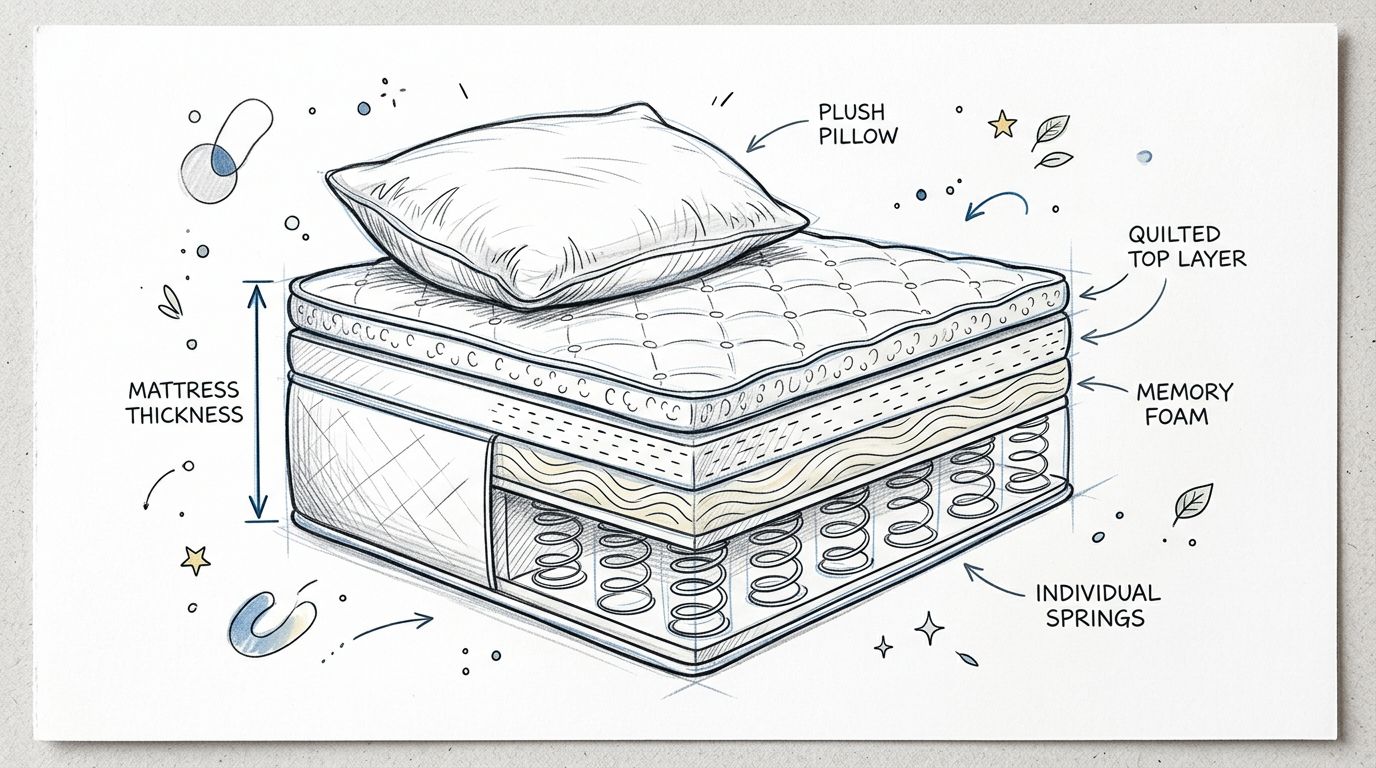
Why a queen sleeper doesn't always sleep like a queen bed
According to this overview of sleeper sofa mattress ranges, the actual usable width can vary by format, and a queen sleeper mattress might range from 58 to 66 inches wide. That same source notes that width variation, mattress thickness, and the support mechanism together have more impact on guest comfort than the label alone.
That's the point many shoppers miss. A queen label sounds familiar because people know what a queen bed means in a bedroom. But inside a sleeper sofa, the mattress may feel narrower than expected, thinner than expected, or firmer because of how it folds.
Comfort comes down to practical questions:
- How close is the sleep width to standard mattress expectations?
- Does the mattress feel supportive across the center and edges?
- Does the folding mechanism create pressure points?
- Will two adults sleep well on it, or only fit on it?
A sleeper used for occasional guests can tolerate more compromise than one used often. In a living room that hosts family over holidays or regular weekend visitors, mattress quality deserves much more weight in the decision.
The most useful question in a showroom isn't “What size is it?” It's “How does this feel after several hours of sleep?”
Questions worth asking in the showroom
A shopper should move beyond the product tag and ask for specifics. Useful questions include:
- Actual sleep surface: Ask for the measured mattress width and length, not just the category name.
- Mattress construction: Ask what the guest will feel under the body. The support experience matters as much as the top layer.
- Seat trade-off: Some sleepers prioritize a sleek sofa profile, while others prioritize a more forgiving guest bed. Those goals don't always align.
- Expected use: A model suited to occasional overnight use may not be the right choice for frequent sleeping.
This is also where mattress education helps. A broader sizing guide like what size mattress do I need can help shoppers compare sleeper surfaces against standard bed expectations before they commit.
Your Pre-Purchase and Delivery Checklist
A good sleeper sofa purchase usually comes down to discipline. People who test, verify, and confirm details before checkout avoid most of the headaches that make these pieces frustrating.
One measured example shows why. This queen sleeper dimension reference shows a sleeper at about 81 inches wide by 40 inches deep when closed, expanding to about 81 inches by 86 inches when open. That kind of change is exactly why a showroom favorite still needs a hard check against the room plan.
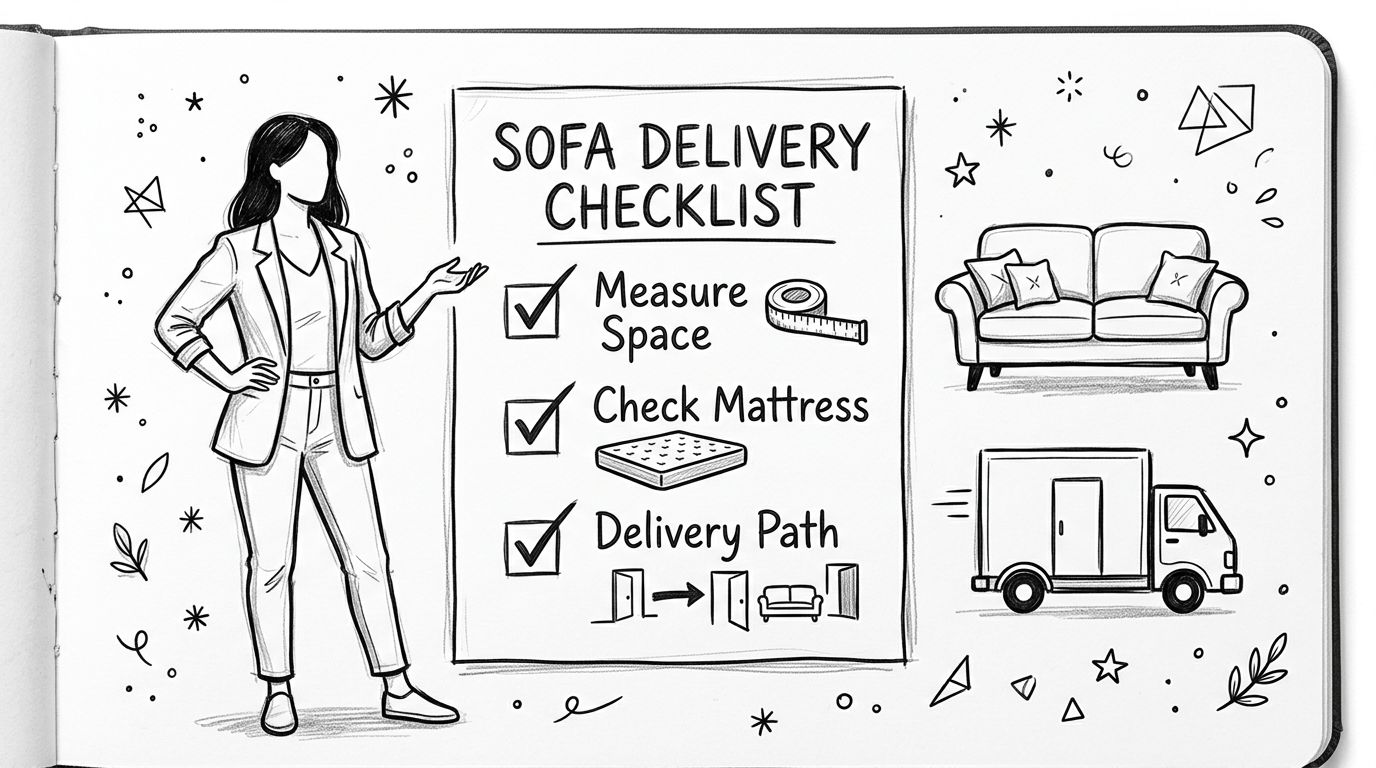
What to confirm before saying yes
A smart buyer should walk through this list before ordering:
- Sit like you'll typically sit: Don't perch on the edge for ten seconds. Sit upright, lean back, and check whether the seat depth supports how the room is used.
- Open the mechanism personally: If the mechanism feels awkward in the store, it won't feel better at home.
- Lie down on the bed surface: Even a short test reveals whether the mattress feels supportive or whether the frame telegraphs through.
- Match your measurements to the spec sheet: Don't rely on memory. Compare written room measurements against written product dimensions.
For shoppers who want to see applicable options in the category, Miller Waldrop Furniture & Decor offers sleeper sofas in twin, full, and queen formats, which helps when comparing the scale of different sleepers against a room plan.
What prevents delivery-day frustration
The final phase is logistics, not style. At this stage, many otherwise careful purchases go sideways.
Keep this checklist close:
- Confirm access details: Make sure the seller has accurate information about entry points, stairs, and room location.
- Ask how the piece arrives: Some sleepers come in forms that are easier to maneuver than others.
- Protect nearby surfaces: During moves, walls, floors, and the sofa itself all benefit from preparation. For households storing or moving upholstered furniture, these protective sofa covers can help shield fabric from dust and scuffs.
- Clear the room in advance: Remove side tables, lamps, and rugs that could interfere with placement or setup.
Buying a sleeper sofa without testing the mechanism is like buying a dining chair without sitting in it. The moving parts are part of the product, not a minor detail.
Find Your Perfect Dual-Purpose Solution
A well-chosen sleeper sofa doesn't feel like a compromise. It feels intentional. The room works during the day, guests sleep comfortably at night, and nothing about the layout feels forced.
The strongest decisions usually come from three habits. Measure for both positions, evaluate the actual sleep surface instead of trusting the label, and think through the delivery path before purchase. That combination prevents the most common mistakes and gives the shopper a much clearer sense of what will work in real life.
Sleeper sofa dimensions matter because they affect more than fit. They shape circulation, comfort, and how flexible a room can be. A piece that looks right but functions poorly won't stay satisfying. A piece that's selected with both modes in mind usually serves the home much better.
For households furnishing a living room, office, den, or guest space, the right sleeper is the one that supports the way the room is used. That's the standard worth shopping by.
Bring room measurements, photos, and questions to Miller Waldrop Furniture & Decor. The team can help shoppers compare sleeper sofa dimensions, think through open-floor clearance, and match a practical dual-purpose piece to the way the room needs to function in Lubbock, Hobbs, or Ruidoso Downs.