


How to Measure for a Sectional Couch Perfectly


Bringing a new sectional home is your ticket to memorable movie nights and snug family gatherings. Before diving into fabric swatches and cushion comfort, there’s one essential step that empowers you to succeed: precise measuring.
Spending a few focused minutes on measurements transforms your buying experience from risky guessing to confident selection. Avoid the headache of discovering your dream sectional is an inch too wide—or worse, won’t even clear the doorway.
Your tape measure is your secret weapon. Armed with exact dimensions, you become the design hero, ready to choose the perfect sectional for your family’s needs.
Don’t Let Guesswork Derail Your Design
You've likely been tempted to eyeball the space, but that’s where plans can unravel. A couple of inches can be the difference between an open, inviting living area and a cramped, awkward layout.
Nail it from the start by focusing on three critical zones:
- Your Room's Footprint: Measure the full length and width of the room to identify your maximum play area.
- The Sectional's Zone: Record the wall space where the sectional will live, noting windows, outlets, and vents you can’t block.
- The Delivery Path: Map every doorway, hallway, and stairwell from your entry point to the living room to ensure a smooth arrival.
Pro Tip: Use painter’s tape to outline the sectional’s dimensions on the floor. This low-effort move lets you “feel” the sofa’s presence and confirm walkway clearances before you buy.
Your Simple Sketch is Your Best Shopping Tool
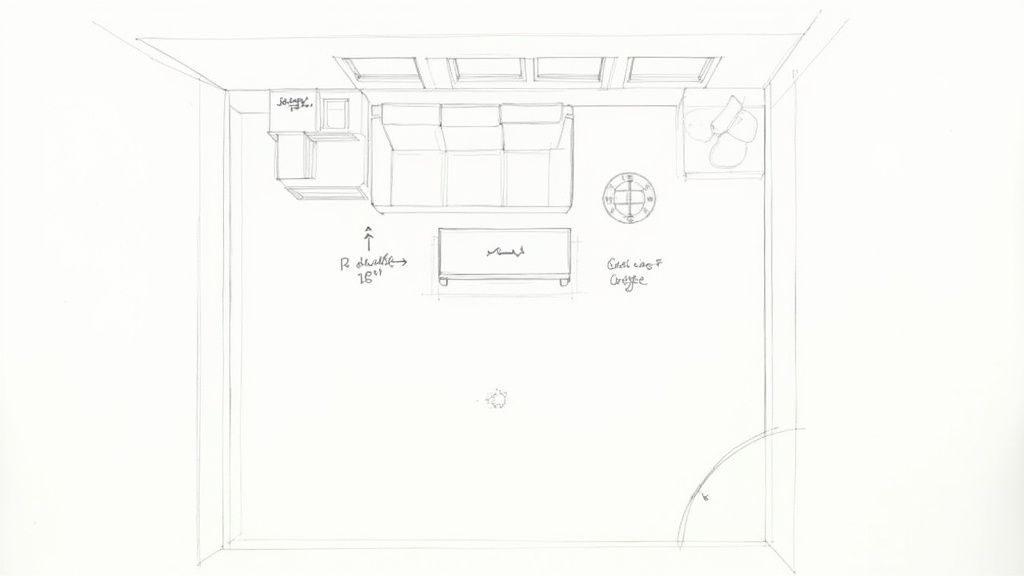
Skip architectural software—your hero’s blueprint is a plain sheet of paper. Draw a box to represent your room, jot wall lengths, and mark doors and windows. This quick sketch gives you the confidence to shop without surprises.
For a real-world example: say your den is 14 feet wide by 18 feet long, and you plan to place an L-shaped sectional on the 14-foot wall. Allow at least 36 inches of walking space plus room for an end table. Your maximum sectional width becomes approximately 120 inches. With these numbers and your sketch, you can work with our designers in-showroom or click through our online gallery knowing exactly what fits.
Mapping Your Space From Walls To Walkways
Turning broad room dimensions into a livable layout starts with pinpointing quirks like low windowsills or floor vents that can derail your design if overlooked. Your goal? Make every inch count and ensure your sofa enhances traffic flow instead of blocking it.
Sketching Your Room’s True Footprint
Measure each wall segment reserved for your sectional. Note where doorways interrupt and record measurements on both sides of the opening. Then mark fixtures that affect placement:
- Windows: Capture the overall width (including trim) and height from the floor to avoid blocking light and views.
- Doors and Entryways: Sketch swing directions to prevent collisions with a chaise.
- Vents and Radiators: Keep air circulation clear to avoid hotspots.
- Outlets and Switches: Plan for lamps and gadgets around power sources.
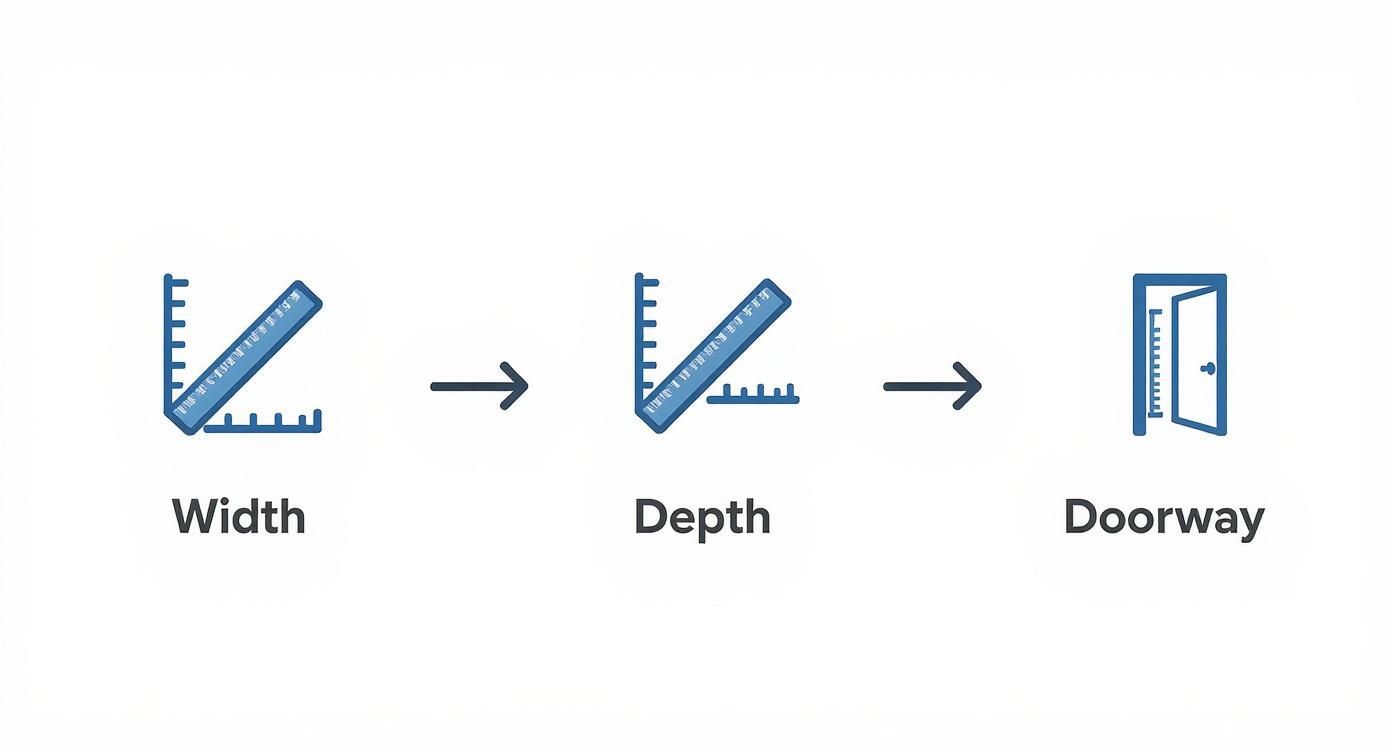
This infographic breaks down the essential steps of measuring width, depth, and doorways to establish a solid foundation for your sectional search.
Establishing Clear Traffic Paths
A well-designed layout invites movement instead of hindering it. Picture daily life—kids running, guests mingling, or you darting between the kitchen and TV. These clearances keep your living area functional and balanced.
| Path Type | Recommended Clearance |
|---|---|
| Minor Traffic | 18 inches |
| Major Walkways | 30 to 36 inches |
Leaving room to move creates an open, welcoming atmosphere. It keeps your sofa from feeling like an obstacle.
Testing Orientation: Left-Arm vs Right-Arm
Painter’s tape is your secret weapon. Outline the sectional’s footprint on the floor to “feel” its presence before you buy.
Walk through the taped shape. Does the chaise block an entry? Does the “L” point to your focal point—TV or fireplace? Then choose:
- Left-Arm Facing (LAF): Chaise on your left when facing the sofa.
- Right-Arm Facing (RAF): Chaise on your right when facing the sofa.
With orientation confirmed and your floor plan in hand, explore inspiring living room layout ideas. This plan becomes your design blueprint whether you shop online or in our showroom.
Decoding Sectional Dimensions and Configurations
Got your room measurements? Now match them to the sectional of your dreams. Translating your sketch into the language of furniture dimensions is where you shine as the design hero. It’s about reading product specs and knowing exactly how each piece will fit and feel in your home—before delivery day.
Speaking the Language: Key Sectional Measurements
- Overall Width & Length: The sectional’s full footprint—width is often the long side (back), length is the shorter side (chaise).
- Overall Depth: Distance from cushion front to frame back.
- Seat Depth: From the front edge of the cushion to where the back begins—controls lounge comfort.
- Seat Height: Floor to cushion top—impacts ease of sitting and standing.
These specs work together to define your sectional’s comfort profile. A 36-inch depth feels more formal and upright—ideal for smaller spaces. A 42-inch depth delivers a sink-in, lounge-ready vibe for movie marathons.
Comparing Common Sectional Configurations
Different shapes serve different purposes:
- L-Shaped Sectional: Classic choice. Long side against the long wall, short side extending into the room—defines the seating area while preserving flow.
- U-Shaped Sectional: Ultimate conversational pit for big families or hosts. Fills one wall and wraps two arms into the space—cozy but can feel bulky in tighter rooms.
- Modular Sectional: The ultimate tool for flexibility. Components can reconfigure for everyday L-shapes or a U-shape for gatherings.
By mastering these terms and styles, you’re not just shopping—you’re strategizing. Choose a sectional that fits both your room and your life. For a deeper dive, see our guide, Sectionals 101: What You Should Know Before Buying a Sectional.
Planning Your Delivery Path For Your Sectional
You’ve nailed room and sectional dimensions—congrats! But the journey from delivery truck to living room is just as crucial. Mapping every step ensures your sectional arrives scratch-free and lands exactly where you want it.
Measuring Every Entry Point
Start at the front door and trace the route to your living space. Note the narrowest points:
- Doorway Height: Floor to lowest point of the frame.
- Doorway Width: Frame-to-frame. If the door is hinged, measure from hinge to edge for true clearance.
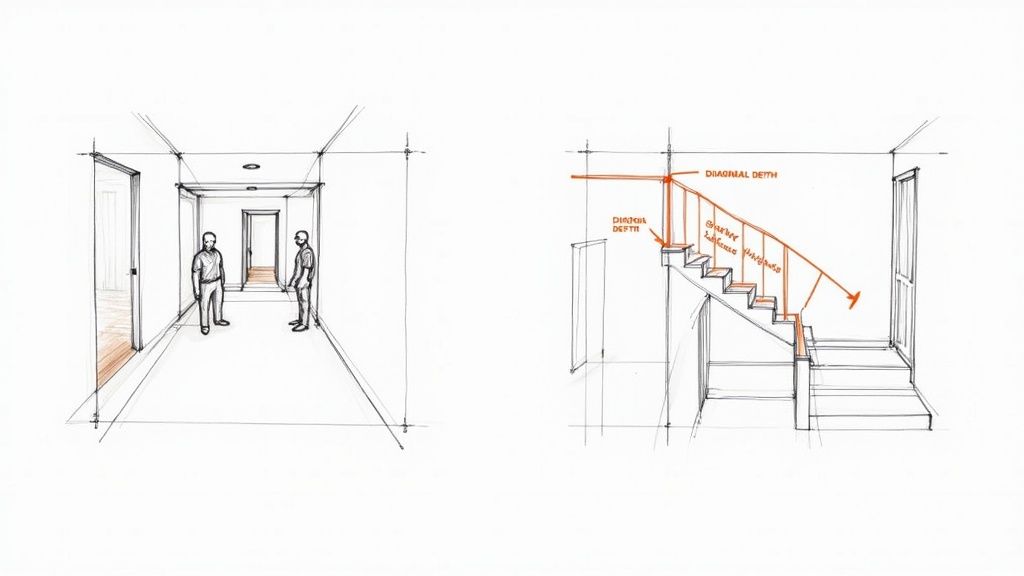
- Diagonal Height: From one bottom doorway corner to the opposite top corner—helps with tight angles.
Then measure hallways at their narrowest and look for protrusions like radiators or built-ins that could snag fabric.
Navigating Corners and Stairwells
Corners require precise pivot calculations. Measure both the incoming and outgoing hallway widths. And don’t forget overhead:
A light fixture or ceiling beam can stop a delivery cold. Measure vertical clearance above floors, corners, and landings to avoid surprises.
For stairwells, note:
- Stairwell Width: Between handrail and wall (or wall-to-wall).
- Overhead Clearance on Stairs: From stair tread to ceiling—watch for the lowest point.
- Landing Dimensions: Depth and width where the sectional must turn.
These measurements plus tips on how to move heavy furniture prepare you for every scenario.
Partnering With Your Delivery Team
Sharing these details with our team at Miller Waldrop turns delivery day into a well-orchestrated event. If a stairwell landing is tight, we’ll suggest sectional components—like pieces from our versatile Flexsteel modular sectionals—that navigate turning angles effortlessly. Our delivery pros use your measurements as a blueprint, ensuring a flawless installation.
Learn more about what to expect on the big day in our full delivery service details.
Avoiding Common Measurement Pitfalls
“Measure twice, cut once” applies to furniture too. It’s easy to get length and width right but overlook trim, baseboards, or a reclining arc. Use this expert checklist to catch pitfalls before they become problems.
The Hidden Inches of Baseboards and Trim
Measuring wall-to-wall? Don’t forget baseboards and casings. Trim can steal 1–2 inches on each side, turning a perfect fit into a scraping disaster. Always measure from baseboard to baseboard for your true wall width.
Your room’s narrowest point is its truest dimension. One protruding trim piece defines your absolute maximum.
Why Walkway Clearance Is Non-Negotiable
A stunning sectional isn’t worth it if it turns your living room into an obstacle course. Rule of thumb:
- Major Walkways: 30–36 inches of clear space.
- Minor Paths: Minimum 18 inches between furniture and coffee tables.
Prioritize these clearances to keep traffic flowing and your space feeling open.
Accounting for Motion and Functionality
Recliners and sleepers need motion space. For a piece like the Flexsteel Arlo Power Reclining Sectional, measure its full recline arc—from sofa back to footrest tip. Look for “wall-hugger” models that minimize behind-the-sofa clearance, but always confirm the spec.
Similarly, measure a sleeper sofa fully extended to ensure it won’t block a doorway or collide with your TV stand when in use.
Bringing Your Measurements to Life with Miller Waldrop
You’ve done the work—the measurements, sketches, and delivery mapping. Now it’s time to transform those numbers into the sectional that becomes the heart of your home. Use your blueprint to guide our design experts in one of our showrooms in Lubbock, Hobbs, or Ruidoso Downs.
Find Your Perfect Fit
Compare frame styles, fabrics, and configurations with confidence. Whether you crave a deep lounge sofa or a sleek modern silhouette, your measurements guarantee every option fits your space and lifestyle.
Your measurements aren’t just numbers—they’re the foundation for your family’s comfort. They ensure the sectional you choose looks stunning and functions flawlessly.
Start Your Custom Sectional Journey
Focus on the details that make it yours: performance fabrics for kids and pets, cushion firmness for movie marathons, and bespoke accents that reflect your style. Your prep work has made you the hero of this story—now let our custom craftsmanship bring it to life.
Ready to transform your living room? Explore our collection of premium Flexsteel sectionals or start building your dream piece with our custom sectionals. Schedule your design consultation online or visit us today to win the day with the perfect sectional.