

How to Choose Living Room Furniture: Your Complete Guide


Before you even dream about fabrics and finishes, the real secret to a stunning living room starts with two things: a tape measure and an honest conversation with yourself. You have the vision, and with the right tools and information, you can bring it to life. It's easy to get swept up in beautiful showroom displays, but the best choices are always grounded in the reality of your space and your lifestyle.
Think of it as laying the groundwork. Getting this part right makes every subsequent decision easier and empowers you to build a room that truly works for you, not just one that looks good in a picture.
Start with a Smart Living Room Layout
A great living room is more than just a collection of nice furniture; it's about the flow and the feeling you create in the space between the pieces. Before you fall in love with a sofa, you need to map out a practical plan. This isn't about drafting complicated blueprints—it's about understanding the canvas you're working with so you can make confident, informed choices.
Measure and Map Your Space
Grab a tape measure. Seriously, this is your most important tool right now. Get the basic length and width of the room, but don't stop there. Note the ceiling height, too, as it influences the scale of everything you'll choose.
Jot down the location and size of every permanent feature:
- Doors and Windows: Where are the entry points? How much wall space do they take up?
- Outlets and Vents: Nothing is more frustrating than finding the perfect spot for a console table, only to realize it blocks your only usable outlet.
- Fireplaces or Built-ins: These are your room's natural focal points, and your layout will need to complement them, not fight them.
This quick exercise prevents the classic mistake of buying a gorgeous sectional that completely overwhelms your room or a tiny armchair that gets lost in a cavernous space. With the global furniture market projected to hit over USD 1,000 billion by the early 2030s, it's clear people are investing heavily in getting their homes right. Taking a few minutes to measure ensures your investment pays off.
Define Your Room's Core Purpose
Now for that honest conversation. Ask yourself: What do we actually do in here? Is this the spot for epic family movie nights, complete with popcorn and blankets? Is it a more formal space for hosting friends with wine and conversation? Or is it your quiet escape for reading a book with a cup of tea?
Your living room's primary function is the single most important factor driving your furniture choices. A room designed for conversation needs a completely different setup than one centered around a TV.
To help you get clear on this, here's a quick checklist you can use.
Living Room Functionality Checklist
Use this quick reference to define your living room's main purpose and pinpoint your furniture priorities.
| Primary Activity | Key Furniture Needs | Material/Style Priority |
|---|---|---|
| Family TV/Movie Nights | Large, comfy sectional; media console; coffee table/ottoman | Durability, stain-resistance (e.g., performance fabrics) |
| Formal Entertaining | Tighter-backed sofa; multiple armchairs; side tables | Style, aesthetics (e.g., velvet, leather, unique shapes) |
| Quiet Relaxation/Reading | Comfortable armchair with ottoman; good lighting (floor lamp) | Comfort, texture (e.g., soft upholstery, cozy throws) |
| Kid's Play Zone | Open floor space; soft-edged coffee table; storage (baskets, bins) | Safety, easy-to-clean surfaces (e.g., leather, washable slipcovers) |
This simple thought process helps you prioritize. If you know comfort is king, you won't be swayed by a beautiful but stiff-backed sofa.
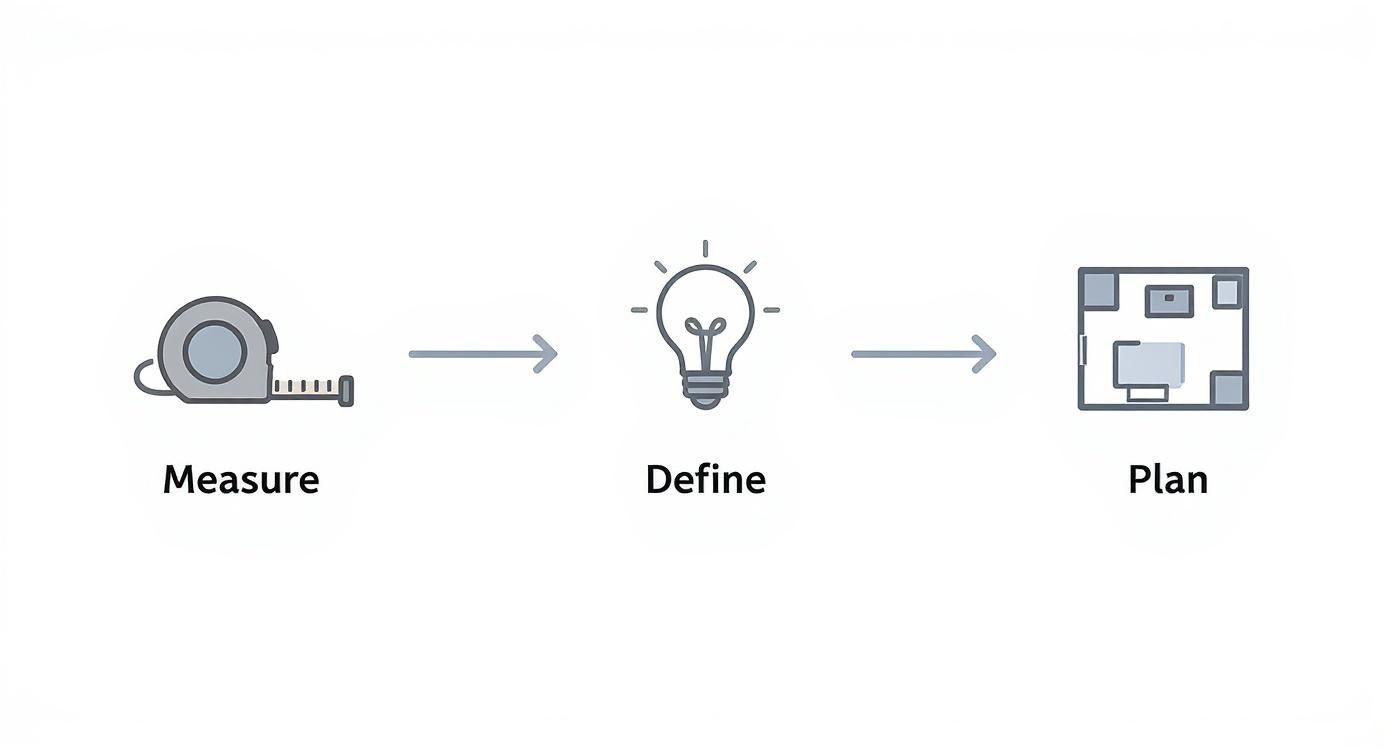
Once you've measured your space and defined its purpose, you're no longer just shopping—you're executing a well-thought-out plan. You have the tools to make every choice with confidence.
With this foundation in place, you’re ready to move on to the fun part: selecting pieces that tell your story.
Finding Your True North in Design
With a solid floor plan in hand, you can dive into the best part: defining the look and feel of your room. Let's be honest, design labels like "Mid-Century Modern" or "Bohemian" can feel intimidating. But don't get hung up on them. The real goal isn't to perfectly replicate a specific style from a magazine; it's to create a space that feels authentically you.
Think of yourself as a style detective. The first step is simple: start a mood board. You don't need any fancy tools for this—a Pinterest board, a folder on your desktop, or even a physical corkboard and some pins will work perfectly.
Pinpoint Your Personal Style
Start gathering images of rooms you genuinely love. Don't second-guess yourself here. If a picture makes you feel something, save it. Pull inspiration from everywhere—Instagram, design blogs, a scene from a movie, or a room you saw in a friend's house. Just collect what catches your eye.
Once you have about 15-20 images, take a step back and look for patterns. What are the common threads tying everything together?
- Color Palette: Are you consistently saving images with warm, earthy tones like terracotta and beige, or do you lean toward cool blues, grays, and crisp whites?
- Favorite Textures: Look at the surfaces. Do you see a lot of smooth leather, cozy bouclé, sleek metal, or the rustic grain of natural wood?
- Go-To Shapes: Are the silhouettes in your saved images soft and curvy, or are they defined by sharp, clean lines and geometric forms?
This isn't just about picking pretty pictures. It's about understanding the why behind your preferences. You're building a personalized design brief based on your own gut feelings, which will give you the confidence to choose pieces that truly resonate.
By identifying the common themes in what you love, you're creating a blueprint for a living room that is a true reflection of you, not a copy of a catalog page.
The Art of Mixing, Not Matching
This is also where you unlock the secret to a beautifully curated room. Understanding your core style elements frees you from the "furniture set" trap, which can leave a room feeling one-dimensional and predictable. Instead, you can confidently select individual pieces that work together because they share a common thread—be it color, material, or general shape.
For example, a classic roll-arm sofa can look incredible next to a more modern, square-armed accent chair if they're grounded by a similar color palette. A luxurious velvet sofa feels even richer when paired with a chair in a natural, woven fabric. It's this thoughtful contrast that builds character and depth.
If you want to dive deeper into this, our guide on how to mix furniture styles is a great resource.
Armed with this knowledge, you're no longer just shopping for a couch. You're ready to select foundational pieces that will tell your home’s unique story. Now, let's get to it.
Select Your Foundational Anchor Pieces
Every well-designed living room has its star players—the big, foundational pieces that set the tone for the entire space. Nine times out of ten, that's your sofa. It's where you'll unwind, chat with friends, and binge-watch your favorite shows, so getting this choice right is something you’ll appreciate for years.
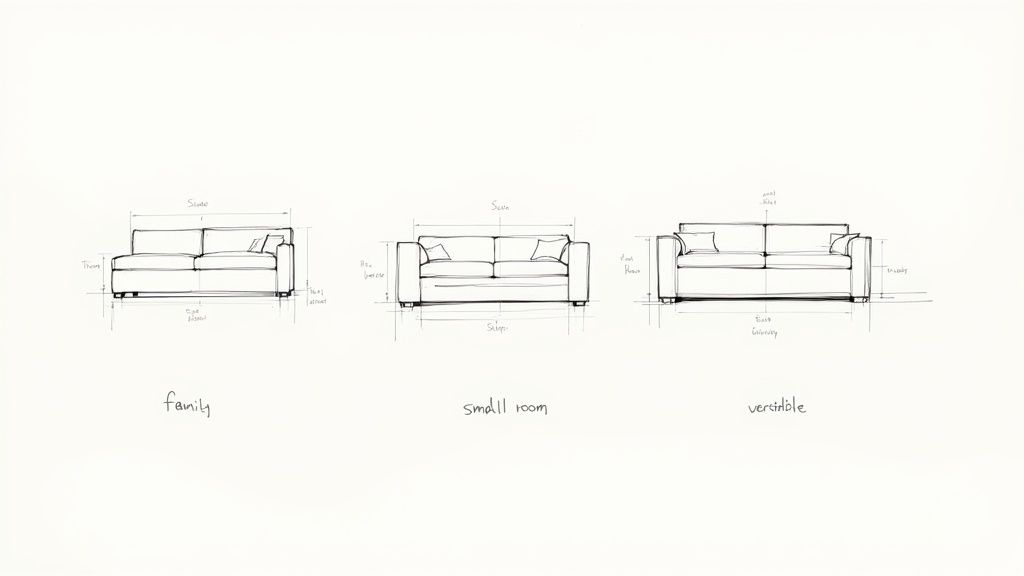
This goes way beyond just picking a fabric you like. The real secret is nailing the scale and proportion, making sure your new furniture fits the room without dominating it. That layout plan you made earlier? Now's the time to use it. It's your map for understanding how a sofa will truly feel in the space, not just how it looks in a showroom.
Choosing the Perfect Sofa
First things first: what kind of sofa do you actually need? Here’s how you can choose the perfect sofa for your family’s needs. If your family lives for movie marathons, a sprawling sectional that lets everyone pile on might be the best investment you ever make. But if you’ve got a smaller room meant more for conversation, a stylish loveseat and a couple of great accent chairs could be a much smarter fit.
Here are a few of the most common sofa types you'll run into:
- Standard Sofa: The classic three-seater. It’s incredibly versatile and slots easily into most layouts. You really can't go wrong.
- Sectional Sofa: Perfect for larger families or anyone trying to squeeze in as much seating as possible. They usually come in L-shapes or U-shapes to hug a corner or divide a room.
- Loveseat: A cozy two-person sofa that's a great solution for apartments, formal living rooms, or as a partner to a larger sofa.
- Sofa with Chaise: This gives you the best of both worlds—the feel of a sectional with a dedicated spot to put your feet up, but without taking up quite as much floor space.
Key Takeaway: Whatever you do, try to resist the temptation of a matching living room "set." The most interesting, personal rooms are built by choosing pieces that complement each other, not ones that are identical. Mix it up with different materials, shapes, and leg styles to create some visual contrast.
This move toward more intentional and functional design isn't just a niche trend. The global living room furniture market was valued at around USD 200 billion in 2023 and is projected to keep climbing. It shows that people everywhere want furniture that looks good and works hard for their lifestyle. You can explore more about these market trends and what’s driving them.
Beyond the Sofa: Other Anchor Pieces
Once you've locked in your main seating, use the same thinking for the other big items. Your coffee table and media console are next on the list.
Coffee Table Sizing: A simple rule of thumb I always share is to pick a coffee table that's roughly two-thirds the length of your sofa. As for height, aim for it to be within a few inches of your sofa's seat. Anything too low or too high just feels awkward to reach for.
Media Console Proportion: When choosing a stand for your TV, make sure it's at least a few inches wider than the screen on both sides. This gives it a sturdy, balanced look and stops your expensive TV from looking like it's about to topple over.
Putting this much care into your foundational pieces is the most important part of how to choose living room furniture. You’re not just filling an empty space; you're building the framework for your life at home.
Choose Materials and Finishes That Last
This is where your living room’s personality really starts to shine. The materials and finishes you pick dictate more than just the look; they control the feel and, most importantly, how well your furniture holds up over time. Here’s how you can select surfaces and fabrics that can handle your real life, making sure your investment is as durable as it is beautiful.
For the big pieces like sofas and chairs, the upholstery fabric is everything. Looking into the best fabrics for upholstery is a great starting point for balancing style, durability, and practicality. Think about your daily reality. Do you have pets, kids, or a busy household that loves to entertain?
Performance fabrics are a lifesaver for active homes, engineered to fight off stains and fading. But then there's the rich texture of natural leather, which develops a stunning patina over the years. It’s a timeless choice that genuinely gets better with age.
Matching Materials to Your Lifestyle
The most important thing is to be honest about how you live. That gorgeous, light-colored linen sofa might be a showstopper, but it demands a completely different kind of attention than a tough microfiber or a forgiving tweed.
Here’s a quick look at some common options:
- Performance Fabrics: These are your best friends for high-traffic areas or homes with kids and pets. They’re synthetic materials built from the ground up to be easy to clean and incredibly resilient.
- Leather: It's famous for its longevity and classic good looks. It’s an amazing choice for durability, but it can get scratched, so that's something to keep in mind if you have pets with claws.
- Natural Fibers (Cotton, Linen): These fabrics feel breathable and create a relaxed vibe. They're beautiful, no doubt, but can be more prone to wrinkling and staining unless they're treated or blended with other fibers.
You have the power to select fabrics that not only look fantastic but also make your life easier.
Beyond Fabric: Finishes for Case Goods
Don't forget about your "case goods"—that’s the industry term for pieces like coffee tables, consoles, and bookcases. The finish on these items sets the tone for the room and will absolutely impact your cleaning routine.
A glossy lacquer finish, for example, can bring a touch of modern glam but will show every single fingerprint. A matte or satin wood finish is much more forgiving. In the same way, a glass coffee table can make a small room feel more open, but you’ll be wiping it down constantly to keep it looking sharp.
Don't just look at the surface; investigate the construction. A solid wood frame that has been kiln-dried is far more likely to resist warping and last for decades compared to pieces made from particleboard or MDF.
In the end, choosing the right materials is about arming yourself with the knowledge to see past the showroom polish. When you understand how different fabrics and finishes will actually perform in your home, you can pick furniture you’ll love for years, not just for a season.
Layer In Your Personality with Accent Furniture
Once you've got your main furniture pieces in place—the sofa, the sectional—it's time for the fun part. This is where you get to infuse the room with your own unique style. Think of accent furniture, rugs, and lighting as the finishing touches that tell your story and make the space truly feel like home.
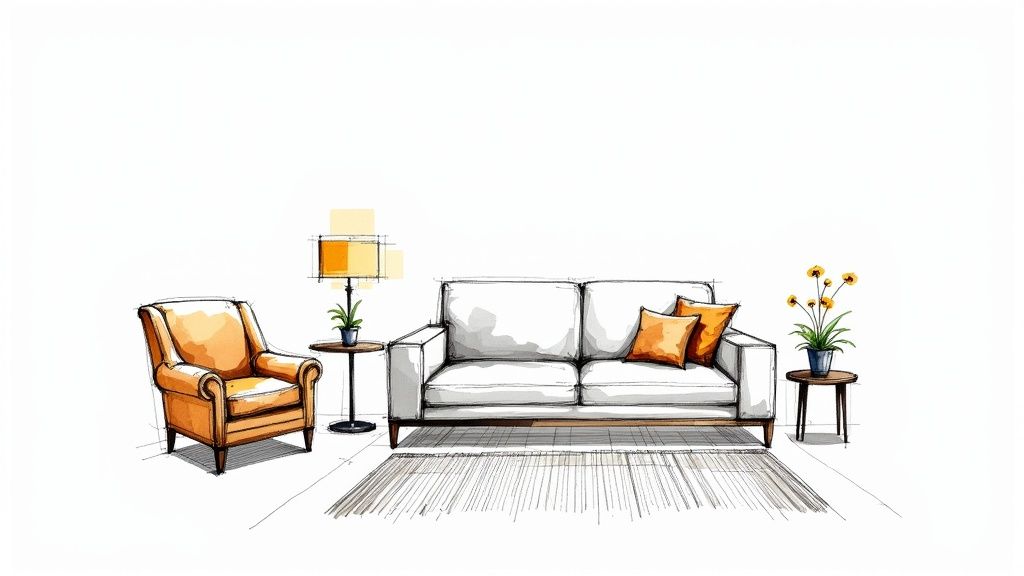
This is your chance to be a bit more expressive and curate a look that feels collected over time, not bought straight off a showroom floor. Forget about perfectly matched sets; the goal here is to create interesting contrast and a sense of balance.
Add Character with Accent Chairs and Tables
An accent chair is one of the easiest ways to start layering. It's a fantastic opportunity to introduce a new shape, a bold color, or a different texture that plays well with your sofa. The key is to think in terms of contrast to create visual energy.
- Shape: Got a big, comfy sofa with soft, rolled arms? Juxtapose it with a chair that has sharp, clean lines and a more structured frame.
- Material: Try pairing a classic fabric sofa with a rich leather armchair or a woven rattan piece. Mixing materials like this adds so much depth and makes the room more interesting to touch and see.
- Visual Weight: If your sofa is a solid, skirted piece that sits right on the floor, an accent chair with long, elegant legs will open up the space and keep it from feeling too heavy.
The same principle applies to side tables. Don't feel obligated to match your coffee table. A sleek metal end table can look stunning next to a rustic wood coffee table, adding another layer of texture and style.
Define the Space with Rugs and Lighting
Never underestimate the power of a good area rug. It acts as an anchor for your main seating area, pulling your sofa and chairs together into a cozy, cohesive unit. As a rule of thumb, your rug should be at least 6-8 inches wider than your sofa on both sides. Ideally, the front legs of the sofa and all accent chairs should sit comfortably on it.
Finally, let's talk about lighting. A single overhead light is functional, but it often creates a flat, harsh atmosphere. Layering your lighting is what gives a room that warm, inviting glow. You'll want a mix of sources:
- Ambient Lighting: This is your primary light source, like a chandelier or a flush-mount fixture.
- Task Lighting: This is focused light for specific activities, such as a floor lamp next to your favorite reading chair.
- Accent Lighting: Think of this as mood lighting. A small table lamp on a console or a picture light adds warmth and highlights certain features in the room.
These finishing touches are what transform a house into a home. They fill the space with personality and create a living room that’s a true reflection of you and your experiences.
And don't forget the walls! Learning about selecting framed pictures for your living room is a fantastic way to inject even more color and personal style into the space.
By carefully choosing these final elements, you create a living room that doesn't just look good, it feels right. It becomes a space you can’t wait to come home to.
Budget and Buy with Total Confidence
A dream living room is absolutely within reach, no matter your budget. The secret is having a smart plan. This final step is all about navigating the numbers and the practical side of purchasing, so you can bring your vision to life without any last-minute stress or surprises.
Set a Smart and Realistic Budget
Before you even think about shopping, land on a total amount you’re genuinely comfortable spending. This number isn't a restriction; it's a framework that helps you decide where to splurge and where to save. The real goal is to put your money where it counts for long-term value.
Think about how you’ll actually use each piece day-to-day.
- Invest Here: Your sofa or sectional is the undisputed workhorse of the living room. It's where life happens. Dedicate a good chunk of your budget here for a high-quality frame and durable fabric that will stand up to years of use.
- Save Here: Items like trendy decor, accent pillows, and small side tables are perfect for being more budget-conscious. These are the things you can easily and affordably swap out later when you get the itch to refresh your style.
By investing in those core, foundational pieces, you're building a room that’s made to last, both in terms of style and sheer durability.
Navigating the Purchase Process
Okay, so you have your budget. That's half the battle. Now comes the nitty-gritty of actually buying the furniture, and getting these details right is key to a smooth, headache-free experience.
Be sure to ask about lead times right away. A custom-ordered sofa can take several weeks or even months to be built and delivered, while in-stock items might be available almost immediately. Knowing this helps you manage your own timeline and expectations.
You’ll also want to get crystal clear on the return policy. Find out if there are restocking fees or special conditions for returning custom pieces. Having this information upfront gives you peace of mind and protects your investment.
Finally, confirm all the delivery details. Will the delivery team bring the furniture inside and place it for you? Do they offer assembly and haul away the packaging? A seamless delivery day is the perfect finishing touch. Thinking through these practicalities is how you choose living room furniture with total confidence. You're not just buying an object; you're investing in your home.
At Miller Waldrop Furniture & Decor, we are here to provide the tools and expertise you need to create the living room you've always wanted. When you’re ready to find that perfect centerpiece for your room, you can explore our collection of customizable sectionals and sofas to find the right style and fit for your home.