


Your Guide to Choosing the Best Mattress for Side Sleepers with Shoulder Pain


If you're a side sleeper battling shoulder pain, you've likely discovered that not all mattresses are created equal. Your path to relief begins with a mattress in the medium-soft to medium range, which is about a 5 to 6.5 out of 10 on the standard firmness scale. This sweet spot is your secret weapon, offering enough softness to cradle your shoulder and dissolve pressure, while still providing the firm support needed to keep your spine perfectly aligned all night long.
Your Guide to Waking Up Without Shoulder Pain
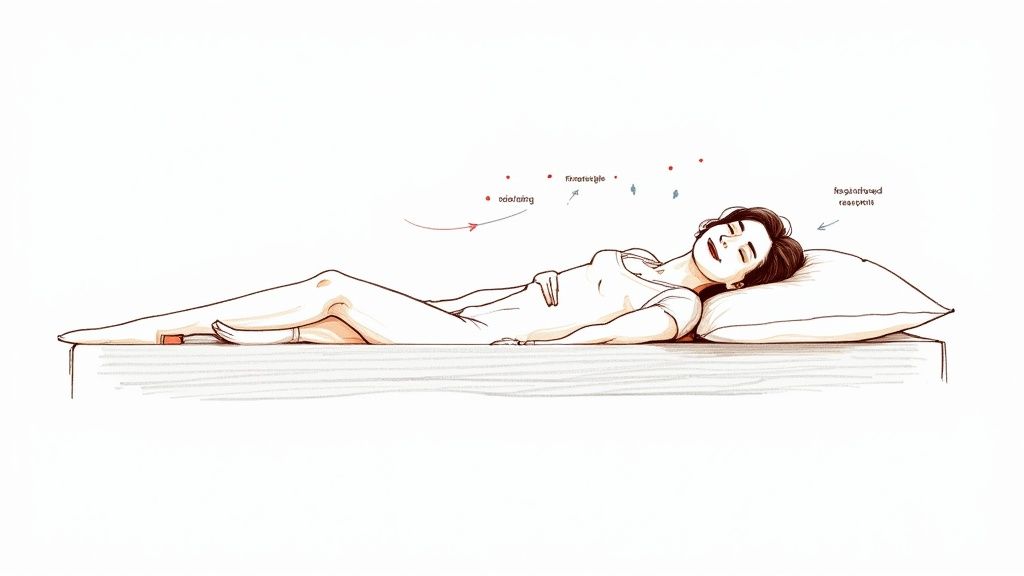
Waking up to a throbbing, stiff shoulder is more than just an annoyance—it can sabotage your entire day. The good news is, this doesn't have to be your reality. This guide is your roadmap to finding genuine relief, empowering you to understand exactly why your shoulder is so susceptible to pain and how the right mattress can become your most powerful tool in the fight for better sleep.
You are not alone in this. A significant 60%+ of adults sleep on their side, making it the most common sleeping position. The challenge? Many of them report shoulder or hip pain. This occurs because when you lie on your side, your body weight concentrates on these small areas, creating intense pressure points that can lead to chronic aches.
To help you choose the perfect mattress for your needs, here’s a quick guide to the most important features we'll explore. Consider it your strategic brief before we dive into the details.
Table: Key Features for Shoulder Pain Relief
| Key Feature | Why It Matters for You | What to Look For |
|---|---|---|
| Pressure Relief | Dissipates your body weight to prevent aches and numbness. | Contouring materials like memory foam or latex. |
| Spinal Alignment | Keeps your spine straight to avoid neck and back strain. | A supportive core with a softer top layer. |
| Medium Firmness | The "just right" feel that balances cushioning and support. | Mattresses rated 5-6.5 on a 10-point scale. |
| Zoned Support | Provides targeted relief exactly where your body needs it most. | Firmer foam under the hips and softer under the shoulders. |
This table provides a high-level overview, but understanding how these features work together is what will truly empower you to make a choice that brings you lasting comfort.
The Path to Pain-Free Sleep
Solving this problem for good means seeing past the marketing hype. We’re going to give you a clear framework for finding a mattress that truly cradles your body, so you can make a decision that you'll feel great about for years to come.
Your journey to better sleep starts with understanding a few key concepts:
- Pressure Points Explained: We’ll break down how a mattress can either create painful hotspots or make them vanish.
- Finding Your Firmness: You'll learn why "medium" is often the magic word for side sleepers and how to fine-tune the perfect level for your unique body type.
- The Best Materials: We'll explore why materials like memory foam and latex are so effective at contouring to your body's natural curves.
- Don't Forget the Pillow: A great mattress can't win the battle alone. The right pillow is an essential ally for keeping your neck and shoulders aligned. You can learn how to choose the perfect pillow in our detailed guide.
The right mattress doesn’t just support your body; it actively works to dissolve pressure points. Think of it as a tool designed to help you wake up feeling restored, not sore.
Of course, a new mattress is just one piece of the puzzle. Combining it with other therapies can make a huge difference. For extra relief from nagging discomfort, you might want to explore some gentle massage techniques for shoulder pain relief. When you pair the right sleep surface with proactive care, you create a powerful strategy for long-lasting comfort.
Why Side Sleeping Can Cause Shoulder Pain
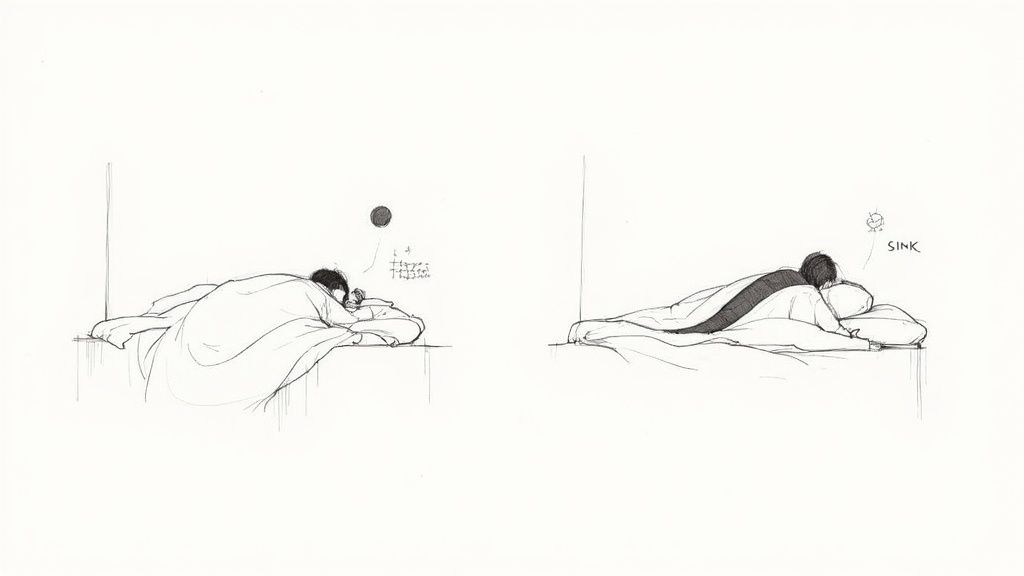
If you're waking up with a sore shoulder, it's easy to blame your sleeping position. But side sleeping itself isn't the villain—in fact, it's the most common way people sleep. The real problem begins when your mattress isn't equipped to handle the unique demands of this position.
Think about it: when you're on your side, your entire upper body weight presses down on the relatively small, complex joint of your shoulder. If your mattress doesn't have enough give, it pushes right back, creating a painful pressure point.
A mattress that’s too firm is a major culprit. It forces your shoulder to bear the brunt of your weight instead of cushioning it. This intense, constant pressure can pinch nerves and restrict blood flow, which is why you might wake up with that dreaded numb, tingling, or aching feeling in your arm.
On the flip side, a mattress that’s too soft causes its own set of issues. Instead of supporting you, it lets your torso sink way too deep, creating a hammock-like curve. This throws your spine out of whack and forces the muscles in your neck and shoulder to work all night trying to stabilize you, leaving you stiff and sore by morning.
The Role of Spinal Alignment
The secret to pain-free sleep is all about maintaining a straight spine. When you’re lying on your side, your spine should look like a straight, horizontal line from your neck down to your tailbone. A poor mattress disrupts this crucial alignment.
- On a Firm Mattress: Your shoulder and hip can't sink in, so they get pushed upward, forcing your spine into an unnatural arc.
- On a Soft Mattress: Your midsection sinks too far down, causing your spine to sag into a U-shape.
Either way, you’re putting a ton of stress on your joints and muscles. The perfect mattress for a side sleeper strikes a delicate balance: it's soft enough to let your shoulder and hip sink in but firm enough to keep your spine level. We dive deeper into this in our guide on finding that “just right” feel for side sleepers.
A great mattress works with your body, not against it. It should contour to your shape, distributing your weight evenly to dissolve pressure points, especially in the shoulder area.
Understanding Pressure Points
So, what exactly are pressure points? They're the spots where your body’s weight is most concentrated. For anyone who sleeps on their side, the big ones are the shoulder and the hip. When your mattress doesn't properly cushion these areas, a few things happen.
- Reduced Blood Flow: That constant pushback from the mattress can temporarily cut off circulation, leading to that "pins and needles" sensation.
- Nerve Compression: Nerves running through your shoulder can get pinched between bone and mattress, causing sharp pain or numbness that can linger.
- Joint Inflammation: Night after night of this stress can contribute to chronic inflammation, turning a small ache into a persistent problem.
Once you understand these mechanics, you can stop looking for just any "comfortable" mattress. Instead, you can begin your search for a bed specifically engineered to give your body the support and pressure relief it actually needs for truly restorative, pain-free sleep.
How to Choose the Perfect Firmness Level for Real Relief
When you're trying to find the best mattress for shoulder pain, almost everything boils down to one critical factor: firmness. But "firmness" isn't as straightforward as it sounds. Think of it like the suspension in a car. If it's too stiff, you feel every single bump in the road. If it's too soft, you sink and bottom out. Your mattress needs to find that perfect balance for your body.
The goal isn't just to find the "softest" or "firmest" mattress, but the one that’s just right for you. For the vast majority of side sleepers, that sweet spot is a medium-soft to medium feel. On the typical 1-10 firmness scale, where 1 is like sleeping on a cloud and 10 is the floor, you're probably looking for something rated between a 5 and 6.5.
This range is where you find the ideal partnership between cushioning and support. A mattress in this zone is soft enough to gently cradle your shoulder and hip, letting them sink in just enough to take the pressure off. But it’s also supportive enough to keep your spine in a healthy, straight line, which is key to preventing back and neck pain.
Why Medium Firmness Is a Side Sleeper's Best Friend
A mattress that’s too firm is the number one enemy of a side sleeper's shoulder. It’s like sleeping on a board—it just pushes back against the widest parts of your body. This constant resistance is what causes intense pressure buildup, leading to that nagging morning ache, numbness, or that awful pins-and-needles feeling down your arm.
On the flip side, an overly soft mattress might feel like a dream for the first five minutes, but it's a nightmare for your alignment. It lacks the structure needed to hold up your core, causing your midsection to sink way too deep. This creates a "hammock effect" that throws your spine out of whack and forces your shoulder muscles to work all night trying to stabilize you.
A great medium-firmness mattress is like a smart tool for pain relief. It knows exactly where to give (your shoulder) and where to hold firm (your waist and back), ensuring you wake up feeling refreshed, not sore.
And this isn't just a hunch; scientific research confirms it. One clinical trial showed that after people switched to a medium-firm mattress, they reported a 55% improvement in sleep quality and a major drop in pain. The study specifically pointed out that mattresses rated around 5.5 to 6 on the firmness scale can slash pressure on the shoulders and hips by 20% to 40% compared to other models. You can explore the science behind mattress firmness and pain relief yourself.
Finding Your Personal Sweet Spot
While that 5 to 6.5 range is a brilliant starting point, your body weight is another piece of the puzzle:
- Lighter individuals (under 130 lbs): You might actually get better contouring from a slightly softer mattress, maybe around a 4-5, without having to worry about sinking in too much.
- Heavier individuals (over 230 lbs): You'll probably need something a bit firmer, closer to a 6.5-7, to get that crucial support and prevent the feeling of "bottoming out" on the mattress.
At the end of the day, you know your body best. Understanding what firmness actually does gives you the power to choose a sleep surface that works with you, not against you. If you're ready to find that perfect balance, our team of Sleep Experts at Miller Waldrop can walk you through our collection of mattresses designed for superior pressure relief.
Finding the Right Materials for Pressure Relief
Once you’ve locked in that Goldilocks firmness level, your next mission is picking the right materials. Think of mattress materials like different tools in a toolbox, each designed to tackle shoulder pain in its own unique way. The best one for you really boils down to personal preference and how you want your bed to feel.
The three main players in the comfort game are memory foam, latex, and hybrid mattresses. Each brings something special to the table, particularly for side sleepers. Let’s break down what makes each one tick so you can find the perfect match for your sleep style.
The Contouring Champion: Memory Foam
Memory foam is famous for one thing: its incredible ability to contour to your body. Imagine pressing your hand into a fresh piece of dough—it leaves a perfect impression. That’s precisely what memory foam does for you. This material gives you that slow-sinking, deep-hugging sensation that’s amazing at distributing your weight evenly.
For a sore shoulder, this is fantastic news. The foam creates a custom cradle, allowing your shoulder to sink in just enough to melt away the pressure points that cause that aching, pins-and-needles feeling. If you love the sensation of being in your mattress rather than just lying on top of it, memory foam is your best bet.
The Buoyant Supporter: Latex
Latex offers a completely different kind of relief. Instead of that deep, slow sink you get from memory foam, latex feels more responsive and almost buoyant. Picture pressing into a giant, soft rubber eraser—it has some give, but it also gently pushes back.
This natural responsiveness cushions your shoulder without ever making you feel trapped or "stuck." Latex is also incredibly durable and sleeps cooler than traditional memory foam, which is a huge plus for anyone who tends to overheat at night. It delivers fantastic pressure relief with a bit more springiness, so you feel lifted and supported.
The infographic below really brings home how different materials and firmness levels work together to affect your alignment.
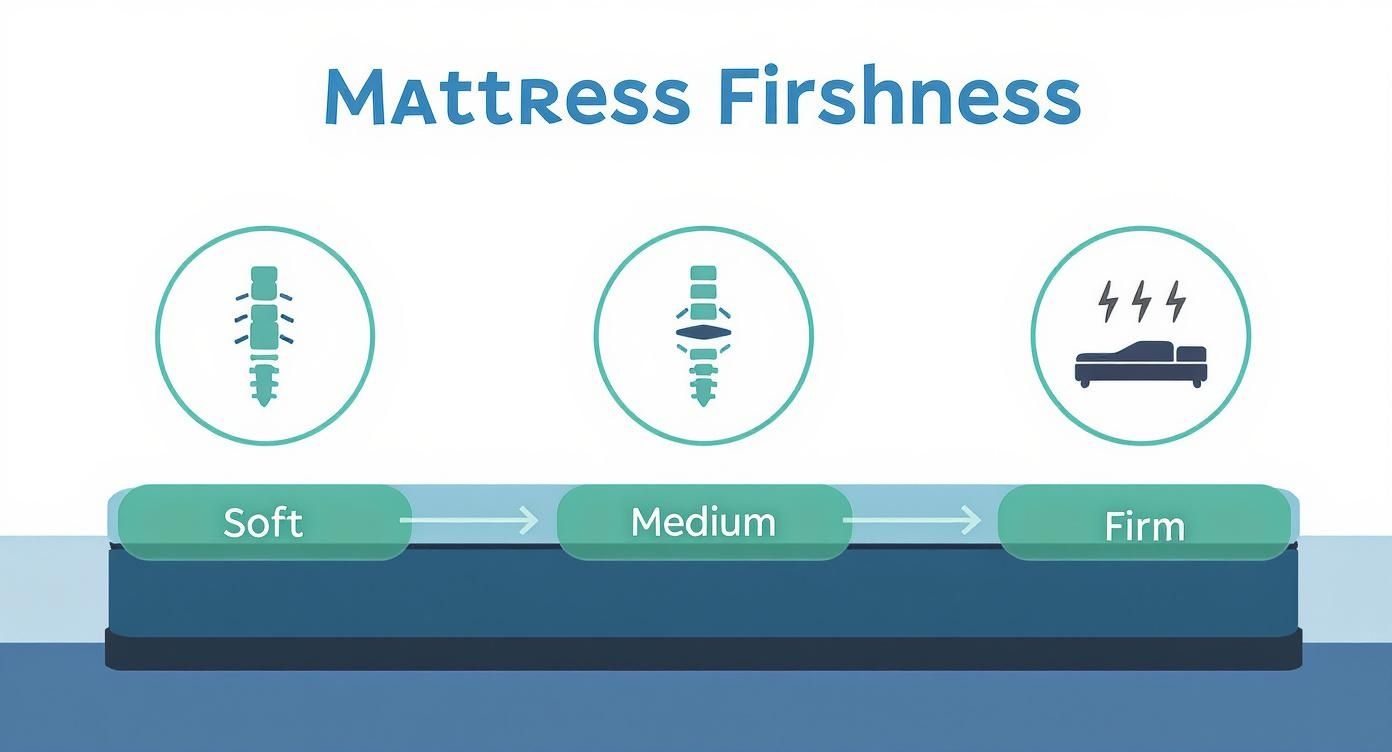
As you can see, that medium feel is the sweet spot. It’s the only one that keeps the spine straight while giving the shoulder the cushioning it desperately needs.
The Best of Both Worlds: Hybrid Mattresses
What if you can’t decide between the hug of foam and the sturdy support of springs? Well, you don’t have to. Hybrid mattresses are designed to give you the best of both worlds. They start with a supportive core of individually wrapped innerspring coils and top it with thick comfort layers of memory foam or latex.
This combination is a true game-changer for side sleepers. You get the targeted cushioning your shoulder needs from the foam up top, plus the robust, edge-to-edge support from the coils underneath.
This dual-layer design prevents the all-foam "sinking feeling" while still delivering that crucial contouring. It’s a fantastic balance. To get a better sense of their design, you can learn more about what a hybrid mattress is and how it benefits sleepers. This dynamic approach is why hybrids are so often the go-to solution for ending shoulder pain for good.
To make things even clearer, here’s a quick rundown of how these materials stack up for a side sleeper.
Mattress Material Comparison for Side Sleepers
Choosing a material is all about matching its core strengths to your specific needs. This table breaks down the key differences to help you decide.
| Material Type | Pressure Relief | Spinal Alignment | Best For |
|---|---|---|---|
| Memory Foam | Excellent. Deep contouring cradles the shoulder and hip, melting pressure away. | Very Good. Molds to the body's curves, keeping the spine straight. | Sleepers who love a deep "hug" and want maximum pressure point relief. |
| Latex | Good. Responsive cushioning that supports without deep sinking. | Excellent. Naturally buoyant, it prevents the hips from sinking too far. | Hot sleepers and those who prefer an "on top" feel with more bounce. |
| Hybrid | Excellent. Combines foam/latex comfort layers with a supportive coil core. | Excellent. Coils provide robust, zoned support for perfect alignment. | Sleepers who want balanced support, pressure relief, and a traditional feel. |
Ultimately, whether you lean toward the deep cradle of memory foam, the gentle lift of latex, or the balanced feel of a hybrid, the right material will make all the difference in achieving a painless night's sleep.
Advanced Features for Next-Level Comfort
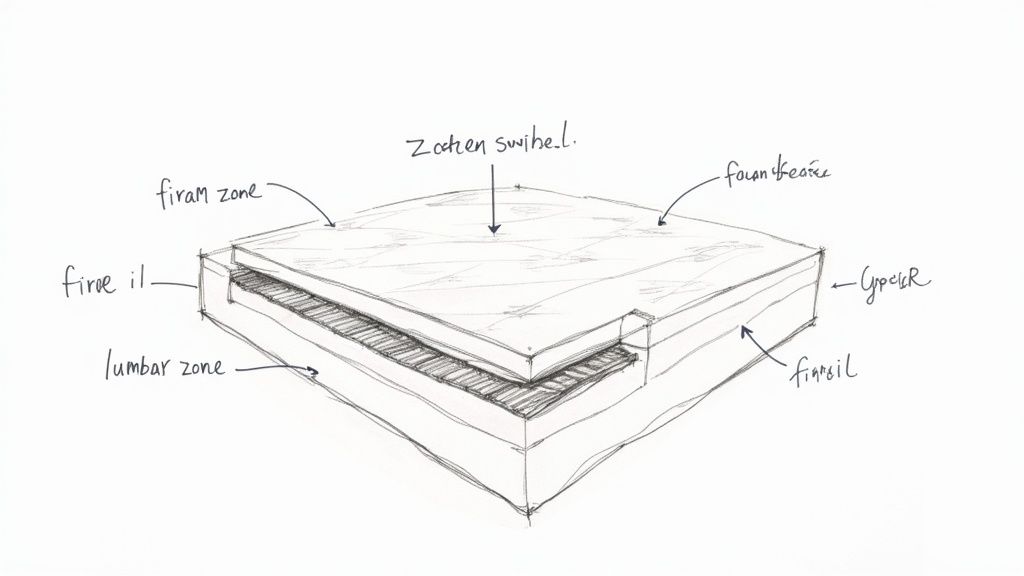
Alright, you've got the basics down—firmness levels and materials are no longer a mystery. Now you can get into the details that separate a decent mattress from one that truly feels life-changing. These are the thoughtful design elements that transform a simple bed into a dedicated tool for waking up without that nagging shoulder pain.
The single most important feature to understand is zoned support. Imagine a mattress that’s smart enough to know where you need softness and where you need firmness. Instead of one uniform feel from head to toe, a zoned mattress is engineered with softer foam under your shoulders and hips, allowing them to sink in just the right amount.
At the same time, it provides firmer support under your torso and lower back. This targeted approach is the key to proper alignment. It stops your midsection from dipping too low, which can throw your spine out of whack, while giving your shoulder the cushioning it desperately needs. It’s a design that works with your body, not against it.
Key Features to Look For
Beyond zoned support, a few other features make a world of difference. When you're comparing different mattresses, keep an eye out for these.
- Robust Edge Support: This is exactly what it sounds like—a reinforced perimeter. Strong edges mean you can sleep right to the very edge without that dreaded feeling of rolling off. It also makes getting in and out of bed easier and is a hallmark of a well-built, durable mattress.
- Motion Isolation: If you sleep with a partner, this is a non-negotiable. Good mattresses absorb movement, so you won't be woken up by every little toss and turn. Materials like memory foam and mattresses with individually pocketed coils are fantastic at this.
A mattress with advanced features doesn’t just provide a comfortable surface; it actively works to solve the specific challenges side sleepers face. Zoned support, strong edges, and motion isolation are the details that deliver next-level comfort and lasting relief.
Finding the Right Complete Sleep Solution
Once you know what these terms mean, you can cut through the marketing fluff. You’ll be able to read product descriptions and immediately spot the mattresses built with your specific needs in mind. For instance, a model like the Serta Perfect Sleeper Midsummer Nights Mattress uses a Gel Band support system to deliver this kind of targeted relief exactly where you need it.
When you focus on these elements, you’re not just buying a mattress; you're investing in a complete sleep system. It ensures the bed you choose is perfectly equipped to give you the pressure relief and support needed for a truly restorative night. If you’re ready to explore options with these kinds of features, our Sleep Experts at Miller Waldrop are here to help you find the perfect match.
Your Path to a Pain-Free Night's Sleep
So, where do you go from here? You're now armed with everything you need to know to find the right mattress and finally win the battle against shoulder pain.
It really boils down to finding that sweet spot: a medium-firm feel (around a 5-6.5 out of 10 on the firmness scale) that uses pressure-relieving materials like memory foam or latex. If you can find one with zoned support, even better. Think of this not just as buying a new bed, but as a serious investment in your health, your daily energy, and your overall well-being.
You have the power to completely change how you sleep and, more importantly, how you wake up. For those dealing with stubborn, chronic muscle knots, it can also be helpful to look into complementary therapies. Things like myofascial release therapy can work wonders alongside the support you get from a great mattress.
This isn't just about avoiding pain; it's about reclaiming your mornings. The right mattress is your most powerful tool for waking up energized and ready to take on the day.
Ready to make a change? Feel free to explore our handpicked collection of mattresses, all chosen for the specific pressure relief that side sleepers desperately need. Our sleep experts are always on hand to guide you to the perfect fit.
It's time to take back your comfort and start the journey to truly restful, pain-free sleep.
Have Questions? We Have Answers
Shopping for the right mattress can feel like a maze, but you're not alone in your questions. Let's clear up some of the most common concerns we hear from side sleepers looking to finally kick that shoulder pain to the curb.
Can a Mattress Topper Help with Shoulder Pain?
It absolutely can—as a temporary fix. Think of a good 2-3 inch memory foam or latex topper as a band-aid for a mattress that's just too firm. It adds that missing layer of plushness, letting your shoulder sink in just enough to ease the pressure.
But it’s important to see it for what it is: a short-term solution. A topper can't magically fix a worn-out, sagging mattress that's lost its foundational support.
How Long Does It Take to Get Used to a New Mattress?
Great question. You should give your body about 30 nights to fully adjust to a new mattress. This is what we in the industry call the "break-in period," and it's completely normal. Your muscles need time to relax and adapt to a new, more supportive surface.
This adjustment window is exactly why reputable brands offer sleep trials of 100 nights or more. It gives you real-world, no-pressure time to be certain the mattress is the right fit for you and your shoulder.
A new mattress is an investment in your well-being. Give your body the time it needs to settle in and truly feel the benefits of proper alignment and pressure relief.
Is a Firm Mattress Bad for Shoulder Pain?
For most side sleepers, the answer is a definite yes. A genuinely firm mattress just doesn't have the "give" your body needs. Instead of cradling your shoulder and hip, it pushes against them, creating painful pressure points and forcing your spine into an unnatural curve.
While a supportive mattress is crucial, a rock-hard surface is often the main culprit behind shoulder pain for people who sleep on their side. You need a blend of deep-down support with a gentle, contouring top layer.
Now you have the knowledge to find a mattress that will deliver real, lasting comfort. Here at Miller Waldrop Furniture & Decor, our Sleep Experts are dedicated to helping you find that perfect match. Visit us today and start your journey to pain-free mornings.