

Your Guide to the Best Pressure Relief Mattress for Side Sleepers

If you're a side sleeper hunting for the best pressure relief mattress, you’ve probably heard that a medium to medium-soft feel is the way to go. And for good reason. This specific firmness level equips you with the perfect balance—it’s soft enough to cushion your shoulders and hips, yet supportive enough to keep your spine perfectly straight. The result? You can finally wake up without those nagging aches and pains.
Your Toolkit for Waking Up Pain-Free
For the nearly 60% of adults who are side sleepers, waking up with sore hips or shoulders is an all-too-common battle. When you sleep on your side, your body weight concentrates on those small, sensitive areas. The wrong mattress acts against you, amplifying the pressure and leading to restless nights and chronic discomfort.
But the right mattress is your most powerful tool for winning the day. It can completely change the game, enabling you to get the deep, restorative sleep your body needs. This guide is designed to empower you with the knowledge to find it. We’ll walk you through the features that truly matter for your body and sleep habits, so you can transform your bedroom into a true sanctuary for rest.
Finding Your Ideal Firmness: The First Step to Victory
Your body weight is one of the most critical factors in choosing your mattress. What feels like a supportive cloud to a lightweight person might feel like a hammock to someone heavier, causing their spine to sag into a painful curve. On the flip side, a mattress built for a larger frame can feel like a board to someone smaller, creating new pressure points.
The ultimate goal is to find a mattress that perfectly contours to your unique body shape.
Below is a quick-reference guide to help you find that sweet spot. It matches body weight to the ideal firmness needed for proper pressure relief and spinal alignment, giving you the power to make an informed choice.
Mattress Firmness Guide for Side Sleepers
| Your Body Weight | Recommended Firmness Level | Why It Works For You |
|---|---|---|
| Under 130 lbs | Soft to Medium-Soft (3-5/10) | Lighter frames need a softer surface that can easily contour to your curves. This range offers enough give to cradle your shoulders and hips, preventing pressure without feeling stiff. |
| 130 to 230 lbs | Medium to Medium-Firm (5-7/10) | This is the sweet spot for most people. It provides the perfect blend of deep cushioning for pressure points and solid support to keep your spine perfectly neutral all night long. |
| Over 230 lbs | Medium-Firm to Firm (6-8/10) | A firmer mattress gives you the deep compression support needed to prevent sinking in too far. This keeps your spine straight and ensures the mattress’s support layers can do their job effectively. |
Of course, a new mattress is just one part of your wellness arsenal. If you deal with persistent hip pain, incorporating gentle hip pain relief exercises into your daily routine can make a huge difference. While your mattress does the heavy lifting at night, these exercises can help strengthen and stabilize the area during the day.
Your journey to better sleep starts with understanding what your body needs. If you’re also struggling with general back issues, our guide on choosing the best mattress for back pain provides another powerful resource for your quest.
Here at Miller Waldrop, our Sleep Experts are your trusted guides, ready to help you put all this information together and find the perfect mattress. We are committed to helping you find the tools you need to finally wake up feeling refreshed and completely pain-free.
The Science Behind a Good Night's Sleep for Side Sleepers
Most of us are side sleepers—it’s just the most comfortable position. It can help with everything from snoring to heartburn, but it puts your body in a tricky situation. When you lie on your side, your entire body weight presses down on two small, sensitive points: your shoulders and your hips. If your mattress isn't up to the task, that concentrated force is a recipe for a restless night and a painful morning.
This is where the right mattress becomes your hero. Its job isn't just to be soft; it's to intelligently adapt to your body's curves, giving you support where you need it and a gentle cradle where you don’t. The best pressure relief mattress for side sleepers masters this delicate balance, empowering you to sleep soundly.
When Your Spine Is Out of Line
A mattress that’s either too firm or too soft will throw your body out of alignment, and you’ll definitely feel the consequences.
If your mattress is too firm: A hard surface just pushes back. For side sleepers, this means your shoulder and hip can’t sink in at all. They get shoved upward, forcing your spine into an unnatural arc. This strain on your muscles and joints is often the culprit behind that sharp, nagging pain you feel in the morning.
If your mattress is too soft: On the flip side, a mattress without enough core support lets your heaviest parts—usually your hips—sink way too deep. Your spine bows downward into a hammock-like curve, which puts a ton of stress on your lower back. You'll wake up feeling achy and like you never truly rested.
The goal is simple: find a mattress that lets your shoulders and hips dip down just enough to relieve pressure, while still holding up your waist to keep your spine in a perfectly straight line.
Key Insight: A neutral spine is the secret to deep, restorative sleep. The right mattress makes this possible, allowing your muscles to fully relax so your body can truly recover overnight.
Are You Feeling the Effects of Poor Pressure Relief?
Your body is excellent at signaling when something’s wrong. You might not immediately blame your mattress, but the signs are often there. If you’re constantly tossing and turning, trying to find a comfortable spot, or waking up with numb or tingling arms, your mattress is failing its mission.
Morning aches and stiffness are another huge red flag. Pain that’s at its worst when you first get out of bed but seems to fade as you move around is a classic sign of poor spinal support during sleep. Your mattress should work with your body, not against it. If you feel like you're fighting your bed every night, it’s time to find a better ally.
Understanding what your body is telling you is the first step. Now, you can look for features that directly solve these problems. Exploring collections like Tempur-Pedic, renowned for deep, contouring pressure relief, is an excellent way to start your search. When you visit a Miller Waldrop showroom, our Sleep Experts are here to help you connect the dots, turning those morning aches into a clear solution so you can finally find the mattress that lets you wake up pain-free.
Comparing Mattress Types For Side Sleeper Comfort
When you're a side sleeper, the choice between memory foam, hybrid, and latex isn't just about preference—it's about finding the right tool for the job. Each material interacts with your body differently, and understanding those nuances is the key to finally conquering shoulder and hip pain. Forget generic marketing hype; here’s how you can choose the mattress that actually performs for you.
The fundamental challenge for any side sleeper is striking a delicate balance. You need a surface that’s soft enough to cushion the curves of your shoulders and hips, but also firm enough to keep your spine perfectly straight. Tip too far in either direction, and you'll wake up sore.
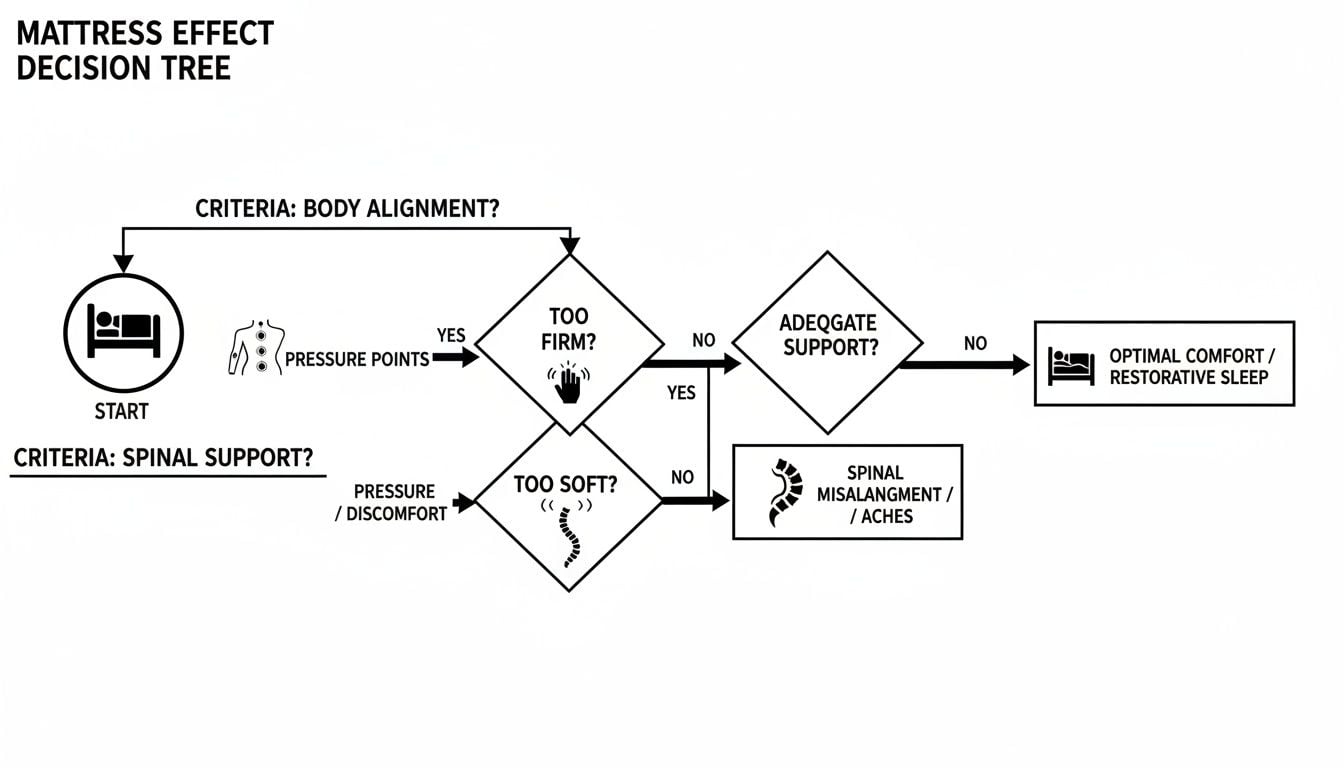
As you can see, a mattress that’s too firm creates sharp pressure points, while one that’s too soft causes your midsection to sink, throwing your spine out of alignment. Your mission is to find that perfect sweet spot where the mattress works with your body, not against it.
Mattress Type Comparison for Side Sleepers
To empower you in your decision, here’s how each mattress type stacks up against the most important factors for side sleepers.
| Key Feature | Memory Foam | Hybrid | Latex |
|---|---|---|---|
| Pressure Relief | Excellent. Deeply conforms to cushion shoulders and hips. | Very Good. Foam layers provide cushioning, but support from coils is more prominent. | Good. Responds and cushions but offers more of a "lifting" than "sinking" feel. |
| Spinal Support | Good. Varies by foam density and firmness. Softer foams can sometimes lack support. | Excellent. Coil systems, especially with zoned support, provide robust and targeted support. | Very Good. Naturally supportive and resilient, preventing excessive sagging. |
| Feel & Response | Slow-sinking. Creates a deep, body-hugging cradle. Slow to respond when you move. | Balanced. A mix of contouring foam on top and responsive bounce from the coils below. | Buoyant & Bouncy. Instant response time, making it feel like you're floating on top. |
| Temperature | Fair to Good. Modern gel and open-cell foams have improved, but it can still retain heat. | Excellent. The coil layer promotes significant airflow, making it one of the coolest options. | Very Good. Naturally breathable, especially when aerated (Dunlop or Talalay process). |
| Motion Isolation | Excellent. Absorbs movement better than any other material. Ideal for couples. | Good. Coils can transfer some motion, but pocketed coils minimize this effect. | Good. Less motion transfer than innerspring but more than memory foam. |
This table gives you a high-level view, but the right choice often comes down to the subtle differences in feel and your personal sleep habits.
Memory Foam: The Deep Contouring Champion
Memory foam’s reputation is built on its unique, slow-melting feel. For you as a side sleeper, this is its biggest asset. It allows your shoulder and hip to sink in just enough to relieve pressure, distributing your weight so effectively that it feels like the mattress was molded just for you. Worried about heat? Don't be. Today's memory foams aren't like the old ones; they often include cooling gel, graphite, or open-cell designs to stay breathable.
Here’s how you know memory foam is the right tool for you:
- You sleep almost exclusively on your side and love the feeling of being "hugged" by your mattress.
- You share a bed with a restless partner. Its ability to stop motion in its tracks is second to none, meaning you won't feel their tossing and turning.
Of course, that deep "sinking" feeling isn't for everyone. If you're an active sleeper who changes positions often, you might find it a bit restrictive. If you'd rather feel more "on" the bed, a hybrid or latex mattress will likely suit you better. Our guide on innerspring vs. memory foam mattresses offers even more detail on how these materials compare.
Hybrid Mattresses: The Best of Both Worlds
You can think of a hybrid mattress as the ultimate problem-solver. It takes the pressure-relieving comfort layers from a foam mattress and pairs them with a robust innerspring coil system. For you, this means you get the contouring your shoulders and hips need from the top layers, while the coils below provide the heavy-lifting support to keep your spine aligned.
Key Takeaway: Many premium hybrids use zoned support, a massive advantage for side sleepers. These systems place stronger coils under your heavier torso and hips, with more forgiving coils at the shoulder zone. This creates an incredibly ergonomic surface that adapts to you.
This intelligent design is exactly what makes a mattress work for a side sleeper's body, not against it. High-end models like the Stearns & Foster Reserve Medium Tight Top showcase this technology perfectly, offering a sophisticated blend of plush comfort and underlying support that appeals to a huge range of people.
A hybrid is likely your best bet if:
- You're a side sleeper who tends to sleep hot. The spring core allows for fantastic airflow, keeping the mattress much cooler than an all-foam design.
- You want that perfect balance. You get the pressure relief you need without feeling trapped, as the coils provide a gentle bounce that makes moving around effortless.
Latex Mattresses: The Buoyant and Durable Option
Latex offers a feel that’s all its own—it’s buoyant, responsive, and almost springy. While memory foam slowly molds to your body, latex compresses and bounces back the moment you move. For side sleepers, this translates to pressure relief that feels more like you're being lifted up than sinking in. It still cushions your pressure points, but it keeps you floating on the surface.
Here’s how to tell if latex is the right choice for you:
- You prioritize natural and durable materials. 100% natural latex is made from the sap of rubber trees, making it a long-lasting and sustainable option.
- Allergies are a concern. Latex is naturally hypoallergenic and resists common allergens like dust mites and mold.
- You dislike the "quicksand" feel of memory foam. The responsive, lively feel of latex is a refreshing alternative that provides excellent support and relief.
Ultimately, the best pressure relief mattress for side sleepers is the one that fits your body, your budget, and your personal definition of comfort. Think of these materials as different tools, each designed for a specific purpose. The next step is to come feel the difference for yourself at a Miller Waldrop showroom. Our Sleep Experts are trained to help you test each one and find the perfect match, ensuring you wake up feeling refreshed and pain-free.
Essential Mattress Features for Better Sleep
Picking the right mattress material is a great start, but the details are what really separate a decent night’s sleep from a truly restorative one. Once you’ve decided between foam, hybrid, or innerspring, the next step is to look at the specific design features that make a bed the best pressure relief mattress for side sleepers. These are the elements that give you fine-tuned control over your comfort.
Think of it this way: the mattress core provides the foundational support, but these features refine its performance. They ensure every part of your body gets precisely what it needs to relax and recover. You aren't just buying a mattress; you're building a sleep system customized to you.
Zoned Support Systems for Perfect Alignment
One of the most meaningful innovations in mattress design is zoned support. For anyone who sleeps on their side, this can be a total game-changer. It’s a smart design that creates different firmness levels across the mattress to align with your body’s natural curves and weight distribution.
Here’s how it works to support you:
- Softer Shoulder Zone: The area where your shoulders rest is intentionally made more forgiving. This allows your shoulder to sink in just the right amount, preventing it from getting jammed up toward your ear and causing that all-too-common morning ache.
- Firmer Lumbar and Hip Zone: Since your hips and torso are the heaviest part of your body, this middle third of the mattress is reinforced with denser foam or firmer coils. This crucial support keeps your spine from sagging into a "hammock" shape, which is a primary cause of lower back pain.
A mattress with zoned support doesn't just passively react to your body; it actively works to keep your spine straight. It's a proactive solution for preventing pain before it even starts.
Zoned support isn’t just a nice-to-have feature; for you as a side sleeper, it’s an ergonomic necessity. It provides targeted firmness right where you need it, creating a surface that feels like it was made just for you.
Cooling Technologies for Undisturbed Sleep
After spinal alignment, the next biggest sleep disruptor is temperature. Waking up hot is a frequent complaint, especially with older memory foams that were notorious for trapping body heat. Thankfully, modern mattresses are engineered with advanced cooling technologies designed to keep your temperature stable all night. Staying cool is key to preventing the tossing and turning that pulls you out of deep, restorative sleep.
Here’s how to choose features that help you stay cool:
- Breathable Covers: High-tech fabrics woven with cooling fibers or treated with phase-change materials can actively pull heat away from your skin.
- Gel-Infused or Copper-Infused Foams: These foams have conductive materials mixed in. They work by drawing heat from the surface and dispersing it throughout the mattress, so it doesn't build up around your body.
- Ventilated or Open-Cell Foam: A simple but effective solution. Tiny perforations or an open-cell structure allows air to move freely through the comfort layers, carrying heat away with it.
When these features work together, they create a noticeably cooler and more comfortable sleep environment, helping you stay asleep longer.
Adjustable Bases and Edge Support
To truly complete your sleep system, there are two final pieces to consider. An adjustable base is the ultimate tool for personalized comfort. It lets you elevate your head and feet independently, helping you find that "zero-gravity" position that takes all the pressure off your hips and lower back. For side sleepers, even a slight elevation can make a huge impact.
Finally, don't overlook edge support. A mattress with a reinforced perimeter won't sag or collapse when you sit on the edge or sleep near it. This simple feature makes the entire surface of the bed usable, which is especially important for couples who need to maximize their personal space.
Navigating all these features can feel overwhelming, but our Sleep Experts at Miller Waldrop are here to guide you. We encourage you to visit one of our showrooms and feel the difference for yourself. We'll help you find the perfect combination of features that works for your body and your budget.
How to Find Your Perfect Mattress Fit
You can spend hours scrolling through online reviews, and that’s a great way to start. But here’s the thing: no review can tell you how a mattress feels for your body. The only way to know if a bed will truly eliminate your pressure points is to lie on it yourself. This is where your research ends and the real-world test begins.
Trying out a mattress is more than just a quick sit on the edge. You need to simulate how you actually sleep. When you visit a showroom, plan on spending at least 10-15 minutes on any mattress you’re seriously considering.
That might feel like a long time, but it’s crucial. It gives your body a chance to relax and sink in, showing you how those comfort layers actually perform under your shoulders and hips. A two-minute test simply won't reveal the subtle differences in support that matter night after night.
What to Look For When Testing a Mattress
As you lie there, listen to your body. The best pressure relief mattress for side sleepers shouldn't feel like it's pushing back against you; it should feel like you're almost floating.
Here’s a quick mental checklist you can use to assess your fit:
- Shoulder Comfort: Does your shoulder sink in naturally, or is it being forced up toward your ear? You're looking for a gentle cradling feeling, not a jam.
- Hip Support: Are your hips sinking down in line with the rest of your body, or are they bottoming out? Your midsection should feel held and supported, with no sagging.
- Spinal Alignment: This one is hard to judge on your own. Ask a friend or one of our Sleep Experts to look at your back. Your spine should be a relatively straight line from your neck to your tailbone, without any major curves up or down.
- Pressure Points: Do you feel a specific point of pressure on your shoulder blade or hip bone? The right mattress spreads your weight out, making those "hot spots" disappear.
Remember, you're choosing a piece of equipment for your long-term health. Don't let yourself feel rushed. Those few extra minutes in the store can prevent years of aches and pains.
Taking the Guesswork Out with Science
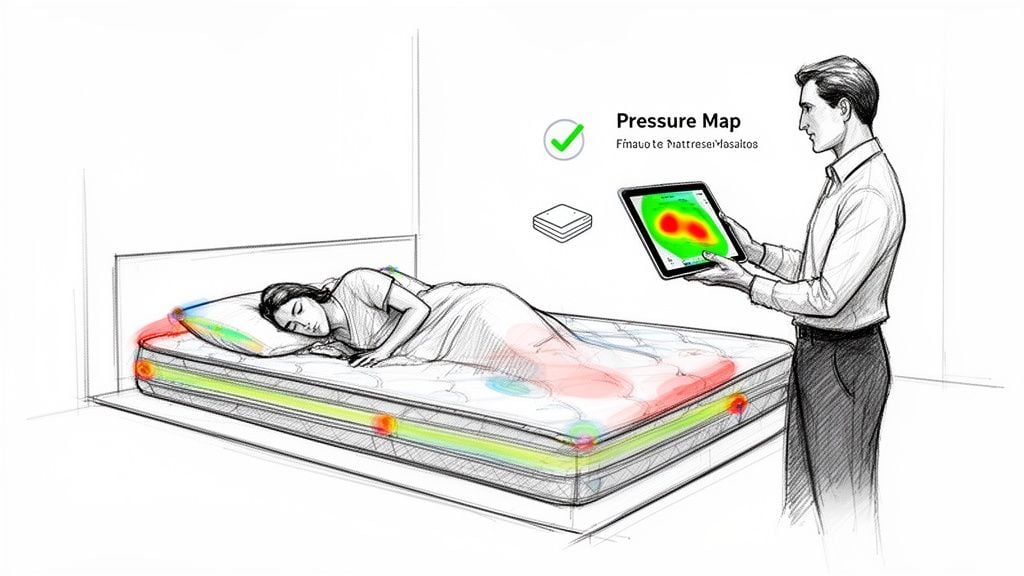
Feeling the mattress is the most important step, but we can back up that feeling with objective data. At Miller Waldrop, we empower you with an advanced bed-matching system that adds a layer of science to the process. This isn't a sales gimmick—it's about giving you concrete information to confirm what you’re feeling.
Our system generates a personalized pressure map by analyzing your body’s unique curves and pressure points. This map gives you a visual of exactly where you need more cushioning and where you need firm support, taking the guesswork out of the decision.
This technology helps our trained Sleep Experts point you to mattresses that are a scientifically sound match for you. It lets you see, in real time, how different models like the Tempur-ProAdapt Medium distribute your weight and support your spine. To learn even more about making the right choice, take a look at our complete guide on how to shop for a mattress.
We invite you to come by our showrooms in Lubbock, Hobbs, or Ruidoso to try this personalized fitting process for yourself. Our mission is to give you the knowledge and confidence you need to find the perfect mattress and finally get the restorative sleep you deserve.
Answering Your Final Questions About Pressure Relief
Choosing a mattress is a big decision, and it's smart to have questions. Investing in your sleep is an investment in your health, and you deserve to be sure you're making the right call.
Here’s how you can address some of the most common concerns, based on what our Sleep Experts hear in our showrooms. Think of this as the final check-in to make sure you’ve covered all the angles before you commit.
How Long Should I Test a Mattress In the Store?
You really need to give it at least 10-15 minutes. Don't just sit on the edge or lie down for a moment; get into your go-to side-sleeping position and stay there.
This is the only way to let your body truly relax and sink into the mattress. It takes more than a minute to know if the support layers are actually hitting your pressure points correctly. Our Sleep Experts will always encourage you to take your time—this choice will impact your sleep for years.
Can a Mattress Topper Fix My Current Mattress?
A good topper can definitely make a firm mattress feel softer, but it's really a short-term solution or a way to fine-tune a bed that’s already in good shape.
A topper adds cushioning, but it can't fix a sagging, unsupportive core. If the foundation of your bed is failing, adding a topper is like putting a band-aid on a broken bone.
Expert Insight: Use a topper to customize the feel of a fundamentally good mattress, not to try and revive a bed that's past its prime. True, lasting support comes from the mattress core itself.
Is a Firm Mattress Better for Back Pain If I'm a Side Sleeper?
This is one of the biggest myths you need to overcome as a side sleeper. A mattress that's too firm can actually make back and hip pain worse by forcing your spine out of alignment. As a side sleeper, your shoulders and hips need room to sink in just enough to keep your spine straight.
You're looking for a balance of contouring comfort and underlying support. For most, a medium to medium-soft feel is the sweet spot, giving you that necessary cushion without letting you sink too far.
What If My Partner and I Have Different Sleep Needs?
This is a challenge you can solve. One of you is a side sleeper craving a plush surface, while the other is a back sleeper who needs something firmer. A hybrid mattress is often a fantastic starting point, as its coil system provides deep-down support while foam layers deliver comfort and excellent motion isolation.
For couples with very different preferences, a split king adjustable base is the ultimate solution. This setup lets you both choose your own mattress and control your own side of the bed. Our experts can show you exactly how these custom sleep systems work to give you both what you need.
Of course, once you've found the perfect mattress, you'll want to keep it fresh. Learning how to clean your mattress like a pro is key to protecting your investment for years to come.
At Miller Waldrop, we believe finding the right mattress should be a relief, not a hassle. It’s about empowering you to start a journey to better health and finally get restorative sleep. Our Sleep Experts are here to answer any other questions you have and guide you to a mattress that feels like it was built just for you. Visit us online or in-store today and equip yourself with the tools to sleep better tomorrow.