


Hybrid Mattress vs Memory Foam: Which Is Right for You?

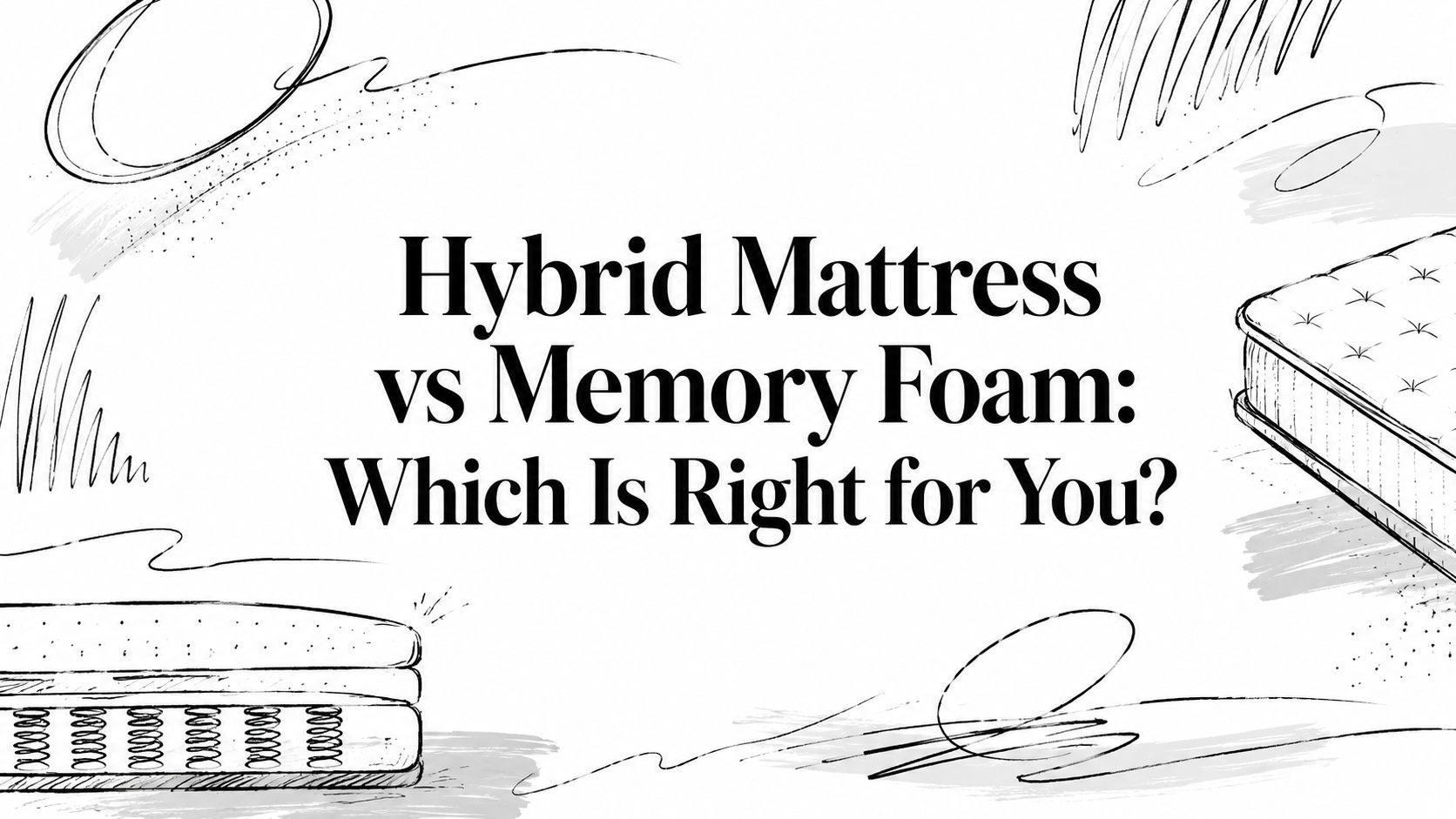
Mattress shopping usually starts the same way. A shopper lies awake on an old bed, opens a dozen tabs, and ends up trapped in the same argument over and over: hybrid mattress vs memory foam.
That debate matters, but most online advice misses the fundamental issue. The right mattress isn't the one with the loudest marketing. It's the one that fits how a specific body sleeps, moves, heats up, and settles down at night.
For shoppers across West Texas and New Mexico, that difference shows up fast. A mattress that feels plush for ten minutes can sleep hot, sag too soon, or make turning over feel like work. A mattress that seems firm in a showroom can become the best sleep surface in the house once the body gets proper support.
The Search for Better Sleep Begins Here
A lot of shoppers already know they need a new mattress. What they don't know is which type will solve their problem. One model promises pressure relief. Another promises airflow. A third talks about support layers, cooling covers, motion control, edge reinforcement, and recovery time. That's enough to make any decision feel harder than it should be.
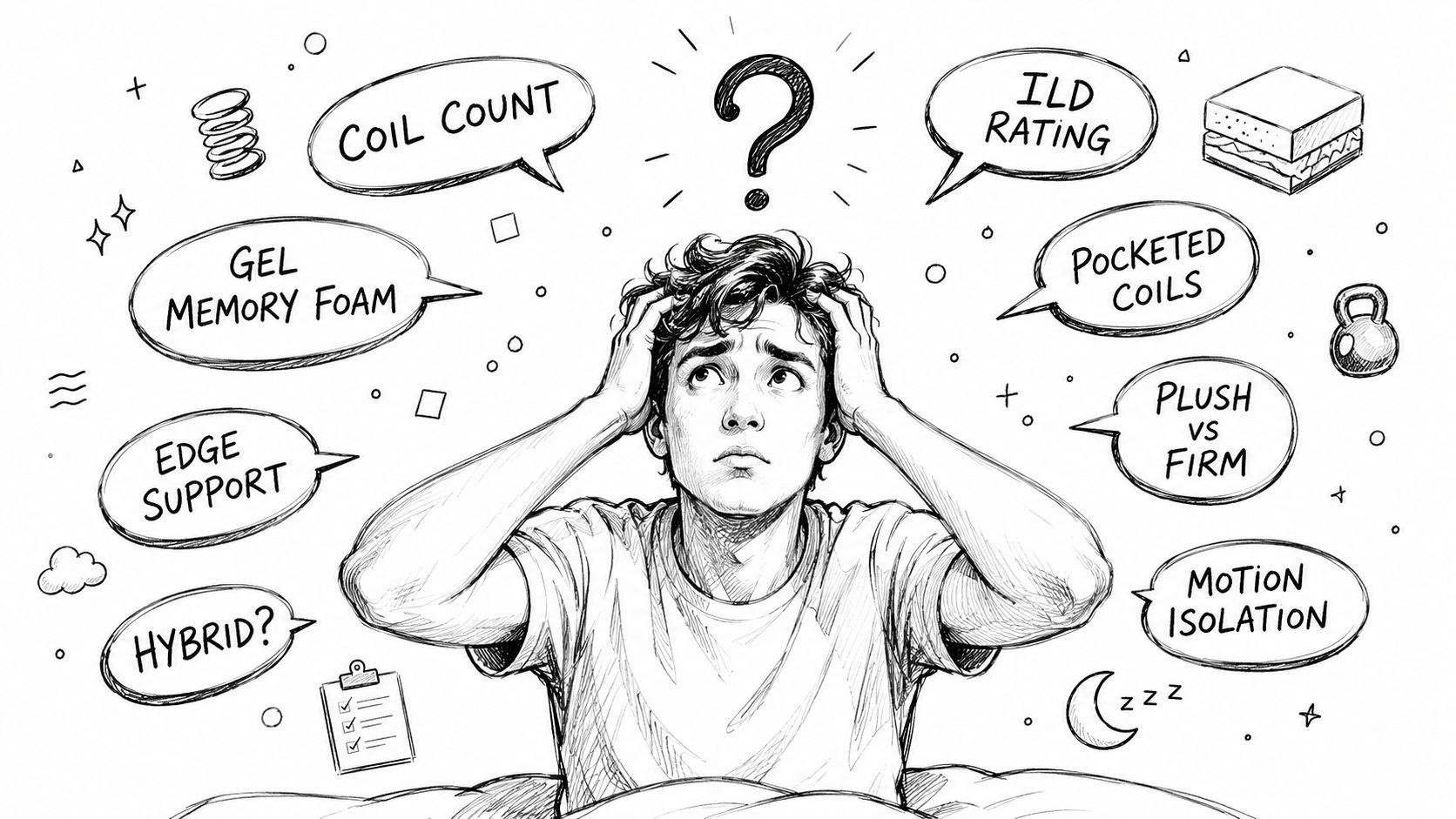
The goal isn't to buy a mattress category. The goal is to wake up without shoulder pressure, low back strain, overheating, or that worn-out feeling that comes from fighting the bed all night. That's why the hybrid mattress vs memory foam question matters so much. It's usually the first major fork in the road.
What most shoppers actually need
Consumers aren't looking for technical specs. They're trying to answer practical questions:
- Will it sleep cool enough: especially in warmer bedrooms and dry climates where trapped heat gets old fast.
- Will it support the body correctly: without creating pressure at the hips, shoulders, or lower back.
- Will it be easy to move on: because nobody wants to feel buried in the mattress.
- Will it hold up: after years of nightly use.
Practical rule: A mattress should solve a sleep problem, not create a new one.
Sleep quality also depends on habits outside the mattress itself. For anyone dealing with bedtime inconsistency, light sleep, or racing thoughts, this guide on expert advice on sleep disruption adds useful context to the mattress decision.
A better way to think about the choice
Hybrid and memory foam mattresses can both be good. They just serve different sleepers better. Memory foam usually wins when deep contouring and motion control matter most. Hybrid usually wins when cooling, easier movement, and stronger support matter more.
That's the filter worth using. Strip away the buzzwords and focus on how the bed will feel at midnight, not how it sounds in a product description.
Understanding the Core Construction
Construction decides feel. Before anyone compares performance, it helps to understand what's inside each mattress.

A memory foam mattress is built mainly from foam layers. The top layers respond to body heat and pressure, then conform closely around the body. That's the classic “hug” people talk about. Some sleepers love it because it cushions the shoulders and hips. Others hate it because it can feel slow and enveloping.
A hybrid mattress combines a comfort layer on top, often foam, with a coil support core underneath. The top gives some pressure relief. The coil unit below adds lift, airflow, and a more responsive surface. That's why hybrids often feel more balanced instead of pronounced contouring.
How memory foam is built
Memory foam construction is simple in concept. Comfort foams sit above denser support foams. When a sleeper lies down, the mattress compresses where pressure is highest and shapes itself around the body.
That body-conforming response is the whole appeal. The mattress absorbs movement well and reduces the sharp pushback that some people feel on firmer surfaces. Modern versions may include cooling covers or specialty infusions, but the essential feel remains a slower, deeper cradle.
For shoppers who want a real example of the category, a king hybrid mattress option with a medium feel helps show how different the layered design can be once coils enter the build.
How hybrid mattresses are built
A hybrid uses two systems working together. The comfort section handles surface feel. The coil section handles structure.
That matters because coils don't just support weight. They also create space inside the mattress. Instead of a solid block of foam, the bed has an internal framework that can flex, rebound, and move air more freely.
A simple way to picture it is this. Memory foam feels like settling into a molded cushion. A hybrid feels like sleeping on a cushioned surface with a support engine underneath.
Why construction changes the experience
This isn't a small detail. It affects how the mattress responds every time a sleeper turns, sits on the edge, or gets warm in the middle of the night.
Construction shapes the entire sleep experience:
- Surface contouring: Memory foam usually contours more closely.
- Pushback and lift: Hybrids usually keep the body more “on” the bed than “in” it.
- Air movement: Coil systems open up space that foam-only builds don't have.
- Ease of movement: Hybrids tend to recover faster and feel less restrictive.
A shopper doesn't need to memorize mattress engineering. But it helps to know this much. Foam-heavy builds prioritize contour. Coil-based hybrids prioritize balance.
A Detailed Comparison of How They Feel and Perform
Most shoppers notice the difference between a hybrid mattress and memory foam within the first minute. One tends to hug. The other tends to lift. But comfort alone isn't enough. Performance decides whether the bed still feels right after a full night, a full year, and real daily use.
Here's the quick view first.
Hybrid vs. Memory Foam at a Glance
| Feature | Memory Foam | Hybrid Mattress |
|---|---|---|
| Feel | Deep contouring, slower response | Balanced cushioning with more lift |
| Temperature | Can retain more heat | Better airflow and cooler sleep |
| Ease of movement | More “stuck-in-bed” feel | Easier to change positions |
| Motion isolation | Stronger motion control | More movement transfer than foam |
| Bounce | Lower bounce | Higher bounce |
| Edge feel | Usually less stable | Usually sturdier at the perimeter |
| Best fit | Sleepers who want pressure relief and less partner disturbance | Sleepers who want cooling, support, and easier movement |
Temperature regulation
For hot sleepers, this category isn't close. Hybrid mattresses show stronger cooling performance. In one comparison, 78% of hot sleepers reported cooler nights on hybrids versus 52% on memory foam, with the difference tied to the coil system creating natural airflow channels that dense foam can't match, according to this temperature regulation comparison.
That lines up with what shoppers often feel in person. Foam can feel comfortable at first, then warmer as the night goes on. A hybrid's coil core gives heat somewhere to go.
If a sleeper runs hot, starts the night fine, and wakes up warm, hybrid usually makes more sense.
Responsiveness and movement
Many shoppers make the wrong choice. They lie on memory foam, like the pressure relief, then realize later that turning over takes effort. That slow response can feel relaxing for some people and annoying for others.
Hybrid mattresses recover faster. That quicker rebound makes a real difference for combination sleepers, older adults, and anyone who doesn't want to fight the bed when changing positions.
A hybrid usually feels more mobile. Memory foam usually feels more settled.
Pressure relief and support
Memory foam shines when the body needs contouring around pressure points. Side sleepers often notice this first at the shoulders and hips. The foam compresses and distributes weight in a way that can feel gentle and quiet.
Hybrids can also relieve pressure, but the support underneath feels more active. Instead of allowing the body to sink too low, a hybrid tends to cushion while keeping the torso more level. Back and stomach sleepers often prefer that balance because it reduces the chance of dipping too far through the middle.
Motion isolation
Couples should pay attention here. Memory foam is usually the better pick when movement transfer is the top concern. It absorbs motion instead of bouncing it across the bed.
The tradeoff is simple. What memory foam gains in motion control, it often gives up in bounce and easy mobility. Hybrid mattresses usually transfer more movement, but they're easier to move on and feel more responsive overall.
Key takeaway: Couples have to decide which annoyance matters more, partner movement or a mattress that feels harder to move around on.
Bounce and overall feel
Some sleepers want a mattress that responds when they do. Others want one that barely moves at all. That preference should drive the decision more than trendy language like “luxury feel” or “cloud comfort.”
Hybrid mattresses tend to feel springier and more buoyant. Memory foam tends to feel quieter and more absorbing. Neither is automatically better. But they are very different.
A practical comparison helps:
- Choose memory foam if the sleeper wants close contouring, softer pressure absorption, and less motion transfer.
- Choose hybrid if the sleeper wants airflow, easier movement, and a sleep surface that feels more lifted.
- Be cautious with foam if the sleeper already dislikes slow-moving cushions, deep sink, or warm sleep.
- Be cautious with hybrids if the sleeper is extremely sensitive to partner movement.
For many shoppers, the hybrid mattress vs memory foam decision comes down to one blunt question. Does the body want to sink in, or stay supported on top?
Durability Edge Support and Long-Term Value
A mattress can feel great on day one and still be a poor buy. Long-term value comes down to how well it holds support, how stable it feels around the perimeter, and whether its construction fits the sleeper's body weight.
Durability under real use
Body type is a significant factor. At the 200+ pound threshold, memory foam longevity drops to 5–7 years while hybrid mattresses maintain an 8–10 year lifespan because coils resist permanent compression more effectively, based on this durability comparison for heavier sleepers.
That doesn't mean every memory foam mattress wears out quickly. It means heavier bodies place greater demands on foam-only builds. Over time, foam can lose resilience and stay compressed where weight concentrates most.
For average-weight sleepers, either category can work well if the build quality is solid. For heavier sleepers, hybrid usually offers the safer long-term bet.
Edge support matters more than people think
Shoppers often ignore edge support until the mattress is in the bedroom. Then they notice they avoid sitting on the side, feel like they're rolling off near the perimeter, or realize the usable sleep surface feels smaller than expected.
Hybrid mattresses usually handle this better because coils create a firmer, more stable boundary. Memory foam edges can feel softer unless the bed uses reinforced perimeter construction.
A mattress doesn't just need to support the center of the body. It needs to support the way people sit, stand, and sleep across the entire surface.
Value isn't just the ticket price
The cheapest mattress is rarely the best value if it loses support too soon or creates nightly discomfort. A smarter way to judge cost is to ask what the sleeper is buying over time.
Consider these value questions:
- How many years of reliable support does the build offer
- Does the mattress fit the sleeper's weight and sleep habits
- Will the edge remain usable for sitting and sleeping
- Will the comfort still feel right after the break-in period
A good mattress should earn its space every night. For sleepers who need stronger support, sleep warm, or put more stress on the bed, hybrid often delivers better long-term value. For sleepers who prioritize contouring and motion control above all else, memory foam can still be worth it, but only if the construction matches the person using it.
Finding the Right Mattress for Your Body and Sleep Habits
The best mattress category isn't chosen by hype. It's chosen by how the body sleeps. Sleep position, body weight, temperature, and movement patterns all matter. So does firmness.
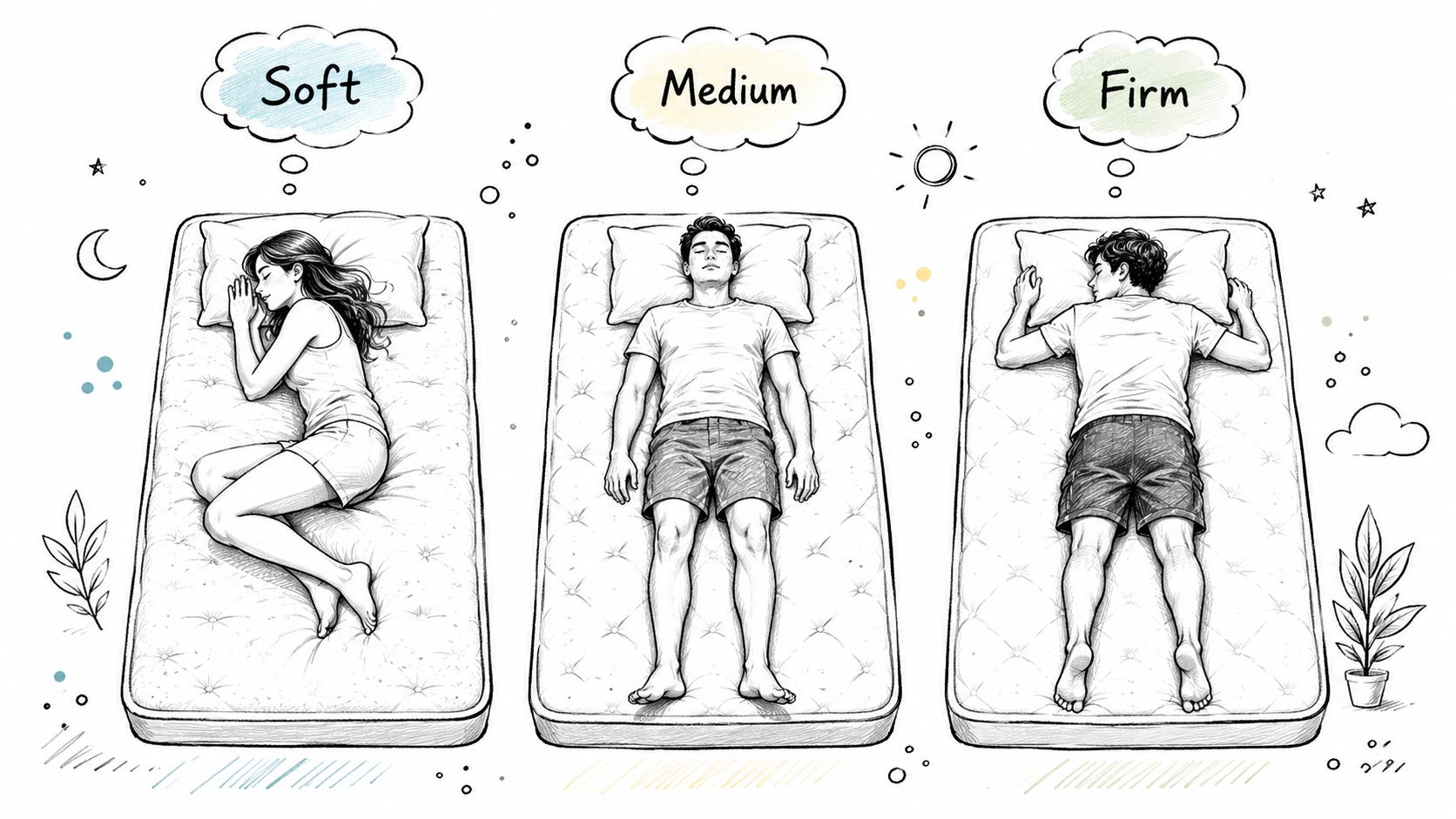
One point cuts through a lot of confusion. Systematic reviews confirm that a medium-firm surface is optimal for most sleepers regardless of whether the mattress is memory foam or hybrid, which means the best match is driven more by firmness tolerance and anatomical fit than by material alone, as noted in this firmness and anatomical matching guide.
That's why shoppers should stop asking only, “foam or hybrid?” The better question is, “What firmness and support profile does this body need?”
Sleep position changes the recommendation
A side sleeper usually needs more pressure relief at the shoulder and hip. That often makes memory foam attractive, especially for people who enjoy contouring. But a side sleeper who gets hot or changes positions often may still do better on a softer-feeling hybrid.
Back sleepers often land in the middle. They usually need support through the lumbar area without excessive sink. A medium-firm hybrid is often a strong choice because it balances cushioning and structure, though a well-built medium-firm memory foam mattress can also work.
Stomach sleepers usually need firmer, flatter support. Too much sink can pull the midsection downward and make the lower back work harder. Hybrid designs often do a better job keeping the body level.
Body type changes the stakes
Lighter sleepers may not sufficiently compress materials to notice major differences right away. They can often choose based more on feel preference.
Average-weight sleepers should focus on support and sleeping temperature. If they like a close hug, memory foam may fit. If they want easier movement and a more lifted feel, hybrid is usually the better answer.
Heavier sleepers should lean hard toward hybrid unless they have a very specific reason not to. More body weight puts more demand on the support core. That's where coils usually outperform foam-only construction over time.
A mattress should match the body using it, not a generic shopper profile.
Sleep habits make the final call
A sleeper who barely moves at night can often enjoy deeper contouring without complaint. A combination sleeper usually can't. That person needs a mattress that allows quick position changes without resistance.
A sleeper sharing the bed with a restless partner may still prefer memory foam because of its stronger motion control. A hot sleeper in that same situation has to weigh that benefit against the risk of sleeping warmer.
A useful decision framework looks like this:
- For side sleepers with pressure-point pain: memory foam often feels better if sleeping hot isn't a major issue.
- For back sleepers wanting balance: medium-firm is usually the sweet spot, and either construction can work.
- For stomach sleepers: hybrid is often the safer recommendation because it resists excess sink.
- For combination sleepers: hybrid usually wins because it's easier to move on.
- For hot sleepers: hybrid is the stronger choice.
- For partner-sensitive sleepers: memory foam often has the edge.
Shoppers who need help narrowing firmness and fit can use this mattress guide for comparing sleep needs to organize the decision before stepping into a showroom.
Take the Guesswork Out of Your Decision
Online research helps, but it can't do one thing that matters most. It can't tell a shopper how a mattress feels under that person's shoulders, hips, and lower back.
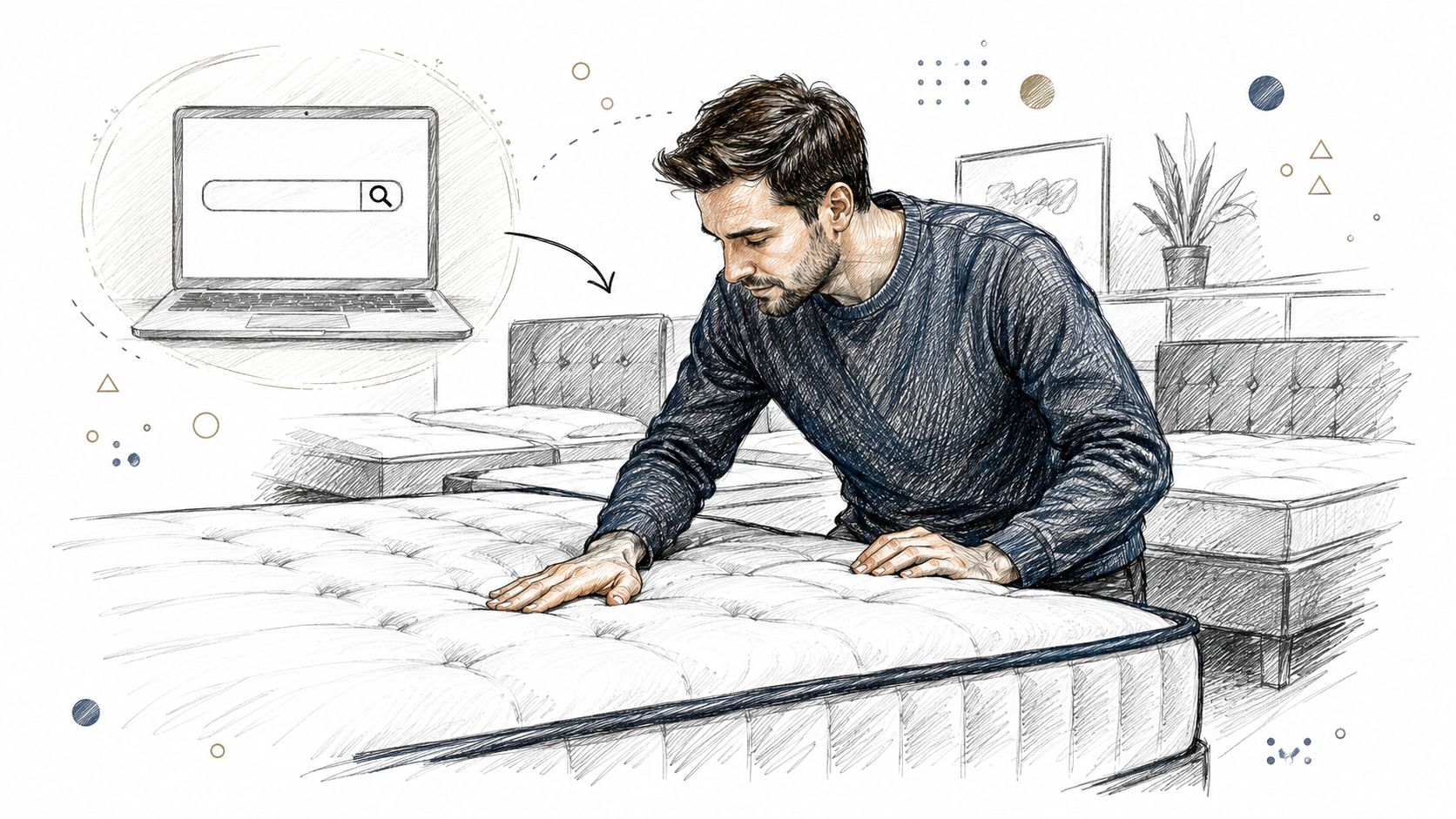
That's where the generic hybrid mattress vs memory foam debate usually falls apart. Two mattresses can share a category and feel completely different in real life. One hybrid may feel supportive and smooth. Another may feel too firm. One memory foam bed may cradle pressure points well. Another may feel slow, warm, or overly soft.
Why in-person testing still matters
Small details become obvious fast when the body is on the bed. Shoulder compression, lumbar support, edge stability, and ease of movement can't be judged from a product page alone.
That matters even more for sleepers who move often. Hybrid mattresses have faster recovery times of 0.52 seconds versus 0.63 for memory foam, which affects the “stuck-in-bed” sensation and makes repositioning easier for combination sleepers, according to this recovery time comparison for mattress responsiveness.
A number like that is useful. Feeling it is better.
Better tools lead to better decisions
The smartest mattress decision usually comes from combining three things:
- Pressure-point mapping: This helps identify where the body needs relief and where it needs support.
- Guidance from trained Sleep Experts: A good expert can spot mismatches in posture, firmness, and feel quickly.
- Side-by-side testing: Lying on different constructions in sequence reveals what the body prefers.
Some shoppers don't need more options. They need a better way to eliminate the wrong ones.
For anyone comparing models and features, a mattress comparison tool for narrowing options makes the decision easier before making the final trip to test them in person.
The clear recommendation
For most hot sleepers, heavier sleepers, stomach sleepers, and combination sleepers, hybrid is the stronger recommendation. It solves more practical problems at once.
For sleepers who care most about deep contouring and reduced partner disturbance, memory foam still deserves a serious look. But the firmness has to be right, and the sleeper has to be honest about whether that slower, deeper feel is comfortable after a full night.
The best mattress isn't the one that wins the internet argument. It's the one that fits the body well enough that sleep stops being the problem.
Miller Waldrop Furniture & Decor gives shoppers the tools to make that choice with confidence. With showrooms in Lubbock, Hobbs, and Ruidoso Downs, dedicated Sleep Experts, advanced bed-matching technology, and a curated selection of quality mattresses, the team helps each shopper find the right fit instead of guessing. Explore the mattress selection, compare options in person, and take the next step toward better sleep with Miller Waldrop Furniture & Decor.