


Decorating a Home on a Budget: Pro Tips for Creating Your Dream Space

Decorating your home on a budget isn't about sacrifice—it’s about empowering you to make smart, intentional choices. You are the hero of your home's story, and it all begins with a solid game plan. By figuring out your personal style, taking stock of what you already own, and setting a clear budget, you gain the tools you need to create a space that truly reflects you. This foundational work stops you from making impulse buys and ensures every dollar spent makes a difference you can see and feel.
Build Your Decorating Blueprint First
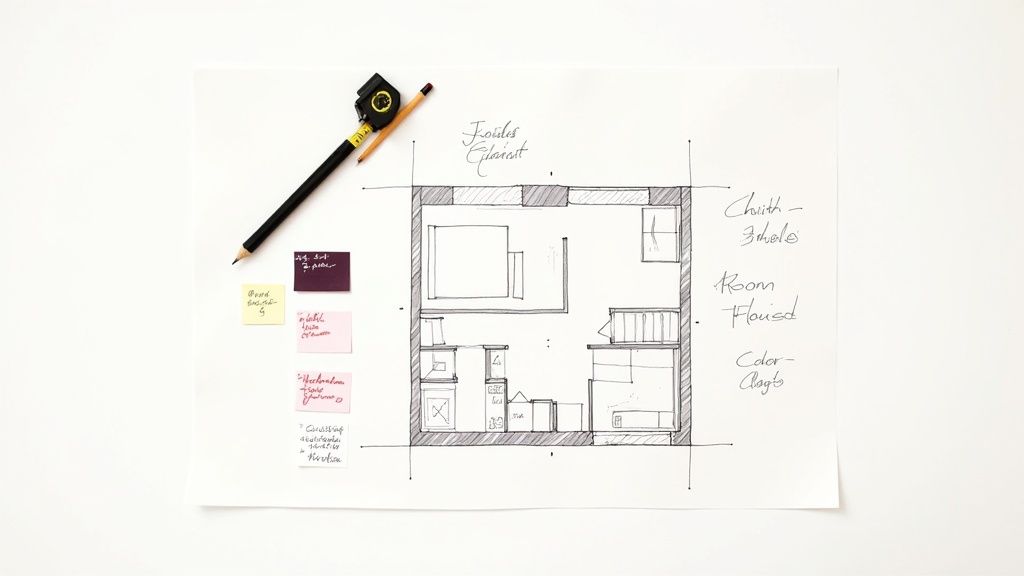
Before you even think about browsing online or walking into a store, the most powerful thing you can do is create your decorating blueprint. Think of it as your personal roadmap to success. This empowers you to think like a designer, making strategic moves that line up with both your vision and your wallet. Jumping straight into shopping without a plan is the fastest way to blow your budget on a collection of things that just don't work together.
This planning stage is where you really take the reins. It’s not about restriction; it’s about getting crystal clear on what you want. When you define your goals and inventory what you have, you transform decorating from a frustrating guessing game into a fun, deliberate, and creative project where you are in complete control.
Discover Your Unique Style
First, let's unlock your personal aesthetic. Don't get hung up on official design terms like "mid-century modern" or "bohemian." Instead, focus on the feeling you want your home to have. Are you craving a calm, airy sanctuary or a space that’s buzzing with vibrant energy?
- Gather inspiration: Platforms like Pinterest are perfect for this. Start saving images that you’re drawn to and look for common threads—do you see a pattern in colors, textures, or furniture shapes?
- Ask yourself why: For each image you save, pinpoint what you love about it. Is it the warm wood tones? The cozy, plush textiles? The clean, minimalist layout? This little exercise helps you decode the core elements of your true style.
- "Shop" your own home: Take a walk through your house and look at your furniture and decor with fresh eyes. Identify the pieces you genuinely love that can be the foundation for your new look. You might be surprised to find a forgotten vase or a side table that just needs a new home to really shine.
Set a Realistic and Empowering Budget
Creating a budget isn't about holding back your creativity; it's about channeling it. A well-thought-out budget ensures you put your money where it will have the biggest impact, helping you avoid those costly mistakes and dreaded buyer's remorse.
"Your home is a story of who you are, told in the things you love. The best homes are curated slowly over time, not bought in a day."
This thoughtful approach is catching on everywhere. The global home decorating market is projected to hit USD 100.82 billion by 2031, largely driven by people like you who want personalized spaces without the massive price tag. More and more homeowners are getting savvy by repurposing what they have and diving into DIY projects, proving that great style isn't about spending a fortune.
As you build out your blueprint, you'll find that many budget-friendly choices also happen to be good for your well-being. These mindful decisions often overlap with sustainable interior design principles, which emphasize buying things that last and consuming more consciously.
Your Budget Decorating Priority Planner
To put this all into practice, you need to decide where your money and effort will make the most impact. This simple planner helps you focus on what truly matters for your space.
| Room/Area | Priority Level (High/Medium/Low) | Key Action (e.g., Paint, New Textiles, DIY Art) | Estimated Budget | Desired Outcome |
|---|---|---|---|---|
| Living Room | High | New rug and throw pillows | $300 | Create a cozier, more inviting gathering space. |
| Bedroom | Medium | Paint accent wall and DIY headboard | $150 | Make the room feel more serene and personal. |
| Entryway | Low | Add a mirror and a small plant | $50 | Brighten the space and make it more welcoming. |
Once you’ve mapped out your priorities with a tool like this, you can start making targeted decisions with confidence, knowing every choice is a step toward the home you envision.
High-Impact Upgrades That Don't Break the Bank
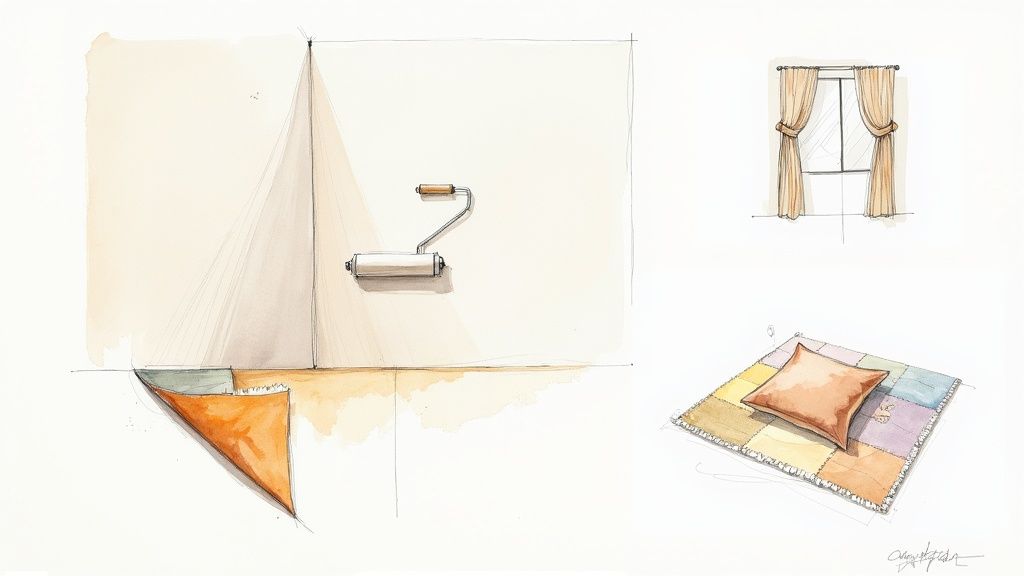
You don't need a massive budget to completely transform a room. The real secret to decorating on a dime is knowing where to put your money to get the most visual bang for your buck. You have the power to make smart, strategic choices that redefine a space without draining your wallet.
Forget the full-gut renovation for now. Instead, let's focus on the triple threat of budget decorating: paint, textiles, and lighting. These are the tools that can single-handedly create a dramatic shift in any room.
The Transformative Power of Paint
Never underestimate what a can of paint can do. It is the most cost-effective and powerful tool in your design arsenal. With just a few hours of work, you can make a cramped room feel airy, a dark room feel bright, or a bland room feel full of personality.
You don’t even have to paint the whole room. Create an accent wall behind a sofa or headboard to add instant depth and forge a natural focal point. If you're renting, peel-and-stick wallpaper gives you that same "wow" factor without any long-term commitment. The hardest part is picking the right shade, but here's a guide to picking the perfect paint color for your home to walk you through finding a hue that really speaks to you.
Instantly Refresh with Textiles
One of the fastest ways to change a room’s entire vibe is to swap out the textiles. Think of curtains, rugs, and throw pillows as the jewelry of the room—they pull the whole look together. This is your chance to play with new colors, inject some bold patterns, and add cozy textures.
- Throw Pillows: Ditch the tired old pillows and bring in some fresh covers. You can find incredibly affordable options online, or if you're feeling crafty, make your own no-sew versions with fabric glue. It’s easier than you think!
- Curtains: Here’s a classic designer trick you can use: hang your curtain rod 4-6 inches higher and wider than the actual window frame. This simple adjustment instantly makes your ceilings feel taller and the room more grand.
- Area Rugs: A good rug anchors a seating area, adding warmth and pulling all your furniture together. Keep an eye out for sales at discount home stores or browse online marketplaces for some incredible finds.
These small changes can take a room from dated to dynamic in a single afternoon.
A room's lighting is like its soul. The right light can make even the most basic furnishings look elegant and inviting, while poor lighting can make expensive decor fall flat.
Redefine Your Space with Lighting
Lighting is a total game-changer, but it’s amazing how often it gets overlooked in decorating plans. Good lighting sets the mood, highlights the features you love, and makes a space feel warm and complete. Best of all, you don't need to call an electrician to make a huge difference.
Tuck a stylish floor lamp into a dark corner to make the whole room feel bigger and more inviting. Swap out that generic, builder-grade ceiling fixture for a dramatic pendant light or a modern chandelier—it will instantly become the centerpiece of the room. Even something as simple as changing your lightbulbs from a cool to a warm white can create a much cozier atmosphere. You have the power to control your home’s ambiance, and the right lighting is the key.
With these focused upgrades, you're not just decorating; you're thoughtfully enhancing your home.
Finding Affordable Decor Like a Pro
Now that you have your high-impact areas mapped out, it's time for the really fun part—the treasure hunt. Decorating on a budget is an art, and the real win is finding stylish, unique pieces without that soul-crushing price tag. This is where you put on your pro goggles and turn every shopping trip into a chance to unearth something amazing.
Let go of the idea that "affordable" has to mean "boring" or "generic." With the right strategy, you can find decor that tells your story and makes your home look anything but cookie-cutter. It’s all about knowing where to look and, just as importantly, how to look.
Master the Art of Secondhand Shopping
Think of thrift stores, flea markets, and consignment shops as your secret weapon. These places are absolute goldmines for solid wood furniture, interesting art, and quirky little decor pieces that are just waiting for a second life. The key is to go in with a plan and a sharp eye.
Before you even leave the house, pull up your inspiration board and make a mental list (or a real one!) of what you're looking for. Are you hunting for a vintage mirror? Brass candlesticks? A sturdy side table? Having a focus keeps you from getting overwhelmed by the sheer amount of stuff and prevents you from buying something just because it’s a bargain.
- Look for good bones. Always focus on items made from quality materials like solid wood or real metal. A dresser with some cosmetic scratches is an easy weekend project, but one made of flimsy particleboard often isn't worth the time or effort.
- Think beyond its current state. Could that dated, orange-toned coffee table be a showstopper with a coat of charcoal paint? Can that old, ornate picture frame be used to frame a cool piece of fabric for some DIY art? Potential is everything.
- Know when to walk away. If something is broken beyond a simple fix, has a strong mildew smell you know you'll never get out, or just doesn't feel right, leave it. There will always be another great find just around the corner.
Navigate Online Marketplaces Safely
Online platforms like Facebook Marketplace have completely changed the game for scoring incredible deals on furniture and decor. The trick is to be a smart, strategic shopper. Set up alerts for specific items you’re hunting for, like "Flexsteel sofa" or "round dining table," so you get a notification the second something new is listed.
Remember, the best homes are curated slowly over time. Patience is your most valuable tool when decorating on a budget. Don't rush to fill every space; wait for the pieces you truly love.
This patient approach lets you focus on smaller, impactful additions that won't drain your bank account. And the research backs this up. Affordable accents often make the biggest difference. For instance, wall art makes up 75% of the US wall décor market simply because it offers a huge visual change for a relatively low cost. You can find more details on home decor market trends on fortunebusinessinsights.com.
Shop Retail Like an Insider
Hunting for secondhand gems isn't the only way to decorate on a budget. Your favorite big-box retailers and even higher-end stores can be fantastic sources if you know how to work the system. My first rule? Always sign up for the email lists of stores you love. You'll get first dibs on sales and exclusive coupons you wouldn't find otherwise.
Also, get to know the "clearance" or "as-is" section of every store. This is where they put floor models or slightly damaged items for a fraction of the original price. It's a fantastic way to snag high-quality pieces that might just need a little wood glue or a quick paint touch-up.
Ready to find that perfect, foundational piece to build your room around? Here’s how you can choose the perfect sofa for your family’s needs, ensuring it becomes a comfortable and stylish anchor for all your budget-friendly finds.
Create Your Own Style with DIY Projects
There's something incredibly special about filling your home with pieces you’ve made yourself. DIY projects are the ultimate secret weapon for decorating on a budget because they turn ordinary items into one-of-a-kind treasures that are full of personal story. This is where you get to put your stamp on your space, infusing it with character that can't be bought off a shelf.
When you embrace a do-it-yourself mindset, you’re not just saving money; you’re customizing your home to fit your vision perfectly. It's all about seeing the potential in a tired piece of furniture or a blank wall and having the courage to make your idea a reality.
Give Old Furniture a Second Life
Before you haul that dated dresser or scuffed-up side table to the curb, pause and consider its potential. With just a little bit of effort, you can completely transform a piece of furniture, giving it a high-end look for a fraction of what you’d spend on something new. It’s one of the most satisfying ways to make a huge impact on a tiny budget.
Here are a few simple ways you can tackle a furniture refresh:
- A Fresh Coat of Paint: Never underestimate the power of paint. A bold color can turn a boring, overlooked item into a real statement piece. Think about a sophisticated charcoal grey or even a vibrant jewel tone to add a pop of personality.
- Update the Hardware: This is my favorite five-minute upgrade. Swapping out old knobs and pulls for new ones delivers dramatic results almost instantly. You can find stylish, affordable hardware online or at your local home improvement store.
- Add New Functionality: Get creative! Could that old bookshelf become a chic bar cart just by adding some wheels? Could a small table be repurposed as a plant stand? Thinking outside the box opens up a world of possibilities.
"The most beautiful homes are curated slowly over time, not bought in a day. DIY projects are a testament to that journey, celebrating patience, creativity, and the joy of making something your own."
Craft Your Own Unique Decor
You definitely don't need to be a professional artist to create stunning decor for your walls and shelves. Some of the most impactful projects are also the simplest, adding a personal touch that truly makes a house feel like a home. This is your chance to play with color, texture, and style without a major financial commitment.
If you're looking for something deeply personal, you can even learn to create custom cross stitch patterns from photos of your family, pets, or favorite places. It’s a beautiful way to literally weave your life's story into the fabric of your home.
When you're ready to get your hands dirty, having the right tools makes all the difference. Here’s how you can assemble the perfect Essential DIY Starter Kit to tackle any project with confidence.
Arrange Your Finds for a Polished Look
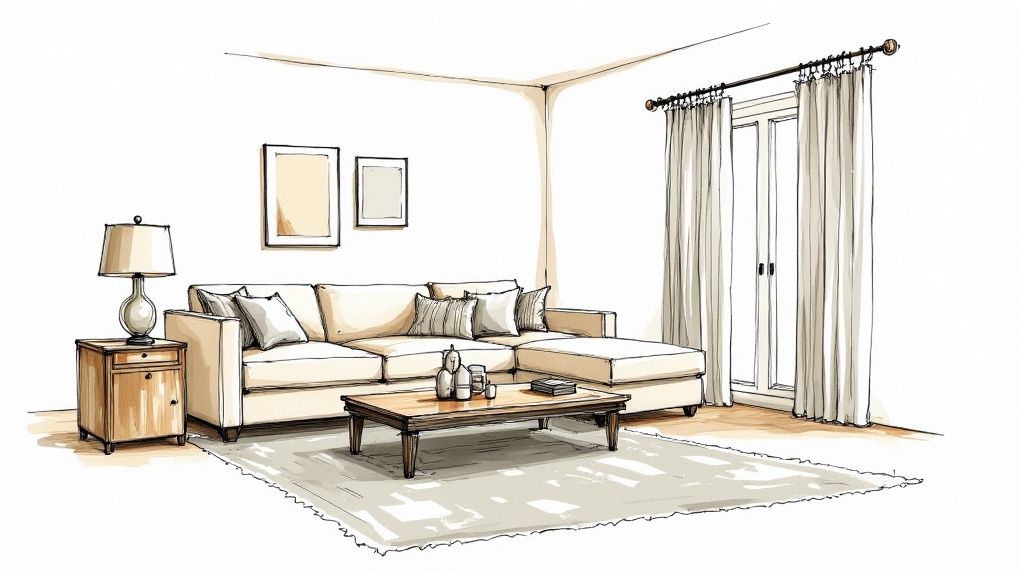
You've hunted for treasures and gathered pieces that really speak to you. Fantastic. Now for the magic trick: arranging everything to create a space that feels intentional, polished, and uniquely yours. This is where you get to play stylist, turning a collection of individual items into one cohesive room.
Styling isn't about memorizing a bunch of rigid rules. It's more about understanding a few key principles that create harmony and draw the eye. Armed with these simple techniques, you can start arranging your decor with the confidence of a pro and make every corner of your home feel complete.
Create Balance and Flow
First things first, let's establish a sense of balance. This doesn't mean you need perfect, mirror-image symmetry. It's really about visual weight. Think of it like a seesaw. A large, dark sofa on one side of a room can be balanced by two smaller armchairs and a floor lamp on the other. This creates an asymmetrical balance that feels much more dynamic and interesting.
Also, think about how people will actually move through the room. Your furniture layout should create clear pathways, making the space feel open and easy to navigate. If you're stuck on the right layout for your main living area, exploring different ways to arrange your living room furniture can be a total game-changer.
Layer Textures and Heights
One of the fastest ways to make a room feel rich and curated is by layering different textures. This is a secret weapon when you're on a budget because it adds so much depth without costing a fortune.
- Mix your materials: Combine soft textures, like a chunky knit throw, with smooth surfaces like a wooden coffee table or a sleek metal lamp.
- Vary heights: When styling a shelf or console table, I always fall back on the "Rule of Three." Group items in odd numbers and at different heights—a tall vase, a medium-sized framed photo, and a small, low bowl. This simple trick creates visual interest and keeps the eye moving.
- Use rugs to define spaces: An area rug is crucial for anchoring a seating area and adding another layer of texture. Make sure at least the front legs of your sofa and chairs are on the rug to create a unified look.
When you mix textures and heights, you’re telling a more interesting story. Each element—from a velvet pillow to a ceramic vase—adds a new chapter, making the room feel thoughtfully assembled over time.
This focus on affordable, high-impact items is a huge global trend. The market for small touches like decorative candles is projected to grow to USD 13.15 billion by 2029, while the rug market is expected to hit USD 58.50 billion. It just goes to show that people are moving toward making small, stylish changes rather than doing massive renovations.
By applying these simple styling principles, you're doing more than just placing objects in a room; you're curating an environment. You're the one in charge, using your creativity and smarts to transform budget finds into a home that looks and feels extraordinary.
Answering Your Biggest Budget Decorating Questions
It’s easy to feel a bit lost when you first dive into decorating on a budget. Translating that beautiful vision in your head into a real-life room can bring up a lot of questions. But don't worry, that's completely normal. A few insider tips are all you need to get unstuck and start creating a home you truly love.
"I'm Decorating a Whole House. Where on Earth Do I Start?"
This is probably the number one question we hear, and the answer empowers you to take control: start with the room you live in the most. For most of us, that's the living room or the bedroom.
Focusing your energy on the space you use every single day gives you the biggest return on your effort. Waking up in a bedroom that feels like a sanctuary or relaxing in a living room you're proud of provides a daily dose of joy and builds incredible momentum to keep going.
Before you buy a single thing, declutter that room completely. Then, pick one high-impact, low-cost project. A fresh coat of paint can radically change a space overnight. By tackling your home one room at a time, you keep the overwhelm at bay and get to celebrate those small, satisfying victories along the way.
"What Should I Buy Secondhand vs. New?"
This is a fantastic question, and learning the difference is a budget-decorating superpower.
Secondhand shops are your absolute best friend for anything with "good bones." We're talking about solid wood furniture—dressers, dining tables, nightstands, and chairs that just need a little love. A coat of paint or some new hardware can completely transform a dated but well-made piece. You can also score incredible deals on unique art, vintage mirrors, and one-of-a-kind decorative objects that give your home character.
So, what should you buy new? For comfort and hygiene, it's almost always best to invest in a new mattress and sofa. Large area rugs also fall into this category unless you can be 100% certain of their condition and cleanliness. We also recommend buying new for anything that requires a precise fit, like custom-style window treatments, to avoid a frustrating and costly mistake.
"How Can I Make My Inexpensive Decor Look High-End?"
This is where the real magic happens. Making affordable finds look like a million bucks comes down to mastering three little secrets: scale, texture, and curation.
-
Go Big with Scale: One large piece of art will always look more intentional and expensive than a gallery wall of a dozen tiny, scattered frames. It creates a powerful focal point that grounds the room. Even a giant DIY abstract canvas that you painted yourself can have a huge impact.
-
Layer on the Texture: A room with only flat, smooth surfaces can feel a little… well, flat. The key is to mix in a variety of textures. Think about pairing a velvet pillow with a linen sofa, placing a metal lamp on a wooden side table, or draping a chunky knit throw over a leather chair. These layers add visual depth and make a space feel thoughtfully designed.
-
Curate Like a Pro: This is all about editing. Resist the urge to fill every empty surface. A few carefully chosen, meaningful objects will always look more sophisticated than a room full of generic, "store-bought" clutter. Step back and really look at your decor. Keep only the pieces you absolutely love.
At Miller Waldrop, we believe you are the hero of your home's story, and every hero needs the right tools. Our design experts are here to help you find those perfect foundational pieces that anchor your space and bring your unique vision to life—all within your budget. Explore our collection of affordable decor and discover the tools you need to win the day and kickstart your home's transformation.