

How to arrange bedroom furniture for Flow and Style


Arranging your bedroom furniture is your opportunity to design a personal sanctuary. The secret to a room that just works is starting with a simple, powerful blueprint: measure your space, sketch a floor plan, and define your traffic paths. This is the foundational step that empowers you to turn a potentially frustrating chore into a clear, manageable process, ensuring every piece you choose fits and has a purpose.
Your Foundation For A Flawless Bedroom Layout
Before you dream of moving that heavy dresser, you need to lay the groundwork. A truly great bedroom layout is never an accident; it's born from thoughtful planning. Taking a few minutes to understand your space is the single most important tool you have to create a sanctuary that feels open, intuitive, and perfectly designed for you. This isn't just about saving your back—it's about giving yourself the confidence to make smart design choices.
Think of your empty room as a blank canvas. Your very first brushstroke? Measurement.
Getting the exact dimensions of your room is non-negotiable. This means noting the length and width of walls, but also the placement of windows, doorways, and even electrical outlets. This initial step will save you from common headaches like choosing a gorgeous bed that swallows the room whole, or realizing your favorite reading lamp has nowhere to plug in. For a detailed walkthrough, our guide on how to measure furniture provides the precise steps you need to get it right the first time.
Map Your Space And Flow
Once you have your numbers, it's time to sketch a simple floor plan. You don't need to be an architect—a basic drawing on graph paper or a free online tool works just fine. This visual map is where your design strategy really starts to take shape.
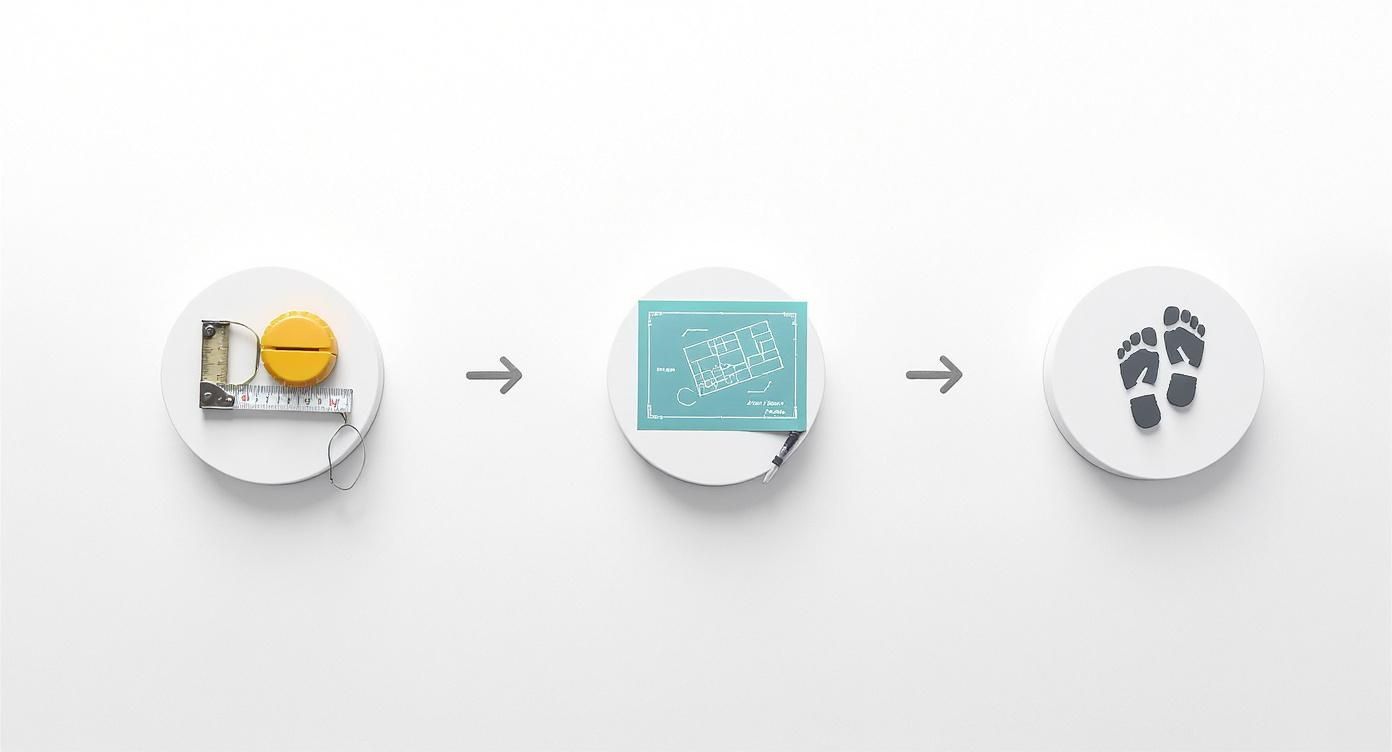
This isn't as complicated as it sounds. Here’s a quick checklist to guide you through these crucial first steps, giving you the power to plan like a pro.
Bedroom Layout Planning Checklist
| Planning Step | Key Action | Why It Matters |
|---|---|---|
| Measure the Room | Record the length and width of walls. Note the location of all doors, windows, and outlets. | Empowers you to select furniture that's the perfect size and ensures a functional setup. |
| Sketch a Floor Plan | Create a simple, to-scale drawing of the room on paper or with a digital tool. | Provides a visual "sandbox" to test different layouts without moving heavy items. |
| Identify Traffic Paths | Mark the natural walkways from the door to the closet, windows, and bed. | Guarantees you can move around comfortably and access everything you need without obstruction. |
This checklist simplifies the process, turning an abstract idea into concrete, actionable tasks. It's the key to setting yourself up for success.
With your layout sketched out, you can easily spot your room’s natural focal point. This is usually the wall you see when you first walk in, or the longest uninterrupted wall. This is almost always the best spot to place your bed.
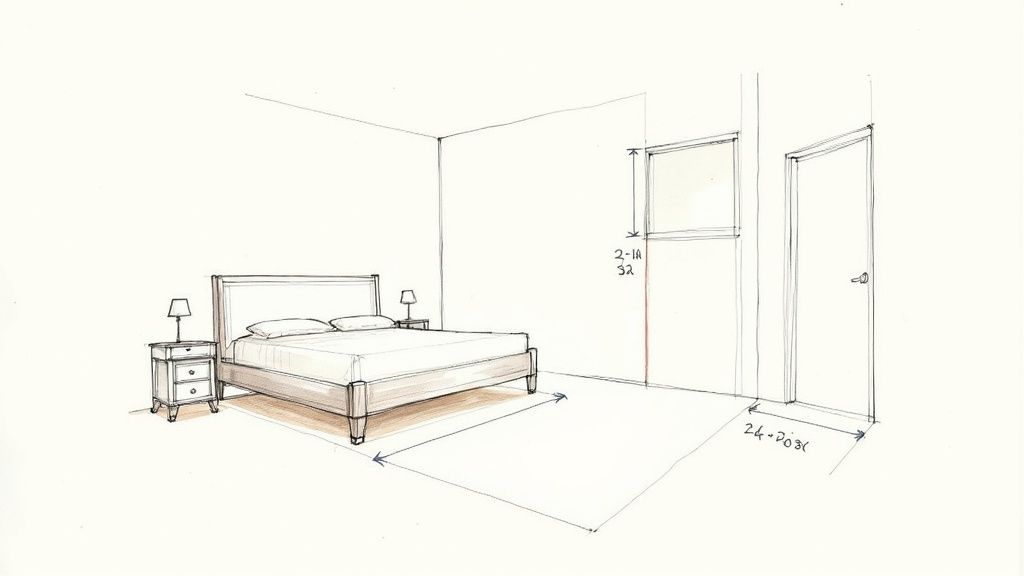
From there, map out clear pathways. You’ll want to leave at least 24-30 inches of walking space around the bed and in front of dressers or closets. Anything less will make the room feel cramped and awkward to navigate.
A great bedroom layout starts with a solid foundation. Understanding the best flooring options for your space can also significantly influence comfort and style, setting the stage for your furniture arrangement. This planning phase ensures your final layout feels intentional, not accidental.
By taking care of these initial steps, you've essentially created a blueprint for a perfect room. You now have the clarity to arrange your furniture in a way that is both beautiful and incredibly functional, turning your vision into a comfortable reality.
Positioning Your Bed for Ultimate Comfort and Flow
Your bed is the heart of your bedroom—the true hero piece in your personal retreat. Its placement doesn't just decide where you sleep; it sets the entire tone and flow for the rest of the space. Learning how to arrange bedroom furniture always starts with this one, single piece.
And it's not just a design preference. On a global scale, the Asia-Pacific region commands about 41% of the bedroom furniture market. Within that, beds alone account for nearly 37% of all sales, making them the single largest share worldwide. This just goes to show how central the bed is to our very concept of a bedroom. You can dive deeper into these global furniture trends to see how these patterns play out.
The Power of the Commanding Position
One of the most effective principles you can use is placing the bed in the commanding position. This is a classic for a reason. It simply means positioning your bed where you can see the door without being directly in line with it. More often than not, this means placing it against the wall opposite the entryway.
This layout does more than just look aesthetically pleasing; it taps into your deep-seated need for security. Being able to see who’s coming and going gives you a subconscious sense of safety and calm—exactly the vibe you want in a room designed for rest.
Exploring Other Smart Bed Placements
Of course, the commanding position isn't always possible. Architectural quirks, window placements, and room dimensions can all throw a wrench in that plan. Don't worry, you have other great options.
- Along the Longest Wall: If the wall opposite your door has a window or is simply too short, your next best move is to use the longest uninterrupted wall. This creates a powerful focal point and typically leaves you with plenty of space to build out the rest of the room.
- Under a Window: This can be a surprisingly beautiful and space-savvy choice, especially in smaller rooms. The trick is to choose a low-profile headboard that doesn't obstruct the view or block precious natural light. Just make sure you invest in good curtains or blinds for privacy and to control the morning sun.
Key Takeaway: No matter where your bed lands, always aim to leave at least 24 to 30 inches of walking space on both sides and at the foot. This isn't just a designer's rule; it’s a practical must-have for making the bed, moving around comfortably, and keeping the room from feeling claustrophobic.
Real-World Scenarios for Your Room
Let's put this into practice with a couple of common room types.
- For a small, square room (10'x10'): Placing the bed against the wall opposite the door is usually perfect. If there's a window on that wall, you can center a low headboard right under it to maintain a sense of balance without sacrificing any light.
- For a long, narrow room (9'x14'): Here, you'll want to place the bed against one of the shorter walls. This simple move stops the room from feeling like a bowling alley and helps create the illusion of a wider, more proportioned space.
Think of your bed as the anchor of your sanctuary. When you place it with intention, you're setting the stage for a room that isn't just stylish, but deeply functional and restorative. Once this hero piece is in its rightful spot, everything else will start to fall into place around it.
Ready to find that perfect anchor for your own space? You can explore our curated bedroom collections to discover the tools you need to build the tranquil retreat you deserve.
Placing Dressers, Nightstands, and Storage
Once you've anchored your bed in its rightful spot, it's time to bring in the supporting cast: your dressers, nightstands, and any other storage pieces. These are the elements that turn a room with a bed into a functional, personal retreat. Your strategy is to work from the biggest pieces down to the smallest, making sure everything enhances the flow of the room, not clogs it up.
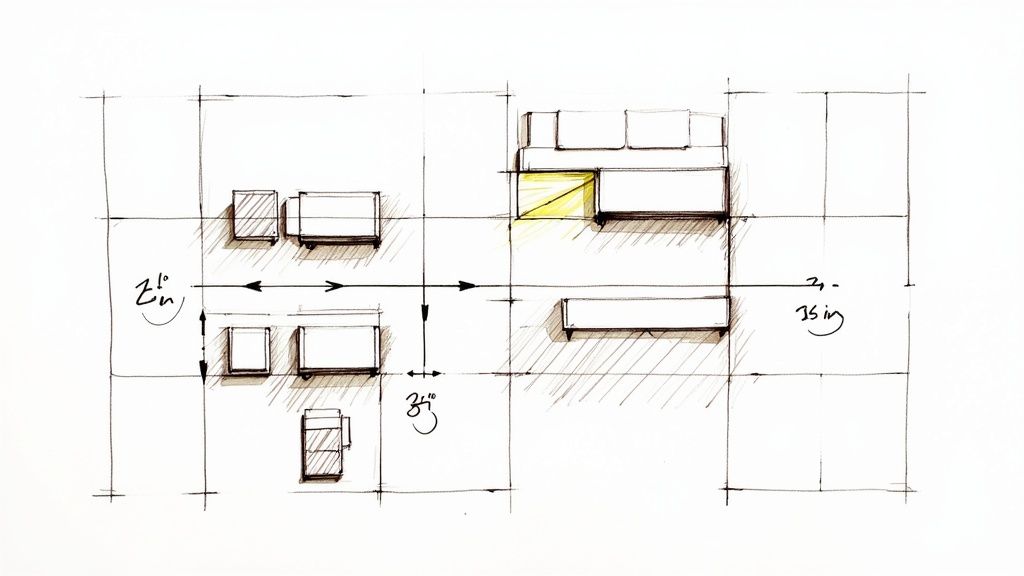
Let's start with your biggest case good—usually a dresser or maybe an armoire. This piece has a lot of visual weight, so where you put it really matters for the room's overall balance. The best-case scenario is placing it on the wall directly opposite your bed. This creates a natural, pleasing symmetry and gives the room a secondary focal point.
If that wall isn't an option (maybe it has a door or window in the way), your next best bet is the longest clear wall available. You want to give a substantial piece like this plenty of breathing room. Also, think about how it interacts with the light. You definitely want to avoid sticking a tall armoire where it will block a window or cast a huge shadow, which can instantly make the whole space feel cramped and gloomy.
Finding the Perfect Nightstands
With the dresser in place, you can now focus on the nightstands. These aren't just little side tables; they're workhorses that frame your bed and provide essential bedside function. When it comes to nightstands, the golden rule is all about getting the scale and proportion right.
The top of your nightstand should be roughly level with the top of your mattress. This creates a clean, unbroken visual line and, more practically, makes it easy to grab your alarm clock or a glass of water without fumbling in the dark.
Here are a few quick tips to help you get it right:
- Height is Key: Aim for a height that's within 2 to 4 inches of your mattress top. If it’s too low, it just looks off. Too high, and it can feel like a wall next to your head.
- Width Matters: Make sure the nightstand's width feels proportionate to your bed. A giant king bed flanked by two tiny nightstands looks comical, and the reverse is just as awkward.
- Function First: What do you actually need it to do? Are you a book-stacker who needs open shelving, or do you prefer drawers to tuck away clutter? Let your daily habits guide your choice.
Adding Seating and Smart Storage
The final layer involves adding those pieces that bring extra utility and a dose of personality. A storage bench at the foot of the bed is a classic for a reason—it's a multitasking hero. It does a great job of defining the sleeping zone, gives you a place to sit and tie your shoes, and hides away extra linens or pillows. A piece like the Broyhill Ashgrove II Storage Bench offers both classic style and practical function, becoming an invaluable tool in your design arsenal.
Of course, getting the layout right means having pieces that are not only beautiful but also built to last. For a deeper dive into making smart choices, you can use our guide on the 5 things to look for when buying chests, dressers, and cabinets. It’s packed with expert advice to help you find pieces that fit your space and your life.
By taking the time to thoughtfully place your dressers, nightstands, and other storage, you’re not just filling a room—you're creating distinct zones for dressing, sleeping, and relaxing. You’ll end up with a space that’s organized, comfortable, and truly feels like your own.
Making Sure Your Bedroom Layout Actually Works
A well-designed bedroom isn't just about having beautiful furniture; it's about being able to move around without bumping into things. This is what designers call traffic flow—the unseen pathways you use every day, from the door to your bed, to the closet, and over to the window. When you get this right, the room just feels right. It becomes functional, comfortable, and intuitive.
Think about your own habits. You need a clear shot for that half-asleep stumble to the bathroom at 2 a.m. or when you're hauling a basket of clean laundry to the dresser. These main routes through your room should be protected at all costs.
A layout truly works when you don’t have to think about it. The goal is to create pathways that are so natural you barely notice them, making your daily life smoother and more serene.
Carving Out Your Walkways
The secret to effortless movement is simple: give your furniture some breathing room. You shouldn't have to turn sideways to shimmy past the dresser or constantly stub your toe on the leg of a bench.
Here are a few rules of thumb you can live by when placing your furniture:
- Main Highways: For the busiest paths, like the one from the door to your bed, leave at least 36 inches of open space. It might sound like a lot, but this wider lane makes a huge difference in how comfortable the room feels.
- Smaller Paths: For the less-traveled routes, like the gap between the side of your bed and the wall, you can get away with a minimum of 24 inches.
- The Drawer and Door Test: This is a big one. Before you commit to a layout, open every single drawer all the way out. Swing every closet door and the main bedroom door fully open. Nothing should crash, block, or scrape.
Let Your Furniture Do Double Duty
Let's face it, our bedrooms are often more than just a place to sleep. They can be a home office, a quiet reading spot, or a personal retreat. This is where multi-purpose furniture really shines, especially if you're working with a smaller room.
The global bedroom furniture market is now worth an estimated USD 247.55 billion, and with that growth comes serious innovation. Designers are creating incredibly clever, adaptable pieces that help you make the most of every inch. You can see some of these market trends for yourself and get a feel for how smart design is changing our homes.
Think about an ottoman that opens up to store your extra blankets—it saves you from needing a bulky chest and gives you a place to sit. Or consider a slim desk that can also work as a vanity table. A headboard with built-in shelves can completely replace a pair of nightstands. When you choose pieces that can pull their weight in more than one way, you cut down on clutter and free up precious floor space, which is key to achieving that effortless flow.
Our design experts can help you select furniture that not only fits your space but enhances its functionality. Stop by one of our showrooms to explore options that will make your bedroom work beautifully for you.
Using Rugs, Art, and Lighting to Complete Your Space
You've got the main furniture pieces in place. The bed is positioned, the dressers are set, and the traffic flows smoothly. Now for the empowering part—adding the final layers that turn a well-arranged room into a space that truly feels like you.
This is where rugs, lighting, and art come into play. These are the tools that inject personality and warmth, tying all your hard work together to create a cohesive, inviting retreat.
Think of it this way: the furniture is the skeleton, but these finishing touches are the soul. It's a shift we're seeing everywhere in home design. People aren't just looking for functional rooms; they're creating personal sanctuaries. With the bedroom furniture market expected to be valued at around USD 254.3 billion in 2025, it’s clear we're all investing more in making our homes a reflection of our lifestyles.
Anchor Your Space with the Perfect Rug
Never underestimate the power of a good area rug. It does more than just add a pop of color or a soft texture underfoot; it acts as an anchor for your furniture, visually grounding your layout and defining the sleeping area.
Getting the size right is everything. A rug that’s too small can make your furniture look like it's floating aimlessly. Too big, and it can swallow the room whole.
Here are the go-to rules of thumb you can use to select the right size:
- For a Queen Bed: An 8'x10' rug is almost always the perfect fit. You can slide it under the bed so it extends beyond your nightstands, giving you a plush landing spot on both sides and at the foot.
- For a King Bed: Step up to a 9'x12' rug. This larger size provides that generous, luxurious border that makes a king bed feel truly grand.
Of course, placement is just as important as size. If you want to see exactly how to position your rug for a designer look, you can use our guide on area rug placement in the bedroom. For those who really want to get the details right, understanding the intricacies of hand-knotted rugs can help you select a piece that truly elevates your room.
Layer Your Lighting for Mood and Function
A single, harsh overhead light just won't cut it in the bedroom. To create a space that feels both versatile and comfortable, you need to think in layers.
Pro Tip: Every well-lit room has three layers: ambient (the overall glow), task (for reading or getting ready), and accent (to highlight something you love, like a piece of art).
Start by building your ambient light with a pair of soft table lamps on your nightstands or a chic floor lamp in a corner. Next, bring in some dedicated task lighting, like an adjustable lamp next to a reading chair. This layered approach puts you in full control of the atmosphere, letting you switch from a bright, energizing morning vibe to a calm, relaxing evening mood with the flick of a switch.
Your bedroom tells a story, and the art, lighting, and textures are the final, beautiful chapters. If you're looking for those perfect finishing pieces to complete your vision, our design experts are here to help. Schedule a design consultation today, and let us help you select the lamps, rugs, and decor that will bring your space to life.
Getting Past Common Bedroom Layout Hurdles
Even with the best-laid plans, you'll inevitably hit a few snags that make you second-guess your layout. Don't worry, it happens to everyone. When you're figuring out how to arrange bedroom furniture, a few classic challenges always seem to pop up. Here’s how you can conquer the most common questions.
What's the Biggest Mistake People Make When Arranging Bedroom Furniture?
Hands down, the most frequent misstep is shoving every single piece of furniture flush against the walls. It feels like the "safe" thing to do, but it usually just creates a weird, empty void in the middle of the room—like a furniture-lined racetrack. It makes a room feel static and frankly, a little boring.
The other big one is ignoring scale. You can't just hope for the best. A giant, chunky bed frame in a small room will make it feel like you can barely breathe. On the flip side, tiny furniture can look lost and insignificant in a large, airy space. This is exactly why getting out the tape measure before you do anything else is the one step you just can't skip.
How Can I Arrange Furniture in a Really Small Bedroom?
When you're short on square footage, your mantra should be "go vertical and make it multipurpose." The entire game is about keeping as much floor space clear as possible without sacrificing the storage and comfort you actually need.
- Think Up, Not Out: A tall, slender dresser offers just as much storage as a wide, low one but eats up way less floor real estate. Floating shelves are also fantastic for getting books and décor off your surfaces.
- Get Pieces That Do Double Duty: A bed with built-in storage drawers is an absolute game-changer. A storage bench at the foot of the bed gives you a spot to sit and a place to stash extra blankets.
- Create a Little Optical Illusion: Never underestimate the power of a large mirror. Placed strategically, it can make a room feel brighter, more open, and almost double in size.
When every item has a job—or two—you can craft a layout that feels surprisingly spacious. It's all about making each piece earn its spot.
Is It Okay to Put a Bed in Front of a Window?
Absolutely! This is a great move to have in your playbook. Putting a bed in front of a window can create a beautiful, dramatic focal point, and it’s a lifesaver in rooms with limited solid wall space. It’s one of those old-school design "rules" that was made to be broken.
The key is to do it thoughtfully. Choose a headboard that works with the window instead of fighting it. An open, wrought-iron frame or a very low-profile headboard looks fantastic because the natural light can still pour in. Just make sure you have great window treatments—blackout curtains or shades are a must for controlling light and giving you privacy. Oh, and leave a few inches of clearance so you can still get in there to clean the windows.
Feeling empowered to take on your own layout puzzle? Having the right furniture is half the battle in creating a room that works just as good as it looks. At Miller Waldrop Furniture & Decor, our design experts are always here to help you find those perfect pieces to make your vision a reality.
Ready to build your dream sanctuary? Explore our curated bedroom collections today and find everything you need to win the day.