

Reclaim Your Sleep: Your Action Plan to Fix a Sagging Mattress

That dip in your mattress is more than just an annoyance—it's a sleep thief. While you can't magically reverse the breakdown of materials in a truly worn-out mattress, you can absolutely take action to boost its support and reclaim your comfort. The best immediate fixes involve empowering your bed with simple, strategic adjustments: rotating the mattress, strategically adding a supportive topper, and, most importantly, inspecting the foundation for any weaknesses. This guide will equip you with the knowledge to diagnose the problem and choose the right tool to win back your restorative sleep.
Your First Step to Fixing a Sagging Mattress
If you're waking up sore or constantly finding yourself rolling into a "hammock" in the middle of the night, your sleep setup is failing you. A sagging mattress does more than feel bad; it throws your spine out of alignment, robbing you of the deep, restorative sleep your body needs. But before you assume a new mattress is your only option, it's time to play detective.
Think of your bed as a complete system. The mattress, the box spring or foundation, and the bed frame all have to work in harmony. A problem in one area—like a broken slat on your frame—can easily masquerade as a problem with the mattress itself. A few minutes of investigation can save you a lot of money and empower you to find a real solution that extends the life of your bed.
Why Is My Mattress Sagging?
Figuring out the "why" is the key to finding the right fix. Mattresses don't just start sagging for no reason; there's always an underlying cause. And you're not alone in this—a 2023 survey found that around 42% of mattress owners noticed significant sagging within just the first five years. Traditional innerspring mattresses were the most common offenders. You can dig deeper into these trends in recent industry forecasts to see how different mattress types hold up over time.
So, what's usually behind that frustrating dip?
- Normal Wear and Tear: This is the most common reason. Night after night, the foams, fibers, and coils in your mattress are under pressure. Over time, they naturally compress and lose some of their bounce.
- A Weak Foundation: This is the big one people miss. If your box spring is old and broken down, or your bed frame slats are too far apart (or missing center support), your mattress isn't getting the even support it needs. It will inevitably sink into the weak spots.
- Low-Quality Materials: Let's be honest—some mattresses are built better than others. Cheaper foams or coils with a lower density will simply break down much faster than their high-quality counterparts.
- Moisture and Spills: Accidents happen, but liquid is the enemy of foam. Spills can seep in and degrade the internal materials, causing them to lose their structure and support much quicker.
Once you pinpoint the likely culprit, you can choose the right tool for the job. Sometimes it's as simple as reinforcing your frame, and other times a great mattress topper is all you need. Taking these steps puts you back in charge of your sleep quality.
And when you're truly ready to build a long-term sleep solution, our Sleep Experts at Miller Waldrop are here to guide you toward a mattress built from the ground up for lasting, sag-free comfort.
Now, let's explore some immediate actions you can take to improve your sleep tonight.
Quick Fix Solutions at a Glance
Here is a quick overview of immediate, low-cost actions you can take to address mattress sag tonight.
| Solution | Best For | Estimated Cost | Effort Level |
|---|---|---|---|
| Rotate the Mattress | Uneven wear, dips on one side | $0 | Low |
| Add a Mattress Topper | Minor to moderate sagging | $75 – $300+ | Low |
| Use a Plywood Board | Weak foundation or slats | $30 – $70 | Medium |
| Pillows or Mattress Helper | Targeted dips, temporary fix | $20 – $100 | Low |
These solutions are designed to provide temporary relief and can significantly improve your comfort while you consider a more permanent fix. They're perfect for bridging the gap and helping you get a better night's sleep right away.
How to Diagnose the Real Cause of the Sag
Before you try to fix anything, you need to play detective. That annoying dip you feel every night might not even be the mattress's fault. More often than you'd think, the real culprit is a weak or failing support system hiding underneath. Discovering the true source of the problem is the single most important action you can take to avoid wasting time and money on a fix that won’t work.
First things first, strip the bed completely. Get all the sheets, blankets, and pillows out of the way so you have a clear, unobstructed view of the mattress surface. Look for any obvious dips, valleys, or body impressions. A slight impression where you sleep is perfectly normal, but a deep, noticeable sag is a red flag.
Isolating the Problem Area
The big question is: Is it the mattress or the foundation?
There's a simple way for you to find out. Slide the mattress off the bed and lay it directly on the floor. A hard, flat floor is the perfect, unyielding support surface, taking the bed frame and foundation completely out of the picture.
If the sag magically disappears (or is at least way less noticeable) when the mattress is on the floor, you've found your culprit. The problem isn't the mattress; it’s the foundation or frame failing to do its job.
On the other hand, if the mattress still has that significant sag even on a perfectly flat floor, then you know the internal support materials have given out. The problem is definitely within the mattress itself. This is a crucial distinction that tells you exactly what to do next.
This decision tree can help you visualize the process and make the right call.
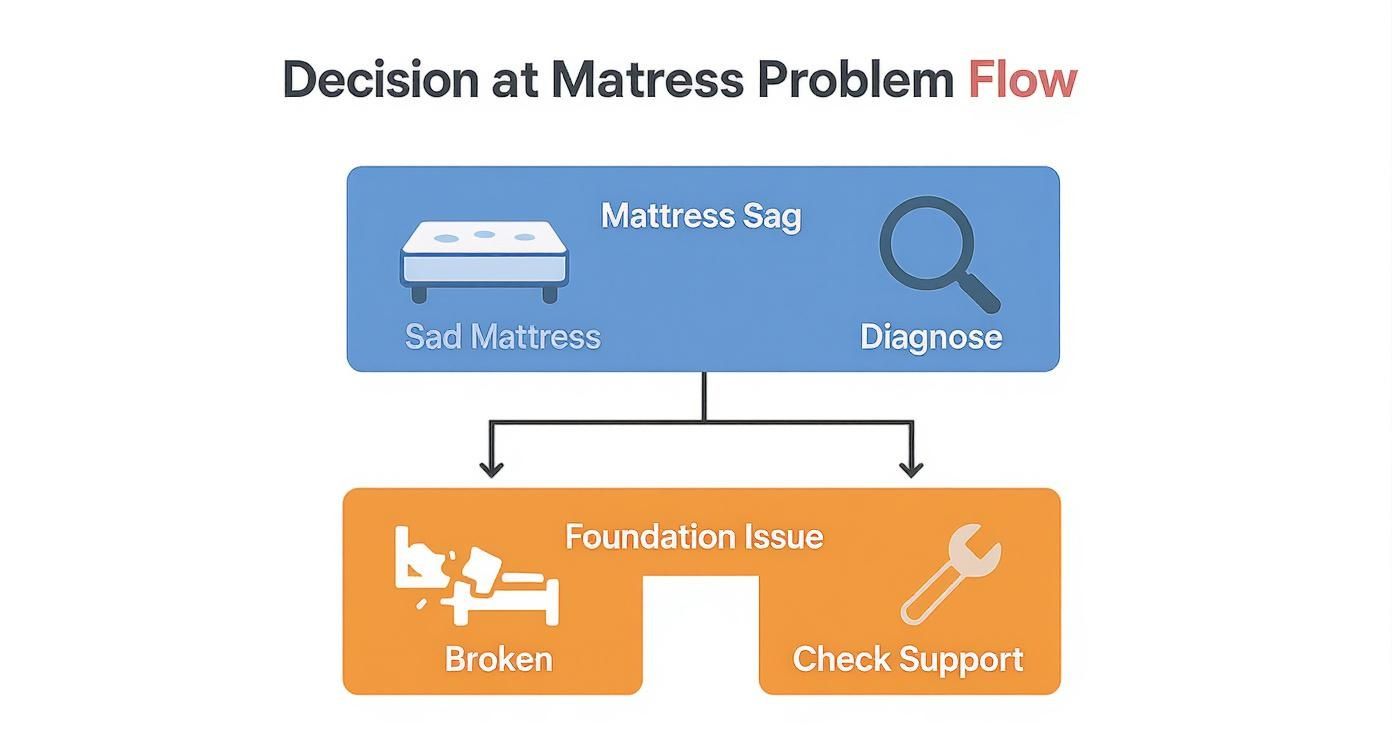
As you can see, figuring out if the issue is the mattress or what's under it is the essential first step toward a real solution.
Measuring the Sag Accurately
To get a real sense of how bad the sag is, you can do a quick "string test." Just grab a string, a broom handle, or anything long and straight. Lay it across the width of the mattress, pulling it taut over the sagging spot.
Now, take a ruler and measure the gap—the distance from the bottom of your string down to the deepest point of the indentation.
Most mattress warranties only kick in for sags that are 1.5 inches or deeper. Measuring it gives you hard proof, letting you know if you can file a warranty claim or if it’s a smaller issue you can tackle yourself.
If your detective work points to a worn-out foundation, you're in luck! That's usually a much easier and cheaper fix than buying a whole new mattress. A solid foundation is really the unsung hero of a good night's sleep. Here's how you can find the right one to give your bed the solid support it needs, empowering you to sleep better for years to come. Our team of Sleep Experts at Miller Waldrop can point you to a foundation that will give your bed the solid support it needs.
Quick Fixes: Toppers and Supports for Immediate Relief
So, you've confirmed the mattress itself is the problem. The good news? You don't have to suffer through another night of tossing and turning in that dreaded dip. There are some excellent, quick-fix solutions that can provide immediate relief, acting as the perfect tools until you’re ready to invest in a new mattress.
These fixes essentially work by adding a new layer of support or creating a more level sleeping surface, directly counteracting the sag that’s been ruining your sleep.
You’re not just buying another product; you’re strategically reclaiming your comfort. And you're not alone in this—the market for these kinds of solutions is booming as more people look for smart ways to extend their mattress's life. In fact, the global market for mattress toppers and repair kits recently topped $320 million, and it's still growing. This trend shows a real shift toward savvy, cost-effective maintenance. You can dig deeper into these trends by exploring the full mattress industry statistics.
Picking the Perfect Mattress Topper
A high-quality mattress topper is often the best first line of defense against a sagging mattress. Now, let’s be clear: it won't magically repair the broken-down support deep inside your mattress. What it can do, however, is create a brand-new, even layer right on top, effectively paving over the indentation.
The trick is for you to choose a topper that offers genuine lift and support, not just a bit of extra fluff.
-
Firm Latex Toppers: These are fantastic for fighting a sag. Latex is naturally resilient and buoyant, so it actively pushes back against your weight to create a level, supportive surface. It’s a real hero for a memory foam mattress that’s developed that all-too-common body impression.
-
High-Density Memory Foam Toppers: Don't just grab any memory foam topper. You need to look for one with a density of at least 4-5 lbs. per cubic foot. A thick, dense foam like this can actually fill in the valley created by the sag and offer proper contouring support, keeping you from sinking even further. Aim for a topper that is at least 3 inches thick to feel a real difference.
Think of a good topper as adding a brand-new comfort layer to your bed. It’s an empowering way to customize your sleep surface for an immediate upgrade, giving you back control without the major expense of a new mattress.
Using Under-Mattress Supports for a Firmer Foundation
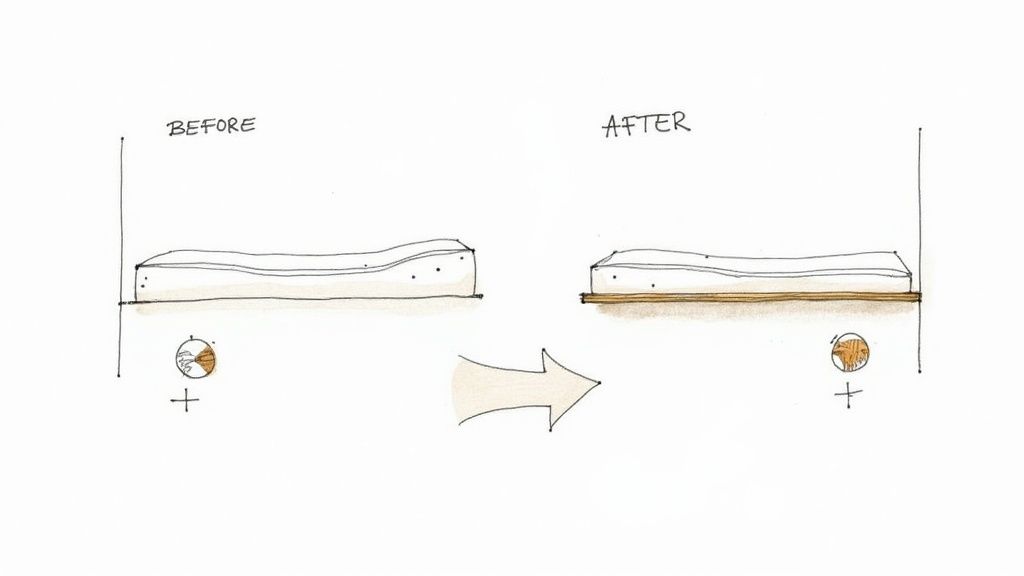
If your mattress needs more than just a surface-level fix, shoring it up from below can bring back a lot of its lost firmness. This approach works by creating a solid, unyielding platform directly under the sagging spot, which stops the mattress from dipping under your body weight.
One of the most effective tools for this is a specialized mattress support board. They’re designed to slide right between your mattress and the foundation, providing targeted reinforcement exactly where it's needed most.
For a more hands-on, DIY approach, a simple piece of plywood cut to size can also work wonders. Just slip it under the sagging section to create a firm base. This trick is especially effective for older innerspring mattresses where the coils have begun to lose their strength.
By combining these immediate solutions, you can create a powerful one-two punch against sagging. A supportive topper on top paired with a firm support board underneath can dramatically improve your sleep quality, literally overnight.
Of course, if you discover your foundation is the real culprit, our Sleep Experts at Miller Waldrop are ready to help you find a durable mattress foundation that’s built to prevent sagging from day one.
Reinforcing Your Bed's Foundation
It’s easy to blame the mattress when you start to feel that dreaded dip, but more often than not, the real culprit is hiding underneath. If your investigation pointed to a weak or failing foundation, you're in luck—this is often a straightforward fix that addresses the root of the problem.
Think of it this way: your mattress and foundation are a team. A flimsy foundation can't do its job, forcing the mattress to sink into unsupported gaps. This is what creates that sag you're trying to get rid of. By shoring up the base, you give your mattress the solid, even surface it needs to perform its best.
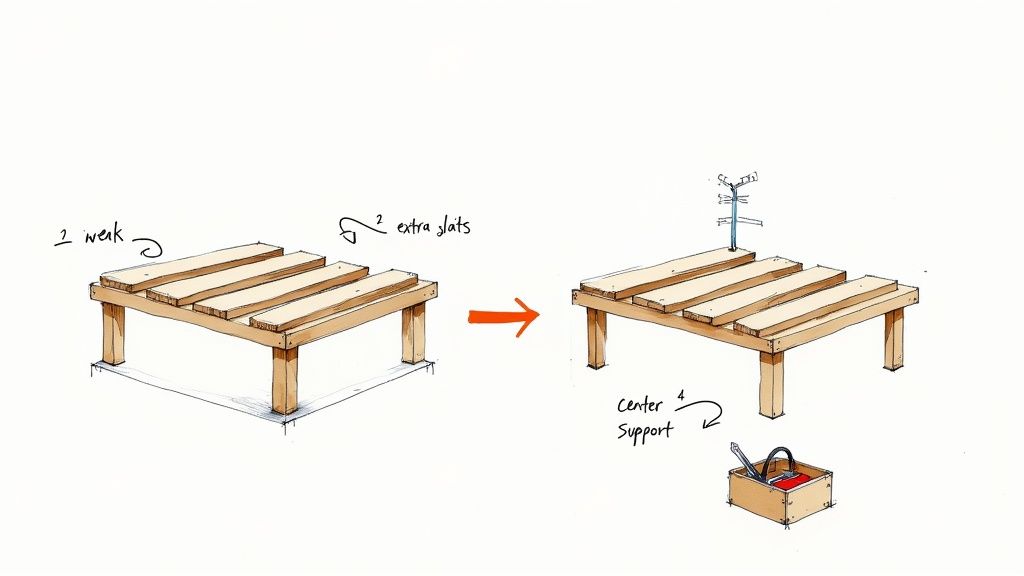
Upgrading Your Bed Slats
If your bed frame has slats, the spacing between them is absolutely critical. To cut costs, many manufacturers ship frames with the bare minimum number of slats, leaving huge gaps. Over time, even the best mattress will start to sag into those empty spaces.
Thankfully, the solution is simple and cheap: you can just add more slats. You can pick up a few extra boards at any hardware store and slide them in between the existing ones.
Pro Tip: For solid, even support, you want no more than 2 to 3 inches of space between each slat. This one small change creates a much stronger surface and can instantly stop your mattress from dipping.
The Importance of a Solid Box Spring
A box spring isn't just a simple platform; it’s an active part of your bed's support system. After years of use, its internal springs can wear out and break, or the wooden frame itself can crack. When that happens, your mattress is sure to follow.
Give your box spring a quick check. Press down firmly all over the surface. Do you feel any soft spots or hear any groans or creaks? Those are tell-tale signs that it’s compromised. While you could try to repair it, a full replacement is usually the most reliable fix. Learning why you really do need a box spring can shed light on just how vital it is for the life of your mattress.
Don't Forget Center Support
That infamous crater in the middle of the bed? On queen and king sizes, it's almost always caused by a lack of center support. A bigger mattress needs at least one—and ideally two—strong legs running from the middle of the frame down to the floor to prevent it from bowing.
If your frame is missing this key feature, you can easily find universal center support legs online or at a furniture store. Installing them is a quick project that provides immediate reinforcement where you need it most.
By taking the time to build a stronger base, you're not just patching the problem—you're solving it for good. A solid foundation is the unsung hero of a great night's sleep. If you find your old foundation is beyond saving, our team at Miller Waldrop can help you find a sturdy new mattress foundation that will last for years to come.
Smart Habits to Prevent Future Sagging
While you can definitely bring a sagging mattress back from the brink with a few good fixes, the best strategy is always prevention. Think of it less like a chore and more like a simple maintenance plan to protect your investment. A few easy habits can help you keep your bed comfortable and supportive for years to come.
The single most powerful thing you can do is rotate your mattress regularly. It costs nothing, takes just a few minutes, and makes a world of difference. Every three or four months, just spin your mattress 180 degrees so the part that was at the head of the bed is now at the foot. This simple trick spreads the wear and tear out evenly instead of letting it all concentrate in your favorite sleeping spot.
Protecting Your Mattress from the Inside Out
Moisture is the silent killer of mattresses. Spills, sweat, and even humidity in the air can work their way into the foam and fibers, causing them to break down and lose their supportive qualities way too soon. This is where a high-quality mattress protector becomes non-negotiable.
You'll want to find a protector that’s both waterproof and breathable. That's the winning combination. It stops liquids from ever reaching the mattress core but still lets air flow freely, which keeps things from getting hot and stuffy. Keeping your mattress clean and dry is one of the best ways to stop sagging before it even starts. For more great advice, you can use our essential mattress care tips to keep your bed in top shape.
Taking these preventative steps seriously is more important than ever. People are much more aware of sagging issues these days and are replacing their mattresses sooner because of it.
The numbers don't lie. Back in 2015, only 28% of people replaced their mattress within five years because it was sagging. Fast forward to this year, and that figure has shot up to 41%. The average age of a replaced mattress has also dropped from 8.2 years to just 6.7 years.
Committing to Long-Term Support
Finally, don't forget about the foundation. We’ve talked about it before, but it’s worth repeating: even the world's best mattress will sag if it doesn't have solid support underneath it. Make a point to occasionally check your bed frame, slats, and box spring for any signs of weakness, like cracks or bowing.
When you put these habits together—regular rotations, a good protector, and a solid foundation—you create a powerful system that fights sagging from all angles. And when the time does come to find your next sleep setup, our Sleep Experts at Miller Waldrop are here to help you choose a durable mattress and foundation built for lasting, sag-free comfort.
When It’s Time to Invest in a New Mattress
Look, a good DIY fix can be incredibly empowering, but even the best tricks have their limits. There comes a point where you're just putting a band-aid on a much bigger problem. Trying to salvage a deeply sagging mattress can feel like patching up a sinking ship—eventually, you have to accept that the core structure is just gone.
Knowing when to upgrade isn't a failure. It's actually a smart move for your long-term health and getting back to truly restorative sleep.
The biggest giveaway is the sag itself. Remember that "string test" we talked about? If you measure a dip that’s deeper than 1.5 inches, you’re past the point of a simple fix. The foam, springs, or other support materials inside have permanently broken down. No amount of plywood or even the plushest topper can bring back the proper spinal alignment you need.
Moving Beyond a Temporary Fix
Persistent pain is another huge red flag. If you’ve shored up your bed frame, checked your slats, and even added a high-quality topper but still wake up feeling stiff and sore, listen to your body. Your mattress is no longer supporting you—it's actively working against you.
And let's be honest about age. Most mattresses are built to last somewhere between seven and ten years. If you're pushing past that decade mark, it’s probably given you all it's got.
Deciding to replace your mattress is an opportunity to reclaim control over your sleep. It empowers you to choose a new sleep solution built with durable materials designed to prevent the very sagging you've been fighting.
If you’ve decided it’s time to move on, learning how to choose a new mattress is the perfect next step on your journey to better sleep.
For a deeper dive into timing your upgrade, you can also explore our guide on when to replace your mattress. When you’re ready to build your ultimate sleep foundation, our Sleep Experts can help you choose the perfect mattress for lasting comfort and support.
Still Have Questions About Fixing That Sag?
Even after trying a few fixes, it's normal to have some lingering questions. Let's walk through a few of the most common ones so you can move forward with confidence.
Can a Deep Sag in Memory Foam Actually Be Fixed?
This is a tricky one. For a minor dip in memory foam, a good quality, high-density topper can feel like a miracle, giving you a fresh, even surface to sleep on.
But, you have to be realistic. If that sag is deeper than 1.5 inches, you're looking at a more serious problem. A sag that deep usually means the foam's core support structure has given up for good. A topper at this stage is really just a band-aid, not a long-term solution.
How Often Should I Be Rotating My Mattress?
Think of it like rotating the tires on your car. You want to even out the wear and tear. You can empower your mattress to last longer by rotating it every three to six months.
This simple step is genuinely the best thing you can do to prevent sagging in the first place. It stops one area from taking all the nightly pressure, which can really extend the life of your bed.
Will Putting a Board Under My Mattress Mess Up My Warranty?
This is a huge one, so pay close attention. It's tempting to slide a piece of plywood under the mattress for some quick, firm support, but this can absolutely void your warranty.
Most mattress manufacturers are very specific about the kind of foundation you need to use—they might require slats that are no more than a certain number of inches apart, for example. Before you add any kind of DIY support, dig out that warranty information and read the fine print. You don't want to accidentally lose your coverage over a simple mistake.
On a related note, keeping your mattress in good shape goes beyond just the structure. A clean mattress is a healthy mattress. If you run into other common issues like accidents or spills, knowing how to get pee out of a mattress can be a lifesaver.
Getting these questions answered can give you the confidence to make the right call for your bed and your back.
At Miller Waldrop Furniture & Decor, we believe everyone deserves a great night's sleep on a supportive, comfortable bed. If you've tried all the tricks and decided it’s finally time for an upgrade, our Sleep Experts are here to help. They can guide you through the process of selecting the perfect mattress built for your unique needs, ensuring lasting, sag-free comfort.
Ready to win back your sleep? Visit us online to explore a collection of durable mattresses and find the hero for your sleep story at https://www.millerwaldrop.com.