

Your Guide to the Interior design process steps

Embarking on an interior design project, whether it's a complete renovation or a simple living room refresh, is an act of creation. It begins not with paint swatches or furniture browsing, but with a conversation—the essential first step where you get to translate your daydreams into a powerful, actionable plan.
This initial meeting, the consultation and brief, is the cornerstone of the entire process. This is your moment to define what "home" truly means to you and your family, transforming your vision into the blueprint for a space that supports your life.
Think of it as forging a creative partnership. The goal is to build a shared understanding that empowers every decision from here on out. When you invest time in this step, you take control of the process, preventing confusion and costly mistakes down the line.
Turning Your Lifestyle into a Design Brief
A design brief is the roadmap for your project. To chart your course, you need a clear destination. This means going deeper than just aesthetics and getting honest about how you and your family truly live.
Here’s how you can build a powerful brief to guide your journey:
- How You Really Live: Be practical and specific. Do you need a durable, comfortable sofa for movie nights with kids and a dog? A serene, sunlit corner for reading? Or is your primary goal to create a wide-open space perfect for hosting gatherings? Your lifestyle is the foundation.
- What You Love: Start a collection of images of rooms and styles that resonate with you. Don't analyze it yet—just gather what you're drawn to. As you collect inspiration, you'll begin to see your unique taste emerge through clear themes.
- The Pain Points: Identify what frustrates you about your current space. Is it the lack of storage, the poor lighting, or a piece of furniture that's just not working? Naming these frustrations helps you prioritize the changes that will have the biggest impact on your daily life.
The initial consultation is far more than a formality; it’s the foundation for your success. A detailed, thoughtful briefing process can cut project overruns by as much as 30%, empowering you to have a smoother and more enjoyable experience.
This is how a vague idea like, "I want it to feel cozy," becomes a clear, actionable goal: "I need a deep-seated sectional with soft, textured fabric, layered rugs, and warm, dimmable lighting." This level of clarity is your most powerful tool. If you need more support in this crucial first step, explore our advice on where to begin your home design journey.
The Power of a Shared Vision
There’s a reason this foundational step is so critical across the entire $137 billion global interior design market. Data from industry experts is clear: when the vision is sharply defined from day one, client satisfaction skyrockets and stress plummets.
By taking the time to articulate your needs, you're not just giving instructions. You’re building a clear plan that will help you create a home that isn't just beautiful, but one that works perfectly for the life you actually lead.
With this roadmap in hand, you are fully equipped and ready for the exciting steps ahead.
Now that you have your design brief in hand, the real fun begins. This is where your vision starts to take physical form—where we translate that initial spark into a visual concept that truly reflects your story. This is the moment you start to see and feel the possibilities.
Crafting a Mood Board That Tells Your Story
A mood board is your creative sandbox, a visual brainstorm where you can assemble images, textures, and colors that you're drawn to without any pressure or commitment. The magic happens when you step back and see how these individual elements come together to create a cohesive style that is uniquely yours.
A great starting point is to explore the different types of interior design. Seeing examples helps you put a name to what you like, whether it’s the clean, uncluttered feel of modern design or the cozy, lived-in vibe of a modern farmhouse. This gives you the language to describe your vision with confidence.
These days, this is almost always a digital process. In fact, 62% of clients globally prefer digital mood boards. They’re not just easier to edit and share; they also help speed up approvals by around 25% by keeping everyone on the same page.
Finding Your Anchor Pieces
Every well-designed room has a "hero" piece that grounds the space and clarifies its purpose. This is your anchor piece. In a living room, this is almost always the sofa. It’s more than just a place to sit; it’s the stage for your life—where you’ll host friends, enjoy family movie nights, and unwind after a long day.
So, how do you choose the right one?
- Think About Scale: The sofa must fit the room, not just physically, but visually. A huge sectional will overwhelm a small room, while a tiny loveseat will look lost in a large, open space. Measure your room and the piece to ensure a perfect fit.
- Be Honest About Durability: Your lifestyle dictates your fabric choice. If you have kids or a beloved pet, a high-performance fabric is a non-negotiable tool for a stress-free home. We often guide families toward brands like Flexsteel because they deliver incredible durability without compromising on style.
- Set the Tone: Your sofa is a major style statement. A sleek, low-profile frame immediately reads modern, while plush cushions and rolled arms feel more classic. This one decision has a massive impact on the room's overall feel, setting the stage for everything else.
Your anchor piece is the foundation of the room's design. Choose it with intention, and everything else—from the paint color to the accent decor—will fall into place around it much more easily.
The Practical Magic of Space Planning
With a concept brewing and an anchor piece in mind, it's time for space planning. This is where you get practical, figuring out the best way to arrange everything for a room that flows and just feels right. It's about more than just making furniture fit; it's about making your space intuitive and easy to live in.
The timeline below shows just how this early vision starts to take shape, moving from conversations to a concrete plan.
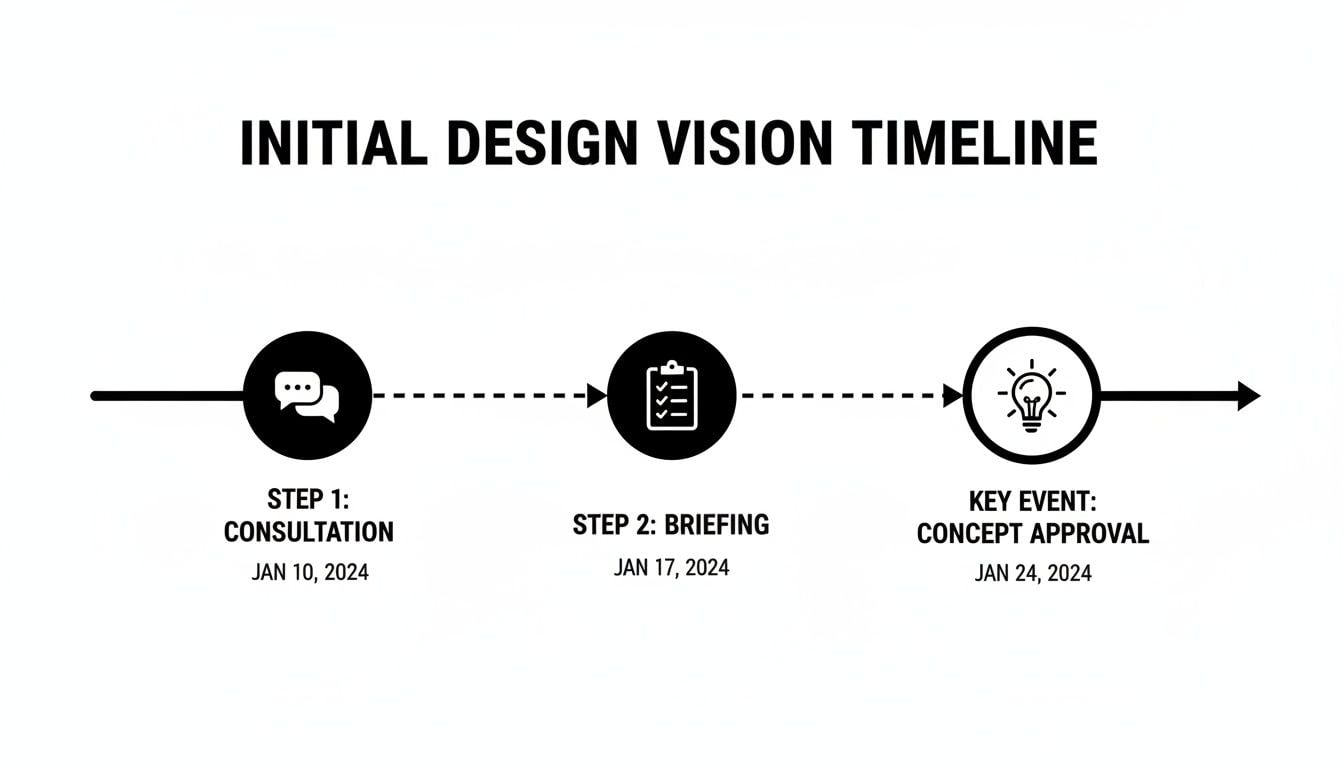
As you can see, getting from that initial chat to a finalized brief is a critical first step. It sets you up for success. Our complimentary design services are here to walk you through each of these stages. If you want to get a head start, check out our guide on how to plan a room layout.
Figuring Out Your Budget and Finding the Right Furniture
You have a stunning design concept in mind. Now it's time to make it real—translating those beautiful ideas into a concrete plan that fits your wallet. This is the step where numbers and logistics become your allies, turning a design dream into a room you can actually live in and love.
Think of this not as a restriction, but as your strategic roadmap. A solid budget and a smart sourcing strategy give you control, helping you make confident decisions without the stress of overspending. You'll have the power to decide where to invest for the long haul and where to save, so you can achieve the look you want without any surprises.
Setting Your Budget: Where to Splurge and Where to Save
Before you start sourcing, it’s crucial to have a clear financial picture. The most effective way to do this is to decide on a total budget you’re comfortable with, and then break it down—first by room, and then by the individual items within it.
A simple "Splurge vs. Save" list for each space is a game-changer.
- Splurge List: These are your workhorse pieces, the items you use every single day—your sofa, your dining table, and especially your mattress. This is where you want to allocate a larger chunk of your budget for quality that will last for years.
- Save List: Here’s where you can get creative and find great value. Items like decorative accents, side tables, or furniture for a low-traffic guest room don't need to be high-end to look fantastic.
A well-planned budget puts you in the driver's seat. Prioritizing investment pieces ensures longevity and satisfaction, while strategic saving allows you to complete the look without compromise. It’s all about balance.
For instance, when designing a bedroom, the mattress is the most important investment you'll make for your well-being. The quality of your sleep impacts everything. It's a smart strategy to dedicate a healthy portion of your budget here, because durability and personal comfort are absolutely non-negotiable.
The Hunt for Furniture: Ready-Made vs. Custom Orders
With your budget as your guide, you can begin the exciting hunt for the perfect pieces. You'll quickly find a whole spectrum of options, from items you can take home today to furniture built just for you.
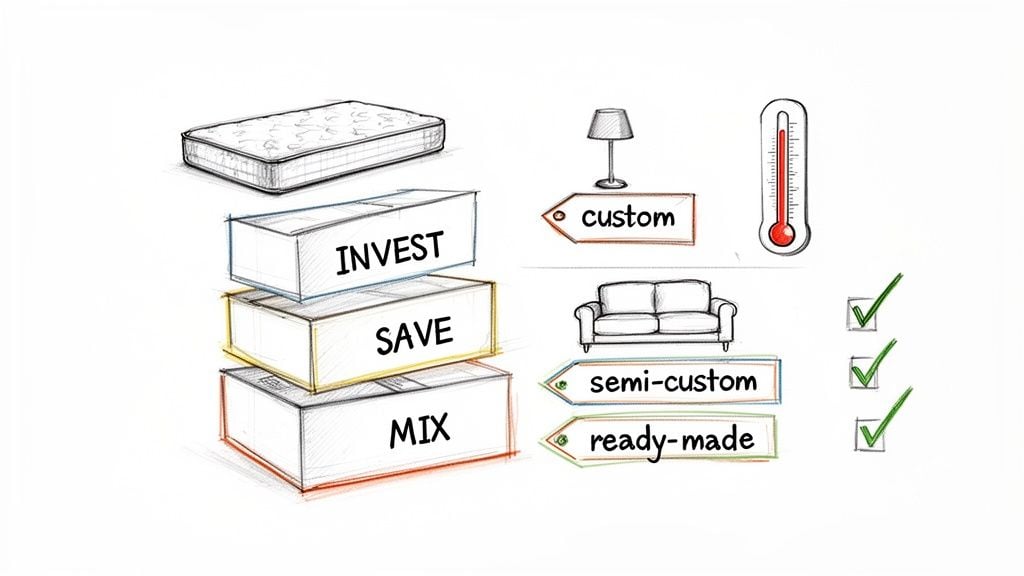
Understanding the difference empowers you to decide what's right for your timeline and vision:
- Ready-Made: This is your in-stock, off-the-floor furniture. It's a fantastic choice for speed and affordability, especially for smaller accent pieces or a quick refresh.
- Semi-Custom: This is the happy medium where you can add a personal touch—like choosing the fabric on a sofa or the leg finish on a chair—from a curated list of options. It gives you a sense of ownership without the full custom price tag.
- Fully Custom: This is where you bring your unique vision to life from the ground up. You get to specify the exact dimensions, materials, and finishes. Brands like Hooker and La-Z-Boy have incredible custom order programs that let you create a truly one-of-a-kind piece that fits your room and your style perfectly.
As you start sourcing, you can explore the best places to shop for home decor on a budget for those "save" list items. For the bigger investment pieces, remember that help is available. We believe great design should be accessible, which is why we offer flexible financing options and a Low Price Promise to help you bring home the furniture you'll love for years to come.
Getting a handle on the real numbers is key to a successful project. If you want to dig deeper, we've put together a full breakdown of the costs associated with interior design services and furnishing.
The Big Reveal: Installation and Styling Your Space
This is it. After all the planning, decisions, and anticipation, this is the moment your vision finally comes to life. All those approved mood boards and sourced furniture pieces are about to transform from ideas on a screen into the room you’ll actually live in. This stage is so much more than just moving boxes; it’s about coordinating a seamless delivery and installation, followed by the creative magic of styling that makes a house truly feel like home.
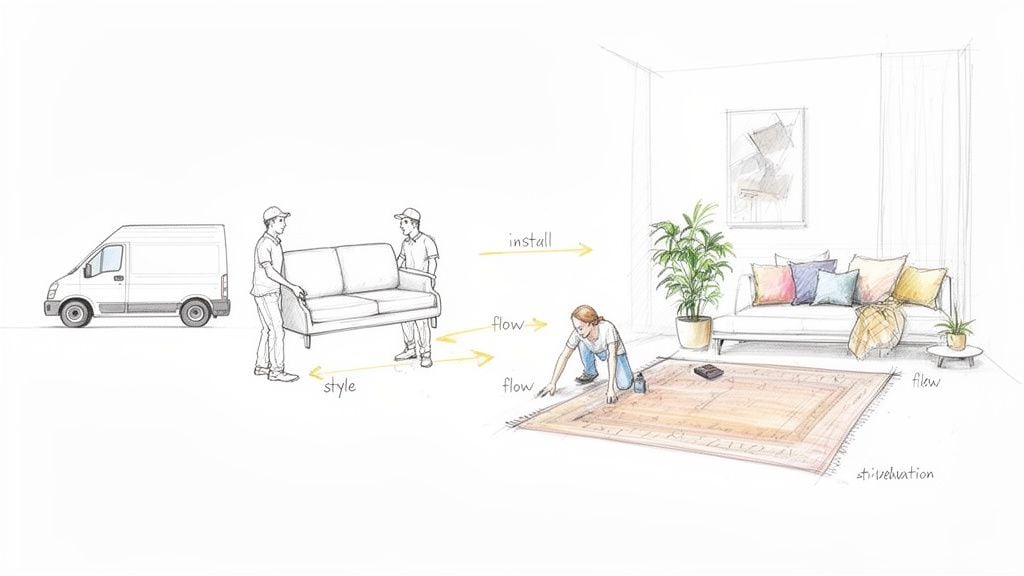
When that delivery truck finally pulls up, it’s a feeling of pure excitement and relief. This is the payoff for all your hard work! Having managed this process for over 70 years, we know that a smooth installation day comes down to one thing: excellent coordination.
From Truck to Triumphant: Nailing Delivery Day
Getting your new furniture delivered and set up is what makes the whole design concrete. It's not just about convenience; it’s about efficiency. In fact, industry reports show that working with a retailer who manages sourcing and delivery can save you real money—sometimes as much as 20%—by using trusted logistics partners. One market intelligence report even found that 80% of clients see huge value in this integrated approach.
For our West Texas families and local property managers, this means getting those durable, comfortable pieces—like a new power recliner or an adjustable mattress base—installed perfectly the first time, ready for you to enjoy right away.
A little prep work goes a long way in making the day stress-free.
- Clear the path. Before the delivery team arrives, walk the route from your front door to the room. Measure doorways and tight corners one last time to make sure everything will fit.
- Protect your surfaces. Put down floor coverings or old blankets to protect your floors from any potential scuffs or scratches. It’s a simple step that can save you a lot of headaches.
- Inspect everything on arrival. As items are unboxed, give each one a thorough look-over. It’s far easier to report any shipping damage on the spot than to deal with it weeks later.
Delivery day is when your project goes from a plan on paper to the room you'll actually live in. It's a day of exciting transformation, and our goal is for you to feel nothing but thrilled.
The Art of Arrangement: Creating Flow and Function
Once all the big items are in the room, the real fun begins. Arranging furniture is a puzzle, but the goal isn’t just to make everything fit. It’s about creating a layout that feels intuitive, encourages conversation, and makes the room easy to use.
Think about how people will move through the space. You want to create clear pathways so no one is awkwardly squeezing past a chair or tripping over a table leg. A good rule of thumb is to leave 30-36 inches for main walkways. And for the space between your sofa and coffee table? Aim for around 18 inches—close enough to set down a drink, but far enough for legroom.
Start with your anchor piece, like your sofa or bed, and place it first. Then, build the rest of the room around it. This creates a natural focal point and makes every other placement decision feel much simpler.
Styling: The Final Layer of Personality
If furniture provides the bones of a room, styling gives it a soul. This is where you add the final layers that express who you are. It’s all about the intentional placement of accessories, textiles, and personal mementos that tell your story.
Here’s a simple way to approach it:
- Layer from big to small. Roll out the area rug first, then position your main furniture. Next comes lighting and window treatments. The final touches are the small decor items: pillows, throws, artwork, and personal objects.
- Use visual triangles. When styling a surface like a bookshelf or console, group objects of varying heights in threes or fives. This simple trick creates a "visual triangle" that guides the eye and looks intentionally curated, not cluttered.
- Mix up textures. Contrast is your friend. A smooth leather sofa feels even more luxurious when paired with a nubby knit throw, soft velvet pillows, and a rustic wood side table. This mix of materials makes a space feel rich and layered.
- Get personal. This is the most crucial part! A room isn't truly yours until it reflects your life. Hang photos of loved ones, display art from a local maker, or show off a collection from your travels. These are the details that turn a beautifully designed house into your home.
As you fluff that last pillow, you’re not just finishing a project; you’re celebrating the end of a rewarding journey. The prize is a beautiful, functional space that’s all you. And remember, you don’t have to do it alone. Our complimentary design services are here to support you at every stage, from the initial idea to the final, stunning reveal.
Your Partner in Creating a Beautiful Home
Taking on an interior design project can feel like a huge undertaking, but it doesn't have to be overwhelming. Now that you've walked through the full interior design process steps—from the first spark of an idea to the final, satisfying reveal—you have a real framework for turning your vision into a home you'll absolutely love.
At Miller Waldrop, we believe the best homes are the ones that reflect the people living in them. We see our role not as just selling you furniture, but as giving you the guidance and tools to make confident, creative choices for your space. Think of us as your experienced partner, ready to help you navigate the process and win the day.
Turning Your Vision into Reality
The most rewarding design projects always come back to a few core principles. A clear plan isn't just helpful—it's the essential tool for keeping your project on track, on budget, and true to your style.
If you remember anything from this guide, let it be these key takeaways:
- A Clear Vision is Key: It all begins with understanding your own needs and what you want your home to feel like. That initial brief is your most valuable asset.
- Concept is Your Compass: Turning your ideas into a mood board with anchor pieces is what keeps the whole design cohesive, ensuring every choice works together.
- Budgeting Empowers You: A smart budget gives you the freedom to invest in quality where it matters most—like a durable, comfortable sofa—and get creative with more affordable decorative items.
- Installation is Transformation: The final delivery and styling phase is pure magic. It's the moment your house truly becomes a home, filled with your personality.
Reflecting on the process, many homeowners find it’s a rollercoaster of emotions. From the initial uncertainty to the excitement of seeing a design plan, the patience required while waiting for pieces, and finally, the thrill of the reveal. In the end, it’s always worth it.
This is a powerful journey, and you certainly don't have to do it alone.
How We Support You at Every Step
Whether you're just pinning inspiration photos or you’re ready to pick out throw pillows, our team is here to help. Our complimentary design services are your secret weapon, available at any stage of the interior design process steps in our Lubbock, Hobbs, and Ruidoso Downs showrooms.
Need a hand choosing a power recliner the whole family will fight over? We can help you find it. Not sure if that modern sectional can work with your grandmother's traditional rug? We live for those challenges and can show you how to create a balanced, collected look. If you're dreaming of a one-of-a-kind bedroom set, we'll happily walk you through all the custom fabric and finish options until we land on something that is uniquely you.
Our goal is to make great design accessible. For instance, when you're looking for the heart of your living room, we can show you how to choose the perfect sofa for your family’s needs. It’s not about us having the best sofas; it’s about giving you the tools to find the right one for your family.
A beautifully designed home is completely within your reach. You've learned the steps, found your inspiration, and now you know what you need. All that's left is to begin.
Feeling inspired? Your dream home is closer than you think. Visit one of our showrooms in Lubbock, TX, or Hobbs & Ruidoso Downs, NM, to speak with a design expert today. Let's start your design journey together.
Frequently Asked Questions About the Design Process
Whenever we talk with someone starting a new home project, some of the same great questions tend to pop up. We get it—this is a big undertaking! To help you feel confident as you get started, here are some honest answers to the questions we hear most often in our showrooms.
How Do I Determine My Interior Design Style?
Figuring out your personal style isn't about passing a test; it's more like a treasure hunt. The best way to start is by simply gathering inspiration. Hop on a platform like Pinterest and create a board, saving any images of rooms, furniture, or even just colors and textures that catch your eye. Don't overthink it—just save what you love.
After a week or two, take a look at what you’ve collected. Are there any patterns? Maybe you’ve pinned a dozen rooms with clean lines and neutral palettes, which points toward a modern or minimalist vibe. Or perhaps you're drawn to cozy textures, worn woods, and comfy, inviting furniture—a sure sign you lean toward modern farmhouse or traditional styles.
Your personal style isn't about fitting into a pre-defined box. It's about identifying the specific elements that make you feel happy and comfortable in a space, and then learning how to combine them cohesively.
Of course, nothing beats seeing things in the real world. We always recommend stopping by one of our showrooms in Lubbock, Hobbs, or Ruidoso Downs. It’s one thing to see a sofa from a great brand like Hooker or Ashley online, but it’s another to actually sit on it. This hands-on experience is where abstract ideas become real preferences, and our design experts are always there to help you connect the dots.
What Is a Realistic Budget for Furnishing a Living Room?
This is the big one, and the honest answer is: it varies. A realistic budget depends on your room’s size, the quality of furniture you’re after, and whether you’re starting from a completely empty space. The best place to begin isn't with a dollar amount, but with a list of priorities. What are your absolute must-haves?
Usually, these are the pieces that get the most daily use, like a durable sofa or a hardworking coffee table. You’ll want to dedicate the biggest chunk of your budget to these high-traffic, foundational items. Think of a quality sofa as an investment in your family’s comfort and its own longevity—it's the hero piece that will host countless movie nights and family gatherings for years to come.
At Miller Waldrop, we truly believe you can build a beautiful room at any price point. That’s why we offer a huge range of options, flexible financing, and our Low Price Promise. We can help you figure out where to invest for the long haul and where you can save, making sure every dollar you spend has a major impact.
Can I Mix and Match Furniture from Different Brands and Styles?
Not only can you—you absolutely should! In fact, mixing styles and brands is the secret to a room that feels authentic, personal, and collected over time. A space where every single piece matches perfectly can feel a little sterile, almost like a catalog photo instead of a real home.
The trick to mixing successfully is to find a common thread that pulls everything together. This unifying element could be:
- A Consistent Color Palette: Using a few shared colors across different styles creates instant harmony.
- A Repeated Material: Weaving in the same wood tone or metal finish (like brass or black) in various pieces makes them feel related.
- A Similar Formality Level: A casual, slipcovered sofa pairs naturally with a relaxed accent chair, even if they're from different eras. The shared vibe is what makes it work.
For example, a sleek, modern Flexsteel sectional can look fantastic next to a more traditional wooden armchair if they share a similar color in their upholstery. Our design team loves helping clients create these unique pairings, like blending a contemporary La-Z-Boy recliner with an eclectic, vintage-inspired rug for a look that feels both balanced and full of personality.
How Long Does It Take to Get Custom-Order Furniture?
The timeline for custom-order furniture is an important factor in the interior design process steps, and it really depends on the manufacturer, the materials you select, and how complex the piece is. Generally speaking, you can expect a lead time anywhere from several weeks to a few months.
When you place a custom order with us, we make transparency a top priority. We'll give you a clear, estimated timeline right from the start and keep you in the loop with updates as they come in.
The payoff for the wait is getting something that’s made just for you. You get to choose the exact fabric for your sofa, the perfect wood finish for your dining table, or the ideal configuration for your bedroom set. It’s an incredible way to ensure your furniture is a true reflection of your style, and our team is here to make the whole process feel simple and stress-free.
At Miller Waldrop Furniture & Decor, we believe that creating a home you love should be an exciting and rewarding journey. To start finding the pieces that will become the heart of your home, explore our curated collection of living room furniture. Here’s how you can choose the perfect sofa for your family’s needs and begin your design adventure today.