

What Is a Console Table Used For? Your Guide to This Versatile Staple

Ever feel like you have an awkward, empty space in your home that you just don't know what to do with? That spot behind the sofa, that long, narrow hallway, or that blank wall in the dining room? There's a secret weapon in the world of interior design perfect for these tricky spots: the console table.
It's so much more than just a skinny table. Think of it as a launchpad for your daily routine, a display for your favorite things, and a stylish problem-solver all in one. It’s the perfect marriage of form and function, designed to fit where other furniture simply can't.
The Console Table Explained: Your Home's Most Versatile Player
So, what is a console table actually used for? The short answer is: just about anything. This chameleon of the furniture world is a tool you can use to conquer clutter and inject your personality into any room.
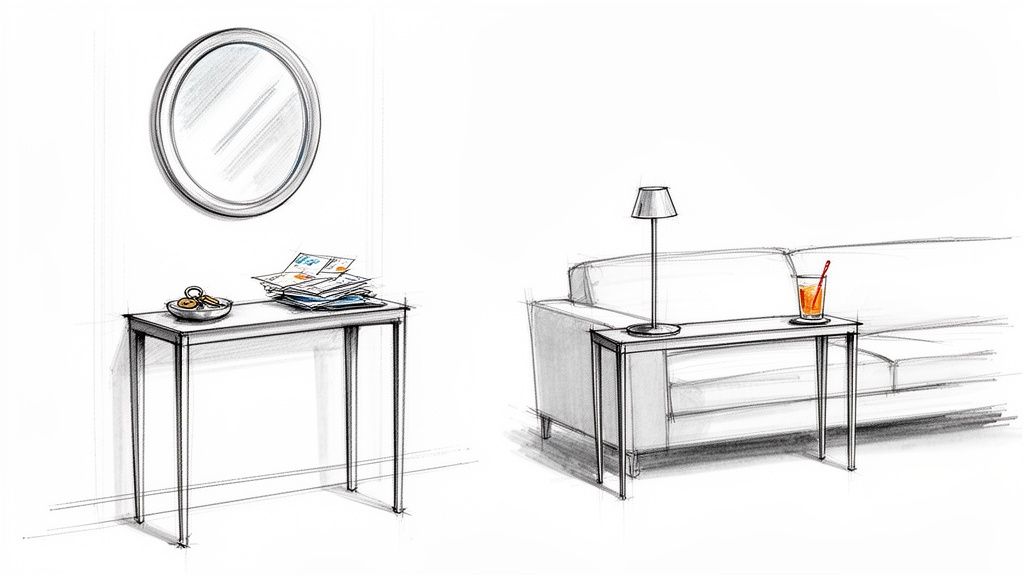
Picture it in your entryway. It’s the command center where you drop your keys, sort the mail, and take a final glance in the mirror before heading out. Or, slide one behind your sofa. Suddenly, you have a perfect perch for a pair of reading lamps and a place to set down a drink, creating a cozy, defined living area. In a dining room, it can easily step in as a slim buffet for serving dishes or a chic bar for entertaining.
It's More Than Just a Pretty Piece
A console table does more than just fill an empty space—it completely elevates it. It enhances the flow of your home and adapts to the way you actually live. Its real magic is its versatility.
This one piece of furniture can solve so many common design dilemmas:
- Tackles Awkward Spaces: It’s built for those narrow hallways, the gap behind a floating sofa, or any long, empty wall that just feels unfinished.
- Boosts Organization: Many console tables come with drawers or shelves, giving you a designated spot for everything from entryway clutter to extra linens.
- Creates a Decorative Moment: It acts as the perfect stage for a table lamp, a striking piece of art, cherished family photos, or your favorite decorative objects. It's where you tell your home's story.
A console table is your chance to turn a forgotten nook into a beautiful, functional focal point. It’s how you can create a home that not only looks stunning but also works effortlessly for your life.
Beyond just solving problems, a great console table helps set the entire mood of a room. For more ideas on creating that welcoming feeling, check out these expert tips on making your home cozy.
Top Console Table Uses at a Glance
To help you visualize where a console table could fit into your home, here’s a quick rundown of its most popular and effective roles.
| Location | Primary Function | Styling Essentials |
|---|---|---|
| Entryway / Foyer | Drop zone for keys, mail, and bags. A welcoming first impression. | A mirror, a catch-all bowl or tray, a table lamp for warm light. |
| Living Room | Sofa table for lighting and drinks, or a media stand for a TV. | Matching lamps, decorative objects, stacked books, a plant. |
| Hallway | Fills a narrow space, provides surface area without blocking traffic. | A piece of art or a gallery wall above, a vase with flowers. |
| Dining Room | A slim buffet for serving, a bar cart, or extra storage. | Serving dishes, glassware, a wine rack, candles. |
| Bedroom | A vanity table, a desk in a small space, or a TV stand. | A small stool, a jewelry box, a framed photo, a small lamp. |
This table shows just how adaptable a console can be—it’s all about matching the piece to the needs of your space.
Ready to find the perfect piece to solve your own design challenges? Here’s how you can explore our curated collection of console tables and discover the ideal partner for your home.
Where Did the Console Table Come From?
To really understand why the console table is such a secret weapon in interior design, it helps to know its backstory. This isn't some fleeting trend; its roots are planted firmly in the lavish halls of 17th-century European aristocracy. Back then, they were often ornate, half-moon tables with just two legs, physically attached to the wall with decorative brackets called consoles.
Their job was simple: to look incredible while holding up sculptures, massive floral arrangements, and other symbols of wealth. They were pure eye candy, masterpieces of craftsmanship meant to show off the owner's taste and status in a grand entryway. Eventually, they grew two more legs and learned to stand on their own, but their purpose as a beautiful piece for the edges of a room never really changed.
From Palaces to Your Place
As centuries passed and homes became more about living than showing off, the console table evolved right along with them. It shed its purely decorative skin and took on a much more practical, hardworking role. The 20th century, in particular, saw it transform from an exclusive luxury into an absolute must-have for homes of all kinds.
Why the shift? Our needs changed. As we knocked down walls and embraced open-concept living, the console table found a new job defining spaces. It could tuck in neatly behind a floating sofa, creating a subtle visual border for the living room without closing it off. Its slim, narrow shape made it the perfect solution for tight hallways that needed a surface but couldn't afford to lose an inch of walkway.
The Modern Console: A Timeless Problem-Solver
Today, the console table is more popular than ever, and it's all thanks to that incredible adaptability. It's become a cornerstone piece for just about any room, acting as an entryway drop-zone, a display shelf behind the couch, or an elegant accent in a hallway. The global market for them hit USD 4.24 billion and is expected to climb to USD 5.98 billion by 2032—that’s a serious testament to its staying power. You can see more on the growth of the console table market if you're curious just how essential this piece has become.
Choosing a console table means you're investing in a piece with a rich heritage of adapting to homeowners' needs. It's a legacy of form meeting function.
Knowing this history helps you see that you’re not just buying another piece of furniture. You’re choosing a design hero with centuries of proven performance. Brands in the incredible Hooker Furniture collection carry on this legacy, mixing classic design with the practical function modern homes demand. When you bring one into your home, you're not just solving a tricky design problem—you're adding to a long and stylish history.
Putting Your Console Table to Work, Room by Room
Alright, let's get into the fun part—seeing just how much a single console table can do. Think of it less as one piece of furniture and more as a design chameleon, ready to solve problems and add a touch of style wherever you put it.
Its secret is its specialization. In an entryway, it’s all about creating a great first impression and keeping daily chaos at bay. Behind a sofa, it’s a master of defining space and layering in cozy light. Once you know its mission in each room, you can really make it work for you. Let’s walk through some practical, room-by-room strategies.
The Entryway: Your Daily Launchpad
Your entryway is the first thing you see when you get home and the last thing you see when you leave. A console table here is your "launchpad," turning a potential pile-up of stuff into an organized, welcoming hub. It gives you a designated spot for keys, mail, and anything else you need to grab on your way out the door.
To make it really sing, hang a mirror above it. This isn't just for a last-minute check before you leave; it also makes the space feel bigger and brighter. A beautiful bowl or tray is perfect for corralling keys and pocket change, keeping the surface from becoming a mess. Add a small lamp, and you've got a warm glow that says, "welcome home." For a deeper look at how you can get this space just right, check out our guide on the elements of a standout entry table.
The Living Room: The Ultimate Anchor
In a living room, you’ll often see a console table tucked right behind a sofa that's "floating" in the middle of the room. It’s a classic designer move for a reason. It acts as a visual anchor, grounding the whole seating area and creating a subtle border in an open-plan home. It just makes the entire layout feel more deliberate and polished.
Placing a console table behind your sofa is one of the quickest ways to make a living room feel more polished and professionally designed. It's a simple move with a massive impact on the room's overall flow and ambiance.
This isn’t just about looks, either. It’s an incredibly practical spot for a pair of matching table lamps, which cast a lovely, balanced light for reading or just relaxing in the evening. The surface is also your personal gallery—a place to display treasured photos, art books, or a vase of fresh flowers, turning the boring back of your sofa into a genuine focal point.
Beyond the Obvious: Clever Uses Around the House
The console table's slim, versatile shape makes it a problem-solver in so many other spots. Don't be afraid to think outside the entryway or living room.
- In the Dining Room: It’s the perfect stand-in for a narrow buffet or server. During dinner parties, you can use it to hold extra dishes, wine bottles, or dessert, freeing up precious real estate on your dining table. It also makes a fantastic, elegant bar station.
- In the Bedroom: Need a spot to get ready? A console table works beautifully as a vanity. Just hang a mirror on the wall above it, pull up a small stool, and you have a chic, space-saving alternative to a bulky vanity set.
- In a Hallway: Long, stark hallways can feel a bit like a bowling alley. A slim console table breaks up that long stretch, giving you a surface for a lamp or a piece of art without getting in the way.
- As a Media Stand: In smaller spaces like a den or bedroom, a sturdy console table can be a great-looking, minimalist TV stand. If it has a bottom shelf, even better—just add a few woven baskets to hide away remotes and cables.
For more inspiration on arranging any room, take a look at these smart room layout ideas to maximize your space. With a little creativity, a console table can become the piece that pulls every room together.
How to Choose Your Perfect Console Table
Ready to find the one? That perfect console table that looks like it was made just for your home? Choosing the right piece is more than just filling a space; it's about solving a design challenge and letting your personal style shine. If you focus on three key things—size, material, and style—you can pick a table that not only fits perfectly but makes your daily life a little better.
Think of this as your playbook for making a smart, stylish choice that you'll love for years. It all starts with really looking at your space. A console table should feel like a natural part of the room, never an obstacle. Getting the proportions right is the secret to achieving that seamless, professionally designed look.
Measure for a Perfect Fit
Before you start scrolling and fall in love with a specific design, grab a tape measure. Seriously, this simple step is the key to making sure your new table complements your other furniture and doesn't get in the way of foot traffic.
Here’s what to look for:
- Height: If it's going behind a sofa, the table should be no taller than the sofa's back. For an entryway or hallway, a standard height of 30-33 inches is usually just right.
- Length: Behind a sofa, a good rule of thumb is to aim for a table that’s about two-thirds the length of the couch. Against a wall, make sure to leave at least 6 inches of "breathing room" on each side. This prevents the space from looking cramped.
- Depth: For high-traffic areas like a hallway, you'll want a slim profile. A depth of 12-15 inches is ideal to keep the walkway clear and open.
This quick decision tree can help you visualize where a console table might be used best in your home.
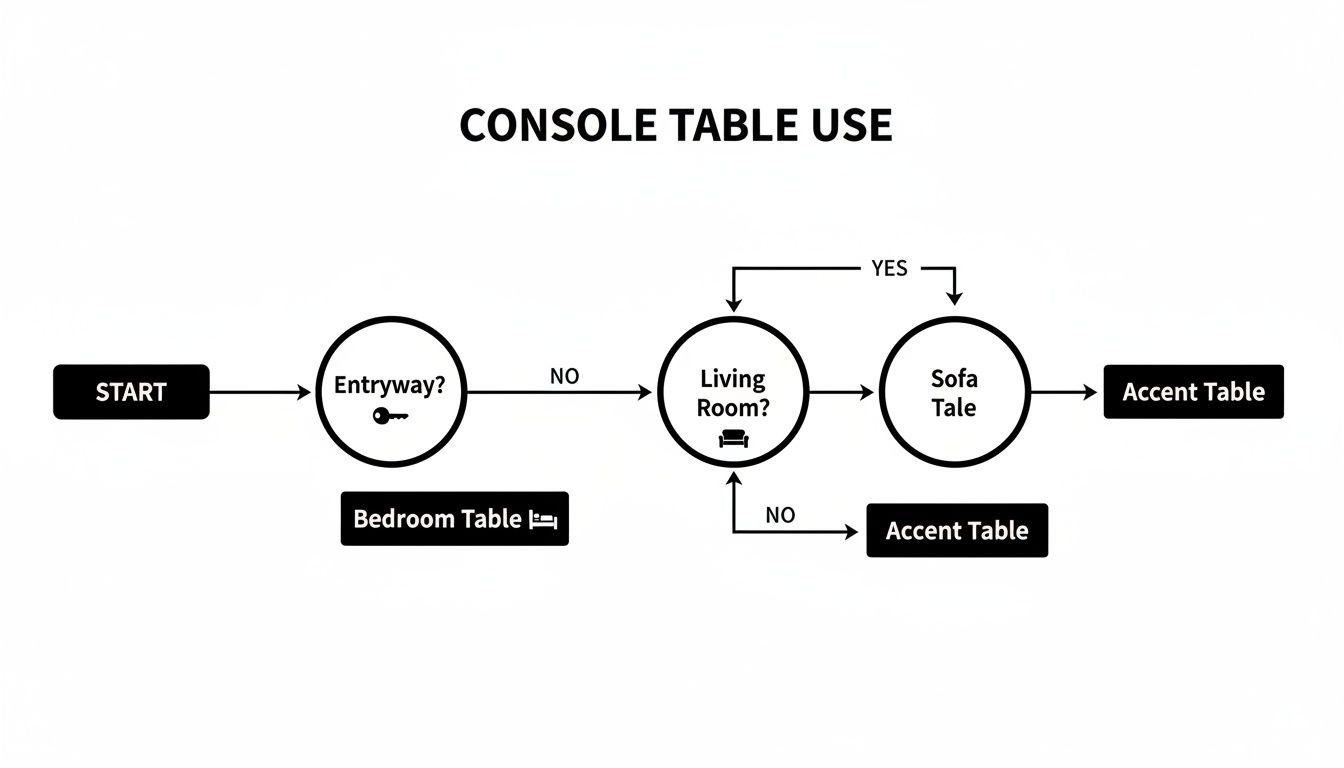
As you can see, a console table’s main job—whether it's a spot for keys, a base for a lamp, or a display for your favorite things—is really defined by where you put it.
Select Your Material
The material you choose does more than just look good; it sets the whole tone for the piece and dictates how well it will hold up over time. It's important to think about your family’s lifestyle and the overall vibe you're trying to create.
A classic wood console, for instance, brings a sense of warmth and timeless strength to a room, making it a fantastic, family-friendly choice. If you're curious about how to choose the right woods, our guide on the best wood for tables is a great resource. On the other hand, metal can add an industrial or modern edge, while glass or mirrored finishes are perfect for making a small space feel bigger and a bit more glamorous.
To help you decide, here’s a quick comparison of some of the most popular materials.
Console Table Materials Compared
| Material | Best For (Style) | Durability | Maintenance Tips |
|---|---|---|---|
| Wood | Traditional, Rustic, Farmhouse | High | Use coasters; dust regularly; polish occasionally. |
| Metal | Modern, Industrial | Very High | Wipe with a damp cloth; avoid harsh chemicals. |
| Glass | Contemporary, Glam | Medium | Clean with glass cleaner; watch for scratches. |
| Marble | Luxury, Classic | High (but porous) | Seal regularly; clean spills immediately to avoid stains. |
| MDF/Veneer | Budget-Friendly, Versatile | Medium | Avoid moisture; use coasters; gentle cleaning. |
Choosing the right material really comes down to balancing the look you want with the life you live.
Match Your Home’s Style
Last but not least, pick a console that speaks the same design language as the rest of your home. Is your style rustic and cozy? A sturdy, handsome wooden table might be the perfect hero piece. Or do you lean more toward sleek, contemporary lines? A table with a minimalist metal frame could be your ideal match.
Your console table is more than furniture; it's a reflection of your personality. Choose a style that complements your existing decor to create a cohesive and harmonious look.
Now you’re armed with the knowledge to select a console table that's not just beautiful, but perfectly suited to your space and lifestyle. To see how these ideas can come to life in your home and get expert advice, we invite you to visit one of our showrooms. Our team is here and ready to help you find that perfect piece that will make your home’s design sing.
Styling Your Console Table Like a Designer
So, you've found the perfect console table. Now for the fun part: making it your own. This is your chance to transform a simple piece of furniture into a curated display that tells your story and solves a real design challenge. Styling isn't about following a strict set of rules; it’s about using a few simple design principles—layering, balance, and scale—to create a look that feels completely natural and uniquely you.
Think of your console table as a small stage. Your job is to arrange the actors (your decor) in a way that’s both beautiful and functional. The goal is to create a little scene, or vignette, that feels intentional and harmonious, not just a random collection of stuff. With a few key techniques, you can start styling your console table with the confidence of a pro.
Mastering the Art of Balance and Scale
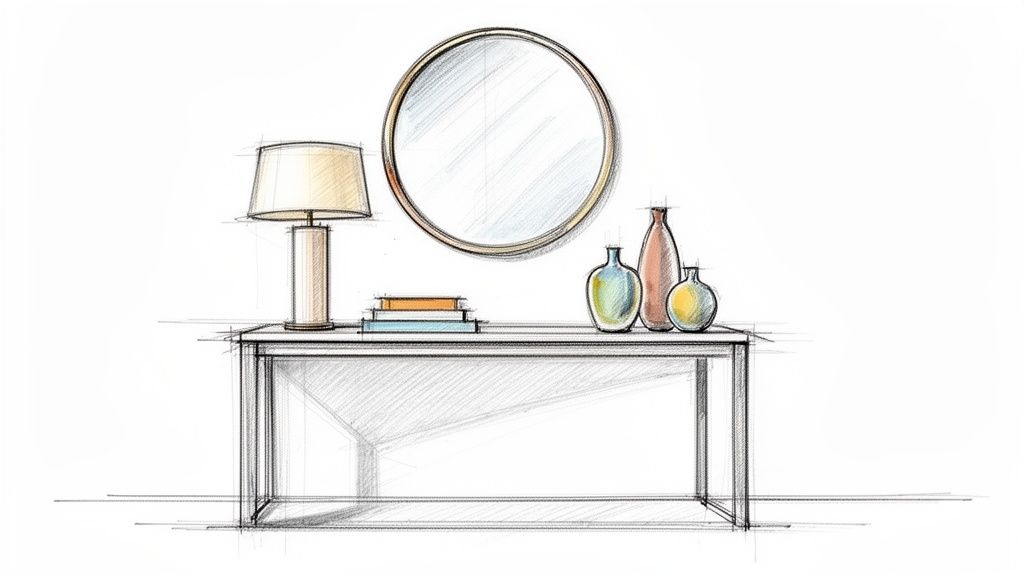
First things first, you need an anchor. This is usually a large item hung on the wall right above the table, like a striking mirror or a significant piece of art. This anchor piece is what grounds the entire arrangement, giving it a focal point. As a rule of thumb, hang it about 6-8 inches above the tabletop. This keeps it feeling connected to the table instead of just floating aimlessly on the wall.
Next, it’s time to play with height. This is a classic designer trick for creating visual interest and preventing the display from feeling flat. You want to use items of varying heights to draw the eye up and down across the surface. For example, a tall, elegant lamp on one side can be balanced by something shorter and wider on the other, like a neat stack of coffee table books or a decorative bowl. This creates an asymmetrical balance that feels dynamic and modern.
The Power of Layering and Texture
Layering is what gives your display depth and personality. Start with your tallest items in the back—think a lamp or a vase filled with long stems or branches—and then work your way forward with shorter pieces. You could lean a smaller framed photo against your main anchor piece or place a small, interesting object in front of a stack of books. It’s all about creating a foreground and a background.
The "Rule of Three" is a stylist's secret weapon. Our eyes are naturally drawn to things grouped in odd numbers. Try arranging objects in threes—like three different-sized vases or a candle, a small plant, and a photo frame—to create a look that’s more appealing and memorable.
Don’t forget about texture! Mixing different materials is what really brings a display to life. Combine smooth, hard surfaces like ceramic or metal with softer, more organic elements. Imagine a sleek metal tray holding a rustic wooden bowl, or a smooth glass vase filled with textured florals. This contrast makes the whole setup more engaging and tactile. A piece like the beautiful and versatile Uttermost Cassio Console Table offers the perfect neutral canvas to experiment with all kinds of textures and materials.
Ready to bring your vision to life? Our design experts are here to help you pull it all together and select the perfect pieces to tell your story. Schedule a complimentary design consultation with our team, and let’s create a space that’s beautifully and functionally yours.
Find Your Perfect Design Partner at Miller Waldrop
Bringing your vision for your home to life should be an exciting journey, not an overwhelming one. At Miller Waldrop, we’ve spent over 70 years helping our neighbors in West Texas and Southeastern New Mexico furnish their homes with confidence. As a fourth-generation family business, we’re here to be your trusted guide.
Think of yourself as the hero of your home's story—and every hero needs a guide. Our team is your dedicated partner, whether you need help finding the perfect console table for a tricky spot or advice on styling an entire room. We empower you with a curated selection of quality brands you can trust.
Our collection of versatile console tables, for instance, offers beautiful and practical solutions for any space you can imagine.
Your home should be a reflection of you. We provide the expertise and curated selections so you can confidently create a space that is both beautiful and functional.
We'd love for you to come and see for yourself. Stop by our showrooms in Lubbock, Hobbs, or Ruidoso Downs to experience our personalized design services firsthand. Let our knowledgeable staff help you find the right furniture and make your beautiful home a reality.
A Few Common Console Table Questions
Even with a head full of ideas, you probably still have a few lingering questions. That's completely normal. Getting these practical details sorted out is the last step before you can pick out and place a console table with total confidence.
Let's walk through some of the most common questions we hear from homeowners every day in our showrooms.
How Tall Should A Console Table Be?
Getting the height right is crucial for a balanced, professional look. If you plan on tucking the table behind your sofa, here's an easy rule of thumb: choose one that's the same height as the sofa back, or just a hair shorter. You never want it peeking up over the top. Most sofa backs are around 28-33 inches, so aim for that range.
For an entryway or a hallway, standard table height—about 30 inches—is almost always the perfect fit. It just feels natural and creates a surface that's easy to use.
Can A Console Table Be Used As A Desk?
Absolutely! This is one of my favorite small-space hacks. A console table makes for a fantastic, streamlined desk in a bedroom corner or a makeshift home office nook.
The key is finding one with the right proportions for work. Look for a height of around 29-30 inches, but more importantly, make sure it's deep enough. You'll want a depth of at least 15-20 inches to give you enough space for a laptop without cramping your legs underneath.
What Is The Difference Between A Console And A Sofa Table?
This question trips a lot of people up, but the answer is pretty simple. In the furniture world, you'll often hear the terms used interchangeably.
Think of it this way: a “sofa table” is just a console table with a specific job—being placed directly behind a sofa. The term “console table” is the broader category for any long, narrow table designed to sit against a wall or another piece of furniture. So, while all sofa tables are console tables, not all console tables are used as sofa tables.
At Miller Waldrop, we believe you’re the hero of your home’s design story. Our role is to provide the tools and expertise you need to bring that story to life. Explore our curated collection of console tables and find the perfect piece to solve your design challenges today.