


1 Inch Mattress Topper: Your Guide to a Subtle Comfort Boost

A lot of sleepers aren't trying to rescue a terrible bed. They're trying to fine-tune a good one.
That's the exact lane where a 1 inch mattress topper makes sense. Maybe the mattress feels just a touch firm. Maybe a guest bed needs a softer welcome. Maybe the goal is to add a clean, removable layer that helps protect the surface without changing the whole sleep setup. In homes across West Texas and New Mexico, that kind of small adjustment often matters more than a dramatic overhaul.
The mistake is expecting a thin topper to do a thick topper's job. A 1 inch model is a precision tool. Used for the right purpose, it can be smart, tidy, and cost-conscious. Used for the wrong purpose, it can be frustrating.
Is Your Good Mattress Almost Great
Some mattresses miss the mark by a little, not a lot. The support feels solid, but the top surface is a bit too flat. The bed works well most nights, yet it doesn't feel finished. That's usually when shoppers start wondering if they need a whole new mattress.
Often, they don't.
A 1 inch mattress topper works best when the mattress underneath is already doing the heavy lifting. It's not a rebuild. It's a surface adjustment. That makes it a practical option for sleepers who want a small comfort change without adding much height or changing the bed's core feel.
Start with the real problem
Before buying anything, it helps to name the issue clearly.
- Surface comfort is slightly off: The mattress feels supportive, but the top layer feels a little too firm or too plain.
- The mattress is still in good shape: There's no major dip, collapse, or obvious support failure.
- Protection matters: The goal includes shielding the mattress from wear, spills, or everyday use.
- The bed doesn't need a major softness boost: A subtle change is enough.
If that sounds familiar, a thin topper belongs on the shortlist.
Practical rule: If the mattress feels good underneath but not quite right on top, a 1 inch topper can be the right-size solution.
A different issue needs a different answer. If the bed is sinking, hammocking, or causing alignment problems, a thin layer on top won't fix the structure below. That's when it helps to look at a guide on how to address a sagging bed before choosing any topper.
Think of it as gear, not a miracle
The smartest sleep upgrades match the problem. A 1 inch topper is for refining, not rescuing. That's what makes it useful. It lets a sleeper make a controlled adjustment instead of overcorrecting with a thick layer that changes the bed more than expected.
For someone who likes their mattress and just wants it to feel more polished, cleaner, or slightly more forgiving, this can be exactly the right tool.
Understanding the 1-Inch Topper's True Purpose
A 1 inch topper sits in a very specific category. It's thin enough to keep the mattress feel mostly intact, but substantial enough to add a noticeable surface layer.
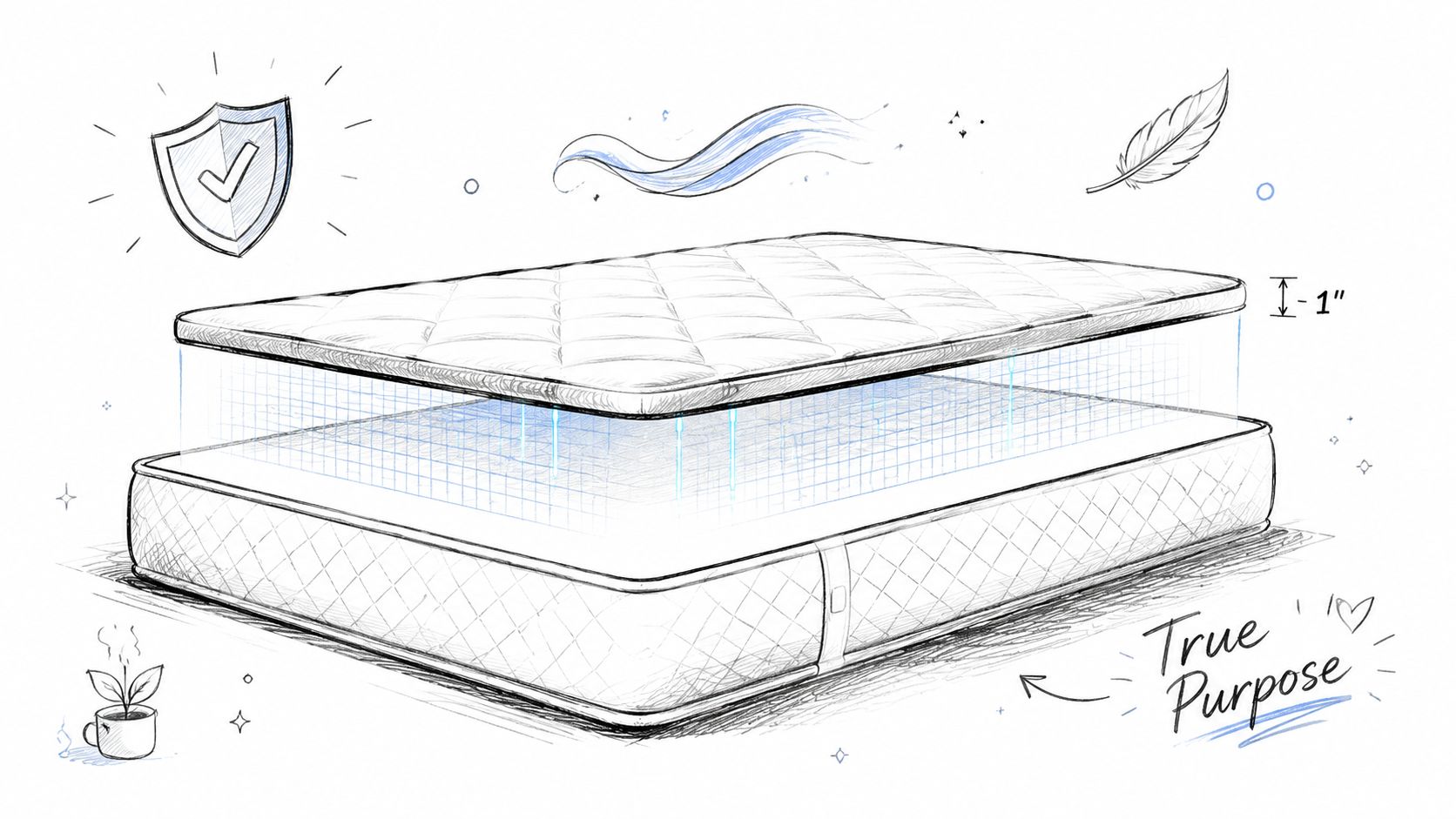
Its function is similar to a screen protector on a phone. It improves the surface experience and adds a measure of protection, but it doesn't turn the phone into a different device.
What it does well
A 1 inch topper is best understood as a light comfort and protection layer. According to Turmerry's explanation of 1 inch mattress toppers, a 1-inch mattress topper is categorically defined as a “thin” option that provides only a “subtle” cushioning layer. That same source notes it's specifically recommended for sleepers with already supportive mattresses who want a minimal comfort upgrade, and that its main value is helping protect the mattress and extend its life rather than correcting firmness issues.
That tells shoppers exactly how to use one wisely.
- It refines the top feel: A bed can feel a little less stark or stiff.
- It adds a sacrificial layer: Everyday wear hits the topper before it reaches the mattress.
- It keeps the profile low: The bed doesn't become dramatically taller or harder to sheet.
- It supports a cleaner setup: Many households like having one more removable layer between the sleeper and the mattress.
What it won't do
This is where honest buying matters. A 1 inch topper won't remake a mattress with major problems.
A thin topper can soften first contact with the bed, but it won't rebuild lost support underneath.
That means it's not the right answer for a sagging center, broken-down edges, or a mattress that's too old and unsupportive. It also won't create the deep cradle that many side sleepers expect when they're trying to relieve pressure at the shoulders or hips.
Why realistic expectations matter
Shoppers often get disappointed when they buy a thin topper for a thick-topper problem. The product didn't fail. The match was wrong.
A better approach is simple. Use a 1 inch mattress topper when the mattress is structurally sound and the goal is modest. That's when the product earns its place.
When a 1-Inch Topper Is Your Best Solution
The best reason to buy a thin topper is clarity. The shopper knows exactly what needs to change, and it isn't much.
That might sound underwhelming, but it's good buying discipline. A sleep setup doesn't need the biggest add-on. It needs the right one.
The best-fit situations
A 1 inch mattress topper tends to shine in a few very practical settings:
- A new mattress needs protection: The mattress already feels good. The topper adds a protective layer against everyday use, spills, and surface wear.
- A guest bed needs a friendlier surface: Guests notice first-touch comfort more than long-term contouring. A thin topper can make the bed feel more welcoming without changing the support profile too much.
- An RV, camper, or occasional-use bed needs a low-profile upgrade: Thin toppers are easier to handle, easier to store, and less likely to create fit issues in tight spaces.
- A firm mattress needs a slight softening: Not a deep plush effect. Just a gentler surface.
- A sleeper wants a minor seasonal adjustment: Some materials can help shift the feel of the bed without committing to a taller, heavier topper.
Where shoppers often expect too much
Pressure relief is the most common area of confusion. Many shoppers hope a thin topper will solve shoulder pain, hip tenderness, or deeper discomfort on a primary bed. That usually leads to disappointment.
As noted in Mattress Firm's guidance on choosing the right mattress topper, sleep experts and sources like Consumer Reports recommend at least 1.5 to 2 inches for significant pain relief, and a 1-inch topper is better suited to subtle adjustments, guest beds, and minor comfort tweaks than to correcting major support issues for primary sleepers.
If the goal is major pressure relief, a 1 inch topper is usually undersized for the job.
A quick yes-or-no filter
A thin topper is a strong candidate when the answer is “yes” to most of these:
- Is the mattress still supportive?
- Is the needed change small?
- Is mattress protection part of the goal?
- Is keeping the bed's height close to the same important?
If the answers are mostly “no,” it's time to look at thicker comfort layers or a different mattress solution entirely.
Choosing Your Ideal Topper Material
Once the thickness makes sense, the material becomes the primary decision. At 1 inch, material matters even more because there isn't much depth to hide weaknesses. The feel on the surface is what the sleeper is going to notice.
How each material behaves at this thickness
Memory foam can create a smoother, slightly more conforming surface feel. But at 1 inch, it won't deliver the deep body-cradling effect people often associate with thicker foam layers. A sleeper may notice a touch of cushioning, not a dramatic transformation. For a broader look at foam feel and support behavior, this guide to the benefits of memory foam mattresses gives useful background.
Latex feels more buoyant and responsive. Instead of hugging the body, it tends to give a sleeper a light lift. In a 1 inch format, that can be appealing on a mattress that already feels good and just needs a livelier, less flat top surface.
Wool works differently. It usually delivers temperature balance and a more cushioned, padded hand rather than a true support change. Many sleepers choose it because it feels breathable and tidy, not because it reshapes pressure patterns.
Down alternative is softest in first contact. It can make a bed feel cozier and less severe, but it generally won't add meaningful support. It's often more about plushness than structure.
Material choice changes the personality of the bed. Thickness changes the scale of the change.
1-Inch Topper Material Comparison
| Material | Primary Feel | Best For | Considerations |
|---|---|---|---|
| Memory foam | Slight contouring, smoother surface | Sleepers who want a gentle softening effect | At this thickness, it won't create deep pressure relief |
| Latex | Springy, responsive, lightly buoyant | Sleepers who want subtle softness without a sink-in feel | Feel can be more active than some people expect |
| Wool | Cushioned, breathable, lightly padded | Sleepers focused on comfort balance and surface temperature | More of a comfort finish than a support change |
| Down alternative | Plush, pillowy, soft on top | Guest beds and shoppers who want a cozy first impression | Limited support and limited structural effect |
Why foam can disappoint in 1 inch
A lot of shoppers assume dense foam automatically means strong ergonomic improvement. It doesn't work that way when the layer is this thin. According to FoamRush material details and related sleep ergonomics context, a 1-inch high-density foam topper can achieve a 100% recovery rate, yet still offer minimal pressure relief volume. The same source notes that effective pressure redistribution typically needs 2 to 3 inches of depth, which is why a 1 inch foam topper often works better for hygiene protection than ergonomic support.
That's the key trade-off. High-density foam may hold up well and bounce back cleanly, but that doesn't mean it can absorb enough body weight at 1 inch to change pressure meaningfully.
The practical pick
For a primary bed, the best material depends on what's missing now. If the surface needs a touch of contour, foam can work. If the bed feels dead and flat, latex often feels better. If the aim is comfort finish and breathability, wool is worth a look. If the bed is mainly for guests, down alternative often delivers the easiest comfort upgrade.
Finding Your Topper in West Texas and New Mexico
Buying a topper online can sound simple until the box arrives and the feel isn't right. Thin toppers are especially tricky because small differences in material feel are the whole point of the product.
That's why in-person testing matters. A 1 inch topper isn't about dramatic specs. It's about whether the surface adjustment feels useful on an actual bed.

What counts as good value
The mattress topper category is substantial, with the global market valued at $951.4 million in 2024 and projected to reach $1.7 billion by the end of 2031, according to Consumer Reports' mattress topper buying guide. That same guide notes that queen-size toppers typically cost between $100 and $400, and a quality topper often lasts three to five years.
Those numbers help frame a topper correctly. It's not a throwaway accessory, but it also shouldn't be treated like a guaranteed fix for every mattress complaint. Good value comes from matching the product to the problem.
What shoppers should check in person
In Lubbock, Hobbs, and Ruidoso Downs, shoppers usually benefit from focusing on feel rather than marketing language.
- Surface response: Does the topper just smooth the top, or does it create an unwanted sink?
- Heat perception: Does the material feel neutral, slightly warm, or more breathable?
- Bed height: Does the added inch keep the bed easy to make and easy to get into?
- Use case: Is this for every night, a guest room, or a secondary sleeping space?
A thin topper is a precision purchase. Local shoppers tend to do best when they test it with a clear purpose in mind instead of shopping by thickness alone.
Caring for Your Topper to Maximize Its Life
A thin topper doesn't ask for complicated care, but it does reward consistency. Simple habits help the material stay cleaner, feel fresher, and wear more evenly over time.
Daily and monthly habits that help
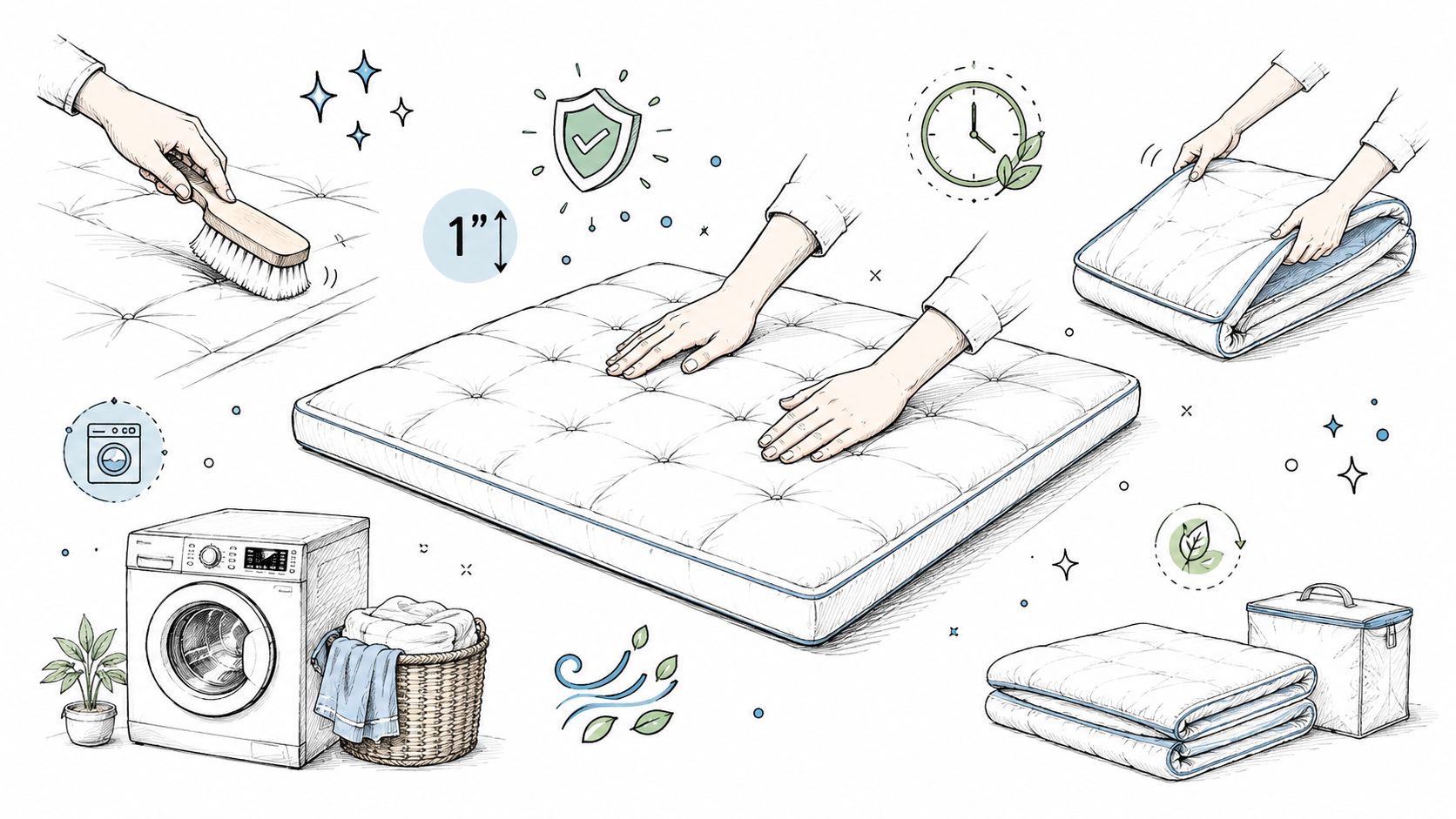
Most topper problems start with moisture, compression, or neglect. A few easy steps reduce all three.
- Use a protector: A removable barrier above the topper catches sweat, oils, and spills before they settle in.
- Air it out: Strip the bed occasionally and let the topper breathe in a well-ventilated room.
- Rotate when appropriate: Turning it periodically can help distribute wear if one side of the bed gets more use.
- Keep it dry: Spot clean lightly and avoid soaking foam-based materials.
Cleaning without causing damage
The safest cleaning method depends on the material, but foam products generally need a gentle touch. Too much water can create bigger problems than the stain itself. For a closer look at safe foam care, this article on how to clean memory foam is a helpful reference.
A topper should feel fully dry before bedding goes back on. Trapped moisture shortens comfort life fast.
For fiber-filled options, regular fluffing helps maintain a more even surface. For foam or latex, a clean cover and careful spot treatment usually do more good than aggressive washing.
Storage matters too
If the topper is for a guest room, RV, or seasonal setup, store it flat when possible. If it must be packed away, keep it clean and dry first. Avoid compressing it for long stretches in damp conditions.
A 1 inch mattress topper works best when it stays in its lane. Protect it, clean it carefully, and use it for the job it was built to do. That's how a small sleep upgrade keeps paying off.
For shoppers in West Texas and New Mexico who want help choosing the right comfort layer, Miller Waldrop Furniture & Decor offers the kind of guidance that makes mattress shopping simpler. Visit a local showroom in Lubbock, Hobbs, or Ruidoso Downs to compare sleep accessories in person, explore quality options from trusted brands, and get matched with solutions that fit the bed, the room, and the way the household sleeps.