


How to Choose the Perfect 12×14 Area Rug for Your Home


A 12×14 area rug is a serious piece of design real estate. Covering 168 square feet, it’s the kind of rug that doesn’t just accent a room—it defines it. This generous size empowers you to create a truly cohesive look in larger living rooms, dining rooms, and primary bedrooms, especially those that are at least 14×16 feet.
Why a 12×14 Rug Is Your Room's Secret Weapon
The right rug can single-handedly transform a space. A 12×14 area rug, in particular, is more than just a floor covering. It's the foundational tool that pulls your entire design story together, anchoring your furniture and carving out a comfortable, functional zone from an otherwise vast, empty-feeling room. This is how you make a large house feel like a home.
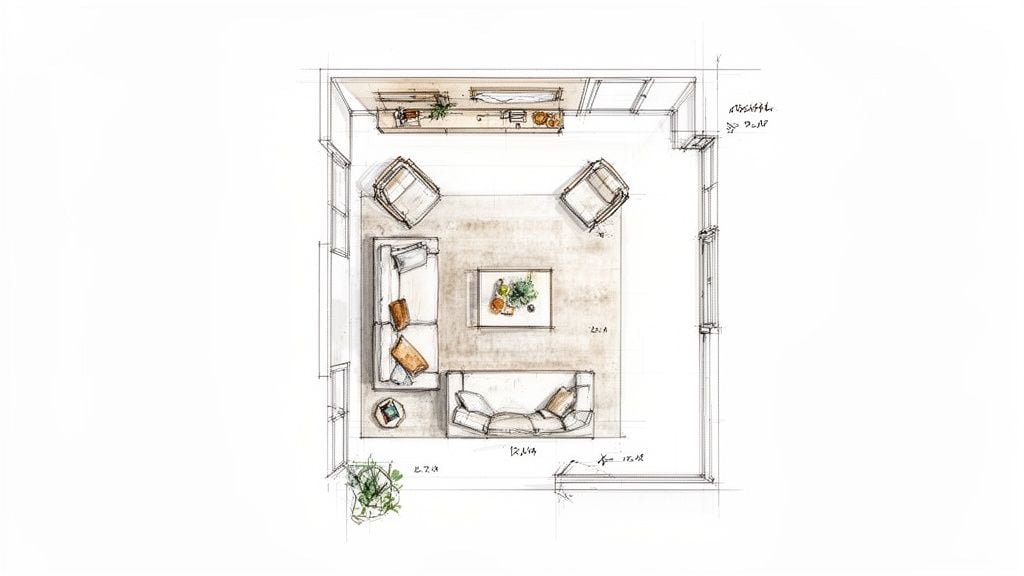
With a rug this substantial, you stop seeing a random collection of furniture and start seeing a unified, intentional living space. It’s the design element that wordlessly says, "This is where we gather, relax, and live."
Understanding the Power of Scale
The magic of a 12×14 area rug really comes down to scale. A small rug in a big room can look like a forgotten postage stamp, making the entire space feel disjointed. A generously sized rug does the exact opposite, lending an air of luxury and purpose to the room. It's the key to solving so many common design problems.
Here’s how a large rug empowers you to become the hero of your own design story:
- Define Your Zones: In open-concept homes, a large rug is your best friend. It creates a "room within a room," clearly marking the boundary for your living area or dining space.
- Anchor the Furniture: It provides a solid foundation for your sofa, chairs, and tables, solving that awkward "floating furniture" problem where pieces feel disconnected and lost.
- Add Instant Comfort: Beyond looks, a big rug delivers a huge dose of warmth and softness underfoot. It’s an immediate upgrade to how your room feels.
- Quiet the Space: Rugs are fantastic sound absorbers. They can dramatically reduce echoes and soften the acoustics in rooms with high ceilings or hard flooring.
It's no surprise that the trend is leaning toward larger rugs. The global area rug market hit an impressive USD 38.2 billion in 2023 and is expected to climb to USD 58.6 billion by 2034. With durable materials like wool holding a dominant 38.5% market share, it’s clear homeowners are investing in quality pieces that last.
A correctly sized rug is the frame for your furniture. It pulls all the individual pieces together for a polished, intentional look, turning a simple room into a designed space.
Your Quick Guide to Room Sizing
Before you get your heart set on a specific pattern, let’s talk measurements. The single most important rule for placing a large rug is to leave an even border of exposed flooring around the edges—typically 18 to 24 inches. This creates visual breathing room and ensures your rug looks like a deliberate choice, not just ill-fitting wall-to-wall carpet.
To see if a 12×14 rug is right for you, check out this simple guide. It lays out the minimum room dimensions needed to get that perfect placement.
Quick Guide for 12×14 Area Rug Placement
| Room Type | Minimum Room Size | Key Placement Goal |
|---|---|---|
| Living Room | 14' x 16' or larger | Anchor all main furniture legs on the rug to unify the seating area. |
| Dining Room | 15' x 17' or larger | Ensure all chairs remain fully on the rug, even when pulled out. |
| Bedroom | 13' x 15' or larger | Frame a king or queen bed with at least 24 inches of rug on all sides. |
Getting the size right is the first and most critical step. Once you’re confident in your measurements, the fun part begins.
Mastering Furniture Placement on a Living Room Rug
Your living room is where life happens—movie nights, quiet mornings, get-togethers with friends. When you bring in a 12×14 area rug, you're not just adding softness underfoot; you're setting the stage. Getting the placement right is what transforms a room from a collection of furniture into a cohesive, inviting space.
The main idea is to use the rug to anchor your conversation area. A large rug like a 12×14 gives you the perfect foundation to pull everything together, making the layout feel intentional instead of accidental.
This isn't a one-and-done decision. It's really a three-part process: you measure, you select the rug, and then you arrange the furniture on it. Each step informs the next.
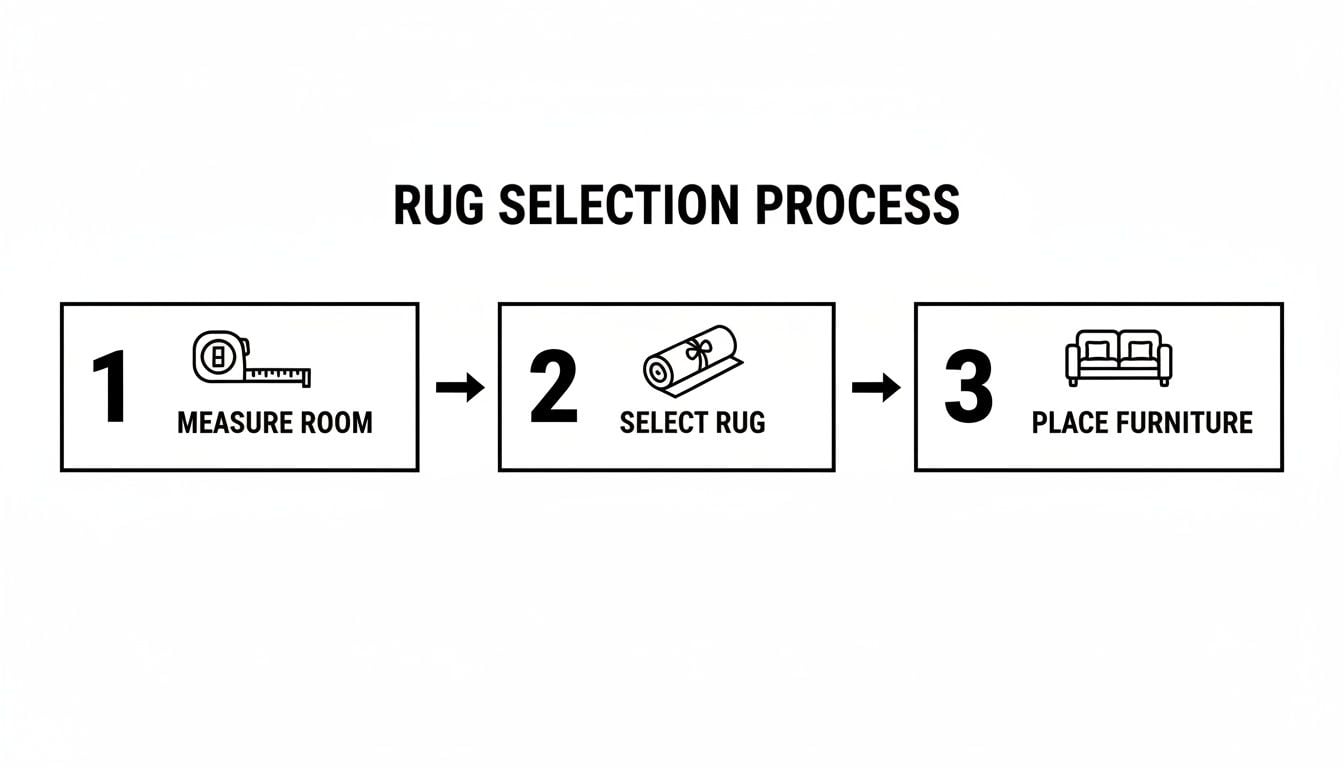
Thinking about it this way ensures the final result feels thoughtful and complete, avoiding that common mistake where furniture seems to be floating in the middle of the room.
The All-Legs-On Approach
If you want to create a truly high-end, grounded look, this is the way to go. The "all-legs-on" method is exactly what it sounds like: your sofa, accent chairs, and coffee table all sit completely on the rug.
A 12×14 area rug is often the ideal size for this in many medium-to-large living rooms. Here's how it helps you win the day:
- Creates total cohesion by visually tying every piece of furniture together.
- Gives a sense of luxury and makes the room feel expansive and well-planned.
- Maximizes comfort, giving you a soft surface to step onto from any seat.
This is how you get that polished, professionally designed feel where everything is perfectly connected.
The Front-Legs-On Rule
What if your room isn't quite large enough for the all-on method, or your furniture is just exceptionally big? The "front-legs-on" rule is your best friend. It’s a classic designer trick for a reason—it works.
Here, you simply place the rug so the front legs of your sofa and chairs are on it, while the back legs remain on the floor. This simple move is surprisingly effective. It tethers the furniture to the grouping, pulling the whole arrangement together without needing an enormous rug.
This is one of the most important techniques for creating a connected living area. By anchoring just the front legs, you visually unify the space and completely avoid that dreaded "floating island" look where furniture pieces feel disconnected from each other.
This is a fantastic strategy for the open-concept floor plans we see so often in West Texas and New Mexico. Your 12×14 area rug can effectively draw a line, defining the living area and separating it from a dining space or entryway, all without walls.
Working with Large Sectionals
Sectionals are amazing for comfort, but they can easily overwhelm a rug that's too small, making it look like a forgotten bath mat. This is where the generous size of a 12×14 area rug really pays off, giving you the scale you need to win.
Here are two great options for pairing a sectional with a large rug:
- Place the whole sectional on the rug. If you have the space, this creates an incredibly cohesive and luxurious foundation for your primary seating.
- Anchor the front legs. A more common and equally sharp look is to run the rug under the front legs of the entire sectional. This grounds the massive piece and leaves plenty of soft rug in front for your feet and a coffee table.
The key is making sure the rug feels like a deliberate base for your largest piece of furniture. Your living room is your home's main stage, and you're in charge of the layout. With these placement strategies, you can arrange your furniture with confidence, creating a space that’s not only beautiful but works for your life.
Ready to find the perfect foundation? Explore our stunning collection of large area rugs and let our team help you bring your vision to life.
Using a 12×14 Rug in Your Dining Room
A dining room rug is one of the most functional pieces you can own. It’s not just about adding color or texture; it’s about empowering you to protect your hardwood from scraping chairs, muffle sound, and anchor your entire dining set to create a truly inviting space. For a larger dining room, a 12×14 area rug often provides that perfect foundation.
It’s no surprise that as people invest more in their homes, the demand for quality rugs is on the rise. The North American carpet and rug market is expected to grow from USD 14.4 billion in 2026 to USD 23.3 billion by 2035. That’s a 5.4% annual growth rate, driven by homeowners who understand how a well-chosen rug can completely redefine a room. A 12×14 area rug is a popular choice for dining rooms because it has the scale to make a real impact.
The Golden Rule of Dining Room Rugs
Here’s a critical piece of information to ensure your dining room functions flawlessly: all four legs of a dining chair must stay on the rug, even when it’s pulled out from the table. This isn't just a design preference; it’s a matter of practicality and safety.
There's nothing more frustrating than a chair leg catching on the edge of a rug. A generous 12×14 area rug is usually large enough to solve this problem completely.
To get it right, make sure you have at least 24 inches of rug extending past your tabletop on all sides. This buffer gives everyone enough room to comfortably pull their chair out without ever leaving the rug's surface.
A correctly sized dining room rug frames your table and chairs as a single, cohesive unit. It creates a defined, elegant space that feels intentional and complete, rather than an afterthought.
Choosing Materials That Can Handle Real Life
Let’s be honest—the dining room is a spill zone. Between dropped food and scraping chair legs, any rug you place here needs to be tough. Durability and cleanability are your two best friends.
Here are the material tools we recommend for this high-traffic area:
- Wool: This natural fiber is a true workhorse. It’s incredibly durable and has a natural lanolin coating that helps repel stains, giving you a crucial window of time to clean up messes.
- Synthetics (Polypropylene, Nylon): For busy, family-friendly homes, you can't go wrong with a good synthetic. These materials are engineered to be stain-resistant, fade-resistant, and easy to clean, often at a great price. A low-pile synthetic like the Surya Rain RAI-1033 Area Rug can handle just about anything you throw at it.
Matching Your Rug Shape to Your Table
With the practical side covered, you can now think about style. The easiest way to create a sense of harmony is to match the shape of your rug to the shape of your dining table.
For a classic rectangular or oval dining table, a rectangular 12×14 area rug is a no-brainer. The similar shapes create a clean, balanced look that just feels right.
What if you have a round or square table? While a large square rug can look great, a rectangular rug often works even better, especially if the room itself is rectangular. It helps fill the space visually and ensures you get that crucial 24-inch clearance for chairs on all sides.
Your dining room is where memories are made. By choosing a rug that’s as practical as it is beautiful, you’re laying the groundwork for countless meals and gatherings for years to come.
Creating Your Serene Bedroom Retreat
Imagine starting every morning by stepping out of bed onto a soft, warm surface. That’s the quiet luxury a properly placed 12×14 area rug brings to a bedroom. It does more than just cover the floor; it transforms the entire room into a true sanctuary.
This generous size is perfect for anchoring your space, creating a foundation that feels grounded, serene, and incredibly cozy. Your bedroom is your personal escape, and a large rug is a key ingredient in setting that peaceful tone. It even helps soften the room's acoustics, making everything feel a little quieter. It’s a simple change that makes a huge difference in how the room feels.
The Best Placement Strategies for Your Bed
With a queen or king-sized bed, a 12×14 area rug offers some fantastic layout options. The main goal is always the same: create a soft, generous border around the bed where your feet land. The right choice for you will really depend on your room's overall dimensions and what other furniture you're working with, like a bench or a small seating area.
Here are three effective strategies you can use:
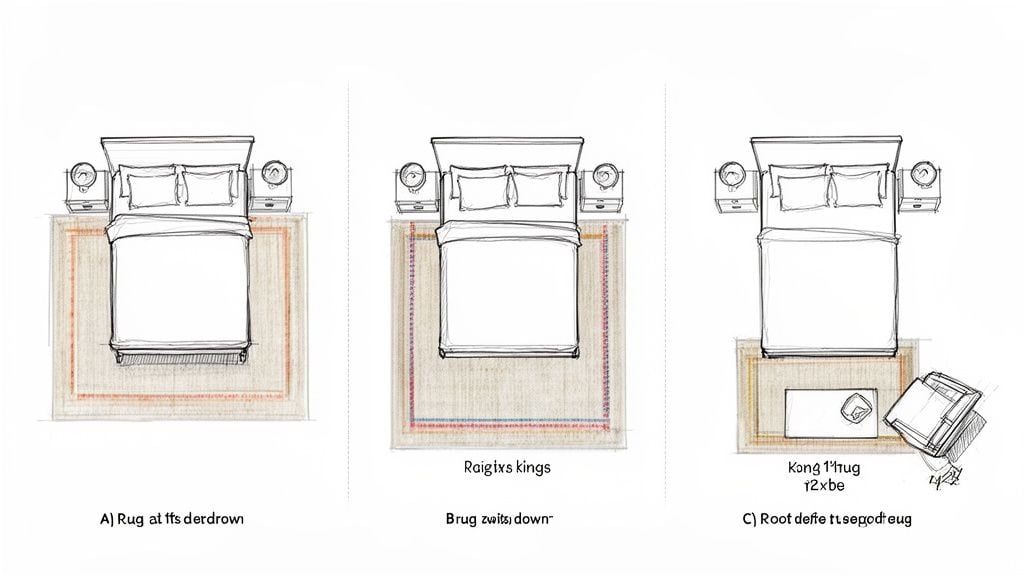
- The Full Foundation: This is where you place the entire bed, both nightstands, and any bench at the foot of the bed completely on the rug. It creates a very grand, luxurious look and establishes the bed as the undeniable centerpiece. This layout works best in larger bedrooms where you still have some exposed floor framing the rug.
- The Two-Thirds Frame: A very popular and practical approach. You’ll position the rug about two-thirds of the way under the bed, so the nightstands sit on the bare floor. The rug should still extend well past the foot of the bed, giving you that soft landing on three sides.
- The Foot of the Bed Zone: Here, the rug goes under just the bottom third of the bed, extending far out into the room. This is a brilliant choice if you have a seating area with chairs or a chaise lounge at the foot of your bed. The rug works to define that space as a separate, cozy zone.
The two-thirds placement offers the best of both worlds for most bedrooms. It gives you that plush feeling underfoot where you need it most—when getting in and out of bed—while still allowing the nightstands to sit directly on the floor, which can create a cleaner, less cluttered look.
Choosing Materials for Maximum Comfort
While a dining room rug needs to be all about durability, the bedroom is where you can indulge in softness and texture. This is your chance to pick a rug that feels absolutely amazing underfoot.
For a truly cozy feel, here are some materials you can use to build your sanctuary:
- Plush Wool: You really can't beat a thick, soft wool rug for bedroom comfort. It’s naturally resilient, feels warm, and has an unmatched luxurious quality.
- Soft Synthetics: Don't overlook modern synthetics. A plush polypropylene or polyester blend can deliver incredible softness. Plus, they're typically stain-resistant and easy to care for—a practical and cozy choice.
The right material turns your floor into another layer of comfort, amplifying that sense of peace in your personal space.
Ultimately, you are the designer of your own peaceful escape. Think of these strategies as the tools you need to build a bedroom that not only looks cohesive but feels like a genuine retreat from the world. Ready to find that perfect foundation? Come explore our curated collection and let our team help you create the bedroom of your dreams.
Choosing the Best Rug Material for Your Lifestyle
A 12×14 area rug is a serious investment in your home. It’s not just about color and pattern; the material you choose is what makes or breaks its longevity and your love for it. This is where you can get practical and match a rug’s fibers to your actual life—whether that means a house full of kids and pets or a quiet, formal space.
Think of it this way: the right material means you get to live with your rug, not just look at it. You want a tool that can handle your family’s unique rhythm, not something you’re constantly worried about.
Natural Fibers: The Timeless Choices
When you think of high-quality rugs, natural fibers probably come to mind first. These are the time-tested classics, bringing an organic warmth and a premium feel that’s hard to replicate. They have a character and resilience that's been proven for centuries.
Here are two options that empower most homeowners:
- Wool: If there's a gold standard for rug materials, this is it. Wool is incredibly durable, and its natural lanolin oils make it surprisingly stain-resistant and even flame-retardant. It has that luxurious, dense feel underfoot that just feels like quality. It's a fantastic all-rounder for living rooms and bedrooms where you want both comfort and performance.
- Cotton: Cotton rugs offer wonderful softness and a casual, relaxed vibe. They take dye beautifully, so you get vibrant colors and patterns. While they aren't as tough as wool, they are often a more budget-friendly choice for lower-traffic spots like a guest room or home office where cozy comfort is the top priority.
You'll also run into fibers like jute and sisal. These bring a wonderful, earthy texture to a room and are very durable. Just be aware that their texture is coarse, and they don't play well with moisture, making them better for dry, low-spill zones like an office or a sunroom.
Synthetic Fibers: The Modern Workhorses
Synthetic fibers have come a long way. These aren't your grandma's shiny, plastic-feeling rugs. Today's synthetics are engineered to tackle the biggest challenges of a busy home—stains, fading from sunlight, and heavy foot traffic—while still feeling soft and looking great.
Think of synthetic rugs as the practical heroes for high-activity zones. For a dining room where spills are inevitable or a living room filled with kids and pets, a high-quality synthetic like polypropylene gives you peace of mind without sacrificing style.
These man-made materials are built for modern living:
- Polypropylene: This is the go-to for durability. It’s incredibly stain-resistant (you can often spot-clean it with a mild bleach solution!), it’s easy to clean, and it won’t fade in the sun. This makes it perfect for bright, busy rooms and a favorite for families.
- Nylon & Polyester: Both are known for their exceptional strength and resistance to wear. They hold color beautifully, which means you’ll find them in a huge range of vibrant, intricate patterns. They offer a great combination of softness and toughness that works in almost any room.
Choosing the right material comes down to being honest about how you use a room. To help you weigh the pros and cons for your home, we've put together a simple comparison chart.
Rug Material Comparison for Your Home
Use this table to choose the best rug material based on your lifestyle, the room's traffic level, and your maintenance preferences.
| Material | Best For | Durability | Feel | Care |
|---|---|---|---|---|
| Wool | Living Rooms, Bedrooms, High-Traffic Areas | Excellent | Soft & Plush | Professional cleaning recommended |
| Cotton | Bedrooms, Low-Traffic Areas | Good | Soft & Casual | Often machine washable (smaller sizes) |
| Polypropylene | Dining Rooms, Kids' Rooms, Entryways | Excellent | Varies, can be soft | Very easy to clean, stain-resistant |
| Jute/Sisal | Offices, Sunrooms, Low-Traffic Living Areas | Very Good | Coarse & Textured | Spot clean only, avoid moisture |
This chart is a great starting point, but remember that the quality of the weave and construction matter just as much as the fiber itself.
When Standard Isn't Enough: The Power of Customization
While a 12×14 area rug is a popular size that fits many rooms beautifully, sometimes your space has unique dimensions. Maybe you found the perfect pattern, but it's not available in the right size, or you need to match a very specific color in your upholstery.
This is where you don't have to settle. Instead of searching endlessly for a rug that almost works, you can create one that’s perfect. Our design experts at Miller Waldrop are here to walk you through the world of custom rugs. We can help you select the exact material, pattern, colors, and even a completely custom size to bring your vision to life.
Your home should be a perfect reflection of you. With a little expert guidance, you can ensure every detail is exactly as you imagined. Ready to find the perfect material for your lifestyle? Explore our curated collection of beautiful area rugs and let's find the ideal foundation for your room together.
Your 12×14 Area Rug Questions Answered
So, you've chosen a beautiful 12×14 area rug. The hard part is over, right? Mostly! Now it's about living with it and knowing how to handle the little things that pop up. From pesky wrinkles to the inevitable "oops" moment with a glass of wine, this information will empower you to keep your investment looking its best.
Let’s walk through some of the most common questions our clients ask after they've settled their new rug into its home.
Dealing with Creases and Curling
It’s a classic scene: you unroll your brand-new rug, and it has some stubborn creases or curled-up corners from its journey to you. Don't panic. This is completely normal and, better yet, easy for you to fix.
Time and gravity are your best friends here. Just lay the rug flat in its designated spot, and most of those wrinkles will relax and disappear on their own within a week or two. If you're in a hurry, you can try reverse rolling. Gently roll the rug up in the opposite direction, hold it for a minute or so, and then lay it back out.
For those stubborn corners that refuse to cooperate, place a heavy stack of books or the leg of a piece of furniture on top of it for a day or two. That gentle, consistent pressure is usually all it takes to convince the fibers to lay flat.
Cleaning Spills on Different Materials
Life happens. When a spill occurs, the single most important thing is to act fast. But how you act depends entirely on what your rug is made of.
- Wool: Immediately grab a clean, dry white cloth and blot the spill. Always work from the outside in to keep the stain from spreading. Wool has natural oils that provide some stain resistance, giving you a precious window of time to act.
- Synthetics (Polypropylene): These are the workhorses of the rug world for a reason. Most spills can be blotted up and then spot-treated with a simple solution of mild dish soap and water. Just remember to test your cleaner on a hidden spot first, like under a sofa.
- Natural Fibers (Jute, Sisal): These materials really don't like getting wet. Your best bet is to blot any liquid immediately with a dry cloth. Avoid using water, as it can leave a permanent water mark. For dried-on messes, you can gently scrape them off and then vacuum the area well.
Here’s a golden rule to help you win against stains: Always blot, not rub. Rubbing a stain only grinds it deeper into the fibers and can fray the pile, making the spot look even worse over time.
Pairing Patterns with Your Existing Decor
Bringing a patterned 12×14 area rug into a room that's already furnished can feel a bit daunting. But it's also one of the best ways to inject some serious personality and style. The trick is to play with scale and color.
If your sofa and chairs are all solid colors, you've got the perfect canvas for a bold, large-scale pattern. The rug becomes the art that grounds the entire space. On the other hand, if you already have patterns—say, striped accent chairs—look for a rug with a pattern of a different scale. A large, flowing floral design, for example, can look incredible next to a tight pinstripe.
An easy way to create instant harmony is to find a secondary color in your rug's pattern and repeat it elsewhere with throw pillows, a vase, or your curtains. It’s a simple designer trick that ties everything together beautifully. If you're working with wood floors, this guide to choosing an area rug for hardwood floors also has some fantastic tips.
At Miller Waldrop, our design experts are always here to help you through the entire process, from that first spark of an idea to long-term care. Your home tells your story, and we want to give you the tools to tell it well.
Ready to find the perfect foundation for your room? Take a look at our curated collection of large area rugs today.