


100 Cotton Curtains Your Complete Buying Guide


The late afternoon sun hits hard in West Texas and Southeastern New Mexico. A room can feel warm and welcoming one hour, then glaring, faded, and overly bright the next. If you’re standing in your living room wondering whether 100 cotton curtains will solve the problem without making the space feel heavy, you’re asking the right question.
Cotton curtains are one of the most approachable window treatment choices because they balance softness, structure, and everyday livability. They can feel relaxed in a breakfast nook, elegant in a formal dining room, or cozy in a bedroom. The challenge isn’t whether cotton works. It’s choosing the right cotton, the right weight, and the right lining for the way you live.
A lot of homeowners get stuck because curtain shopping looks simple until the details show up. What does 100% cotton legally mean? Why do some panels look crisp while others fall in soft folds? Why does one bedroom need light filtering cotton while another needs a lined panel that can stand up to strong sun and cool evenings?
Those are design decisions, not just shopping decisions. When you understand them, you stop guessing and start building a room that feels right every day.
Your Guide to Natural Light and Style
You order two cotton curtain panels in the same soft ivory. On the website, they look nearly identical. Then they arrive, and the difference shows up fast. One filters the hard afternoon sun into a warm glow. The other lets in too much glare, shows every wrinkle, and does little to help with heat along a west-facing window.
That kind of mismatch is common in West Texas and Southeastern New Mexico because curtain choice is not only about color or fiber. Our light is stronger, our dust is finer, and the temperature swing from afternoon to evening asks more from a window treatment than many national style guides account for.
A good starting point is simple. 100 cotton curtains tell you the fiber content. They do not tell you how the fabric will hang, how much light it will soften, or whether it will stand up to a bright Odessa sun or a chilly evening in Ruidoso Downs.
Cotton works a lot like paint sheen. Two walls can be the same color, but flat and satin finish change how the room feels and how light behaves. Curtains follow the same logic. The cotton fiber is the base material. The weave, fabric weight, finish, and lining shape the final result.
That is why one cotton panel looks crisp and clean, while another falls in relaxed folds. One works well in a breakfast nook that needs gentle light control. Another belongs in a bedroom where sunrise comes early and privacy matters after dark.
In homes across Lubbock, Hobbs, Midland, and surrounding areas, I usually ask homeowners to begin with the room’s daily job. Does the space need to cut glare on screens? Hold in a little warmth at night? Stay easier to maintain when dust blows in? Those questions lead to better choices than style labels alone. If you want a broader framework for comparing options, this guide to choosing window treatments for your home is a helpful place to start.
Cotton gives you a natural foundation. The finish and construction decide whether it feels airy, crisp, relaxed, or formal.
Once you see curtains this way, shopping gets easier. You are no longer choosing between two pretty panels. You are choosing how your room will handle light, privacy, comfort, and everyday life.
The Foundation of 100 Cotton Curtains
Late afternoon sun hits a west-facing window in Midland very differently than soft morning light in other parts of the country. In our region, a curtain has to do more than look good. It has to handle glare, help with heat, and still feel comfortable in a room that collects dust faster than you expect.
That is why the word "cotton" deserves a closer look.
A true 100 cotton curtain starts with fiber content. If the label says 100% cotton, the fabric itself should be made entirely of cotton fibers, not a blend with polyester or another material mixed in under softer marketing language. For a homeowner, that matters because fiber content affects breathability, texture, and the way the fabric responds to daily use.

Fiber content tells you what the curtain is made from. It does not tell you how it will live in your home.
That second part comes from weave and finish. Cotton works a lot like tile. Two floors can both be ceramic, but a glossy surface and a matte textured surface behave very differently once real life shows up. Curtains follow that same logic.
- Percale-like weaves usually look crisp and neat. They fit rooms that need a clean, simple outline.
- Sateen-style weaves read smoother and a little more formal because the surface reflects more light.
- Slub or textured cotton adds softness and visual movement, which helps a room feel relaxed and less stiff.
- Canvas or utility-style weaves have more substance and often make sense where privacy, durability, and dust resistance matter more.
If you are unsure what you are seeing, use a simple test. Smooth cotton tends to feel more polished. Visible texture tends to feel more casual and forgiving, which can be useful in family spaces where West Texas dust and daily traffic are part of the routine.
The foundation question is not only, "Is this real cotton?" It is also, "What kind of cotton fabric is this, and does it suit this room?"
That shift helps homeowners make better decisions. A softly textured cotton may be perfect in a living room where you want warmth and a relaxed look. A tighter, cleaner weave may work better in a dining room or home office where you want sharper lines and a more finished appearance. If you want a broader framework for matching fabric choices to each room, this guide to choosing window treatments for your home gives a helpful starting point.
In homes across Odessa, Lubbock, Hobbs, and nearby communities, I usually tell clients to treat cotton curtains as the base layer. The weave, finish, and later the lining determine how well that base layer handles sun, privacy, dust, and comfort. Once you understand that foundation, the shopping process becomes much clearer.
Decoding Fabric Weight for Your Climate
By three o’clock, a west-facing room in Midland or Hobbs can feel very different than it did over breakfast. The light is sharper, the glass is hotter, and a curtain that looked soft and pretty in the store can suddenly seem too thin for the job.
That is why fabric weight matters so much here.
Weight affects three things you will notice right away. It changes how the curtain hangs, how much sun passes through the fabric, and how much support the window treatment gives against heat gain and seasonal drafts. In West Texas and Southeastern New Mexico, those are daily comfort issues, not small finishing details.
A simple way to read fabric weight is to compare it to clothing. Lightweight cotton works like a crisp summer shirt. It feels breathable, moves easily, and lets more light through. Heavier cotton is closer to a structured jacket. It has more body, holds deeper folds, and stands up better to strong sun and long exposures at the window.
The trick is matching that weight to the room, not choosing the heaviest option every time. A panel that is too light can look washed out on a blazing west window. A panel that is too heavy can feel flat or bulky in a breakfast area that needs morning glow.
What weight changes first
Drape is usually the first clue. Lightweight cotton has a looser, fluttery fall. Medium-weight cotton forms cleaner folds and tends to look more finished. Heavy cotton creates a fuller, more anchored look, which can be helpful in rooms with tall windows or strong afternoon exposure.
Then there is comfort. As noted earlier, heavier cotton generally insulates better than sheer or very light cotton. In practical terms, that means a better buffer between your room and hot glass. If you are dealing with punishing summer sun, a medium or heavier cotton often gives you a more usable room through the late afternoon, especially once lining enters the picture.
Cotton Curtain Fabric Comparison
| Fabric Type | Typical Weight | Key Characteristics | Best For |
|---|---|---|---|
| Cotton voile | Lightweight | Airy, soft light diffusion, minimal privacy at night | Dining rooms, layered treatments, rooms where daylight matters most |
| Cotton percale | Light to medium | Crisp appearance, cleaner lines, tailored look | Casual living rooms, breakfast areas, home offices |
| Cotton sateen | Medium | Smoother surface, softer drape, more formal feel | Bedrooms, dining rooms, dressier living spaces |
| Cotton slub | Medium | Visible texture, relaxed style, organic look | Southwestern interiors, layered neutral rooms, family spaces |
| Cotton canvas or twill | Medium to heavy | More structure, stronger privacy, sturdier presence | Bedrooms, sun-exposed living rooms, media rooms |
The table helps you identify what you are looking at. The climate question comes next. Ask how that fabric will perform after hours of direct sun, wind-driven dust, and daily opening and closing.
Matching the room to the fabric
A breakfast nook with gentle morning light usually does well with lightweight or light-medium cotton. You keep the room bright and easy, and the fabric still gives the window some softness.
A bedroom with hard afternoon sun often needs more substance. Medium-weight sateen, slub, or canvas-style cotton usually makes more sense there, especially if sleep comfort and cooling costs matter.
Large living room windows are often the place where homeowners get stuck. They want softness, but they also want glare control and a room that does not heat up by late day. In that case, medium-weight cotton is often the smart middle ground. It gives you shape and presence without making the window feel heavy.
Use these checkpoints as you shop:
- Choose lightweight cotton for rooms where daylight and an airy look matter most.
- Choose medium-weight cotton for the best balance of drape, privacy, and everyday comfort.
- Choose heavier or lined cotton for west-facing rooms, bedrooms, and spaces that get intense sun or need more help with insulation.
- Choose tighter weaves in dusty areas if you want a fabric that feels a little easier to live with and less delicate over time.
In this region, fabric weight is part of function. The right choice helps a room stay prettier, cooler, and easier to use through long sunny seasons.
Mastering Light Control and Privacy
Most curtain mistakes come from asking one panel to do everything. Homeowners want daylight, privacy, softness, and darkness, all from the same fabric. Sometimes that works. Often, it takes the right pairing of cotton face fabric and lining.
The useful starting point is this: not all 100 cotton curtains are blackout curtains. Some are designed to glow. Others are designed to shield.
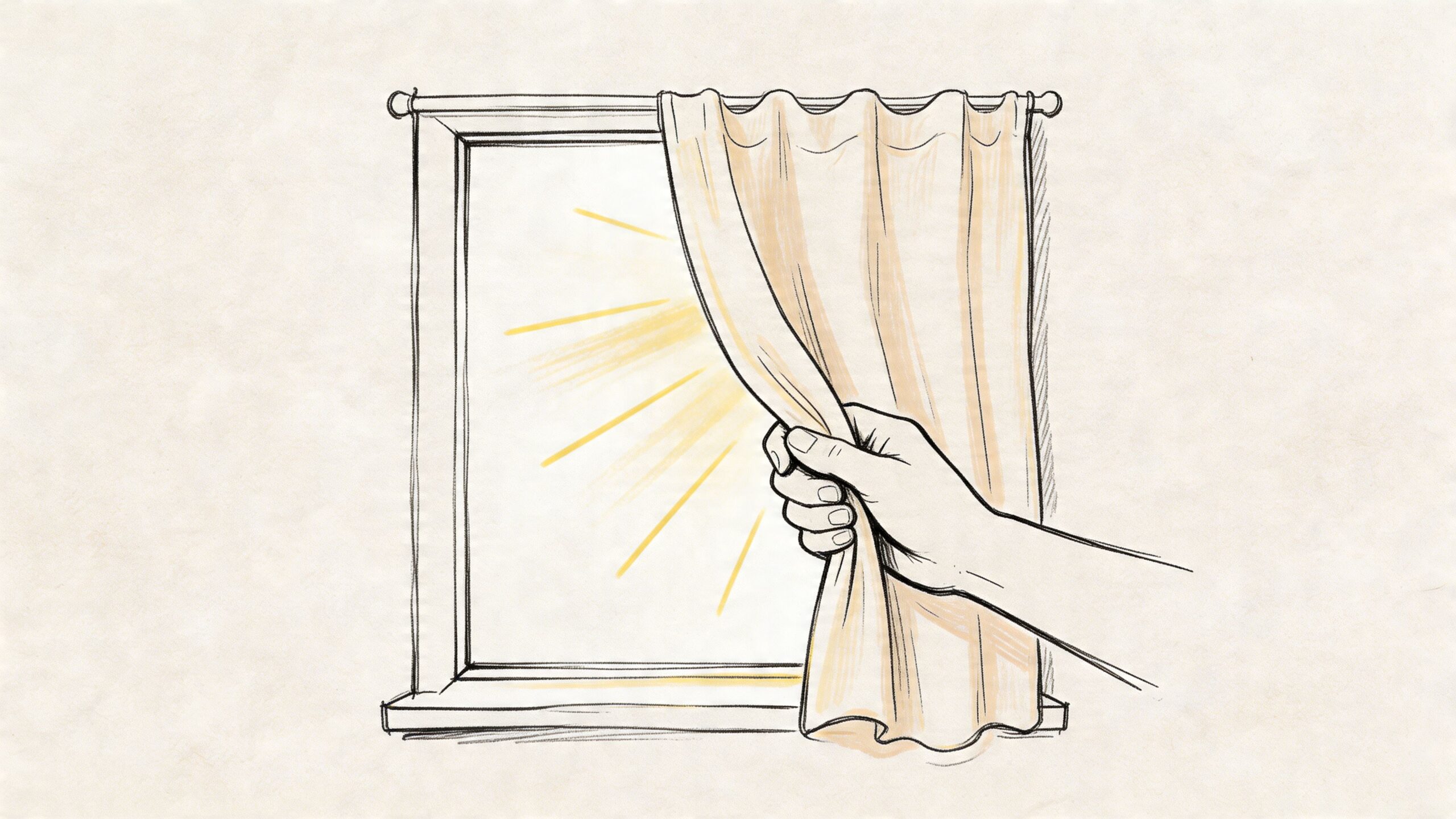
Three levels of light control
According to the Dunn cotton curtain product details from Senjoo Home, uncoated 100% cotton curtains can offer up to 40% blackout capability. That’s a very useful middle ground. It softens glare and adds privacy while still allowing a natural feel.
The same source notes that 1-pass-coated cotton variants achieve 50-70% dim-out, while 3-pass-coated versions can block 100% of direct light.
That creates three practical categories:
- Light filtering cotton for living rooms, dining rooms, and spaces where glow matters
- Dim-out cotton for bedrooms that need rest without complete darkness
- Blackout-capable cotton for nurseries, media rooms, and sleep-focused bedrooms
When lining changes everything
A lot of people focus on face fabric and forget the lining. In reality, lining often determines whether a curtain performs well in our climate.
Choose lining when you need:
- Sun protection for flooring, upholstery, or artwork near the window
- Extra body so the curtain hangs with more presence
- More privacy after dark
- Better darkness in bedrooms
If your room gets intense western exposure, lining usually isn’t optional. It’s part of the design solution.
A curtain should shape light, not just cover glass.
A healthier way to think about fabric choice
If you’re shopping for a nursery, a child’s bedroom, or a home where allergies are part of the conversation, performance isn’t the only issue. Material safety matters too.
For health-conscious spaces, it helps to look for certifications that verify the fabric has been tested for harmful substances. That gives you a more informed way to compare options that might otherwise look identical online.
Choosing Healthy and Long-Lasting Curtains
A curtain lives close to your breathing space. That’s easy to forget because we think of window treatments as décor first. But in a home with children, pets, allergies, or dusty outdoor conditions, fabric choices become part of the daily environment.
That’s why certification matters. It gives you a way to move beyond marketing language and look for something verifiable.

What OEKO-TEX helps you check
According to Interior Medicine’s guide to curtains and blinds, OEKO-TEX certified curtains are tested for harmful substances like flame retardants, formaldehyde, and pesticides. The same source notes that Class I is the safest choice for baby-safe nurseries, while Class II is suitable for adult spaces.
That gives you a practical filter when you’re comparing natural fiber curtains.
Here’s a simple way to use it:
Nursery or child’s room
Look for OEKO-TEX Class I when possible.Primary bedroom or adult guest room
Class II may be appropriate for those spaces.Shared family rooms
Ask what testing or certification supports the material claim.
What makes curtains last
Durability isn’t just the fiber. It’s also the details you don’t always notice on first glance.
Look for:
- Even stitching along hems and side seams
- A stable header that won’t distort when opened and closed
- A suitable lining when the room gets strong sun
- Fabric with enough body for the size of the window
A large window covered with a very light cotton can strain visually and functionally. The curtain may look limp or work harder than it should. A better-matched weight usually holds shape more gracefully.
If you have allergies or a dust-sensitive household, breathable cotton can be a smart starting point. Certification helps you narrow the field to options with clearer safety information.
Measuring before you buy
Shoppers often feel confident choosing a fabric and then lose confidence when measurement starts. Keep it simple.
- Measure the window width first.
- Decide whether the rod will sit above and beyond the frame for a larger visual effect.
- Determine whether you want the hem to kiss the floor, hover slightly, or stop at the sill.
- Check whether the panel heading style changes the final drop.
Those steps are enough to help you shop smarter, even if you eventually work with a professional installer.
How to Measure and Hang Curtains Perfectly
Curtains can be beautiful and still look wrong if they’re hung too low, too narrow, or too short. Many ready-made panels often lose their impact due to these issues. The fabric may be fine. The placement is what lets the room down.
The fix is straightforward. Most windows benefit from hanging the rod higher and wider than the frame itself.

The method that improves most rooms
The infographic above captures the core checklist, but the visual idea is simple. Raise the rod above the frame and extend it past the sides so the stacked curtain doesn’t block as much glass when open. That makes the window look larger and lets in more usable daylight.
For specialty windows, shape matters just as much as height. If you’re working with unusual rooflines or alcoves, this guide to curtains for dormer windows is a helpful reference because it shows how window architecture changes the hanging approach.
A practical measuring checklist
Use this order so you don’t miss anything:
Start with width
Measure the window frame clearly before choosing rod size.Plan for visual width
Add extra width beyond the frame so the curtain stack sits off the glass when open.Decide the finished length
Floor length usually looks the most complete in living rooms and bedrooms.Match hardware to fabric weight
Heavier cotton needs hardware with enough presence to support it cleanly.
If you want a second visual reference, Miller Waldrop’s article on the correct way to hang curtains is useful for comparing rod placement choices.
Don’t forget care when planning the hang
The way you hang curtains affects maintenance too. If panels puddle heavily on the floor in a dusty climate, they’ll collect more debris. If they barely skim the floor, they often stay neater and are easier to manage.
A lot of homeowners also worry about future washing. That’s smart. Cotton rewards thoughtful placement and thoughtful care. If a panel is cut too tight from day one, even a small amount of shrinkage can become noticeable after cleaning.
Hang with a little foresight. A good installation should still look right after everyday use, seasonal dust, and routine care.
Keeping Your Cotton Curtains Beautiful
Cotton is easy to live with, but it isn’t maintenance-free. Its softness and natural drape are part of the appeal. They’re also why care matters. If you wash cotton casually and hope for the best, the fabric may remind you that natural fibers respond to water and heat.
The good news is that cotton care is usually uncomplicated when you keep heat out of the process.
What shrinkage really means for homeowners
According to UniCurt’s cotton care guidance, 100% cotton is prone to shrinkage of 3-5% after the first wash if not pre-shrunk. The same source recommends cold water washes and line drying to preserve fit and minimize wrinkling.
That’s the number to keep in mind before you buy and before you hem. If your curtains are installed with no margin at all, first-wash shrinkage can change the look.
A simple care routine
For most cotton curtains, this routine is a safe starting point when the care label allows washing:
Remove surface dust first
Shake them out gently or vacuum with a soft upholstery attachment.Use cold water
Heat increases the risk of shrinkage and wrinkling.Skip aggressive drying
Line drying helps preserve size and finish.Rehang promptly
Hanging while still slightly damp can help the fabric settle more smoothly.
If your room includes other window coverings, keeping the full window area clean makes your curtains look better longer. Homeowners who pair curtains with shades or blinds may also find this guide on the best way to wash blinds helpful for keeping everything around the window fresh.
How to deal with wrinkles and everyday wear
Some wrinkling is part of cotton’s personality. That doesn’t mean the panels have to look rumpled.
Try these practical habits:
- Choose lined curtains when you want more body and a smoother hang
- Steam lightly after installation if the fabric arrives folded
- Avoid overhandling the leading edge with dusty hands
- Rotate attention to sunny windows where exposure is strongest
Homes with upholstered furniture nearby often benefit from a room-wide fabric care rhythm. If you’re already maintaining cotton or textured upholstery, Miller Waldrop’s guide on how to clean fabric sofa naturally pairs well with the same gentle, low-heat mindset you’d use for curtains.
Natural fabric looks better when you care for it consistently, not aggressively.
When professional help makes sense
Some curtains are easy to wash at home. Others are better left to a professional cleaner, especially if they’re heavily lined, interlined, extra long, or custom made. The care label should always make the final call.
If you’ve chosen cotton because you want a room to feel softer, cleaner, and more grounded, maintenance is part of protecting that choice. A thoughtful wash routine does more than prevent shrinkage. It keeps the drape, color, and scale of the room working the way you intended.
Bring Your Vision to Life with Expert Help
Late afternoon sun hits a west-facing window hard in this part of the country. A curtain that looked soft and pretty under showroom lighting can feel too thin at home, or too heavy for the mood you wanted, once it is working against heat, glare, and everyday dust.
By this point, you have a much better way to choose. You can look past color alone and judge what the room needs. In a bright living room, that may mean cotton with enough body to filter harsh light without making the space feel closed in. In a bedroom, it may mean a lined option that helps with privacy, sun control, and a steadier indoor temperature. In a dust-prone area, it may mean a weave and finish that are easier to keep looking fresh between cleanings.
That is where in-person guidance helps. Miller Waldrop Furniture & Decor offers home décor selections, including curtains, along with in-store design guidance and custom-order support. Being able to handle the fabric matters. Cotton can change character from one panel to the next based on weight, weave, and lining, much like two white paint colors can look similar on a sample card but behave very differently on a full wall.
Good help also saves you from small mistakes that change the whole result. A panel that is slightly too short can make a room feel choppy. A beautiful cotton fabric without the right lining can struggle in a sun-heavy window. A color that feels warm in the store may read dusty or flat once it sits beside your flooring, wall color, and upholstery at home.
The goal is a room that works the way you live. Calm in the evening. Protected from strong sun during the day. Comfortable for your family, and true to your style.
If you are ready to choose 100 cotton curtains that suit your light, layout, and lifestyle, visit Miller Waldrop Furniture & Decor. You can explore home décor options, talk through your room’s needs with experienced staff, and get help turning a good idea into a finished space that feels right for your home.