

Decorative Trays for Ottomans: Style Your Space


The ottoman is already doing too much, and that is exactly why the tray on top matters. A good decorative tray for an ottoman turns a soft, shifting surface into a place for drinks, books, candles, and a finished-looking vignette. A bad one turns the center of the room into something people keep moving around.
Why Your Ottoman Tray Matters More Than You Think
A living room can look polished and still feel awkward if the ottoman tray fights the way the room is used. One family may want a spot for coffee mugs during the morning rush, then a footrest by evening, then a landing place for a stack of books after guests leave. The tray has to support all of that without turning the ottoman into dead space.
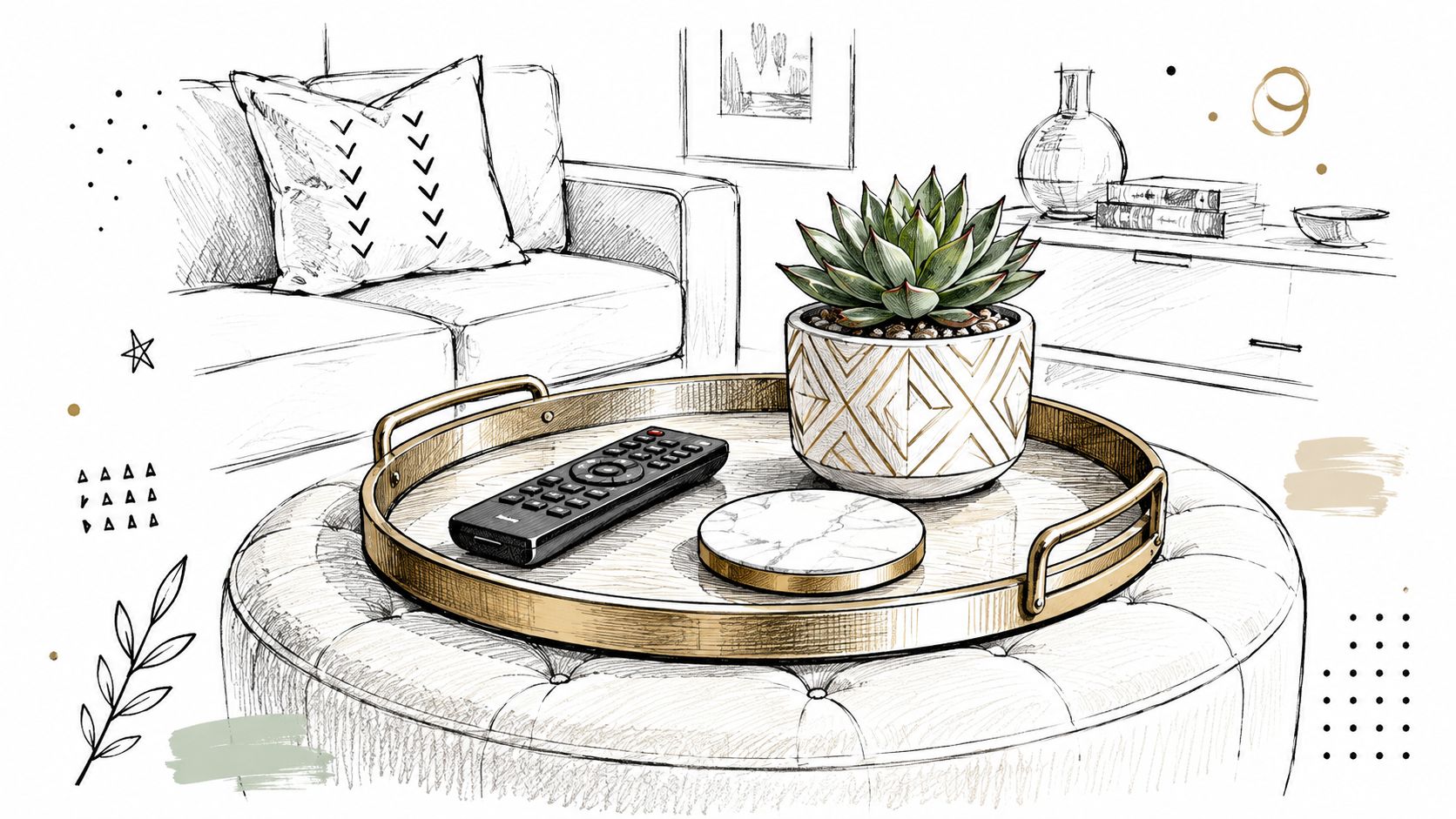
Ottomans are built for flexibility. They work as seating, storage, a table centerpiece, and a footrest, and many include a hollow center with a hinged or removable lid for hidden storage. That versatility is exactly why the tray matters. It gives you a flat, durable surface without taking away the ottoman's everyday usefulness.
Practical rule: treat the tray as the bridge between upholstery and table function, not as decoration sitting on top of furniture.
That difference shows up fast in real homes. In smaller living rooms, one piece has to do the work of several. A tray keeps the ottoman useful instead of forcing everyone to balance cups on cushions or clear items off every time someone wants to put their feet up.
A tray also changes the room visually. Without one, the ottoman often reads as a loose upholstered block. With one, it reads like an intentional centerpiece that belongs in the layout.
Good tray styling starts with function, not accessories
The strongest setups are simple. A low stack of books, one bowl, one candle, and enough open space to set down a mug without crowding the tray is usually enough. The point is not to fill the ottoman. The point is to make it earn its place in the room.
For families, that approach matters even more. A tray that can be lifted quickly, cleared fast, and put back down without drama will get used. A tray that looks gorgeous but blocks daily life will end up in a closet.
If your ottoman also has storage, start with a piece that suits the shape and scale of the top. You can find a practical ottoman with storage that gives you a better base before you style anything on it.
A tray can also support the rest of the room's texture, especially if you already have soft layers like a throw or blanket nearby. For a fuller look, discover ideal luxury throw blankets and use them to balance the harder lines of the tray.
Sizing and Material Selection That Works
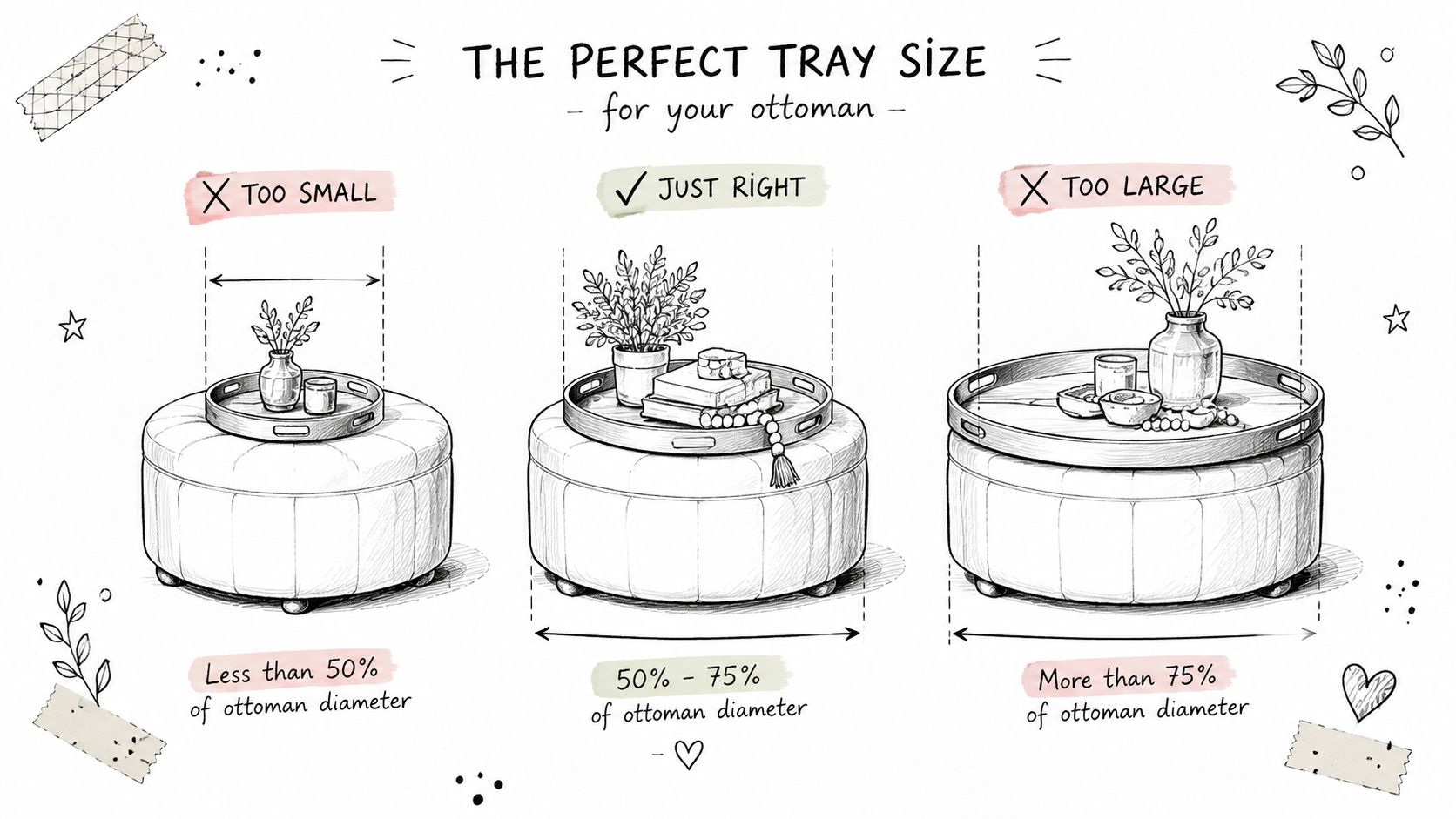
Most tray problems start in the store. People pick something pretty, bring it home, and only then realize it overhangs the ottoman, slides on the fabric, or swallows the whole top. The right tray should look settled, not oversized, and it should still leave some upholstered border visible on all sides.
Size the tray to the ottoman, not to the shelf
A practical sizing rule is to choose a tray that's about two-thirds the width of the ottoman. That keeps the composition balanced instead of heavy. The rule works because an ottoman is compressible, so a tray that looks fine on a hard surface can feel too large once it sits on upholstery.
Measure the usable top area, not the ottoman's outer silhouette. Tufting, piping, and rounded edges all eat into practical space. A tray should leave a visible border around the arrangement, because that border helps the ottoman still read as furniture, not a crowded serving board.
For shape, use common sense. Rectangular trays usually sit naturally on bench-style ottomans. Round trays soften square tufted ottomans and keep the top from feeling too rigid. The shape should settle into the ottoman's profile instead of fighting it.
Choose materials that can handle real traffic
A rigid base matters more on an ottoman than on a coffee table because the surface underneath gives under load. Raised sidewalls help corral decor, and a sturdy frame keeps the tray from feeling flimsy when someone picks it up. Handles matter too, which is why Miller Waldrop's cheap ottomans with storage guide is worth using when the goal is to coordinate furniture that still works hard in everyday life.
Material choice should match the room, not just the style board. Matte wood, woven textures, and leather-wrapped trays usually hide fingerprints and scuffs better than high-gloss lacquer in busy family rooms. Gloss has a place, but it belongs in lower-touch spaces where the tray will not be handled constantly.
A tray with smooth sides and no grip is a poor fit for upholstered furniture. Look for one that feels easy to carry and stable the moment it lands on fabric.
For homes that use the ottoman as seating, lightweight construction is required. The tray needs to be moved with one hand, because the best tray is the one people will clear when they need the surface for feet, snacks, or extra seating.
If the rest of the room leans cozy and layered, a soft textile nearby helps the tray composition feel intentional. For a good companion piece, discover ideal luxury throw blankets and use them to balance the hard edges of the tray with texture elsewhere in the room.
Strategic Placement for Real-Life Functionality
A centered tray looks tidy in a styled photo. It can also be annoying in a real living room. The question is not whether the tray looks symmetrical. The question is whether people can still use the ottoman without moving objects every ten minutes.
Compare the placements by how the room gets used
A large square ottoman often benefits from a shallow tray placed slightly off-center, with one open zone left clear for feet. That works because the tray still creates a defined surface for drinks and decor, but it doesn't turn the entire ottoman into a no-touch display.
A rectangular ottoman usually handles a more linear setup. Two smaller trays can work better than one heavy centerpiece when the family wants one side for styled objects and the other side for daily use. That split keeps the room from feeling overworked.
A round ottoman needs the most restraint. One round tray, centered or just slightly shifted, usually reads cleaner than multiple competing objects. Too many pieces on a round top make the composition feel busy fast.
| Ottoman shape | Placement that usually works | Common mistake |
|---|---|---|
| Square | Centered or slightly offset tray with open foot space | Filling the entire top |
| Rectangular | One tray or two smaller trays arranged lengthwise | Using a tray that overhangs |
| Round | One tray with low, tight styling | Combining too many small objects |
Stability comes before style
The functional workflow is straightforward. Match the tray footprint to the ottoman's usable top area, then make sure there's a meaningful contact zone. A minimum effective contact area of roughly one-third of the ottoman's surface helps keep the tray from rocking when the cushion compresses under load. After that, center the tray over the flattest zone and add high-friction padding or a felt or rubber base.
Do not let the tray hang off the edge. Overhang creates slide risk and makes the whole setup feel unfinished.
Low-friction bottoms and glossy finishes are a bad pairing on upholstered furniture. So are hard-edged trays on tufted ottomans. The surface compresses, the base shifts, and smaller objects tip before anyone notices what happened.
The best setups give the household room to live. They don't require a reset every time someone wants to sit down. They make the ottoman feel available, not protected.
Styling Formulas and Seasonal Rotation Strategies
Once the tray is the right size and in the right place, the styling should stay disciplined. The strongest ottoman arrangements do not look crowded, and they do not require fragile objects that tip the second the cushion flexes. They feel collected, low, and easy to clear.
Use a simple formula, then stop
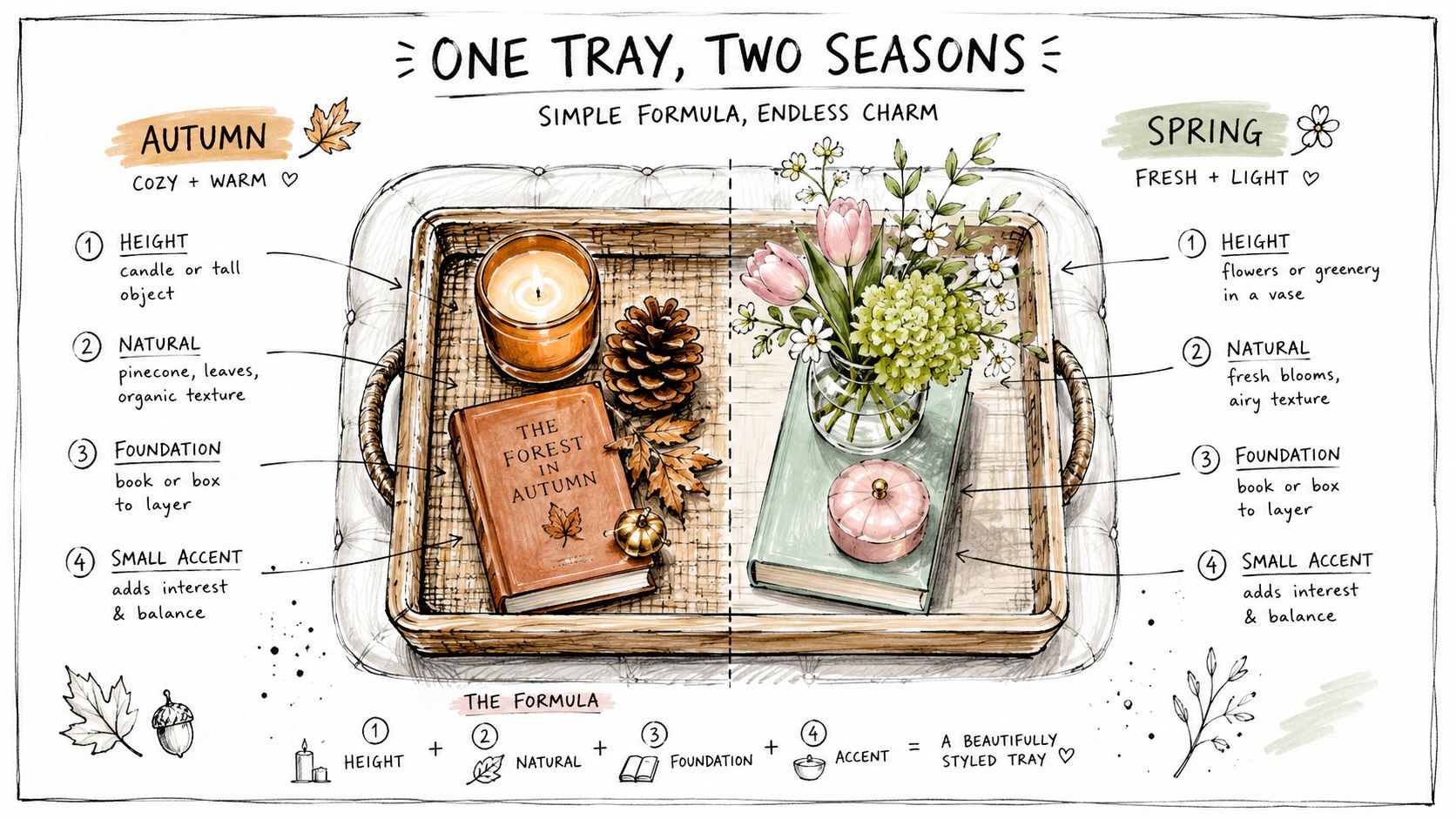
Three objects is usually enough. Start with a grounded base, like books or a box, add one vertical element, and finish with a smaller accent. That creates height without turning the tray into a balancing act. The arrangement should still be movable with one hand and should never feel top-heavy.
A safe formula looks like this.
- Base layer: a stack of books or a low box to anchor the tray.
- Middle layer: a candle, vessel, or small decorative object to add shape.
- Top note: greenery, a small sculptural object, or a seasonal accent.
The problem with overstyling is not just appearance. When the ottoman compresses under load, tall objects become unstable. A low profile is better because it stays composed when the furniture shifts under real use.
For spring, lean light and airy. For summer, keep the tray minimal and breathable. For fall, use deeper tones and fewer pieces. For winter, add more texture and a warmer silhouette. Those shifts keep the room fresh without changing the furniture itself.
Rotate the look, not the whole room
Seasonal styling works best when the tray stays constant and only the contents change. That keeps the room from feeling restless. It also makes storage easier, because the tray remains the anchor while the objects rotate in and out.
For broader inspiration on creating balanced surfaces in the living room, Miller Waldrop's coffee table styling guide offers a useful way to think about layering, even when the surface is an ottoman rather than a hard coffee table.
A floral accent can bring life to the tray without overcrowding it. For rooms that need a softer touch, Fiore's luxury floral design ideas can help inform the color and shape of the arrangement while keeping the tray itself simple.
Keep the decorative load low enough that the tray can be moved without waking up the whole room.
That is the standard that matters. If the tray takes effort to clear, it will become clutter. If it clears quickly, it stays useful.
Maintenance and Longevity Considerations
A tray setup only looks good if it stays that way. In a real house, drinks sweat, fingerprints show up, and sunlight changes finishes over time. The answer is not more decorative rules. The answer is choosing materials that tolerate use and keeping the routine simple.
Clean for the material you actually bought
Matte wood, woven surfaces, and leather-wrapped trays usually age more gracefully than high-gloss finishes in active rooms. They tend to disguise scuffs and fingerprints better, which matters when the tray gets touched daily. Glossy lacquer can still work, but it asks for more attention.
Water rings are the fastest way to make a polished tray look tired, especially on wood. For a practical refresh routine and damage recovery, Miller Waldrop's guide to removing water rings from wood is a useful reference to keep on hand.
A basic maintenance rhythm is enough:
- Wipe weekly: remove dust, crumbs, and surface fingerprints before they settle.
- Check padding monthly: replace felt or rubber bases if they flatten or shift.
- Rotate styling seasonally: refresh the objects before the arrangement starts to feel stale.
Protect the tray from the usual damage points
Drinks need coasters, even on a tray. Condensation leaves marks, and a tray sitting on an upholstered ottoman can transfer moisture more easily than people expect. Sun exposure is another quiet issue. Delicate finishes fade and dry out if they sit in direct light for long stretches.
Handles can loosen over time, especially on trays that get lifted often. That is a practical reason to buy something with solid construction instead of choosing the lightest-looking option. Warping is another red flag. If the tray starts to bow, it stops sitting flat and starts fighting the ottoman surface.
The easiest long-term wins are boring ones. Use a rigid tray, keep drinks contained, and clear the surface before the ottoman is needed as a footrest or extra seat. That routine protects both the tray and the furniture underneath it.
Getting Expert Help for Your Specific Space
Some rooms need more than general advice. A tray that works in a wide, open living room may fail in a narrow one, and a color that looks right online can look wrong against existing upholstery and wood tones. That is where local design help earns its keep.
A designer can narrow the choices fast, especially when the ottoman has to do double duty as a footrest and a display surface. Miller Waldrop Furniture & Decor can help shoppers in West Texas and Southeastern New Mexico sort through furniture and decor options in person, which makes it easier to judge scale, finish, and fit before bringing anything home. Custom order options also make sense when the tray needs to coordinate with a specific room rather than a generic style.
Good questions to bring to a consultation are simple. What tray shape matches the ottoman best? How much of the top should stay open? Which finish will hold up in a family room? Clear answers to those questions save time and prevent expensive mismatch.
If the ottoman in the living room needs to work harder without losing its polished look, visit Miller Waldrop Furniture & Decor to explore furniture and decor that fit real homes, not just staged photos. Their curated selection and design support can help turn a tricky ottoman setup into a practical centerpiece.