


Memory Foam Mattress with Adjustable Base: Top Picks


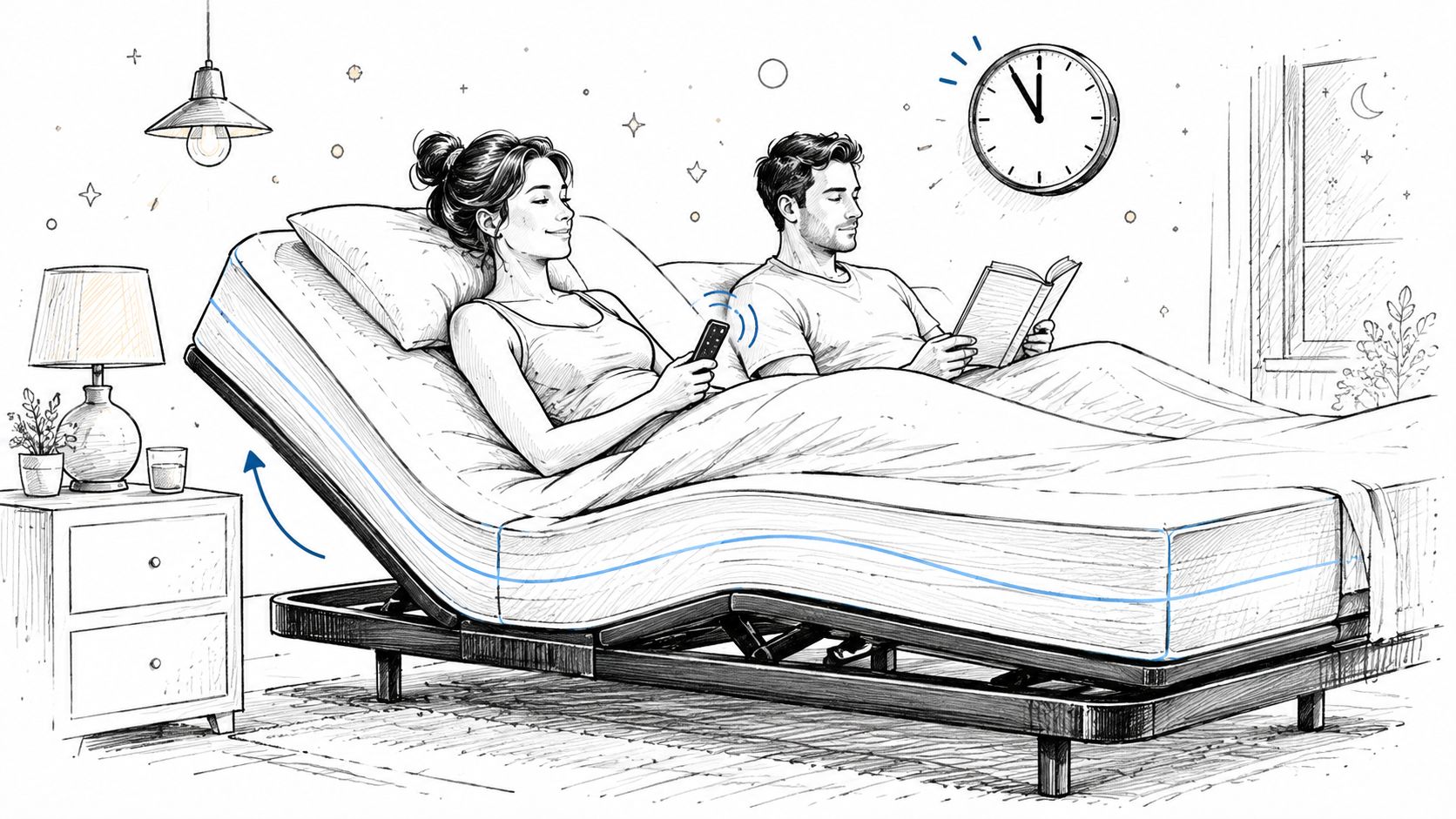
Nighttime is usually when the mismatch shows up. The head of the bed lifts, the mattress should follow cleanly, and instead the surface feels like it's resisting, bunching, or drifting forward just enough to be annoying. That's the difference between a flat mattress and a memory foam mattress with adjustable base setup that works in a real bedroom.
Memory foam earns its reputation here because the material was first developed from NASA viscoelastic foam in the 1960s for impact absorption, then later moved into consumer products and mattresses, where it became a meaningful category by the early 1990s. That engineering lineage matters. Foam-based mattresses flex more easily than traditional spring systems, which is exactly why they're so often recommended for adjustable beds.
The right pairing does more than recline for reading. It can support a better position for pressure relief, make television or book time more comfortable, and reduce the fight between the frame and the mattress. The wrong pairing, though, creates the usual complaints, floating, sliding, and a softer feel right where the base bends. That's where a lot of shoppers waste money, because they stop at “compatible” and never ask how the mattress will behave once the base starts moving.
For sleepers who want a deeper explanation of position-based relief, Aspen Falls Wellness has a useful piece on expert advice for lasting relief, and the core idea applies here too, the body rests better when the surface and the frame cooperate instead of competing.
Why Pairing Memory Foam with an Adjustable Base Changes Your Sleep
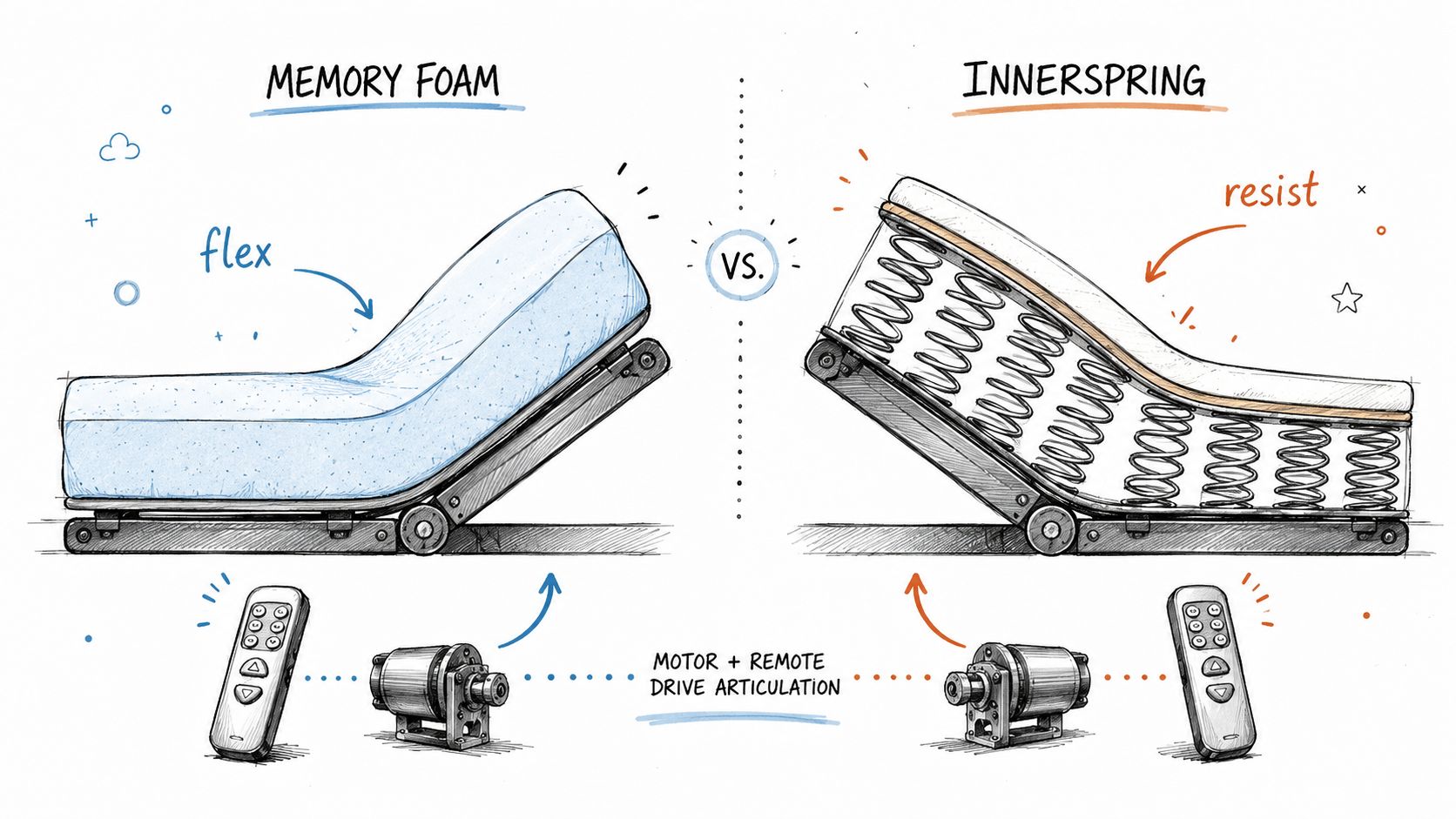
The reason this pairing works is simple. An adjustable base changes angle, and memory foam bends with the angle instead of fighting it. That matters because the base is not static furniture, it uses an electric motor and remote or app controls to raise the head, feet, or legs, so the mattress has to flex and recover every time the position changes (Purple adjustable base overview).
Foam behaves differently from coils
Think of the construction like a soft sponge versus a rigid spring assembly. Foam compresses and conforms across the hinge points, while coil systems can resist or buckle at the joints, which is why foam-based mattresses are widely treated as the safer default for articulation. That flexibility is not a luxury feature. It's the whole game.
The key point is that the mattress has to follow the frame without being damaged by repeated bending. When it does, sleepers get the comfort of elevation without sacrificing the shape of the surface. When it doesn't, the frame does its job but the mattress turns the experience into a compromise.
Practical rule: if the mattress feels stiff in hand, it usually feels stiffer on the base. Stiffness is the enemy of clean articulation.
Why this pairing matters at night
People buy adjustable beds for different reasons, but the mattress decision stays the same. The surface has to move with the base, maintain support under the torso, and avoid creating a hard fold at the head or foot section. That's why memory foam mattress with adjustable base setups remain the standard recommendation in so many buying conversations.
The other reason is practical, not theoretical. This setup lets a partner read, another sleep, and both people keep the bed usable without adding pillows and improvised wedges everywhere. That cleaner experience is the point, and it's why the pairing has stayed relevant long after the first wave of adjustable furniture hype faded.
Benefits and Drawbacks of This Pairing
Put a memory foam mattress on an adjustable base and the bed stops being static furniture. Head and leg position become part of the sleep setup, and that changes how pressure relief, lounging, and overnight comfort work. For many households, that is the whole appeal, and it is why buyers keep pairing foam with adjustable frames instead of trying to force firmer mattresses into a moving base. The angle control also reduces the pile of pillows people usually build under their shoulders or knees, and that cleaner setup is a major reason these beds have become normal in everyday bedrooms (DME Superstore adjustable bed advantages).
The benefits that actually matter
Control is the main win. A sleeper can raise the upper body without cranking the neck into a bad angle, or lift the legs to shift pressure away from the lower back and hips. That matters for anyone who reads, watches TV, works on a laptop, or stays in bed longer than it takes to fall asleep. If you want the classic reclined position, the adjustable base zero gravity position is worth a close look because it shows how much a small change in angle can change comfort (adjustable bed zero gravity).
Couples also get a better setup than they do with many firmer mattress types. One person can keep an incline while the other stays flat, and the mattress still behaves like one surface instead of fighting the frame at every hinge point. Memory foam handles that movement better than most materials because it follows the base instead of pushing back against it. That is the practical reason this pairing keeps winning in real bedrooms.
The drawbacks people ignore
The honest downside is that memory foam changes feel when the base moves. The mattress softens at the bend points, which can feel good to one sleeper and strange to another. Thicker foam builds can resist articulation more than expected, while very thin builds can lose too much pressure relief once the bed is raised.
Compatibility does not mean the mattress will feel identical on a flat frame and on an adjustable base. The same foam can feel more compressed, more contoured, or less supportive once the frame starts moving.
Cost also matters. Adjustable bases add price and mechanical parts, so the purchase has to earn its place in the bedroom. That is why the mattress should be judged in motion, not just on a showroom floor. If you are comparing positions and comfort goals, you should explore adjustable bed advantages before you buy so you understand what the frame is doing for the sleep setup.
Key Specs and Features to Look For Before You Buy
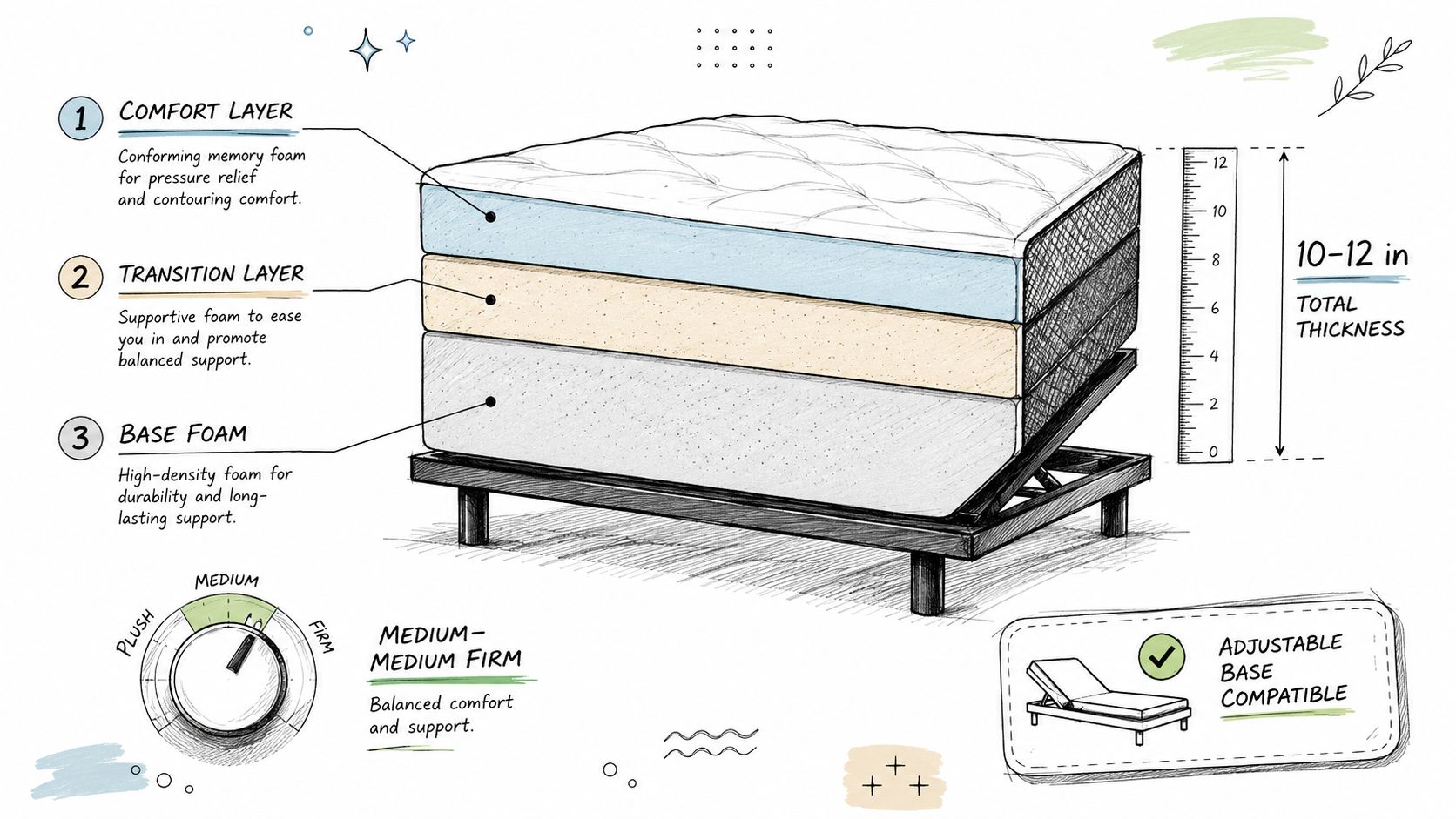
Buyers who get this right start with fit, not flash. For an adjustable-base memory foam mattress, the sweet spot is usually 10 to 12 inches thick with a medium to medium-firm feel. That build gives enough comfort depth to relieve pressure, while still bending cleanly at the joints of the frame.
What the layers should do
A good all-foam mattress should split the work across three layers. The comfort layer cushions the shoulders and hips, the transition layer keeps the body from dropping too fast, and the base foam supports the structure when the bed rises or folds. If coils are inside the mattress, it can still work, but the spring unit changes how smoothly the mattress bends.
Foam-only construction is usually the cleaner choice for articulation. It flexes with the base instead of pushing back against it, which is why foam remains the default recommendation for adjustable setups. That does not make every foam mattress worth buying. It means the build matters more than the marketing copy, and the layers should be chosen for movement, not showroom posture.
What to verify before paying
- Thickness first: stay near 10 to 12 inches for most all-foam setups, because thicker builds can be harder to bend cleanly.
- Firmness second: choose medium to medium-firm so the mattress still flexes without feeling loose through the torso.
- Label third: look for explicit “adjustable base compatible” wording, not a vague comfort promise.
- Warranty fourth: confirm that adjustable-base use is covered before you buy, because compatibility affects warranty risk.
- Manufacturer check last: if the documentation is unclear, contact the brand with the exact base model.
- Use the right reference point: a good mattress for an adjustable bed should be judged by how it bends and recovers, not by how it feels flat in a showroom.
Required: if the product page cannot confirm adjustable-base use, treat that as a warning, not a detail to sort out later.
For shoppers comparing a matched setup in store, the internal guide on best adjustable base mattress is a practical next stop because it keeps the focus on fit, not just features.
Matching Sizes and Configurations to Your Sleep Style
Geometry matters as much as foam. A mattress can be the right material and still be the wrong fit if the dimensions don't match the base or the sleeping arrangement. A single adjustable bed is 38 inches wide, a full is 54 inches by 75 inches, and split king setups use two twin XL units at 38 inches by 80 inches each. That sizing logic matters before the mattress ever leaves the box.
The common setups, compared plainly
A queen setup is the simplest choice for many rooms because it keeps the bed unified and easy to manage. A split setup makes more sense for couples who want independent head and foot control on each side, especially when one person reads late and the other wants a flatter angle. That independence is the main reason split systems remain common in larger sizes.
A queen memory foam mattress is commonly listed as 80 inches by 60 inches by 10 inches in a major retail example. That lines up with standard queen dimensions and shows how often 10-inch builds show up in this category.
A simple decision rule
- Choose a single mattress if both sleepers use similar positions and want the simplest setup.
- Choose a split configuration if each sleeper needs different elevation settings.
- Match dimensions exactly before unboxing, because the mattress and base should sit together without overhang or gap.
- Avoid guessing on size, because a small mismatch becomes obvious once the frame articulates.
The practical advice is straightforward, confirm the mattress geometry before delivery, not after. Buyers who do that avoid the annoying surprise of a mattress that technically fits the room but never quite settles onto the base the way it should.
Solving the Floating Mattress and Sliding Problems
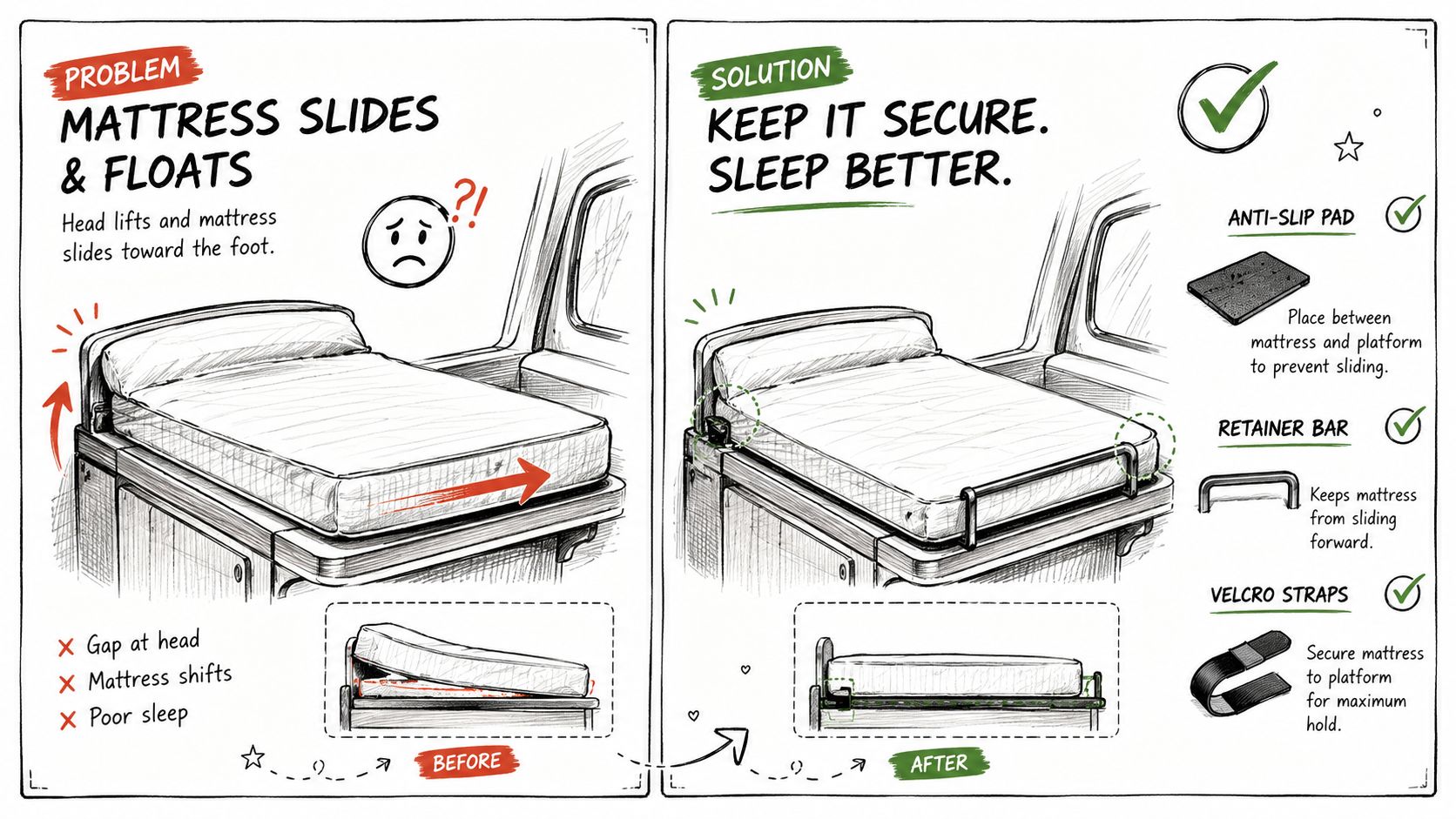
A lot of shoppers get irritated. The mattress can look like it's floating over the base at the head section, or it can slide forward when the frame returns to flat. Those issues usually come from foam compression, the hinge shape of the base, or missing anti-slip support, not from a defective mattress.
Fix the fit before blaming the mattress
The first move is alignment. The mattress has to sit squarely on the base, with the base dimensions matching the mattress exactly. If the bed is even slightly off-center, the movement of the articulating sections can exaggerate the problem and make the mattress feel unstable.
The second move is grip. Non-slip base pads help keep the underside from creeping across the platform. Mattress retainer bars can stop forward movement, and adjustable Velcro straps can give the surface a firmer anchor when the frame moves repeatedly through the same positions.
A new foam mattress often needs a short break-in period before it settles into the shape of the articulating deck.
What actually solves the problem
A one-to-two-week settling period is often enough for the foam to adapt, especially when the mattress is new and hasn't yet learned the base's movement pattern. That doesn't mean the user should sit around hoping for a miracle. It means the fix should combine time, alignment, and a physical anti-slip aid if needed.
The point is not perfection on day one. The point is a bed that behaves predictably once the foam and frame start working together. If the mattress still slides after proper alignment and basic grip support, the problem usually lies in the setup, not the idea of the pairing itself.
Understanding the Price, Warranty, and Long-Term Value
Adjustable bases are not impulse buys. Independent consumer guidance places the better options roughly between $1,248 and $2,762. That range should push shoppers to ask a smarter question than “Is this expensive?” The better question is whether the setup will stay comfortable, reliable, and covered long enough to justify the spend.
What value really means here
A low upfront price can backfire if the mattress and base aren't a good match. Same-brand pairing is often recommended to reduce compatibility problems, and that advice makes sense because the mattress, frame, and warranty language tend to align more cleanly when they come from the same product family. That doesn't guarantee perfection, but it lowers the odds of a fit issue turning into a support headache.
Warranty terms matter just as much. If adjustable-base use isn't clearly approved, the buyer can run into avoidable trouble later. That's why the documentation check comes before checkout, not after delivery.
The long-term logic
A good adjustable setup earns its keep through daily use. If the mattress remains comfortable in raised positions, doesn't fight the base, and keeps the sleeper from piling up pillows, the value compounds over time. That's a better measure than chasing the lowest sticker price.
For shoppers who want a local place to compare frames and foam builds in person, Miller Waldrop Furniture & Decor carries adjustable bases within its bedroom selection, which makes it a relevant stop for this exact kind of pairing decision.
Your Next Step Toward Better Sleep
The best move is to narrow the choice, not overthink it. Start by choosing the thickness and firmness that match the sleeper's body and position habits, then shortlist a few memory foam and adjustable base pairings to test in person. After that, confirm the dimensions, warranty language, and compatibility label before anything gets ordered.
A showroom visit helps because the body can tell the truth faster than product copy. Miller Waldrop Furniture & Mattress has three showrooms in Lubbock, Hobbs, and Ruidoso Downs, plus dedicated Sleep Experts and a high-tech bed matching system that helps match pressure points to the right mattress and base combination. That's the fastest route from guesswork to a setup that feels right.
| Specification | Recommended Range | Why It Matters |
|---|---|---|
| Thickness | 10 to 12 inches | Keeps the mattress bendable on an articulating base |
| Firmness | Medium to medium-firm | Balances comfort with support under a raised torso |
| Compatibility label | Explicit adjustable-base compatible | Confirms the mattress is intended for motion use |
| Warranty | Must cover adjustable-base use | Reduces avoidable coverage disputes |
| Base match | Exact mattress and frame dimensions | Prevents sliding, gaps, and poor articulation |
Visit Miller Waldrop Furniture & Decor to compare memory foam mattresses and adjustable bases with real guidance instead of guesswork. The right setup should fit the body, fit the frame, and make bedtime easier from the first night.