

Circular Wall Art Guide: How to Choose the Right Fit


You're standing in front of a wall that feels too empty, or maybe too busy, and a round piece keeps catching your eye because it looks softer than a rectangle and more finished than a random object. That instinct is good. Circular wall art can solve a room fast, but only if the size, material, and mounting match the wall it's going on.
The mistake many make is shopping by mood first and measuring second. A circle doesn't behave like a framed print. It needs the right diameter, the right amount of surrounding space, and the right hardware if it's going to look intentional in a West Texas living room, a New Mexico bedroom, or a narrow hallway that needs a focal point without clutter.
Why Circular Wall Art Deserves a Different Buying Process
A round piece forces a different decision than a rectangle because the eye reads its edge, not just its image. In art history, the tondo format shaped composition, perspective, and symbolism, and Renaissance artists used it for religious and allegorical work in Italy, with the circular form linked to ideas of divine perfection in historical theory (DegreeArt on round circles in art). That matters in a home, too. A circle either feels deliberate, or it looks like it landed there by accident.
Start with the wall, not the artwork
The first question is simple. Is the room asking for a single statement piece or a grouped arrangement? A large open wall above a sofa usually wants one strong circle with real presence, while a tighter entry or hallway often works better with a smaller piece or a grouping. That's the buying process, because scale drives whether the art feels grounded or flimsy.
Practical rule: if the furniture is already heavy and wide, the circle needs enough diameter to look like it belongs to that mass, not hover above it.
The second question is material. Material controls weight, finish, and how much light the piece throws back into the room. A metal disc reads crisp and modern, canvas softens the look, acrylic can feel sharper, and woven or wood-based pieces bring warmth. A shopper should not fall in love with the image first and discover later that the finish clashes with the room's lighting or the wall can't support the weight.
For shoppers comparing ideas, the internal gallery of big wall art ideas gives a useful starting point for seeing how large pieces change a room's balance. That's the right mindset here. Buy for proportion first, style second, and mounting last.
Keep four decisions in view
The clean checklist is short.
- Material: Decide how much weight and shine the wall can handle.
- Scale: Match diameter to the furniture and the wall span.
- Layout: Choose one piece or a grouped set before shopping.
- Mounting: Pick hardware that fits both the substrate and the wall type.
Circular wall art works best when all four line up. When one of them is off, the room looks unfinished no matter how pretty the design is.
Choosing the Right Material and Finish
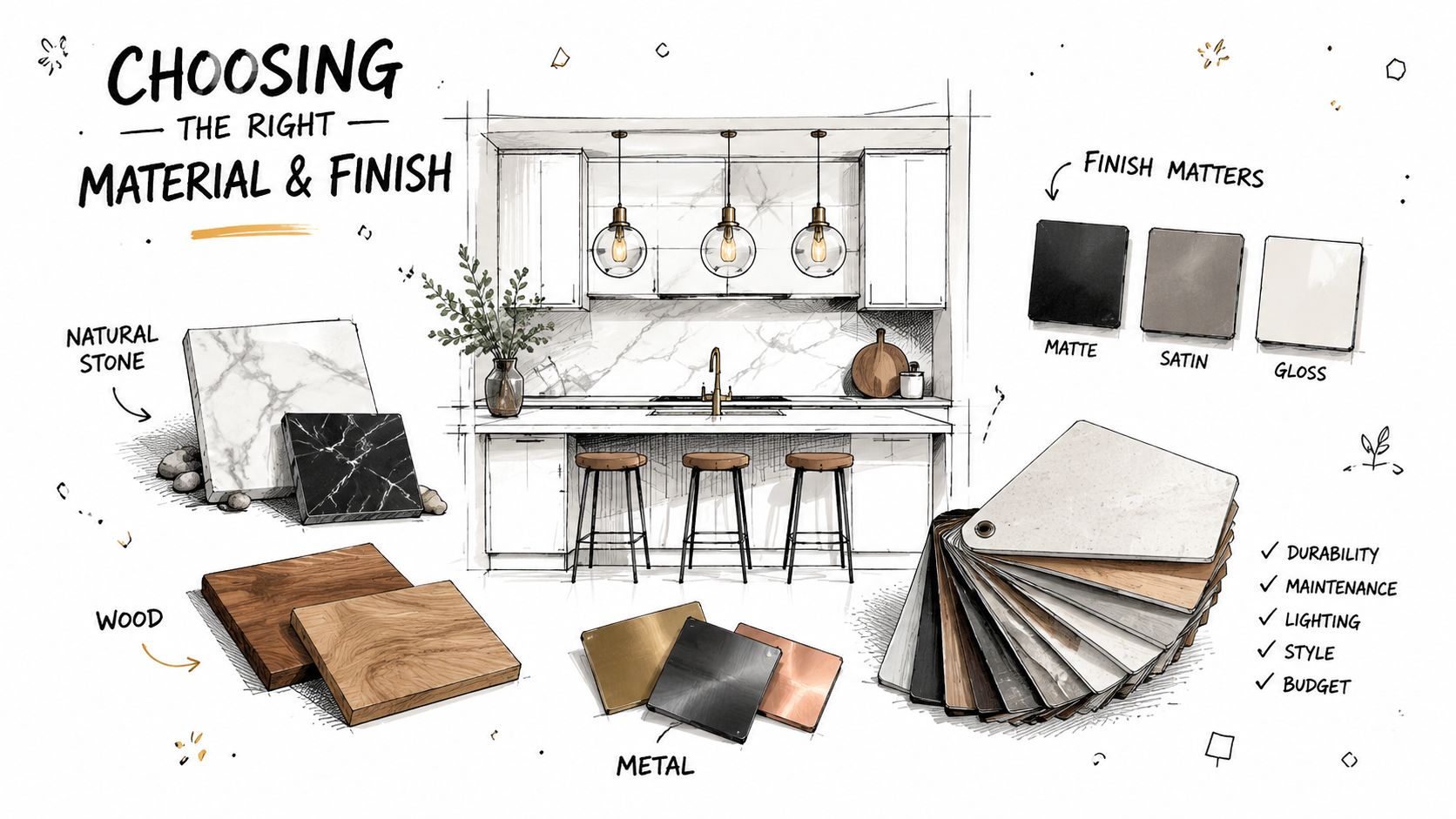
Material is where a lot of shoppers make the wrong call. They choose what looks good on a screen, then find out the piece is too heavy, too glossy, too fragile, or too busy for the wall it needs to live on. The better move is to match the material to the room's use, the amount of light it gets, and how often people brush past it. In homes with kids, renters, or high-traffic rooms, the finish matters as much as the image.
The main material families
A framed canvas round feels relaxed and forgiving. It works in bedrooms and living rooms because it cuts glare and softens hard furniture. Metal and aluminum pieces fit rooms with clean lines, darker finishes, or a more modern tone. Acrylic gives a sharper, more reflective surface, while wood rounds add texture and warmth that work well in rustic or transitional rooms. Woven natural fibers keep the look casual, which helps in rooms already full of smooth furniture. Vinyl decals are the temporary option, useful when the wall needs a light update without a long commitment.
Material also changes installation. Product specifications for wall art show formats such as 4 mm acrylic, 3 mm aluminum, 20 mm canvas-with-frame, and 5 mm mounted board, and some acrylic versions use a black film backing that blocks backlighting (material specifications). That matters if the wall sits near a lamp, window, or sconce. A backlit effect will not happen on black-backed acrylic, so the buyer needs to know the finish before ordering.
For a natural accent with more organic texture, shop local wellness stones shows how stone-like surfaces change the mood fast. It is a niche example, but it makes the point clearly. Texture changes the read of a circle more than you might expect.
Circular wall art materials compared
| Material | Typical Thickness | Weight Class | Best Room | Care Level |
|---|---|---|---|---|
| Framed canvas | Around 20 mm | Light to medium | Bedroom, living room | Low |
| Metal disc | Varies by construction | Light to medium | Living room, entry | Low |
| Acrylic | Around 4 mm | Light | Hallway, modern spaces | Medium |
| Aluminum | Around 3 mm | Light | Minimal rooms, dining area | Low |
| Wood round | Varies by build | Medium | Bedroom, casual living room | Medium |
| Woven natural fiber | Varies by weave | Light | Relaxed spaces, neutral interiors | Medium |
| Vinyl decal | Very thin, around 0.1 mm in technical sheets | Very light | Rental walls, temporary updates | Low |
Acrylic and vinyl need cleaner surface prep. Canvas and wood are more forgiving visually. In a room that gets sunlight, fingerprints, or the occasional bump, the safer choice is usually a finish that does not show every mark.
A lot of people also want depth, especially on larger walls. If the piece needs to stand off the wall and read more like an object than a print, a three-dimensional wall sculpture can do that better than a flat surface. That is a material decision, not just a style one.
Measuring Your Wall and Picking the Right Diameter
This is the part that decides whether the piece feels custom or off the shelf. A round piece needs enough diameter to register as intentional, and that usually means larger than people first assume. A 60 cm circle can look weak above standard furniture, while a 100 cm+ piece is often what creates the focal point in a bigger room. A quick tape mockup on the wall removes the guesswork before anybody buys anything.
Use painter's tape before you shop
The simplest method is also the most useful. Mark the height and width of the furniture below the art, then tape a circle on the wall using painter's tape or a paper template. Step back from the room entry, from the couch, and from the hallway approach. If the tape shape looks like an afterthought, the art will too.
The reason the diameter matters so much is that visible wall coverage grows fast. A 120 cm circle covers about 1.13 m² of wall area, while a 140 cm circle covers about 1.54 m², so that extra 20 cm adds about 36% more surface area (wall art sizing benchmark). That jump is big enough to change the whole room. It's why shoppers should not treat a diameter upgrade like a minor tweak.
A circle that sits too small above a sofa reads as decoration. A circle that's sized well reads as architecture.
Use furniture width as the guide
The clean rule is simple. For sofas, beds, and consoles, the art should feel tied to the furniture span, not floating in the empty wall above it. A round piece usually wants enough width to sit confidently inside that furniture zone, with visible breathing room around the edges. If the wall is wide and the furniture is substantial, the circle should be substantial too.
A practical showroom move is to aim for a diameter that feels closer to two-thirds of the furniture width than to half of it. That keeps the piece from looking timid. It also helps when the wall is tall, because round art needs vertical presence as well as width to feel finished.
Single Statement Piece Versus Gallery Wall Arrangement
Once the diameter is right, the next choice is layout. A single oversized circle is the stronger move in many rooms, especially when the wall is already busy with furniture, lamps, or trim. A grouped arrangement works better when the wall is narrow, the furniture is small, or the homeowner wants movement instead of one focal point.
Which layout wins in real rooms
A small entryway usually benefits from one circle or a very tight pair. Too many pieces make the wall feel chopped up. A narrow hallway follows the same logic, because people move through it quickly and don't have time to read a busy composition. An above-the-bed wall often looks best with one centered round piece or a simple pair with clear spacing, since the headboard already creates a horizontal anchor.
An open living room is where a single oversized circle often wins hardest. The open volume needs a shape that can hold space, not scatter attention. A gallery arrangement can still work, but only if the pieces are planned as a group and not assembled one by one without a clear center.
A useful temporary test is paper or kraft templates. Lay them out on the wall before drilling, then stand back from the room's main entry. If the grouping feels random from a distance, it is random. If a single circle holds the space on its own, that's the cleaner choice.
Keep the group controlled
Groupings should look edited, not scattered. Vary the diameters enough to create movement, but keep the visual family tight. One large circle can anchor a smaller companion piece, but the spacing should still feel deliberate. If the negative space between pieces gets too irregular, the wall starts looking unfinished instead of collected.
For shoppers who want a circular look without committing to one oversized disc, the 3-D wall sculptures category is a smart way to compare dimensional pieces that behave more like sculpture than flat art. That matters because some walls need texture more than image.
Hanging and Mounting Methods That Hold Up
A circular piece can look right and still fail on the wall if the hanger is wrong. The mounting choice has to match the material, the weight, and the wall itself. That matters in West Texas and New Mexico homes, where temperature swings, rental rules, and awkward architecture limit what will stay put. Lightweight pieces are easier to live with, but even light pieces need the right hardware or adhesive. Round art that leans, shifts, or peels at the corners usually ran into a setup problem, not a design problem.
Match the hanger to the substrate
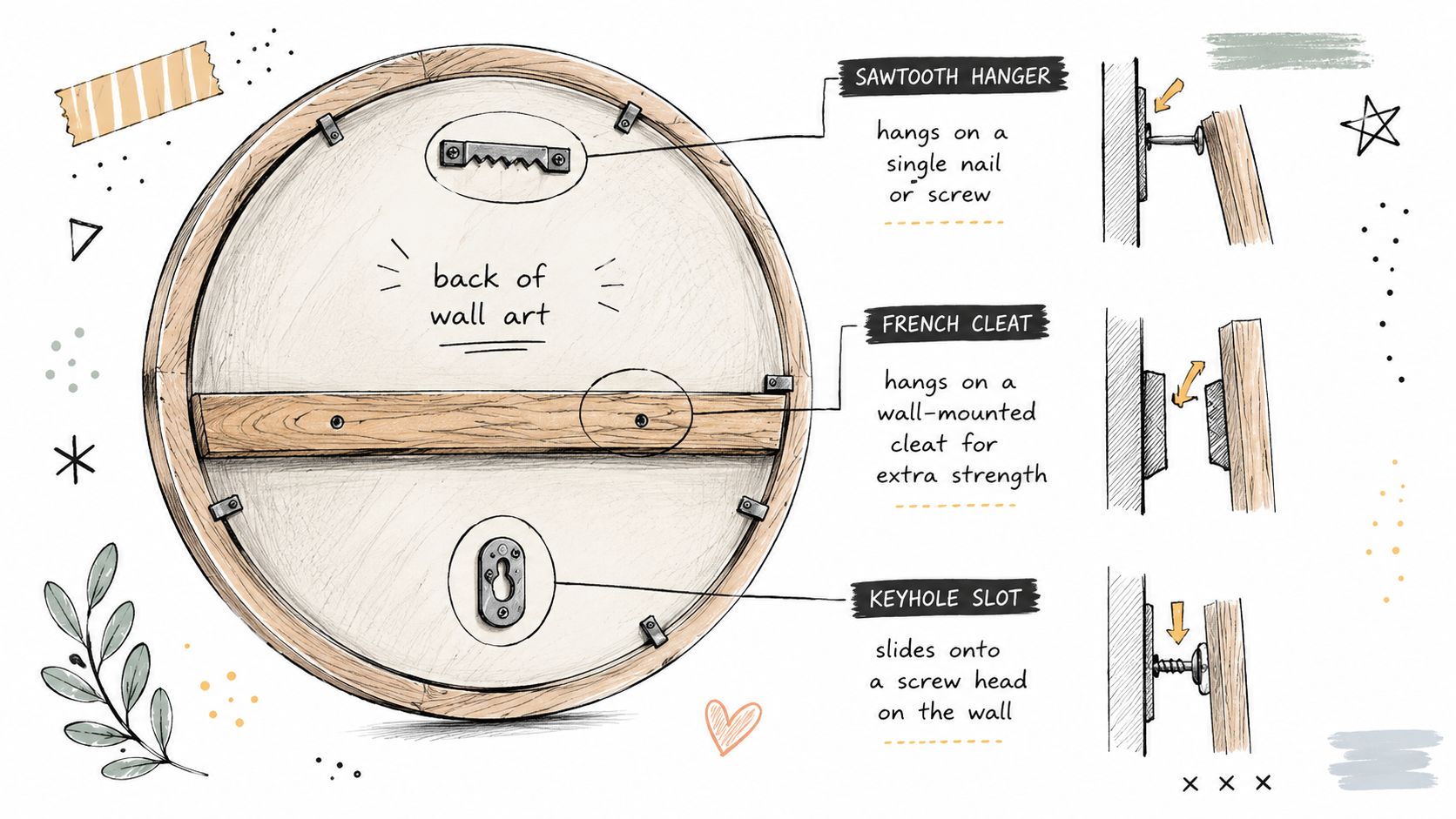
Round wall art can use sawtooth hangers, French cleats, keyhole slots, command strips, or adhesive pads, but each system has a narrow job. A French cleat is the cleanest choice when the piece is heavier or when the buyer wants a firmer hold. Keyhole slots work well on manufactured boards and some framed pieces. Sawtooth hangers are fine for lighter art that does not need serious anti-rotation support. Command strips and adhesive pads make sense for temporary or renter-friendly installs, as long as the wall is clean and the piece is light enough.
The material specs matter here. Circular art can be built on 4 mm acrylic, 3 mm aluminum, 20 mm canvas-with-frame, or 5 mm mounted board, and vinyl circle decals can be 0.1 mm thick, waterproof, washable, solvent resistant, and removable without wall damage when applied correctly. That is a clear reminder that one mounting method does not fit every build. What works on canvas can fail on acrylic, and what works on a decal will not help a metal disc.
Practical warning: hot, dry weather is hard on weak adhesives, so painted drywall needs a clean, cured surface before any sticky mount goes up.
Angled walls and rental spaces need lighter thinking
Slanted walls, eaves, and rental units reward lighter, simpler formats. A thinner circle is easier to align and less risky to adjust, especially in rooms with awkward geometry where heavy layouts fight the architecture instead of working with it. If the piece needs careful placement, use a clear measuring routine before anything touches the wall. The step-by-step guide to hanging your picture with precision lays out that process in a practical way.
One more detail matters. Some mass-market round pieces allow 1 to 2 cm of dimensional variation, so measure the delivered item before final placement. That kind of gap is enough to turn a nearly centered install into one that looks crooked from across the room.
Styling Tips for Living Rooms, Bedrooms, and Dining Areas
In a living room, the circle should respect the sofa, not fight it. A centered round piece above the couch looks better when it's aligned to the sofa zone and has enough side clearance to breathe. The common mistake is placing it too high or too small, which makes the wall feel disconnected from the seating area. A round piece with metal, wood, or canvas finish can all work here, but the room's existing tones should decide which one gets the nod.
In a bedroom, the circle needs to settle the headboard area, not compete with it. One oversized piece above the bed often looks calmer than a tight cluster, especially when the bedding already has pattern or texture. If the room is compact, a single circle keeps the space from feeling crowded. If the room is wide and the headboard is low, a round piece with more visual mass is the smarter call.
Dining rooms and buffet walls are where people often overcomplicate things. A single circle above a console or buffet usually feels cleaner than a crowded arrangement, especially when the furniture is narrow. The round shape softens all the straight lines already in the room, and that's enough. If the finish echoes the dining table or light fixture, the whole area starts to look planned instead of patched together.
For homeowners who want in-person help matching the circle to the rest of the room, Miller Waldrop Furniture & Decor can pull wall art, furniture, and finishes together in one place. That's useful when the art needs to coordinate with a sofa, bed, buffet, or mirror rather than sit alone as a random accent.
Care, Maintenance, and When to Call in the Pros
Dust metal with a soft, dry cloth, clean acrylic with a non-abrasive method that won't haze the surface, and spot-clean canvas gently so the texture stays intact. Wood and woven pieces need lighter handling because moisture and harsh cleaners can leave them looking tired fast. If the wall is uneven, the piece is oversized, or the mount has to sit over furniture with tight clearance, a professional install is the safer move.
The takeaway is simple. The right circular wall art is the one that fits the wall, the room, and the way the house gets used. If the measurements are in hand, bring them to a showroom in Lubbock, Hobbs, or Ruidoso Downs and compare the circle against the furniture, the finishes, and the wall space before anything goes up.
Bring your room measurements, a photo of the wall, and the furniture dimensions, then let Miller Waldrop Furniture & Decor help you choose a circular piece that fits the space instead of guessing from a screen. Visit Miller Waldrop Furniture & Decor to explore wall art and connect the right piece to the rest of the room with less trial and error.