

Master Area Rug Placement in Your Bedroom: Your Ultimate Guide


An area rug in your bedroom is more than just a floor covering—it's the anchor for your personal sanctuary. To achieve a professional, polished look, you have the power to place your rug so it extends 18 to 24 inches beyond the sides of your bed. This isn't an arbitrary number; it’s the key to making the rug feel deliberate and integrated, giving you a soft place to land your feet and visually grounding your entire room.
The Secret to a Perfectly Anchored Bedroom
Your bedroom is your personal retreat, the one place dedicated to pure rest and rejuvenation. You spend time choosing the perfect furniture and paint colors, but the area rug is the unsung hero that ties your entire vision together. It’s a foundational piece, and its placement is a design move that can make or break the feel of your space. A well-placed rug empowers you to ground your furniture, carve out distinct zones, and add that essential layer of warmth and texture.
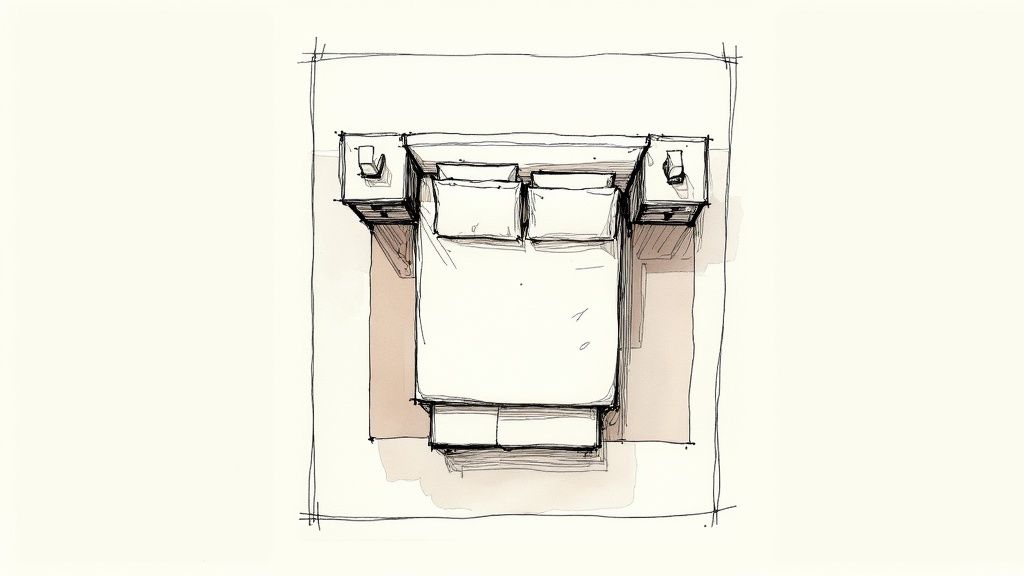
When you start treating your rug as an intentional centerpiece instead of an afterthought, you'll transform the entire atmosphere of your room. In a large, airy bedroom, a substantial rug can create a sense of intimacy. Conversely, in a smaller room, a thoughtfully positioned rug can create the illusion of more space. You hold the key to unlocking your room's full potential.
Why Your Rug Placement Matters So Much
Getting the placement right elevates your design from "nice" to "professionally finished." It’s the detail that makes a room feel complete and intentional.
Here’s how you can use a perfectly placed rug to win the day:
- Define your space. A rug creates a clear visual boundary for your sleeping area, a particularly useful tool in primary suites that might have a separate sitting or dressing area.
- Add serious comfort. Imagine stepping out of bed onto a soft, plush surface on a chilly morning. You can give yourself that small luxury every single day.
- Enhance your unique style. Your rug is a huge opportunity to inject color and texture that complements your bedding, curtains, and furniture. To really nail the vibe, you can explore how different design themes work, like these inspiring tropical ideas for bedrooms.
- Absorb sound. Rugs are fantastic for dampening noise and reducing echo, helping you create that quiet, peaceful environment you deserve.
A bedroom rug doesn’t just decorate the floor—it sets the entire stage. Think of it as the frame for your bed, giving it presence and purpose within your room's layout.
This focus on creating beautiful, comfortable home spaces isn't just a feeling; it's a huge market trend. The global area rugs market was valued at a staggering $12.5 billion in 2023 and is only expected to grow as more people invest in their interiors. You can dig deeper into the growth of the home decor market if you're curious.
Once you understand these core principles, you can make design choices with confidence. When you're ready to find that perfect foundational piece for your sanctuary, the next step is to explore high-quality options. Here's how you can discover the ideal rug to complete your vision: browse our collection of bedroom furniture and decor.
Choosing the Right Rug Size for Your Bed
Before you even think about patterns or colors, getting the rug size right is your most critical first step. It's a lot like tailoring a suit—the fit is everything. A rug that's too small will look like a sad little postage stamp adrift in your room, making your furniture look clunky and out of scale. On the other hand, a massive rug can completely swallow the space, hiding your beautiful floors and making the room feel crowded.
Your goal is to find a size that feels deliberate. You want to choose a rug that anchors your bed, visually ties the space together, and gives your feet a soft place to land first thing in the morning.
Sizing Guidelines for Common Beds
For that professionally designed, polished look, you should choose a rug that extends at least 18 to 24 inches from the sides of your bed. This buffer zone is what creates visual balance and makes the setup feel luxurious and complete.
You'll need to break out the tape measure for this part—no guessing allowed! Get the exact dimensions of your bed frame and the total available floor space you're working with. If you need a refresher on the best way to do this, here’s a simple guide on how to measure furniture that will get you up to speed.
This quick visual breaks down the process, showing how your bed's dimensions are the starting point for finding that perfect rug.
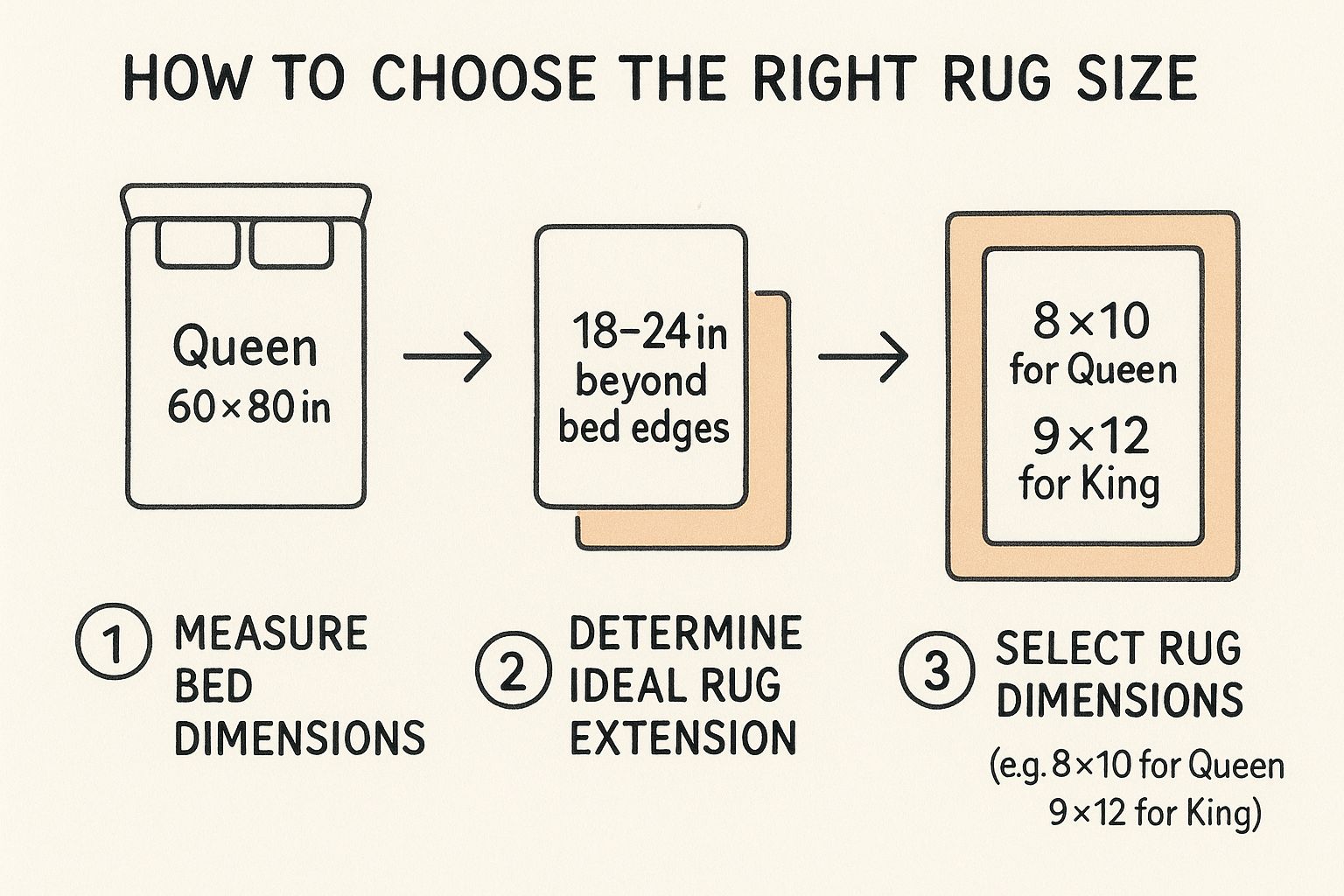
As you can see, it's more of a simple formula than a wild guess. Start with the bed, add that standard border, and you're well on your way to a perfectly balanced room.
Here’s a quick-reference table to help you match standard bed sizes with the most common and effective rug dimensions.
Bedroom Rug Sizing Guide by Bed Size
| Bed Size | Common Rug Size | Placement Guideline |
|---|---|---|
| King Bed | 9' x 12' | Provides ample coverage, extending well beyond the bed and nightstands. |
| Queen Bed | 8' x 10' | The most popular choice, offering a balanced 18-24 inch border on each side. |
| Full Bed | 6' x 9' | A great fit for most full beds, providing a cozy landing spot without overwhelming the room. |
These are tried-and-true combinations that create a beautiful foundation in countless homes. They'll empower you to build a bedroom that feels just right.
The Impact of Room Proportions
While the bed is your main guide, the room itself has a say, too. If you have a sprawling primary suite, you might need to go even bigger than the standard recommendations to make the bed feel properly anchored. A larger rug helps fill the visual space, especially if you have a bench at the foot of the bed or particularly wide nightstands.
It's clear homeowners are passionate about getting these details right. The global market for carpets and rugs was valued at $58.93 billion, with residential use making up over 60% of that. People are investing in their personal sanctuaries, and the right rug is a huge part of that. For a deeper look into a variety of options, here's a comprehensive guide on how to choose the perfect area rug.
Pro Tip: Grab some painter's tape and outline the dimensions of a potential rug on your floor. Live with it for a day or two. This is the best way for you to get a real feel for the scale and ensure it works in your space before you make the purchase.
Ultimately, you know your space best. By taking a few minutes to measure and consider your room's unique layout, you can pick a rug that elevates the entire look and feel of your bedroom. A great rug doesn't just furnish a room—it completes it.
Proven Placement Techniques for Any Layout
Alright, this is where the real fun begins and your design vision starts coming to life. Once you’ve landed on the right size, you can position your rug to create the exact mood you’re after. Most professional designers stick to a handful of core methods for placing rugs in a bedroom. Think of these as your go-to playbook for anchoring your room with confidence and style.
Let’s walk through the three most common and effective techniques. By the end, you'll know exactly which one is the best fit for your room's scale and your personal taste.
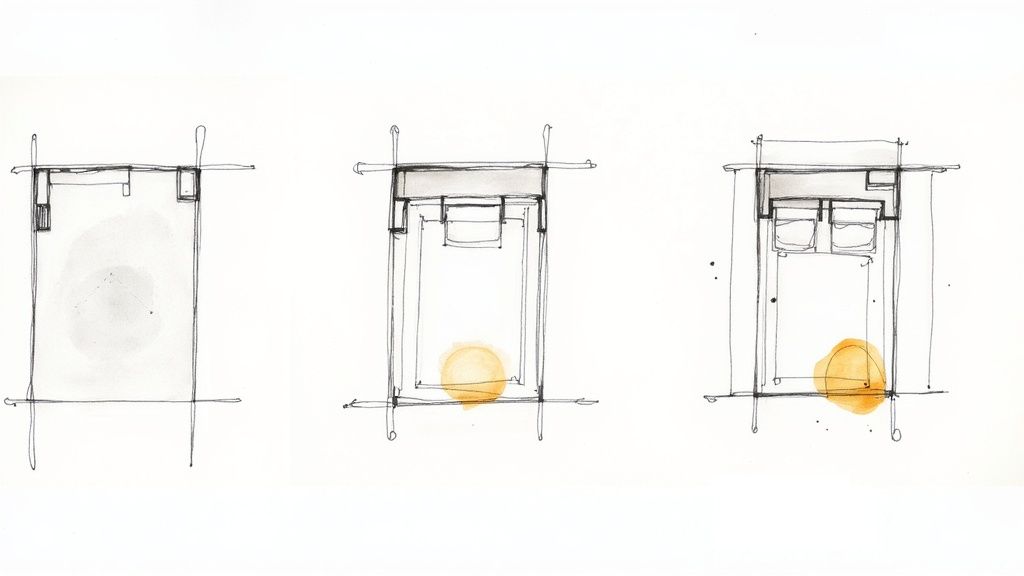
The Luxurious: All Furniture On
This is the ultimate power move in bedroom design. It allows you to create a lavish, cohesive foundation for your entire sleeping area. For this setup, you'll need a rug large enough to fit the bed, both nightstands, and any furniture at the foot of the bed, like a bench. Every single furniture leg should rest comfortably on the rug's surface.
This approach truly shines in spacious primary suites where you have plenty of floor to work with. It visually carves out the entire sleeping zone, defining it as one unified, luxurious space.
- Best For: Large, open bedrooms where you want to create a grand island of comfort.
- Key Tip: Make sure the rug extends at least 24 to 30 inches beyond the sides and foot of the bed. Anything less and the furniture will look like it's teetering on the edge.
The Versatile: Front Two-Thirds
This is, without a doubt, the most popular and flexible method out there. It helps you hit that sweet spot between style, practicality, and budget. Here, the rug slides under the front two-thirds of the bed, which means the head of the bed and the nightstands stay on the bare floor.
This placement gives you that soft landing for your feet when you hop out of bed in the morning and does a fantastic job of anchoring the bed. Plus, you don't need a massive, expensive rug to pull it off. It creates a beautiful layered look, letting a bit of your original flooring peek through.
This method is a designer favorite for a reason—it just works in most standard-sized rooms. It visually connects the furniture, making the space feel intentional and well-designed without overwhelming it.
An 8' x 10' rug is a perfect match for a Queen bed with this technique, framing it beautifully. For a King bed, a 9' x 12' rug usually does the trick.
The Minimalist: Runners on Each Side
Don't have the space—or the budget—for a giant area rug? No problem. Using runners is an incredibly elegant and clever solution. Instead of one large rug under the bed, you simply place two matching runners on either side. This approach gives you that plush, warm feeling right where it counts most.
This technique is a lifesaver for smaller bedrooms or rooms with an odd, asymmetrical layout where a big, centered rug would just look awkward. It also lets you show off more of that beautiful hardwood or tile flooring you love.
If your bedroom feels a bit narrow, this placement can even create an illusion of more width. For more ideas on making the most of a compact space, our guide on small bedroom furniture ideas has some great tips that work hand-in-hand with this rug strategy.
- Best For: Smaller rooms, guest rooms, or anyone who prefers a cleaner, more minimalist look.
- Key Tip: Choose runners that are a bit wider than your nightstands but don't extend past the foot of the bed. This keeps the proportions feeling clean and deliberate.
Ultimately, the best technique is the one that helps you build the sanctuary you deserve. Each method offers a different way to achieve a beautifully grounded bedroom. By choosing the one that fits your space, you’re not just laying down a rug—you’re making a design choice that will elevate the entire room.
Choosing Materials That Complete Your Sanctuary
The size and placement of a rug are important, sure, but the feel of it? That's what really sets the mood. The material you choose is what transforms your bedroom from just a room into a personal retreat. This is your chance to decide if you want your space to feel plush and cozy, breezy and natural, or sleek and modern.
Think about the very first thing your feet touch in the morning. Imagine sinking them into a thick, hand-knotted wool rug like the Surya Harput Area Rug. There's a reason wool is such a classic choice for bedrooms—it’s incredibly soft, naturally durable, and amazing at insulating against cold floors and dampening sound. It’s an investment, but one that pays off in pure comfort every single day.
Materials Matched to Your Lifestyle
The best rug for you has to walk the line between looking good and living well. How you use your bedroom should be the biggest factor in what material you bring into it.
Here’s a quick rundown of some popular options and how you can choose the best one for your needs:
- Wool: This is the gold standard for a reason. It's soft, built to last, and surprisingly good at resisting stains. If you're aiming for a high-end, truly cozy feel, wool is your best bet.
- Synthetics (Nylon, Polyester): These are the practical powerhouses. They're tough, stand up well to stains, and won't break the bank. Perfect for kids' rooms, guest rooms that see a lot of traffic, or any bedroom where pets hang out.
- Natural Fibers (Jute, Sisal): If you love that earthy, coastal, or bohemian vibe, you can't beat natural fibers. Jute and sisal bring a fantastic organic texture to a space. Just a heads-up, they aren't as plush underfoot, so they’re better for lower-traffic spots.
Weaving in Your Personal Style
Once you have a material in mind, the fun part begins: picking a color and pattern that pulls everything together. A rug can be the quiet, grounding force in a room or the standout piece of art that makes a statement.
Our best advice? Let your existing decor be your guide. Your rug should be friends with your bedding, curtains, and furniture, not fight with them for attention. If your room already has a lot going on with patterns, a simple, solid-colored rug can bring a beautiful sense of calm.
What "personal style" means is also changing. People care more than ever about where their products come from. In fact, over the last five years, there's been a 20% jump in shoppers looking specifically for eco-friendly rugs. It's a clear signal that we want our homes to be filled with things that are not only beautiful but also mindfully made. You can dig deeper into these consumer-driven market trends to see how this is shaping design choices.
In the end, choosing a rug is more than just covering a floor. It's a deliberate choice about how you want to feel in your most personal space. When you're ready to find that perfect piece, browsing a well-curated collection is the best way to start. Here's where you can explore our handpicked selection of area rugs and home decor to find the one that completes your sanctuary.
Common Rug Placement Mistakes to Avoid
A beautiful room and a gorgeous rug can still feel off if the placement isn't right. More often than not, it's a simple mistake that throws the whole space out of whack. Let's walk through some of the most common pitfalls so you can steer clear and achieve that polished, professionally designed look you're after.
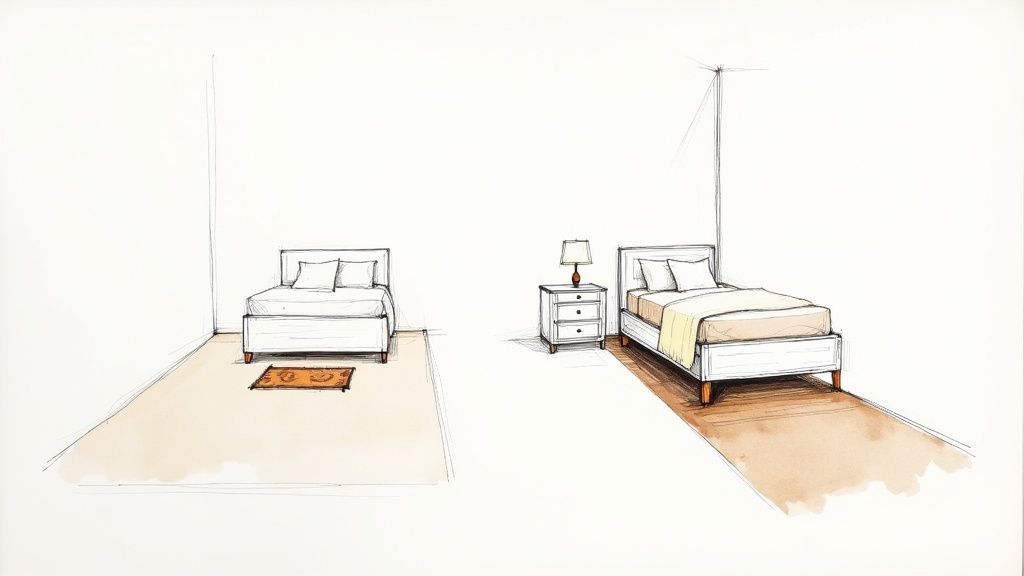
The Floating Rug Phenomenon
This is probably the number one mistake people make. The "floating rug" is that lonely-looking rug stranded in the middle of the floor, not touching any furniture. It looks like a decorative island, completely disconnected from the rest of the room. A rug’s job is to anchor your furniture, not float away from it.
The fix is surprisingly simple: your rug must touch or slide under your main furniture pieces. At a bare minimum, the front two-thirds of your bed should be firmly on the rug. This physical connection is what creates a grounded, cohesive look.
The Skimpy Sizing Trap
It's tempting to save a few bucks with a smaller rug, but this almost always backfires. A rug that's too small for the bed makes the entire room feel cramped and disproportionate. You want the rug to extend comfortably beyond the bed, not just peek out from underneath it.
Aim for at least 18 to 24 inches of visible rug on either side of the bed. If you're on the fence between two sizes, always go for the larger one. A great trick is using painter's tape to map out the dimensions on your floor. It’s the best way to visualize the scale before you buy.
A good rule of thumb is to have at least six to eight inches of rug showing on either side of your largest piece of furniture, like your sofa or bed. This ensures the rug feels generous and intentional, not like an afterthought.
Pushing It All Against the Wall
This one seems logical, but it rarely works. Shoving your rug all the way against the headboard wall pulls it too far under the bed. You're left with a tiny sliver of rug at the foot of the bed and almost none on the sides, making the whole setup feel unbalanced.
Give it some breathing room! Pull the rug away from the wall so you can see a border of flooring. Just a few inches can make a world of difference, centering the rug under the bed and creating a more balanced look. For more on this, our guide on how to protect your floors from your furniture has some great advice.
By sidestepping these common errors, you can position your rug with confidence. It all starts with finding the right piece, and our curated collection of beautiful area rugs is the perfect place to find the foundation for the bedroom you've been dreaming of.
Common Questions About Bedroom Rugs, Answered
Even with all the rules and guidelines, a few questions always seem to come up. Let's tackle them head-on. Think of this as your go-to cheat sheet for those final, nagging doubts before you commit to your perfect rug.
Can I Put an Area Rug on Top of Carpet?
You absolutely can, and it's a brilliant design trick! Layering a rug over your wall-to-wall carpet is a fantastic way to instantly add personality to a room. It lets you bring in a splash of color, define the main sleeping zone, and introduce a whole new layer of texture.
The secret is contrast. Try a low-pile, intricately patterned rug over a simple, plush carpet. That difference in texture is what makes it look intentional and stylish. Just make sure to use a good non-slip pad specifically made for going over carpet—it's essential for keeping the rug from bunching up and becoming a tripping hazard.
Does the Rug Have to Go Under the Nightstands?
This is a great question, and the answer really depends on the look you're going for. If you have a large primary suite and want that ultra-luxurious, fully-grounded feel, then yes—placing the bed, nightstands, and even a bench entirely on the rug looks fantastic.
But for most rooms, that's not practical. The far more common approach is to have the rug start just in front of the nightstands, so they sit on the bare floor. This still anchors the bed beautifully and is often a more budget-friendly choice since you can get away with a slightly smaller rug. There's no wrong answer here; it's all about your room's scale and your personal taste.
What if My Bedroom Layout Is Funky or Asymmetrical?
Don't let an asymmetrical room throw you off! A well-placed rug is actually the perfect tool to bring a sense of order to an awkward space. If your bed is pushed to one side of the room, resist the urge to center the rug in the middle of the floor.
Instead, center the rug on the bed. The bed is your room's main character, and the rug's job is to support it.
An off-center bed with a rug that frames it perfectly will always look more deliberate and high-end than a centered rug that leaves the bed feeling untethered. Work with the asymmetry, don't fight it.
This technique creates a cohesive, grounded sleeping area that feels purposeful, no matter what the room's architecture is doing.
How Much Floor Should I Leave Showing Around the Rug?
Leaving a border of bare floor is key to making the room feel airy and properly proportioned. Think of it as a frame for your rug. As a general rule, aim to leave at least 12 to 18 inches of floor visible between the edges of the rug and the walls.
In a tighter space, you can get away with a bit less, maybe around 8 inches. This little bit of breathing room prevents the rug from looking like a cheap, ill-fitting carpet and actually helps make the room feel bigger.
Feeling ready to find the perfect piece for your sanctuary? At Miller Waldrop Furniture & Decor, we believe your home should tell your story. Our design experts are always here to help you find that ideal area rug to ground your space and pull your whole vision together.
Take a look at our curated collection of high-quality area rugs and home decor and start creating the bedroom you've always dreamed of.