

How to Mix Furniture Styles Like a Design Pro

The key to mixing furniture styles without creating chaos is to follow the 80/20 rule. It’s a simple but incredibly effective guideline that empowers you to become your own designer: let 80% of your furniture set the stage with a primary, dominant style. The other 20% is your "wild card"—accent pieces from a different style that inject personality, contrast, and a bit of unexpected flair. This approach gives you a solid foundation, making the room feel thoughtfully curated, not just thrown together.
Unlock Your Home's Unique Design Story
Take a look around your room. You've probably got that sleek, modern sofa you fell in love with, the antique armchair inherited from your grandmother, and a rustic coffee table you couldn't resist at a local market. These pieces don't have to be a design headache. In fact, they're the ingredients for a home that tells your story.
Forget trying to create a picture-perfect showroom where everything matches. The real magic happens when you embrace the mix. It's about finding the common threads that weave your eclectic collection into a cohesive, layered, and deeply personal space. This isn't just a niche trend; it’s a reflection of how we want to live. The global bespoke furniture market was valued at around USD 35.47 billion in 2023, driven by this very desire for homes that blend different aesthetics into something unique.
This guide is your toolkit for mixing and matching with confidence, so you can create a home that is genuinely, unapologetically you. And it all starts with getting clear on what you love.
Identify Your Primary and Accent Styles
Before you start rearranging, you need to know what you're working with. The first step is to figure out the main design style that anchors your room. Is it modern? Traditional? Maybe more industrial or bohemian?
You don't need a degree in interior design for this. Just look at your biggest, most dominant pieces—the sofa, the bed frame, the media console. These items usually set the overall tone. If you're drawing a blank, our own Decor Style Spotter is a great tool to help you put a name to the styles you're naturally drawn to.
Once you’ve got your foundational style locked in, it's time for the fun part: choosing your accent style. This secondary style is meant to complement your primary look, not clash with it. Think of it as the supporting actor that makes the star shine.
- If your primary style is Modern: A rustic or vintage piece can introduce much-needed warmth and character.
- If your foundation is Traditional: Why not add a few Mid-Century Modern items for a clean, unexpected twist?
- If you love Farmhouse: A touch of industrial metal or some sleek, modern lines can keep the space from feeling too theme-y.
The goal is to create a dynamic conversation between your pieces. Think of it like a great playlist—different genres can work together beautifully if they share a similar mood, rhythm, or emotional core.
The 80/20 rule provides a clear framework for this. Below is a quick breakdown of how you can apply it.
The 80/20 Style Mixing Framework
This table shows how to balance your dominant and accent styles across different elements of your room.
| Element | The 80% (Your Foundation) | The 20% (Your Accent) | Example Scenario |
|---|---|---|---|
| Furniture | Dominant pieces like a sofa, bed, or dining table in one style. | A statement chair, side table, or unique lighting fixture. | A traditional living room (80%) with a sleek, modern arc lamp (20%). |
| Color Palette | A consistent, unifying color scheme across most of the room. | Pops of a contrasting color in pillows, art, or a small rug. | A neutral, minimalist space (80%) with bold, bohemian-patterned cushions (20%). |
| Materials | Primary materials like warm woods, polished metals, or soft fabrics. | An unexpected material like raw concrete, aged leather, or glass. | An industrial room with brick and metal (80%) softened by a plush velvet sofa (20%). |
| Shapes & Lines | A dominant shape language (e.g., clean, straight lines or soft curves). | Contrasting shapes that break the monotony and add visual interest. | A mid-century modern room with angular furniture (80%) and a round, ornate mirror (20%). |
Using this approach helps ensure your eclectic vision comes together in a way that feels intentional and harmonious.
Ultimately, this whole process is an act of self-discovery. Learning more about finding your unique design style can be incredibly empowering. Once you define your core aesthetic and pick thoughtful accents, you’ll see your collection of furniture transform into a home that truly feels like your own.
Create Harmony With a Unifying Color Palette
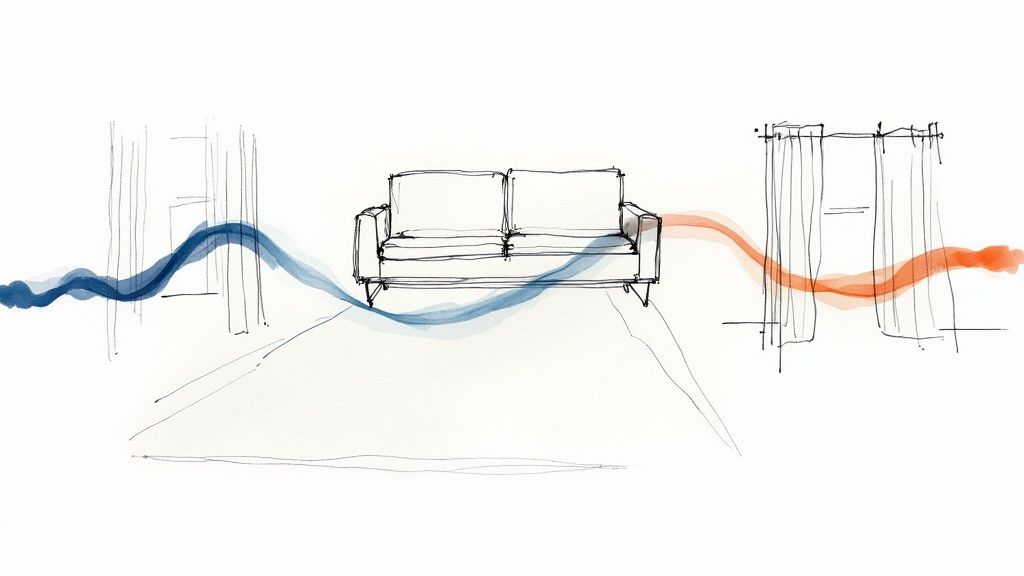
Think of your room as a collection of individual personalities. What brings them together? Color. It’s the single most powerful tool you have for making a Mid-Century armchair and a traditional sofa look like they were always meant to be in the same room.
A cohesive color story acts as the invisible thread that ties your eclectic vision together. When you're learning how to mix furniture styles, a simplified color palette lets your different shapes and silhouettes shine without creating visual chaos. It’s the foundation that allows you to make bold, confident choices elsewhere.
The Power of a Limited Palette
The real secret to a beautifully mixed room isn't throwing a dozen colors at the wall—it’s using just a few with real intention. A tight palette brings a sense of calm and allows the unique forms of your furniture to be the stars.
Here are three powerful strategies you can use to build a color story that unites your space.
- The Monochromatic Mix: This is all about using different shades and tones of a single color. Imagine building a room around blue: a deep navy modern sofa, lighter sky blue curtains, and a vintage rug with dusty blue patterns. The styles are different, but the shared hue makes them feel connected.
- The Analogous Approach: This one feels rich and layered. You just choose colors that sit right next to each other on the color wheel—think greens, blues, and teals. This approach creates a serene yet dynamic space, giving you room to play with different styles within a closely related color family.
- The Complementary Pop: Perfect for creating a bit of drama. You start with a mostly neutral base and then introduce one bold accent color. Picture a room of soft grays, whites, and natural wood, suddenly brought to life with a pop of vibrant ochre in an accent chair, throw pillows, and a piece of art.
Your Design Insight: Your color palette doesn't have to be bland to be unifying. The real goal is consistency. When you repeat your chosen colors across different pieces—a pillow here, a lamp there, a detail in the rug—you create a rhythm that makes everything feel purposeful.
Putting Your Palette into Action
Okay, so you’ve picked a strategy. Now what? The key is to sprinkle your chosen colors throughout the room to create balance. You never want to clump all of one color in a single corner; that just throws everything off.
Let's walk through an example. Say you've landed on a palette of warm gray, cream, and a rich terracotta accent. Here’s how you can bring it to life:
- Find Your Anchor: Your largest piece, like a sofa, is the perfect place for your main color. Let's make it the warm gray. This sets a strong, neutral foundation.
- Add Supporting Layers: Bring in the cream with your supporting pieces—maybe the armchairs, curtains, or a large area rug. This creates a soft, pleasing contrast.
- Sprinkle the Accent: Now for the fun part. Weave that terracotta through smaller items. It could show up in the pattern on a pillow, the glaze on a lamp base, or a cozy throw blanket draped over a chair.
This method guides the eye smoothly around the room, connecting the dots between your different furniture styles. If you're looking to go even deeper, you'll find even more insights in this expert's guide to the perfect color palette.
Layer Textures and Materials for a Cohesive Feel
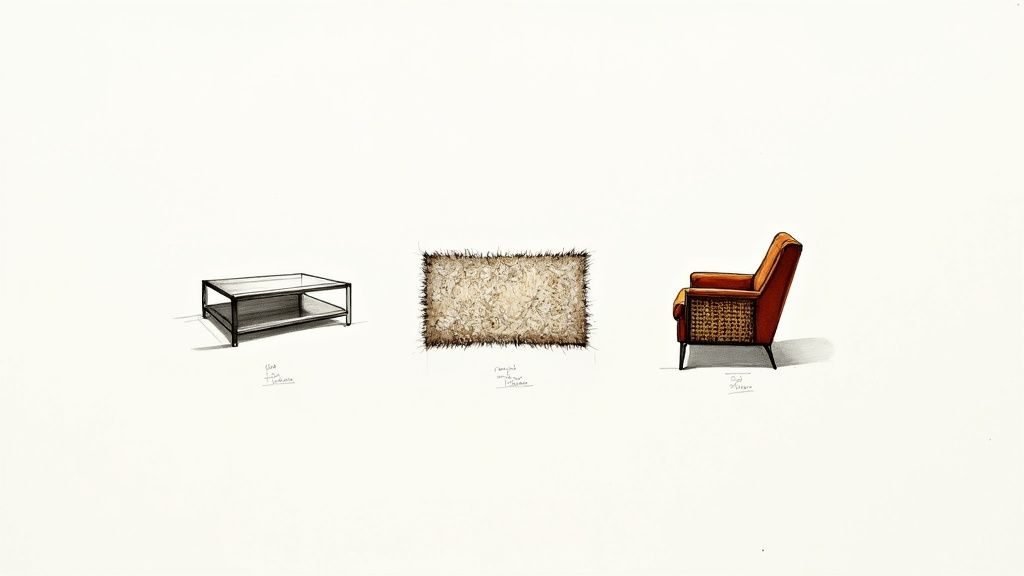
Once you’ve locked in your unifying color palette, your next superpower for mixing furniture styles is texture. A room filled with different styles can easily feel disjointed, but on the flip side, a space where every surface has the same finish just falls flat. Layering textures is what gives a room its depth, warmth, and that inviting, touchable quality.
This is where you really get to think like a designer. You're not just placing furniture; you're strategically pairing materials to create a rich, sensory experience that bridges the gap between your various styles.
Balance Hard and Soft Elements
The easiest way to start is by creating a deliberate contrast between hard and soft materials. Think of it as a conversation happening between different surfaces in the room. A sleek, cool metal coffee table, for example, feels so much more interesting when it’s sitting on a plush, high-pile wool rug. The softness of the rug balances the hardness of the metal, making both elements pop.
Here are a few pairings to get your creative gears turning:
- A rustic, rough-hewn wooden sideboard next to a buttery-smooth leather armchair.
- Sleek glass end tables contrasted with a nubby, textured boucle sofa.
- A polished marble accent piece softened by velvet throw pillows nearby.
This kind of balance keeps any single material from overwhelming the space. It also helps those disparate furniture pieces feel connected through their textural relationships. You can even find inspiration for mixing natural stone veneer with other textures to see how this principle plays out across different design fields.
Use the Rule of Three for Rhythm
To make your textural choices feel intentional rather than random, try leaning on the "Rule of Three." It's a simple design principle that suggests repeating an element three times creates a natural sense of rhythm and cohesion. Just pick a specific texture or material and feature it in at least three different spots.
For instance, if you love the look of rattan, you could weave it into your room with:
- A statement light fixture.
- A small decorative tray on the coffee table.
- The frame of a mirror on the wall.
This repetition subtly guides the eye around the room, creating a powerful thread of continuity. This is especially true for fabrics—choosing the right textiles is a huge part of your textural story. Here’s how you can learn everything you need to know about upholstery materials to make the perfect choice.
Your home should be a feast for the senses. When you mix a variety of materials—wood, metal, glass, wool, linen, leather—you're creating a space that's not just visually appealing, but also deeply inviting to the touch.
The global furniture market, valued at USD 568.6 billion in 2024, definitely reflects this shift toward more personalized and layered home environments. The rising popularity of sculpturally unique chairs and versatile sectional sofas shows how people are moving away from matchy-matchy sets, instead embracing diverse style mixes to create homes that truly reflect their personality.
By thoughtfully layering textures, you’re doing more than just decorating. You’re building a rich, multi-dimensional experience that makes your mixed-style room feel curated, intentional, and complete.
Tie It All Together with Shape and Scale
With your color palette and textures working in harmony, the next layer you can master is the geometry of the room. The way your furniture relates in size and shape is a huge part of what makes a mixed-style space feel either intentionally curated or just plain chaotic. This is all about creating a sense of balance so that no single piece steals the entire show.
Think of it in terms of visual weight. A hulking, dark wood armoire has a much heavier presence than a delicate, glass-topped console table, even if they take up a similar amount of floor space. The goal is to distribute that weight around the room so it feels settled and balanced. You don't want a massive, overstuffed sectional completely overpowering a dainty antique side chair tucked in a corner.
Mix Up Your Lines and Silhouettes
One of the best ways you can make a room dynamic is to consciously mix your shapes. A room filled with only straight lines and hard angles can feel stiff and uninviting. On the other hand, too many curves and rounded edges can feel dizzying and lack structure. The magic happens right in the middle.
Pairing a curvy, ornate vintage mirror over a sleek, modern console table is a classic for a reason. It just works. The contrast is what makes it so visually interesting; the distinct shapes highlight each other's best qualities because they aren't fighting for the same role. One is soft and decorative, the other is crisp and simple.
When you thoughtfully contrast shapes, you create a visual conversation. It’s like pairing a bold, graphic print with a softer, organic one—they make each other look even better.
Find a "Bridge Piece" to Connect Different Styles
Sometimes, you'll have two styles that feel just a little too far apart, and you need something to connect them. This is where a bridge piece becomes your secret weapon. A bridge piece is an item that shares qualities from both styles you're trying to merge, acting as a translator between them.
Let's say you're working with a traditional living room—think classic rolled-arm sofas—but you want to bring in a few modern touches. A transitional-style armchair could be the perfect solution.
- It might have classic turned legs that speak to the traditional sofa.
- But it could be upholstered in a solid, contemporary fabric with clean lines, nodding to the modern accents you want to add.
This single chair acts as a mediator, making the leap between the two styles feel smooth and deliberate, not jarring. Finding that one item to tie everything together can be a total game-changer, turning a collection of furniture into a cohesive design story.
As you look for that perfect connecting element, consider how a versatile, transitional armchair from our curated collection could become the hero piece that unites your space. The aim is to arrange your furniture with confidence, creating a layout where every item has its own space to breathe and contribute to the room's unique character.
Design a Functional Layout That Flows
A room that tells your story has to be a room you can actually live in. Once you’ve picked your pieces, the final, crucial step is arranging your eclectic collection. This is where you create a space that’s as functional as it is beautiful—a layout that encourages connection and moves with the rhythm of your daily life.
The secret is to think in terms of conversational groupings. You want to arrange your seating to make conversation easy, whether a sleek modern sofa is facing a beloved vintage armchair. The goal is to create zones that feel natural and inviting, pulling people together instead of pushing them apart.
This infographic breaks down a simple process for achieving that balance by thinking about visual weight, bridge pieces, and the empty space in between.
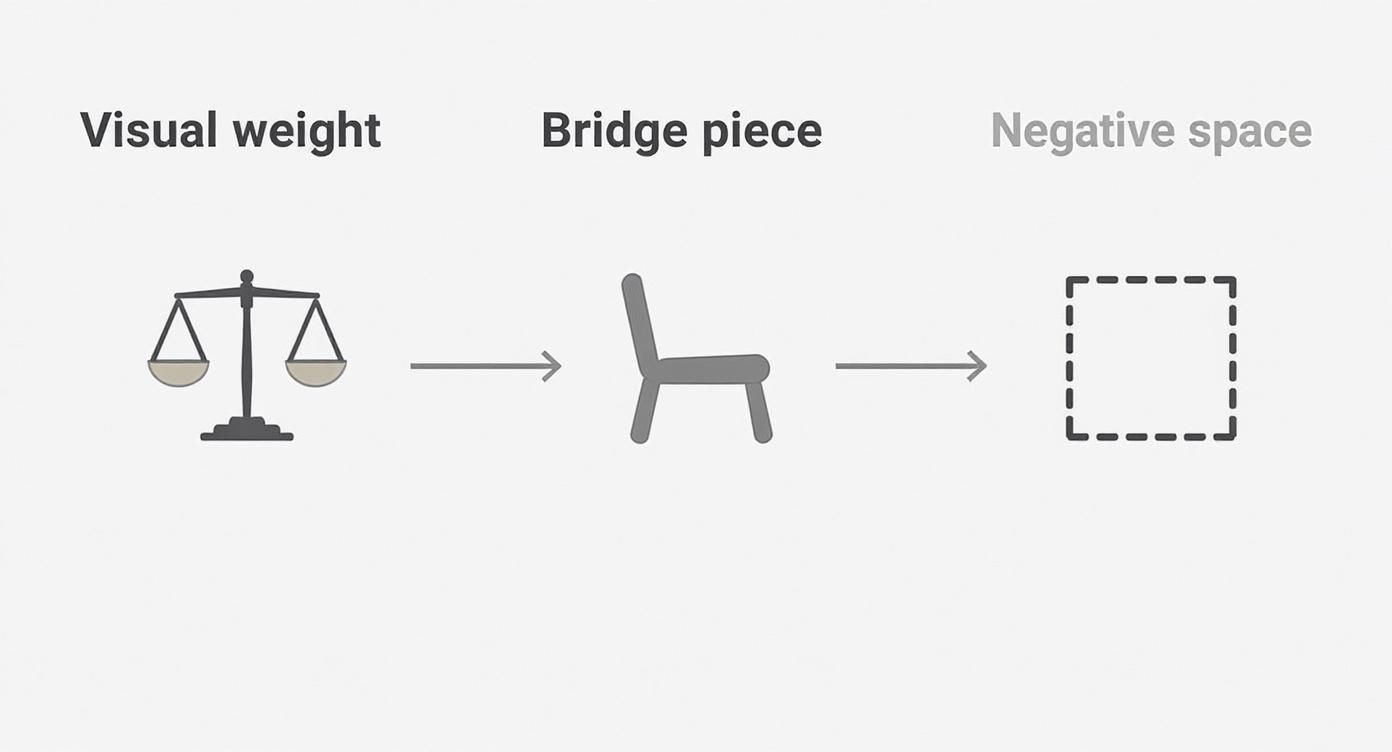
As you can see, creating a balanced room isn't just about placing furniture against the walls. It's a deliberate process of distributing visual weight and connecting the dots.
Anchor Your Room With a Hero Piece
Every great room has a focal point. In a living area, that’s almost always the sofa. This "hero piece" is the anchor you build the rest of your layout around, and choosing the right one is probably the single most empowering decision you can make for your space.
Here’s how you can choose the perfect sofa for your family’s needs. A well-chosen sectional, for instance, can become the heart of your family's living space. It defines the main seating zone and gives you a substantial foundation. From there, you can layer in smaller, more eclectic accent chairs and tables to complement it.
Once your anchor is in place, you can build out from it:
- Define the zone: Place your area rug first, making sure at least the front legs of your sofa and chairs sit on it.
- Position the coffee table: Keep it within easy reach of the main seating. A distance of about 14 to 18 inches is ideal.
- Create connection: Arrange accent chairs to face the sofa, forming that essential conversational triangle.
Embrace the Power of Negative Space
One of the biggest mistakes people make when mixing styles is trying to fill every single inch of a room. This almost always leads to a cluttered, chaotic feeling that completely undermines all your hard work.
Negative space—the empty areas around and between your furniture—is what allows each piece to breathe and be appreciated on its own.
Think of negative space as the punctuation in your room’s story. It provides the pauses that give your statement pieces impact and creates pathways for both your eyes and your feet to travel.
This concept has become even more important as our living spaces have had to adapt. Market trends show a huge rise in multifunctional furniture, a direct response to urbanization and smaller homes. Valued at USD 12.8 billion in 2023, this market is booming because people need pieces that blend style and function in compact areas. You can explore the full report on the multifunctional furniture market to see more about these trends and how they’re shaping modern living.
By focusing on a functional layout, anchoring the room with a hero piece, and preserving negative space, you’re not just arranging furniture. You're choreographing a beautiful, livable space where every piece, regardless of its style, has a purposeful role to play.
Still Wondering How to Mix and Match?
Even with a solid game plan, you're bound to have a few questions pop up as you get started. That’s all part of the fun. Let’s tackle some of the common hurdles you might face when creating your beautifully blended home.
Can I Really Mix More Than Two Furniture Styles?
You absolutely can. In fact, some of the most interesting rooms layer multiple styles. The trick is to avoid a free-for-all.
Aim for one style to be the clear "lead singer" of the room, making up about 60-70% of your furniture. This creates a solid anchor. Then, you can bring in one or two other styles as supporting accents. When you're juggling three or more, your unifying color palette and repeated textures become your best friends—they’re the glue that holds everything together and keeps the space from feeling jumbled.
I'm a Complete Beginner. Where Do I Even Start?
The easiest way to dip your toe in is with the 80/20 rule we talked about. Start with a room that's already mostly one style—let's say it's modern. Now, find just one amazing piece from a totally different style, like a curvy, vintage armchair or a big, ornate gold mirror.
This single swap lets you see how it feels without overhauling the entire room. Another low-stakes approach is to start with accessories. Tossing a few bohemian-print pillows on a minimalist sofa or hanging rustic art in a traditional living room can completely change the vibe. It's a fantastic way to experiment and build your confidence.
Your home is your canvas. Starting small gives you the freedom to play and discover what combinations truly resonate with you, turning the process of how to mix furniture styles from intimidating to exciting.
How Do I Keep Different Wood Tones From Clashing?
Mixing woods is one of the best ways to add warmth and character to a space, but it can feel tricky. The secret is finding a common thread. Start by looking at your biggest wood element—maybe your floors or a large dining table—and figure out its undertone (is it warm like cherry, cool like ash, or neutral?).
From there, pick other wood pieces that share that same undertone, even if the stain is much lighter or darker. A light oak and a deep walnut can look gorgeous together if they both have warm undertones. Also, make sure to scatter the different wood finishes around the room instead of grouping them all together. A well-placed area rug is also a fantastic tool for creating a visual break between wood floors and wood furniture.
At Miller Waldrop Furniture & Decor, we believe your home is the hero's journey, and our furniture and expertise are the tools you need to create your perfect space. Our design experts are here to help you find the foundational pieces and unique accents that tell your story. Explore our curated collection and start building your unique story today.