

Chrome Bathroom Shelves: A Guide to Style & Space

A crowded bathroom rarely starts that way on purpose. It happens one bottle, one extra hand towel, and one backup tube of toothpaste at a time, until the vanity feels overworked and the room feels smaller than it is.
That's why chrome bathroom shelves keep showing up in well-planned baths. They solve a practical problem without looking bulky, and they bring a reflective finish that usually works with both modern and more traditional fixtures. For anyone trying to calm a busy bathroom, they're often one of the simplest upgrades with the biggest visual payoff.
Table of Contents
- Your Solution to a Clutter-Free Bathroom
- Understanding Chrome as a Bathroom Finish
- Finding the Perfect Shelf Type for Your Space
- A Guide to Sizing and Strategic Placement
- Installation Insights Drill vs No-Drill Methods
- Keeping the Shine A Guide to Maintenance and Rust Prevention
- Create a Cohesive Home with Design Expertise
Your Solution to a Clutter-Free Bathroom
A common bathroom scene looks familiar in almost every home. Daily essentials are lined up around the sink, extra products are tucked into corners, and the counter no longer feels restful. Even a well-finished bathroom can start to feel messy when storage doesn't match real life.
Chrome bathroom shelves help by moving the most-used items off the vanity and onto the wall. That shift does two things at once. It clears visual clutter, and it turns empty vertical space into working storage.
A single shelf near the mirror can hold hand soap, a small tray, and the items used each morning. A second shelf can take over for folded washcloths or backup toiletries. In smaller bathrooms, that simple change often feels more effective than adding another floor piece that crowds the path of movement.
Chrome shelves work best when they don't just store things. They give every item a home that's easy to reach and easy to maintain.
For households that need more than one kind of storage, it helps to think in layers:
- Daily-use layer: the items used morning and night
- Guest-ready layer: neatly folded linens or a candle
- Backup layer: extra soap, tissues, or unopened products
That's one reason wall storage is so helpful. It keeps the room useful without making it feel packed. And when a bathroom needs even more vertical organization, pieces like an over-the-toilet cabinet for bathroom storage can complement shelf storage by using wall-adjacent space that often goes ignored.
The finish matters, too. Chrome has enough shine to feel polished, but it usually blends into the room instead of visually weighing it down. In a tight bathroom, that lighter appearance can make a real difference.
Understanding Chrome as a Bathroom Finish
Many shoppers assume chrome is the material. In most cases, it isn't. Chrome is usually a finish applied over a base metal, and that distinction matters because the base material often has a big influence on how the shelf performs over time.
Technical listings show that chrome bathroom shelves are often made with stainless-steel or metal substrates plus a polished chrome finish, and one listing identifies a 21 in. wall-mounted shelf made from high-quality stainless steel with a polished chrome finish at this technical product page. That combination helps explain why a good shelf can feel smooth, easy to wipe clean, and more dependable in a damp room.
Why the base material matters
A shelf's shine doesn't tell the whole story. Two shelves can look similar online, but one may have a stronger substrate, better plating, and better long-term resistance to bathroom wear.
That's why it helps to check for details such as:
- Base metal: stainless steel, brass, or another metal body
- Finish description: polished chrome or chrome finish
- Construction notes: whether the mounting hardware and brackets feel substantial
- Use setting: whether the shelf is intended for a humid bathroom
This is the same thinking designers use in other parts of the home. Surface beauty matters, but the layer underneath often determines how well a finish ages. For readers comparing bathroom metals with other interior accents, this guide to metal accents in the home gives useful context on how metal details affect the overall look and feel of a space.
Why chrome stays popular
Chrome remains common because it's reflective, easy to pair with many faucet styles, and familiar to most homeowners and renters. It can look crisp in a modern bath, but it can also sit comfortably in a more traditional room when paired with glass or classic hardware lines.
Practical rule: A polished finish is only as durable as the material and coating quality behind it.
That point often gets overlooked. A low-quality chrome shelf may still look attractive at first glance, but the finish alone doesn't guarantee lasting performance in moisture and steam.
For anyone updating multiple surfaces at once, it can help to think about finish systems across the room. The logic behind durable coating choices in cabinetry applies here too. Resources on 2K lacquer for cabinets can be useful because they show how finish quality, substrate, and environment all work together in real interiors.
The clearest takeaway is simple. A chrome bathroom shelf should be judged as a full assembly, not as a color alone. The finish catches the eye. The build quality earns the long service life.
Finding the Perfect Shelf Type for Your Space
Not every bathroom needs the same kind of shelf. Some need one slim ledge beside the mirror. Others need vertical storage that can handle towels, soaps, and a few decorative accents without making the room feel crowded.
This visual overview helps show the range of options available.
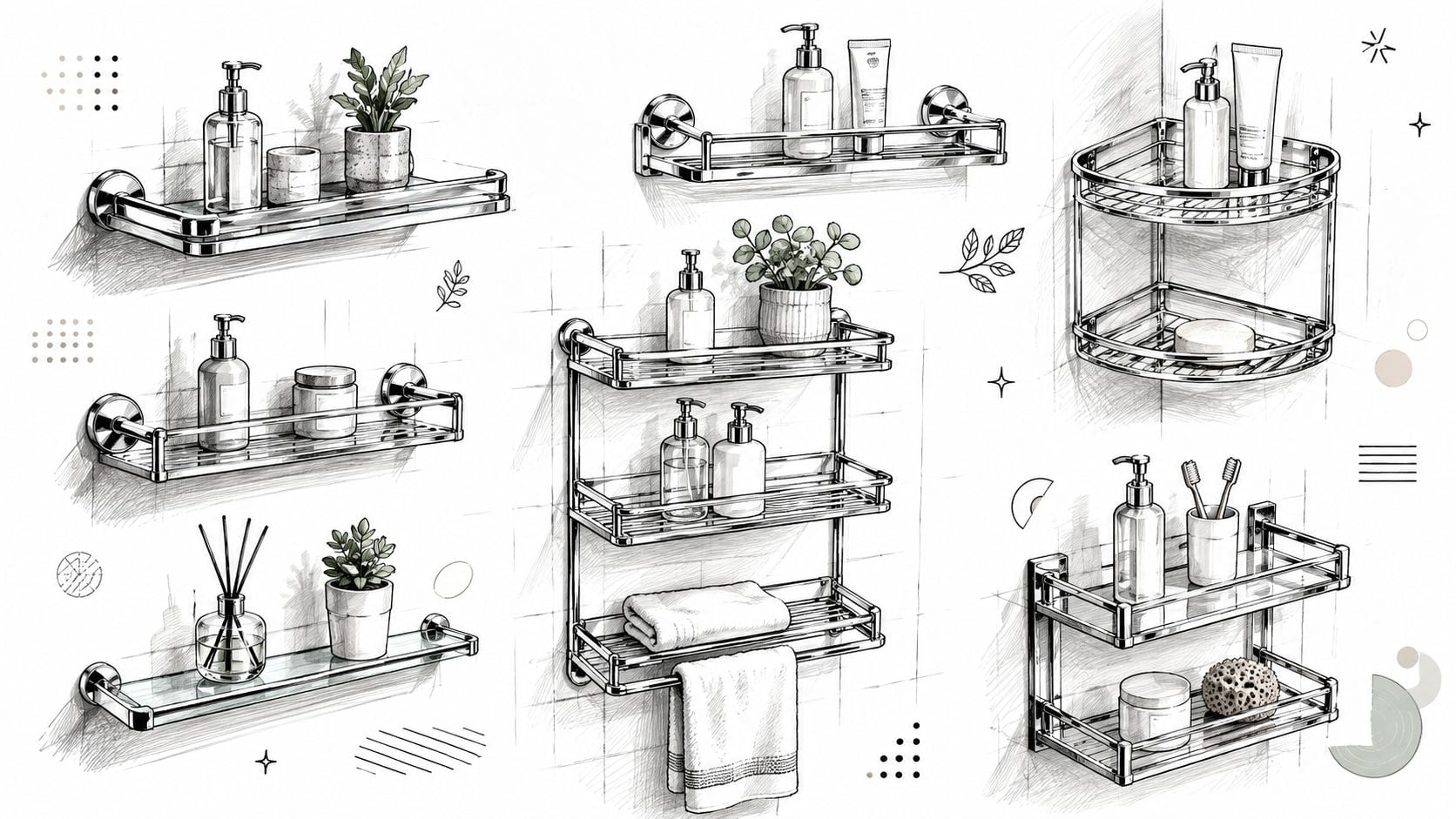
Retail assortments show that chrome bathroom shelves are a standard category, with options commonly built from brass or paired with glass. One example includes a shelf with a 24.4-inch glass surface and polished chrome rail in a chrome shelf collection. That variety is good news for shoppers because it means there's usually a format that suits both the room and the storage problem.
Single wall shelf
This is the cleanest option for a sink wall or open section beside a mirror. It works well when the goal is modest storage without visual heaviness.
A single wall shelf often suits:
- Daily toiletries that need quick access
- Guest bathrooms where only a few items need to be displayed
- Decorative styling such as a candle, hand towel, or small container
Multi-tier shelf
A multi-tier shelf adds more storage without spreading farther across the wall. That makes it useful in bathrooms where floor area is limited but vertical space is available.
This type often helps households that need room for:
- Shared routines, where more than one person uses the same bathroom
- Category storage, such as one level for hair care and one for skin care
- Compact organization, especially in narrow layouts
Corner shelf
A corner shelf uses space that often goes empty. It can be especially practical near a shower or in a tight powder room where every inch matters.
The appeal here is efficiency. The shelf doesn't interrupt the main wall, and it can hold everyday items in a spot that feels tucked away rather than exposed.
Freestanding or over-the-toilet storage
These aren't always the first thing people picture when they search for chrome bathroom shelves, but they're worth considering when wall conditions limit mounting choices. Freestanding pieces can add flexible storage, and over-the-toilet units take advantage of an underused vertical zone.
Here's a quick comparison.
Comparing Chrome Bathroom Shelf Types
| Shelf Type | Best For | Mounting Style | Typical Capacity |
|---|---|---|---|
| Single wall shelf | Light daily-use storage near sink or mirror | Wall-mounted | Low to moderate |
| Multi-tier shelf | Shared bathrooms and compact vertical storage | Wall-mounted | Moderate to high |
| Corner shelf | Small baths, shower-adjacent storage, unused corners | Wall-mounted or corner-mounted | Moderate |
| Freestanding or over-the-toilet storage | Renters, flexible layouts, extra vertical storage | Freestanding | Moderate to high |
The right choice usually comes down to behavior, not just style. If the bathroom collects many small items, tiers help. If the room only needs one landing spot for essentials, a single shelf often looks calmer.
A Guide to Sizing and Strategic Placement
A shelf can be beautifully made and still feel wrong if it's too deep, too wide, or installed in the wrong place. Good bathroom storage depends as much on placement as it does on the shelf itself.
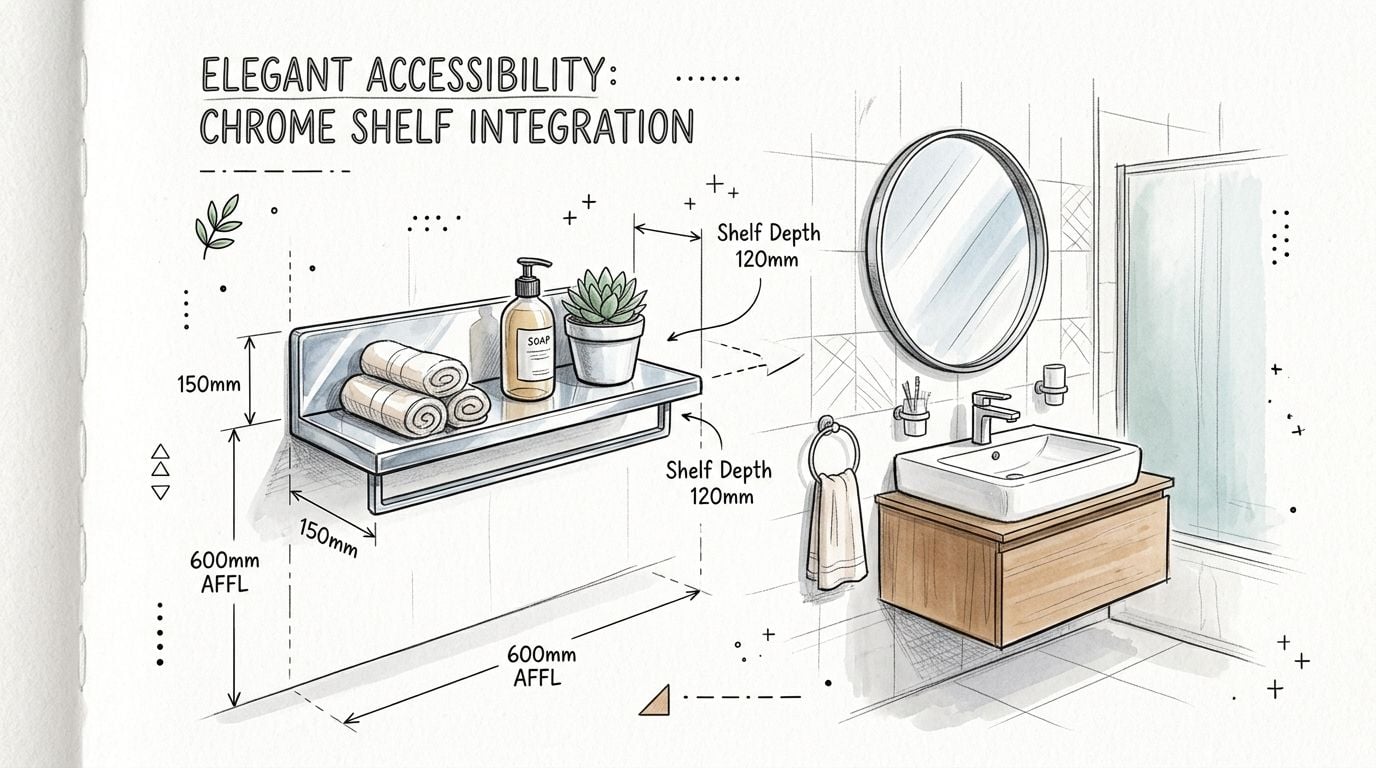
Retail examples show that chrome bathroom shelves are commonly sized for space efficiency, with dimensions around 20 inches wide and 5 to 6.3 inches deep in a representative shelf listing. That shallow projection is a big reason they work so well in tighter baths. They add storage without jutting too far into the room.
Measure the wall before choosing the shelf
The most useful first step is to measure the exact wall area, not just estimate it. Bathroom walls often have more interruptions than expected.
A smart measuring routine includes:
- Check the clear width. Measure the available wall between trim, mirrors, tile edges, or other fixtures.
- Check the projection. Make sure the shelf depth won't interfere with shoulders, elbows, or traffic flow.
- Check swing zones. Doors, medicine cabinets, and shower doors all need room to open comfortably.
- Check height. The shelf should be reachable without feeling crowded against another element.
A shelf that looks slim in a photo can still feel awkward if it lands at face level beside a narrow vanity or protrudes into a path used every day.
Match the shelf location to the items it will hold
Placement works best when it follows the room's routine.
- Near the sink: good for skincare, hand soap, or a tray for daily essentials
- Near the mirror: useful for grooming items that need to stay close at hand
- Beside the shower or tub: practical for towels or products that are used during bathing
- Above open wall space: better for decorative storage and backup items
A bathroom functions better when the shelf location matches the habit it supports.
For readers considering a broader layered-wall approach, these accent wall shelf ideas can help with spacing, proportion, and visual balance beyond the bathroom.
The best placement usually feels obvious once the room is observed in motion. Where does someone reach first in the morning? Where do items pile up by evening? Those spots often reveal the right wall.
Installation Insights Drill vs No-Drill Methods
Installation is where many buyers hesitate, and for good reason. A bathroom shelf has to survive humidity, daily use, and the weight of whatever lands on it. The right mounting method depends less on trend and more on wall type, living situation, and what the shelf will hold.
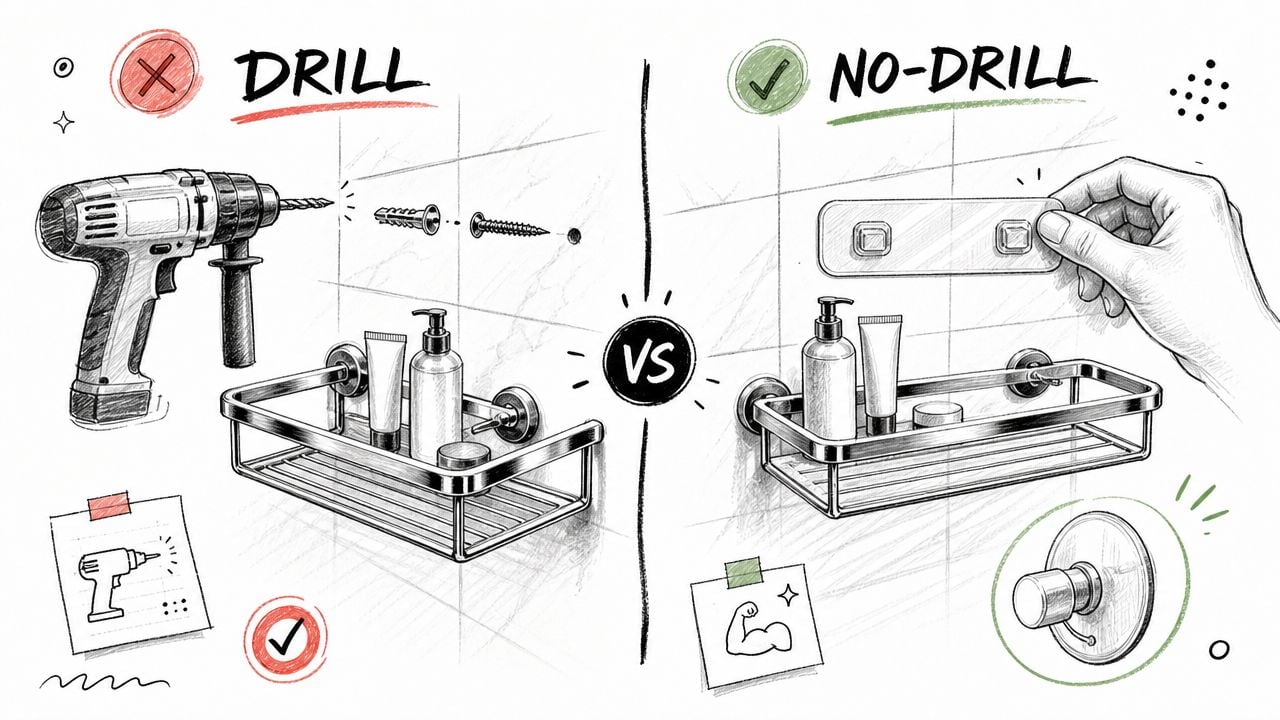
Buyer guidance in current retail and how-to content shows that the choice between adhesive, suction, or bracket-mounted options depends heavily on wall type and bathroom humidity, especially for renters and small-bathroom owners, as discussed in this installation-focused article on chrome bathroom shelf choices.
When drill-mounted shelves make sense
Drill-mounted shelves are often the better choice when the shelf needs to feel permanent and secure. They usually make more sense for homeowners, major renovations, or situations where the shelf will hold heavier and more frequently used items.
Drill-mounted options tend to be better when:
- The wall can support proper anchoring
- The shelf will carry multiple bottles or heavier accessories
- Long-term stability matters more than easy removal
- Tile, stud location, or anchor planning has already been considered
A bracket-mounted shelf usually feels more integrated into the room. It can also look cleaner over time because it isn't relying on an adhesive bond that may weaken in a damp setting.
When no-drill shelves are the better choice
No-drill options can be practical for renters, temporary setups, or bathrooms where wall preservation matters. They can also work well for very light storage.
Still, no-drill doesn't mean risk-free. Performance depends on a few practical details:
- Wall surface: smooth tile generally behaves differently than painted drywall or textured plaster
- Humidity level: a steamy bathroom can challenge adhesives and suction over time
- Shelf use: light items are safer than dense bottles or stacked products
- Removal expectations: some methods come off more cleanly than others
Renters often need the shelf that is safest for the wall, not just the one that looks easiest to install.
A good rule is to match the mounting method to the actual load, not the hoped-for load. If a shelf is likely to become a catch-all, a more secure mounting approach is usually the wiser path. If it will only hold light items in a lower-moisture part of the bath, a no-drill option may be enough.
The strongest choice is the one that respects both the wall and the routine.
Keeping the Shine A Guide to Maintenance and Rust Prevention
A chrome shelf doesn't stay attractive because it's chrome. It stays attractive because the finish quality is good and the upkeep is consistent. That's an important distinction in a room where steam, water spots, soap residue, and frequent wiping are part of daily life.

Buyer guidance also notes that people often assume chrome is rust-proof, but long-term appearance depends on the quality of the plating and the underlying metal, and higher-quality finishes are less prone to showing fingerprints, water spots, or flaking over time in this chrome shelf buying context.
What causes chrome to lose its fresh look
Most problems start small. A shelf may begin to show water marks, residue near the rail, or dullness where products sit too long. In a bathroom with poor ventilation, those signs can appear faster.
Common causes include:
- Standing moisture left on the shelf after showers or handwashing
- Residue buildup from soap, lotion, or hair products
- Lower-quality plating that doesn't hold up as gracefully in humidity
- Neglected joints and brackets where moisture can linger longer
Simple habits that protect the finish
Maintenance doesn't need to be complicated. What matters most is regular attention.
A simple care routine often includes:
- Wipe after heavy moisture exposure: especially in bathrooms that stay steamy
- Use a soft cloth: rough scrubbing can be hard on polished finishes
- Keep products contained: trays or grouped items reduce ring marks and residue
- Let the room breathe: ventilation helps every metal finish age better
The best rust prevention often starts before rust. It starts with drying, airflow, and choosing a shelf with better construction.
Bathrooms with glass shelves or nearby glass enclosures often benefit from the same approach. For readers interested in low-maintenance surface protection ideas, APEX NANO glass coating solutions offer a useful example of how protective treatments can support easier cleaning in wet bathroom environments.
A well-made chrome shelf should still look polished after everyday use. The goal isn't perfection. The goal is a finish that stays easy to live with.
Create a Cohesive Home with Design Expertise
You finish installing a chrome shelf, step back, and something in the room suddenly clicks. The counter looks calmer. The faucet, mirror, and towel bar feel more related. Even a small bathroom starts to read as intentional instead of improvised.
That shift usually comes from fit, not from shine alone.
A well-chosen shelf supports the way the room lives. It gives daily items a home, respects the wall surface, and suits the level of moisture the bathroom deals with every day. In a guest bath, that may mean a simple single shelf that keeps the room tidy without crowding it. In a family bath with steam, splashes, and heavier use, it often means choosing stronger construction and a finish that is easier to keep clean over time.
Good design works like good storage. Every piece should earn its place.
A cohesive bathroom often comes down to four practical checks:
- Quality that holds up: pay attention to how the shelf is made, especially if the bathroom runs humid or has limited airflow
- A shelf type that matches the job: corner shelves, glass-and-chrome shelves, and multi-tier options solve different storage problems
- Placement that protects comfort: the shelf should feel convenient to reach without making the room tighter or harder to clean
- An installation method that suits the wall: renters may prefer removable mounting, while homeowners may want the longer-term stability of drilled hardware
Those choices may sound small, but they shape how the room feels every morning. A shelf that fits the environment tends to stay attractive longer. A shelf that suits the wall lowers the chance of damage, patching, or a loose mount later. A shelf that matches nearby finishes helps the room feel settled, even if the bathroom itself is modest in size.
For homeowners planning a larger update, this guide to essential bathroom fittings for 2026 can help you think through how shelf hardware, finish coordination, and fixture choices relate to the whole room.
Some clients know exactly what they need. Others are working through a narrow wall, mixed metals, rental restrictions, or a bathroom that stays damp long after a shower. In those cases, design guidance helps narrow the options and remove second-guessing.
Miller Waldrop Furniture & Decor offers home accents and design support that can help shoppers evaluate scale, finish coordination, and how a bathroom shelf fits into the larger character of the home. For residents in Lubbock, Hobbs, and Ruidoso Downs, that added perspective can make a practical choice feel more considered.
A polished bathroom does not depend on size. It depends on durable materials, thoughtful storage, and details that make daily routines easier.