

Black Floor Vase: A Guide to Styling Your Space

A room can be beautifully furnished and still feel unfinished. The sofa fits. The rug is right. The art works. But one corner stays visually flat, or a console wall looks shorter than it should, and the whole space feels like it stops too soon.
That's where a black floor vase often solves the problem better than another small accessory ever could. It doesn't just fill space. It adds height, contrast, and shape. In homes across West Texas and New Mexico, that matters. Many rooms need a piece that can stand up to big walls, generous ceilings, strong sunlight, and finishes like warm wood, stone, leather, and plaster.
A well-chosen floor vase acts like a quiet architectural element. It can sharpen a modern room, ground a softer transitional space, or give a rustic interior a cleaner edge. The key is choosing one that fits the way the home is used, not just the way it looks in a styled photo.
Table of Contents
- The Final Touch Your Room is Missing
- How to Choose Your Perfect Black Floor Vase
- Styling Ideas for Every Design Aesthetic
- Selecting the Right Fillers or Going Empty
- Strategic Placement and Long-Term Care
- Complete Your Vision with Expert Guidance
The Final Touch Your Room is Missing
One of the most common design problems isn't a lack of furniture. It's a lack of vertical balance. A room can have everything it needs at eye level and still feel incomplete because nothing rises to meet the architecture.
That usually shows up in a few places. A blank corner beside a media console. A fireplace wall that feels heavy at the bottom and bare above. An entry that opens into a lovely space but doesn't offer a clear focal point. In each case, the answer often isn't more furniture. It's one tall piece with enough presence to steady the room.
A black floor vase works best when it reads as an intentional line in the room, not as leftover filler.
Black helps because it creates definition. Against light walls, it gives a clean silhouette. Near oak, walnut, leather, limestone, or layered neutrals, it introduces contrast without adding visual clutter. That's why it tends to look more refined than brightly colored accents when a room already has strong material character.
For clients who want a little more confidence before choosing one, these expert tips for choosing beautiful vases offer useful visual guidance on proportion and styling direction. The value isn't in copying a display exactly. It's in learning how a vase changes the rhythm of a room.
A black floor vase becomes the finishing move when the room already has good bones. It gives the eye somewhere to land. It makes nearby furniture look more considered. Above all, it turns an awkward gap into a deliberate part of the design.
How to Choose Your Perfect Black Floor Vase
A black floor vase usually succeeds or fails before any branches go in it. The decision comes down to three factors that affect the room in different ways. Scale, material, and shape. Get those right, and the vase reads as part of the architecture instead of a last-minute accessory.
Start with scale
Scale is the first filter because a beautiful vase in the wrong size will still feel off. In most living rooms, I want the vase to register from the doorway and still feel comfortable once you are seated. That means checking height, width, and the visual weight of the piece beside it.
A tall, narrow vase can work well near a console or in a corner, but only if it has enough presence to hold its own against nearby furniture. A shorter, broader form can be the better choice in rooms with lower ceilings or heavier case goods. In West Texas and New Mexico homes, where rooms often have strong architectural lines, plaster walls, wood beams, stone fireplaces, or large open spans, undersized decor tends to disappear quickly.
Use this quick check before you buy:
- Beside a console: The vase should rise clearly above the top so it adds height to the composition.
- In an empty corner: Measure the footprint, not just the height. You need enough width to feel intentional without blocking circulation.
- Near a fireplace or built-in: Match the visual weight of the surrounding materials so the vase supports the setting.
- In an open-plan room: Step back and view it from multiple angles. A vase that looks substantial up close can read thin from across the room.
If you are already refining the larger pieces around it, this guide to accent furniture for living room styling and scale helps clarify how a floor vase should relate to nearby furnishings.
Choose material for the way your home functions
Material is where style meets real life. I do not specify the same vase for a quiet formal sitting room that I would use in a family room with kids, dogs, or constant traffic.
Ceramic gives a room weight and substance. It often looks strongest in spaces that need grounding, especially with warm woods, limestone, or layered neutrals. The trade-off is fragility. If the vase sits near an active walkway, chips and cracks become a practical concern.
Metal works well when you want a slimmer silhouette or a cleaner edge. It can suit modern interiors and tighter spots where a heavy form would feel crowded. The drawback is that the finish can show scuffs, fingerprints, or dents more readily depending on the surface.
Resin and fiberglass are often easier to live with in busy homes. They are lighter, easier to move, and often a smart answer for clients who want the look without the stress of placing a breakable object in a high-use area. The compromise is visual heft. Some pieces look convincing in person, and some do not. This is one category where I always recommend seeing finish and texture up close.
| Material | Best For | Considerations |
|---|---|---|
| Ceramic | Rooms that need visual weight and a grounded presence | Can chip or crack if bumped |
| Metal | Narrow areas and cleaner, more architectural looks | Finish may show wear more easily |
| Resin | Active households that want a lighter piece | May feel less substantial depending on finish |
| Fiberglass | Larger spaces where durability matters | Needs careful review so the surface does not look flat |
One rule holds up every time. The more traffic a room gets, the more your vase should be chosen like a furnishing.
Let the shape support the room
Shape determines how the vase interacts with everything around it. A cylinder looks disciplined and architectural. A rounded profile softens a room with hard lines. A sculptural form brings more personality, but it also asks for restraint elsewhere.
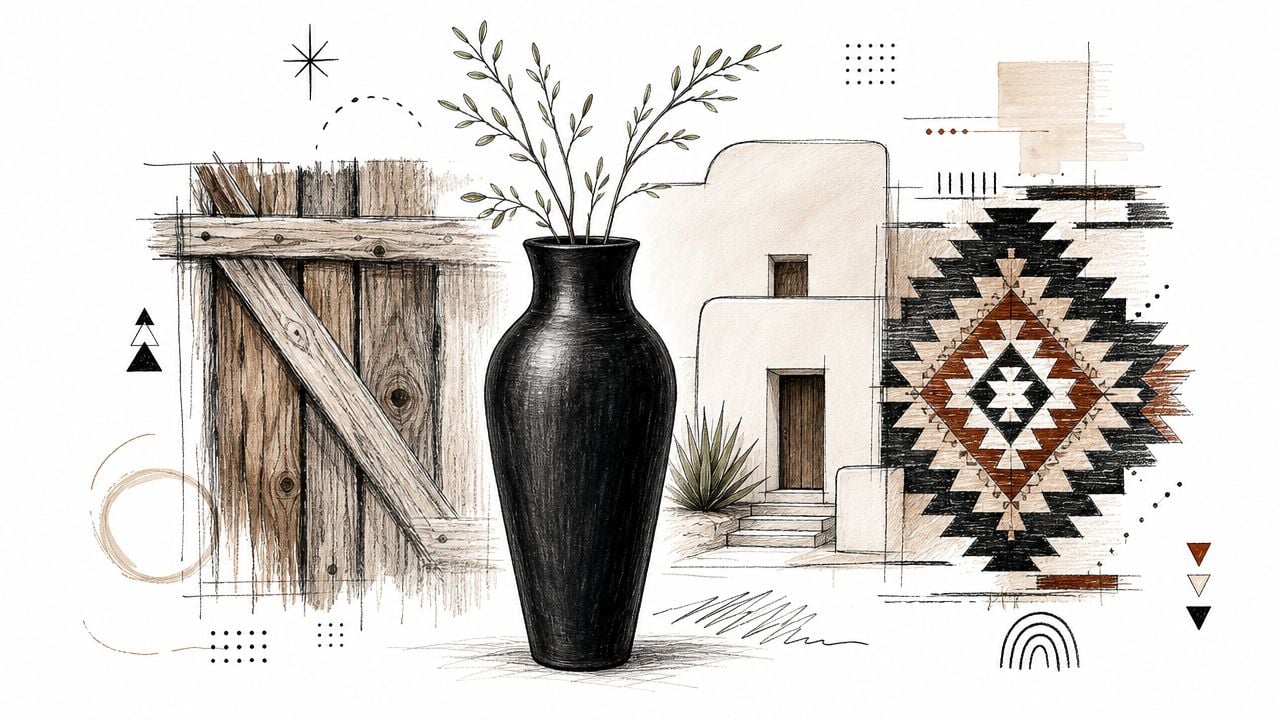
Context is important. In a home with adobe influence, rough plaster, leather, and hand-finished wood, a matte vase with an organic curve often feels more at home than a crisp glossy form. In a cleaner contemporary interior, a sharper silhouette may bring the definition the room needs. If you are coordinating black with clay tones, warm neutrals, wood, or stone, this designer's guide to black color palettes is a useful reference.
I tell clients to judge shape by what the room already has. If the furniture is soft and rounded, add a vase with straighter lines for contrast. If the room is full of angles, a fuller silhouette can relax the composition.
For homeowners who want to compare options in person, Miller Waldrop Furniture & Decor offers a practical way to review vase styles alongside the larger room plan. That makes it easier to choose a piece that fits your specific space, your circulation patterns, and the way you live in the home.
Styling Ideas for Every Design Aesthetic
Recent retail styling points to black floor vases moving away from glossy, formal urns and toward matte, textured, sculptural forms with organic silhouettes. That direction works well because a dark vase can offer a “strong vertical presence without overpowering surrounding decor,” especially in rooms with light walls, neutral upholstery, and warm wood, as reflected in this matte black vase trend reference.
Modern rooms
In a modern interior, the strongest move is restraint. Choose a vase with a clear outline and let negative space do part of the work. One branch, one sculptural stem, or no filler at all often looks stronger than a full arrangement.
Black is especially useful in modern rooms that lean pale or tonal. It gives the room a visual stop. If the palette feels too soft, a dark vase can anchor it without introducing another color family. For broader coordination ideas, this designer's guide to black color palettes is helpful when pairing black with warm neutrals, clay tones, and natural surfaces.
A black vase also works well near occasional pieces that don't have much height on their own. In a seating area, pairing it with living room accent furniture can help a low-profile arrangement feel more complete.
Modern farmhouse spaces
Farmhouse rooms need texture more than shine. A matte black floor vase creates contrast against weathered wood, linen, and softer upholstery, but it needs something around it that keeps it from feeling too formal.
Good pairings include:
- Pampas grass: Softens the dark finish and brings movement.
- Dried branches: Keeps the look rustic but more structured.
- Nothing glossy nearby: Matte and weathered surfaces usually make the vase feel more natural in this setting.
This style works well in West Texas and New Mexico homes because it bridges clean lines with lived-in materials. The vase adds definition, while the filler keeps the mood relaxed.
Transitional homes
Transitional spaces benefit from balance. They usually mix classic forms with edited finishes, so the vase should bridge those two instincts. A rounded black vase or simplified urn shape often does that well.
In a transitional room, the vase shouldn't feel trendy. It should feel settled.
Use it beside a console, under art, or near a fireplace where the dark silhouette can connect traditional wood tones to newer upholstery and lighting. Faux greenery with a defined shape often works better here than loose, oversized stems. The arrangement should look intentional, not wild.
Selecting the Right Fillers or Going Empty
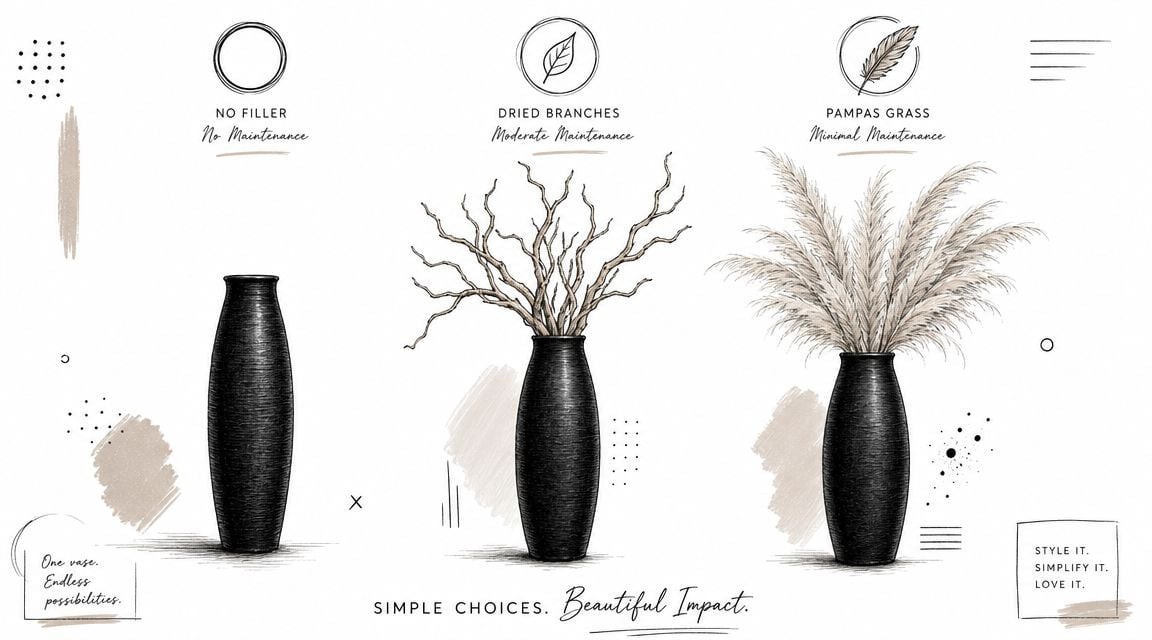
The filler changes the message. The same black floor vase can read sculptural, rustic, soft, elegant, or architectural depending on what goes in it.
Dried stems for texture
Dried materials are often the easiest way to warm up a black vase. Curly willow, eucalyptus, reeds, and pampas all add softness and movement, which is useful if the vase itself has a hard outline.
This option tends to work best in rooms with:
- Natural materials: Wood beams, woven rugs, leather, stone, or plaster
- A relaxed mood: Casual living rooms, bedrooms, and reading corners
- Matte finishes: The textures feel connected instead of competing
The trade-off is upkeep. Dried elements can shed, collect dust, and look untidy if the stems are too short or too crowded.
Faux botanicals for a polished look
High-quality faux stems create a more finished, predictable arrangement. That's often the better choice for entryways, formal living areas, staged homes, or rooms where the vase needs to look composed every day.
A few principles keep faux arrangements from looking artificial:
- Use fewer stems: Sparse usually looks more believable than packed.
- Vary the line: Mix one main shape with a lighter supporting stem.
- Match the room's formality: Structured branches suit formal rooms. Looser greenery fits casual spaces.
For homes that already have layered case goods or styled surfaces, it helps to think about the vase as part of the whole decorative story. These buffet table decorating ideas can help connect a floor vase arrangement with nearby surfaces so the room feels cohesive instead of pieced together.
When empty looks better
Some vases shouldn't be filled at all. If the silhouette is strong, the finish is tactile, or the shape is unusual, adding stems can dilute the effect.
A sculptural black floor vase can function like small-scale architecture. It doesn't need decoration if the form already carries the room.
Going empty is often the right choice in minimalist rooms, narrow corners, or spaces where there's already a lot of texture nearby. It also avoids a common mistake, which is using filler to compensate for a vase that's too small or too weak for the space.
Strategic Placement and Long-Term Care
Placement is what makes a black floor vase read as intentional instead of leftover. I usually start with the question clients in West Texas and New Mexico care about. Will this piece stay out of the way, hold up to daily life, and still give the room the height or contrast it needs?
A good location does three jobs at once. It fills visual dead space, respects circulation, and relates to something nearby, such as a console, fireplace, or chair. If it is floating on its own with no connection to the architecture or furnishings, it will often look undersized or random even if the vase itself is beautiful.
The placements that work most reliably are:
- Entry corners: Good for adding presence right away, as long as doors, bags, and foot traffic do not crowd the base.
- Beside a credenza or console: The furniture gives the vase a clear role and helps the height feel grounded.
- Near a fireplace: Useful when one side of the hearth feels visually empty and does not need another bulky piece.
- At the end of a seating group: A tall vase can finish the composition if there is enough clearance around chairs and side tables.
In open plans, scale and traffic matter more than symmetry. A vase that sits slightly off the ideal visual axis but stays protected from daily bumps is usually the better choice. That trade-off matters even more in homes with kids, pets, or frequent guests.
If you are still deciding where a tall accent belongs, this guide to living room furniture layout and traffic flow can help you judge spacing around seating, focal walls, and walkways.
Care is straightforward, but the material changes the routine. Matte ceramic and textured finishes tend to hide fingerprints better. Metal and glossy surfaces usually show dust, handprints, and scuffs faster, especially in bright natural light. In drier climates like Lubbock, Hobbs, and Ruidoso Downs, dust buildup is often the issue clients notice first.
A few habits keep the piece looking right over time:
- Check the base on hard floors and rugs: Slight wobble gets worse when the vase is tall.
- Lift instead of dragging: That protects the finish and prevents scratches on wood, tile, or concrete.
- Keep water use material-appropriate: Decorative floor vases are often better with dry branches or faux stems unless the vessel is made for water.
- Dust inside as well as outside: The opening collects debris quickly, especially with narrow necks and dark finishes.
Treat the vase like part of the room's architecture. When placement, proportion, and upkeep are handled well, it continues to serve its purpose for years.
Complete Your Vision with Expert Guidance
A black floor vase can solve more than one design problem at once. It can add contrast, finish a blank corner, introduce height, and make surrounding furniture feel more intentional. The piece works best when the decision is grounded in daily life. Scale for the wall. Material for the household. Shape for the room's style.
That's why choosing one in isolation can feel harder than expected. The vase may be right on its own and still wrong for the room around it. Seeing it next to upholstery, wood finishes, accent tables, and lighting usually makes the answer much clearer.
For homeowners and renters in Lubbock, Hobbs, and Ruidoso Downs, design help can be most useful at exactly this stage. Not when a room is being built from scratch, but when it's close and needs the right finishing move.
If a room in your home feels almost finished but not fully resolved, Miller Waldrop Furniture & Decor can help you evaluate the missing piece with real-world context. Visit a showroom to compare vases, accent pieces, and furniture together, or talk with the design team about how to choose a black floor vase that fits your space, your lifestyle, and the way your home is used.