

How to Choose Bedroom Furniture to Create Your Perfect Sanctuary


Choosing the right bedroom furniture is your opportunity to create a personal sanctuary. You can master the entire process by focusing on three key steps: measuring your space, defining what you truly need, and choosing pieces that perfectly serve both. This isn't just about avoiding buyer's remorse; this is your blueprint for ensuring every item, from the bed to the nightstands, has a purpose and helps you build a calm, functional retreat.
Forget the guesswork. A solid plan is your most powerful tool in this design journey.
Your Blueprint for a Better Bedroom
Creating a bedroom that feels like a genuine escape is less about just buying furniture and more about your own smart, upfront planning. The journey to your perfect space starts long before you ever set foot in a showroom—it begins with understanding the canvas you're working with and envisioning how you'll thrive in that room. This first part is the most critical, as it empowers you to shape every single decision you'll make later on.
This guide will walk you through a clear, effective process for choosing bedroom furniture that hits that sweet spot between beautiful and practical. Instead of getting bogged down by a million different options, you'll feel confident making choices that truly reflect your style and make your daily life easier. Your goal is simple: to transform a room for sleeping into a space that truly recharges you.
Start with the Basics: Your Space and Lifestyle
Before you fall in love with a bed frame or dresser, it's time to get clear on your room's dimensions and how you live. This goes way beyond just making sure the bed fits; it’s about creating a room that feels natural and easy to move around in.
- Measure Everything: Seriously, everything. Grab a tape measure and get the length, width, and height of the room. But don't stop there—note where the windows and doors are, and mark the locations of electrical outlets. You'll thank yourself for this later.
- Think About Your Routine: How do you actually use your bedroom? Is it strictly for sleeping, or is it also a quiet corner where you read, work, or get ready in the morning? Your honest answers here will tell you which furniture pieces are must-haves versus nice-to-haves.
- Map Out Your Paths: Picture yourself walking through the room. You need clear, easy pathways from the door to the bed, to the closet, and over to the windows. A well-planned layout is the secret to avoiding that cramped, cluttered feeling that happens when furniture is bought on a whim.
Your bedroom should be the ultimate personal retreat, a place where you can truly unwind. The furniture you choose is the key to unlocking that potential, turning four walls into a haven designed just for you.
Build Around Your Anchor Piece
In almost any bedroom design, the bed is the star of the show. It's the biggest piece of furniture and the room’s natural focal point, which means every other decision should be made with the bed in mind. By picking your bed first, you set the tone for the scale and style that will guide the rest of your choices for dressers, nightstands, and any accent furniture.
Think of your bed as the anchor for the entire room. A large, ornate bed frame will command more visual weight and might look best with more substantial nightstands, like the handsome and functional Aspenhome Cambridge Three-Drawer Nightstand. On the other hand, a sleek, minimalist platform bed would probably feel more at home with clean, understated pieces. This "anchor-first" strategy makes the whole process simpler and ensures you end up with a cohesive, pulled-together look. To get started on furnishing your personal retreat, you might find some great foundational ideas in this ultimate guide to bedroom furniture.
By creating this initial blueprint, you're doing more than just buying furniture; you're intentionally designing an experience. You're laying the groundwork for a room that genuinely supports your well-being. And when you’re ready to bring that vision to life, our design experts are here to help you find exactly what you need to build your perfect sanctuary.
Mastering Your Bedroom Layout Before You Buy
Before you even think about falling in love with a stunning bed frame or a spacious new dresser, let's talk about the most important tool you have: a simple tape measure. Taking a few minutes to measure and plan your space is the single best way to avoid the headache of furniture that just doesn't work.
This isn’t about stifling your creativity. It's about giving you the confidence to choose pieces you know will fit perfectly, creating a room that feels both comfortable and functional from day one.
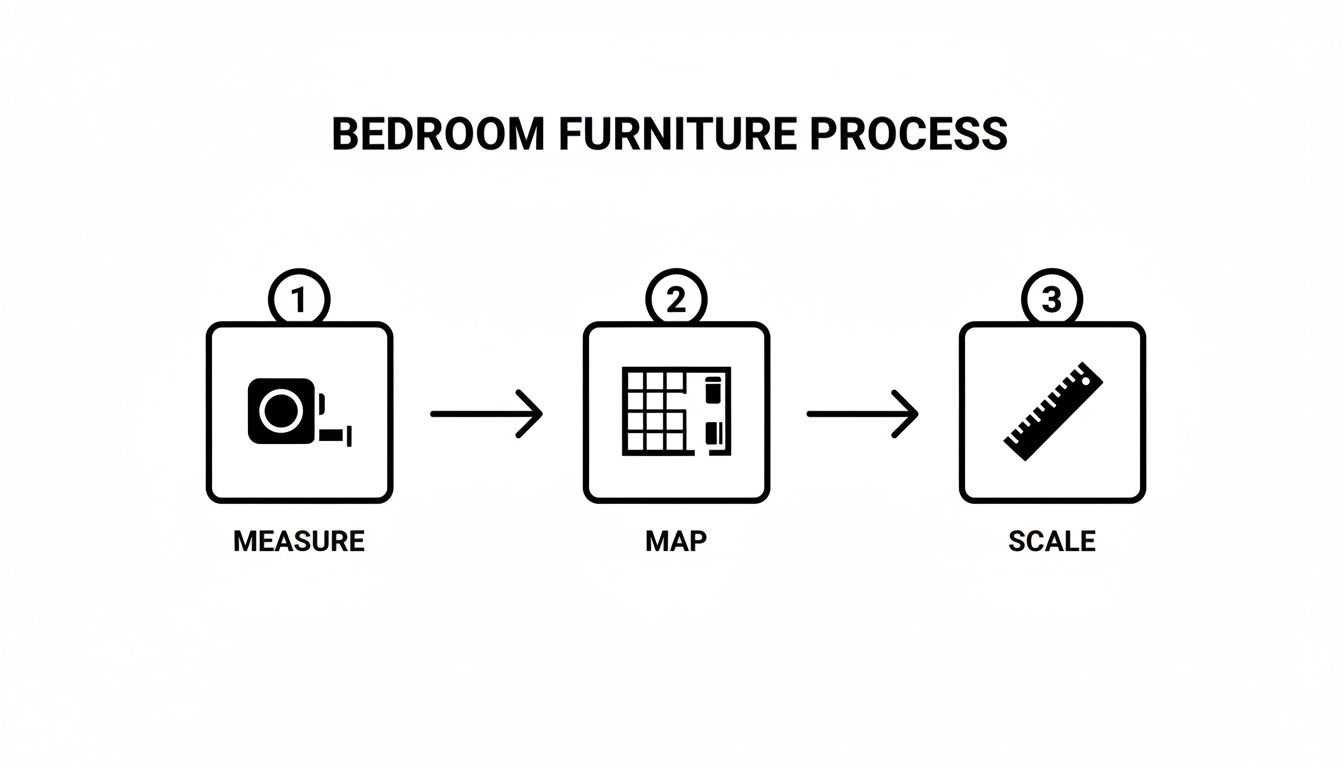
Think of it as a simple three-part plan: Measure, Map, and Scale. Nail this, and you're setting yourself up for a beautiful and practical bedroom layout.
Get Precise Measurements of Your Room
First things first, you need the hard numbers. Grab your tape measure, a notepad, and sketch out a basic floor plan of your bedroom. Be sure to document:
- Core Dimensions: The room's total length and width, wall to wall. Don't forget the ceiling height! This is crucial if you're considering a tall headboard or a chest of drawers.
- Architectural Features: Note the exact location and size of every window and door (closet doors included). Measure their distance from the nearest corner so you know exactly where they sit.
- Fixed Obstacles: Mark where all your electrical outlets, light switches, heating vents, and radiators are. You don’t want to realize your new dresser completely blocks the only convenient outlet for your phone charger.
Having these details on hand is like having a cheat sheet for furniture shopping. It eliminates the guesswork and prevents that awful moment when a delivered piece of furniture blocks a window or can't fit through the door.
Map Out Your Pathways and Flow
With your measurements down, it’s time to think about how you’ll actually move around in the room. A gorgeous bedroom is no good if you're constantly bumping into things. The goal is to create clear, easy-to-navigate pathways that make the space feel open and effortless.
A good rule of thumb is to leave 30 to 36 inches of clearance for major walkways—think the path from your door to the bed or closet. For the tighter spots, like the space between the side of the bed and a wall, try to keep at least 24 inches free.
Pro Tip: Use painter's tape to outline the footprint of potential furniture on your floor. It's a simple, low-cost way to physically see how much space a bed or dresser will take up and how it impacts your walking paths before you buy anything.
This planning ensures you can fully open drawers, access your closet without turning sideways, and generally move around without feeling cramped. For more in-depth strategies, you can check out our guide on how to arrange bedroom furniture for expert advice.
Navigating your bedroom should be intuitive. This table provides a quick reference for the minimum clearances you'll want to maintain.
Bedroom Furniture Clearance Guidelines
| Area/Item | Minimum Recommended Space |
|---|---|
| Main walkways | 30 to 36 inches |
| Between bed and wall | 24 inches |
| Between bed and dresser | 36 inches |
| Space to pull out drawers | 18 to 24 inches (in front of the item) |
| In front of a closet | 36 inches |
Remember, these are just guidelines. The key is to create a layout that feels comfortable and unhindered for your specific needs.
Respect the Scale of Your Space
Finally, let's talk about scale. This is all about choosing furniture that feels proportional to your room's size. Your bed is the biggest player here, so getting its scale right is critical.
For instance, the average master bedroom in the U.S. is roughly 13 x 13 feet. If you try to squeeze a massive king-size bed (which is 76 inches wide) into a room on the smaller side of that, you might be left with less than 18 inches of walking space on either side. That's a tight squeeze! In that same room, a queen bed (60 inches wide) would likely feel much more balanced and leave you plenty of room to breathe.
By mapping out your layout first, you turn furniture shopping from a stressful guessing game into a focused, strategic mission. You've got a blueprint, and now you’re ready to find pieces that not only match your style but also perfectly suit the dimensions of your personal retreat.
4. Define Your Style and Pick Your Materials
Okay, you've got your floor plan and measurements sorted. Now for the fun part: bringing your personal style to life. Your bedroom is your sanctuary, and the furniture you choose is what makes it feel like yours. This is where you move past the tape measure and into the world of texture, color, and character.
Whether you’re a fan of the clean, uncluttered look of modern design or you prefer the cozy, lived-in vibe of a rustic farmhouse, your style choice is what gives the room its soul. It's all about creating a space that feels genuinely you.
What’s Your Personal Bedroom Style?
Not sure where to begin? Don't sweat it. You don’t need to be an interior designer to know what you like. The easiest way to start is by gathering inspiration. Hop on Pinterest or start saving screenshots of rooms that just feel right—the ones that make you feel instantly relaxed and happy.
Before long, you'll start noticing a pattern. Do you find yourself pinning images with:
- Clean lines, neutral colors, and very little ornamentation? You’re probably drawn to a Modern or Minimalist style.
- Warm woods, soft textiles, and vintage-inspired details? Sounds like your heart belongs to Rustic or Farmhouse design.
- Graceful curves, ornate carvings, and rich wood tones? A timeless Traditional aesthetic is likely your perfect match.
The goal here is to find the common threads. This visual "evidence" will give you a clear direction, helping you shop with confidence and pull together a look that feels cohesive and calming.
Getting to Know Furniture Materials and Finishes
The material your furniture is made from is a big deal. It dictates not just the look and feel, but also how durable it is and how it will stand the test of time. Making a smart choice here is the key to investing in pieces you'll love for years to come.
Solid wood is still the heavyweight champion, making up an estimated 40% of the furniture market—and for good reason. Nothing quite beats its durability and timeless beauty. But that doesn't mean it's the only option. Veneers and engineered woods like MDF can offer a fantastic look for a more accessible price.
Let's break down the most common options so you can choose wisely:
- Solid Wood: This is the gold standard for strength and longevity. Dings and scratches can be sanded out and refinished over the years, making it a true buy-it-for-life investment.
- Wood Veneers: These feature a thin layer of real wood bonded to a stable core (like MDF). You get the gorgeous, authentic wood grain you love, but often at a lower cost and with less risk of warping from humidity.
- Engineered Wood (MDF/Particleboard): This is your most budget-friendly choice, common in ready-to-assemble furniture. While it’s not as tough as solid wood, it’s a perfectly practical option for pieces that won’t see heavy daily wear and tear.
Choosing the right material is a balance between your style, your budget, and how long you expect the piece to last. The best choice is the one that ticks all three boxes, ensuring your new furniture doesn't just look great but also holds up to real life.
The Rise of Sustainable and Healthy Choices
These days, many of us are thinking more about creating a home that’s not just beautiful but also healthy and responsible. This has sparked a real shift in furniture, with eco-friendly and low-emission options becoming much more popular. While wood still dominates, materials like recycled plastics and engineered woods with low-VOC (volatile organic compound) finishes are seeing growth rates of 5–7% each year.
Choosing a sustainable piece might mean setting aside 5–15% more of your budget, but the payoff is huge. You’re not just buying a dresser; you’re supporting better manufacturing practices and creating a healthier indoor air quality for your family.
If you want to be sustainable on a tighter budget, you can always explore how to upcycle furniture. A fresh coat of low-VOC paint and some new hardware can completely reinvent an old piece to match your new vision perfectly.
Ultimately, your style and material choices are deeply personal. They are the tools you use to build a room that’s not just functional, but a true reflection of who you are. If you feel stuck, our design experts at Miller Waldrop are here to be your guide, helping you find the perfect materials and styles to bring your vision to life.
Choosing Your Ideal Bed and Mattress
The bed is the heart of the bedroom. It’s more than just the biggest piece of furniture in the room; it’s the foundation for a good night's sleep, which means it’s the foundation for a good day. This is where your journey to furnish your bedroom gets really personal, and where style and function absolutely have to meet.
Think of it this way: you’re not just buying a bed, you’re investing in a sleep system. That means finding a bed frame that speaks to your style and a mattress that truly supports your body. Getting this combination right is the secret to creating a genuine sanctuary for rest.
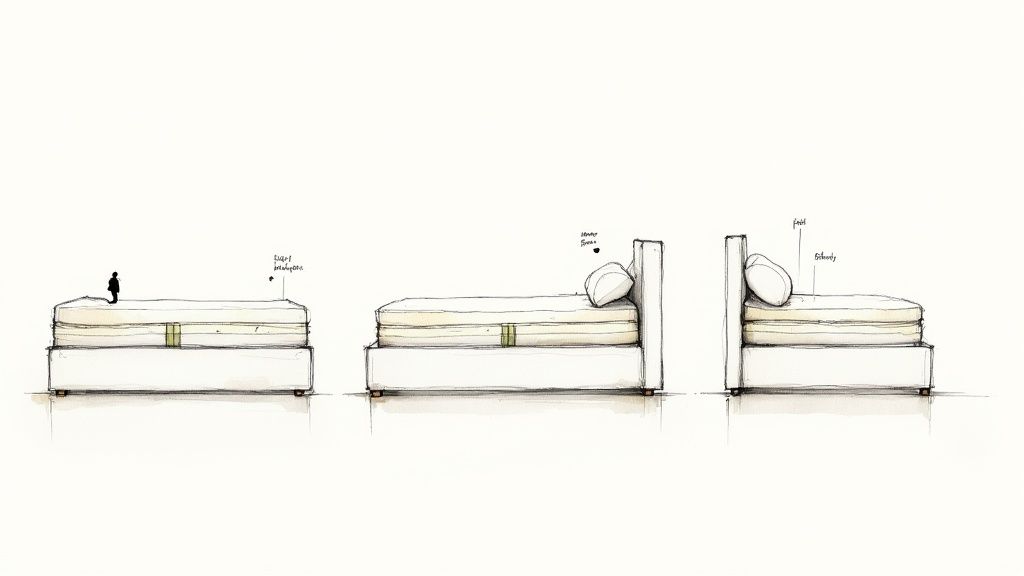
Select a Bed Frame That Fits Your Style and Needs
A bed frame does so much more than just hold up your mattress. It sets the entire tone for the room and can even sneak in some much-needed functionality. It’s the anchor piece that defines the space.
So, how do you choose? Let your lifestyle and the room itself guide you. Here’s how you can find the perfect bed frame for your needs:
- Platform Beds: These have a clean, modern vibe thanks to their low profile and built-in slat support. The best part? No box spring needed.
- Storage Beds: An absolute lifesaver in smaller rooms. These frames come with built-in drawers underneath, turning that otherwise dead space into a powerhouse of organization.
- Upholstered Beds: If you’re a bedtime reader or love to lounge, the soft, cushioned headboard of an upholstered bed is a game-changer. It adds a layer of comfort and a touch of luxury you'll appreciate every night.
Pay close attention to the frame's construction, too. A solid slat system, for example, is critical for giving your mattress the even, sturdy support it needs to prevent sagging and last for years.
Demystify the Mattress Selection Process
I get it—choosing a mattress can feel overwhelming. But it all comes down to one simple thing: what feels right for your body. Your sleeping habits and personal comfort preferences are the only guides that matter.
The real difference between mattresses lies in the materials inside. Here’s a quick rundown of the main types you'll see so you can make an informed choice:
- Innerspring: The classic. Known for that bouncy feel and robust support from a network of steel coils. They also breathe well, which is a huge plus if you tend to sleep hot.
- Memory Foam: Famous for that "sinking-in" feeling, memory foam is a master at pressure relief. It cradles your joints, making it a fantastic choice for side sleepers who need to cushion their shoulders and hips.
- Latex: If you want pressure relief but with a bit more bounce than memory foam, latex is your answer. It has a responsive, almost buoyant feel and is naturally hypoallergenic and incredibly durable.
- Hybrid: Can’t decide? A hybrid might be perfect. It combines the supportive coils of an innerspring with soft comfort layers of memory foam or latex, giving you a balanced feel that many people love.
The goal isn't to find the "best" mattress on the market. It's about finding the one that's practically custom-fit to you. Your sleep position, weight, and what feels good are the only things that count.
Getting a handle on these basics is a great start, but there's more to it. For a much deeper dive, you can learn more in our complete guide on how to choose a mattress.
Match Your Mattress to Your Sleeping Style
The way you sleep every night is the biggest clue to what kind of mattress you need. Your body requires different support based on your go-to position.
- Side Sleepers: You'll want a softer surface that lets your shoulders and hips sink in just enough to keep your spine straight. Memory foam and hybrid mattresses are often the top contenders here.
- Back Sleepers: Your main goal is to maintain the natural curve of your spine. A medium-firm mattress usually hits that sweet spot of support and contouring, preventing your lower back from dipping.
- Stomach Sleepers: You need a firmer mattress, period. This keeps your hips from sinking too low, which prevents your spine from arching into an uncomfortable—and unhealthy—position.
Building the perfect sleep system is a personal journey, but you don't have to go it alone. Our Sleep Experts at Miller Waldrop are the guides you need. We even use an advanced bed matching system to map your unique pressure points, giving you personalized recommendations. It's all about helping you invest with confidence in the bed and mattress that will give you great sleep for years to come.
Finding Smart Storage and Accent Pieces
A truly serene bedroom starts with a place for everything. Once you’ve landed on the perfect bed and mattress, it's time to choose your storage. This is where function and personality really come together, letting you select pieces that not only hold your belongings but also help tell your room’s design story.
Effective storage is more than just a standard dresser. It’s about finding clever solutions that fit your room and your lifestyle. The right pieces stand between you and clutter, and clearing that clutter is the secret to creating the peaceful sanctuary you're after.
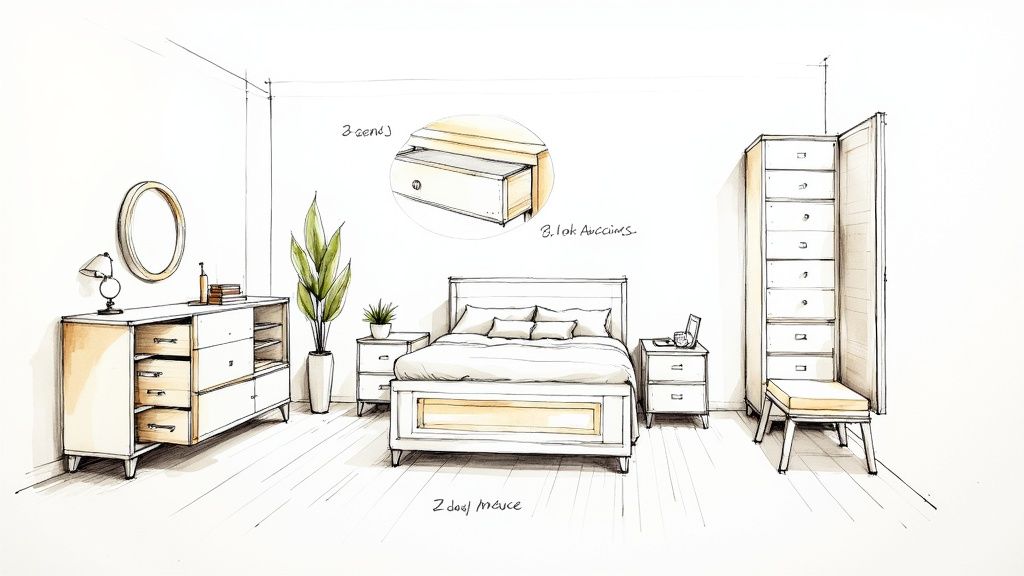
Choose Storage That Works for Your Space
Your room's layout is your guide here. You need pieces that fit the scale of the space without making it feel crowded or difficult to navigate. The trick is to think vertically just as much as you think horizontally to make the most of every square foot.
- Got limited floor space? A tall chest of drawers is your best friend. It draws the eye upward, creating a sense of height, and packs a ton of storage into a small footprint.
- Working with a larger room or a long, empty wall? A wide, low dresser is a fantastic anchor piece. It offers generous storage, and its surface is perfect for displaying photos, a TV, or even a beautiful vanity mirror.
A great example of a piece that does it all is the Aspenhome Cambridge Nine-Drawer Dresser. With its expansive surface and drawers of all sizes, it’s incredibly versatile and brings a timeless look to any room.
Evaluate Quality for Long-Term Value
When you invest in a dresser or chest, you expect it to last. The quality of its construction is just as important as its style—maybe even more so. Knowing what to look for will help you choose a piece that can handle daily use for years to come.
Get hands-on and pay attention to the details. Open the drawers. Do they glide smoothly, or do they wobble and stick? The hardware—the knobs and pulls—should feel solid and be attached securely. These little things often say a lot about the overall craftsmanship.
A key sign of high-quality construction is dovetail joinery, an interlocking technique that connects drawer fronts to the sides. This method creates an incredibly strong bond that resists being pulled apart, ensuring your drawers stay sturdy and functional for the long haul.
For a deeper dive into what makes a piece truly last, check out these key features to know about bedroom furniture storage. It’ll give you the confidence to assess any piece like a pro.
Add Personality with Accent Pieces
With your main storage sorted, it’s time for the fun part: the finishing touches. Accent pieces are where you can really inject your personality and add those extra layers of comfort and function. These are the elements that take a room from just "furnished" to "thoughtfully designed."
Think beyond the absolute essentials. How do you want to live in your space?
- A Bench at the Foot of the Bed: This is such a classic addition for a reason. It’s both elegant and incredibly practical, giving you a spot to sit and put on your shoes or lay out tomorrow's outfit.
- A Cozy Armchair or Chaise: If you have the room, creating a small reading nook can transform an empty corner into a private retreat. Just add a comfortable chair, a small side table, and a good lamp.
- A Full-Length Mirror: A well-placed mirror is a designer's secret weapon. It’s obviously useful, but it also makes a room feel bigger and brighter by bouncing light around. Find a frame that complements your style, whether it’s ornate and traditional or clean and modern.
These accent pieces are your chance to round out the room's design. They support your daily routines while adding visual interest, making your bedroom a more complete and personalized haven. If you're struggling to find those perfect accents to tie it all together, our design experts at Miller Waldrop are here to help you discover pieces that reflect your unique style and elevate your space.
Time to Make It Real
Okay, you've done the legwork. You’ve measured your space, sketched out a plan, and have a solid idea of the style you're going for. Now comes the best part: turning that vision into a real, tangible sanctuary you can relax in. This is where you shift from dreaming and planning to actually doing.
At Miller Waldrop, we see ourselves as your partners in this final, most important phase. Our job isn't just to sell furniture; it's to give you the guidance and resources you need to pull everything together with confidence.
You've Got an Expert in Your Corner
Trying to pick out furniture can be overwhelming, especially when you're going it alone. That’s why our non-commissioned design experts are here to empower you. They're not focused on making a sale; they're focused on listening to you and helping you find exactly what you need.
Think of it like having a knowledgeable friend with you in the showroom. Someone who can immediately point out a nightstand that fits your tricky dimensions or help you see the subtle differences between two wood finishes. That's what our team does. They take the stress out of the equation so you can focus on making choices you love.
All that planning you did? This is where it really shines. When you come in with your measurements and a few inspiration photos, our team can act like your personal shoppers, zeroing in on the pieces that are a perfect match for your space and your style.
Making the Right Choices, From Mattresses to Materials
A great bedroom is more than just a pretty picture; it’s an investment in your well-being. Our specialists are here to walk you through the decisions that matter most, ensuring every piece contributes to better sleep and a more functional room.
- Sleep Experts on Staff: A good mattress is non-negotiable. It's the core of your bedroom. Our Sleep Experts use an advanced pressure-point mapping system to find the mattress that’s built for your body and sleep style. It takes the guesswork out of a decision you'll live with for years.
- Custom Orders for a Perfect Fit: Can't find exactly what you're picturing? Sometimes the ideal piece needs to be made just for you. We offer custom order options, letting you choose the specific fabrics, finishes, and configurations to create something truly one-of-a-kind.
From the moment you walk into our showroom to the day our white-glove team delivers and sets up your new furniture, we handle the details. Your job is to enjoy the process of watching your dream bedroom come together, piece by perfect piece.
Ready to get started? Schedule a complimentary design consultation with one of our experts and let’s bring your vision home.
Got Questions? We've Got Answers.
As you start to narrow down your choices, you'll probably find a few questions bubbling up. That's a good thing! Getting these sorted out is the final step before you can confidently create a bedroom you'll absolutely love. Our design team hears these all the time, so let's get right to them.
What’s the One Piece of Bedroom Furniture I Can’t Get Wrong?
Without a doubt, it’s the bed. Think of it as the anchor of your entire room. It’s usually the largest piece, it's where your eye naturally goes, and most importantly, it's where you rest and recharge. The size and style of your bed will dictate almost every other decision you make, from the height of your nightstands to the scale of your dresser.
My Bedroom Is Tiny. How Do I Make It Feel Bigger?
Creating a sense of space in a smaller room is all about smart, strategic choices. It's less about having fewer things and more about choosing the right things.
- Get Your Furniture Off the Ground: Look for pieces with legs. A mid-century modern dresser or a bed frame that's elevated off the floor creates visible space underneath, which tricks the eye into seeing a more open, airy room.
- Embrace the Magic of Mirrors: A well-placed, large mirror is one of the oldest and best tricks in the book. It bounces light around and adds a sense of depth, instantly making the room feel less confined.
- Go Low-Profile: A towering, heavy headboard can really dominate a small space. Opt for a lower-profile design that doesn't feel so imposing.
A light, cohesive color scheme also works wonders. When everything feels connected, the room just feels calmer and more expansive.
A common mistake is thinking you need tiny furniture for a tiny room. The real secret is choosing smarter pieces that work together. When your furniture feels harmonious, the whole room feels more serene and spacious.
How Much "Walking Around" Room Do I Really Need?
This is a big one, and it's all about flow. You want to be able to move around your room easily without squeezing past things. A good rule of thumb is to leave at least 30-36 inches for main pathways, like from the door to the bed or to the closet. For the sides of the bed you get in and out of, aim for a minimum of 24 inches.
Don't forget about functional space! Before you place that dresser, make sure you have enough clearance for the drawers to open all the way. Leaving at least 30 inches in front of a dresser is a safe bet. There's nothing worse than a drawer that only opens halfway because it hits the bed frame.
Does All My Bedroom Furniture Have to Be a Matching Set?
Definitely not! Actually, a room where everything isn't perfectly matched often has more personality and style. The key isn't matching; it's coordinating.
You can create a beautiful, cohesive look by linking pieces with a common thread. Maybe it’s a consistent wood tone across different pieces, or perhaps you stick to a shared color palette. You could also unify the room with hardware—all brushed brass or matte black pulls, for instance. Mixing complementary styles, like a few rustic pieces with some industrial accents, can also create a really dynamic and interesting space that feels uniquely yours.
At Miller Waldrop, we believe you are the hero of your home's story. Our job is to provide the expert guidance and quality furniture you need to create your perfect bedroom sanctuary. We're here to help you build your dream room, together. Ready to start your adventure? Explore our stunning collection of bedroom furniture today.