

How to Choose the Perfect Dark Green Chair for Any Room


You're standing in the room with a swatch in hand, trying to decide whether that dark green chair will look deliberate or like a single good idea that never got a second vote. That's the moment most shoppers face. The chair itself is rarely the problem, the room around it is.
A dark green chair works because it sits in that useful middle ground between neutral and statement color. It brings weight without shouting, so it can calm a plain room, deepen a layered room, or anchor a space that feels a little too safe. In the right setting, it reads as collected and confident, not trendy for the sake of being trendy.
Why a Dark Green Chair Works in Almost Any Room
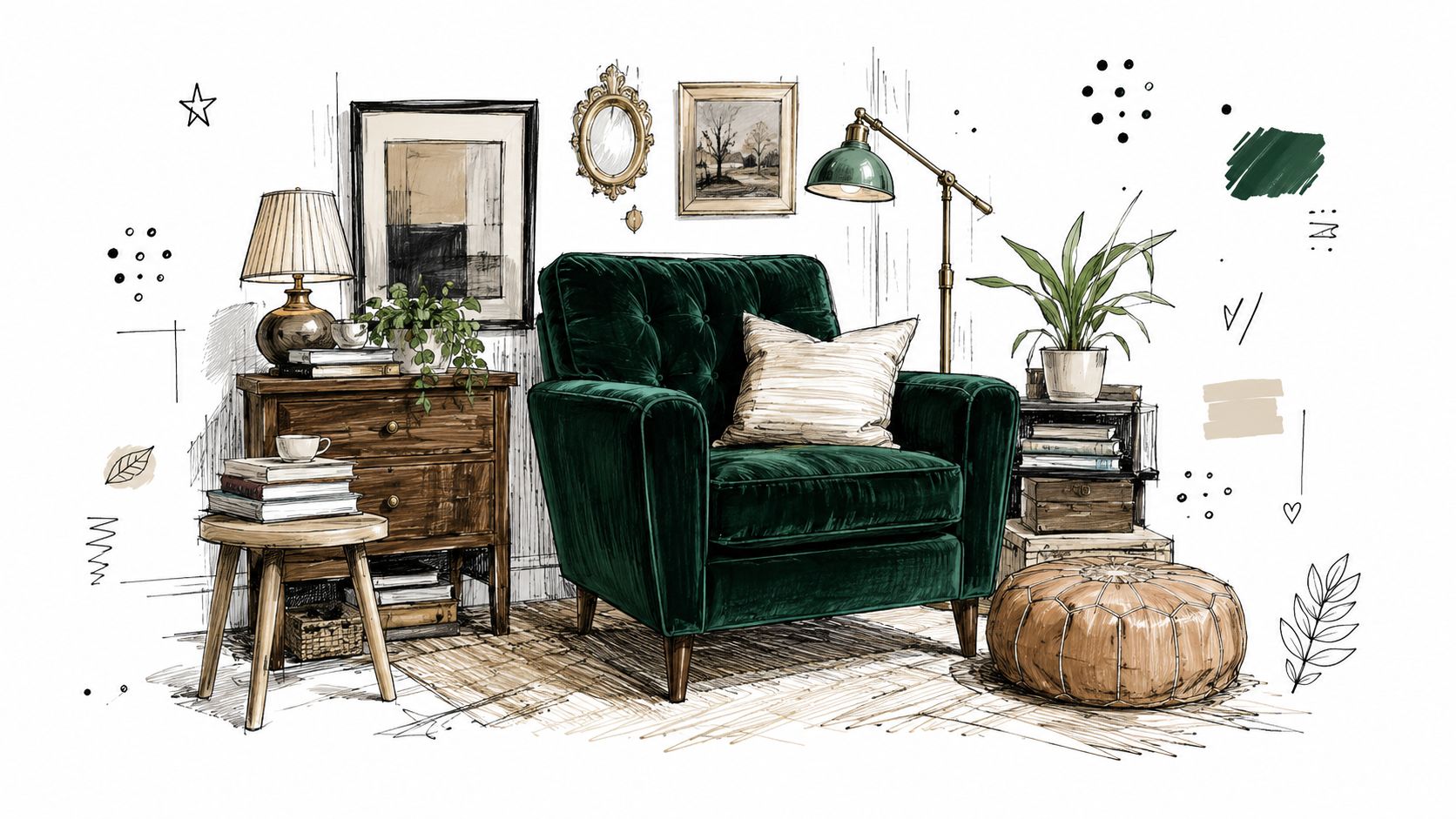
A dark green chair is the right move when a room needs one grounded object that doesn't flatten everything around it. In a pale living room, it stops the space from feeling washed out. In a bedroom corner, it turns dead space into a reading spot with actual purpose. In a home office, it softens the hard edges that so many desks and storage pieces bring with them.
The color earns its keep because it can play two roles at once. It can be the visual lead in a sparse room, or it can fall back and support other finishes when the room already has pattern, wood tone, or art doing most of the talking. That flexibility is why dark green keeps showing up in rooms that need maturity more than drama.
A dark green chair should look like it belongs to the room, not like it arrived alone and is waiting for a matching set that never shows up.
There's also a historical reason the color feels special without looking precious. Wimbledon's Royal Box, built in 1922 alongside the current Centre Court, is said to contain just 74 dark green wicker chairs behind one baseline, with access reserved by invitation only for royals, heads of government, players, media figures, armed forces representatives, and tennis supporters, making the color part of a globally recognized symbol of exclusivity rather than an ordinary retail choice. That's a strong reminder that dark green has long carried authority, not just decoration. The chair color doesn't need to be flashy to feel important, as the Wimbledon example shows in detail on the Royal Box background at The Times of India.
For a softer, family-friendly comparison, even pet bedding follows the same logic of blending with the room instead of fighting it, which is why the fashion dog bed guide is a surprisingly useful reference for color balance and visual weight in lived-in spaces.
Get the Proportions Right Before You Fall in Love
Style should come after fit, not before it. A chair can be gorgeous and still be wrong if it sits too deep, perches too low, or crowds a walkway. The fastest way to avoid regret is to measure the space before the mood takes over.
Start with seat depth
For a dark green chair in a living room, the practical benchmark for seat depth is about 42 to 58 cm, with deeper lounge chairs toward the upper end and upright occasional chairs closer to the lower end, according to a residential furniture specification reference on Modern Furniture's dark green lounge chair guidance. That range matters because it changes how the chair feels in daily use. A deeper seat supports lounging and reading, while a shallower seat feels more upright and easier to enter and exit.
Then check seat height and arm height
Seat depth alone won't save a bad purchase. Seat height has to work with the height of the sofa, side table, or desk nearby, and arm height has to clear the surrounding furniture without making the chair look bulky. An oversized arm undercuts a small room fast, while a low arm can make a chair feel too relaxed beside a more formal sofa.
Practical rule: measure the spot on the floor first, then the chair, then the walking path around it. If a door needs to swing past the chair, the chair loses.
A good shop-floor test is simple. Bring the room dimensions with you, note the width of the chair footprint, and leave space for circulation instead of hoping the room will “open up” once the chair arrives. It usually doesn't. The chair either fits its job or it starts acting like an obstacle.
Match the Silhouette to the Job
A dark green chair doesn't behave the same way in every silhouette. A lounge chair invites you to stay. A dining chair asks you to sit upright. A desk chair has to disappear into work, not turn the office into a lounge. Choosing the wrong silhouette is how people end up with a beautiful chair that performs the wrong task every day.
Use the shape to define the room
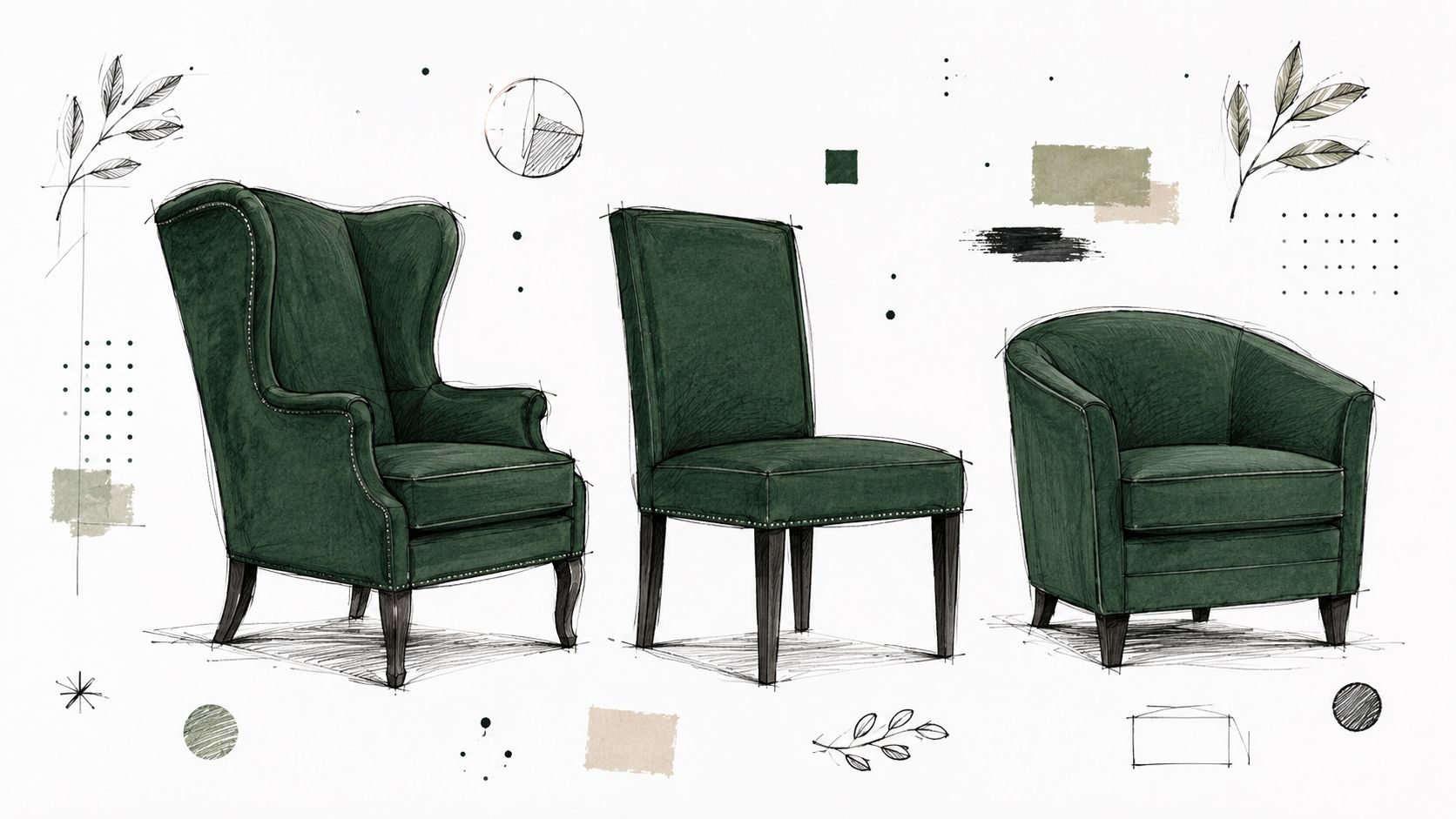
An accent chair is the easiest way to add color in a corner that needs personality but not much footprint. It should be chosen for visual balance first, then comfort second, because it's usually supporting a larger seating arrangement. A lounge chair is the stronger choice for a reading nook or a room that needs a real pause point, since the deeper profile gives the chair a job beyond decoration.
A club chair usually feels denser and more enclosed, which makes it useful when a room needs a grounded, substantial shape. A wingback reads more formal, so it works best where the room already leans traditional or where a taller back helps create a sense of enclosure. A parsons chair is the workhorse for dining because the cleaner profile keeps the table area from feeling crowded. A desk chair should stay practical above all else, especially in rooms where visual clutter is already a problem.
That hierarchy matters more than trend language. A wingback in a tight modern room can feel heavy. A low lounge chair in a dining room can look like it wandered off. A parsons chair in dark green is often the most versatile purchase because it handles daily use without announcing itself too loudly.
Ask what the chair has to do every day
If the chair is for conversation, a compact lounge or club shape usually wins. If it's for meals, pick the one that tucks in cleanly. If it's for a desk, comfort has to live inside a working posture, not replace it. The most expensive mistake is buying a chair for a mood you admire and a room task you never needed.
Why the Dining Room Might Be the Smarter Placement
The usual instinct is to save a dark green chair for the living room. That's the safe answer, and it's not always the smart one. Dining rooms are often the better place to spend money on dark green because the chair is seen repeatedly, used hard, and judged from every angle around the table.
Green is showing up more visibly in dining rooms, especially in chair-forward spaces where color does some of the work that art and textiles normally do. A dark green dining chair also makes more sense for real life because darker upholstery is more forgiving in high-traffic eating spaces. Pale fabric shows the fallout of ordinary meals fast, while a darker finish keeps the room looking composed longer.
That matters for households that don't want to baby their furniture. If a room sees kids, guests, takeout, or daily cleanup, the dining chair has to earn its place through durability and visual resilience, not just looks. A dark green finish gives you a stronger margin of error.
The best place for a dark green chair is often the room that gets used hardest, not the room that gets photographed most.
The living room still makes sense when the chair is acting as a single accent, especially in a quieter corner where it can be the room's visual punctuation. But if the budget only covers one good dark green chair, the dining room often deserves the first shot. It's the harder-working placement, and hard-working pieces usually pay for themselves in fewer regrets.
Make the Color Work in the Room Around It
A strong chair color can still fail if it's the only place the color appears. That's the mistake people make most often. They buy one beautiful dark green chair, set it in a beige room, and wonder why it feels isolated instead of designed.
Spread the color in layers
One design principle does the heavy lifting here. An accent color should appear in large, medium, and small gradations across the room instead of being trapped in one lonely object. In practice, that means the chair becomes the large dose of green. A pillow, throw, or cushion can carry the medium layer. A vase, book spine, artwork detail, or lamp base can handle the small layer.
That doesn't mean the room has to turn into a green theme park. It means the color gets repeated enough times that the chair looks intentional. A dark green chair surrounded by natural wood, cream textiles, and one or two supporting green notes feels edited. The same chair without support feels dropped in.
Match the room to the level of support it already has
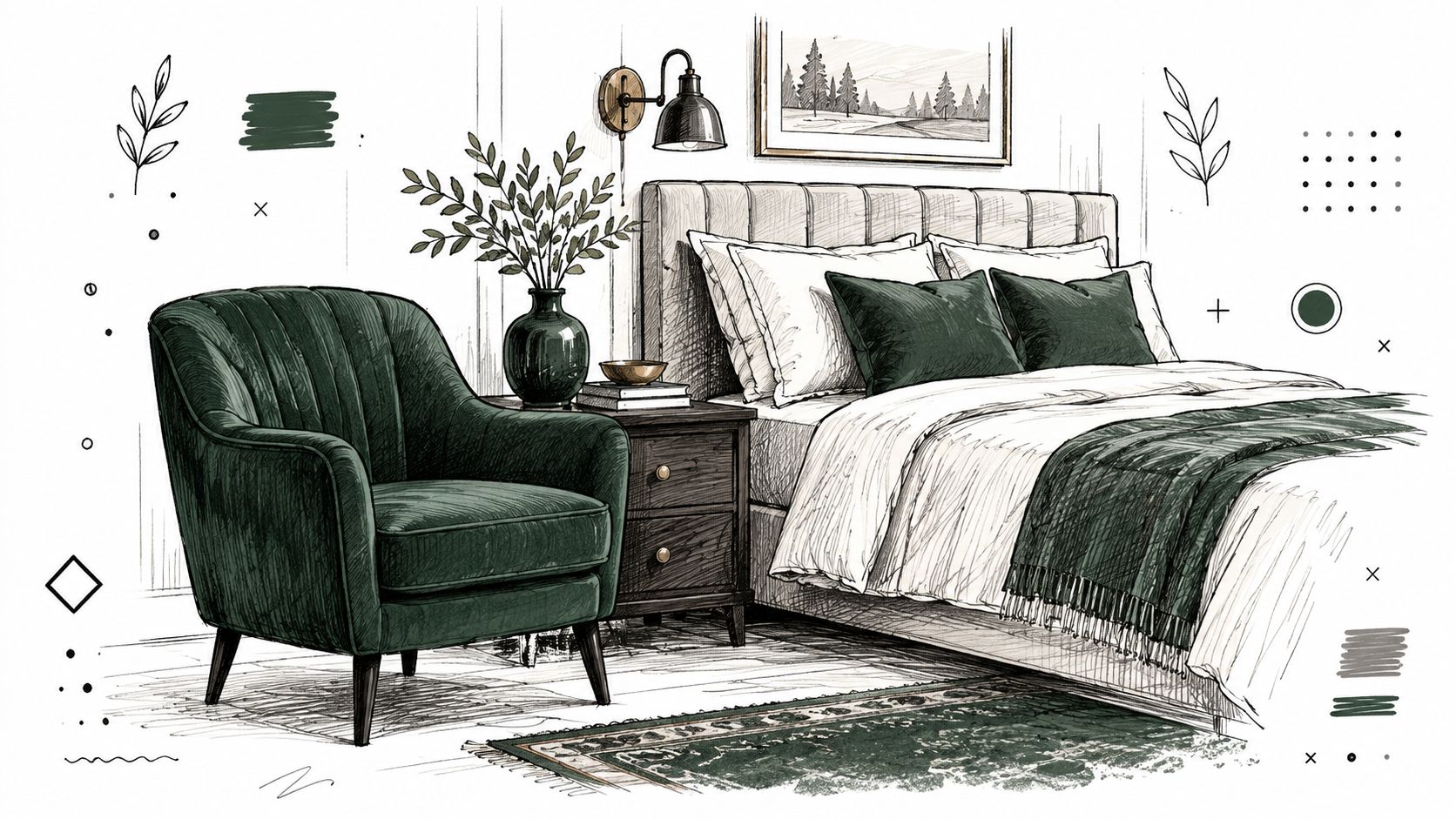
A living room with art, patterned textiles, or wood grain can usually absorb a dark green chair easily, because the room is already doing some visual work. A bedroom often needs softer support, like one pillow or a blanket, so the chair doesn't fight the bed for attention. An office can use the chair as the color anchor, then repeat the tone in a file box, print, or desk accessory so the chair doesn't look like a guest.
For a shopping reference tied to this exact problem, the New York Green Accent Chair is a useful example of how a chair can act as the anchor while the rest of the room carries the supporting notes.
If the chair is the only colored object in the room, the fix is usually simple. Add one medium repeat and one small repeat. That alone changes the room from random to deliberate.
Fabric Choices and How to Live With Them
The fabric decides whether a dark green chair stays beautiful after the first month of real use. Color gets the attention, but upholstery decides the maintenance burden. That's where buyers need to get serious, because the wrong fabric turns a good-looking chair into a constant annoyance.
Choose the fabric for the life you actually have
Performance fabric is the most practical default for families because it's built for repeat use and less panic over everyday mess. It's the least romantic choice, which is exactly why it's usually the smartest one. Linen looks relaxed and breathable, but it asks for a more careful household. Velvet gives dark green its richest, deepest look, but it will show touch marks and changes in pile. Leather wipes clean easily, yet it can feel colder and more structured in a room. Boucle is stylish and soft-looking, but it tends to catch pet hair and needs a homeowner who won't resent extra upkeep.
If the chair is going in a family room or dining area, performance fabric usually wins. If it's going into a quieter bedroom corner, velvet can be worth the extra attention because the visual payoff is strong. Leather is best when cleaning speed matters more than softness. Boucle is the one to buy only when texture matters enough to justify the care.
The frame matters too. Hardwood generally gives a chair a more trustworthy feel over time, while engineered wood can be fine in lighter-use pieces but deserves a closer inspection before purchase. Cushion fill matters just as much. Foam gives structure. Down wraps feel softer and more relaxed, but they need more maintenance to keep their shape.
For care, the safest move is to read the manufacturer's cleaning instructions before the chair ever enters the house. That's also why product care guidance should be part of the buying conversation, not something handled after the first spill.
Maintenance rule: if the finish is fussy enough that a buyer already worries about cleaning, the fabric is probably wrong for the room.
For anyone tempted to steam-clean upholstery on impulse, there's real value in reading how to skip DIY steam cleaning mistakes before taking matters into hand. The wrong approach can do more damage than the stain itself.
Your Buying Checklist and Where to Take It
A dark green chair should pass a simple test before it comes home. It needs the right proportions, the right silhouette, the right fabric, and at least one supporting color note in the room. If any one of those pieces is missing, the chair is probably solving the wrong problem.
Use this checklist in the showroom:
- Measure the space first. Confirm seat depth, seat height, and arm height against the room and the nearby furniture.
- Choose the room on purpose. Decide whether the chair belongs in the dining room, living room, or a quieter corner before style takes over.
- Accept one fabric trade-off. Pick the finish you can live with, not just the one that photographs best.
- Repeat the color once or twice. Let the chair be the anchor, then echo the green in small and medium accents so it feels integrated.
Sitting in the chair still matters. The frame, cushion feel, and arm placement are easier to judge in person than from a screen. For larger pieces, custom order options can make the difference between almost right and exactly right, and that's where design services become useful instead of decorative.
The cleanest next step is simple. Bring the measurements, the room photos, and this checklist into a showroom, test the chair like it's going into a real home, and leave only when the proportions and color plan both make sense.
A CTA for Miller Waldrop Furniture & Decor. Visit Miller Waldrop Furniture & Decor to browse in person, talk through fabric and finish options, and get help choosing a dark green chair that fits your room, your routine, and your budget without guesswork.