


Best Dining Room Table Sets for Your Home


The table looked perfect in the showroom. At home, it blocks the path to the kitchen, the chairs collide with the wall, and two everyday diners sit at opposite ends of a surface designed for a crowd. That mistake happens because shoppers start with color and style before checking the room.
The best dining room table sets earn that label differently. They fit the available floor area, support the household's routines, leave enough room for people to move, and use materials the owner can maintain. A matched set can be the right answer, but a carefully mixed table, chairs, and bench often performs better. The right choice starts with the room, not the catalog.
Starting With the Room You Actually Have
A shopper standing in an empty dining area usually notices the obvious things first, the wall color, the light fixture, and the table finish that looks appealing online. A showroom advisor looks at the floor around the furniture. That unused space determines whether the finished room feels relaxed or obstructed.
Measure the usable length and width before looking at collections. Mark door swings, windows, radiators, vents, light fixtures, sideboards, kitchen islands, and nearby sofas. A table can fit between two walls and still fail because a door opens into a chair or a pendant hangs off-center above the eating area.
Three room realities
A dedicated dining room gives the table more authority. A rectangular table can follow the room's longest dimension, while a sideboard or display cabinet can occupy a short wall without competing with the dining chairs.
An open-plan great room needs a set that defines the dining zone without creating a visual barrier. A round or oval table can soften the transition between kitchen, living, and dining areas. The finish should also relate to nearby furniture, because the set will be viewed from several directions rather than from one doorway.
A nook or eat-in kitchen demands discipline. The table often shares space with cabinets, appliances, and walking routes, so a compact round table, a slim rectangular table, or an extendable design usually makes more sense than a large formal set. Counter-height furniture may suit a casual kitchen routine, but standard-height seating remains the safer choice for long meals, homework, and mixed-age gatherings.
Practical rule: A dining set should support the way the room operates at its busiest, not merely fit when every chair is pushed in.
The global living and dining room furniture market illustrates why this category remains a substantial household purchase. One estimate places it at USD 256.10 billion in 2026, with a projection of USD 314.43 billion by 2031, while wood represented 38.73% of the market in 2025, residential buyers represented 73.81%, and North America represented 32.64% of regional share, according to Mordor Intelligence's living and dining room furniture market overview. Those figures reinforce the practical point: most buyers need furniture for real homes, and wood-led residential settings remain central to the category.
A showroom advisor asks about the room before showing finishes for a reason. The room's shape, traffic pattern, and daily use narrow the sensible choices faster than a style label ever will.
Sizing Your Table Set the Right Way
Table sizing becomes straightforward once the shopper separates seating space from circulation space. A standard chair needs about 24 inches of table edge per person, while comfortable movement behind a seated chair needs at least 36 inches from the table edge to a wall or another piece of furniture, according to this dining table size guide from Miller Waldrop. Busier routes may need 42 to 48 inches, especially where people pass between the dining area and kitchen, as outlined by Mathis Home's dining table guide.
Work from the outside in
Start with the room's usable dimensions, not the advertised table dimensions. Subtract 72 inches from both the room length and width to estimate the largest tabletop that preserves 36 inches of clearance on each side, a calculation also described in Mathis Home's room-sizing guidance. Then check whether the actual chair profile needs more room behind the seat.
A practical planning exercise looks like this:
- Four seats: A compact rectangular table can use about 24 inches per diner, or roughly 48 inches of usable edge for two diners on a side, while a round or square shape can make a small room feel balanced. The room still needs the tabletop plus 36 inches of circulation on accessible sides.
- Six seats: A 72-inch table may technically accommodate six to eight seats, but the comfortable everyday count is often lower unless the room is generous and the chairs are slim. The shopper should check elbow room rather than relying on the number of chairs shown in a product photograph.
- Eight seats: A longer table works only when the room can preserve the same circulation envelope around the extra chairs. A large table that leaves no space for chair pull-out is not a successful hosting solution.
The chair itself adds another layer. Ergonomic dining layouts commonly allow 24 inches of personal space per person, while the chair-pull zone typically needs 24 to 30 inches behind each seat, according to Eureka Ergonomic's dining clearance guide. These are not decorative margins. They let a diner sit down, stand up, and shift position without scraping walls or bumping another chair.
Check the height before admiring the finish
The widely used dining-table height is about 28 to 30 inches, paired with chair seats around 17 to 19 inches, leaving roughly a 10 to 12 inch gap between seat and tabletop, as explained by Early Oak Reproductions' dining height guide. Thicker tabletops, apron rails, and padded seats reduce effective knee clearance, so shoppers should sit at the actual table rather than judge by appearance.
Before visiting a showroom, use painter's tape to mark the tabletop footprint on the floor. Add another taped boundary for the chair-pull area, open every nearby door, and walk the route between the table and the kitchen. Anyone preparing for a move can also use this furniture-wrapping guide from TLC Moving & Storage to protect existing pieces while clearing the room for a realistic test.
Matching Table Shape to Room and Routine
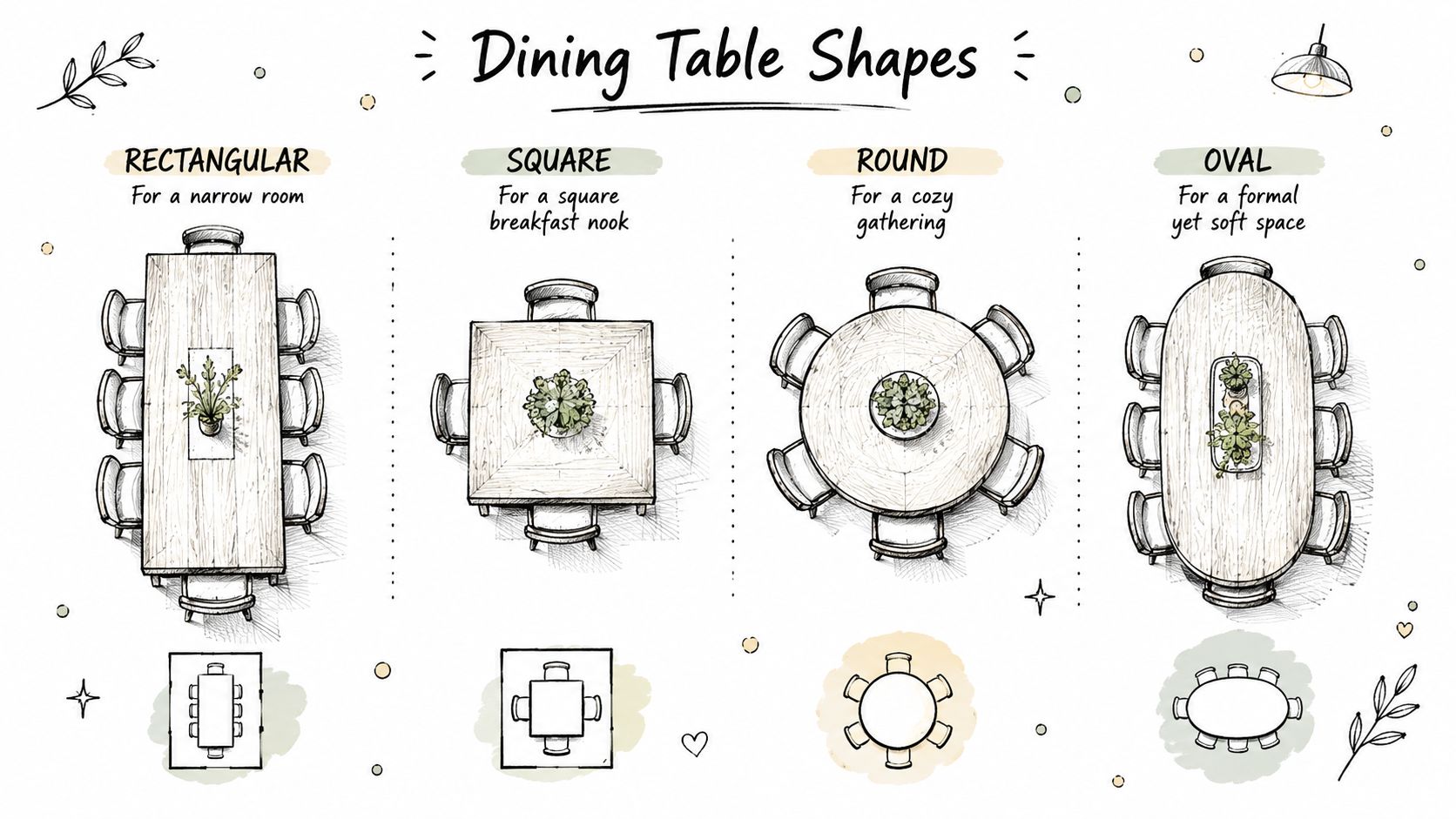
Shape changes how people move, talk, and use the edge of the table. The right geometry can make a compact room feel generous, while the wrong one consumes circulation with corners that contribute little usable seating.
Rectangular and square options
Rectangular tables remain the dependable choice for long, narrow rooms and households that host larger meals. Their straight edges align with walls, rugs, and linear place settings, and extension leaves can add capacity without changing the room's basic visual direction. Four legs can provide a familiar silhouette, but leg placement matters when diners sit at the ends.
Square tables suit square rooms and smaller households that value symmetry. Four diners can face one another easily, and the central arrangement supports homework, card games, and everyday meals. A square table becomes less efficient as it grows, because each side adds distance between diners and consumes corner-to-corner floor area.
Round and oval options
Round tables remove corners from traffic paths. They work especially well in open-plan areas, compact nooks, and rooms where conversation matters more than formal place-setting alignment. The trade-off is that a larger round tabletop can use significant floor area while offering less practical edge than a similarly sized rectangular table.
Oval tables are the strongest compromise. They retain the length needed for family meals and extension leaves while softening the corners that interrupt movement. In a room shared by children, adults, and passing traffic, the oval profile often feels easier to live with than a sharp-cornered rectangle.
A pedestal base deserves consideration when chairs need flexible placement. It reduces the fight between chair legs and table legs, especially for mixed seating or multi-generational meals. Four legs can look lighter and provide strong support, but they demand more attention to where each diner's knees and chair legs will land. Further shape guidance appears in this dining room table styles resource.
Materials and Finishes That Hold Up Over Time
A dining table doesn't age according to price alone. It ages according to heat, moisture, sharp objects, sunlight, cleaning habits, and whether the owner accepts regular maintenance. Solid hardwoods such as oak, maple, and walnut offer a strong long-term foundation, but a stable veneer or engineered core can be the more sensible choice when budget and dimensional stability matter.
Stone and quartz create visual drama and handle many daily spills, yet their weight and edge treatment affect delivery and room planning. Glass reflects light and keeps a compact room visually open, but fingerprints and chips become more noticeable. Metal bases suit industrial and modern rooms, although the tabletop material still determines most of the daily care.
| Material | Durability | Maintenance | Best For | Price Tier |
|---|---|---|---|---|
| Solid hardwood | Strong longevity and repair potential | Clean spills promptly and protect from heat and moisture | Families wanting a table that can mature with the home | Higher |
| Veneer or engineered core | Stable and practical for regular use | Use coasters, avoid standing water, and follow the finish instructions | Budget-conscious rooms and changing households | Moderate |
| Stone or quartz | Durable surface with substantial weight | Wipe spills promptly and protect vulnerable edges | Statement dining rooms and frequent entertaining | Higher |
| Glass | Light-reflective and visually airy | Frequent cleaning and careful handling | Compact, bright, contemporary spaces | Moderate to higher |
| Metal base with wood or stone top | Base is resilient, top determines care | Maintain the top according to its material | Industrial, modern, and mixed-material interiors | Moderate to higher |
Match the finish to the household
Oil-and-wax finishes bring out wood's richness, but they reward owners willing to refresh and maintain them. Conversion varnishes and lacquers resist stains more effectively, though chips can be conspicuous when damage occurs. Matte and painted finishes disguise fingerprints better than glossy surfaces, but sharp objects can leave visible marks.
Young families usually benefit from a forgiving wood finish, rounded edges, and chairs with replaceable or cleanable upholstery. Adult-only households that entertain occasionally can choose a more delicate surface if the owners accept the care it requires. UV exposure also matters. A table near strong windows may change tone over time, particularly when rugs or accessories shield only part of the surface.
For graceful aging, the strongest combination is a solid hardwood or quality veneer top with a durable, repairable finish and uncomplicated chair upholstery. The most demanding combination is a highly polished or delicate surface paired with fabrics that absorb spills. Beauty matters, but the table has to survive the routine that made the room necessary.
Why Mixing Pieces Often Beats a Matching Set
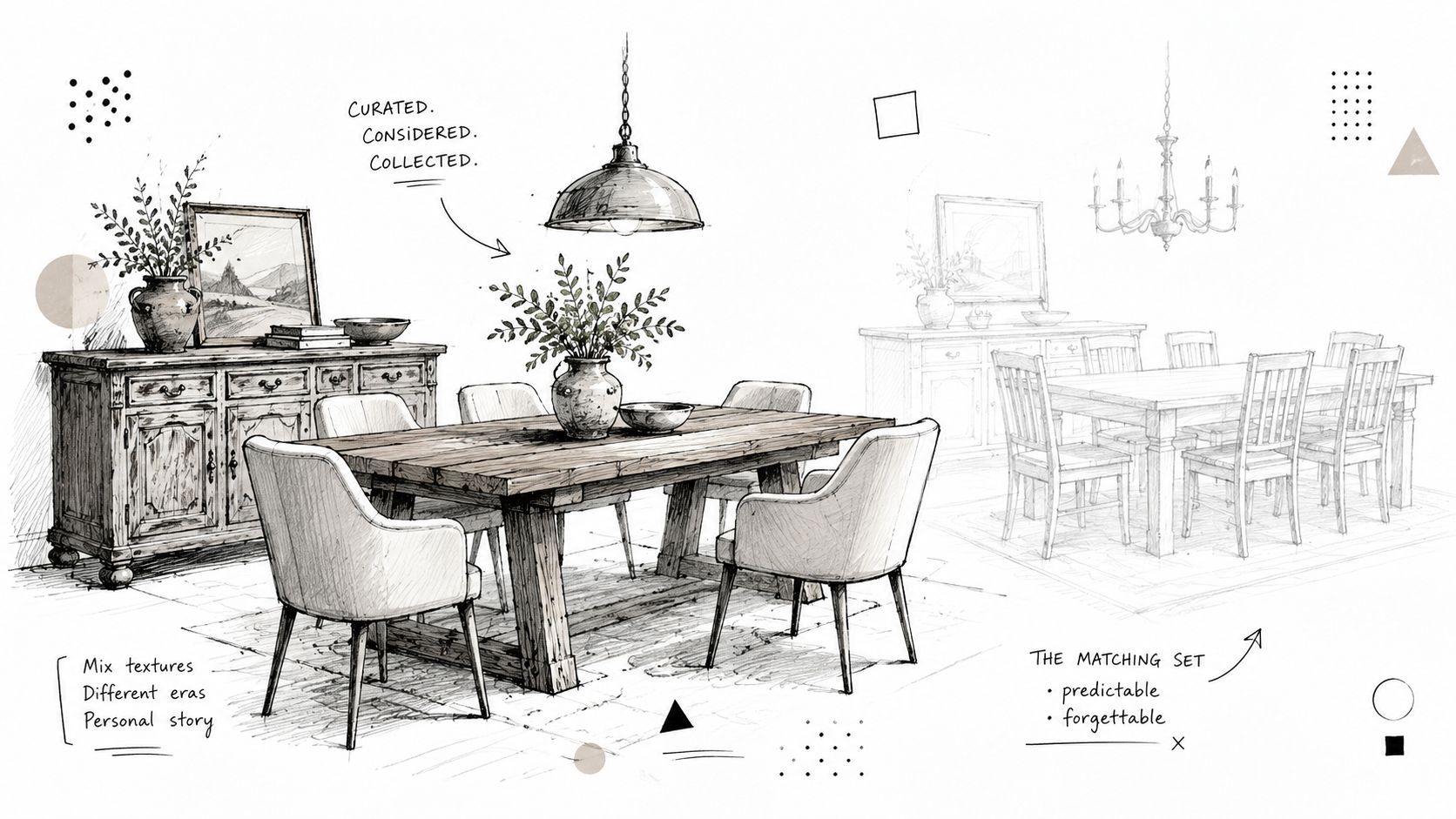
A fully matched set solves shopping quickly, but it can also make the room look as though it came straight from a display floor. A curated combination gives the household more control over comfort, replacement, and proportion. That matters because a dining chair may wear out before the table, or a family's seating needs may change while the main table remains useful.
Keep a visual thread
Mixed pieces look intentional when at least one element connects them. The table and chairs can share a warm finish tone, a wood species, a repeated metal detail, or a common upholstery color. The silhouettes can vary, but the room needs a visual thread that prevents the combination from appearing accidental.
A substantial table can anchor lighter chairs. A bench can occupy one side where the wall limits chair movement, while individual chairs remain on the open sides. Upholstered end chairs can add comfort and distinction without requiring every seat to use the same profile.
Design advice: Mix silhouettes, not every decision. Keep one element calm while another carries the personality.
The contrarian choice works especially well in rooms with non-standard dimensions. A shopper can select a narrow table for the floor plan, then choose chairs with the exact seat height and back comfort required. An inherited chair can remain useful when its finish or upholstery relates to the new table. Replacement also becomes easier because one damaged chair doesn't force a full-set purchase.
When matching still wins
A matched set remains practical for a first home, a rental, or a household that wants visual simplicity. It can also be the safest route when the table, chairs, and bench have been engineered to work together ergonomically. The mistake isn't buying a set. The mistake is assuming matching automatically means better.
A mixed room should look edited, not random. One strong element, such as the table or a statement chandelier, should establish the direction. The remaining pieces can support it with restrained variation. That approach gives the dining room room to evolve as taste changes, without discarding every piece at once.
Your Pre-Shop Checklist Before You Visit a Showroom
A showroom visit works best when the shopper arrives with measurements, photos, and a clear description of the household's routine. Without that preparation, a large display room makes almost every table seem appropriately sized.
Record the room
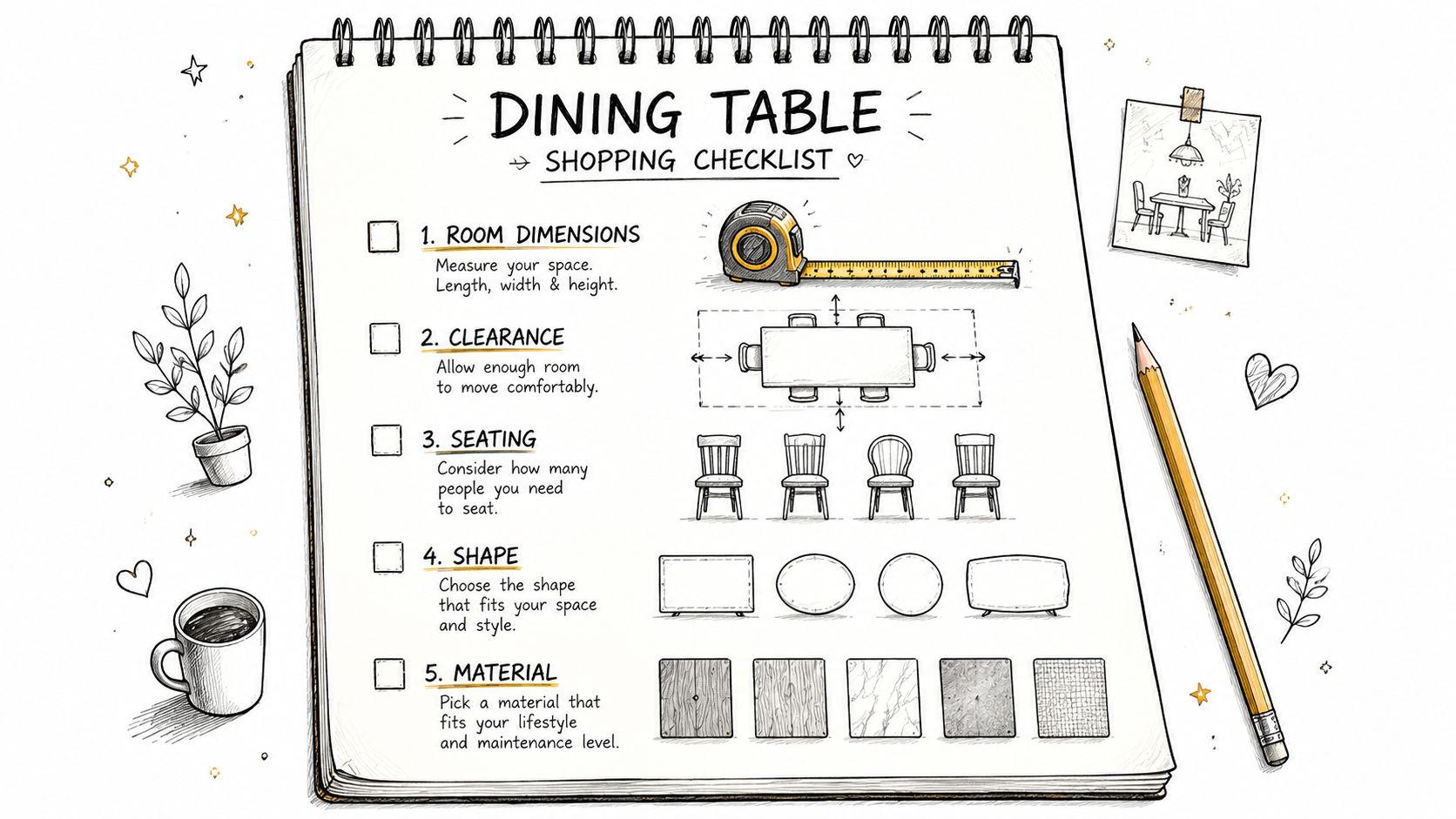
Bring the usable room length and width, ceiling height, doorway width, and the location of doors, windows, outlets, vents, and fixed lighting. Photograph each wall and take one image from the main entrance. Include adjacent furniture that will remain, because a table that fits an empty room may not fit the finished one.
Write down the everyday seat count and the occasional hosting count separately. The table should serve normal meals comfortably, with extension leaves or extra seating handling occasional gatherings rather than forcing daily diners to live with an oversized surface.
Take a focused question list
- Ask about samples: Confirm whether finish, wood, stone, and upholstery samples can travel home for viewing in daylight and evening light.
- Ask about construction: Check how extension leaves store, where table legs sit, and whether the apron affects knee clearance.
- Ask about lead times: Custom finishes, fabrics, and configurations may require a different delivery schedule than stocked pieces.
- Ask about protection: Find out which topcoats, cleaning products, and heat protections the manufacturer recommends.
- Ask about service: Review delivery, assembly, damage reporting, and warranty terms before placing the order.
A budget should separate the table, each chair, and delivery-related costs rather than treating the set as one figure. The shopper should also decide whether a bench, rug, protective pad, or custom upholstery is essential before falling for an upgrade. For a finishing gift or hosting detail, luxury gift sets from Fiore can be considered separately from the furniture decision.
Before ordering, tape the table footprint at home, place temporary chair outlines around it, and walk every path with the chairs pulled out. At the showroom, sit long enough to test thigh clearance, back support, table height, and whether the armrests slide comfortably beneath the tabletop. The purchase is ready when the physical test agrees with the measurements, not when the display looks impressive.
Turning the Plan Into the Perfect Set
The showroom decision isn't finished when a shopper points to a table. The final result depends on confirming the details that photographs and floor displays conceal, especially finish variation, upholstery texture, extension-leaf alignment, and the way the pieces will enter the home.
Confirm the physical details
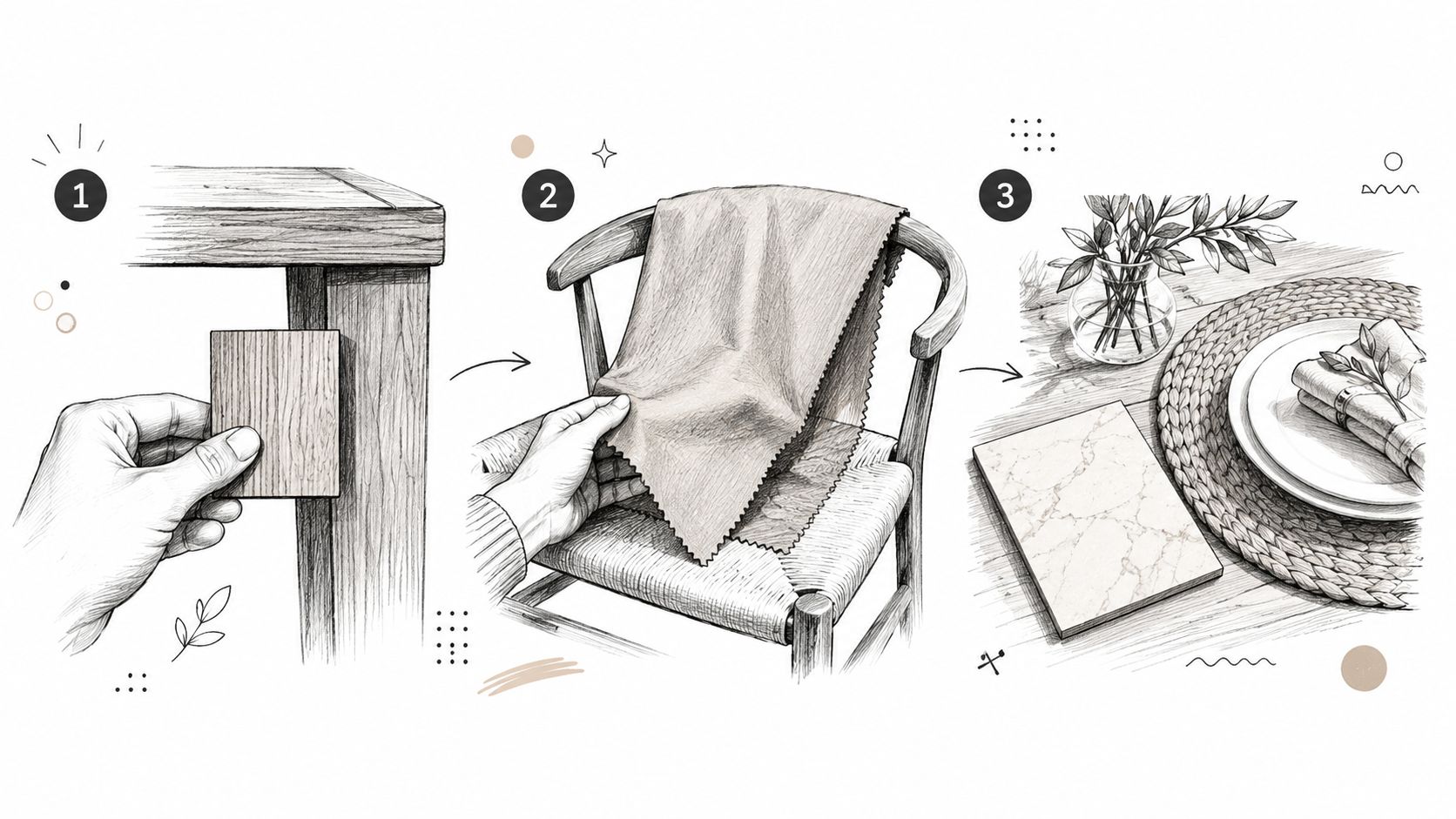
Take material swatches home and compare them beside the flooring, cabinetry, wall color, and existing furniture. Daylight can make a finish look cooler or lighter, while evening bulbs can bring out warmer undertones. Upholstery should be judged by touch as well as appearance, particularly when the table will support long dinners, homework, or remote work.
For a custom order, confirm the final dimensions, finish name, fabric grade, seat height, and extension-leaf configuration in writing. A design consultant can coordinate custom upholstery, finish selections, and protective topcoat upgrades so the set reflects both the room and the household's maintenance tolerance.
Chair selection deserves separate attention. This guide to choosing dining room chairs helps shoppers evaluate seat height, comfort, scale, and the relationship between chairs and table construction rather than treating seating as an afterthought.
Plan the arrival
Lead times vary between stocked furniture and custom pieces, so the order should include a clear schedule and delivery expectation. White-glove delivery and in-home assembly can reduce the risk of damage in tight entries and ensure extension leaves, table hardware, and chair components are assembled correctly.
Miller Waldrop Furniture & Decor offers dining furniture, design guidance, and custom-order options for fabrics, finishes, and configurations. A shopper can use those services to test the room plan, coordinate table and seating choices, and resolve practical details before delivery.
Book an in-store consultation or schedule a room measurement appointment before choosing the final set. The advisor should review the taped footprint, traffic paths, seat count, table height, material samples, and mix-versus-match preference, then help turn that evidence into a dining room table set built for the way the home works.
Visit Miller Waldrop Furniture & Decor to explore dining tables, chairs, benches, and customizable configurations with guidance from a design team. Bring the room measurements and photos, then schedule a consultation so the selected set fits the space, supports the household's routine, and arrives ready for everyday use.