

Decorating walls with high ceilings: Your Guide to Creating a Stunning Space

Walking into a room with high ceilings can be a double-edged sword. On one hand, you’ve got this incredible sense of openness and light. On the other, those towering walls can feel… well, intimidating. If you’re not careful, standard-sized furniture and art can look like dollhouse pieces, leaving the room feeling cold and unbalanced.
But that vast, empty space is actually your greatest asset. It’s an opportunity for you to create a truly breathtaking, dramatic, and personal room.
From Blank Canvas to Breathtaking Feature
The biggest mistake people make with tall walls is trying to ignore the upper half of the room. They hang art at a standard eye level, leaving a huge, awkward gap above it. The key is for you to embrace the verticality with intention. Instead of just filling the space, your goal is to guide the eye upward, creating a seamless and captivating experience from floor to ceiling.
This isn't about just buying bigger stuff. It's about a strategic approach to scale, texture, and light that empowers you to make the entire room feel cohesive and inviting.
Celebrate the Scale
Let's reframe how you see those walls. Don't fight the height—work with it. Think of it as a canvas for making a bold statement. With the right strategy, you can turn what feels like a design challenge into the most stunning feature of your home. We'll walk you through exactly how to do it.
You’re about to learn how to:
- Nail the Proportions: We’ll get into the specifics of choosing art and decor that feel perfectly scaled to your space, not too big and not too small.
- Add Warmth and Character: Discover how tools like lighting, molding, and wall treatments can add architectural interest and make a cavernous room feel cozy.
- Create a Visual Journey: Learn to use vertical elements like drapes, tall furniture, and strategically placed decor to draw the eye up naturally.
For over 70 years, we've been in the business of helping folks in West Texas and Southeastern New Mexico furnish homes they love. At Miller Waldrop, we see furniture and decor as more than just objects—they're the tools you use to tell your own story.
With a solid plan, those daunting walls become the perfect backdrop for a home that feels both grand and genuinely welcoming.
Ready to get started? A great first step is finding that one perfect statement piece to build around. You can explore our collection of home accents to find something that sparks your imagination. Let's dive in.
Choosing Decor That Commands Attention
When you're staring up at a tall, blank wall, the single most important design principle to remember is scale. Get this right, and everything else falls into place. Without the right proportions, even the most stunning decor can get lost, looking more like a postage stamp on a billboard than a deliberate design choice. The goal is for you to select pieces that feel intentional and have enough presence to truly command the space.
Think of it this way: a tiny, delicate teacup on a massive banquet table looks completely out of place. It's the same idea with your walls. A standard-sized painting on a 15-foot wall just won't have the impact you're looking for. You need pieces that confidently fill their space and create a strong visual anchor.
This is where oversized, statement-making decor becomes your best friend. A single, large-scale piece of art or a dramatic, floor-to-ceiling mirror can instantly ground the room, giving you the power to make the entire space feel more cohesive and complete.
Mastering Proportions with the Two-Thirds Rule
So, how do you know what "large-scale" really means for your space? A great guideline that designers often turn to is the "two-thirds rule." It’s simple: your artwork or mirror should take up roughly two-thirds of the width of the furniture it hangs above. It’s not a strict law, but it’s a fantastic starting point for creating visual harmony.
For instance, if you have a console table that's 60 inches wide, you should be looking for art that's around 40 inches wide. This simple measurement creates a pleasing, balanced relationship between the furniture and the wall decor, so the art never feels like a random afterthought. This becomes even more critical on those big, expansive walls where a strong focal point is a must.
This infographic breaks down the core pillars of designing for vertical spaces.
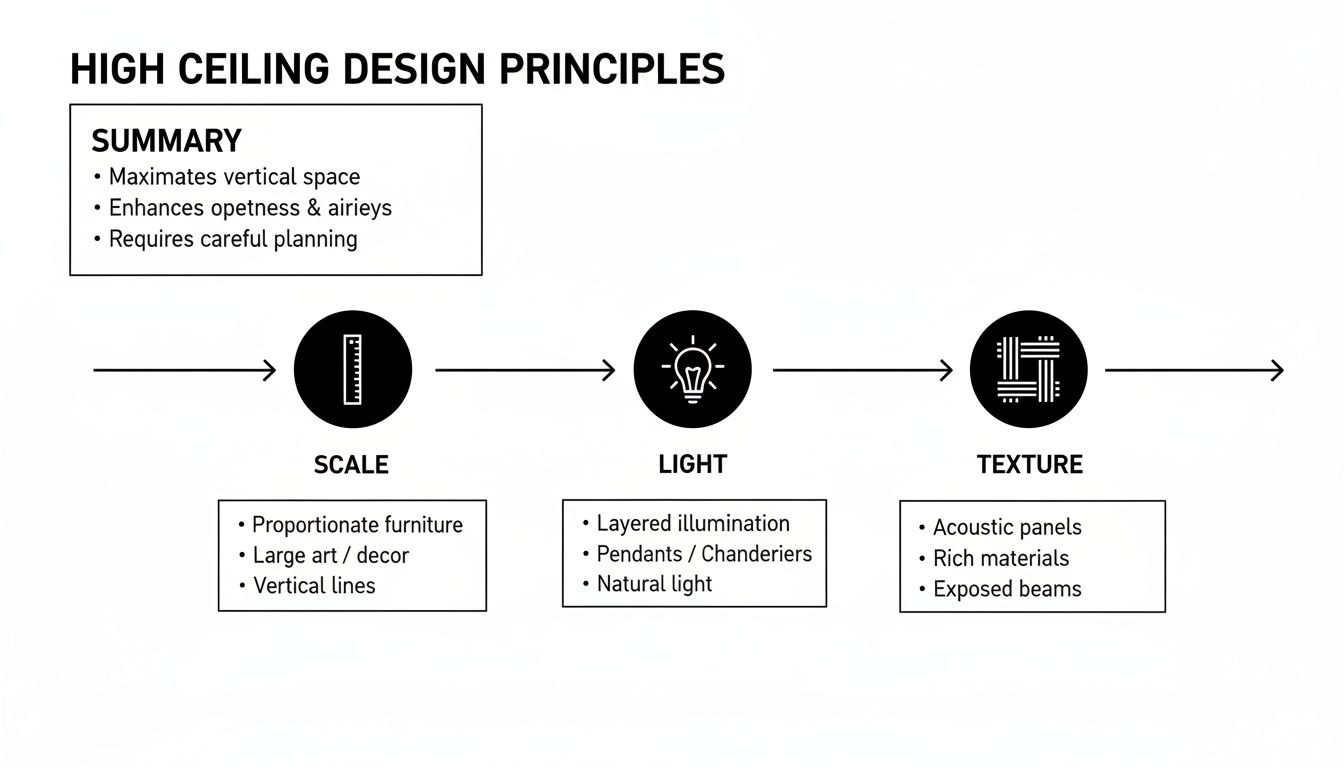
It really comes down to balancing scale, light, and texture to create a room that feels both grand and genuinely inviting.
Creating a Custom Look for Any Height
But what about the vertical space? The rules shift a bit when you're working with those soaring ceilings. You can't just hang everything at eye level. You have to treat the entire wall, from floor to ceiling, as your canvas.
Choosing decor is about more than just filling a space; it's about making a statement that reflects your personal style. You have the power to transform an intimidating wall into the heart of your home.
Here are a few practical ways you can think about vertical scale:
- Go Big with a Single Piece: In a grand entryway or a living room with vaulted ceilings, a single piece of art that's 48 inches tall or more is a game-changer. It feels bold and intentional, preventing that top half of the wall from feeling stark and empty.
- Create Impact with Groupings: If one massive piece feels too monolithic, you can create the same large-scale effect with a gallery wall. The trick is to treat the entire collection of smaller frames as one large, cohesive unit. Make sure the overall grouping still follows that two-thirds rule over your sofa or console table. For more inspiration on this, especially for tricky spots, check out our creative ideas for decorating the space above your TV.
- Layer with Other Tall Elements: Don't forget that you can add vertical interest without hammering a single nail. A slender, full-length mirror leaning against a wall, or a tall, sculptural floor lamp, can draw the eye upward and fill the space beautifully.
To make sizing a bit easier, here’s a quick reference table.
A Quick Guide to Sizing Decor for Tall Walls
Use this reference to help you select artwork and mirrors that are proportionally correct for your wall height.
| Ceiling Height | Recommended Vertical Art Size | Gallery Wall Strategy | Mirror Style Suggestion |
|---|---|---|---|
| 9-10 Feet | 36-48 inches | Tightly-grouped collection covering 4×4 ft | Tall, rectangular floor mirror |
| 11-13 Feet | 48-60 inches | Vertically-oriented gallery up the wall | Oversized, arched top mirror |
| 14+ Feet | 60+ inches | Large grid of 9+ pieces, treated as one unit | Multiple panel mirrors or a custom piece |
Ultimately, this is about finding what works for your home and your style.
Feeling confident about your decor choices is the first step toward a beautifully designed home. If you're looking for that perfect statement piece to anchor your room, our design experts at Miller Waldrop can help you find exactly what you need to bring your vision to life.
Adding Depth with Wall Treatments and Texture
When you've got soaring ceilings, the wall itself is your biggest canvas. Beyond just hanging art, the right wall treatment can empower you to transform a flat, intimidating surface into a feature full of character. It's the secret to keeping a grand room from feeling cold or cavernous. A thoughtful use of color, molding, and texture is how you make a big space feel custom and inviting.
A feature wall is one of the simplest yet most dramatic moves you can make. Painting one key wall in a deep, saturated color instantly creates a focal point. This simple trick draws the eye, adds a layer of depth, and visually breaks up that massive vertical space. It works especially well behind a headboard or a large sofa, anchoring the furniture and carving out a distinct zone within the larger room.
Building Architectural Interest
To really elevate tall walls, think about adding architectural elements. Applied moldings, like picture frame molding or even full wainscoting, are brilliant tools for adding structure and a touch of class. They create horizontal lines that make a towering wall feel more detailed and less like a blank void.
This doesn't mean you need to recreate a historic mansion. Even a simple chair rail can add a sense of scale and purpose. For a more contemporary or rustic vibe, you could bring in materials that add natural warmth. For instance, exploring different timber cladding options can add a rich, textural layer that pulls the eye upward in a really organic, intentional way.
The Power of Subtle Texture
Texture is the unsung hero of cozy design. A wall with a subtle finish—think grasscloth wallpaper, a hand-troweled plaster, or a soft limewash—plays with light in a way that flat paint just can't. It adds visual warmth and a softness that's almost tangible. This is particularly effective in a bedroom, where a textured wall behind a plush bed can amplify that feeling of comfort and escape. For instance, here's how you can choose the perfect Serta mattress set to complete your sanctuary.
Don't underestimate how texture affects a room's feel and sound. A smart wall treatment doesn't just look better; it can make your home feel more comfortable and sound more peaceful by absorbing echo.
There's a reason these solutions are so popular. The global market for wall and ceiling textures was valued at a staggering USD 29.54 billion in 2023. In homes, these finishes are prized not just for their looks but for their ability to improve acoustics by up to 30% in high-ceilinged rooms—a game-changer for creating a quiet sanctuary.
Wallpaper is another fantastic way to bring in both pattern and texture at the same time. If you're thinking about it, just make sure you know the prep work involved. You can get the full rundown in our guide on whether you can put wallpaper over existing wallpaper.
From a simple paint choice to intricate paneling, our design team at Miller Waldrop can walk you through all the possibilities to find the perfect treatment to add depth and personality to your home.
Using Light to Define Your Vertical Space
When you're working with high ceilings, lighting is one of your most powerful design tools. The right fixtures do so much more than just light up a room—they act as functional art, drawing the eye upward and helping you turn all that open space into a stunning focal point. This is your chance to really celebrate the room's impressive scale.
A dramatic chandelier or a series of cascading pendant lights can instantly command attention and fill that empty void in the upper third of a room. These aren't just light sources; they're intentional, stylish pieces that occupy space with purpose.
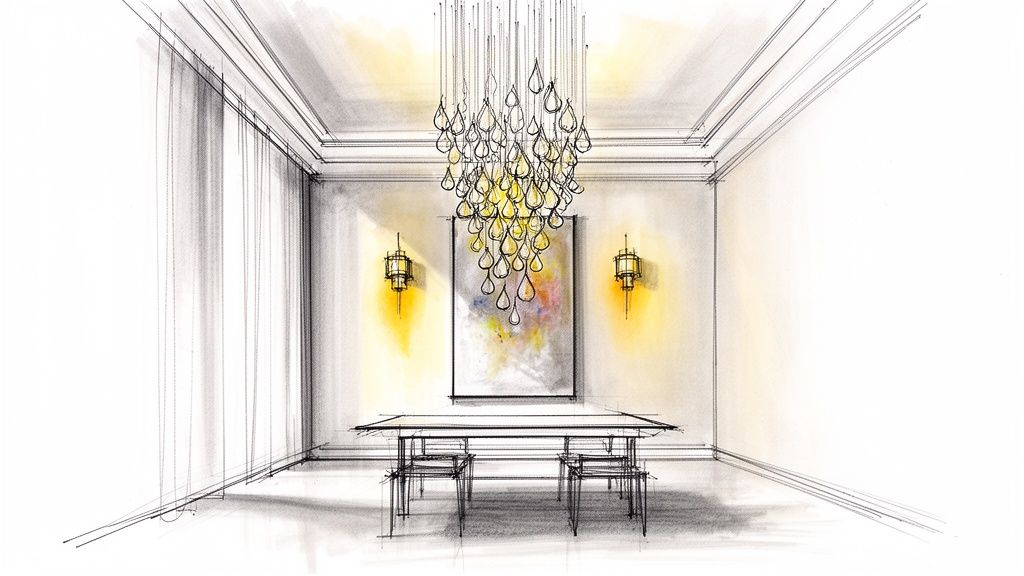
This blend of decor and illumination is a cornerstone of great interior design. It's no surprise the global market for ceiling lights and chandeliers is expected to reach USD 52.10 billion by 2030. Good lighting isn't just a trend; it's an investment that can make high-ceiling rooms feel up to 25% larger and more inviting, which is a huge advantage, especially for staged homes on the market.
Creating Layers of Light
A single overhead light, no matter how spectacular, is almost never enough to properly light a tall room. The real secret to creating a warm, welcoming atmosphere is to layer your lighting at different heights. This approach builds depth and dimension, preventing your grand space from feeling cold, cavernous, or full of shadows.
Picture a dining room with a soaring ceiling. By hanging a beautiful chandelier lower over the dining table, you not only light up your meals but also create a cozy, intimate zone for gathering. From there, you could add a pair of vertical wall sconces to flank a large mirror or a favorite piece of art, pulling focus to your decorated walls.
Your lighting choices are the tools you use to paint with light, highlighting the architectural features you love and setting the perfect mood for every occasion.
To get that balanced, professionally designed look, you'll want to combine three key layers of light:
- Ambient Lighting: This is your room's main light source. Think of a central chandelier, a cluster of pendants, or recessed lights that provide general, even illumination.
- Task Lighting: These are more focused lights for specific activities. A floor lamp by a reading chair or under-cabinet lighting in a tall built-in bookshelf are perfect examples.
- Accent Lighting: This is where you get to play and add drama. Use directional lights like sconces or picture lights to spotlight artwork, architectural details, or a unique wall finish.
Going beyond just fixtures and bulbs, understanding basic architectural lighting design principles can completely change how your high ceilings are experienced, emphasizing their grandeur and adding a real touch of sophistication.
Finding the perfect mix of fixtures can feel overwhelming, but it doesn't have to be. Our design experts at Miller Waldrop love helping clients select the right lighting—from show-stopping chandeliers to subtle floor lamps—to complete their vision. Take a look at our collection of stylish lighting options to find the pieces that will make your space truly shine.
Drawing the Eye Upward with Vertical Elements
Once you’ve nailed down the right scale, texture, and lighting, the final piece of the puzzle is using vertical elements to pull everything together. This is how you really celebrate your room's height instead of letting that upper space feel like an afterthought. When you strategically place objects that guide the eye from the floor to the ceiling, the whole room feels intentional, balanced, and complete.
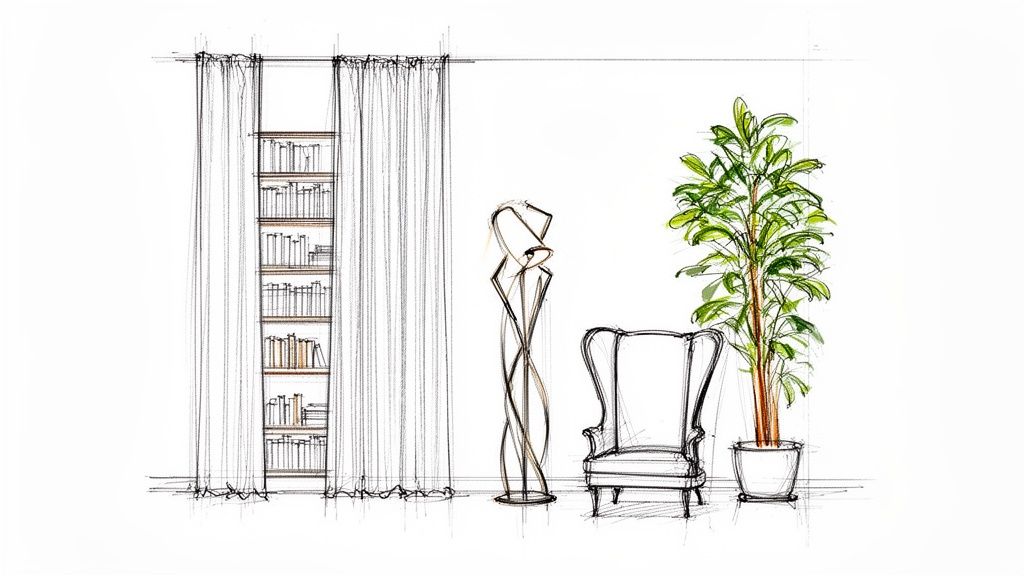
It’s no surprise that decor designed for grand spaces is on the rise. The global wall décor market reached a staggering USD 4.61 billion in 2024, and much of that growth comes from homeowners wanting to make the most of their vertical space. Getting it right doesn't just look good—it can even boost property value.
Using Drapery and Furniture to Your Advantage
One of the most effective tools in your design kit is floor-to-ceiling curtains. Don't just hang them over the window frame; mount the rod just a few inches below the ceiling and extend it well beyond the window's width. This simple change adds instant drama and softness, making your windows feel enormous and guiding the eye all the way up.
For more details on getting the placement just right, we've put together a guide on the correct way to hang curtains that will completely change how you see your windows.
Furniture choices are just as critical. Low-profile pieces can get lost in a room with tall ceilings, so think vertically here, too.
- Tall Bookcases: A beautiful, tall bookcase or an open étagère doesn't just provide storage; it confidently fills that vertical space and becomes a stunning feature wall.
- High-Back Chairs: A chair with a commanding presence, like a classic wingback, has the scale needed to feel right at home in a lofty room. Here’s how you can find the perfect La-Z-Boy recliner that offers both the right scale and unparalleled comfort.
- Vertical Lighting: Consider a sculptural floor lamp with an arc that reaches up and into the room's upper volume. It’s both a light source and a compelling vertical line.
Think of your furniture and decor as allies. Every tall element is like a brushstroke, helping you paint a complete and beautifully balanced picture on the canvas of your room.
When you bring these strategies together, you create a space that feels both grand and inviting. The goal is to choose pieces that work in harmony to celebrate your home’s impressive architecture. If you're looking for the perfect vertical accents for your home in Lubbock, Hobbs, or Ruidoso Downs, our design services at Miller Waldrop are here to help you craft a space that feels uniquely you.
Bringing It All Together
And there you have it. Armed with these strategies, you can finally stop seeing those tall walls as a design challenge and start treating them like the incredible opportunity they are. Creating a space you truly love is always a process, so enjoy the journey of turning that grand, open room into a cozy, personal sanctuary.
If you hit a roadblock along the way, remember you don't have to go it alone. The Miller Waldrop team is here to help you pull it all together.
Maybe you’re hunting for that one perfect, oversized piece of art that just speaks to you. Or perhaps you need help choosing a substantial, comfortable sectional to properly anchor your living room. Whatever it is, our design experts are on hand to offer personalized advice and help you make choices that feel right for you.
Your home is where your family’s story unfolds. The right design isn’t just about looking good—it’s about creating a backdrop for a life filled with comfort and joy.
The best way to get inspired is to see these ideas in person. We’d love for you to stop by our showrooms in Lubbock, Hobbs, or Ruidoso Downs. It’s one thing to read about scale, but it’s another thing entirely to see how you can choose the perfect large-scale sofa from our Ashley Furniture collection to command your room.
Let's build a beautiful, comfortable home your family will cherish for years to come. Your dream space is closer than you think, and we're excited to help you bring it to life.
Answering Your Top Questions About High Ceilings
When you're staring up at a vast, empty wall, it's natural to have a few questions. Decorating tall spaces comes with its own set of rules—and knowing when to break them. Let's walk through some of the most common design dilemmas and empower you with clear, confident answers.
How High Should I Hang Pictures on a Tall Wall?
This is probably the number one question people have. The standard advice is to hang art with its center at eye level, which is usually 57 to 60 inches off the floor. But with soaring ceilings, that rule needs a little flexibility.
If you’re hanging a single, oversized piece of art, don't be afraid to nudge it up a bit higher. You want it to command the space, not get lost in it. The goal is for the art to feel balanced within the entire vertical plane.
For a gallery wall, think of the whole arrangement as one large, single piece of art. The center of the entire grouping should be at that 57-60 inch mark. Most importantly, make sure the bottom frames have a relationship with the furniture below them. This anchors the collection and stops your art from looking like it's just floating away.
Should I Paint High Ceilings a Different Color?
Absolutely—if it serves the mood you're going for! The color of your ceiling can completely change the feel of a room.
Want to make a massive room feel a bit more intimate and cozy? You can paint the ceiling a color that's darker than the walls. This visually lowers the ceiling, creating a dramatic, sophisticated look that can be truly stunning.
On the other hand, if you want to emphasize the height and make the room feel even more open and airy, stick with a lighter shade or even the same color as the walls. A pro tip is to use a slightly lighter tint of your wall color for the ceiling. It creates a subtle, seamless effect that gently draws the eye upward without being jarring.
Your ceiling is essentially the "fifth wall" in your room. Treating it with intention is one of the most powerful tools you have for shaping the feel of your entire space.
What Window Treatments Work Best for Tall Windows?
For tall windows, the best tool to use is almost always floor-to-ceiling curtains. They are a game-changer. They add softness, texture, and a sense of drama while beautifully accentuating the room’s grand scale.
To get the most impact, hang the curtain rod as high as you can—just a few inches below the ceiling or crown molding. Also, extend the rod several inches past the window frame on each side. This trick makes your windows look even grander and lets the maximum amount of natural light flood in when the curtains are open.
At Miller Waldrop, we know you have what it takes to create a home you love. Our design services are here to offer the expert guidance and resources you need to turn your vision into a reality. Let’s work together to transform those design questions into confident, beautiful solutions.
Ready to find those perfect finishing touches? Come explore our collection of home accents and discover pieces that will make your tall walls truly shine.