


Green and Brown Baby Bedding: Stylish Nursery Ideas

A lot of parents start the nursery the same way. They save a few photos, fall for a soft sage crib sheet or a warm mushroom blanket, and then hit the wall where style and safety start competing for attention.
That tension is real. Green and brown baby bedding looks calm, refined, and timeless, but a nursery can't be built on looks alone. The right room has to feel restful, fit the family's home, and protect a baby where it matters most. Good design solves all three.
Dreaming Up a Serene and Earthy Nursery
A green and brown nursery works because it doesn't shout. It settles the room. Soft greens, wood tones, and earthy browns create a space that feels grounded from the start, which is exactly what many parents want when everything else in life feels busy, new, and slightly chaotic.
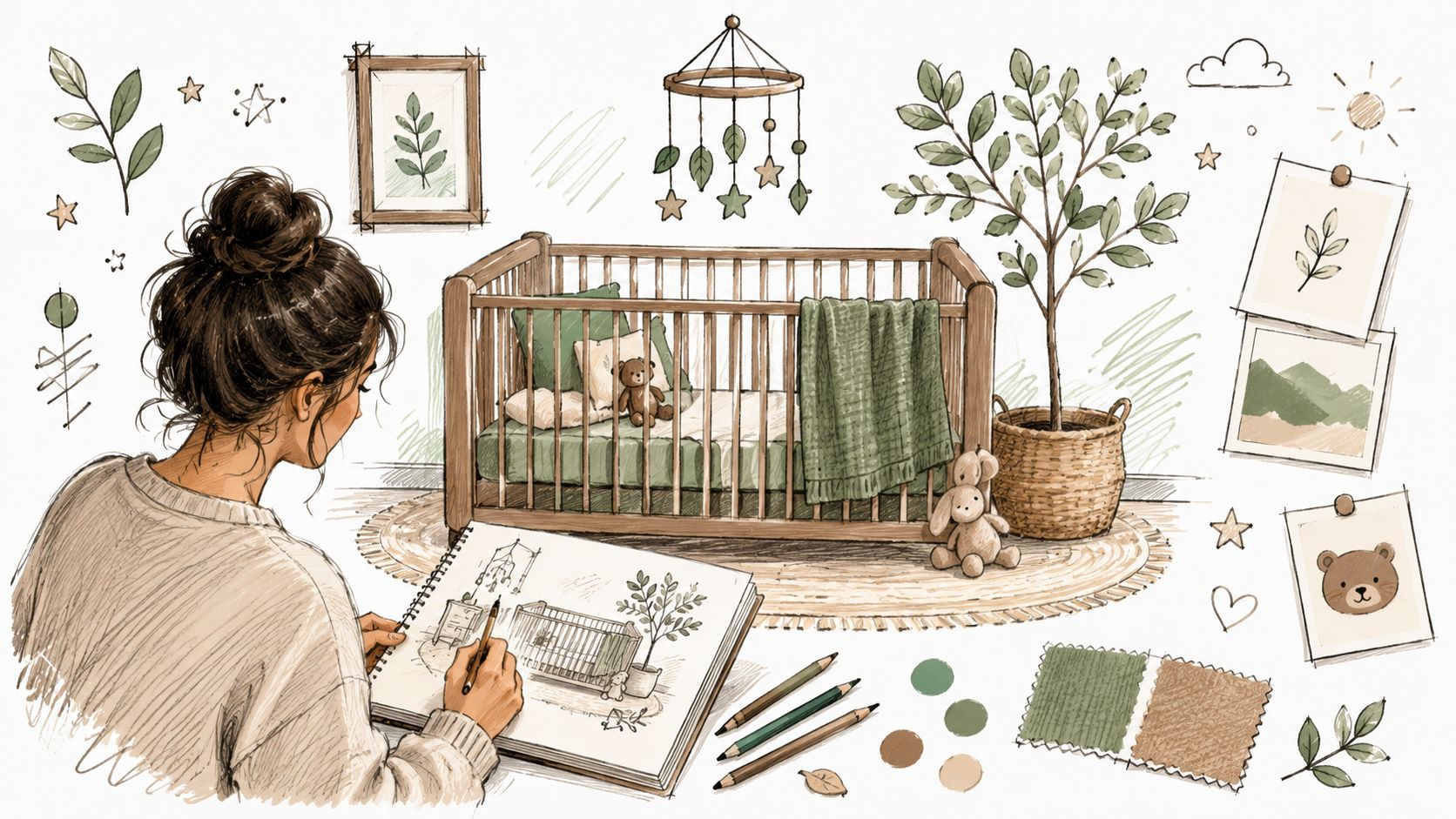
That instinct lines up with where nursery design is headed. For 2026, earthy brown tones like warm mushroom and cocoa brown, along with sage green and dusty olive, are projected to replace the colder “Sad Beige” look and create spaces that feel grounding and cocoon-like according to nursery color trend reporting.
Why this palette works so well
Green softens a room without making it sugary. Brown adds weight and warmth without making it dark. Together, they feel natural, not theme-y.
A nursery built around these tones also ages better than a room loaded with novelty prints. The crib sheet can change later. The foundation still works.
A peaceful nursery usually starts with fewer, better choices. One strong palette beats ten cute ideas fighting each other.
Beauty starts with a safer base
The biggest mistake isn't picking the wrong shade of green. It's treating safety like a later step, after the “fun” design decisions are finished.
The better approach is simple:
- Choose the crib setup first so the room's prettiest element is also the safest one.
- Use bedding as the visual anchor because it sets the tone for walls, wood finishes, and textiles.
- Keep the look restrained so the room feels restful instead of over-styled.
Green and brown baby bedding does this especially well. It gives the nursery depth, softness, and flexibility, but only when the materials and fit are right. That's where smart design starts.
Choosing Your Perfect Earth-Tone Palette
The best green and brown baby bedding doesn't begin with “green” or “brown” as broad categories. It begins with exact shades. A sage sheet and a cocoa blanket tell a very different story than olive paired with dark espresso.
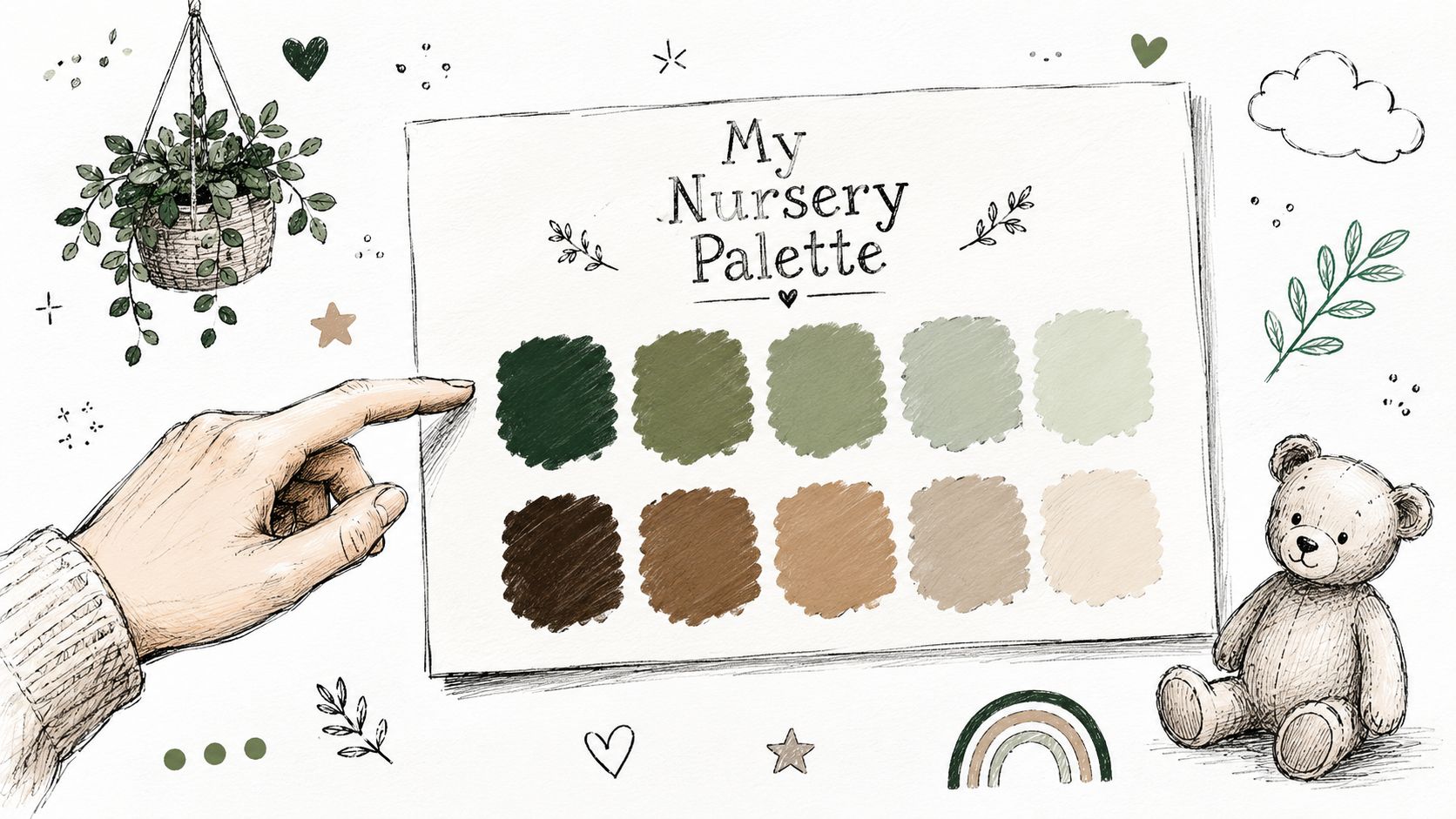
Start with one lead color
Every calm nursery needs a visual hierarchy. The easiest method is the 60 30 10 rule.
| Use | Role in the room | Strong earth-tone picks |
|---|---|---|
| 60 | Main color | warm white, soft mushroom, light sage |
| 30 | Secondary color | dusty olive, cocoa brown, muted taupe |
| 10 | Accent color | terracotta, deeper moss, natural black |
That keeps the nursery from becoming muddy. Too many mid-tones make an earthy room feel flat. One light tone, one medium tone, and one accent create structure.
Pairings that consistently look good
Some combinations are easier than others. These work because they balance softness and contrast.
- Sage and mushroom work for parents who want the room to feel airy and current.
- Dusty olive and cocoa give the nursery a richer, cocooned look.
- Soft taupe, moss, and terracotta add a little warmth without pushing into seasonal decor.
For families who want the entire room to feel rooted in natural materials, Color of the Earth inspiration is a useful reference for seeing how grounded palettes can stay refined rather than heavy.
Practical rule: If the crib is wood-toned and the room gets limited light, keep the bedding lighter than the furniture.
Use bedding as the room's color anchor
The crib sits at the center of the nursery visually, even when it's not in the middle of the floor. That makes bedding the smartest place to lock in color.
A fitted sheet in sage or mushroom can guide every other choice. Once that shade is decided, curtains, rugs, and changing pad covers become easier to edit. Parents don't need more options. They need fewer, clearer ones.
Clean air matters too, especially in smaller nurseries layered with textiles, paint, and furniture finishes. For families building a low-irritant room, EcoQuest Purifiers room units can be a practical addition alongside low-emission bedding and furniture choices.
Skip the obvious nursery clichés
Earth tones already carry visual interest. They don't need cartoon overload, loud contrast, or overly busy pattern mixing.
A better formula looks like this:
- Pick one quiet pattern such as a subtle stripe or tiny botanical.
- Add one solid in the dominant shade.
- Bring in texture through knit, quilted stitching, or woven trim instead of louder prints.
That's how green and brown baby bedding stays stylish. It looks designed, not decorated.
Prioritizing Safety and Materials in Bedding
Clear decisions matter most. If a nursery looks beautiful but the sheet slips, the mattress off-gasses heavily, or the bedding pile keeps growing, the room has failed its job.
The safest crib setup is also the cleanest-looking one. A firm mattress. One properly fitted sheet. No styling clutter inside the crib.
Follow the order that matters most
Parents often shop backward. They look at fiber labels first, then color, then maybe fit. That's the wrong order.
According to baby bedding safety guidance, the strongest approach uses a three-tier certification method for chemical-safe bedding. Start with OEKO-TEX Standard 100 or MADE SAFE for sheets, move to GREENGUARD Gold or MADE SAFE for mattresses, and add GOTS if organic fiber origin matters. That same guidance makes an even more important point. Physical fit comes before chemical safety claims because an improperly fitted sleep surface creates a more immediate risk.
The non-negotiable fit rules
Fit isn't a minor detail. It's the first question.
A crib sheet should have a pocket depth of at least 6 inches, ideally 8 or more, with full elastic around the entire perimeter, not only the corners, according to crib bedding fit specifications. That same guidance notes that sheet slipping is linked to 14% of crib-related entanglement incidents in unpadded surfaces, and failed fit raises the risk of loose bedding accumulation by 30%. It also recommends the two-finger test, where only two fingers fit between the mattress and sheet.
If a fitted sheet looks a little loose in the store or after one wash, it's the wrong sheet.
The mattress matters just as much. The same source states that crib mattresses should be 2¾ to 6 inches thick with a firm, non-inclined surface, and it warns against memory foam or pillow-top styles. Memory foam bedding increases suffocation risk by 4.2x compared with firm cotton alternatives in controlled nursery studies in that guidance.
What to look for on the label
A short shopping checklist keeps things simple:
- For sheets look for OEKO-TEX Standard 100 or MADE SAFE.
- For mattresses prioritize GREENGUARD Gold or MADE SAFE.
- For organic claims add GOTS if fiber origin is important.
- For fit check pocket depth, full-perimeter elastic, and pre-washed or sanforized fabric.
For readers who want to understand fabric quality language more clearly, a guide on sheet construction and feel can help separate marketing language from practical buying decisions.
Bamboo, cotton, and what actually matters
Material choice should support comfort, breathability, and easier care. It shouldn't distract from safety basics.
Bamboo-derived fabrics are projected to be the fastest-growing babies bedding material segment, with about 8.1% CAGR from 2026 to 2034, according to market data on babies bedding materials. That growth makes sense. Many parents want breathable, natural-feeling textiles in earth tones, especially as outdoor-inspired nursery styling becomes more common.
Cotton is still a dependable choice, especially when the weave feels smooth and the fit is reliable. Bamboo blends often appeal to parents who want softness and breathability. Neither material gets a free pass if the sheet fits poorly or carries weak safety information.
Another point gets ignored too often. Soft decorative bedding in any color belongs out of the crib. Nursery safety guidance on styling and sleep warns that soft, bulky bedding including quilts and blankets increases SIDS risk by three times. That's why the safest crib almost always looks more minimal than the styled photos online.
Parents planning ahead for toddler years may also want a realistic look at making the big bed leap, since bedding needs change once a child moves beyond the crib stage.
Styling Your Nursery Around the Bedding
Once the bedding is chosen well, the rest of the room gets easier. The crib textiles should lead. Everything else should support them.
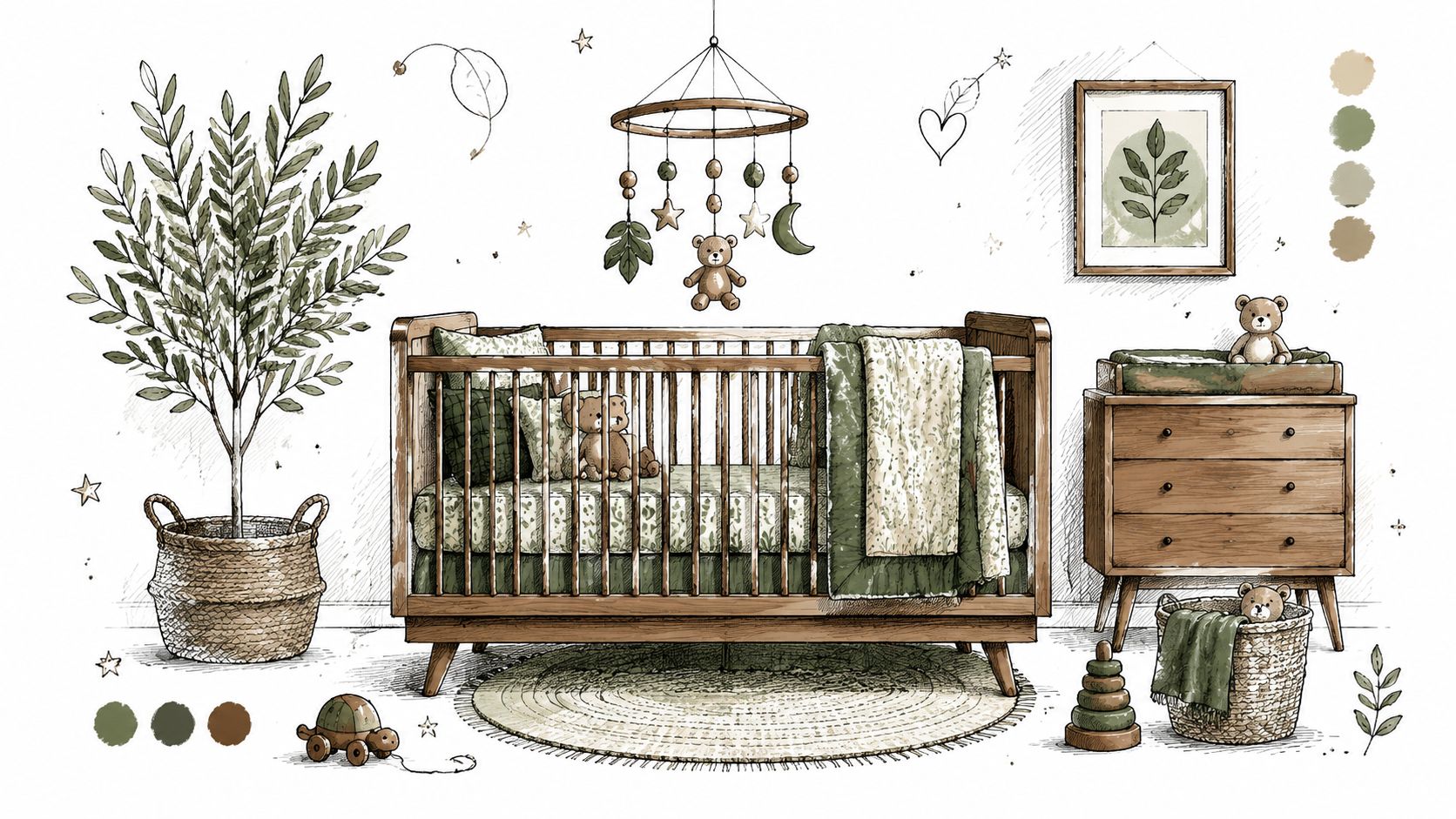
The strongest nurseries right now aren't relying on loud motifs. For 2026, nursery bedding is projected to move away from bold prints and toward texture-driven designs like semi-plains, jacquard weaves, waffles, and linens for softer, more refined tactile appeal, according to designer nursery trend predictions.
Let texture carry the room
That shift is good news because texture is what gives green and brown baby bedding depth. Without it, earth tones can fall flat.
Good nursery texture comes from contrast:
- Smooth plus nubby such as a crisp fitted sheet with a woven basket nearby
- Matte plus soft sheen like washed cotton against a lightly finished wood crib
- Lightweight plus grounded such as airy curtains over a dense wool-blend rug
A room built this way feels layered even when the palette stays restrained.
Match the wood tones carefully
Not every brown belongs in the same room. Bedding and furniture need a relationship.
| Bedding mood | Best wood direction | Overall effect |
|---|---|---|
| Sage and mushroom | natural oak or light walnut | soft, airy, modern |
| Olive and cocoa | medium walnut or richer stained wood | cozy, cocooned, tailored |
| Taupe and moss | weathered oak or muted brown finish | relaxed, organic, quiet |
For families drawn to warm minimalism, organic modern design ideas can help connect bedding tones with the right furniture finishes and room balance.
The room should feel collected, not matched. Brown doesn't have to be the same brown everywhere.
Keep wall decor restrained and intentional
Wall art should echo the mood of the bedding, not compete with it. Botanical studies, abstract natural scenes, soft animal sketches, and tonal textile art all work better than loud graphic sets.
Parents who want help narrowing the visual direction can browse Revellia's wall art ideas for nursery-friendly ways to keep the walls soft and cohesive.
The same editing rule applies to accessories. One woven hamper, one upholstered glider pillow, one substantial rug. That's usually enough. A nursery doesn't need dozens of small decorative moments. It needs a few pieces that make the room feel calm.
What to avoid
A beautiful earth-tone nursery can get derailed fast. The most common styling mistakes are easy to spot:
- Too many shades at once make the room look muddy
- Overdecorated crib areas ruin both safety and visual calm
- Theme-heavy accents date the room quickly
- Cold lighting drains warmth from sage, olive, and mushroom tones
Green and brown baby bedding looks best when the rest of the room supports it subtly.
Your Guide to Finding and Caring for Bedding
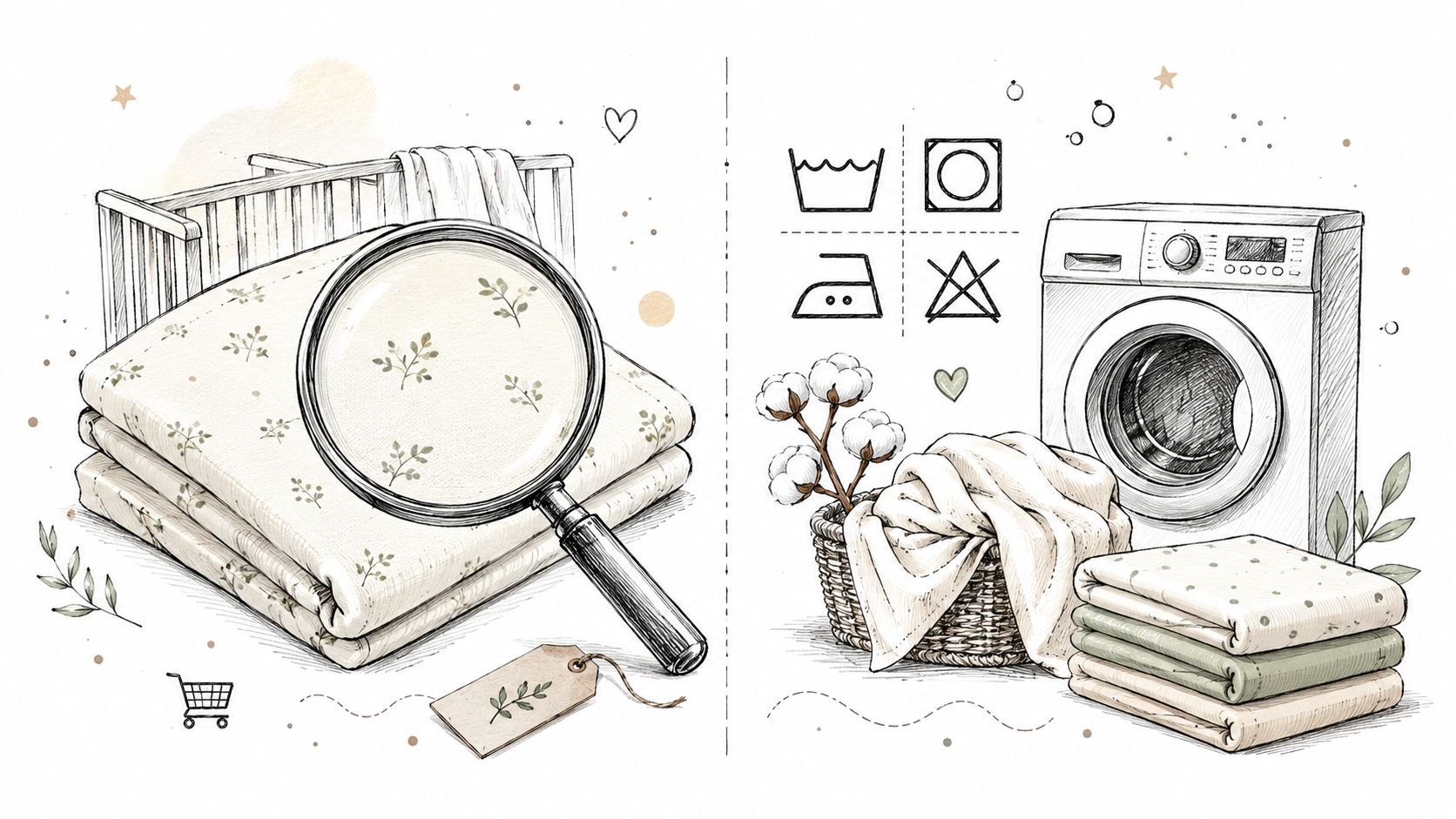
Online shopping is convenient, but baby bedding is one category that benefits from being handled in person. Color is hard to judge on a screen. Texture is even harder. A sage sheet can read gray online and green in daylight. A “soft” fabric description can still feel stiff, slick, or overly thin once it arrives.
Why in-person shopping still wins
A showroom visit gives parents information a product page can't.
They can check whether a brown reads warm or muddy. They can feel whether a fabric has the right hand for a baby's skin. They can compare a smoother cotton against a more textured weave and decide what fits the room's look without guessing.
Custom design help matters too. Families often know the feeling they want but not the exact combination that gets them there. A knowledgeable design team can help tighten the palette, coordinate finishes, and avoid expensive mismatches before they happen.
Simple care habits that protect the bedding
Beautiful bedding won't stay beautiful if it's washed carelessly. The goal is softness, shape retention, and consistent fit.
- Wash before first use so any finishing residue is removed and shrinkage shows up before the sheet goes on the crib for regular use.
- Use a gentle detergent because heavy fragrance and harsh additives can cling to fabric.
- Skip fabric softener when possible since buildup can affect feel and breathability.
- Dry with care so elastic holds its shape and the fitted corners stay snug.
Bedding that twists, shrinks unevenly, or loses its grip after laundering doesn't belong in the nursery.
Buy fewer pieces, but buy better ones
Parents don't need an oversized bedding collection. They need a small rotation that washes well, fits properly, and keeps the nursery looking coherent.
A practical setup usually includes a few fitted sheets in the chosen earth-tone family and one or two room textiles outside the crib to reinforce the palette. That approach keeps the nursery cleaner visually and easier to maintain week after week.
Miller Waldrop Furniture & Decor gives families a practical way to turn nursery ideas into a room that feels polished, personal, and safe. Shoppers can visit one of the curated showrooms to see colors in real light, compare textures in person, and work with a knowledgeable team on furniture, finishes, and custom options that fit the space. Explore Miller Waldrop Furniture & Decor to get expert help creating a nursery that looks beautiful and lives well every day.