

2000 Thread Count Sheets: The Truth About Luxury Bedding

The most repeated bedding advice in the store aisle is also the one that causes the most confusion: buy the highest thread count possible. That sounds sensible until a package promises 2000 thread count sheets and asks shoppers to believe that one giant number equals luxury.
It doesn't.
A sheet set touches skin for hours every night. It affects warmth, airflow, texture, and how polished the whole bed feels over time. That means the better question isn't “What's the biggest number on the label?” It's “What kind of fabric is being woven, and will it work with the mattress underneath it?” Even outside bedding, fabric quality depends on more than a headline number, which is why resources like The Fabric Company's quilting cotton guide can help readers see how thread count fits into the bigger picture of fabric performance.
A comfortable bed works like a system. The mattress supports the body. The sheets control the first layer of feel against the skin. When those two pieces suit the sleeper, the whole room works harder for rest.
Table of Contents
- The High Thread Count Dilemma
- Debunking the 2000 Thread Count Myth
- What Truly Defines Quality Bed Sheets
- How to Find Your Perfect Sheets
- A Shoppers Guide to Buying and Caring for Sheets
- Build Your Ultimate Sleep Sanctuary
The High Thread Count Dilemma
A shopper sees two packages. One says “luxury cotton.” The other says “2000 thread count” in oversized print. Consumers often assume the second one must be better because the number feels more impressive.
That's the dilemma. Bedding labels train shoppers to treat thread count like a score, as if the highest score wins. But sheets aren't a math contest. They're a fabric choice, and fabric quality depends on what those threads are made from, how they're twisted, and how they're woven together.
The confusion gets worse because many people are shopping for sheets at the same time they're replacing a mattress, moving into a new home, or refreshing a guest room. They don't want a lesson in textile engineering. They want sheets that feel cool or cozy, wash well, and still feel good after regular use.
Good sheet shopping starts when the shopper stops asking, “What's the highest number?” and starts asking, “What will this feel like after real nights of sleep and real laundry days?”
That shift matters. A well-made moderate thread count sheet can feel smoother, breathe better, and last longer than a poorly made set with a huge number on the package.
For anyone pairing new sheets with a quality mattress, confidence begins. The goal isn't to chase a label. The goal is to choose the right surface for the way the sleeper rests, runs warm or cool, and ultimately wants the bed to feel.
Debunking the 2000 Thread Count Myth
The short answer is simple. 2000 thread count sheets aren't a reliable sign of luxury. They're usually a sign that the number needs closer inspection.

According to Groen's explanation of 2000 thread count sheets, high-quality single-ply cotton yarns typically top out at 400 to 500 threads per square inch. The same source notes that to push the count far higher, manufacturers often use multi-ply yarns from weaker fibers, and organizations such as Good Housekeeping view counts over 1,000 as marketing hype that rarely connects to better sleep quality. That source also identifies 300 to 500 as the ideal range for quality cotton sheets.
Why the number gets inflated
Thread count sounds straightforward. Count the threads in a square inch of fabric. More threads should mean better fabric. But that logic breaks down when the threads themselves change.
Some manufacturers raise the label number by twisting multiple smaller strands together into one yarn. That's called multi-ply construction. On paper, the count climbs. In the bed, the result often feels heavier, less breathable, and less durable than shoppers expected.
A simple analogy helps. One smooth, strong cord usually performs better than several weaker strings twisted together and treated like they're something special. The bundle may look bigger, but bigger isn't the same as better.
Why this matters in daily use
A sheet can feel substantial in the package and still disappoint at home. That often happens because shoppers mistake density for quality. Dense fabric isn't automatically softer. It isn't automatically cooler. It isn't automatically longer lasting.
Common problems with inflated high-count sheets include:
- Reduced airflow: Tighter, heavier construction can hold more warmth than many sleepers want.
- Rougher long-term feel: Weaker fibers may not age as gracefully through repeated washing.
- Misleading expectations: The label promises luxury, but the experience depends on fiber and weave, not headline numbers.
Practical rule: If a sheet label leans hard on “2000 thread count,” the shopper should slow down and look for the real quality markers hiding in smaller print.
The lesson isn't that thread count means nothing. It's that thread count stops being useful when the number turns into a marketing stunt. A smart buyer doesn't need to be impressed by a giant number. A smart buyer needs to know what created it.
What Truly Defines Quality Bed Sheets
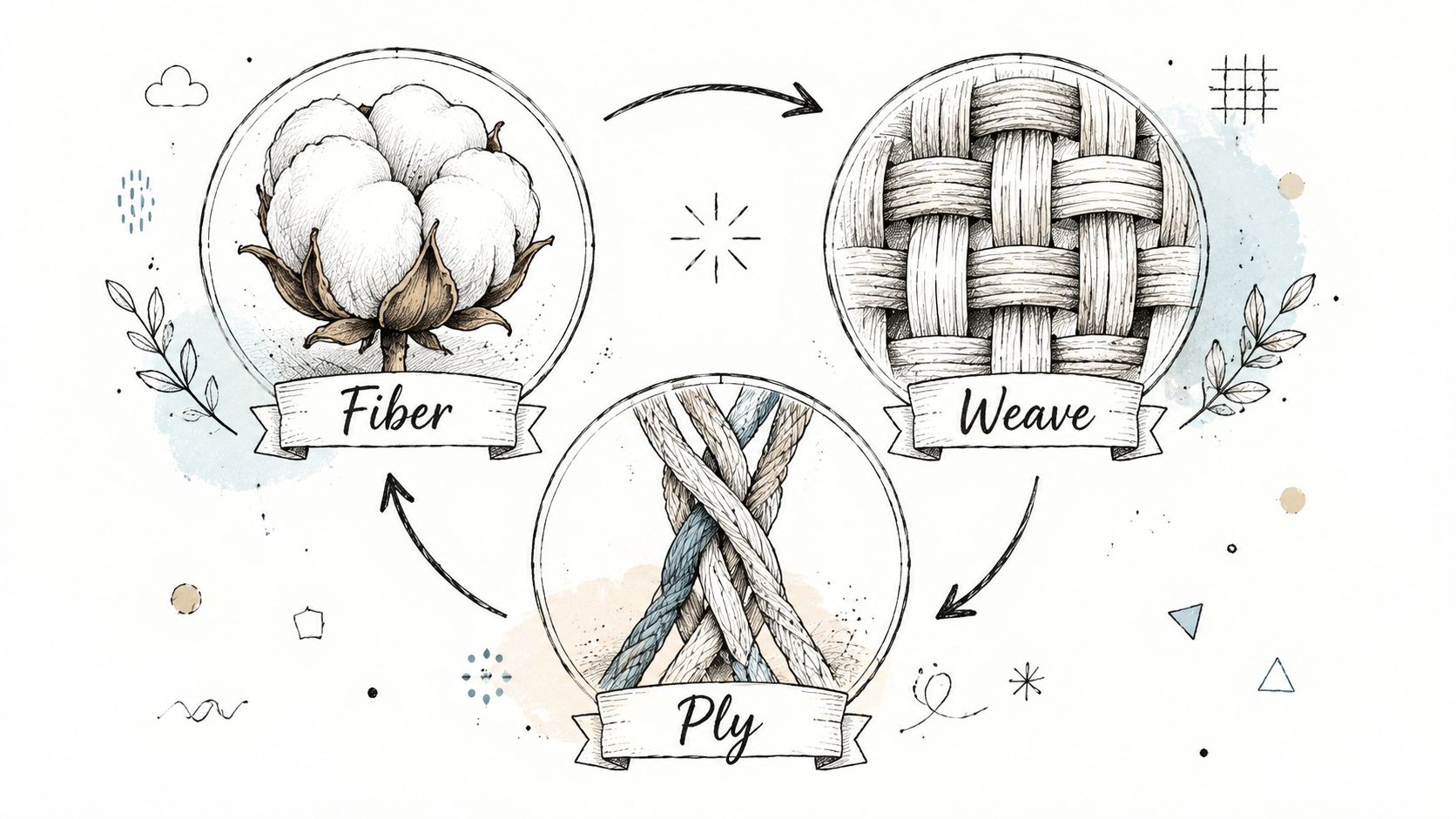
Once the thread count myth falls away, three things become much more useful: fiber, weave, and ply. Those are the details that shape softness, breathability, strength, and how well sheets complement a good mattress.
Fiber matters more than bragging rights
Start with the cotton itself. Better fibers usually create a smoother, cleaner yarn. Lower-grade fibers tend to produce fuzzier, weaker yarns that don't hold up as well.
Shoppers often get stuck on numbers because fiber quality isn't always displayed in huge print. But fiber is the base ingredient. If the starting material is weak, no amount of packaging language fixes that.
This same principle shows up in other home textiles too. Readers comparing decorative fabrics may find practical crossover advice in these home decor pillow fabric tips, because surface feel, durability, and intended use all matter more than marketing language.
Weave changes the sleeping experience
Two cotton sheet sets can feel completely different because of weave. This very aspect makes a bedroom start feeling customized instead of generic.
According to Ettitude's guide to the best thread count for sheets, the sweet spot for premium comfort is 250 to 400 thread count. That same source recommends percale at 200 to 300 for hot sleepers and sateen at 300 to 600 for those who want more warmth, while noting that going beyond those ranges offers little benefit and that 2000 thread count is a red flag for low-quality, multi-ply construction.
Here's what those weave terms usually mean in plain language:
- Percale: Crisp, matte, airy. It suits sleepers who like a cooler, fresh-sheet feel.
- Sateen: Smoother, silkier, slightly warmer. It suits those who prefer a softer drape and a cozier surface.
The right weave doesn't just change texture. It changes how the sheet works with body temperature through the night.
Ply is where shoppers often get fooled
Ply describes how many strands are twisted together to make a yarn. Single-ply usually means one stronger yarn doing the work on its own. That's generally what shoppers want when they care about breathability and a refined hand-feel.
Multi-ply yarn often enters the picture when labels chase inflated counts. A huge number can distract from a less elegant construction method. That's why shoppers should treat ply as a quality clue, not a technical footnote.
A simple framework helps:
- Check fiber first. A better raw material gives the sheet a better chance to feel smooth and wear well.
- Choose weave by sleep style. Cool and crisp isn't the same as soft and warm.
- Look for single-ply language. That usually points toward a cleaner, more breathable fabric.
A confident shopper doesn't need to memorize textile jargon. A confident shopper just needs to know where true quality lives.
How to Find Your Perfect Sheets
A good sheet choice isn't about winning a luxury contest. It's about matching material and weave to the sleeper, the room, and the mattress. A cool sleeper may love one fabric that a hot sleeper avoids. A guest room may need easy care, while a primary bedroom may call for a more refined feel.
Three realistic paths for most bedrooms
Long-staple cotton percale tends to suit sleepers who want a light, crisp bed. It has that clean, neat feel people often describe as fresh or cool. In warmer climates, or for anyone who throws a leg out from under the covers at night, percale usually makes sense.
Long-staple cotton sateen fits a different kind of comfort. It feels smoother and drapes more closely over the mattress. People who prefer a slightly warmer, more polished bed often gravitate toward it, especially when the room runs cooler or the sleeper likes a softer hand-feel.
Microfiber solves a different problem. It's often chosen for easy care, a soft initial touch, and a lower barrier to entry. But it doesn't breathe like better cotton, and some sleepers notice that difference quickly, especially when body heat builds during the night.
Sheet Material and Weave Comparison
| Sheet Type | Feel | Best For | Ideal Thread Count |
|---|---|---|---|
| Long-staple cotton percale | Crisp, cool, matte | Hot sleepers, airy bedrooms, tailored feel | 200 to 300 |
| Long-staple cotton sateen | Smooth, softer, slightly warmer | Sleepers who want drape and warmth | 300 to 600 |
| Microfiber | Soft, easy-care, less airy | Guest rooms, budget-focused shoppers, low-maintenance setups | Thread count isn't the best quality measure here |
That table helps narrow the field, but personal preference still decides the winner. One person hears “crisp” and thinks luxury hotel. Another hears “crisp” and thinks too stiff. One person hears “smooth” and thinks cozy. Another worries it may sleep warmer.
Fit matters as much as fabric
Even excellent sheets disappoint when they don't fit the mattress correctly. A fitted sheet that pulls loose at the corners changes the whole sleep surface. It bunches, shifts, and distracts from the comfort the fabric should provide.
That's why mattress depth matters. Before buying, it helps to compare dimensions against reliable bed sheet measurements for common mattress sizes. A well-fitted sheet supports the mattress instead of fighting it.
A practical way to choose is to ask four direct questions:
- Does the sleeper run hot or cool? Breathability may matter more than softness on first touch.
- What feel does the sleeper want? Crisp and airy feels very different from smooth and drapey.
- How much care does the household want to give? Some fabrics reward careful laundering more than others.
- What role does the bed serve? A primary suite, child's room, and guest room may each need something different.
There isn't one perfect sheet for every home. There is a best-fit sheet for a specific bed, a specific sleeper, and a specific routine.
A Shoppers Guide to Buying and Caring for Sheets
Buying sheets gets easier when the shopper has a checklist. Caring for them gets easier when the household understands what wears fabric out.
What to check before buying
Shoppers can ignore flashy packaging and go straight to the details that matter most.
- Read the fiber content: Look for clear labeling, especially if the goal is cotton rather than a synthetic blend.
- Scan for single-ply wording: That's often a stronger sign of quality than a giant thread count printed on the front.
- Treat very high counts with caution: If the number looks extreme, the shopper should inspect the rest of the label more closely.
- Touch the sheet if possible: The hand-feel can quickly reveal whether the fabric feels airy, slick, dense, or overly heavy.
- Match the sheet to the sleeper: Cool, crisp bedding and smooth, warmer bedding serve different needs.
A careful buyer shops with fingertips and common sense, not just with the biggest number on the package.
Regular sheet changes matter too. Households building a healthy routine can use this guide on how often sheets should be changed to keep the bed feeling cleaner and more comfortable.
How to keep good sheets feeling good
Even well-made sheets need sensible care. Heat, harsh detergents, and product buildup can change how fabric feels.
A few habits help preserve comfort:
- Wash in cooler water when the care label allows. That's gentler on fibers.
- Use mild detergent. Heavy products can leave residue behind.
- Go easy on fabric softener. It can coat fibers and interfere with breathability.
- Don't over-dry. Excessive heat can be rough on fabric over time.
- Store sheets dry and folded. Clean, breathable storage helps keep them fresh.
Good care doesn't need to be complicated. It just needs to protect the qualities the shopper paid for in the first place.
Build Your Ultimate Sleep Sanctuary
The final layer of a comfortable bed isn't the mattress or the sheet by itself. It's the way they work together. A supportive mattress can still feel off if the sheet traps too much heat, bunches at the corners, or feels rough against the skin. A beautiful sheet set can't rescue a mattress that doesn't support the body correctly.
Sheets are the comfort layer of the whole system
The best way to think about bedding is as part of a complete sleep environment. The mattress handles pressure relief and support. The pillow supports alignment. The sheets manage surface feel and temperature.
That's why chasing 2000 thread count sheets misses the point. The number doesn't tell the shopper whether the bed will feel cool at midnight, comfortable at dawn, or polished every day in between. The right sheet is the finishing layer that helps a quality mattress perform the way it should.
For readers shaping the full bedroom experience, this guide to creating a sleep sanctuary with lighting, temperature, mattress, and bedding working together offers a broader look at how the room itself supports better rest.
The home setup that supports better rest
A confident shopper can now spot the red flags and focus on what matters:
- Choose fiber over hype
- Choose weave by sleep style
- Choose fit that suits the mattress
- Choose bedding as part of the full sleep system
That perspective turns shopping into a smarter decision for the whole home. The sheets stop being a random add-on and start becoming a tool that helps the sleeper get more from the bed already in the room.
A better bedroom rarely comes from one magic label. It comes from thoughtful layers working together.
For shoppers ready to build a bed that feels right from the mattress up, Miller Waldrop Furniture & Decor offers the tools to make that decision with confidence. Their showrooms in Lubbock, Hobbs, and Ruidoso Downs help families compare sleep solutions in person, explore quality mattress options, and work with Sleep Experts who use advanced bed-matching technology to recommend the right support for each body. Readers looking for a practical next step can browse mattress options such as the Mattress 1st collection and then visit a showroom to create a complete sleep setup that fits their home.