

How Long Do Mattresses Last? Your Guide to a Better Night’s Sleep

On average, you can expect a good mattress to last somewhere between 7 and 10 years. But that's just a ballpark figure. The real lifespan of your bed comes down to what it's made of, how you treat it, and how much you use it. Knowing the difference is your first step toward taking control of your sleep quality.
Your Guide to Mattress Longevity
Think of your mattress as a crucial piece of equipment for your health—because it is. Just like a good pair of running shoes, a mattress has a definite shelf life. Over miles of use, the cushioning in your shoes breaks down and stops protecting your joints. Your mattress works the same way.
Night after night, the materials inside your bed slowly start to break down. This is what leads to those dreaded sags, lumps, and a sleeping surface that just doesn't feel right anymore. It's a gradual process, but it directly impacts your ability to get the deep, restorative sleep you need to conquer your day.
Knowing how long a mattress should last empowers you to make a smart investment in your health. The International Sleep Products Association (ISPA) generally recommends replacing your mattress every 7 to 10 years. If you want to dive deeper, you can discover more mattress insights from industry research.
To give you a clearer idea of where your bed might fall, here’s a quick cheat sheet that breaks down the average lifespan for each major mattress type.
Mattress Lifespan at a Glance
This summary of the average lifespan for different types of mattresses will help you quickly identify where your current mattress falls and what to look for next.
| Mattress Type | Average Lifespan (Years) |
|---|---|
| Innerspring | 5 – 7 |
| Memory Foam | 7 – 10 |
| Latex | 10 – 15 |
| Hybrid | 7 – 10 |
Use this as a starting point. If your mattress is getting close to or has passed its "best by" date, you have the power to upgrade your sleep. When you're ready, our Sleep Experts are here to help you find the perfect new bed for years of incredible rest.
Comparing The Lifespan Of Different Mattress Types
When you're trying to pin down how long a mattress will last, understanding what it's made of is your most important tool. It's a bit like cars—you wouldn't expect a zippy little compact and a rugged work truck to have the same lifespan. Different mattress types are simply built for different levels of wear and tear, and getting a handle on these differences is the first step toward a smart purchase.
The mattress market is huge, valued at around USD 38.57 billion in 2024, and a big reason for that is every mattress eventually needs replacing. This constant demand means there's a staggering number of options out there. Knowing the core differences helps you cut through the marketing fluff and focus on what truly matters for your sleep.
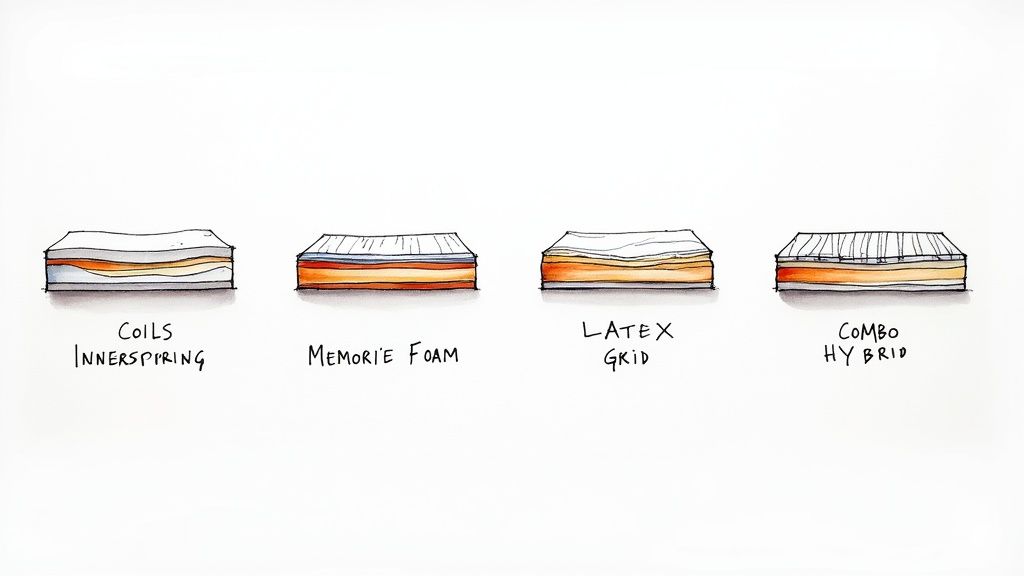
Innerspring and Memory Foam
Let’s start with the classics. Traditional innerspring mattresses, with their familiar core of steel coils, tend to have the shortest lifespan. You can typically expect them to last about 7 to 8 years. Over time, those coils lose their springiness and start to sag, which means less support and more of that classic squeaking sound.
Memory foam mattresses usually go a bit longer, giving you a solid 8 to 10 years of service. The real key here is the foam’s density. Higher-density foams are tougher and do a much better job of resisting body impressions and sagging compared to their lighter, lower-density cousins.
This infographic gives a great at-a-glance look at what to expect from the most common mattress types.
As you can see, the materials directly impact how long you can expect your bed to last, with latex leading the pack.
Latex and Hybrid Models
Speaking of which, latex mattresses are the marathon runners of the mattress world. They often last 10 to 12 years, and sometimes even longer. Whether it's made from natural or synthetic rubber, latex is incredibly resilient. It bounces back beautifully and resists forming those dreaded body dips, making it a fantastic long-term investment.
Then you have hybrid mattresses. These beds are designed to give you the best of both worlds by combining the sturdy support of innerspring coils with the conforming comfort of foam or latex on top. Their lifespan usually lands somewhere in the middle, around 8 to 10 years. The final number really depends on the quality of both the coils and the comfort layers used in their construction. If you're curious, you can learn more about what a hybrid mattress is and see why they've become so popular.
Choosing a Mattress for Durability and Comfort
Making the right choice isn't just about picking the mattress that lasts the longest—it's about finding the one that best suits your sleep style, body type, and comfort preferences for years to come. This table breaks down how each type stacks up so you can choose the perfect tool for your needs.
| Mattress Type | Key Materials | Pros | Cons (Durability) | Best For |
|---|---|---|---|---|
| Innerspring | Steel Coils, Thin Comfort Layers (Foam/Fiber) | Bouncy, Breathable, Affordable | Coils can sag and squeak; comfort layers compress quickly. | Budget-conscious shoppers; those who prefer a traditional, firm feel. |
| Memory Foam | Polyurethane Foam (Varying Densities) | Excellent pressure relief, motion isolation | Lower-density foams can form impressions; heat retention is possible. | Side sleepers; couples who don't want to feel their partner move. |
| Hybrid | Innerspring Coils + Foam/Latex Layers | Balanced support and comfort, good airflow | Multiple components mean more potential points of failure (coils & foam). | People who want the benefits of foam and springs; most sleeper types. |
| Latex | Natural or Synthetic Rubber Foam | Highly durable, responsive, sleeps cool | Can be heavy and expensive upfront. | Eco-conscious buyers; those wanting a long-term investment. |
Ultimately, understanding these foundational differences helps you look past the price tag. You can focus on what really counts: choosing a mattress that’s built to give you years of comfortable, restorative sleep. When you’re ready to find your perfect fit, our Sleep Experts are here to walk you through every option, so you can feel completely confident in your choice.
Factors That Determine Your Mattress's Lifespan
The type of mattress you buy is just the starting point. Several other factors come into play that can either shorten or extend its life, much like how a car's longevity depends on both its build quality and how you drive it. Understanding these factors gives you the power to get the most out of your investment.
It all starts with the materials inside. A mattress made with high-density foams or a higher coil count is simply built to last longer. These more robust components are much better at resisting the sagging and body impressions that develop from nightly use, helping your bed hold its shape for years to come.
Your Habits and Home Environment
How you use your mattress every night has a massive impact. For example, beds used by heavier individuals or couples can wear out 1–3 years sooner simply because of the constant, increased pressure. It's a surprising fact that only about 20% of people list old age as the main reason for buying a new mattress, which means a lot of us are likely sleeping on worn-out beds without even knowing it. If you're curious, you can explore more surprising mattress statistics to see just how much our habits matter.
Beyond who is sleeping on the bed, its support system is critical. A solid foundation or box spring is non-negotiable. Putting a brand-new mattress on a weak, sagging base is like building a beautiful house on a crumbling foundation—it just won't last.
Takeaway: Your mattress doesn’t exist in a vacuum. Your body weight, sleeping position, and the quality of your bed frame are just as important as the mattress materials themselves.
Let's break down a few other crucial elements that affect how long your mattress will serve you well:
- Sleeper's Body Weight and Size: It's simple physics. More weight puts more stress on the foams and coils, causing them to break down faster.
- Sleeping Position: Side sleepers, for instance, put a lot of concentrated pressure on their hips and shoulders. Over time, this can lead to faster wear in those specific spots.
- Foundation Quality: An old, flimsy, or sagging box spring will make your mattress sag right along with it, cutting its life short.
- Care and Maintenance: Simple things make a huge difference. Using a quality mattress protector and rotating your bed every few months are two of the easiest ways to extend its life.
Being mindful of these factors helps you actively protect your bed and your quality of sleep. When you're ready to find a mattress built to last and suited to your specific needs, our team of Sleep Experts is here to guide you to the perfect solution.
Seven Signs You Need a New Mattress
Your body often knows your mattress is past its prime long before you do. Think of those morning aches or that feeling of never being quite rested—those are subtle (and not-so-subtle) hints that your bed is failing you. Paying attention to these signals is the key to protecting your sleep and your health.
If you're waking up feeling like you've gone a few rounds in a boxing ring instead of getting a peaceful night's sleep, one of these seven common culprits is probably to blame.
The Obvious Red Flags
The easiest signs to spot are the ones you can see and feel. Look at the surface of your bed. Does it have visible sagging, noticeable dips, or lumps? If your mattress looks more like a lumpy landscape than a flat, supportive surface, its internal structure has broken down.
This leads directly to the next clue: you wake up with new aches and pains. That stiffness in your lower back or the new crick in your neck isn't just a sign of getting older. When a mattress loses its ability to support you, it can’t properly align your spine or relieve pressure on your hips and shoulders, leaving you sore.
Here's a simple test: If your morning stiffness fades away after you get up and move around for a bit, that’s a huge indicator that your mattress is the problem. Your bed should be a place for recovery, not the cause of your pain.
And perhaps the most telling sign of all? You simply sleep better somewhere else. If you find yourself getting fantastic sleep in a hotel or even on the couch, it's a clear message that your own bed is letting you down.
The Sneaky Signs of a Worn-Out Bed
Some clues are less about comfort and more about what's happening inside your mattress.
-
Worsening Allergies: Have your allergies or asthma been acting up, especially at night? Over the years, mattresses become a haven for dust mites, dead skin cells, and other allergens that can seriously disrupt your breathing and your sleep.
-
Noisy Springs: If your bed creaks, squeaks, or groans every time you shift your weight, it's literally crying out for retirement. Those noises are the sound of worn-out springs and coils that have lost their strength and resilience.
-
Old Age: Finally, just consider its age. If your mattress is over eight years old, it’s time to start looking. Even if it looks okay on the outside, the internal foams and fibers have been compressed night after night for years, and they simply can't provide the support they once did.
If any of this sounds painfully familiar, it’s a clear sign that it's time to stop compromising on your rest. You deserve a bed that actively contributes to your well-being. Our Sleep Experts can help you find the perfect new mattress to put these problems to bed for good.
How to Make Your Mattress Last Longer
You’ve invested in the perfect mattress, and now you want to get the most out of it. The good news is that a few simple maintenance habits can make a huge difference, extending the comfort and support of your bed for years. It’s all about taking a proactive role in its care.
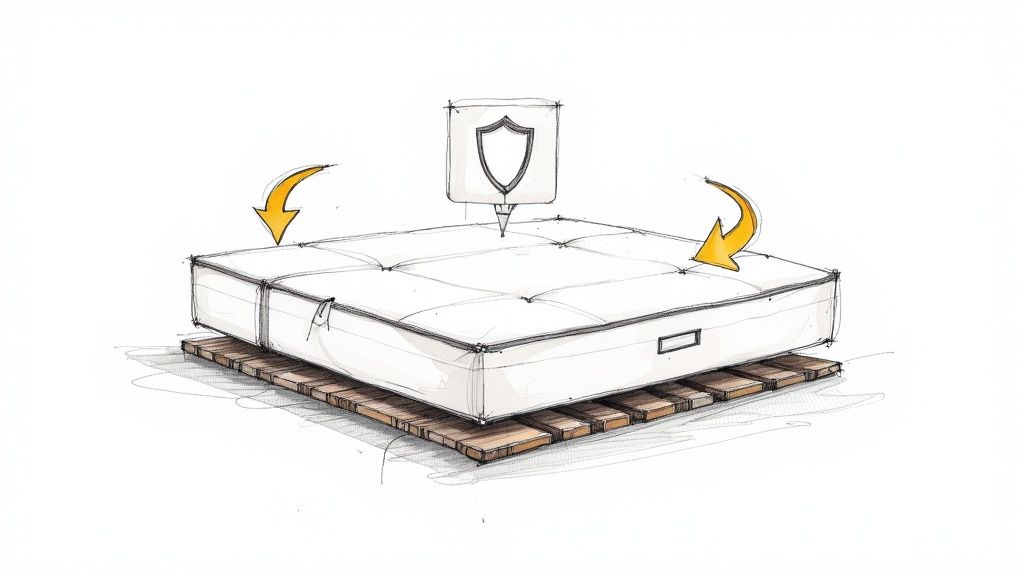
The single most effective thing you can do is get a high-quality mattress protector from day one. Think of it as insurance for your bed—it’s a simple shield that guards against the inevitable spills, sweat, dust mites, and allergens that slowly degrade the foams and fabrics inside.
Adopt Proactive Care Habits
With your mattress shielded by a protector, a few other routines will help you fend off premature wear and tear.
First up is rotation. It might seem like a hassle, but rotating your mattress head-to-foot every 3–6 months is critical. This simple step ensures wear is distributed evenly, preventing those dreaded body indentations from setting in permanently. Surprisingly, only about 30% of mattress owners do this regularly, so joining that group gives you a real advantage in the longevity game.
Your bed’s foundation is its best friend. A weak or sagging box spring will cause even the best mattress to break down prematurely, so ensure your bed has a solid, supportive base to rest on.
Ready to become a mattress care pro? Here are a few more tips to keep your bed in prime condition:
- Provide a Solid Foundation: Your mattress needs a sturdy, supportive base, whether it’s a modern platform or a traditional box spring. A flimsy frame can cause sagging and may even void your warranty.
- Clean It Properly: Give your mattress a quick vacuum every few months to clear out dust and dander. For a deeper dive, our guide is packed with helpful mattress care tips.
- Avoid Jumping: It’s tempting, but treating your bed like a trampoline puts a ton of focused stress on the coils and foam layers. This can cause serious, irreversible damage to the mattress’s internal structure.
By making these small habits part of your routine, you take control of your mattress’s lifespan, ensuring it delivers great sleep for as long as possible.
Your Questions About Mattress Lifespan Answered
When you're mattress shopping, a lot of questions can pop up. It's a big purchase, so getting straight answers is key to making a smart decision for your sleep. Let's clear up a few of the most common things people ask about how long a mattress should last.
Can a Mattress Really Last 20 Years?
The short answer? Almost certainly not. It’s a nice thought, but this is one of those times where the reality doesn't quite match the myth. While an exceptionally high-quality latex mattress that’s been perfectly cared for might get close to 15 years, that's a huge outlier.
For the vast majority of mattresses, 20 years is well beyond their functional lifespan. Even if it looks okay from the outside, the inner materials—the foams, fibers, and coils—will have broken down significantly.
More importantly, after two decades, it's lost its ability to properly support your spine and has collected a shocking amount of dust mites and other allergens. For both your health and comfort, the expert-recommended 7-10 year replacement window is a much safer bet.
Does a Warranty Cover Normal Sagging?
This is a common point of confusion, but warranties don't cover the normal wear and tear that happens over years of use. They're there to protect you against legitimate manufacturing defects.
Most brands define a "defect" as a sag or indentation of a specific depth—usually 1.5 inches or more—that isn't the result of using the wrong kind of bed frame or foundation. The gradual softening that makes your mattress less supportive over time is considered normal aging, not a defect.
It's always a good idea to read the warranty's fine print before you buy. And if you’re not sure how old your current mattress is, our guide can help you figure out how old your mattress is.
Key Insight: A classic sign your mattress is failing is waking up with an achy back that feels better once you’re up and moving around for a bit. That morning stiffness often points to a bed that's no longer giving your spine the support it needs overnight.
At the end of the day, knowing when to say goodbye to your old mattress is just as important as choosing a new one. Now you have the tools to evaluate your current bed and the confidence to find a replacement that will give you the great sleep you deserve.
When you’re ready to invest in years of restorative sleep, the Sleep Experts at Miller Waldrop Furniture & Decor are here to help you find the perfect mattress. Explore our collection and find your perfect fit today.