

When to Replace Your Mattress for Better Sleep

You've heard the old rule of thumb: replace your mattress every 7 to 10 years. While that’s a decent starting point, it's not the whole story. The right time for an upgrade is a personal journey, depending on the mattress itself, how you feel each morning, and the major milestones in your life.
Your Guide to a Better Night's Sleep
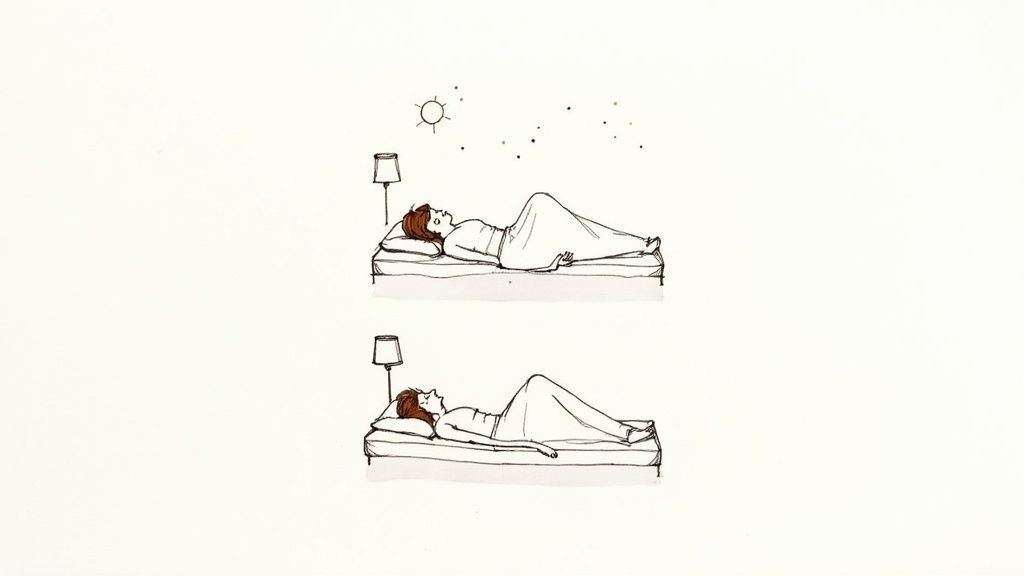
Are you waking up with a sore back, feeling tired, or just plain unrested? Your mattress might be the silent villain sabotaging your sleep. This guide is your secret weapon, empowering you to look past the simple timeline and learn to read the signs your body—and your bed—are giving you.
Think of this as an investment in your daily energy and health. Knowing when to part with your old mattress is the first step toward unlocking truly transformative rest.
Understanding the Timeline
While the 7-10 year rule is a helpful benchmark, real-world expectations can be a little different. On average, most people expect a new mattress to last about 9.6 years.
But life happens. Younger adults, for instance, often find their mattress needs change as they move, get married, or grow their families. These milestones are signals that it's time to re-evaluate your sleep setup.
Getting a new mattress is a huge step, but it's just one piece of the puzzle. There are many other strategies to improve overall sleep quality that work hand-in-hand with a supportive bed.
Your mattress is the foundation of your well-being. A worn-out bed can lead to poor spinal alignment, chronic aches, and persistent fatigue, impacting everything from your mood to your daily performance.
Ready to arm yourself with the support your body is craving? You can take control of your sleep. Let us show you how to find the perfect mattress for your unique needs when you explore our collection.
Seven Clear Signs Your Mattress Needs an Upgrade
Your body has a way of telling you when something is wrong. When it comes to your mattress, learning to read those signals—the subtle and the not-so-subtle—is the key to protecting your sleep. Think of your mattress less like a piece of furniture and more like a high-performance tool for your health.
And just like any tool, it eventually wears out. An old mattress simply can't provide the foundational support your body needs to rest and repair itself, which can throw your whole day off track.
The Visible and Physical Warnings
Often, the most glaring signs are the ones you can see and feel. A quick visual inspection can empower you with a surprising amount of information about the health of your mattress and whether it's still up to the job of supporting you.
These physical red flags are clear evidence that the core materials are breaking down.
-
You See Sags, Dips, or Body Impressions: Strip the sheets off your bed and run your hand across the surface. Can you feel noticeable indentations where you and your partner usually sleep? That's a classic sign your mattress has lost its structural integrity, leading to poor spinal alignment and those familiar morning aches.
-
You Wake Up with Aches and Pains: Is waking up with a stiff neck, sore shoulders, or an aching lower back your new normal? When a mattress gets old, it loses its ability to cushion pressure points. This forces your muscles to stay tense all night trying to support your spine, leaving you feeling beat up instead of refreshed.
-
You Hear Squeaks, Creaks, and Groans: If your bed protests with a symphony of noises every time you roll over, it’s signaling for retirement. Those sounds are the tell-tale sign of worn-out innersprings that have lost their bounce and can no longer offer stable, quiet support.
The Invisible Clues to Poor Sleep
Sometimes, the problem isn't what you see on the mattress, but how you feel after a night on it. It’s easy to blame a bad night's sleep on stress or a late-night coffee, but your bed is often the real culprit. Have you ever noticed you sleep like a rock in a hotel or at a friend's house? That's a major clue that your mattress at home is the problem.
A revealing study found that people who replaced their mattress after just five to seven years reported a significant drop in back and neck pain. This shows how quickly a mattress can lose its magic, well before you hit that 10-year milestone.
Here are a few more sneaky signs that your mattress is failing you:
-
Your Allergies Seem Worse at Night: Over the years, your mattress becomes a hotspot for dust mites, dead skin cells, and other allergens. If you're constantly waking up stuffy or with itchy eyes, your old bed could be the source of your misery.
-
You Feel Every Toss and Turn: Does your partner shifting in their sleep feel like a minor earthquake? You can solve this problem. Newer mattresses, especially models like those in the expertly designed Serta Perfect Sleeper collection, are engineered to absorb and isolate motion, so one person's movement won't jolt the other awake.
-
You Struggle to Get Comfortable: If you spend more time thrashing around trying to find a "good spot" than you do actually sleeping, your mattress is the problem. It has likely developed lumps and uneven spots that prevent your body from fully relaxing into a deep, restorative sleep.
To make it even easier, run through this quick self-assessment.
Your Mattress Health Self-Assessment Checklist
Use this simple checklist to quickly evaluate your mattress against key warning signs.
| Warning Sign | Check If This Applies | What This Means For Your Sleep |
|---|---|---|
| Visible Sagging or Dips | ☐ | Your spine isn't properly aligned, leading to back and neck pain. |
| Morning Aches and Stiffness | ☐ | The mattress no longer relieves pressure, forcing muscles to work overnight. |
| Noisy Springs | ☐ | The core support system is broken down, causing sleep disruptions. |
| Worsening Allergies | ☐ | Your bed has become a haven for allergens that interfere with breathing. |
| Poor Motion Isolation | ☐ | You and your partner are constantly waking each other up. |
| Constant Tossing and Turning | ☐ | Uneven surfaces are preventing you from reaching deep sleep stages. |
| Better Sleep Elsewhere | ☐ | This is the clearest sign that your mattress at home is the problem. |
If you checked off even one or two of these boxes, it's a strong signal that your mattress is holding you back from a great night's sleep. Recognizing these signs is your first step toward taking back control of your sleep health. When you're ready to find a mattress that truly works for you, our Sleep Experts can equip you with the knowledge to choose the perfect foundation for better rest.
How Long Different Mattress Types Really Last
Ever wonder why some mattresses feel ancient after just a few years while others seem to last forever? The secret is in what they're made of. Think of it like this: you wouldn't expect a budget-friendly compact car to last as long as a heavy-duty truck, and the same logic applies to mattresses.
The materials packed inside your mattress directly dictate its durability and, ultimately, its lifespan. A classic innerspring mattress, for instance, typically gives you a solid 5-7 years of support before the coils begin to wear out and sag. That's often why people find themselves needing a new solution sooner than they planned.
This infographic lays out the universal tell-tale signs that your mattress is on its last legs, no matter what kind you have.
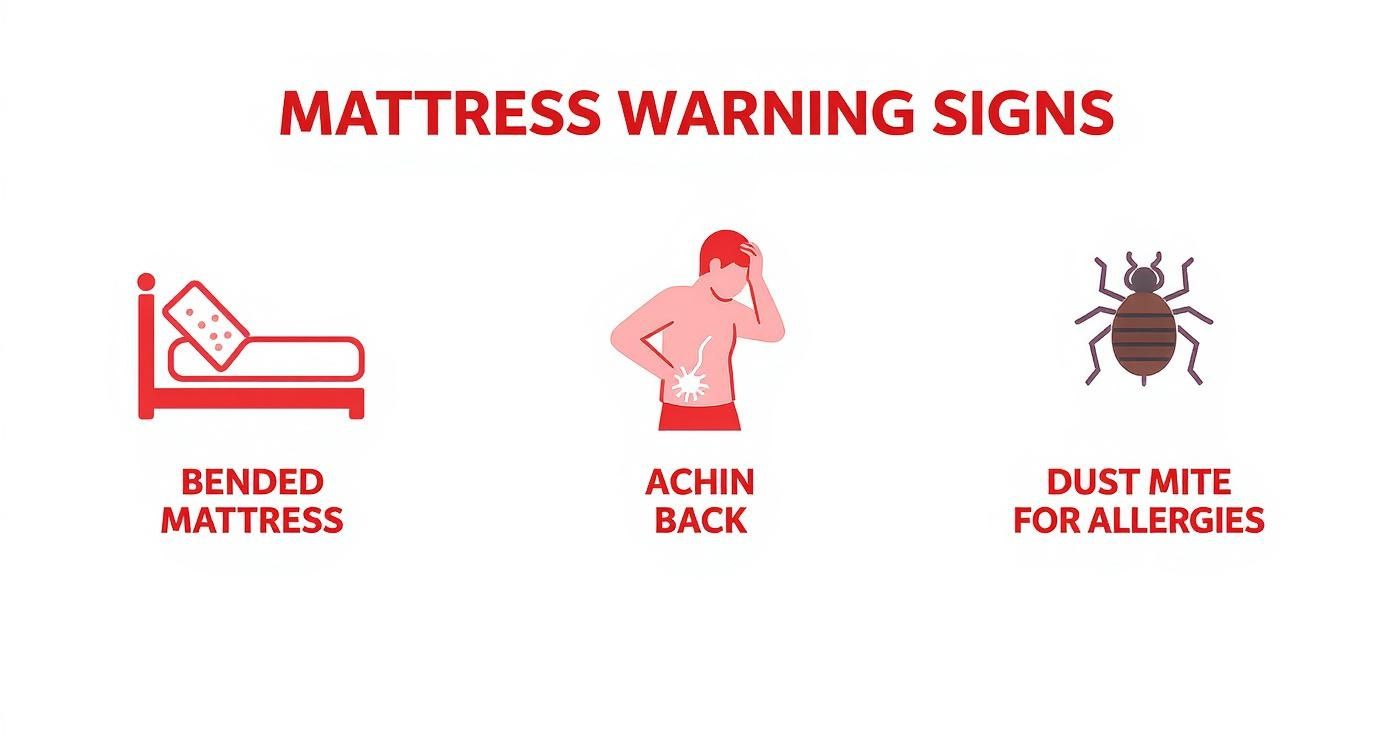
From visible dips and lumps to waking up with new aches and pains, these are clear signals that the core of your mattress just can't do its job anymore.
Lifespans for Modern Mattresses
The good news is that mattress technology has come a long way. Today's materials are designed for the long haul, giving you more years of quality sleep for your investment.
-
Memory Foam & Hybrid Mattresses: These are the workhorses of the modern mattress world, usually lasting a good 7-10 years. Quality memory foam is great at holding its shape, while hybrids give you the best of both worlds—the contouring comfort of foam on top of a sturdy, responsive coil system.
-
Latex Mattresses: If you're looking for the undisputed champion of durability, latex is it. These mattresses can easily last 10-12 years, and it’s not uncommon to see them go even longer. Natural latex is incredibly resilient, bouncing back year after year and fighting off sagging like nothing else.
It's no surprise the global mattress market is projected to jump from $37.3 billion in 2023 to nearly $66.5 billion by 2033. Innovations in foam and hybrid designs are giving people compelling reasons to upgrade their sleep setup.
Choosing a mattress isn’t just about how it feels on night one—it's about equipping yourself with a tool for your health. Picking a type that's built to last means you're setting yourself up for years of restorative sleep.
In the end, understanding how long mattresses last based on their construction empowers you to make a much smarter decision. Our Sleep Experts are always here to break down the pros and cons of each type, helping you find a perfect match that will support you well for years to come.
Lifestyle Changes That Signal a New Mattress Is Needed
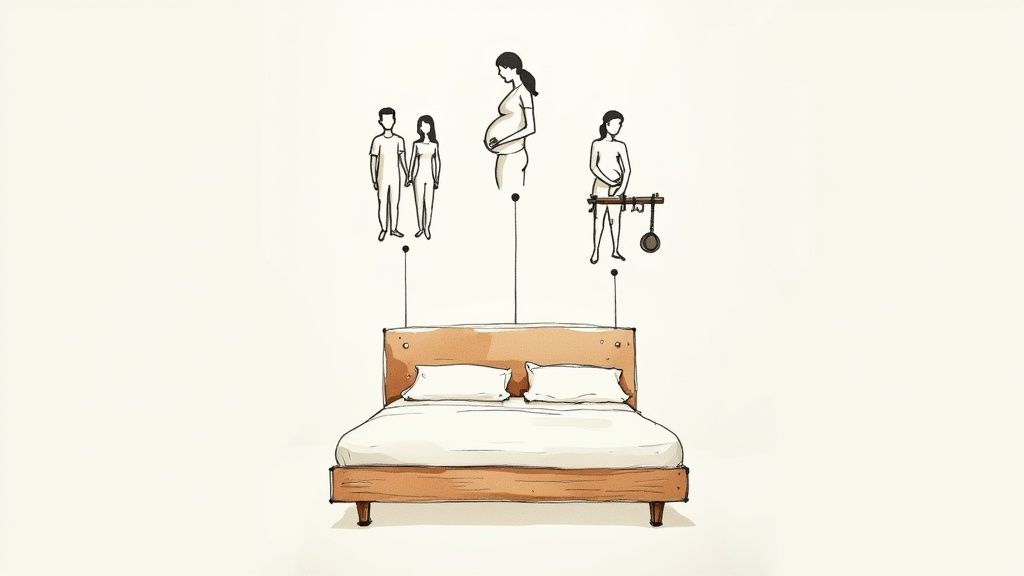
Sometimes, the need for a new mattress has nothing to do with sagging or lumps. Your mattress could be in perfectly fine condition, but your life has changed. The bed that was your solo sanctuary five years ago might not be the tool you need today to win the day.
Life's big transitions are your cue to re-evaluate your sleep foundation. Think of your mattress not as a static piece of furniture, but as a dynamic tool for your well-being—one that has to keep up with you. Choosing a new mattress isn't just buying something new; it's an investment that matches your current reality.
When Your Life Outgrows Your Bed
Certain life events are practically a blinking sign telling you to reassess your mattress. As your body’s needs shift, your mattress must adapt to keep giving you the restorative sleep you need to thrive.
Here are a few key moments that should trigger a mattress evaluation:
- Sharing Your Bed: Bringing a partner into the picture means navigating two different sleep preferences. Suddenly, things like motion isolation become critical. That extra-firm mattress you loved might feel like a rock to them, forcing you to find a solution so you both can get a good night's sleep.
- Pregnancy and Parenthood: During pregnancy, the need for better back support and pressure relief skyrockets. Your body is undergoing incredible changes, and your mattress has to provide the right kind of cradling comfort to keep up.
- Significant Weight Changes: If you've gained or lost a substantial amount of weight, the way your mattress feels and performs will change, too. A bed that once felt perfectly supportive might now seem way too soft, or a firm surface could suddenly start creating painful pressure points.
- New Health Conditions: The onset of chronic back pain, arthritis, or even acid reflux often demands a more specialized sleep surface. This is especially true as we get older and proper spinal alignment becomes non-negotiable. You can learn more about why your mattress gets more important as you age to make the right choice.
Your mattress needs to support the life you're living now, not the one you had years ago. If your lifestyle has shifted, let our Sleep Experts help you find a mattress that fits your new reality.
A Toolkit for Choosing Your Next Mattress
Once you’ve spotted the warning signs, you've hit the most important step. Knowing it’s time to replace your mattress is the first move toward reclaiming a great night's sleep. This is where you get to find a mattress that actually works for you.
Don’t think of this as just another purchase. Think of it as building your personal toolkit for perfect sleep. The right tools always depend on the job. If you're a side sleeper, you’ll need a softer surface to cushion your shoulders and hips. But if you sleep on your back, you'll want a firmer foundation to keep that spine properly aligned. Your body is already telling you what it needs; the trick is learning how to listen.
Matching Materials to Your Sleep Style
What’s inside your mattress makes all the difference. Are you someone who constantly kicks off the covers because you sleep hot? A mattress with cooling gel-infused foam could be a game-changer. What if your partner tosses and turns all night? A hybrid mattress is fantastic at isolating motion, so their midnight acrobatics won't wake you up.
Here’s how you can choose the perfect materials for your needs:
- For Pressure Relief: Memory foam is brilliant for this. It contours to your body's unique shape, giving exceptional support and relief to aching joints.
- For Responsive Support: Hybrid models combine the best of both worlds—supportive inner coils with plush comfort layers on top. This creates a balanced feel that works for a huge range of sleepers.
- For Durability: Latex mattresses are famous for their resilience and long lifespans, making them a smart long-term investment in your well-being.
Making Your Decision with Confidence
Let's be honest, choosing a new mattress can feel a bit overwhelming. There are so many options out there. It helps to know that North America drives a huge part of the global mattress market, and retailers are always encouraging people to upgrade.
The most important thing isn't what's popular or what's on sale—it's what helps you get truly restorative sleep. You have the power to choose what's right for you by trusting what your body is telling you.
Your body type is also a massive factor in this decision. To find a mattress that really fits your frame and sleeping habits, check out our guide on which mattress is right for your body type. With this info in hand, you can walk into a store or browse online feeling confident you’re choosing the perfect foundation for years of incredible sleep.
A Few Final Questions About Replacing Your Mattress
Even when you know it's time for a new mattress, a few last-minute questions can pop up. It's totally normal. Getting those final details sorted out is the last step before you can confidently choose a mattress that truly works for you. Let's tackle some of the most common ones.
Can I Squeeze a Few More Years Out of My Old Mattress?
We all want to get the most out of a big purchase, but when it comes to a mattress, there's a point of no return. Regularly rotating it and using a good mattress protector are great habits for helping a new mattress live a long, healthy life. Unfortunately, they can't magically fix a mattress that's already breaking down.
If you're already dealing with sagging spots or waking up with aches and pains, these measures are just band-aids. The only real solution for getting your sleep quality back on track is a new mattress built to give you the support your body needs today.
What’s the Best Way to Get Rid of My Old Mattress?
Thankfully, this is easier than you might think. The most convenient option is to have the delivery team haul away your old one when they bring the new one—many retailers offer this service.
You can also check with your local recycling center or waste management service. Many have dedicated mattress recycling programs or specific bulk pickup days. It’s a great way to keep it out of a landfill. While some charities might take mattresses, they usually have to be in near-perfect condition, so always call and ask about their policy first.
The right firmness level is less about personal preference and more about proper spinal alignment. Your sleeping position is the most important factor in this decision.
How Do I Figure Out the Right Firmness for Me?
This is the big one! You can find the right firmness by matching it to your primary sleeping position and, to a lesser extent, your body weight.
- Side sleepers generally need a softer surface—think medium-soft to medium. This allows their shoulders and hips to sink in just enough to relieve pressure and keep the spine straight.
- Back sleepers usually find their sweet spot with a medium-firm to firm mattress. This provides solid support under the lower back, preventing that hammock-like sag.
- Stomach sleepers should stick to a firm mattress. Anything softer lets the hips dip too low, putting a major strain on the spine.
Finding the path to better sleep is a personal journey, and our team at Miller Waldrop Furniture & Decor is here to be your guide. Our Sleep Experts can offer a personalized recommendation, helping you find that "just right" mattress to finally win back your nights.
Explore our mattress collections today and get ready to start waking up refreshed.