

Your Guide to Fix a Sagging Mattress

That sinking feeling when you lie down is more than just annoying—it's wrecking your sleep. Finding the right mattress fix for sagging starts with empowering yourself to play detective and figure out what's really going on. A quick look can tell you if you're dealing with worn-out foam, a failing box spring, or even a weak bed frame, putting you in control of the solution.
How To Diagnose and Tackle a Sagging Mattress
Before you can conquer that dip, you need to find its source. The problem isn't always the mattress itself; sometimes, the real culprit is hiding underneath, and you have the power to find it.
First, strip the bed completely. Get everything off—sheets, pillows, mattress protector, all of it. Now, grab something perfectly straight, like a yardstick or even a broom handle, and lay it across the mattress where it sags the most.
Take a ruler and measure the gap between the bottom of the straight edge and the deepest point of the sag. This one simple measurement gives you the crucial data you need to decide your next move.
Understanding the Severity
The depth of that dip will point you toward the right fix. A small indent can often be managed with a simple trick you can do today, but a deep crater usually means a more serious structural problem that you'll need to address.
- Minor Sagging (Under 1 inch): This is pretty normal wear and tear. You can often get by with a simple rotation or by adding a bit of extra support right where you need it.
- Moderate Sagging (1–2 inches): This tells you the materials inside are starting to get compressed. A good, dense mattress topper can work wonders here, but it's also a great time for you to double-check your bed frame and foundation.
- Severe Sagging (Over 2 inches): If you're seeing a dip this deep, the core support of your mattress has probably given up. Temporary fixes won't last long, and this is a major sign that it's time for you to start shopping for a replacement.
If you think you might be in that last category, it's worth checking out these 7 signs it's time to replace your mattress to be sure.
This handy decision tree shows what to do based on what you find.
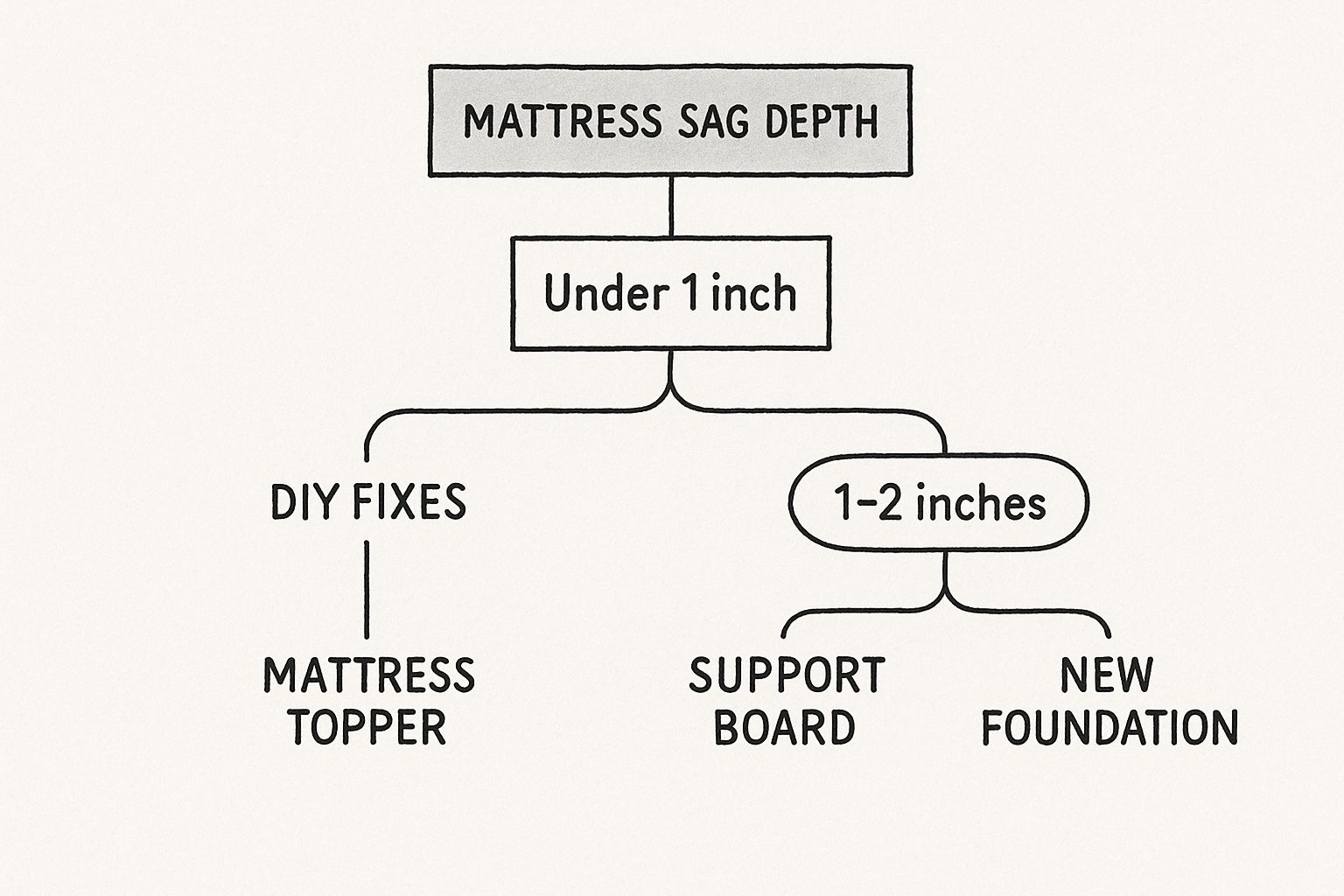
As you can see, knowing the depth helps you skip the guesswork and go straight to the solution that will actually work. If you do land in the "replace" zone, you can equip yourself with the right knowledge to find a durable, supportive mattress that won't let you down.
Pinpointing the Source of Your Sagging Bed
Sometimes the mattress gets all the blame when the foundation is the real problem. Use this table to match your bed's symptoms with the likely culprit, guiding you toward the most effective first action you can take.
| Symptom | Likely Culprit | Recommended First Action |
|---|---|---|
| A single, body-sized dip in the middle | Mattress Wear | Rotate the mattress 180 degrees immediately. |
| A "taco" or "V" shape sag in the center | Weak/Broken Frame Support | Inspect the center support legs and slats on your frame. |
| A large, general depression across one side | Box Spring/Foundation Failure | Check the box spring for broken slats or weakened areas. |
| Two distinct dips where you and a partner sleep | Normal Body Impressions | Add a firm mattress topper to even out the surface. |
Once you've zeroed in on the cause, you'll know exactly where to focus your efforts for a better night's sleep.
Why Your Mattress Sags and How It Impacts Your Health
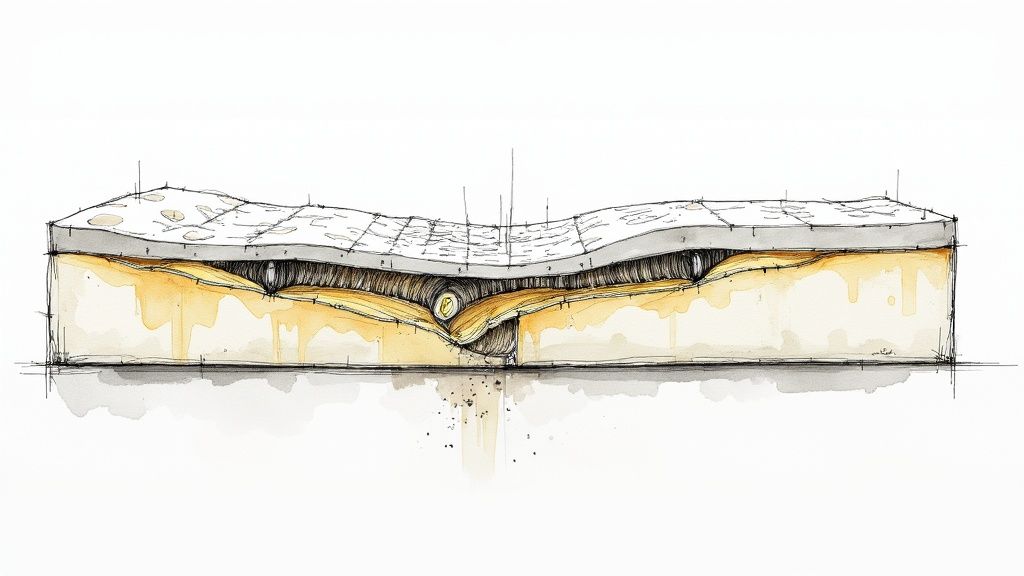
A sagging mattress is a classic sign of a bed that's past its prime. It's more than just an annoyance; it’s a structural breakdown that can seriously mess with your sleep and overall health. Think about it: night after night, the materials in your mattress—whether memory foam or innersprings—are under constant pressure. Over time, that foam loses its bounce-back ability and the coils just don't have the same supportive spring they used to. This is what creates those dreaded dips and valleys right where you sleep.
This isn't just a rare problem, either. It’s incredibly common. Industry studies show that about 34% of people end up replacing their mattress sooner than expected specifically because of sagging. Even more telling, somewhere between 20% to 25% of mattress owners report noticeable sagging within just 3 to 5 years.
The Toll on Your Body and Mind
When your mattress stops providing a flat, even surface, it forces your spine into an unnatural curve. This kind of misalignment is a huge contributor to chronic back pain, morning stiffness, and that feeling of tossing and turning all night. A sagging mattress is a direct cause of poor sleeping posture, which is often behind issues like neck pain and sleepless nights.
The connection is simple: if your body can't rest in a neutral, supported position, it can't fully relax and repair itself overnight. You end up waking up tired, sore, and feeling like you barely slept.
But the effects go beyond just physical aches. The quality of your sleep is directly linked to your mental well-being. If you're constantly waking up groggy, irritable, or just "off," your sagging mattress could be the hidden culprit. Poor sleep can torpedo your focus, affect your mood, and drain your energy for the day ahead. You can take a deeper dive into how your mattress affects your mood and mental health: https://www.millerwaldrop.com/how-your-mattress-affects-your-mood-mental-health/
Once you understand why your mattress is sagging, you're in a much better position to do something about it. Whether that means trying a temporary fix or deciding it's time for a new mattress, you have the tools and information to find the right solution and get the healthy, restorative sleep you deserve.
Practical DIY Fixes You Can Try Today
Before you start pricing out a new mattress, you've got some surprisingly effective, low-cost options you can try. These are simple tricks of the trade that can help you squeeze a bit more life out of your bed and get back to sleeping comfortably.
The first thing you can do is the easiest: just rotate it. Over time, your body leaves its mark in the same spots night after night. By spinning your mattress 180 degrees from head to foot, you give those worn-down areas a much-needed break. I suggest doing this every three to six months to help everything wear more evenly.
And if you're lucky enough to have a double-sided, flippable mattress (a bit of a rarity these days), flip it! This gives you a completely fresh surface to sleep on and can make a huge difference right away.
Adding Strategic Support
What if rotating doesn't quite cut it? When you have a noticeable dip, it’s time to get a little more targeted with your support. You don't need anything fancy; you probably have what you need lying around the house.
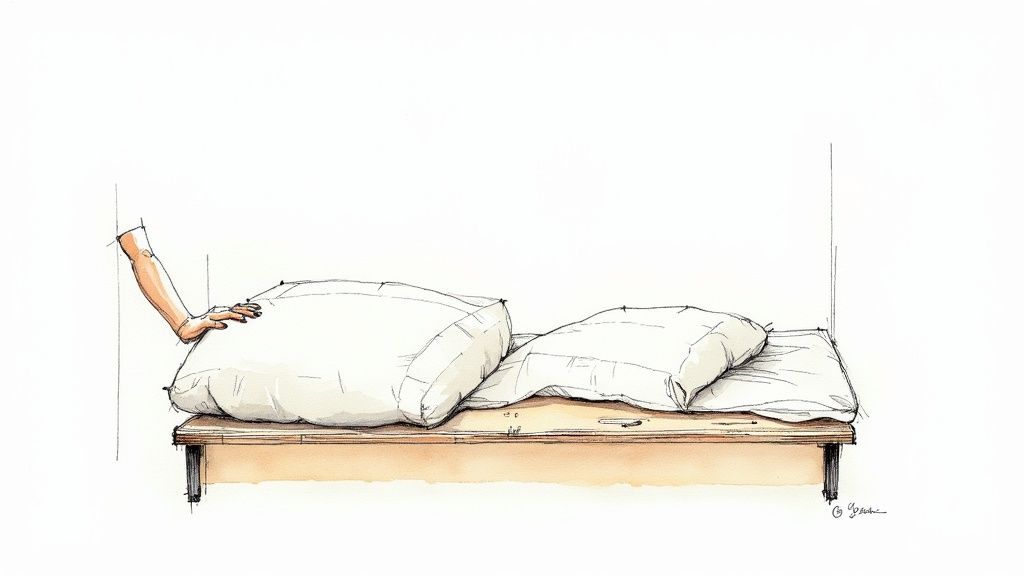
- Pillows: A couple of firm, flatter pillows are perfect for this. Just slide them directly under the sagging section of the mattress to give it a little boost. This is ideal for those dips that form right under your hips or shoulders.
- Folded Blankets or Towels: If the sag is more of a trench than a dip, neatly folded blankets or towels can provide a more even lift across a larger area.
Think of this as a spot treatment. You're directly targeting the problem area, giving that specific section the lift it needs to bring your spine back into proper alignment with the rest of the mattress.
For a more permanent and heavy-duty solution, a sheet of plywood can work wonders. Measure the inside of your bed frame and get a piece of plywood cut to fit—about a half-inch thick is usually plenty. Lay this right on top of your slats or box spring, creating a solid, flat surface for your mattress to rest on.
This simple trick prevents your mattress from sinking into any gaps in the foundation, which is often a hidden cause of sagging. It's a fantastic way for you to instantly add firmness and stability.
These DIY fixes give you the power to take action now. But it's also important to be realistic. If the sag is severe and these tricks don't help, it's a strong sign the internal support of the mattress has failed for good.
When that happens, you can arm yourself with the right information for your next purchase. You can start by exploring how to choose a high-quality mattress from trusted brands like Serta and Beautyrest to find a better foundation for your sleep.
Choosing the Right Products to Combat Sagging
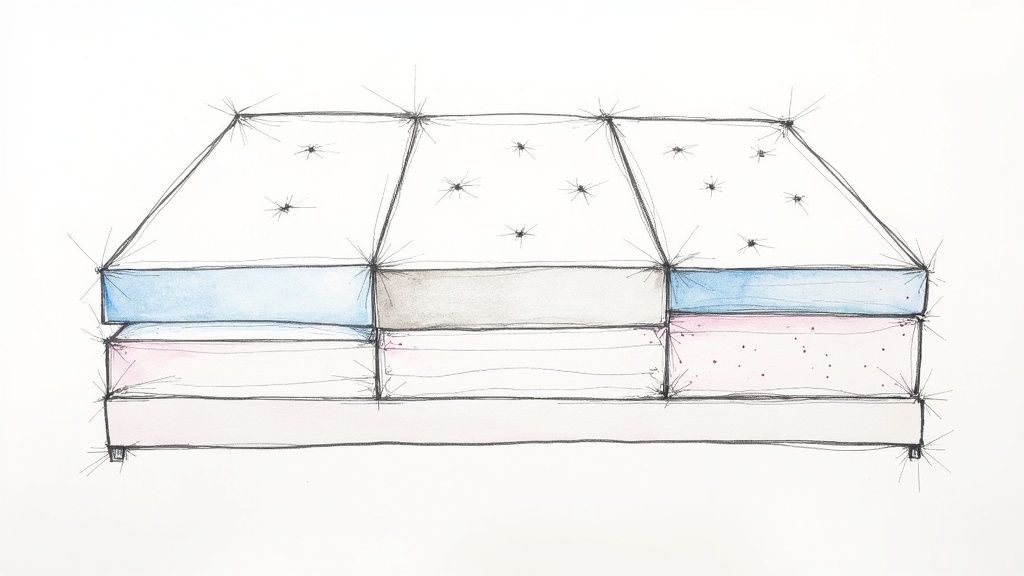
When rotating and fluffing just aren't cutting it anymore, the right product can be a real game-changer for your sleep. Before you give up and buy a whole new mattress, a targeted solution can add years to its life and save you a lot of money.
This isn't an uncommon problem. In fact, sagging is a huge issue for mattress owners. About 54% of people blame a loss of support for having to replace their mattress sooner than they'd planned. This has, thankfully, led to some smart products designed specifically to help you fix a sagging bed.
Toppers: The Top-Down Solution
A high-quality mattress topper is often the quickest and most direct way to fix the problem. Think of it as a thick, supportive layer you place right on top of your bed, creating a fresh, even surface to sleep on. It's a simple fix that puts you back in control of your comfort.
Here’s how you can choose the perfect topper for your needs:
- Firm Memory Foam: This is a fantastic choice. It contours to your body but is dense enough to fill in the dips, preventing you from sinking into those annoying low spots.
- High-Density Latex: If you prefer a bouncier, more responsive feel, latex is the way to go. It's incredibly durable and provides a firm lift that resists forming new body impressions.
Key takeaway: The trick is to get a topper that's firm enough to bridge the sag. If it's too soft, it will just sink into the dip along with you, and you'll be right back where you started.
Support From Below: The Foundation Fix
Sometimes, the real culprit isn't the mattress itself but what's holding it up. If your bed frame or foundation is weak, nothing you do to the mattress will be a lasting solution. The problem is literally at the base of it all.
For these situations, you need to look underneath the mattress:
- Mattress Helpers or Support Boards: These are simple but effective. They're just solid or slatted inserts that you slide between your mattress and the box spring, right under the sagging area. They create a rigid platform that pushes the saggy spot back up.
- An Upgraded Box Spring or Foundation: An old, broken, or flimsy box spring can't provide the flat, stable base your mattress needs to perform its best. Taking the time to understand why you really do need a box spring for your bed can make all the difference in getting proper, long-term support.
Finding the right product is a powerful step toward reclaiming your comfort and getting a good night's sleep. To see what might work for you, check out our collection of supportive mattress toppers and foundations or chat with one of our Sleep Experts. They can help you find the perfect fix for your bed.
Long-Term Strategies to Stop Sagging in Its Tracks
Fixing a sag is great, but empowering yourself to keep it from coming back is the real win. A few smart habits can make a huge difference, extending the life of your mattress and ensuring you get supportive sleep for years to come.
Honestly, the most powerful tool you have is a consistent rotation schedule. Every three to six months, just spin your mattress 180 degrees from head to foot. It’s that simple. Doing this spreads the wear and tear evenly instead of concentrating it in the one spot you sleep in every single night.
Your Bed Frame Matters More Than You Think
A mattress can only do its job if it has the right support underneath it. A perfectly good mattress starts to sag because the foundation or bed frame just isn't up to the task. This is especially true for queen and king sizes that absolutely need solid center support.
Here’s what you need to look for to ensure your frame is supporting you properly:
- Got Center Support? Your frame needs at least one sturdy leg in the middle that touches the floor. For king and California king beds, two is even better. Without it, the middle is guaranteed to sag.
- Check Your Slats. The gaps between your slats should be no more than 2.75 inches apart. Any wider and the mattress will start to sink through, creating dips and almost certainly voiding your warranty.
- Always Use a Protector. Think of a waterproof mattress protector as essential insurance. It keeps moisture from sweat and spills out of the core, which is crucial because moisture breaks down foams and fibers, speeding up the sagging process.
A strong foundation and a good protector aren't just maintenance chores. They're a direct investment you can make in the quality of your sleep for the long haul.
If you’re ready to build a better foundation for your bed, we can guide you to the right supportive bed frame and mattress protector to keep your mattress feeling new for years.
Questions We Hear All the Time About Sagging Mattresses
Even with a solid plan, you probably still have a few questions about tackling a sagging mattress. It's completely normal. Getting those last few details sorted out will help you figure out the best approach for your specific bed and get back to sleeping soundly.
Will a Mattress Topper Actually Fix the Sag?
It's a great question, and the answer is: it depends on the sag. A firm, high-quality mattress topper can be a fantastic solution for minor to moderate sagging. It essentially creates a fresh, even layer on top, smoothing over those annoying dips and giving you a more supportive surface.
However, if you're dealing with a really deep sag—think anything more than 1.5 to 2 inches—a topper is more of a temporary band-aid. It might buy you a little time, but it won't solve the underlying problem of a failing support core.
How Often Should I Be Rotating My Mattress?
This is the single best preventative habit you can build. To keep wear and tear even and stop sags before they start, you should rotate your mattress 180 degrees (head-to-toe) every 3 to 6 months.
Think of it like rotating the tires on your car. You do it to ensure they wear down evenly and last longer. The same logic applies to your mattress—spreading out the nightly pressure is key to its longevity.
When Is It Time to Just Give Up and Buy a New One?
Look, sometimes a mattress is just at the end of its life. If the sag is severe, you're waking up with a sore back almost every morning, or your DIY fixes just aren't cutting it anymore, it’s a sure sign the internal support system has broken down.
At that point, you’re not just fighting a sag; you’re fighting for a good night's sleep. Investing in a new mattress isn't just a purchase—it's an investment in your well-being.
You now have the know-how to spot, fix, and prevent sagging, putting you back in control of your comfort. If you’ve decided that a new mattress is the right call for you, the Sleep Experts at Miller Waldrop Furniture & Decor are here to help. We can guide you to a durable, supportive mattress that will give you sag-free sleep for years.
Come see how we can help you choose the perfect sleep solution at https://www.millerwaldrop.com.