


Dinnerware from Portugal: Authentic Style for Your Home


On a Friday evening in West Texas, a dining table can shift from everyday practical to memorable with one small decision: the plate that lands in each guest's hands. A hearty meal, warm light, and dinnerware with character often do more for the mood than a complicated centerpiece ever could.
Table of Contents
- Setting a Table That Tells a Story
- The Art and Soul of Portuguese Ceramics
- Understanding Materials and Craftsmanship
- How to Choose Authentic Portuguese Dinnerware
- Styling Your Dinnerware in a Texas Home
- Care Maintenance and Lasting Beauty
Setting a Table That Tells a Story
A good table doesn't begin with matching pieces. It begins with a feeling. In many homes across Lubbock, Hobbs, and Ruidoso Downs, the most inviting dining rooms aren't the ones that look untouched. They're the ones that hold a stack of serving bowls ready for chili, roasted vegetables, or a slow Sunday meal that lingers.
That's where dinnerware from Portugal becomes more than a style choice. It gives a table texture, history, and a little soul. A softly irregular rim, a glaze that changes slightly from plate to plate, or a bowl with visible depth in its finish can turn an ordinary weeknight dinner into a setting people remember.
For homeowners in the American Southwest, that matters. Local homes often balance sturdy materials such as wood, leather, iron, and woven textiles. Portuguese ceramics fit naturally into that language because they don't feel sterile. They feel made. On a dark dining table, a layered place setting can look especially striking beside richly finished serving pieces such as these parquetry serving trays with Juste handles.
Why the table matters so much
Dinnerware shapes how food is received. Rustic stoneware makes a simple soup feel generous. A hand-finished platter makes grilled vegetables look intentional. Even dessert feels more special when it lands on a plate with character instead of something flat and generic.
Practical rule: If a table feels cold, the problem often isn't the food. It's usually the mix of materials, color, and scale.
People often spend months choosing dining chairs and almost no time choosing the pieces that guests touch first. That's a missed opportunity. Anyone trying to discover ways to make your home cozy will usually get farther by improving the sensory details, including ceramics, than by adding more decoration alone.
What Portuguese dinnerware brings to the room
Portuguese dinnerware carries a sense of heritage without feeling formal. It can handle a celebratory meal, but it also looks right at home with tacos, roast chicken, or cornbread on a casual evening.
A homeowner doesn't need an elaborate dining room to use it well. A simple wood table, linen napkins, and a thoughtful stack of plates and bowls are enough to create a table that feels collected rather than purchased all at once. That's the appeal. The table tells a story before anyone takes the first bite.
The Art and Soul of Portuguese Ceramics
Portugal's ceramics tradition didn't appear overnight. It developed over centuries, and that long evolution explains why dinnerware from Portugal often feels layered and distinctive rather than trend-driven.
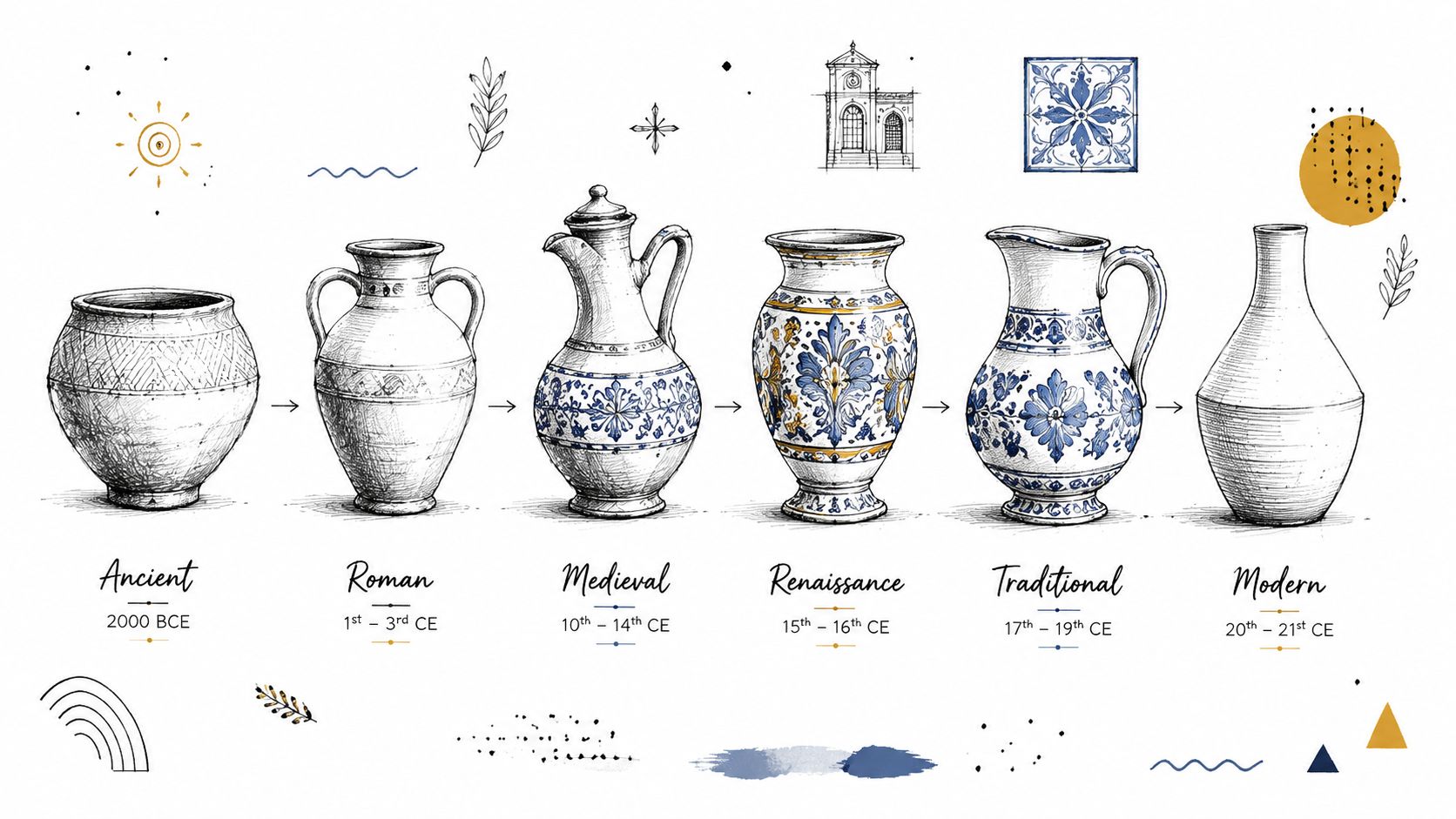
According to this history of Portuguese ceramics, Portugal's ceramic industry has ancient roots, with artisans working clay since pre-historic times. The tradition was significantly shaped by Moorish caliphates starting in the 8th century, and by the second half of the 15th century, Portugal began importing ceramic tiles from Valencia, Spain. This historical fusion of Indigenous, Moorish, and Spanish influences created a unique ceramic identity.
Why that history still shows up on the table
That blend of influences helps explain the range people see today. Some Portuguese pieces feel rustic and earthy. Others feel refined, glazed, and architectural. Some carry tile-inspired blues and whites, while others lean into sandy neutrals, ocean tones, or saturated colors that look hand mixed rather than machine standardized.
For a homeowner, history becomes useful when it changes how a piece is read. A plate with painted detail no longer looks merely decorative. It reads as part of a larger visual tradition. A bowl with a thick wall and textured glaze doesn't seem heavy by accident. It feels connected to a craft language that values warmth and presence.
A visual culture built for layered interiors
Portuguese ceramics work especially well in interiors that avoid perfection. Southwestern homes often look best when polished and rugged elements sit together. A smooth upholstered chair next to a reclaimed wood table. Iron hardware against plaster walls. Natural fibers paired with glazed ceramics.
That's one reason these pieces pair so well with thoughtful stemware and tumblers. Homeowners building a full table setting may also enjoy this perspective on quality hospitality glassware, since glass and ceramic texture should support each other instead of competing.
Portuguese ceramics often succeed because they hold two qualities at once. They feel grounded enough for daily use and expressive enough for guests.
Heritage that still feels current
Portugal also holds a global reputation for high-quality glazed ceramic dinnerware due to its glazing expertise and sustainability, with brands such as Porcel, Vista Alegre, and Nosse Ceramics known for blending artisanal craftsmanship with contemporary design, as noted in this overview of Portuguese glazed ceramic dinnerware.
That balance matters in real homes. A homeowner doesn't want museum pieces that feel too precious to use. The most successful dinnerware from Portugal respects tradition while still fitting a present-day dining room, whether the table hosts a holiday meal, a birthday cake, or takeout on a Tuesday.
Understanding Materials and Craftsmanship
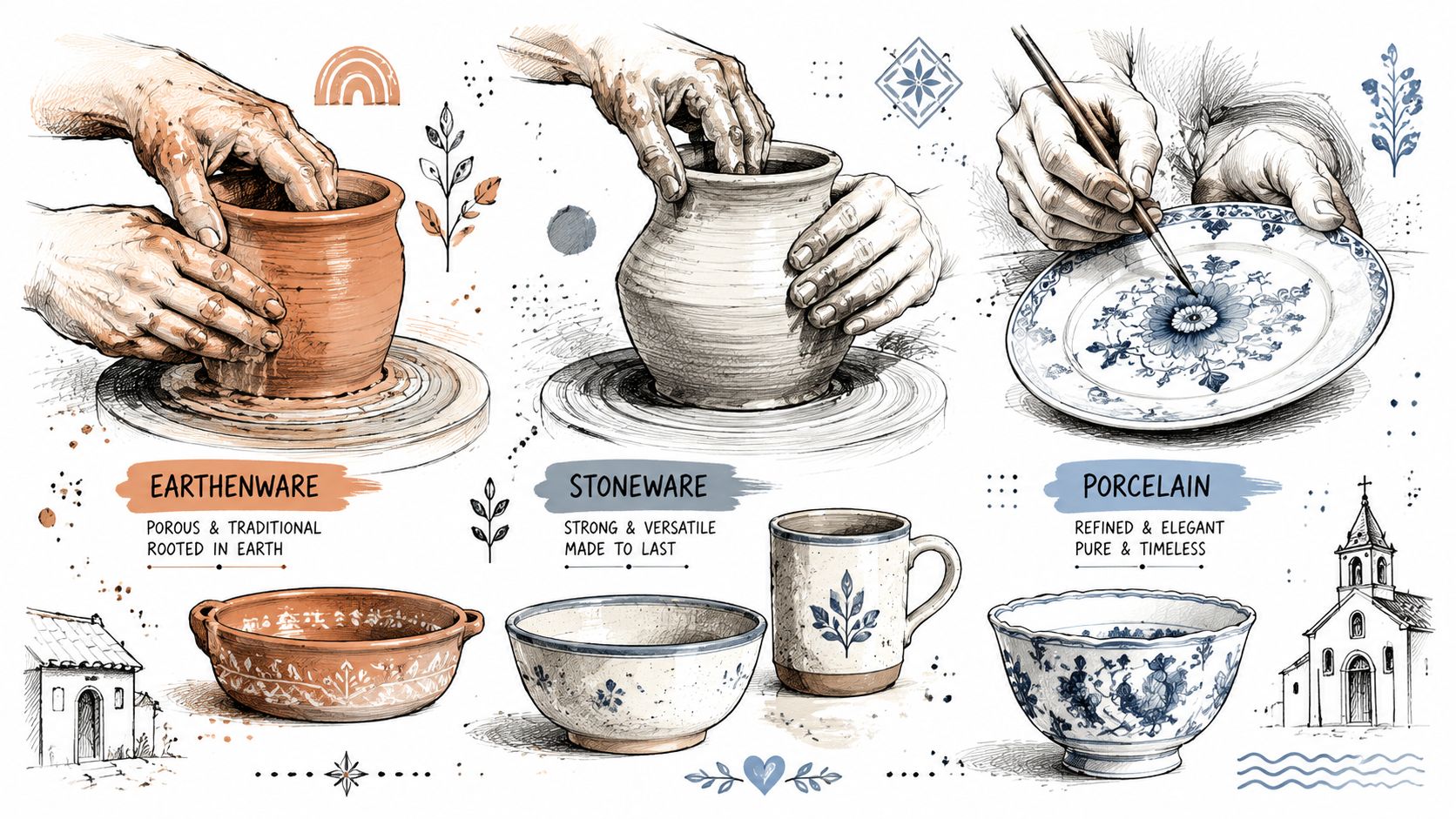
Buyers often hear the words earthenware, stoneware, and porcelain without getting a clear explanation of what those terms mean at the table. The easiest way to understand them is to think about how each one behaves in daily life.
Three materials in plain language
| Material | What it tends to feel like | Best suited for |
|---|---|---|
| Earthenware | More relaxed, often thicker, often artisanal in appearance | Decorative everyday use and casual serving |
| Stoneware | Solid, weighty, durable, comfortable for daily meals | Busy households and frequent entertaining |
| Porcelain | More refined, usually lighter in appearance | Formal settings and cleaner, tailored looks |
This isn't a hierarchy. It's a matter of fit. A family with young children, frequent guests, and heavy weeknight use will often gravitate toward stoneware. A homeowner creating a dressier dining cabinet may prefer porcelain for some occasions and stoneware for others.
Why Portuguese stoneware stands out
High-fired Portuguese stoneware deserves special attention because it closes the gap between beauty and practicality. According to this discussion of crafted dinnerware from Portugal, Portuguese-made dinnerware from recognized brands is often engineered using high-density stoneware that achieves a Mohs hardness rating exceeding 6.5, making it exceptionally resistant to chipping and staining. This is a result of firing at temperatures between 1200°C and 1280°C, which vitrifies the clay and creates a non-porous surface.
That sentence contains the kind of detail shoppers need. High firing changes the body of the piece itself. It isn't just a decorative finish applied at the end. The clay becomes denser and less porous, which helps explain why quality stoneware performs so well in active homes.
How this helps a family in real life
A durable plate matters most during ordinary moments. Think of a rushed breakfast, a teenager sliding a plate across the table, or a host carrying a stack of dishes after a long holiday dinner. A strong clay body and a resilient glaze reduce the worry that every meal might leave a mark.
Some Portuguese-made dinnerware from recognized brands also withstands over 1,000 cycles of microwave and dishwasher use without degradation in structure or finish, and the same source notes a Mohs hardness rating exceeding 6.5 tied to that firing process and non-porous surface. For a homeowner, that means the dinnerware isn't asking for a gentler lifestyle than the household can give.
A useful test is simple. If a set looks beautiful but makes the owner nervous to serve spaghetti, roasted meat, or everyday coffee cake, it's probably the wrong set for the home.
One more durability detail worth knowing
Cutlery can leave gray lines on weaker glazes, which is why metal marking resistance matters. According to the discussion of ceramic tableware durability standards in this published paper, BS 8456:2015 classifies ceramic tableware as resistant when it reaches classification 0 or classification 1, meaning no marks or only slight marks removable by cleaning.
That standard gives homeowners a useful lens. Beauty isn't enough. A plate also has to hold up to forks, knives, stacking, reheating, and repeated cleanup. The best Portuguese stoneware tends to do both.
How to Choose Authentic Portuguese Dinnerware
Many shoppers know they like the look of Portuguese ceramics. Fewer know how to tell the difference between a genuine hand-finished piece and an imitation that borrows the style but not the substance.
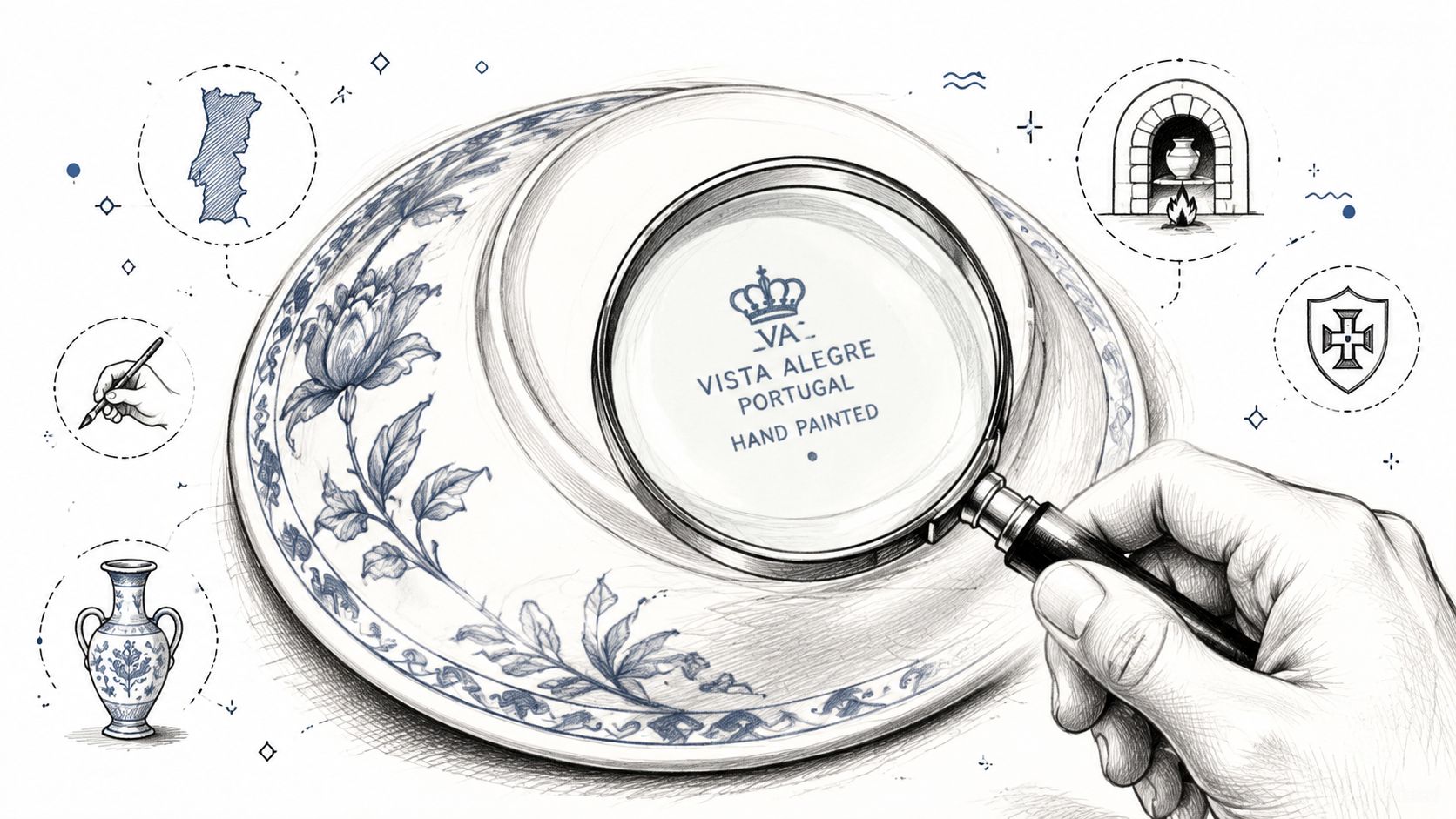
That's the point where confidence matters more than enthusiasm. A buyer doesn't need to become a ceramic historian. A buyer does need to know what authentic craftsmanship looks and feels like in the hand.
The signs that matter most
According to this guide to artisanal Portuguese tableware, a key challenge for consumers is distinguishing industrial "Portuguese-style" dinnerware from genuine artisanal stoneware. Authentic pieces feature "slight irregularities" and deep, non-uniform glazes resulting from hand-finishing, which are markers of heritage that mass-produced imitations lack.
That idea trips people up because many shoppers have been trained to think perfect sameness equals quality. In handcrafted ceramics, that's often the opposite of the truth. If every rim is identical, every color sits flat, and every plate looks machine-even under bright light, the set may be polished but not artisanal.
A practical checklist for shopping
When evaluating dinnerware from Portugal, it helps to look for a mix of visual and tactile signals.
- Rim variation: A hand-finished plate may show a gentle shift in edge thickness or contour. It shouldn't look warped, but it also shouldn't feel factory-stamped.
- Glaze depth: Rich glazes usually have movement. Color may pool more intensely near the edge or settle differently in the center.
- Surface character: An authentic artisanal piece often reveals subtle changes in sheen, brushwork, or tone.
- Weight and balance: Quality stoneware generally feels substantial without feeling clumsy.
- Backside finish: Turn the plate over. The foot should feel intentional and clean, not rough in a careless way.
The goal isn't to hunt for flaws. It's to recognize evidence of the maker's hand.
Some homeowners also benefit from reading broader buying guidance such as this article on choosing the ideal dinner plate set, especially when deciding how many place settings, serving pieces, and bowl styles a household needs.
What to avoid
Industrial lookalikes usually reveal themselves in a few ways:
| Warning sign | What it often means |
|---|---|
| Flat, uniform glaze | Visual depth may be missing |
| No variation across pieces | Hand-finishing is less likely |
| Overly themed styling | The set may be imitating heritage rather than reflecting it |
| Lightweight but generic feel | The piece may prioritize appearance over substance |
A buyer should also be wary of pieces that look “rustic” in a staged photograph but reveal no actual complexity up close. True artisanal work doesn't depend on marketing words. It shows itself in the finish.
Questions worth asking before buying
A careful homeowner can narrow the field quickly by asking a few grounded questions.
Does the glaze have visible depth or movement?
If the color reads flat and printed, the character may be superficial.Do small differences appear from piece to piece?
Slight variation can be a strength, not a defect.Would this still look good in five years?
Authentic style ages better than novelty.Does it fit the household's actual habits?
Beautiful dinnerware that doesn't suit family dinners, entertaining, or cleanup routines usually stays in the cabinet.
Why authenticity changes the experience
A mass-produced imitation can still hold food. That isn't the issue. The issue is that it won't bring the same depth to the room, the same tactile pleasure to everyday use, or the same sense of owning something made with care.
Authentic Portuguese dinnerware gives the homeowner more than a visual effect. It offers a relationship to craft. That's why the right set keeps earning its place on the table long after the first dinner party ends.
Styling Your Dinnerware in a Texas Home
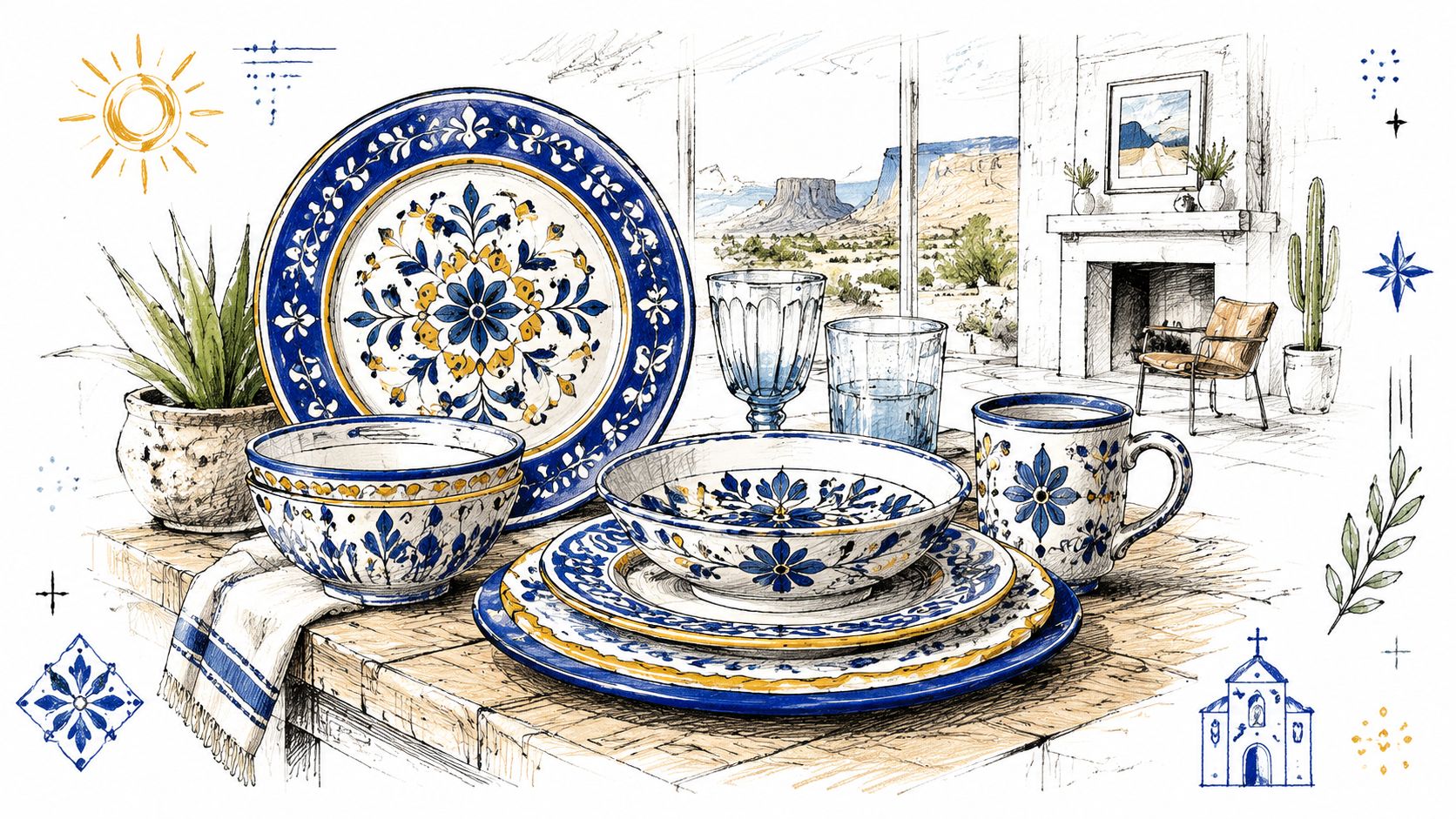
In the Southwest, the strongest interiors don't force a theme. They combine warmth, restraint, and material contrast. Portuguese ceramics fit beautifully into that rhythm because they can soften a room, brighten a table, or ground a setting depending on the glaze and form chosen.
Modern rustic with depth
A dark wood dining table, linen runner, and matte iron chandelier create a strong backdrop for blue-and-white or softly variegated Portuguese plates. This look works well in homes that already feature wood beams, framed nature scenes, or neutral upholstery.
The dinnerware should bring pattern without clutter. A layered setting with a salad plate over a grounded dinner plate often feels enough. Add clear glass, woven placemats, and one low arrangement rather than multiple decorative objects.
Southwestern elegance with terracotta warmth
Traditional Portuguese terracotta pieces used for soup and serving are especially appealing in this region. According to this collection of Portuguese plates and bowls, traditional Portuguese terracotta pieces, like those used for soup, have a thermal conductivity that allows them to keep food warm for extended periods. This makes them functionally ideal for serving slow-cooked dishes, while their colorful designs inspired by tiles and sardine motifs add a cultural touch to the table.
That makes them a smart fit for meals common in Texas homes, including stews, beans, braised meats, and comfort dishes served family-style. In a room with leather dining chairs, a vintage rug, and warm plaster or sandy wall color, terracotta bowls can feel both useful and beautifully regional.
A table looks most resolved when the dinnerware echoes the room's materials. Clay loves wood, leather, linen, and aged metal.
For homeowners refining this balance, the decor style spotter can help identify which supporting finishes and accents belong around the table.
Clean contemporary with handmade contrast
Some Southwestern homes lean lighter and more modern. Pale oak, simple silhouettes, and open-plan layouts need dinnerware that doesn't disappear. Portuguese stoneware in muted white, soft gray, or ocean-washed blue adds texture without interrupting the architecture.
The value of handmade variation is particularly evident. In a clean room, every detail shows. A subtle glaze transition or softly uneven edge gives the table life.
A simple styling formula works well here:
- Start with a quiet base: Neutral placemats or bare wood keep the table from feeling busy.
- Add one handmade note: Let the plate or bowl provide the visible texture.
- Keep serving pieces substantial: A larger platter or serving bowl helps the setting feel anchored.
- Use textiles sparingly: One quality napkin per place often does more than elaborate layering.
The result is a dining space that feels calm but not cold. That balance suits many Texas homes, where people want comfort first and formality second.
Care Maintenance and Lasting Beauty
Beautiful dinnerware lasts longer when daily care is simple and consistent. The goal isn't to handle every piece like a museum object. The goal is to protect glaze, edges, and finish so the set keeps its character through years of real meals.
Everyday habits that prevent damage
Good care starts in the cabinet. Plates should be stacked carefully, and heavier serving pieces shouldn't press awkwardly against delicate rims. If a shelf feels crowded, the dinnerware isn't being stored well enough.
Washing also matters. Many high-quality Portuguese ceramics are built for regular household use, but loading them thoughtfully still helps. Avoid forcing pieces tightly together where edges can knock during the cycle.
- Lift, don't drag: Sliding stacked plates against each other can wear finishes over time.
- Give bowls space: Rounded shapes can shift during washing if they're packed too tightly.
- Separate serving pieces: Larger platters deserve their own stable spot in storage.
- Check utensils after meals: Quick cleanup reduces the chance of surface marks sitting too long.
Why safety standards deserve attention
Food safety should never be an afterthought. According to European market guidance for ceramic dinnerware, European ceramic dinnerware sold in the EU must comply with Directive 84/500/EC, which strictly limits the release of lead and cadmium, ensuring the pieces are food-safe. Choosing dinnerware that meets these standards is a mark of quality and safety.
That gives homeowners a practical benchmark. Style matters, but trustworthy craftsmanship includes safe materials and proper manufacturing standards. A well-chosen set should feel as dependable as it looks.
Caring for the finish over time
Regular maintenance doesn't need to be complicated. It needs to be repeatable. Households that get the longest life from their dinnerware usually rely on a few steady habits rather than occasional deep care.
Choose pieces meant to be used, then care for them in a way that supports use, not fear.
For broader upkeep guidance around furnishings and finishes throughout the home, this product care resource is a helpful reference.
Dinnerware from Portugal earns its place by doing two jobs well. It makes the table more beautiful, and it supports the life happening around that table. When a homeowner chooses with care, styles with intention, and maintains the pieces well, the result isn't just a prettier cabinet. It's a more memorable home.
A well-designed dining room deserves pieces with substance, and the right dinnerware can bring the whole space into focus. Miller Waldrop Furniture & Decor helps homeowners across West Texas and Southeastern New Mexico create rooms that feel welcoming, layered, and lasting. Visit a showroom to explore furniture, accents, and design guidance that make it easier to build a table setting, and a home, that feels distinctly personal.