


How to Improve Sleep Quality: A Guide for Restorative Nights


If you’ve been tossing and turning more than you’ve been sleeping, you’re in the right place. Restless nights don't have to be your new normal. You have the power to reclaim deep, restorative sleep, and it doesn't require a massive, life-altering overhaul. The key is making small, smart adjustments to your surroundings, your daily habits, and the very bed you sleep on.
Your Journey to Better Sleep Starts Now
Feeling exhausted is more than just an inconvenience—it's a challenge so many of us in West Texas and Southeastern New Mexico are facing. If you’re struggling to drift off at night or wake up feeling like you barely slept, you are far from alone. The data backs this up, showing that millions of people are missing out on quality rest week after week.
This guide is designed to hand you the controls. Here, you'll discover the tools and strategies to conquer restless nights by mastering the three fundamental pillars of great sleep:
- Your Sleep Environment: How you can turn your bedroom into a true sanctuary for rest.
- Your Daily Rituals: Simple, powerful habits that signal to your mind and body that it's time to wind down.
- Your Sleep Equipment: How to choose the right mattress and pillows that work for you, not against you.
Small Changes Lead to Big Results
Forget the idea that you need to completely reinvent your life by tomorrow. The real secret to better sleep comes from small, consistent changes that add up over time. This isn't a strict set of rules, but a framework for you to discover what works for your unique needs. It’s about building a routine that helps you thrive.
You have more power over your sleep than you think. By focusing on intentional adjustments, you can build a sustainable foundation for better health and more energized days.
A huge part of the problem comes down to our habits and bedrooms. The National Sleep Foundation's 2026 Sleep in America Poll brought this into sharp focus, revealing that nearly 4 in 10 adults have trouble falling asleep three or more nights a week. This isn't just a statistic; it's a clear signal that simple, effective strategies are needed. You can dive deeper into the findings from the 2026 Sleep in America Poll to see the full picture.
As you start making these changes, understanding how to improve sleep quality naturally provides a great framework. It's about creating a lifestyle that supports rest from the moment your day begins.
To get you started, here is a quick-reference table that boils down the core strategies you can use to win back your nights.
Your Quick-Start Guide to Better Sleep
| Pillar of Sleep | Quick Action | Long-Term Goal |
|---|---|---|
| Environment | Dim the lights an hour before bed. | Create a cool, dark, and quiet sleep sanctuary. |
| Rituals | Avoid screens for 30 minutes before sleep. | Establish a consistent wind-down routine every night. |
| Equipment | Check if your pillow supports your neck. | Find a mattress that fits your unique sleep style. |
Think of this as your starting point. Each small action builds momentum toward the bigger goal: consistently great sleep.
Your Personal Plan for Better Nights
At Miller Waldrop, we know that a great night's sleep changes everything. We see ourselves as your local partners in creating a home that helps you live your best life. Our team has the expertise to provide you with the tools you need to win back your nights so you can conquer your days.
Ready to build the foundation for countless nights of incredible sleep? Here’s how you can find your perfect match. Start by exploring our curated collection of Serta, Beautyrest, and Mattress 1st mattresses.
Crafting a Bedroom Sanctuary for Deep Rest
Your bedroom should be a sanctuary dedicated to one thing: rest. But for many of us, it’s become a multi-purpose room that actually works against our sleep. To achieve truly restorative rest, you need to consciously design a space that tells your brain and body it's time to power down.
Let's walk through how you can transform your bedroom from a source of distraction into a true sleep haven.
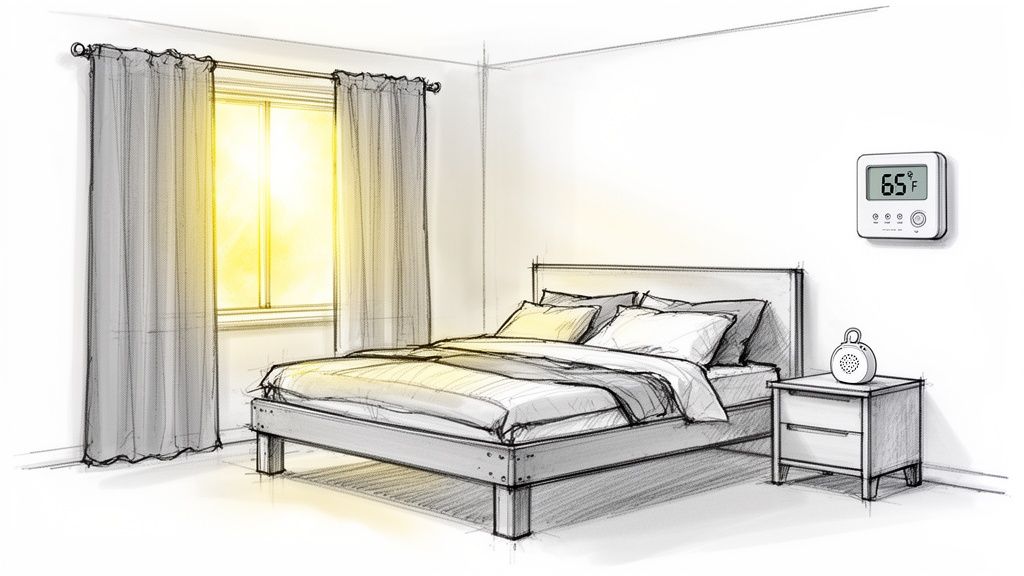
It really comes down to three key environmental factors: light, temperature, and sound. By mastering these elements, you give your body a powerful signal to fall—and stay—asleep.
Master the Darkness
Your first task is to make your room as dark as possible. Even a sliver of light from a streetlamp or a glowing clock can interfere with your body's production of melatonin, the hormone that governs your sleep-wake cycle. Here in West Texas and Southeastern New Mexico, where the sun can hang in the sky late into the evening, this is especially critical.
You have a couple of fantastic tools at your disposal:
- Blackout Curtains: These are non-negotiable for blocking out external light sources, from car headlights to that brilliant early morning sun.
- Sleep Mask: A simple, inexpensive way to block any light that still creeps in. It’s the perfect tool for creating total darkness, no matter where you are.
Getting this right often means knowing the difference between light filtering vs blackout shades to ensure you're creating a true cave-like environment for deep, uninterrupted rest.
Find Your Ideal Sleep Temperature
After you’ve handled the light, the next big factor is the temperature. Have you ever tossed and turned because you felt too hot? That’s because your body temperature naturally needs to drop to initiate sleep. A cool room helps that process along.
Experts have found the sweet spot for sleep is right around 65°F (18.3°C). Most people do best in a range between 60 and 67°F, which can make a huge difference in staying asleep all night.
Start thinking of your thermostat as a sleep tool. Experiment within that range to discover what feels best for you. A room that’s a little too cool is almost always better for sleep than one that’s even slightly too warm.
Control Your Sound Environment
Just as you're drifting off, a dog barks or a car alarm goes off, and suddenly you're wide awake. Sound is a major sleep disruptor. While you can't silence the world outside, you can create a consistent, peaceful soundscape in your bedroom.
Here’s how you can create a bubble of tranquility:
- White Noise Machine: This is one of the best tools you can use for your sleep. The constant, gentle sound effectively masks sudden, jarring noises that would otherwise wake you up.
- Earplugs: If you're an especially light sleeper or have noisy neighbors, a good pair of comfortable earplugs can provide that final layer of silence you need.
By managing the sound, you protect your sleep cycles from being interrupted by things you can't control.
Build a Foundation of Tranquility
Finally, the very furniture in your room can either promote calm or create mental clutter. A disorganized, chaotic space often leads to a racing mind when your head hits the pillow.
It all starts with the foundation: your bed frame. If your frame squeaks, wobbles, or transfers motion every time you or your partner rolls over, it’s actively sabotaging your sleep. A sturdy, high-quality bed frame creates a silent, stable base so that movement doesn’t wake you.
Your nightstand matters, too. Instead of letting it become a mountain of clutter, choose one with drawers to tuck essentials away. A clear surface holding just a lamp, a book, and a glass of water sends a powerful signal of calm. You can find more tips on designing a relaxing bedroom that you can use to create an even more peaceful space.
Building Daily Rituals for Quality Sleep
Great sleep doesn't just happen by accident when your head hits the pillow. It’s something you earn with the small, deliberate choices you make all day long. By building a few simple daily and nightly rituals, you can take back control and prime your body and mind for the deep, restorative rest you need.
Think of it this way: your body has its own internal clock, the circadian rhythm, and it absolutely loves consistency. Simple things like when you eat, when you move your body, and when you get some sunshine all send powerful signals that help you fall asleep more easily at night. It's all about finding a rhythm that works for you.
Creating a Relaxing Wind-Down Routine
About an hour before you plan to go to sleep, it’s time to consciously shift gears. A solid wind-down routine is just a sequence of calm, relaxing activities that tells your brain, "Okay, the day is over. It's time to power down." This isn't about following a strict, joyless script; it's about finding what actually feels relaxing and enjoyable to you.
The main idea is to move away from stimulating things (like your phone or the news) and toward calming ones. For some people, that might mean curling up with a good book. For others, it could be some light stretching to work out the day's kinks or even just jotting down thoughts in a journal.
Here are a few tools that can work wonders:
- Read a Real Book: Ditch the glowing screens and pick up a physical book. Getting lost in a story is one of the best ways to take your mind off of your own daily worries.
- Gentle Stretching: You don't need a full yoga session. Just some slow, deliberate stretches for your neck, shoulders, and back can release a surprising amount of physical tension.
- The "Brain Dump": Spend 10-15 minutes writing in a journal. Get all your worries, to-do lists, and random thoughts out of your head and onto the page. This keeps them from swirling around when you're trying to fall asleep.
- Take a Warm Bath or Shower: This does more than just feel good. When you get out, your core body temperature drops, which actually mimics a natural signal your body uses to initiate sleep.
Your wind-down routine is your personal buffer zone between the chaos of the day and the calm of the night. Think of it as an act of self-care that teaches your body how to relax, making it easier to get quality sleep night after night.
How Your Daytime Habits Affect Your Night
It’s not just about what you do right before bed, though. What you do from the moment you wake up really sets the stage for your night. Three areas in particular—caffeine, meals, and exercise—are like dials you can turn to fine-tune your sleep.
Getting a handle on these is a massive step in learning how to improve sleep quality.
- Set a Caffeine Curfew: We all know caffeine is a stimulant, but its effects can last a lot longer than you think. That afternoon pick-me-up can easily disrupt your sleep hours later. As a general rule, try to cut off all caffeine by 2 PM.
- Time Your Meals: A big, heavy, or spicy dinner right before bed is a recipe for indigestion and a restless night. Try to finish your last large meal at least three hours before you turn in. If you get hungry later, a small snack like a banana or a few almonds is a much better bet.
- Be Smart About Exercise: Regular physical activity is fantastic for sleep, but timing is key. A hard workout gets your heart rate up and raises your core body temperature—the exact opposite of what your body needs to do to fall asleep. Get your intense exercise done at least three hours before bedtime.
Don't Let the Quest for Sleep Keep You Awake
It's a strange paradox: the more we focus on getting "perfect" sleep, the more elusive it can become. With all the sleep-tracking watches and apps out there, many people get fixated on their sleep scores. This can lead to what experts call 'orthosomnia'—an obsession with sleep data that, ironically, just creates more anxiety and makes it harder to sleep. You can actually read more about sleep trends and the rise of orthosomnia to see how common this has become.
Remember, the goal is progress, not perfection.
If you find yourself lying in bed wide awake, don't just toss and turn. If you haven't fallen asleep after about 20 minutes, get up. Go to another room, keep the lights dim, and do something quiet and boring until you genuinely feel sleepy again. Forcing it only teaches your brain to associate your bed with stress.
This is all about building a healthier, less stressful relationship with sleep. It's about trusting your body and giving it the consistent cues it needs to rest. These rituals aren't chores; they're the tools you can use to win back your nights, one peaceful evening at a time.
How to Choose Your Perfect Mattress
Of all the things you can do for better sleep, choosing the right mattress is arguably the biggest game-changer. Think about it: you spend a third of your life on it. It’s the foundation for every single night of rest. A great mattress supports you, relieves pressure points, and lets you wake up feeling recharged, not sore.
But walking into a mattress showroom can feel overwhelming. With all the different materials, technologies, and firmness levels, how do you even begin? This guide will give you the knowledge you need to confidently find the mattress that’s perfect for you.
Before we even get to the mattress itself, it's worth remembering that great sleep starts long before your head hits the pillow. The small choices you make all day—from your morning coffee to your evening routine—set the stage for quality rest.
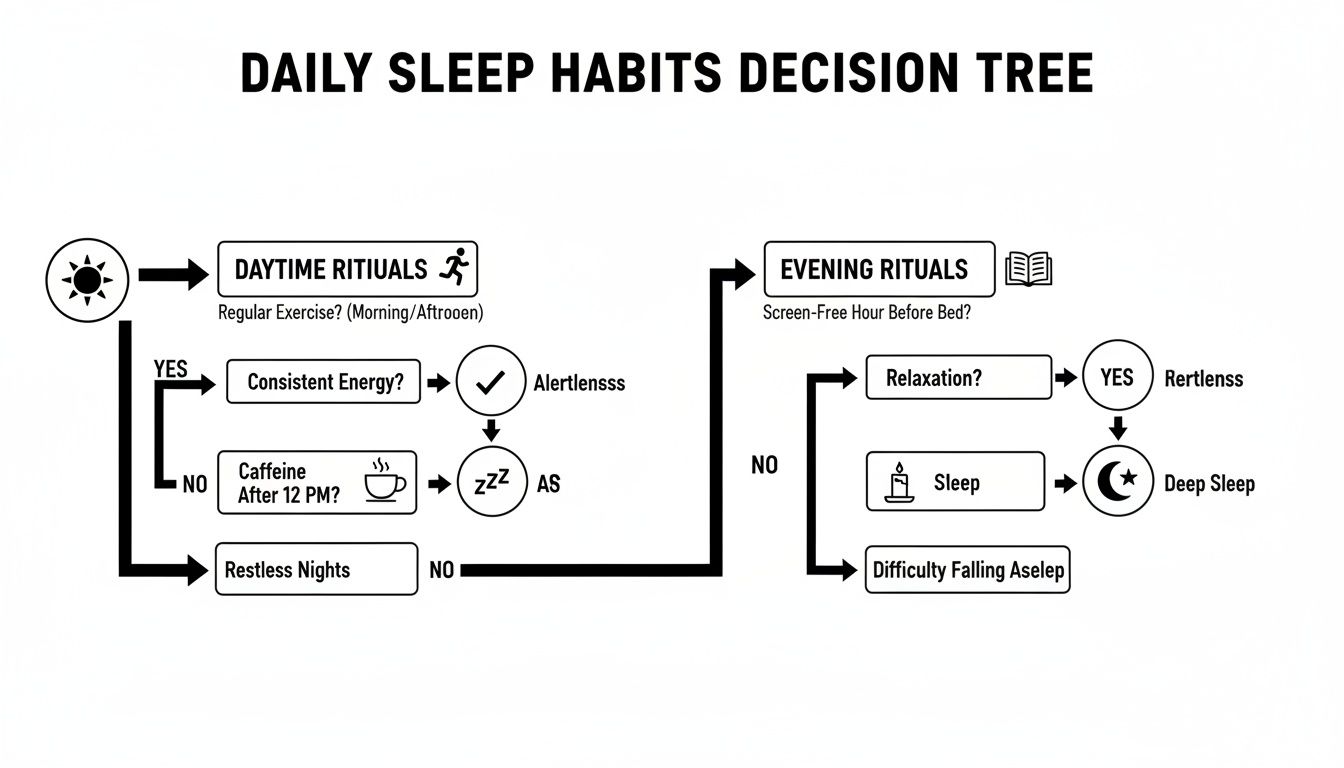
As you can see, things like getting some exercise or winding down with a book are just as crucial as what you sleep on. It all works together.
Matching Your Mattress to Your Sleep Position
The single most important factor in choosing a mattress is how you sleep. Your go-to position determines where your body puts the most pressure on the mattress and what kind of support you need to keep your spine properly aligned.
Side Sleepers: Most of us are side sleepers. If this is you, you need a mattress that can give way a bit at the shoulders and hips. This "cushioning" is what keeps your spine straight instead of curved. A medium-soft to medium firmness is usually the sweet spot here, preventing that all-too-common shoulder or hip pain.
Back Sleepers: Sleeping on your back is fantastic for spinal alignment, but only if your mattress cooperates. If it’s too soft, your hips will sink lower than your shoulders, creating an uncomfortable arch in your lower back. Too firm, and it won't give at all. For back sleepers, a medium-firm mattress typically provides that perfect balance of support and contouring.
Stomach Sleepers: This position can be tough on the neck and spine. The biggest mistake a stomach sleeper can make is choosing a soft mattress. Your hips will sink, putting a serious strain on your spine all night. To counter this, you need a firm surface that keeps your hips elevated and your body as neutral as possible.
Your sleep position is your body's personal blueprint for comfort. Matching your mattress to this blueprint is the first step in preventing aches and pains and unlocking deeper, more restorative rest.
Understanding Different Mattress Types
Once you have a firmness level in mind, you can start exploring the different kinds of mattresses out there. Each type has a distinct feel and its own set of strengths.
Innerspring Mattresses
These are the traditional coil-based mattresses many of us grew up on, but they've come a long way. Modern innersprings provide robust, durable support and have a familiar, responsive bounce. Because the coil system allows air to circulate freely, they are also a fantastic choice if you tend to sleep hot.
Memory Foam Mattresses
Famous for its "sinking in" feeling, memory foam is the champion of pressure relief. It contours precisely to your body, distributing your weight evenly and cradling your joints. This makes it an excellent option for side sleepers and anyone dealing with chronic pain. Another huge plus is motion isolation—if your partner tosses and turns, you’re far less likely to feel it.
Hybrid Mattresses
Why choose one when you can have both? A hybrid mattress truly offers the best of both worlds. It pairs a supportive innerspring coil base with top layers of contouring memory foam (or latex). The result is a bed that delivers the sturdy support and bounce of coils along with the pressure-relieving comfort of foam. It’s no wonder they’re so popular.
The Power of a Personalized Fitting
You can read articles and reviews all day, but nothing replaces actually trying a mattress. You wouldn’t buy shoes without trying them on, and your mattress is infinitely more important for your health and daily well-being.
This is where science can make a huge difference. At Miller Waldrop, you can use our bedMATCH® system to take the guesswork out of the equation. This is a smart diagnostic tool, not a sales gimmick. In just a few minutes, it creates a digital map of your body, measuring your unique pressure points and calculating the exact level of postural support you need.
With that scientific data in hand, our Sleep Experts can guide you to a curated selection of mattresses that are a perfect fit for your body. This turns what could be a confusing and frustrating process into a clear and confident decision. For an even deeper dive, you might find our guide on choosing the right mattress for your needs helpful.
Finding the right mattress is a powerful investment in your health, energy, and overall happiness. Ready to feel the difference it can make? Discover your perfect sleep solution by exploring our curated collection of Serta, Beautyrest, and Mattress 1st mattresses.
Personalize Your Sleep with an Adjustable Base
Think of your mattress as the foundation for good sleep. Now, think of an adjustable base as the key to customizing that sleep for your body's unique needs. If you’ve been fighting a losing battle with snoring, acid reflux, or persistent pain, an adjustable base might be the very tool that finally brings you relief. It fundamentally changes your bed from a flat surface into a responsive sleep system you can control.
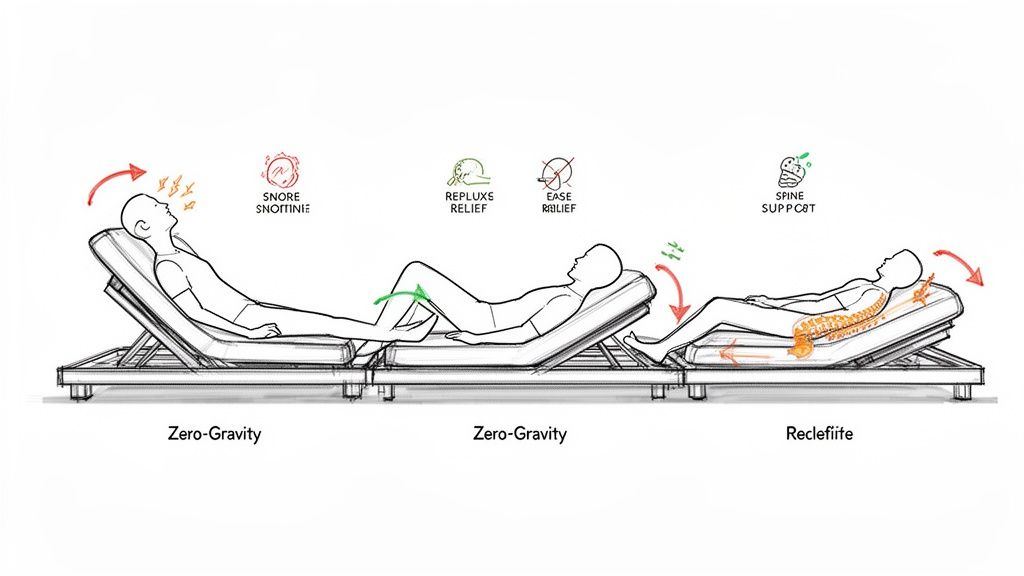
Instead of wrestling with a mountain of pillows every night, you can make precise, subtle adjustments with the push of a button. It’s all about taking back control from those nagging issues that a simple flat bed just can't solve.
Find Relief for Common Sleep Problems
The real magic of an adjustable base is how it offers targeted solutions for some of the most frustrating sleep disruptors. By simply changing the angles of your head and feet, you can use gravity to your advantage and physically address what’s keeping you awake.
Here’s how this tool can make a huge difference for people dealing with:
- Snoring: For so many of us, snoring happens when our airway gets partially blocked as we lie flat. Just a slight elevation of the head can be enough to open things up, helping you (and your partner) breathe easier and quieter all night long.
- Acid Reflux: Lying down flat is the worst thing for heartburn. It creates a direct path for stomach acid to travel where it shouldn't. By raising your upper body, you keep yourself more upright and let gravity do its job, keeping that acid comfortably in your stomach.
- Back Pain: This is where the "zero-gravity" position becomes a lifesaver. By raising your head and legs just slightly, you take a significant amount of pressure off your lower back. You can feel the tension in your lumbar spine just melt away.
An adjustable base isn't just a luxury item; it's a practical health tool. It gives you the ability to create a sleep position that actively works with your body, not against it.
More Than Just a Bed for Sleeping
The benefits don't stop when you wake up. An adjustable base can make your bedroom a far more comfortable and functional space for everyday life, too.
Imagine sitting up in bed to read a book, answer a few emails on your laptop, or watch a movie without constantly shifting around to get comfortable. An adjustable base provides the perfect ergonomic back support, turning your bed into a cozy personal lounge. It makes your bedroom a true haven for relaxation, day or night. If you want to dive deeper into the mechanics, you can learn more about what an adjustable base bed is in our detailed guide.
When you can tailor your position for both sleep and relaxation, you're investing in more than just a bed—you're getting a system that supports your well-being 24/7. Learning how to improve sleep quality often comes down to having the right tools, and this is one of the best.
Ready to feel the difference for yourself? Come visit our showrooms in Lubbock, Hobbs, or Ruidoso Downs. You can try out an adjustable base and talk with a Sleep Expert who can help you find the perfect setup.
Common Questions We Hear About Getting Better Sleep
Even after you start making changes, questions always pop up. It’s completely normal. We get a lot of the same ones from our customers across West Texas and Southeastern New Mexico, so we thought we'd answer a few of the most common ones right here.
Think of this as an ongoing conversation. Getting better rest is a process, and it helps to know what to expect along the way.
How Long Until I Actually Feel a Difference?
This is probably the number one question we get. While some things—like turning down the thermostat—can help you sleep better that very same night, most real, lasting improvements take a little time.
It generally takes your body about two to four weeks to truly settle into a new sleep schedule or a consistent nightly routine. If you've brought home a new mattress, you'll need to account for a "break-in" period. This can last anywhere from 30 to 90 days, as the materials soften and your body gets used to a new kind of support. Be patient and stick with it.
Building great sleep is all about consistency. Small, steady changes practiced over a few weeks will always beat drastic, quick-fix attempts.
Does the Right Pillow Really Matter That Much?
Yes, absolutely. A pillow is so much more than a cushion for your head—it’s a crucial piece of the alignment puzzle. In fact, your pillow accounts for about 20% of your overall posture and comfort while you sleep. Its main job is to fill the gap between your head and shoulders, keeping your neck in a straight line with your spine.
If your pillow is too high or too flat, it forces your neck into an unnatural position. That strain is what leads to waking up with stiffness, headaches, or shoulder pain. The right pillow really comes down to how you sleep:
- Side Sleepers: You need a thicker, firmer pillow to properly support the distance from your ear to your shoulder.
- Back Sleepers: A pillow with medium height and firmness works best to support your neck's natural curve without pushing your chin to your chest.
- Stomach Sleepers: A very thin, soft pillow—or even no pillow at all—is ideal to prevent your neck from arching backward.
Think of your mattress and pillow as a team. They have to work together to give you the support you need.
When Should I Talk to a Doctor About My Sleep?
While all the tips we've covered can make a huge difference, it's important to know when a problem might be more than just a bad habit or the wrong mattress. Some symptoms can signal an underlying medical condition that lifestyle changes simply can't fix.
It’s time to schedule a visit with your doctor if you’re experiencing any of these on a regular basis:
- Loud, chronic snoring that involves choking or gasping sounds. This can be a sign of sleep apnea.
- An uncontrollable urge to move your legs, particularly in the evening when you're trying to relax. This is a classic symptom of Restless Legs Syndrome (RLS).
- Feeling completely exhausted during the day, even when you think you got a full night’s sleep.
And if you’ve been trying these sleep hygiene tips for several weeks with zero improvement, that’s another good reason to check in with your primary care physician. They can help you figure out what’s really going on.
At Miller Waldrop Furniture & Decor, we believe that when you sleep well, you live well. Our goal is to give you the knowledge and tools you need to build a foundation for great rest.
If you’re ready to put the final pieces of your sleep puzzle into place, come take a look at our collection of pillows and sleep accessories.