

How to Choose Window Treatments for Your Home

Choosing the right window treatments can feel like a huge decision, but you can conquer it by breaking the process into a clear, manageable roadmap. This is your guide to selecting coverings that not only look fantastic but also work hard for your specific needs, empowering you to solve key problems for your home.
Think of your window treatments as more than just decoration. They are the functional tools you need to set the mood, protect your furniture from that harsh West Texas sun, and even help lower your energy bills.
To get started, here's how you can think through the four key things for every window.
Function First: What Job Does It Need to Do?
Before you even think about color or style, ask yourself: what is the primary job for this window treatment? Are you trying to block the intense afternoon light in a west-facing living room? Do you need to create a private sanctuary in a primary bathroom? Or maybe your goal is better insulation against the summer heat and winter cold.
Being clear about the function is the most important first step. A beautiful sheer curtain won't do you much good if your goal is to sleep in a pitch-black room.
Style and Scale: Completing the Picture
Now for the fun part. Your window treatments should feel like a natural extension of your home's personality. They need to harmonize with your existing decor, whether you have a modern farmhouse vibe, a classic traditional feel, or something uniquely your own.
Consider the scale of the room and the window itself. Large, dramatic drapery can make a grand statement in a room with high ceilings, while a sleek, low-profile shade might be perfect for a smaller space.
Materials and Controls: The Details That Matter
The material you choose affects everything—the look, the feel, and just as importantly, the durability and maintenance. A steamy bathroom or a greasy kitchen requires a material that can stand up to moisture and is easy to clean, like faux wood blinds or vinyl shutters. A formal dining room, on the other hand, is the perfect place for luxurious silk or velvet drapes.
Then, think about how you want to operate them.
- Manual controls are simple and reliable.
- Cordless options offer a clean look and are safer for homes with children and pets.
- Motorization brings a touch of modern convenience, allowing you to control your shades with a remote, an app, or even your voice. Imagine telling your house to "close the blinds" as the sun starts to glare on the TV.
By focusing on these four areas—function, style, material, and operation—you’re no longer just "picking curtains." You're making a smart, informed investment in your home's comfort, beauty, and efficiency.
To make it even simpler, here's a quick cheat sheet for matching a window treatment to your primary goal.
Matching Window Treatments to Your Needs
| Your Primary Goal | Top Window Treatment Choices | Why It Works |
|---|---|---|
| Maximum Light Control & Blackout | Blackout Roller Shades, Lined Drapery, Room-Darkening Honeycomb Shades | These options use opaque materials or special liners designed to block nearly all incoming light, perfect for bedrooms and media rooms. |
| Privacy Without Sacrificing Light | Cellular Shades, Faux Wood Blinds, Sheer Shades ("Silhouettes") | These treatments allow you to filter light beautifully while preventing outsiders from seeing in. You can tilt slats or choose translucent materials. |
| Energy Efficiency & Insulation | Honeycomb/Cellular Shades, Interior Shutters, Lined Drapes | The unique cellular pockets trap air, creating an insulating barrier against heat and cold. Shutters and thick drapes provide a substantial thermal layer. |
| Moisture & High-Traffic Areas | Faux Wood Blinds, Vinyl Shutters, Aluminum Blinds | Made from durable, water-resistant materials, these options won't warp, crack, or mildew, making them ideal for kitchens and bathrooms. |
This strategic approach ensures your final choices are as practical as they are beautiful.
At Miller Waldrop, we believe the best design choices come from a place of knowledge. Our mission is to provide you with the insights and tools needed to make those choices confidently, turning your vision into a reality.
If you need a little more guidance on how to pull your whole room together, exploring our professional interior design process can offer a world of clarity. You absolutely have the power to create a perfectly finished space.
Prioritizing Function: Light, Privacy, and Insulation
It’s easy to get swept up in the beautiful fabrics and finishes when you’re shopping for window treatments. But before you fall for a particular style, let's talk about what your windows really need to do for you. Think of it this way: what problem is this window causing? Is it a glare on the TV every afternoon? Does the bedroom feel like a fishbowl? Is your AC running nonstop?
Solving those practical problems first is the secret to a choice you'll be happy with for years. You can always find a style you love, but only after you know what job the window treatment has to perform.
This flowchart breaks down the thought process perfectly. It’s a roadmap that starts with the practical and leads you to the perfect solution for your home.
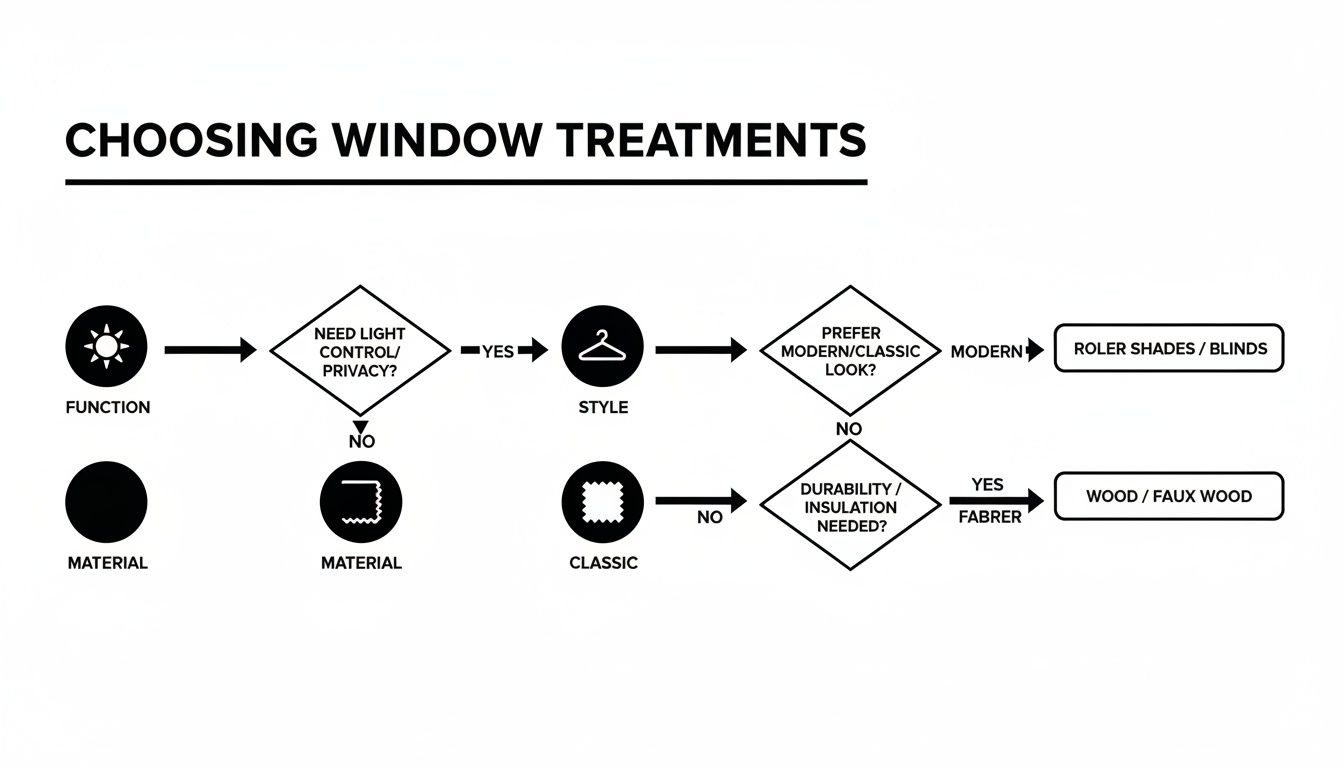
As you can see, figuring out your needs for light, privacy, and insulation is the foundation. Once you have that sorted, picking materials and styles becomes a whole lot easier.
Mastering Light Control
The amount and quality of natural light can completely change the feel of a room. So, your first task is to decide exactly how much light you want—or don't want. The needs of a sun-drenched Lubbock living room are worlds apart from a primary bedroom in Hobbs that needs to be dark for a good night's sleep.
Think of light control in three main categories:
- Light-Filtering: These are your go-to for creating a soft, ambient glow. They cut the harsh glare but keep the space feeling bright and open. They’re fantastic for kitchens, home offices, and living areas where you want to enjoy the daylight without being blinded by it. Sheer shades are a classic example.
- Room-Darkening: This is the perfect middle ground. Room-darkening treatments block a good deal of light, but not all of it. They're a great fit for media rooms to reduce screen glare or for bedrooms where you prefer a dim, cozy atmosphere over total darkness.
- Blackout: When you need it dark, you need blackout. These are engineered with opaque fabrics or liners to block 95-99% of all incoming light. For shift workers, nurseries with napping babies, or anyone who is a light sleeper, blackout options are an absolute must.
Getting the opacity right is the first big win. You’re giving yourself the power to set the mood—from a bright breakfast nook to a pitch-black bedroom for deep sleep.
Achieving the Right Level of Privacy
Next up is privacy. This is rarely a one-size-fits-all decision, as your needs can change dramatically from one room to the next. A street-facing window has totally different requirements than one on the second floor overlooking your backyard.
For daytime privacy that doesn’t mean living in a cave, look at options like top-down/bottom-up shades or light-filtering cellulars. They let you see out while making it tough for nosy neighbors to see in.
For bathrooms and bedrooms, you'll want something completely opaque when closed. A brilliant strategy you can use is layering—pairing light-filtering shades with a set of blackout drapes gives you total control over both light and privacy, day or night.
Your Secret Weapon Against West Texas Weather
Finally, you have to talk about insulation. Here in West Texas and Southeastern New Mexico, this isn't just a feature; it's a necessity. Your window treatments are a front-line defense against our brutal sun and those surprisingly chilly winter nights.
The U.S. Department of Energy has some eye-opening stats: around 30% of a home's heating energy is lost through windows, and a staggering 76% of the sunlight hitting a standard double-pane window becomes heat inside your home. This is where your window treatment choice turns into a smart financial decision.
Before you even pick a treatment, it helps to understand the performance of your current windows, including their U-factor in windows. From there, you can add a powerful layer of insulation.
Top choices for insulation include:
- Cellular (or Honeycomb) Shades: These are the champs of insulation. Their unique air-trapping pockets create an incredible thermal barrier. For maximum energy savings, always go for a double-cell design.
- Lined Drapery: A substantial set of drapes, especially with a thermal lining, acts like a heavy blanket for your window, blocking significant heat transfer in both directions.
- Interior Shutters: When properly fitted, shutters create a solid, protective barrier that keeps the summer heat out and the cozy warmth in during winter.
By starting with these three core functions—light, privacy, and insulation—you've laid the groundwork for making a smart, long-lasting decision. You’re not just decorating anymore; you're actively improving your home’s comfort and efficiency.
Matching Window Coverings to Your Home's Style
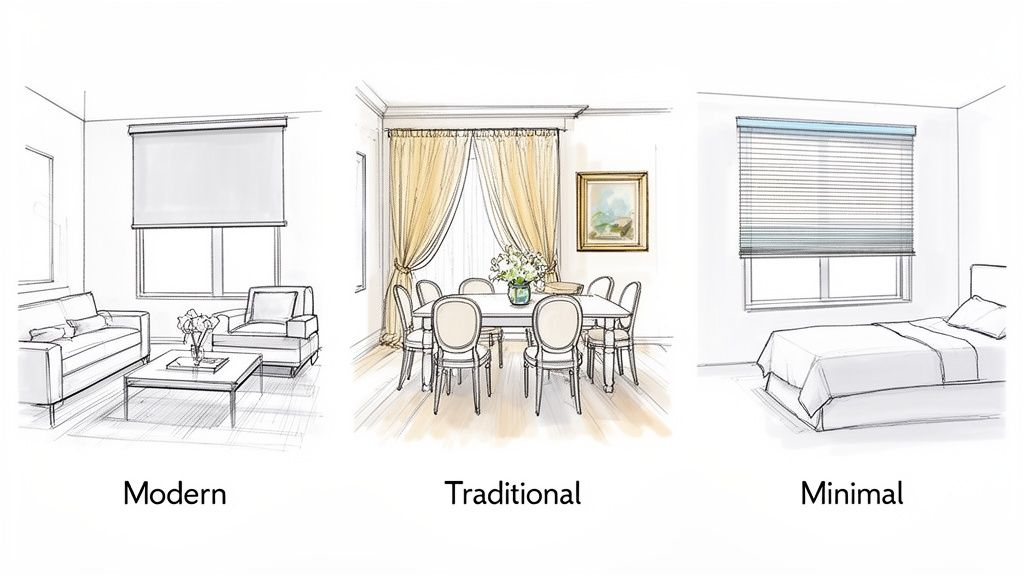
You’ve figured out what your window treatments need to do. Now for the fun part: making sure they look fantastic. The right window coverings should feel like they truly belong in the room, complementing your furniture, colors, and overall aesthetic.
Think of them as the final piece of the puzzle that pulls the entire space together. The perfect choice can elevate everything else, whether you’re aiming for a rustic farmhouse look in Ruidoso Downs or a sleek, contemporary vibe in Lubbock.
For Modern and Minimalist Homes
When it comes to a modern aesthetic, less is almost always more. The goal is clean lines, simple shapes, and an uncluttered feeling. Your window treatments should support that simplicity, not fight against it.
Here’s how you can choose a polished, modern look:
- Roller Shades: These are the definition of minimalist design. They roll up into a tight, nearly invisible cylinder, providing function without adding any visual clutter.
- Solar Shades: A fantastic modern option, especially for our sunny climate. They offer crucial UV protection and cut down on glare while still letting you see outside. Their sleek profile feels right at home in a contemporary space.
- Faux-Wood Blinds: If you want to bring a little warmth into a modern room without sacrificing clean lines, premium faux-wood blinds are an excellent choice. Their crisp, horizontal lines echo the geometric shapes often found in modern furniture, creating a really cohesive design.
You can create a seamless look that makes the room feel bigger and more serene by choosing a shade or blind color that’s very close to your wall color. This "tone-on-tone" approach helps the treatment blend in, perfecting a minimalist style.
For Traditional and Classic Interiors
Traditional design is all about creating a sense of warmth, elegance, and history. It loves rich textures, detailed patterns, and timeless silhouettes. Your window treatments are a golden opportunity to add softness, drama, and a touch of luxury.
Here’s how you can enhance a classic home with these options:
- Drapery: This is the quintessential choice. Layering fabric panels over another treatment—like simple Roman shades or classic wood blinds—adds incredible depth and sophistication. You can make a statement using rich fabrics like velvet, silk, or a heavy linen.
- Roman Shades: Offering the softness of drapes but with a more structured, tailored appearance, Roman shades are perfect. Their soft, cascading folds look beautiful in dining rooms or formal living areas where you want an elegant but tidy finish.
- Wood Shutters: As a permanent upgrade, interior shutters add serious architectural character and value to a home. They provide outstanding light control and a classic look that simply never goes out of style.
For Eclectic and Transitional Styles
So, what if your style is a little bit of this and a little bit of that? Perfect. This is where you get to have the most fun and let your personality shine. The secret to making an eclectic look work is to find a common thread—like a color, texture, or even a general shape—to tie your different choices together.
Layering different types of treatments is your best friend here. For more ideas on how to pull a room together with varied pieces, take a look at our guide on how to expertly mix furniture styles.
It's also worth noting that homeowners are increasingly investing in renovations, and the right window treatments are a smart part of that investment. In fact, professionally staged homes with quality window treatments can sell up to 73% faster. Whether you’re in Hobbs or Carlsbad, choosing treatments that boost both your daily comfort and your home’s resale value is a win-win.
Ultimately, you want to feel confident in the style you've created. When you're ready to see how these different options look and feel in person, our experts are here to help.
Getting to Know Your Options: Blinds, Shades, Drapes, and Shutters
Alright, now that you've thought about what you need from your window treatments, it's time for the fun part: exploring the actual options. Think of this as getting to know the four main players. When you understand what each one does best, you can walk into a showroom with confidence, ready to find the perfect fit.
We'll break down the pros and cons of blinds, shades, drapery, and shutters. Each one has its own personality and strengths, and knowing the difference is what will help you make a choice you’ll be happy with for years to come.
The Structured Versatility of Blinds
If you’re someone who wants ultimate control, blinds are your answer. They’re built with individual slats (or louvers) that you can tilt, raise, or lower, giving you precise command over how much light and privacy you have at any given moment. They’re the real workhorses of the window treatment world.
- Wood Blinds: Nothing beats the natural warmth and classic, solid feel of real wood. They bring a timeless character to spaces like studies, dens, or living rooms.
- Faux-Wood Blinds: These are the problem-solvers, especially for our climate. Made from durable, moisture-resistant composites, they won't warp in a humid bathroom or above a kitchen sink. They give you the look of wood without the worry.
- Aluminum Blinds: A fantastic budget-friendly choice that doesn't skimp on style. Aluminum blinds are sleek, modern, and come in a huge range of colors to match any decor.
The clean, horizontal lines of blinds work well with just about any style, from traditional to ultra-modern. The ability to angle the light is their superpower—you can keep the sun's glare off your TV while still brightening the room, all without sacrificing your privacy.
The Soft Elegance of Shades
Where blinds are all about structure, shades are defined by fabric and softness. A shade is made from a single, continuous piece of material, which gives it a much softer, more uniform look. It’s a great way to make a room feel less busy and more pulled-together.
It’s easy to get the terms mixed up, but understanding the difference between blinds and shades is a key step in picking the right product. Shades come in an incredible variety of styles, each with its own special features.
Popular Shade Styles:
- Cellular (Honeycomb) Shades: These are the absolute champions of energy efficiency. Their unique, pocket-like structure traps air, creating a powerful insulating barrier against the brutal West Texas heat and surprise winter cold snaps. A blackout cellular shade in a bedroom is a true game-changer for sleep.
- Roller Shades: The definition of clean and simple. Roller shades disappear neatly when raised, offering a minimalist look that can be as subtle or as bold as you like, thanks to a massive range of fabrics from sheer to full blackout.
- Roman Shades: The best of both worlds. Roman shades give you the soft, luxurious feel of drapery but with the crisp function of a shade. They fold up into beautiful, soft pleats, adding a touch of tailored elegance that’s just perfect for a dining room or formal living space.
The Luxurious Appeal of Drapery
Drapery is what truly finishes a room. It adds a layer of texture, color, and sophistication that just can't be replicated. Think of curtains and drapes as the final piece of the puzzle—the element that adds softness, absorbs sound, and brings a powerful sense of warmth and style.
Drapery is more than just decorative. When you choose a thermal or blackout lining, drapes become one of the best insulators for your windows, acting as a serious buffer against heat gain in the summer and heat loss in the winter.
A go-to designer trick is to layer drapery panels over existing blinds or shades. This gives you the functional light control of the shade paired with the beauty, insulation, and color of the drape. It's how you get that truly custom, high-end look without compromising on practicality.
The Timeless Architecture of Shutters
Shutters are really in a category of their own. Because they’re a permanent fixture, they function more like custom-built furniture for your windows. They instantly add architectural detail and can significantly increase your home’s resale value.
Plantation shutters offer exceptional light control, privacy, and insulation all in one incredibly durable package. We often recommend premium Hunter Douglas shutters because they are engineered to last a lifetime, standing up to our intense sun without fading, cracking, or warping. Their classic, refined style looks just as good in a rustic ranch house as it does in a sophisticated traditional home.
Now you have a solid foundation for identifying the right category for each window in your house. The next step is to get hands-on with materials and controls. Ready to narrow it down? Our design experts are always here to help you sort through the final details and find your perfect match.
Why Motorization is More Than Just a Cool Gadget
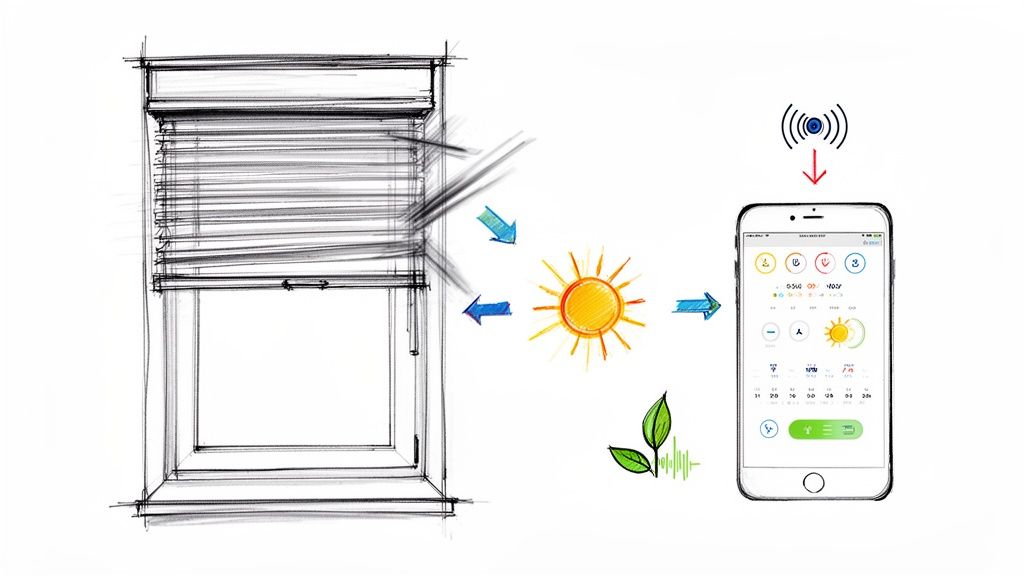
What if you could adjust every shade in your house with a single tap, a quick voice command, or have them move on their own throughout the day? This isn't science fiction anymore. Motorized window treatments are incredibly practical and more accessible than most people realize, adding a serious upgrade in convenience, safety, and efficiency to your home.
Think of it as the next logical step in home automation—a simple way to make your daily routines smoother and your space work for you, not against you.
Convenience That Changes Your Daily Routine
The most immediate benefit you'll notice is pure convenience. With the press of a button, you can instantly cut the afternoon glare on your TV. It’s a game-changer, especially for those hard-to-reach windows in a two-story entryway or over the bathtub that you’ve probably given up on ever adjusting.
But it’s not just about a remote control. Modern systems integrate seamlessly into your existing smart home setup, so you can use voice commands with Alexa or Google Home. Even better, you can put your shades on a schedule.
- Gentle Wake-Up: Have your bedroom shades rise slowly with the morning sun. No more jarring alarms.
- Instant Ambiance: Create a "Movie Night" scene that dims the lights and lowers the shades all at once.
- Effortless Security: Schedule all your shades to close automatically when you head out for the day, boosting privacy in an instant.
A Critical Safety Upgrade for Kids and Pets
Beyond the "wow" factor, motorization offers a crucial safety improvement for any home with children or pets. Traditional blinds and shades with long, dangling cords are consistently listed as one of the top hidden hazards in a home, posing a serious strangulation risk.
By switching to motorized treatments, you get rid of those hazardous cords completely. It's a clean, modern look that provides invaluable peace of mind, knowing you’ve removed a major risk from your home.
This one decision brings together sophisticated design and responsible homeownership, creating a safer environment for your entire family.
A Smart Way to Boost Energy Efficiency
For anyone living in West Texas and Southeastern New Mexico, motorization is one of the smartest investments you can make. That intense sun can turn a house into an oven, making your AC unit work overtime. Automated shades are your first line of defense. By programming them to lower during the hottest parts of the day, you create a dynamic shield against solar heat gain.
The impact here is huge. The push for smart homes is a major force in the window coverings market, with nearly 90% of U.S. households now using automated solutions. In sunny climates like ours, energy-efficient treatments can slash energy bills by up to 25%. You can dig into the numbers in this in-depth market analysis on Fortunebusinessinsights.com.
This automation doesn't just lower your cooling costs; it also protects your furniture, wood floors, and art from fading under harsh UV rays. By having your home respond to the sun automatically, motorized shades deliver a real return on investment. Our designers can walk you through the best Hunter Douglas PowerView® Automation options to make your home smarter and more comfortable.
Putting It All Together: Your Game Plan
Alright, you’ve explored all the possibilities—from the practical needs of light control and privacy to the fun of choosing styles and materials. Now for the hands-on part. Let's walk through the final steps to get those perfect window treatments into your home.
Measure with Confidence
Getting your measurements right is absolutely crucial. It’s the difference between a custom, professional look and a frustrating, ill-fitting result. A common mistake is just measuring the glass, but you need to think about the whole frame.
First, decide if you want an inside or outside mount.
- Inside Mount: This is where the treatment fits neatly inside the window frame. It gives you a clean, minimalist look. You'll need to measure the width at the top, middle, and bottom of the frame and use the narrowest measurement to ensure a good fit.
- Outside Mount: Here, the treatment is installed on the wall or trim above the window. This is a more forgiving option and can be a great trick to make a window feel larger. It's also the go-to solution if your window frame isn't deep enough for an inside mount.
Before you pull out the tape measure, our guide on the correct way to hang curtains has some fantastic tips that apply to almost any window treatment project.
Set a Realistic Budget
Window treatments are a true investment in your home's comfort, value, and style. The final cost will depend on the window size, the materials you fall in love with, and whether you add custom features like motorization.
Don’t forget to factor in long-term value. Higher-quality, energy-efficient options like cellular shades or properly lined drapes might have a higher upfront cost, but they often pay for themselves over time with savings on your energy bills.
Think of your window treatments not just as a purchase, but as an upgrade. They add tangible value by boosting energy efficiency, securing your privacy, and putting the finishing touch on your home's design.
You Don't Have to Do This Alone
Feeling a little overwhelmed by the choices? You don't have to figure it all out by yourself. The design experts at Miller Waldrop are here to be your partners in this process, helping you turn your vision into a reality.
With over 70 years of experience, our family-owned business has been serving West Texas and Southeastern New Mexico for generations. We know this region, its intense sun, and its unique style like the back of our hand.
We’d love for you to bring your ideas and inspiration to our showrooms in Lubbock, Hobbs, or Ruidoso Downs. Come see the options, feel the fabrics, and test the operating systems in person. Together, we'll find the perfect solution to complete your home with confidence and style.
Common Window Treatment Questions Answered
Choosing the right window treatments can feel like a huge decision, and it is! It’s the finishing touch that pulls a whole room together. To help you feel confident in your choice, we’ve put together answers to a few questions we hear all the time from our customers.
What Are the Best Window Treatments for the West Texas Heat?
This is probably the number one question we get, and for good reason. When you're dealing with our kind of sun, you need more than just shade—you need a real defense against the heat.
- Cellular or Honeycomb Shades are the MVPs here. Their unique honeycomb-shaped pockets are specifically designed to trap air, which acts as a powerful insulator against that relentless heat gain.
- Solar Shades are another fantastic option. Think of them like high-tech sunglasses for your windows. They’re engineered to block harsh UV rays and cut down on glare, all while letting you keep that beautiful view.
- Layered drapery with a thermal lining is a classic for a reason. Adding a thermal lining to your drapes is like putting a blanket on your windows, providing a surprisingly effective barrier that stops heat in its tracks.
Our designers live here, too, so we know exactly which materials and styles offer the best energy efficiency for our unique climate.
The right treatment isn't just about blocking light; it's about actively rejecting heat before it ever gets into your house. That's what leads to real savings on your cooling bills month after month.
Should I Choose Blinds or Shades?
This really boils down to what you value more: precise light control or the overall look and feel of the fabric.
Blinds, which are typically made from hard materials like real wood or durable faux wood, feature adjustable slats. This gives you incredible, tiltable control over both light and privacy. They offer a clean, structured look that many people love.
Shades, on the other hand, are made from a single piece of fabric. This creates a softer, more seamless aesthetic. While you can't tilt them, they come in a huge array of materials and opacities—from completely sheer to total blackout. For instance, Roman shades offer an elegant, tailored fold, while roller shades provide a sleek, minimalist vibe.
Is Professional Installation for Window Treatments Worth It?
One hundred percent, yes. It might be tempting to save a few dollars and go the DIY route, but professional installation is what guarantees a perfect fit and flawless operation. Trust us, it makes all the difference.
When treatments are installed incorrectly, they can hang crooked, create gaps that let in light and heat, and even pose a safety risk. Our installers are meticulous—they ensure every measurement is precise and every bracket is secure. It's the final, critical step that protects your investment and saves you from a world of potential frustration.
Here at Miller Waldrop Furniture & Decor, we believe window treatments are the essential final layer that truly completes a space. You’ve now got the know-how to make smart choices, and our team is here with the tools you need to bring it all home. When you’re ready to see the fabrics and feel how the mechanisms work in person, we invite you to explore our beautiful Hunter Douglas window treatment collections. Let's make your vision a reality.