


Queen vs King Mattress: Which Size Is Right for Your Bedroom

A queen mattress is 60 by 80 inches, and a king is 76 by 80 inches. That means each sleeper gets about 8 more inches of personal space on a king, but the better choice still depends on room size, budget, and how the bed gets used at night.
| Comparison point | Queen mattress | King mattress |
|---|---|---|
| Standard size | 60 x 80 inches | 76 x 80 inches |
| Width difference | Baseline | 16 inches wider |
| Sleeping surface | 4,800 sq in | 6,080 sq in |
| Per person for two adults | 30 inches | 38 inches |
| Setup impact | More space-efficient | More room, more cost |
A lot of people walk into a showroom thinking they just need “the bigger one.” That's usually the wrong starting point. The key question is whether a bedroom can handle the footprint, whether the sleepers truly need the extra width, and whether the full setup fits the budget without squeezing the rest of the room.
In a West Texas home, that question gets more complicated fast. A bedroom might also need to function as a nursery, guest room, office corner, or pet zone. Once a king bed goes in, the room either works beautifully or turns cramped in a hurry. That's why the smartest decision starts with the space around the bed, not just the bed itself.
Starting Your Queen vs King Mattress Decision
A couple buys a new house in Lubbock, stands in the empty primary bedroom, and does the same mental math every shopper does. A king sounds luxurious, a queen sounds practical, and both can feel right until the room starts filling up with nightstands, a dresser, and a closet door that swings too far. That's where the decision lives.
Practical rule: If the room has to do more than sleep duty, the mattress size needs to respect that.
The queen vs king mattress choice usually comes down to three things, space, sleep habits, and total investment. The queen is the sensible pick when the bedroom needs to stay open and usable. The king is the stronger move when the room is large enough to absorb the extra width and the sleepers want more separation.
That separation matters more than many admit. A king doesn't just look larger; it changes how two people move, stretch, and settle through the night. For some couples, that extra room is the difference between waking up rested and waking up irritated by every elbow and blanket tug.
There's also the long view. A bedroom setup isn't just a mattress, it's the bed frame, bedding, protection, and delivery logistics that come with it. If the room might later need to serve another purpose, a queen often leaves more flexibility. If the room is meant to be a true primary retreat, the king starts making a lot more sense.
One straightforward option for shoppers who want to see queen-size bedroom furniture in context is a queen panel bed. Seeing the frame, bedding, and surrounding furniture together helps a lot more than staring at a mattress tag in isolation.
Queen and King Mattress Dimensions Compared
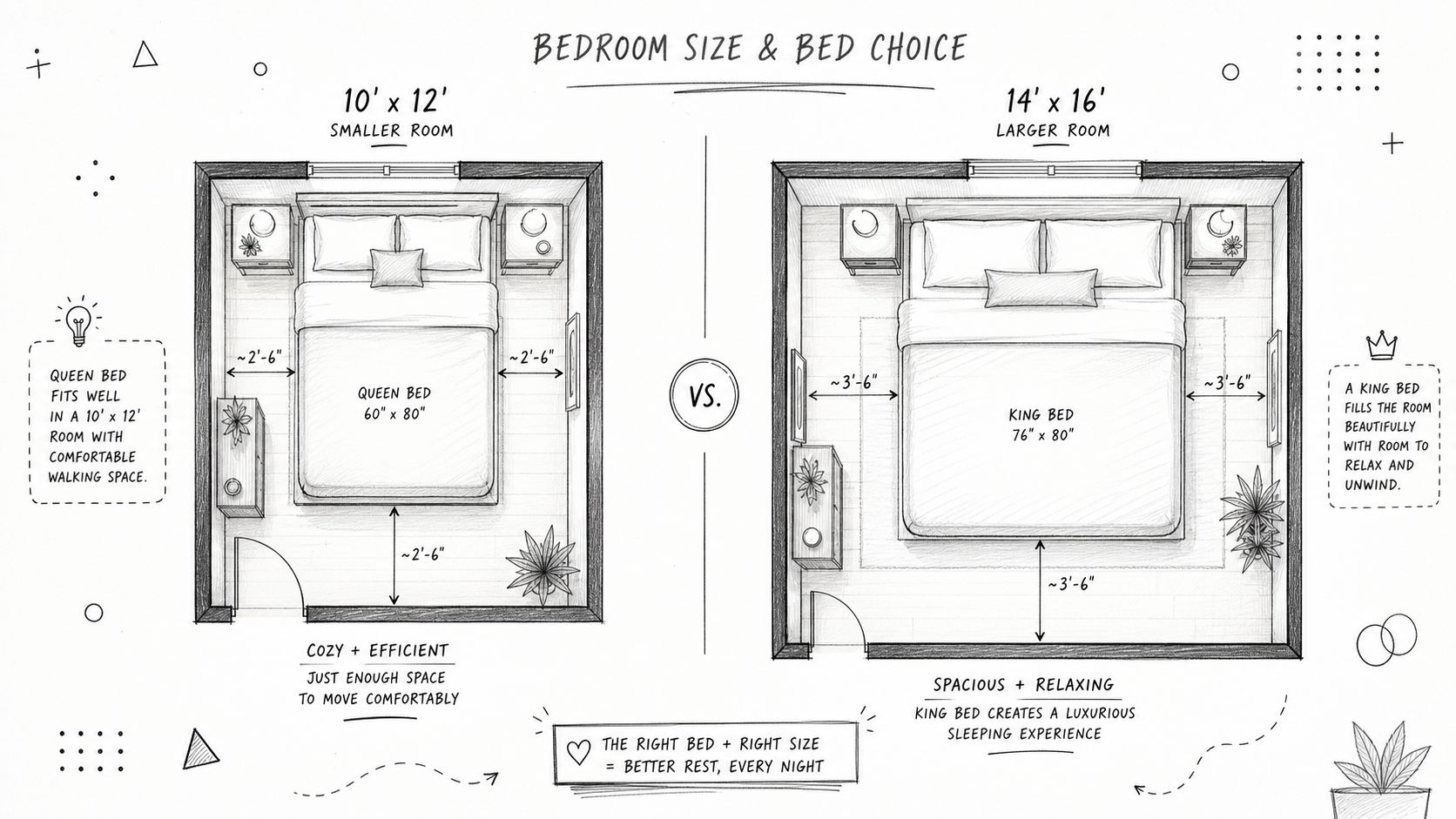
The dimensions are simple, and they tell the whole story. A standard queen mattress measures 60 inches by 80 inches, while a standard king mattress measures 76 inches by 80 inches. The length is identical, so the entire difference is width, and that width gap is 16 inches.
| Mattress size | Width | Length | Total surface area |
|---|---|---|---|
| Queen | 60 in | 80 in | 4,800 sq in |
| King | 76 in | 80 in | 6,080 sq in |
That extra width changes the experience in a very direct way. For two adults, a queen gives each person about 30 inches of width, while a king gives each person about 38 inches. In other words, the king adds 8 inches per sleeper. That's the number that matters when one partner sprawls, sleeps hot, or never stays in one position for long.
The surface area difference is just as clear. The queen offers 4,800 square inches, and the king offers 6,080 square inches, which means the king provides 1,280 more square inches of sleeping surface (Sleep Foundation). Some buying guides also describe that as about 27% more surface area for the king (Sleep Foundation). That's not a small upgrade. It's a real shift in how much room two people, a child, or a pet can occupy without everyone colliding.
A king panel bed makes that width feel even more substantial once it's paired with the right frame and bedding. The numbers are the starting point, but the finished setup is what your body lives with every night.
Room Size and Sleep Space Requirements
A mattress can be the right size on paper and still be the wrong size in the room. That's the part shoppers miss when they focus only on width. A queen usually fits more comfortably in smaller bedrooms, while a king works best when the room has enough breathing room left after furniture goes in.
The old rule of thumb says a queen suits a bedroom around 10 feet by 12 feet, while a king feels more natural in a space closer to 12 feet by 12 feet or larger. Those are only starting points, though. Real rooms need space for nightstands, dresser drawers, door swings, closet access, window clearance, and the path between the bed and the wall.
A room that looks generous when it's empty can feel crowded after furniture arrives. A king's extra width changes circulation more than people expect, especially in homes with angled layouts, support beams, or multi-use corners. In a West Texas house, that extra floor space often matters because bedrooms aren't always simple rectangles with nothing else going on.
A good mattress choice preserves the room's job, not just the sleeper's comfort.
That's why the better question isn't “Can a king fit?” It's “Can the room still function after the king goes in?” If the bedroom has to hold storage, pet movement, a crib, or an office chair, the queen often wins by keeping the room livable. If the room is a dedicated sleep space with generous clearance, the king earns its keep.
For shoppers measuring a real room, the easiest method is to map the bed footprint first, then mark the swing of every door and drawer second. If the remaining walkway feels cramped on paper, it'll feel worse in daily use. A king panel bed can be the right fit in a larger primary bedroom, but not in a room that needs to multitask.
Sleep Style and Couple Compatibility
Sleep style is where the king usually proves its value. If one or both sleepers toss, turn, stretch, or change positions often, the extra width gives those movements room to happen without constant contact. The same is true for couples who don't sleep in the same posture all night. A king makes the bed feel less like a shared lane and more like two usable zones.
Combination sleepers are the obvious case, but they're not the only one. People who share the bed with a child or a pet feel the difference fast. The extra width keeps the center of the bed from becoming crowded the moment someone else climbs in.
A queen can still work well for couples who sleep close and don't mind it. Some people like a tighter sleep setup, and there's nothing wrong with that. A queen also makes sense for a single sleeper who wants extra room without taking over the bedroom.
The right choice depends on whether the bed is a place to spread out or a place to stay compact. If both sleepers value personal space, the king is the cleaner solution. If they'd rather keep the room visually lighter and sleep close together, the queen does the job without waste.
Bottom line: the king is a comfort upgrade for shared sleep, but only if the room and budget can support it.
That's the part shoppers should be honest about. If one partner already knows they need room to roll, the king is the safer buy. If the bed is only occasionally shared, or the bedroom is already carrying a lot of other furniture, the queen is usually the smarter call.
Mattress Price and Total Setup Cost
The mattress price is only the first bill. King size costs more because it uses more material, but the real sting shows up in the rest of the setup. Sheets, mattress protectors, comforters, duvet covers, frames, and bases all cost more once the bed goes king.
A common queen vs king mattress mistake is budgeting for the mattress and forgetting everything else. That's how shoppers get surprised at checkout. One comparison estimates the total king setup at roughly $500 to $600 more than a comparable queen setup, while another places mattress prices around $850 to $1,200 for queen and $1,000 to $1,700 for king. That gap matters because bedding and support pieces are part of the true cost, not optional extras.
| Item | Queen Estimate | King Estimate |
|---|---|---|
| Mattress | about $850 to $1,200 | about $1,000 to $1,700 |
| Full setup difference | baseline | about $500 to $600 more |
A shopper hunting for stylish decor on a budget can use stylish decor on a budget as a reminder that bedroom spending has layers. The bed is only one piece of the room, and the larger the mattress, the more every matching accessory tends to climb.
Delivery can also become more complicated with a king. Bigger pieces are harder to turn in narrow hallways, tighter staircases, and older homes with awkward corners. That's not just an inconvenience. It can shape whether the room setup feels easy or exhausting.
For bedding, a standard queen sheet set like the Dri-Tec performance sheet set in standard bright white queen is a practical example of how size affects the whole purchase. A queen keeps the refresh cycle simpler and lighter on the wallet. A king gives more surface area, but it also asks for a bigger commitment everywhere else.
Local Buying Tips for West Texas and New Mexico Shoppers
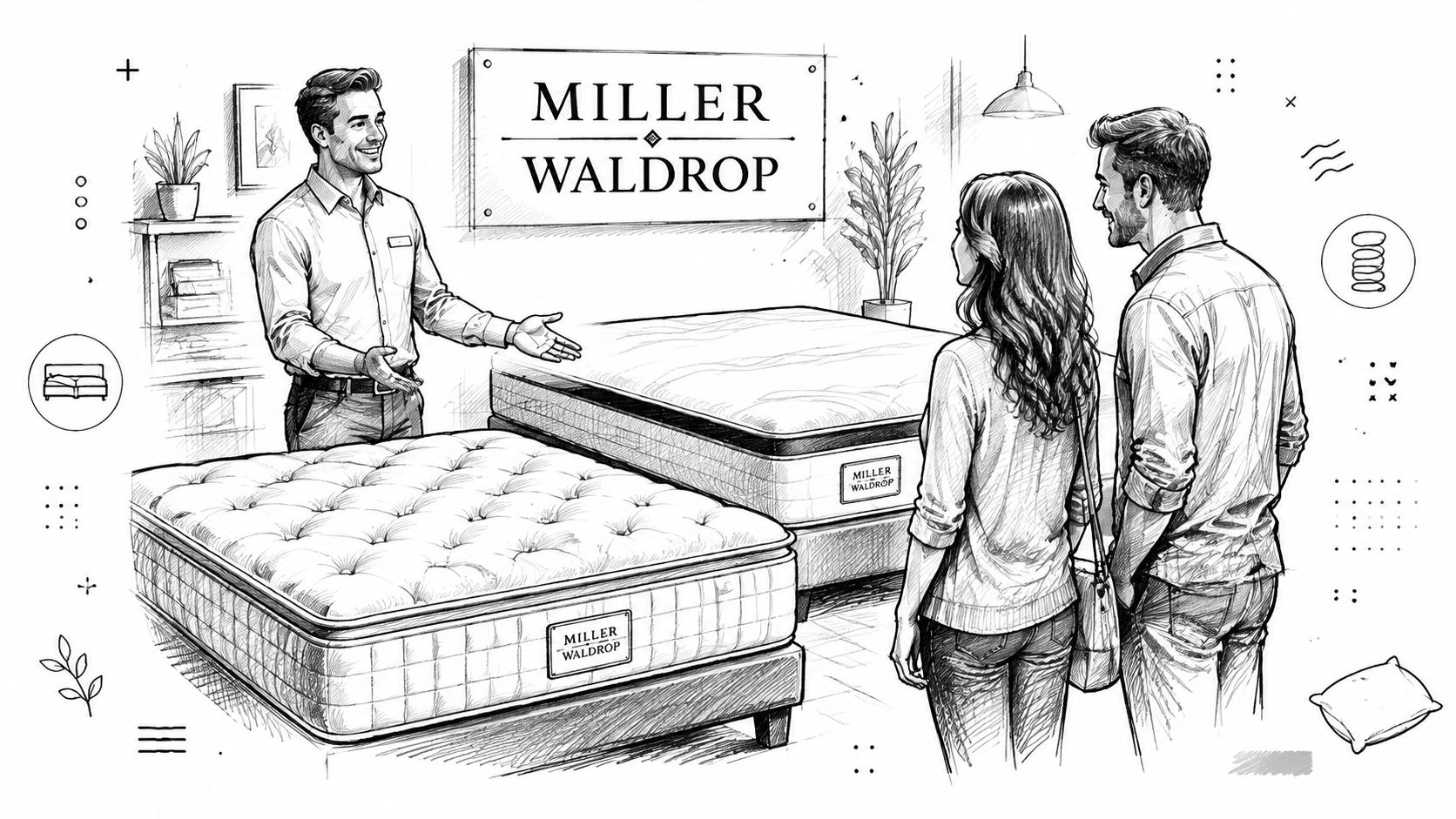
Buying in person solves problems that online shopping can't. In Lubbock, Hobbs, and Ruidoso Downs, shoppers can lie down on both sizes, compare how each one feels in the room, and see how much visual space the mattress takes up. That matters more than a spec sheet when the decision is this close.
The smarter showroom visit starts with two questions. First, how much room does the bedroom really have once furniture and walkways are included? Second, how much width does the sleeper need to stay comfortable? Those two answers usually point to the right size before a salesperson says a word.
Miller Waldrop Furniture & Mattress carries Serta, Beautyrest, and Mattress 1st, so shoppers can compare memory foam, innerspring, and hybrid options across multiple price points. Their Sleep Experts also use a high-tech bed matching system to identify pressure points and narrow down the right firmness and size for a specific body type. That's useful because mattress size and mattress feel need to work together, not fight each other.
The store also offers financing options and a Low Price Promise, which helps when the full setup includes bedding, a frame, and delivery. Professional delivery is especially useful for king size purchases because the bigger mattress has less room for error in tight homes. In practical terms, the right store should make the size decision easier, not louder.
A good local mattress visit should leave a shopper with one clear answer, not three new doubts.
For shoppers who also need broader home solutions, a local option like Miller Waldrop Furniture & Decor can keep bedroom planning tied to the rest of the house instead of treating the mattress as a one-off purchase. That's useful in homes where the bedroom has to fit the life around it, not just the bed inside it.
Queen vs King Mattress Recommendations by Situation
Choose a queen when the bedroom is compact, when the space has to multitask, or when budget discipline matters more than extra sprawl. It's also the right call for a single adult who doesn't need king-level width and would rather keep the room open for storage, movement, or a second purpose.
Choose a king when two adults regularly share the bed and both want room to move without bumping each other. It's also the better pick when children or pets join in often, because that added width keeps the bed from feeling crowded fast. If the bedroom is large enough to support the footprint comfortably, the king stops feeling indulgent and starts feeling sensible.
A couple with a dedicated primary bedroom should think hard about the long-term comfort difference. A king often justifies itself in a room that exists mainly for sleep. A queen wins when the same room still has to function like part of the house during the day.
For shoppers who want fabric or customization help beyond mattresses, the collaboration program for sewing enthusiasts is a useful reminder that bedroom comfort and soft goods often come together in one project. The same principle applies here, the right bed size should match the room's real use, not just its label.
If the room feels tight on paper, go queen. If the room feels generous and the sleepers want elbow room, go king. That's the cleanest decision rule, and it holds up better than chasing the biggest size available.
Miller Waldrop Furniture & Decor helps shoppers compare queen and king options with real mattresses, bedroom furniture, and practical guidance for the room they live in. Visit Miller Waldrop Furniture & Decor to test the size difference in person, compare bedding and frame options, and choose the setup that fits your space without wasting money.