

Velvet Sectional Sofa: How to Choose the Right One


You're standing in a showroom or scrolling late at night, looking at a velvet sectional sofa that seems to solve everything at once. The color is right, the shape looks soft, and the price feels within reach. Then the annoying questions show up, and they're the ones that matter, will it fit through the door, will it crowd the room, and will velvet still look elegant after real life gets hold of it?
A velvet sectional is a space-planning decision first and a style decision second. That's the honest way to buy one, because sectionals already sit at the center of the sofa market, with Grand View Research reporting that sectionals were the largest revenue-generating sofa type in the U.S. market in 2025, and that global sectionals held a 27.3% share of category value in 2025 (Grand View Research). If the configuration is this important to the market, it's even more important in a home where the sofa has to carry the room, not just decorate it.
Why a Velvet Sectional Starts with the Room
A couple in a smaller living room can fall in love with a jewel-toned sectional fast. The shape looks inviting, the velvet catches light beautifully, and the room starts getting rearranged in their heads before a single tape measure comes out. That is the mistake. The room decides first, the fabric decides second.
Velvet changes how the room reads
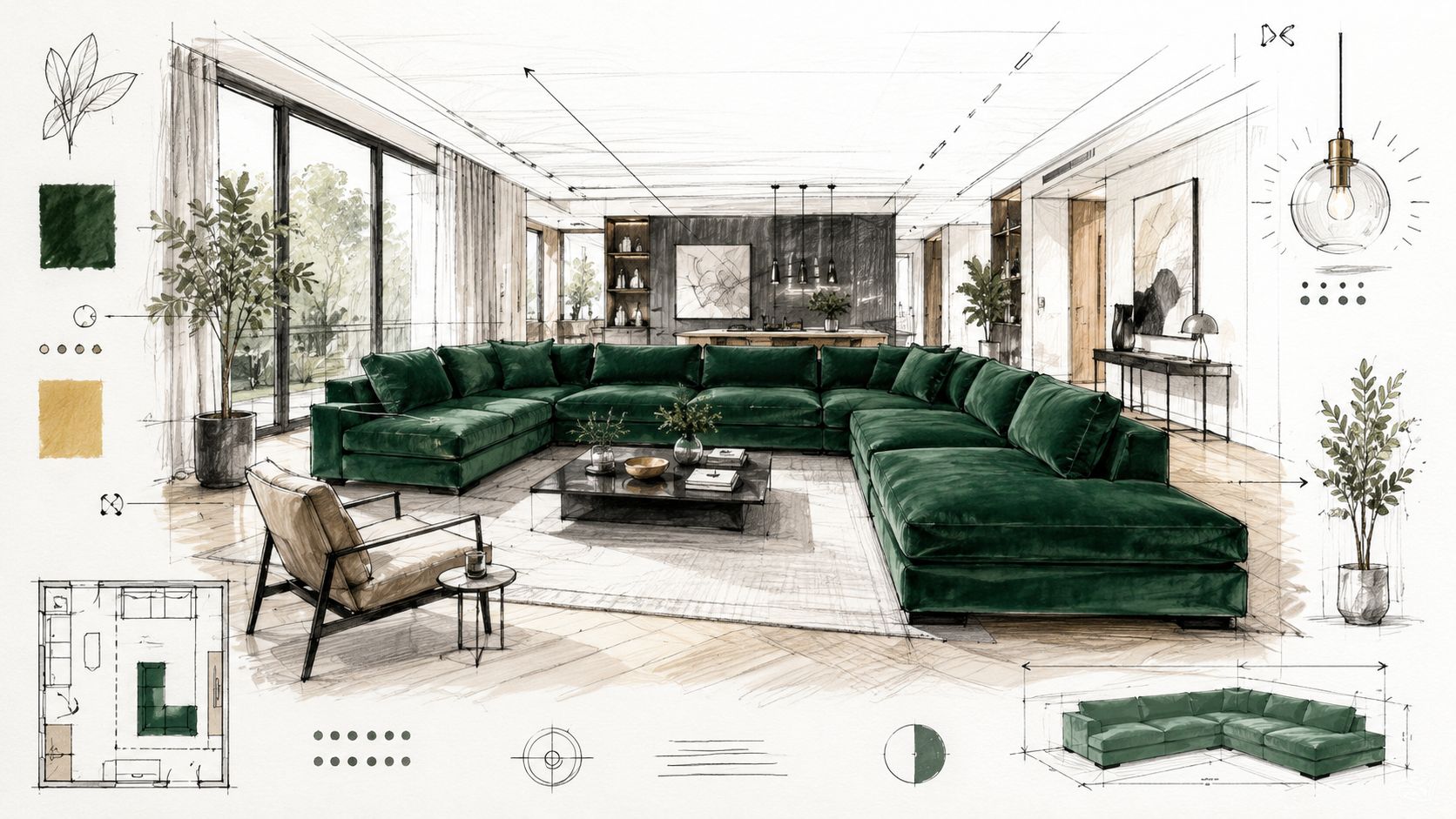
Velvet has visual weight. Its pile direction and soft sheen make a sectional look richer than a flat weave, but they also make it read larger in a tight room. A dark velvet can anchor a space, while a lighter one can bounce light and feel airier, yet both still need room to breathe around them.
Shoppers should look at sightlines and the furniture already in the room before they get attached to a color. A beautiful velvet sectional shoved too close to a coffee table or walkway starts to feel like an obstacle, not a feature. In a living room where the sofa is the main event, the rest of the layout has to behave like supporting cast.
Practical rule: if the sectional makes the room feel like it shrank, the piece is wrong, no matter how good it looks in photos.
Why sectionals deserve the attention
Sectionals matter because they solve real household problems. Grand View Research notes that sectionals hold a major place in the sofa market, which matches what shoppers already know, a sectional is usually the sofa that has to host people, stretch out for movie nights, and define a room without extra furniture clutter (Grand View Research).
Soft ambient lighting also changes how velvet performs in the room, because shine, shadow, and texture all become more visible after dark. A useful companion read is this guide to layered candle light, since lighting choices can make a velvet sectional look intentional instead of heavy.
Measure Twice Before You Fall in Love
A good velvet sectional purchase starts with tape on the floor and swatches in hand, but the tape comes first. Measure the room, then measure circulation, then measure access into the home. If any of those three fail, the sofa is a bad buy, no matter how elegant the upholstery is.
Start with the wall runs and the actual walking path
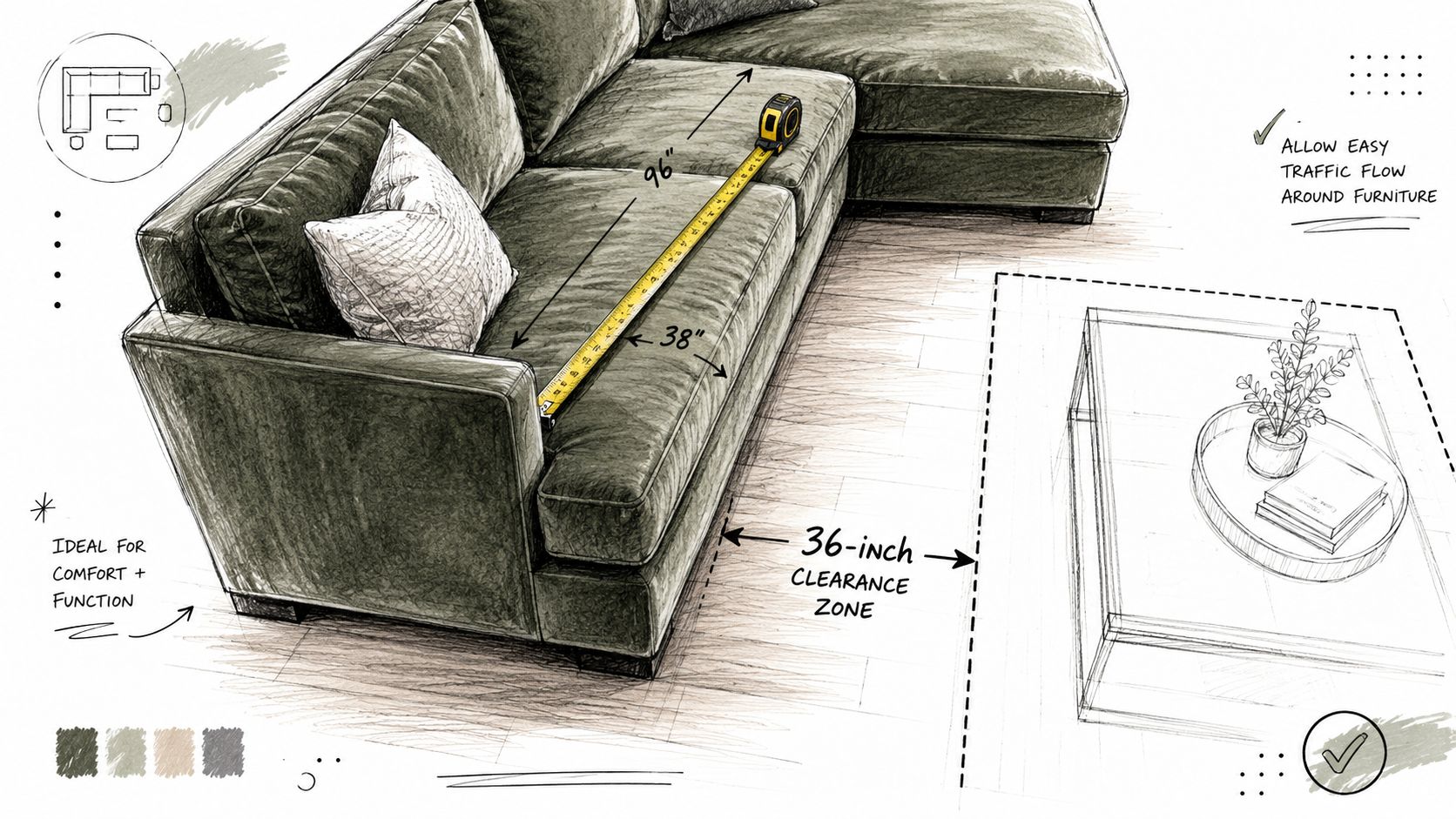
Measure the wall runs where the sectional might sit, then map how people move through the room. A sectional should support circulation, not block it. Independent design guidance for 2026 emphasizes that 36 inches of clearance is the baseline for comfortable movement in a room, and that number should be treated as a floor, not a wish.
That means the floor plan has to include the path from doorway to sofa, the turn around the coffee table, and the route to any adjacent seating or storage. If there's a chaise, the extension needs room too. A sofa that technically fits but chokes the walkway is still the wrong sofa.
Check the doorway, stair turn, and assembled footprint
The product page's headline width is only part of the story. The assembled footprint tells the truth, because arms, depth, and chaise length affect whether the sectional can get into the room. A representative 2-piece velvet sectional listed at 103.5" x 52" x 35"H also required a 10" minimum door width, which shows how misleading it is to shop from width alone (product listing).
The clean workflow is simple.
- Measure wall runs first. Know the usable length on each side of the room.
- Map the turn points. Doors, stair corners, and tight hallways matter more than most buyers expect.
- Compare the full assembled footprint. Check width, depth, arm height, and chaise extension, not just one dimension.
- Leave a buffer. Allow 2–4 inches beyond the piece for installation and airflow.
If delivery people have to fight the geometry, the room has already told the buyer no.
For a practical example of how to work through a room shape and layout math, the process in a measure an L-shaped room for flooring guide is a useful model, because the same discipline applies to furniture planning. Measure once for the room, then again for the product.
A local showroom can make this easier by helping you compare tape measurements against a real frame size, and a piece like the Aline velvet tan swivel chair shows why that matters, because a compact chair can solve an awkward corner without forcing the whole layout to bend around a sectional that is too large.
Choosing the Right Velvet Fabric and Finish
Velvet gets treated like one single fabric, but it isn't. The weave, backing, and fiber content change how the sectional feels, how it drapes, and how it behaves after months of use. Buyers who skip that distinction usually end up disappointed by either the look or the upkeep.
Cotton, polyester, performance, and crushed velvet
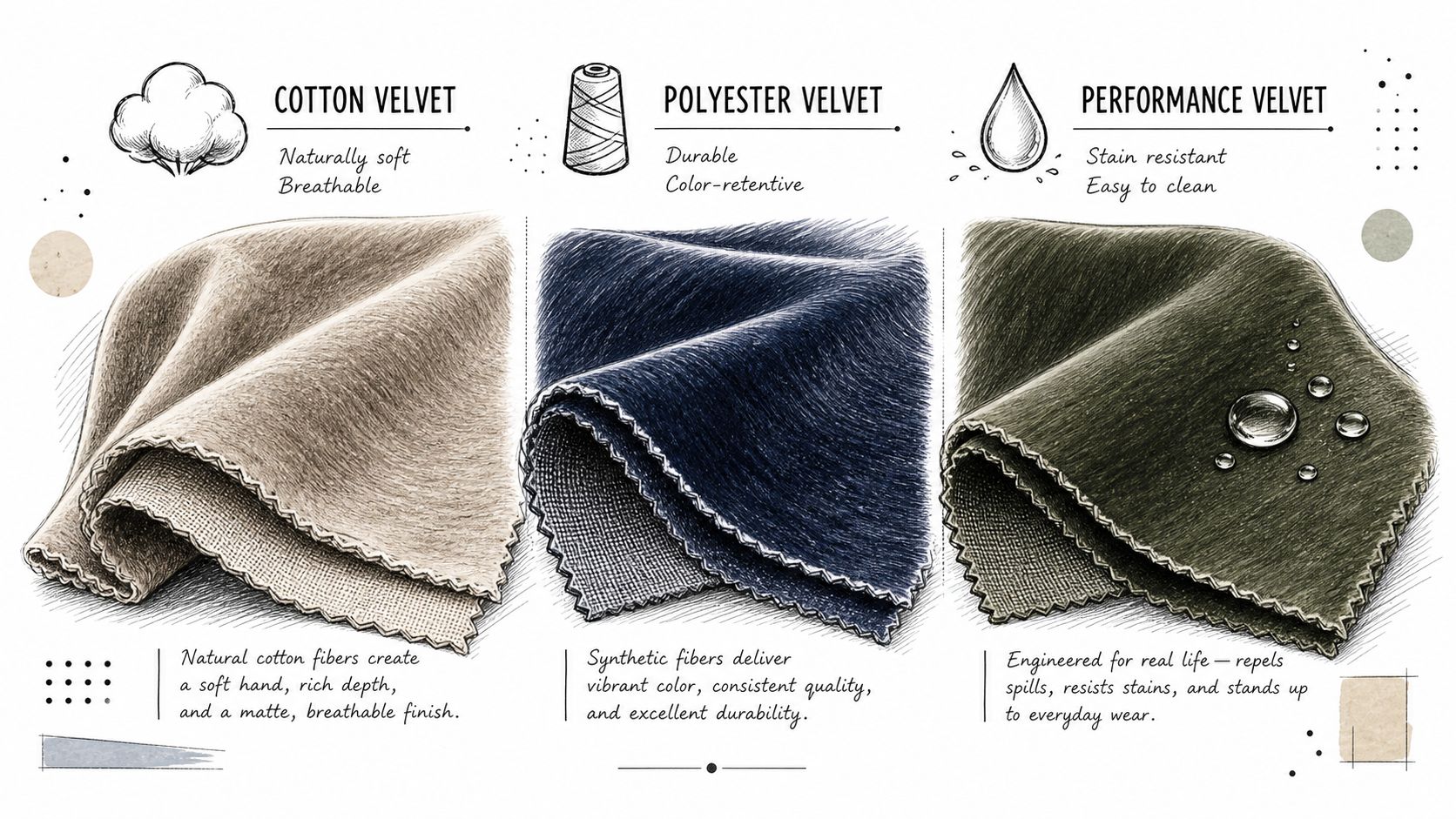
Cotton velvet has a softer, more natural hand and a matte-leaning look. It can feel elegant and classic, but it usually asks for more care. Polyester velvet tends to be more forgiving in everyday use, and that matters if the sectional is going in a family room rather than a formal lounge.
Performance velvet is the smarter pick for households that want the plush look without behaving like a museum. It usually gives the easiest balance of softness and day-to-day tolerance. Crushed velvet is more about visual texture than smooth tailoring, so it can hide minor surface marks, but the finish is bolder and less understated.
A good shopping rule is simple. If the room gets regular use, lean synthetic or performance. If the room is a quieter sitting area and the look matters more than rough treatment, a more delicate velvet can make sense.
Why pile direction and sheen matter
Pile direction changes how the fabric looks when someone sits down or runs a hand across it. Velvet can show a darker or lighter cast depending on which way the nap lies, which is part of its charm, but it also means the sofa can look “moved around” even when it's just been used normally. Sheen does the same thing, especially in daylight, where pet hair, fingerprints, and crushed areas can stand out more clearly.
The market trend toward deeper greens, browns, and warm reds fits that reality. Darker color stories can be more practical because they soften the look of wear and help the sectional feel grounded in the room. If a buyer wants a velvet sectional to stay beautiful without constant fussing, saturated tones usually make more sense than pale ones.
For a smaller accent piece, a matching velvet chair can help test the feel before committing to a full sectional. A useful example is this clearance velvet tan swivel chair, which shows how the fabric reads in a different silhouette.
Durability and Performance Tradeoffs Worth Knowing
A velvet sectional can look expensive and still be the wrong fit for the household. The question is whether the construction and fabric match the room's weekly traffic. A smart buyer looks at the frame, seat build, and likely use before getting distracted by the sheen.
What the build should tell you
The better listings usually call out corner-block reinforcement, kiln-dried wood, and a seat structure built from foam plus pocket springs. Those details matter because they support the parts of the sectional that take daily weight, not just the outer shape. In one example, the product details also referenced a 300 lb-per-seat rating, which gives a useful sense of capacity and construction quality.
A velvet sectional with weak framing is a false economy. It may look finished on day one, then start shifting, sagging, or wearing unevenly far too quickly. In a showroom, press on the seat, lift the corner slightly, and ask how the frame is built before talking about color again.
When velvet is the right call, and when it isn't
Velvet makes the most sense in low-to-medium traffic living rooms where the visual impact is the point. It also works well when the household is willing to treat the sofa with care instead of using it as a catch-all landing zone. Families with toddlers, large dogs, or a lot of snack-heavy lounging may be happier with a textured weave or performance fabric that hides abuse more naturally.
The tradeoffs are real. Velvet can show crushed pile from a favorite seat, reveal wear on the chaise edge, and collect pet hair more obviously than some textured fabrics. Dark denim can also transfer color more easily than many buyers expect, so the person who wants a worry-free sofa should not force velvet into a role it was not chosen for.
A practical way to judge performance is to compare it with other fabrics in the same room. A textured weave hides scuffs better, while velvet gives you a richer surface and a more finished look. If you want one reason to keep your expectations realistic, the same basic rule applies to other exterior surfaces too, including when to clean solar panels in Arizona. Regular care matters more than wishful thinking.
| Fabric Type | Feel and Look | Stain Visibility | Best Household Fit |
|---|---|---|---|
| Cotton velvet | Soft, classic, more natural-looking | More noticeable in bright light | Lower-traffic rooms, careful households |
| Polyester velvet | Smooth, versatile, easy to live with | Moderate, depending on color | Everyday living rooms |
| Performance velvet | Plush with a tougher day-to-day profile | Usually better managed | Busy homes, families, pets |
| Crushed velvet | Textured, more dramatic, visually active | Can disguise minor marks | Accent-forward rooms, statement spaces |
Cleaning and Maintenance That Actually Works
Velvet stays elegant when the owner treats it as a textile and keeps up with the pile. The routine is simple, but it has to happen on schedule. Ignore the fabric, and the surface starts looking tired long before the sofa should.
Build a habit, not a rescue plan
Vacuum the sectional regularly with an upholstery attachment. That keeps dust, crumbs, and pet hair from settling into the pile, and it is far less aggressive than waiting until the sofa looks visibly dirty. If a spill happens, spot-clean it immediately with a damp cloth, and test any fabric-safe cleaner on a hidden area first so the color and nap do not react badly.
Never saturate the fabric. Soaking velvet can distort the pile and leave a ring or stiff spot that is harder to fix than the original spill. A light touch and patience beat scrubbing every time.
Rotate, brush, and protect the finish
Cushions should be rotated every 2–3 months to distribute wear and keep one seat from collapsing into the family favorite zone. Brushing the pile back into direction can also help the fabric look even after daily use, and a simple care routine like the one in this Miller Waldrop furniture guide on armless seating and sectional parts shows how much small upkeep details matter. If the sectional sits in strong afternoon light, move it if possible or protect the most exposed areas, because consistent sun is rough on any upholstered finish.
A good maintenance routine looks like this:
- Weekly: vacuum the seats, arms, and chaise edge.
- Immediately after spills: blot with a damp cloth, do not rub.
- Every few months: rotate the cushions and check for uneven wear.
- As needed: brush the nap in one direction to revive the surface.
Household upkeep works the same way on other surfaces too. Anyone who has ever checked when to clean solar panels in Arizona knows that timing and consistency matter more than dramatic cleanup days. Velvet requires the same consistency that any fine textile demands.
Configuration, Custom Order, and What to Ask For
A sectional is not just a sofa with a chaise. It's a layout choice. Get the configuration wrong and the room will feel off every day, even if the fabric is beautiful.
Read the shape before you read the price tag
L-shape sectionals work well when one long run can anchor the main wall and the chaise can open toward the room. U-shape sectionals make sense when the room is large enough to support a true gathering zone. Chaise-left and chaise-right matter more than people think, because one bad side choice can fight the door swing, the TV wall, or the path to the rest of the home.
Armless pieces are useful in tighter layouts, especially when the goal is to reduce visual bulk. Curved silhouettes soften the room and can work better in open-plan spaces where a hard corner would feel too boxy. The best shape is the one that supports how the room is used, not the one that looks strongest in a catalog photo.
What custom order really buys
A custom order usually lets the buyer choose fabric, finish, leg style, and configuration. That matters because velvet sectionals often look very different once the leg finish, arm style, and orientation are chosen together. A showroom that can walk through those choices is worth the visit, because the buyer gets answers before the order is locked in.
A useful question list for the sales floor:
- Which side should the chaise go on based on the door swing and TV wall?
- Does the sectional fit the room with 36 inches of circulation space around the busiest path?
- Can the leg finish and upholstery color be adjusted to suit the rest of the room?
- Is the frame built for the kind of use this household puts on a sofa?
For shoppers comparing modular parts and armless components, this sectional parts page is a relevant example of how sectional pieces can be configured with intention. That's the mindset to bring to the store.
Shop Smart with a Local Showroom You Trust
A velvet sectional is easier to buy when somebody can sit on it, feel the fabric, and talk through the room layout in plain language. Photos can't tell a shopper whether the seat is too deep, whether the nap catches light the wrong way, or whether the chaise will block the walkway once the room is lived in. A curated showroom cuts through that noise.
Why the in-person step matters
A good showroom visit settles the questions that online browsing leaves open. Firmness, cushion feel, arm height, and fabric hand all become obvious in person, and those details shape whether the sectional will still feel right after a long Saturday afternoon or a full house of guests. Flexible financing and a clear price promise also change the decision, because they let the buyer focus on fit and quality instead of trying to make a bad compromise look smart.
Miller Waldrop Furniture & Decor brings that showroom approach to Lubbock, Hobbs, and Ruidoso Downs, with more than 70 years of family-owned experience, curated furnishings, and custom-order options for fabrics, finishes, and configurations. For buyers who want to browse a sectionals category before deciding on a specific build, the store's sectionals selection is the right place to start.
What to bring with you
The best shoppers walk in with room measurements, photos of the space, and a clear sense of how the room has to function. A velvet sectional should solve the layout problem first, then add style on top of that. If the store can help turn those measurements into a workable configuration, the buyer leaves with a sofa that fits the home instead of just filling it.
Bring the dimensions, bring the inspiration images, and bring the family if the sofa will serve family life. That's how the right sectional gets chosen, with less guesswork and a lot fewer regrets.
Miller Waldrop Furniture & Decor helps shoppers compare sectionals, fabrics, and configurations in person, which makes a velvet sectional sofa easier to choose with confidence. If the room needs a better layout and a fabric that fits real life, visit Miller Waldrop Furniture & Decor and bring the measurements that matter.