


Sectional Sofas with Chaise: A 2026 Buyer’s Guide


The wrong sectional can make a good living room feel cramped in a week. The chaise that looked smart on the showroom floor can block a hallway, steal a door swing, or push the coffee table into the only walking lane that matters. A sectional sofa with chaise is a room-defining shape, so the buyer who wins is the one who plans circulation first and seat count second.
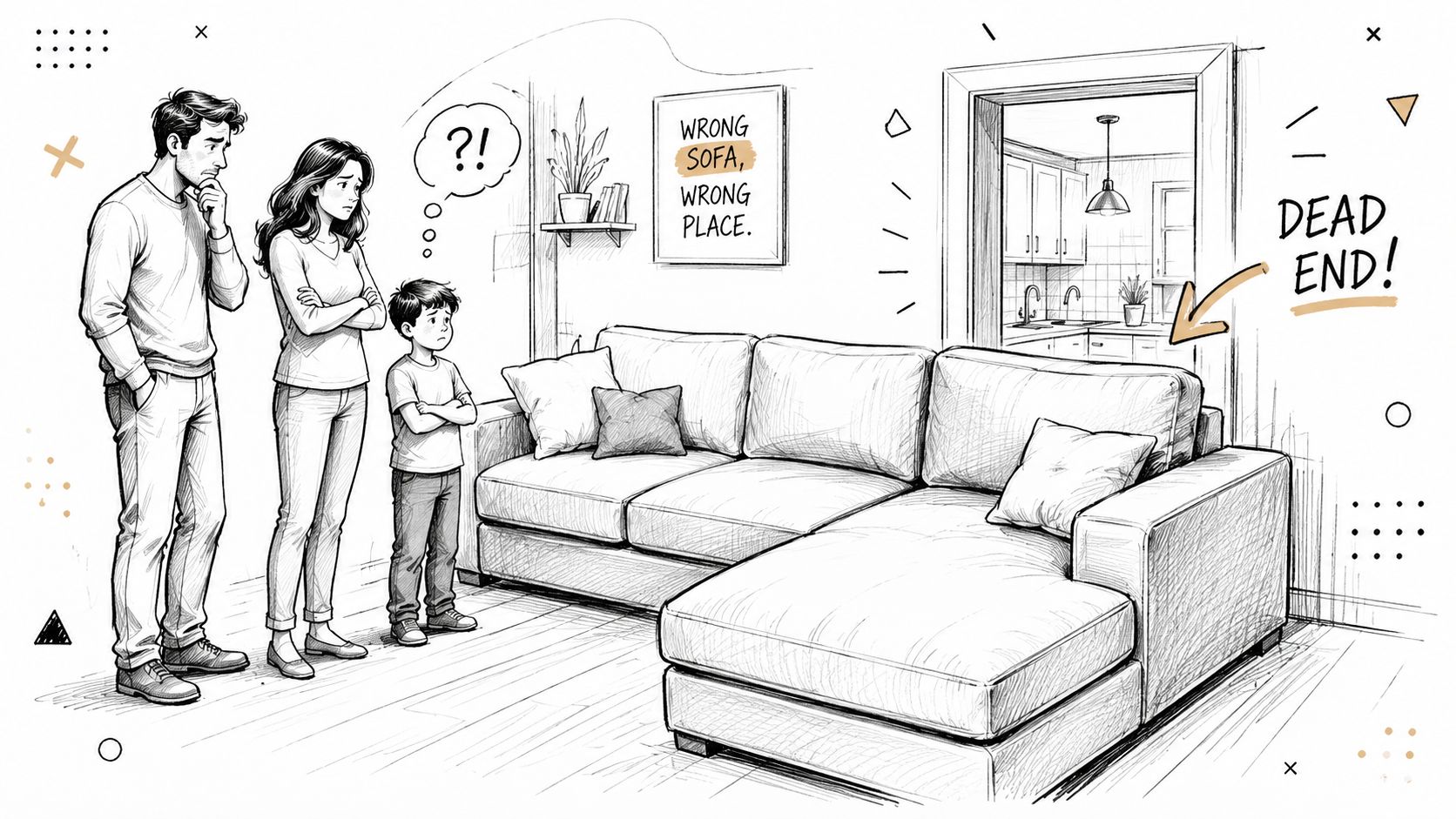
That's also why the best shopping conversations start with where people walk, sit, and stretch out. If a room has a side path to the kitchen, a window you don't want blocked, or a doorway that opens inward, the chaise changes everything. A useful resource for brands and makers thinking about community partnerships is gifted collaboration program details from Linda's Electric Quilters, since the same kind of planning mindset applies to furniture shopping, measure first, place later.
Practical rule: if the chaise can't live without crowding the route to another part of the house, it's the wrong layout, even if the sofa itself is beautiful.
Why the Chaise End Changes Everything
A standard sofa gives a room a straight edge. A chaise pushes the layout forward and starts taking up circulation space, which is why people either love it or regret it. The chaise end is not a decorative extra, it is the part that decides whether the sectional feels tucked in or territorial.
The shopping data shows how mainstream this choice has become. In a consumer survey covered by Furniture Today's sectional survey coverage, more than one-third of respondents said they were considering adding a sectional to their shopping list in the coming year, and another 17% had already bought one in the prior year. The same survey found that 22% of sectional shoppers wanted a chaise component, which puts the chaise in the regular decision set, not the specialty corner. Half of actual sectional buyers spent between $1,000 and $2,999, and 15% spent $5,000 to $10,000 or more, according to the same survey. That spending pattern fits a purchase people expect to live with for years, not a quick room filler.
The room starts to revolve around the chaise
Once the chaise enters the layout, the focal point shifts. The TV, fireplace, or window still matters, but the walking path around the chaise matters just as much because the long end projects into the room and claims floor area. In a large family room, that projection can define a lounging zone cleanly. In a narrow room, it can act like a low wall and choke the route to the next space.
Three common room shapes make the tradeoff obvious. In a wide room with open sides, the chaise can anchor the seating area without causing trouble. In a long, narrow room, the chaise usually needs to stay on the less traveled side, or it will cut into the main passage. In a room with a side doorway, the chaise has to clear the swing path and leave enough room for people to pass without turning sideways. Seat count does not solve any of that. Circulation does.
The design history explains why this format stuck. Sectional flexibility and the lounging function of a chaise longue were combined into one durable home-furniture form, and the sectional category holds the largest revenue share in major sofa-market reporting. Grand View Research places sectional sofas at 27.3% of the sofa market in 2024 and projects the global sofa market to reach USD 325.11 billion by 2033 with 4.2% CAGR from 2026 to 2033; Mordor Intelligence separately estimated sectional sofas at 28.76% of the sofa market in 2025. Those figures point to a simple truth. The chaise is a steady part of how people furnish living rooms, not a passing flourish. Grand View Research's sofa market report captures that broader market shift.
For a buyer looking at a real layout, a chaise sectional like this Miller Waldrop oxnard 2-piece sectional with left-facing chaise shows the basic tradeoff clearly. The lounging end gives you a stronger place to stretch out, but it also claims the path beside it, so the room has to support that footprint from day one.
A useful resource for brands and makers thinking about community partnerships is gifted collaboration program details, since the same planning mindset applies to furniture shopping. Measure first, place later.
What a Chaise Sectional Actually Is
A chaise sectional is just a sectional with one end extended into a lounging seat instead of stopping at a standard chair cushion. Think of it as a sofa with a built-in reading zone attached to one side. That's why it feels more relaxed than a regular sectional, and also why it takes more room to behave well.
The basic language matters because shoppers get tripped up by product pages. LHF means left-hand facing, and RHF means right-hand facing, with the direction judged while standing in front of the sofa and looking at it. If the chaise is on the left from that viewpoint, it's left-hand facing. If it's on the right, it's right-hand facing. That rule is the cleanest way to avoid ordering the wrong side.
Standing in front of the sofa is the only direction test that matters.
There's also a difference between a built-in chaise and a modular chaise ottoman. A built-in chaise is fixed into the frame, so it behaves like a single shape. A modular version separates the lounging section from the main sofa, which gives the owner more rearrangement options and a little more forgiveness if the room changes later.
For a first-time buyer, a simple mental picture helps. A chaise is like a reading chair bolted onto the end of the family sofa. That extra lounging surface is the whole point, but it also means the sofa is no longer just about sitting, it's about how one person stretches out without interrupting everyone else. A showroom associate can work faster when the buyer says “I need an LHF sectional with chaise” instead of describing the room from memory.
A product page that shows this language in action is the Oxnard 2-piece sectional with left-arm-facing sofa and chaise, which is exactly the kind of listing that rewards clear terminology.
The Main Configuration Families
Shoppers usually end up in one of four chaise layouts, and each one fits a different kind of room pressure. The survey data makes the demand clear, but the room shape decides which version survives real life. The useful question isn't “Do you want a chaise?” It's “Which chaise arrangement won't fight the room every day?”
Configuration Families at a Glance
| Configuration | Typical Overall Size | Best Fit |
|---|---|---|
| L-shape with chaise | About 95 to 130 inches for typical family-room use | Everyday living rooms, TV rooms, and households that want a clear lounging side |
| U-shape with one chaise end | Larger, wraparound footprint | Big rooms that need conversation seating and a more enclosed feel |
| Reversible chaise | Similar to a standard sectional footprint, with side-dependent flexibility | Renters, movers, and homeowners who may change layouts later |
| Modular sectional with chaise module | Varies by piece, often reconfigured around the room | Families who want long-term flexibility and easy expansion |
The L-shape with chaise is the default for a reason. It gives a room a clear corner and keeps the lounging end anchored without swallowing the whole layout. That works best when one wall carries the TV or fireplace and the other side needs to stay open for circulation. This is the style many people mean when they say they want a sectional that feels “finished.”
The U-shape with a chaise is different. It makes the room feel like a conversation pit, which is great if the room is large enough to support that much furniture without forcing side traffic through the seating zone. It's less forgiving than a basic L-shape, but it can make a large family room feel intentional instead of empty.
Reversible and modular layouts are the smart answer for households that expect change. Reversible chaise setups let the lounging piece move to the side that currently makes sense, while modular systems can be split, rejoined, or expanded. The current buyer pattern supports those flexible forms because chaise demand is real, but the room that holds the sectional today may not be the room that holds it in three years.
Measuring Your Room Before You Fall in Love
Start with the chaise, not the sofa. The lounge end is what narrows a room, blocks a path, or leaves you with a sectional that looks right on paper and wrong in daily use. A chaise adds a footprint penalty, and that penalty is what keeps a room usable or makes it miserable. Independent sizing guidance puts the chaise extension at about 60 to 72 inches long and 36 to 40 inches deep, with 30 to 36 inches of surrounding clearance for normal traffic flow. That means the chaise projection is often the problem, not the seat count on the spec sheet. See the layout guidance in sectional measuring guide.
Three room sizes, three outcomes
A 10-by-12 apartment living room is the hardest test. A chaise fits only when the traffic path stays simple and the lounge end does not point into the main walkway. In a room this tight, a compact reversible or modular chaise makes sense. A long fixed section usually steals too much of the floor.
A 12-by-16 family room gives you more room to work with, but it still demands discipline. An L-shape with chaise can fit well if the sectional sits against the longest wall and the circulation lane stays outside the chaise projection. This is the kind of room where a tape-measure sketch saves the day, because a sectional can feel well placed or feel cramped by a few inches.
A 14-by-20 open-concept great room gives the chaise more freedom, but it also creates more competing routes. The sectional has to define a zone without blocking access to the dining area, kitchen, or back hall. In rooms like this, the chaise works best as a boundary piece, not a barricade.
Use painter's tape to outline the full sofa body on the floor, then extend the tape by the chaise depth and leave room for the walk path. Draw the chaise on graph paper too. A scale sketch makes door swings and outlet locations obvious before the purchase is final. Do not stop at width. Measure the projection from the wall into the room, and check every nearby door, vent, and outlet before anyone falls in love with a fabric swatch.
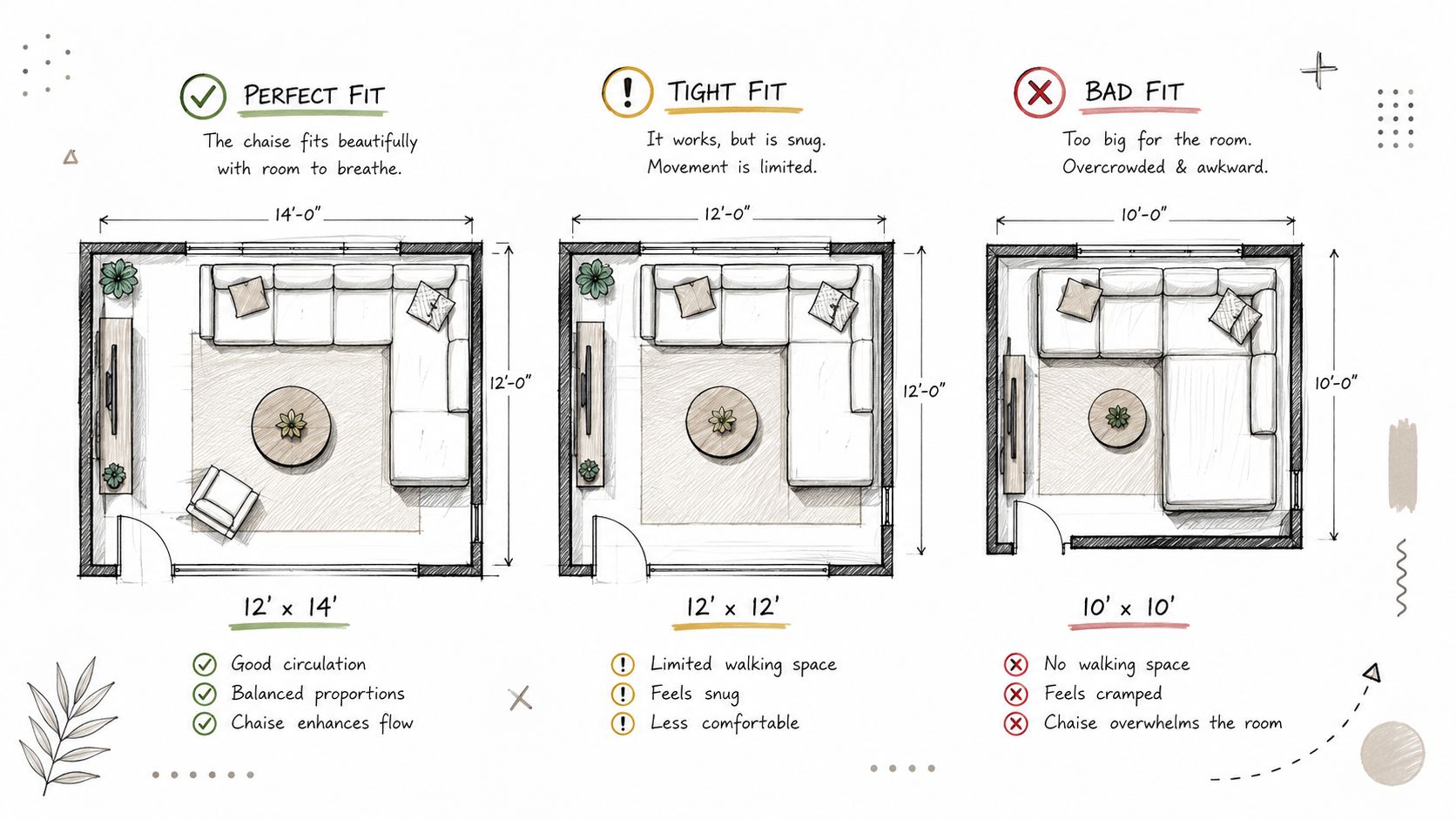
Room test: if a chair, stool, or vacuum route already uses the space where the chaise wants to live, the sectional choice is not ready yet.
Materials That Hold Up on the Chaise End
The chaise gets used differently from the rest of the sectional. People do not just sit there. They sprawl, nap, read, and stay put longer than they planned. That puts the most pressure on the chaise end, where comfort and compression have to hold up together.
Upholstery, frame, and cushion fill
Fabric and leather send different messages in a room. Fabric usually reads softer and gives you more texture options. Leather brings a cleaner look and a surface many households can wipe down more easily. The right pick depends on who lives there and how the room gets used. A home with kids and pets usually needs a finish that forgives daily contact, while a couple building a media room may care more about visual calm and how the material ages.
The frame matters just as much as the cover. A solid hardwood frame gives the sectional a better chance of staying square, while lighter engineered options can still work if the build quality is careful. The chaise end carries more sustained load than a short-sit cushion, so the structure under that section has to resist sagging over time.
Cushion fill is where many buyers get fooled by showroom comfort. Foam density in the 1.8 to 2.2 lb/ft³ range is the benchmark worth remembering, because firmer foam in that range gives better long-term support and slows early compression. That matters more on chaise cushions than on the rest of the sofa, since the chaise end sees the longest lounging sessions. Deeper chaise geometry shifts pressure away from the lower back and across the full length of the seat, but if the depth is too much for the user, slouching starts fast. A lumbar pillow or a slightly pitched chaise fixes a lot of that mismatch. For broader comfort and support guidance, see Coohom's sectional comfort article.
Practical choice: if the chaise will be the main napping seat, pay more attention to cushion density than to decorative stitching.
For a household with pets and children, the better move is usually durable upholstery with firm support and a frame that does not wobble under daily use. For a quieter room used mostly for reading or TV, softer-touch materials can make sense, as long as the chaise does not sink so much that posture gets sloppy.
A shopper comparing layout pieces should also look at how the lounge end is built as a standalone module, like the Savion dark armless chair with PHR, because the seat structure tells you a lot about how the finished sectional will feel once the chaise takes regular use.
Reversible and Modular Layouts Win Long Term
A fixed chaise looks tidy while the room stays unchanged. Most homes do not stay unchanged. Furniture gets moved, families grow, rooms get reused, and a sectional that cannot adapt turns into the expensive piece everyone else has to work around.
A reversible or modular chaise sectional is the smarter long-term buy. Flexible layouts make more sense for anyone who expects a move, a remodel, or a shift in how the room gets used. The chaise already matters in the buying decision, as noted earlier, so it should not be locked into a layout that only works on day one.
The circulation penalty is the main issue. A chaise adds a long occupied zone that changes how people pass through the room, how far a side table can sit from the seating, and whether the TV wall or corner arrangement still makes sense. In a narrow living room, a reversible layout lets you swap the lounge side to keep the main walkway clear. In a square room, modular pieces give you room to pull the chaise off the end and reset the flow around it. In an open-plan space, the same flexibility helps you decide whether the sectional should face the conversation area or the room divider without forcing a permanent compromise.
A product like the Savion dark armless chair with RHF chaise shows the point clearly. Sectional components can be treated as parts of a layout, not a one-shot purchase, and that matters when the chaise side needs to change with the room.
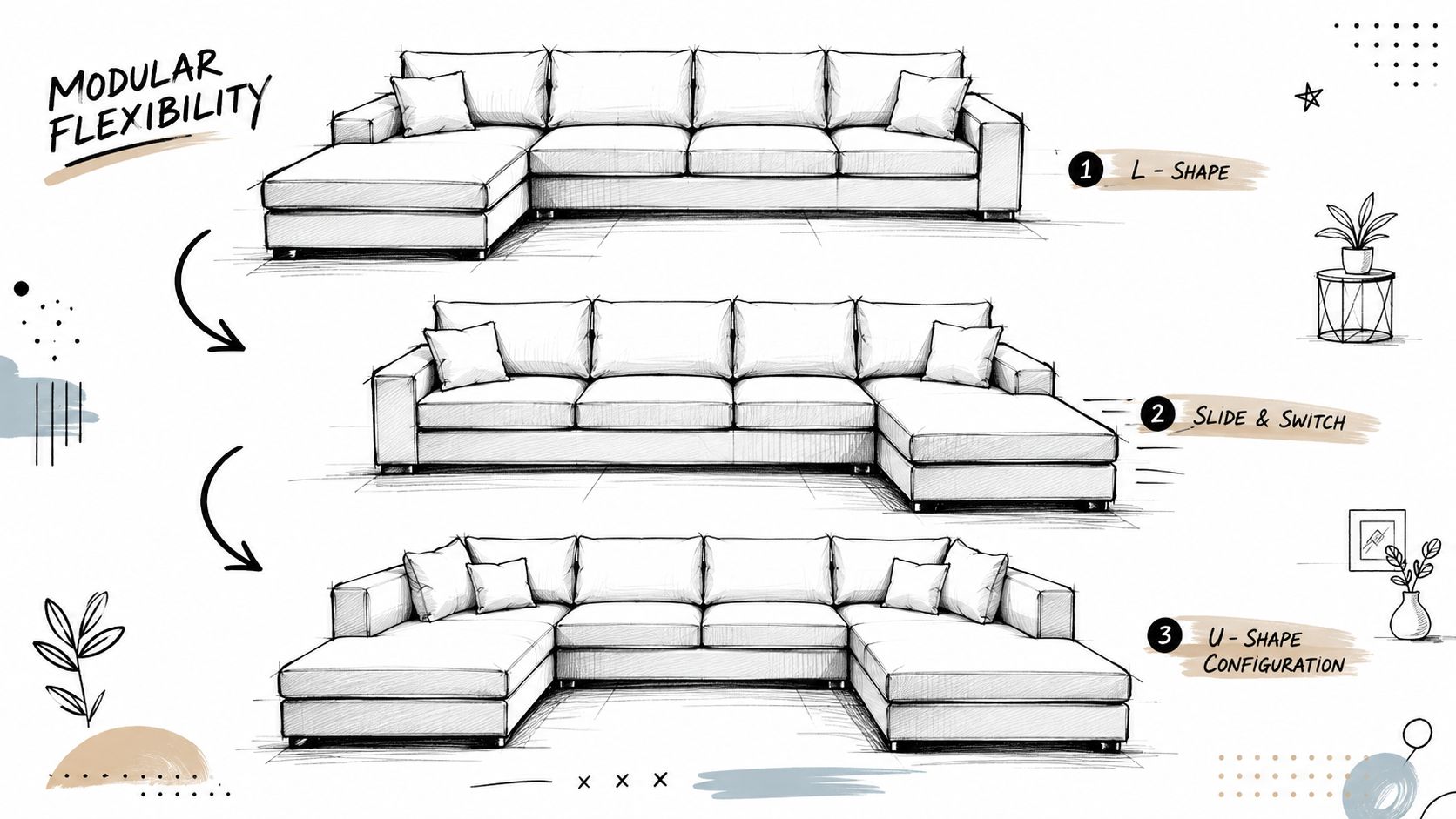
For a homeowner who moves apartments, opens up a wall, or reworks the TV zone later, reversible and modular pieces are easier to keep in service. That is the whole point. Buy the layout that can change with the room, not the one that only works if the room never changes.
Styling, Care, and the First 90 Days
A chaise sectional looks finished only when the rest of the room stops fighting it. The rug should be large enough that the front legs of the sectional sit on it, because that makes the seating group feel anchored instead of scattered. The chaise often shifts the focal point away from a centered TV and toward a corner arrangement, so the room needs to accept that new geometry instead of pretending the old one still works.
Decor matters too. A wall above the sectional needs scale, not clutter, and one strong piece usually beats several small ones. For shoppers building out the room around the sofa, stylish decor for your main room is the kind of finishing touch that keeps the chaise from looking like a stranded object in the middle of the space.
First 90 days, simple care
Rotate the chaise cushions monthly so the lounging end doesn't wear unevenly. Vacuum under the chaise frame quarterly so dust and debris don't build up where the piece meets the floor. If the sectional has a modular base or moving parts, check that the connections stay aligned after rearranging the room.
Keep the chaise clear enough that a person can stretch out without bumping a side table or a lamp.
Custom-order options matter here because the showroom floor is only the starting point. A buyer who needs a different fabric, finish, or layout should ask for those options before settling. Miller Waldrop's showroom support makes that conversation practical rather than intimidating, which is the value of buying in person.
Bringing the Plan to a Miller Waldrop Showroom
The best next move is to bring your measurements, sketches, and traffic notes into a showroom and let a real person turn them into a workable purchase. A visit to a Miller Waldrop showroom in Lubbock, Hobbs, or Ruidoso Downs shifts the conversation from guesswork to layout, because the design staff can compare room size, chaise direction, and configuration style against the actual floor space. They can also narrow the field by applying the same tradeoffs already covered here, especially whether the room needs a fixed corner, a reversible chaise, or a modular setup that can change later.
That matters because shoppers do not just need a sofa, they need a room that still moves well after the sectional arrives. Flexible financing and custom-order programs help when the right sectional exists in the wrong fabric, the wrong finish, or the wrong side, and a knowledgeable sales team can sort those choices without turning the process into a guessing game. If a household is weighing comfort against circulation, the showroom is where the tape measure earns its keep.
For a concrete starting point, browse the Miller Waldrop shop and look at configurable sectionals with chaise in different styles. The point is not to chase a catalog photo. The point is to choose the shape that lets the room breathe and keeps traffic from cutting through the seating area.
Visit Miller Waldrop Furniture & Decor to measure your room against real sectional options with chaise, compare layouts with a design-minded associate, and find the configuration that fits your traffic flow as well as your style. Their showrooms in Lubbock, Hobbs, and Ruidoso Downs make it easier to turn a floor plan into a purchase you will still like after the first 90 days and long after that.