

Memory Foam Mattress for Hot Sleepers: A Cool Guide

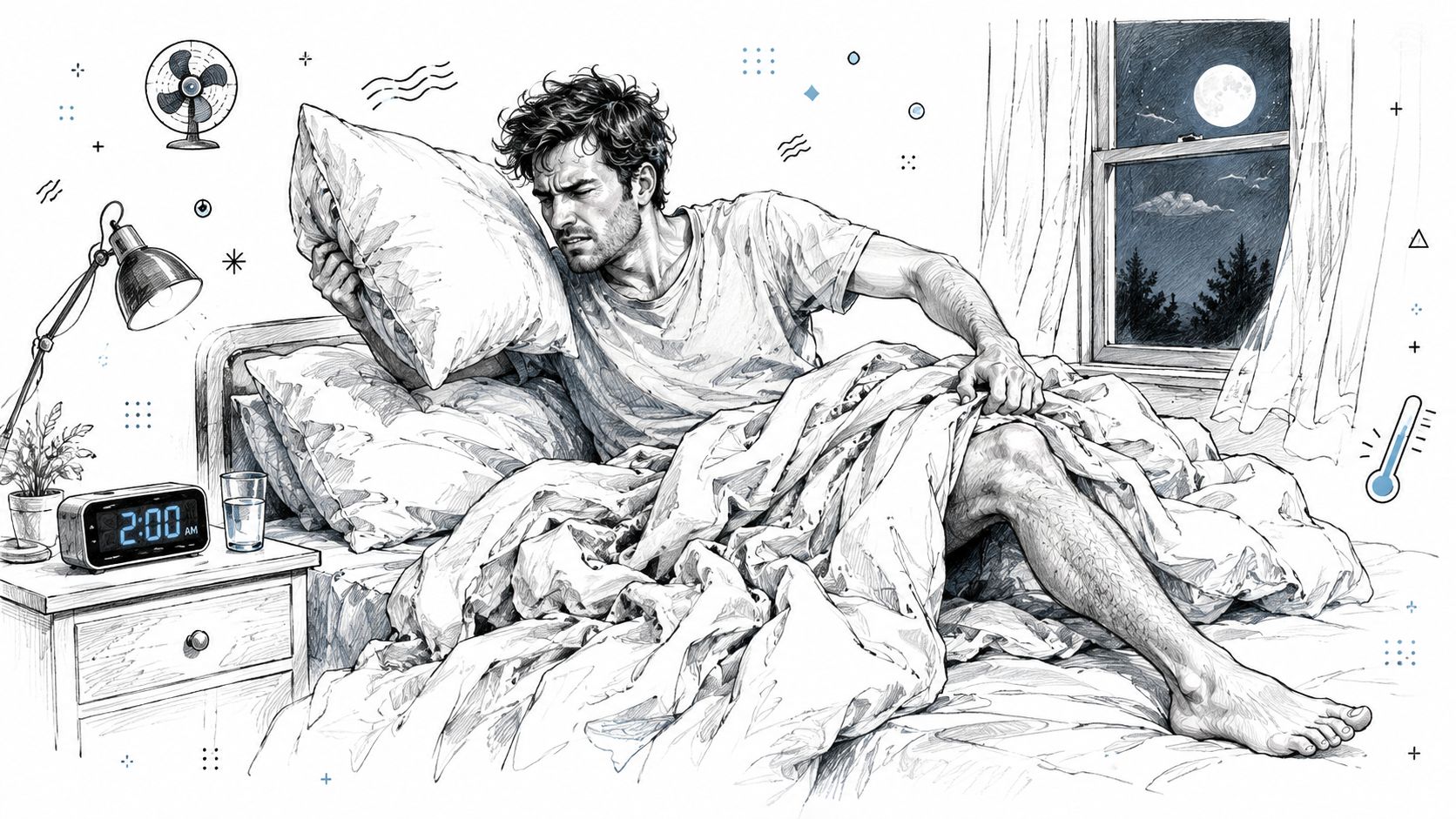
At 2 a.m., a hot sleeper peels back the sheets, flips the pillow to its cool side, and kicks one leg free from the comforter. The room may be comfortable when bedtime begins, yet the sleeper wakes damp, foggy, and already behind on rest. In West Texas and Southeastern New Mexico, warm bedrooms can make that pattern especially stubborn, because a ceiling fan moves air without removing the heat stored beneath the body.
A memory foam mattress for hot sleepers can work well, but the foam itself is only part of the sleep system. Cover fabric, airflow through the mattress, the support core, bedding, and bedroom conditions all influence whether the surface feels comfortable at midnight and still feels comfortable near morning. The following guide focuses on practical ways to compare those details, including how to test cooling performance in a showroom instead of trusting a label alone.
Sleeping Cool Starts with the Right Mattress
A mattress can become the hidden heat source in a bedroom. A sleeper may lower the thermostat, switch to lighter sheets, and run a fan, yet still feel warm because the mattress conforms closely and holds warmth against the body. Traditional memory foam's dense structure restricts airflow, while its contouring feel can create a close pocket around the shoulders, hips, and back. Independent guidance on mattresses for hot sleepers also points to cooler bedroom conditions, generally around 60°F to 69°F, with approximately 66°F often treated as a comfortable target.
That recommendation can be difficult to maintain during a warm night in Lubbock, Midland, Hobbs, or Clovis. Air conditioning may cycle inconsistently, humidity may change, and bedding choices can add another layer of insulation. The right mattress won't make a hot room cold, but it can stop the sleep surface from working against the sleeper.
The real question is consistency
Cooling marketing often focuses on the first touch. A cover may feel cool when a shopper first lies down, but that sensation doesn't automatically prove the mattress will remain comfortable after hours of contact. Independent reporting notes that even cooling-enhanced memory foam can raise surface temperatures by roughly 1.5°F to 3°F after six hours of continuous contact. This material-focused comparison of cooling toppers also identifies heat retention as a documented concern for hot sleepers, with about 8% of memory foam owners reporting overheating or sleeping hot.
A useful shopping resource is a selection of comfortable sleeper mattresses, especially for shoppers who need to compare pressure relief and surface comfort together. The best choice still depends on the person lying on it, not just the product description.
Practical rule: A cooling mattress should feel supportive and breathable after several minutes in the shopper's normal position, not only cool during the first few seconds.
The aim isn't to eliminate every trace of warmth. It's to create a sleep surface that releases heat effectively enough for the sleeper to remain comfortable through changing bedroom conditions.
Why Memory Foam Holds Heat
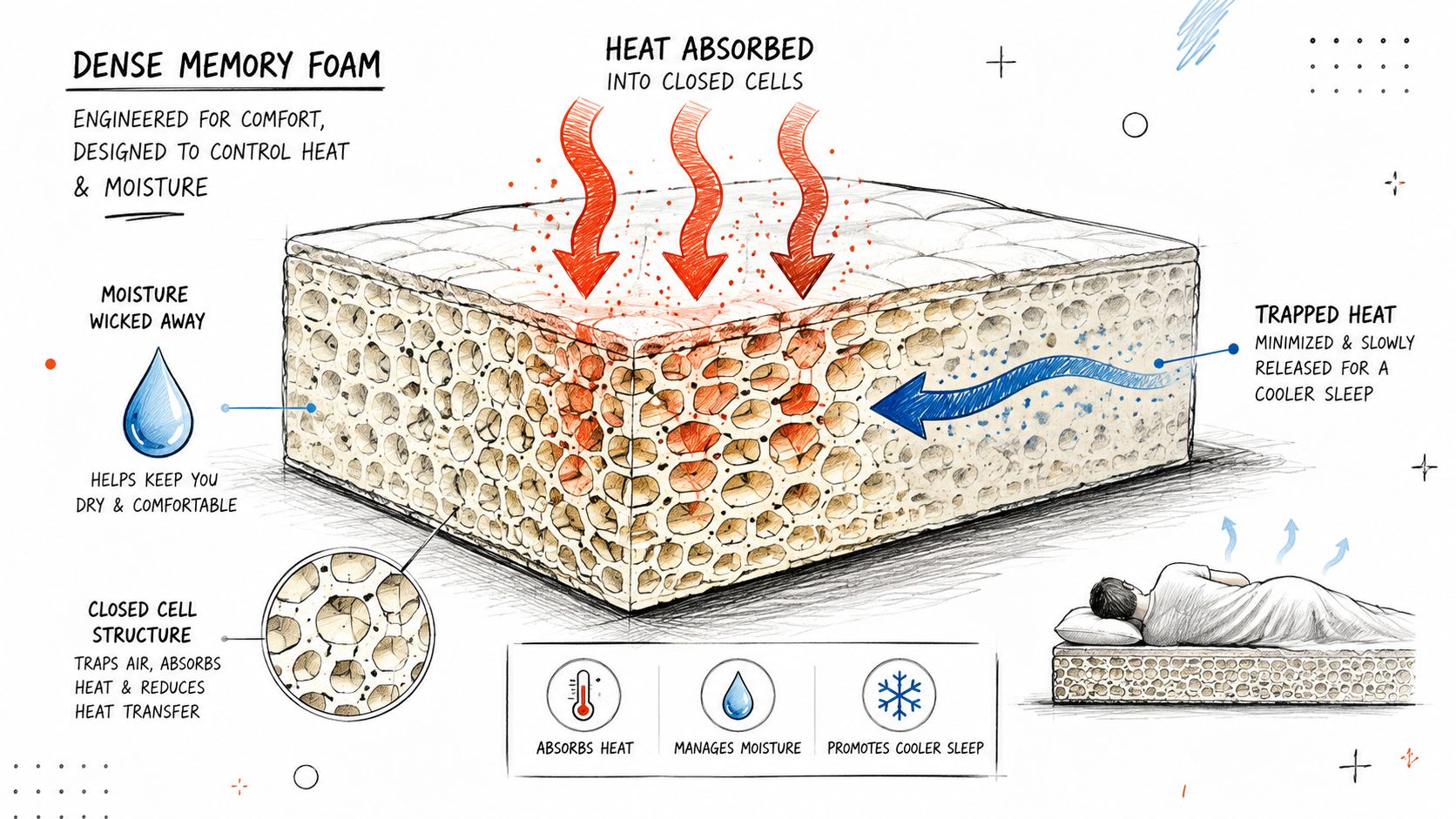
Traditional memory foam behaves somewhat like a dense sponge. A sponge absorbs water into its structure, while viscoelastic foam absorbs body heat and responds by softening around pressure points. The foam doesn't actively create heat, but its close fit can hold warmth and moisture near the sleeper instead of allowing air to move freely.
Memory foam's modern history helps explain that design priority. In 1966, NASA's Ames Research Center commissioned engineer Charles Yost to develop a temperature-sensitive, viscoelastic cushioning material for aircraft safety. The material softened under heat and pressure, and it later became the foundation for consumer mattresses. This history of memory foam's invention marks a clear milestone in a category built around cushioning and pressure relief.
Three reasons warmth builds
Density is the first factor. Dense foam contains more material in the same space, leaving fewer open pathways for air to travel. When a sleeper sinks into that foam, the body rests inside a close-fitting layer rather than above a ventilated surface.
Cell structure is the second. Traditional foam has limited internal airflow compared with a mattress built around open spaces, such as an innerspring core. Heat can move away slowly, but it doesn't circulate as freely through a solid foam block.
Conforming support is the third. The famous memory foam “hug” reduces the air gap around the body. That contour can relieve pressure at the shoulders and hips, but it also limits convective airflow, especially for sleepers who sink.
Neutral mattress guidance explains that copper, graphite, and gel infusions are intended to improve thermal conductivity and spread heat laterally rather than allowing it to pool beneath the sleeper. Copper's thermal conductivity is cited at about 401 W/m·K, which helps explain why manufacturers use it as a heat-transfer additive. This explanation of mattress materials for hot sleepers connects the material choice to the underlying heat problem.
Traditional coils offer a different path. Gaps between coils and space around the support system can encourage air movement, although the comfort layers above the coils still determine how much heat reaches the sleeper. Modern designs address the weaknesses of dense foam by placing cooling materials in the comfort layer, cover, or support core.
Cooling Technologies That Actually Work
Cooling features don't all solve the same problem. Some delay warming at the surface, some move heat through the comfort layer, and others create more space for air to circulate. A shopper comparing a memory foam mattress for hot sleepers should ask which mechanism the mattress uses and whether that mechanism matches the bedroom and sleep style.
Gel is often the easiest feature to understand. Phase-change materials absorb heat when they reach a set temperature, commonly described as activating around 85°F to 90°F. Gel memory foam can lower the sleep-surface temperature by about 2°F to 5°F compared with traditional memory foam, but the effect is limited rather than permanent. This explanation of how gel memory foam works describes the technology as a heat-management layer, not an air conditioner.
Copper and graphite work differently. They improve heat transfer through the foam, helping warmth spread outward instead of remaining concentrated under the sleeper. Ventilation creates another advantage by giving heat and moisture a route through the mattress rather than relying on conductivity alone.
Comparison at a glance
| Technology | How It Cools | Effectiveness for Hot Sleepers | Lifespan of Cooling Benefit |
|---|---|---|---|
| Gel-infused foam | Absorbs and disperses heat through gel or phase-change materials | Noticeable early relief, with limited long-term cooling | Can fade as the material reaches thermal equilibrium |
| Copper-infused foam | Conducts heat through the comfort layer and spreads it laterally | Useful for sleepers who dislike concentrated warmth | Conductivity can remain stable through mattress use |
| Graphite-infused foam | Helps move heat outward through the foam | Helpful when paired with breathable construction | Generally stable as a material feature |
| Open-cell foam | Creates a more breathable internal network | Supports airflow from the beginning of use | Continues while the foam structure remains sound |
Gel's early advantage can diminish as the material reaches equilibrium with the sleeper. One independent material guide reports that the initial cooling benefit often declines after about 30 to 90 minutes, while another notes that gel may reach thermal saturation after roughly 90 to 110 minutes and may reduce peak core temperature by only about 2°F. This comparison of gel and copper-infused memory foam helps clarify why a cool first impression isn't enough.
The strongest design usually combines surface cooling with internal airflow.
A gel layer over open-cell foam, a conductive infusion beneath a breathable cover, or a foam comfort layer over coils can address more than one heat pathway. The material matters, but the complete layer arrangement matters more.
Hybrid and Layered Constructions for Breathability
A mattress's internal architecture often matters more than its advertised cooling ingredient. Three broad designs deserve attention: an all-foam mattress with ventilation features, a pocketed-coil hybrid, and a latex-topped construction. Each creates a different balance between pressure relief, airflow, firmness, support, and cost.
An all-foam design can suit a side sleeper who wants deep contouring and strong motion absorption. Its success depends on the quality of the cooling cover, the presence of open-cell or ventilated foam, and how much the sleeper sinks. A pocketed-coil hybrid gives heat a more direct route through the core, while still placing foam above the coils for shoulder and hip comfort.
Match construction to the body
A taller, heavier back sleeper places more force through the lumbar and hip zones. That sleeper may need firmer transition support, stronger edge reinforcement, and enough comfort material to prevent pressure without allowing excessive sinking. A lighter side sleeper may need more surface cushioning at the shoulder, but too much foam can create a warmer, enclosed feel.
In a Lubbock bedroom where summer nights stay above 75°F, a 2-inch copper-infused comfort layer over individually wrapped coils generally offers a more airflow-friendly setup than a 10-inch solid foam block. That comparison isn't a promise of a specific temperature result. It illustrates how a conductive upper layer and an open support core can work together, while a solid block gives heat fewer escape routes.
The mattress construction also affects movement around the bed. Hybrids commonly provide stronger edge support, so a hot sleeper can move away from the warmest spot without feeling as though the body will slide off the side. Motion control remains important for partners, although the exact balance depends on coil design and comfort-layer thickness.
Construction comparison
| Construction Type | Typical Layer Stack | Airflow Rating (1-5) | Best For Sleep Position | Expected Price Range |
|---|---|---|---|---|
| Cooling all-foam | Cooling cover, memory foam, transition foam, support foam | 2-3 | Side and back sleepers who want contouring | Moderate to premium |
| Pocketed-coil hybrid | Breathable cover, foam comfort layer, transition layer, wrapped coils | 4-5 | Back, combination, and heavier sleepers | Moderate to premium |
| Latex-topped design | Breathable cover, latex comfort layer, transition material, supportive base | 4 | Back and combination sleepers who prefer buoyancy | Premium |
A latex top can add airflow and a more responsive feel, but it may not suit a shopper seeking the deep hug of memory foam. It can also exceed a carefully controlled budget. Shoppers comparing the trade-offs can review hybrid mattress pros and cons before deciding whether coil-based breathability fits their priorities.
Buying Criteria That Match Your Sleep Style
A cooling mattress can disappoint when it solves the wrong problem. A shopper who sinks too much may feel warm even with gel, while a shopper who chooses an overly firm surface may experience pressure at the shoulders and hips. The showroom decision should begin with five variables: sleep position, body weight, bedroom temperature, partner needs, and budget ceiling.
Start with position and support
Side sleepers need pressure relief at the shoulders and hips, but the comfort layer shouldn't allow the pelvis to drop too far. Stomach sleepers generally need a thinner comfort layer so the hips stay lifted and the midsection remains supported. Back sleepers often need a middle ground, enough contouring for lumbar comfort without the deep enclosure that can increase warmth.
Body weight changes how far a sleeper compresses the mattress. A side sleeper above 200 pounds may need deeper contouring and a foam comfort layer with approximately 4-pound density, while a stomach sleeper may prefer a thinner 2-inch comfort layer. These specifications should be treated as starting points for showroom testing, not automatic prescriptions.
Bedroom temperature changes the value of each feature. A shopper in a consistently air-conditioned room may be satisfied with conductive foam and a breathable cover. Someone in a warm, inconsistent bedroom may benefit more from a hybrid core, open-cell foam, and moisture-managing bedding.
A cooling label can't compensate for poor spinal support or the wrong firmness.
Evaluate the entire sleep system
A breathable cover can make a meaningful difference at the surface. Covers made from Tencel or bamboo-derived fabrics may lower surface temperature by 3°F to 5°F compared with standard polyester knit, according to the guidance provided for this buying framework. A breathable cooling protector is also preferable to a waterproof vinyl protector when heat is a concern, because a sealed surface can block airflow and hold moisture.
Thickness marketing can distract from the details that matter. Shoppers should ask about comfort-layer depth, transition support, and coil construction in a hybrid rather than selecting by total mattress height alone. Partners should test the bed together, because one sleeper may prefer a close contour while the other needs a more breathable, responsive surface.
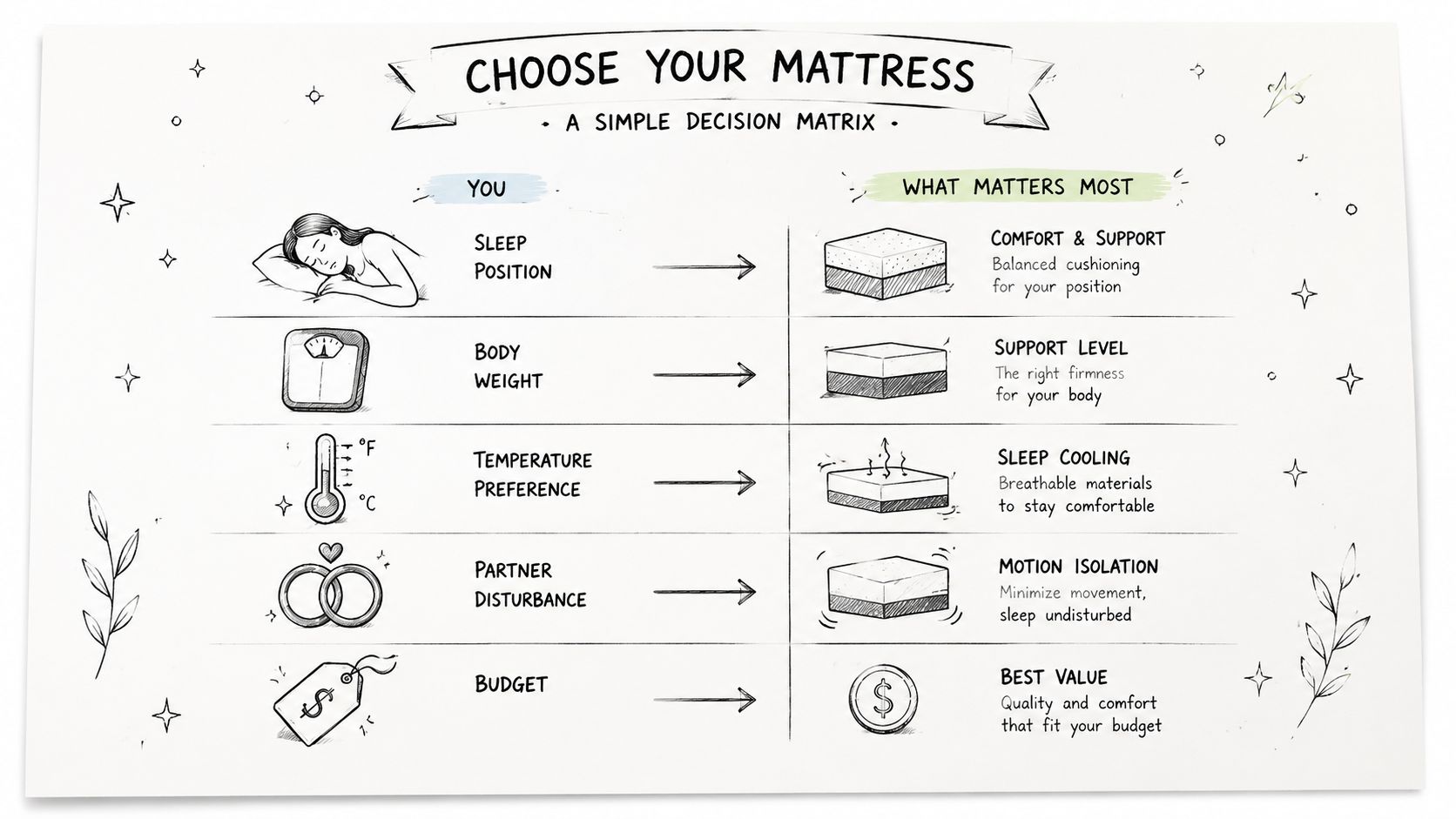
A practical showroom checklist should include:
- Position: Which firmness keeps the spine level in the usual sleep position?
- Body support: Does the hip sink farther than the shoulder, or does the surface keep both areas balanced?
- Cooling materials: Is the gel infused throughout the foam, placed in a layer, or applied only to the surface?
- Cover details: Is the cover breathable and removable, and what care does the manufacturer permit?
- Warranty terms: Does the warranty cover phase-change materials and cooling components?
- Base compatibility: Will the foundation allow air to move beneath the mattress?
- Partner comfort: Can both sleepers change position without disturbing each other?
For shoppers deciding between contouring foam and a more buoyant coil design, hybrid mattress versus memory foam guidance can help organize the trade-offs before a showroom visit.
Testing, Care, and Troubleshooting Tips
A mattress showroom can reveal more than a product label if the test is deliberate. The first few seconds show surface feel, but heat and pressure become easier to judge after the body settles into the comfort layer. A shopper should wear comfortable clothing and bring the same sleep-position habits used at home.
Use a focused in-store test
- Lie in the normal sleep position for at least 3 minutes. Side sleepers should remain on the side, while back and stomach sleepers should test the positions used most often.
- Slide a hand beneath the lower back. A large gap may indicate insufficient contouring, while a body that sinks heavily may need stronger transition support.
- Press the surface and watch the rebound. Slow recovery signals a more enveloping feel, while faster recovery can make repositioning easier.
- Notice heat at the shoulders, hips, and lower back. Those contact zones often reveal whether the comfort layer is holding warmth.
- Test the edge. A hot sleeper may need room to move toward the perimeter without losing support.
A phase-change cover may feel cool at first touch and remain noticeably cool for 30 seconds or longer during a simple hand test. That result doesn't prove all-night cooling, but it can help distinguish a genuine temperature-responsive surface from ordinary fabric.
The showroom test should answer two questions at once, whether the mattress supports the body and whether it allows the body to release heat.
Protect the construction
Care affects comfort over time. Rotating the mattress head to foot every 3 months can help distribute compression, while quarterly vacuuming with an upholstery attachment removes surface dust without stressing the foam. Electric blankets can degrade gel beads over time, so hot sleepers should use them cautiously.
A mattress that begins to feel warmer after 18 months may not need immediate replacement. A breathable protector and moisture-wicking sheets can remove heat and moisture that a sealed protector or heavy bedding traps. The cover shouldn't go into a washing machine unless the manufacturer's tag explicitly allows it, because agitation can damage cooling infusions and may affect warranty coverage.
For cleaning steps that protect the foam, shoppers can use this memory foam cleaning guide and follow the mattress maker's care instructions first.
Your Cool-Sleep Action Plan
A cooler sleep setup comes from matching several modest decisions rather than relying on one impressive-sounding feature. The following checklist gives a hot sleeper a practical path from frustration to a confident mattress test.
- Confirm the source of the warmth. Track whether heat comes from the mattress, protector, sheets, pillow, comforter, or bedroom. A mattress may be part of the problem without being the only cause.
- Choose the cooling mechanism that fits the sensitivity. Gel can provide early surface relief, while copper, graphite, open-cell foam, and coils address heat movement more broadly.
- Match the construction to the sleep position. Side sleepers need pressure relief, stomach sleepers need hip support, and combination sleepers often benefit from a responsive surface.
- Prioritize breathable layers below and above the body. A ventilated or pocketed-coil core, breathable cover, and airflow-friendly base create a more complete system.
- Layer cooling bedding carefully. Moisture-wicking sheets and a breathable protector can preserve the mattress's intended feel better than sealed vinyl.
- Run a pressure-and-temperature test. A short showroom test should include the normal position, lower-back support, rebound speed, edge support, and surface warmth. A longer 15-minute test can reveal more than a quick sit.
- Schedule a follow-up sleep review. A follow-up gives the shopper a chance to identify whether the mattress, bedding, or bedroom conditions need adjustment.
Miller Waldrop's Sleep Experts can help shoppers apply that checklist to available models in showrooms serving Lubbock, Amarillo, Midland, Hobbs, and Clovis. The team can pair pressure-point information with mattress and adjustable-base options, then discuss home-trial arrangements where available.
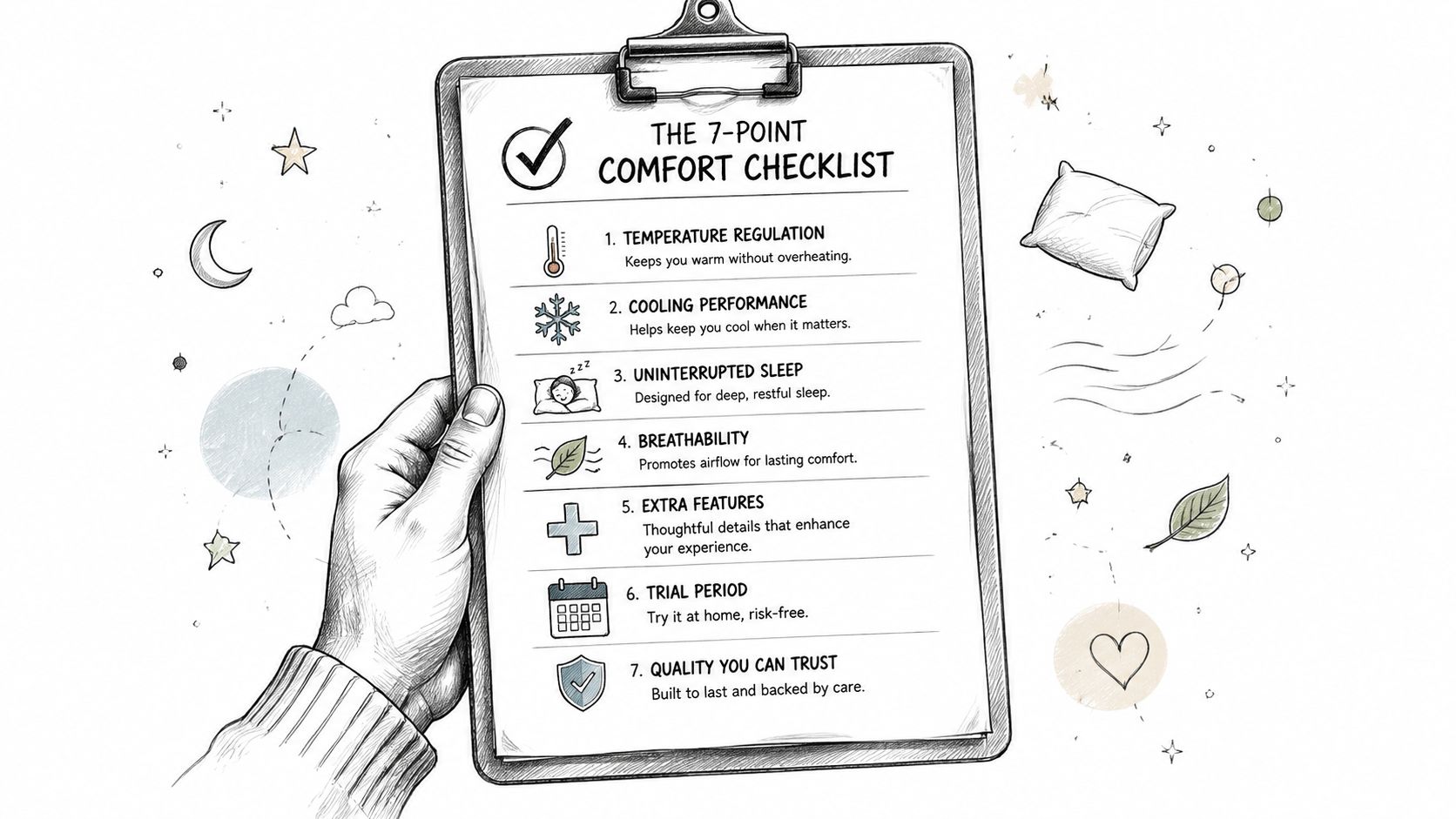
A cooler mattress is a daily investment in focus, mood, and sustained rest. The decision doesn't need to wait for another restless summer night. A shopper can bring the checklist this week, test the available constructions, and choose the setup that supports the body without turning the bed into a heat trap.
Miller Waldrop Furniture & Decor offers mattresses, adjustable bases, and Sleep Expert consultations for shoppers comparing cooling foam, hybrids, and other sleep solutions. Visit Miller Waldrop Furniture & Decor to find a nearby showroom and arrange a practical mattress comparison for a cooler night's sleep.