

Dining Room Furniture for Small Spaces: Your Guide to Smart Layouts

Don't let a small footprint fool you. The challenge of fitting a dining set into a tight spot is a design opportunity in disguise. You hold the key to a beautiful, functional dining area, and it's not about having a huge room; it's about empowering your space by choosing the right furniture that works smarter for you.
Rethinking the Small Dining Room
It’s a common myth that you can't have a stylish dining area if you're short on square footage. But that's all it is—a myth. Instead of getting hung up on limitations, you can completely re-imagine the space by focusing on a few core principles of smart, intentional design.
This guide is your toolkit for doing just that. Here’s how you can make confident choices that result in a beautiful and practical dining experience, no matter the size of your room.
First, Shift Your Mindset
The first, and most important, step is to change how you see the space. That small dining nook isn't just a leftover corner; it’s a dedicated zone for connection, meals, and making memories. When you start seeing it as a canvas for your clever, personalized solutions, you unlock its true potential. Forget what you can't fit and start dreaming about the welcoming space you will create.
A great way to start is by pinpointing the primary purpose of your dining space. Ask yourself:
- Is it for daily meals? A cozy spot for you and your partner to have breakfast, perhaps?
- Will you be entertaining? Do you need the flexibility for an occasional dinner party?
- Does it need to be a multi-use zone? Will this area double as a workspace or a spot for homework?
Knowing exactly how you'll use the space is the key to choosing pieces that solve your specific needs, rather than just filling a corner.
Your small dining area isn't a problem to be solved. It’s an opportunity to showcase your creativity and personal style through smart, intentional design choices.
The Power of Smart, Strategic Design
Clever design isn’t about smoke and mirrors; it’s about making strategic choices. By leaning on a few key concepts, you can craft a dining area that feels open, inviting, and perfectly suited to your life. Your goal is to focus on quality over quantity, making sure every single piece earns its place.
You’ll soon discover how to use foundational design principles to your advantage. This means doing things like using vertical space to draw the eye upward, maximizing natural light to make the room feel airy, and embracing multifunctional furniture that gives you real versatility.
When you're ready to see these ideas in action, you can find the tools you need in our collection of beautifully crafted dining room furniture for inspiration.
Measure Your Space For A Perfect Fit
Picking out a stunning dining set is exciting, but it’s easy to overlook scale in a tight room. Grab your tape measure first—this simple tool transforms you from a guesser into a master planner, guaranteeing each piece not only fits but improves traffic flow and comfort.
Knowing your room’s dimensions inside and out empowers you to design a dining spot that feels welcoming, not cramped. It’s more than checking if a table squeezes in; it’s about ensuring chairs can glide out smoothly and that there’s enough breathing room for guests to circulate freely.
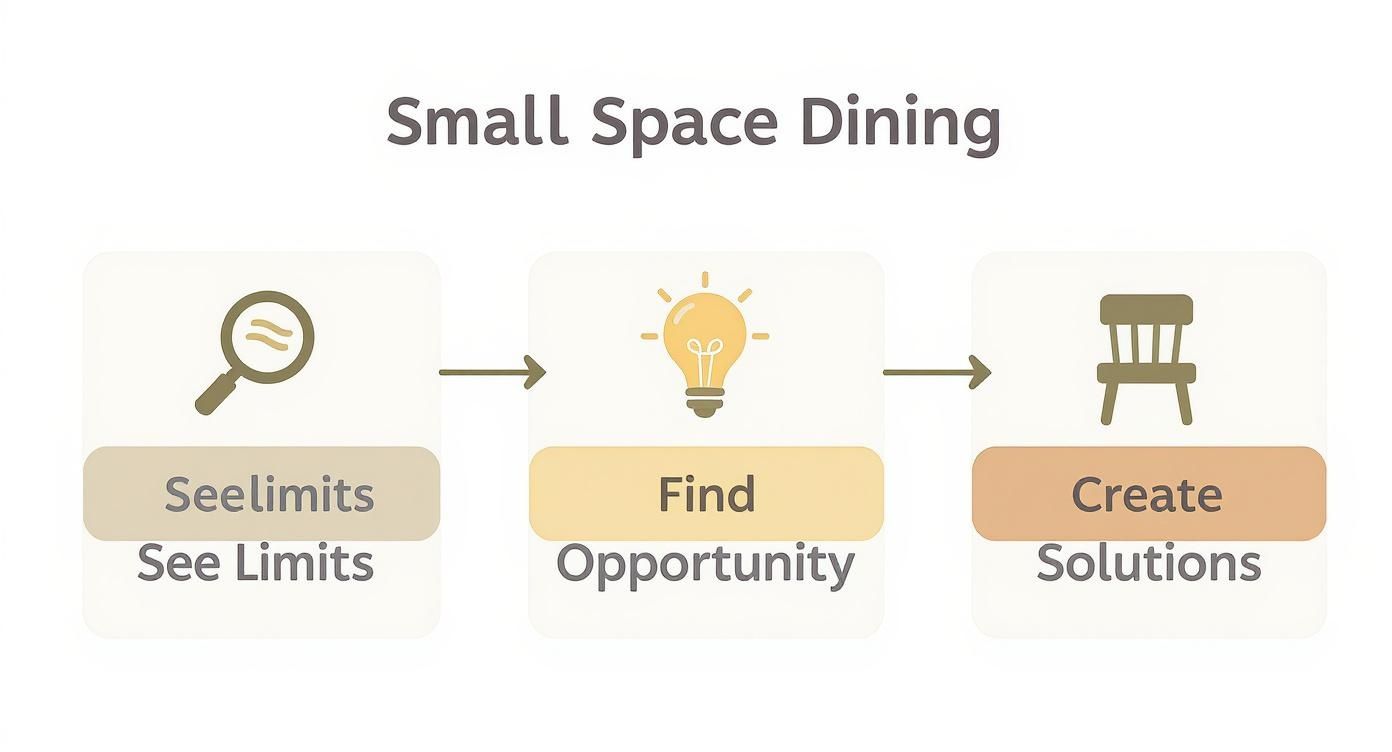
This infographic breaks down how you can turn space constraints into inspiration and clear, actionable steps.
The Crucial Clearance Rule
Comfort hinges on the clearance rule—the free space around your table that lets people sit, stand, and stroll without obstacles. If you skimp on this, even the prettiest set will feel unwieldy.
Key Points:
- Aim for 36 inches of open area on all sides that need access.
- In a low-traffic corner, you can edge down to 30 inches, but 36 inches is the sweet spot.
- Ignoring this guideline often leads to awkward layouts and frustrated guests.
Rule of Thumb: Keep at least 36 inches clear so a pulled-out chair doesn’t block the path of someone walking by.
Visualize Your Furniture Footprint
Numbers on paper can still feel abstract. To bring those inches to life, map out your pieces on the actual floor. You’ll see immediately how everything flows.
Real-World Example:
Imagine fitting a table into a 9-foot by 7-foot nook in an open-plan apartment. The rectangular table you like measures 48 inches long by 30 inches wide. Here’s how you can test it:
- Painter’s Tape: Outline a 48" x 30" rectangle where you plan to place the table.
- Chair Zone: Extend tape 20–24 inches beyond each table edge to represent seated chairs.
- Clearance Check: Measure from the edge of your taped “chair” zone to walls or nearby furniture.
• Do you have at least 36 inches of walking space in primary walkways?
This quick exercise lets you feel scale and flow before you buy—no surprises when the real furniture arrives. You’ll shop confidently, knowing you’ve found not just any small-space dining room furniture, but the right pieces for your home.
Now that you’ve mastered measuring and planning, you're ready to explore our curated gallery of dining room furniture suited to your exact dimensions.
Choosing Your Space-Saving Furniture
With your measurements in hand, you're ready for the fun part: picking the pieces that will bring your dining area to life. This isn't just about filling a space; it's about finding the furniture that is cleverly designed to be your ally in compact living. The right table and chairs won’t just fit—they’ll solve problems, improve the flow of your room, and add a dose of style to every meal.
This decision is bigger than just one household. The demand for smart, space-saving furniture is exploding. The global market was valued at around USD 23.4 billion in 2023 and is projected to hit USD 41.2 billion by 2032. This isn’t a surprise—with more of us embracing city and apartment living, our furniture needs to work harder in smaller footprints.
Find Your Perfect Table
The dining table is the heart of the room, and in a small space, its shape and design are your most powerful tools. Let’s look at a few heroes engineered to help you maximize every last inch.
-
Round Pedestal Tables: These are the undisputed champions for tight corners and square rooms. By getting rid of the corner legs with a single pedestal base, you open up a surprising amount of legroom, often letting you squeeze in one more person than you could with a four-legged table of the same size. Their curved edges also create a much smoother path for walking around, preventing those awkward hip-bumps.
-
Extendable Tables: Think of these as the transformers of the dining world. They offer incredible versatility, keeping a small, manageable footprint for everyday life. But when you have guests over, they expand to accommodate a crowd. You get the best of both worlds without sacrificing your floor space permanently.
-
Drop-Leaf Tables: This is the ultimate space-saver, perfect for areas that need to serve multiple purposes. With one or both leaves down, it can work as a slim console table against a wall or even a small desk. When you’re ready to eat, just lift the leaf for a full-sized dining surface.
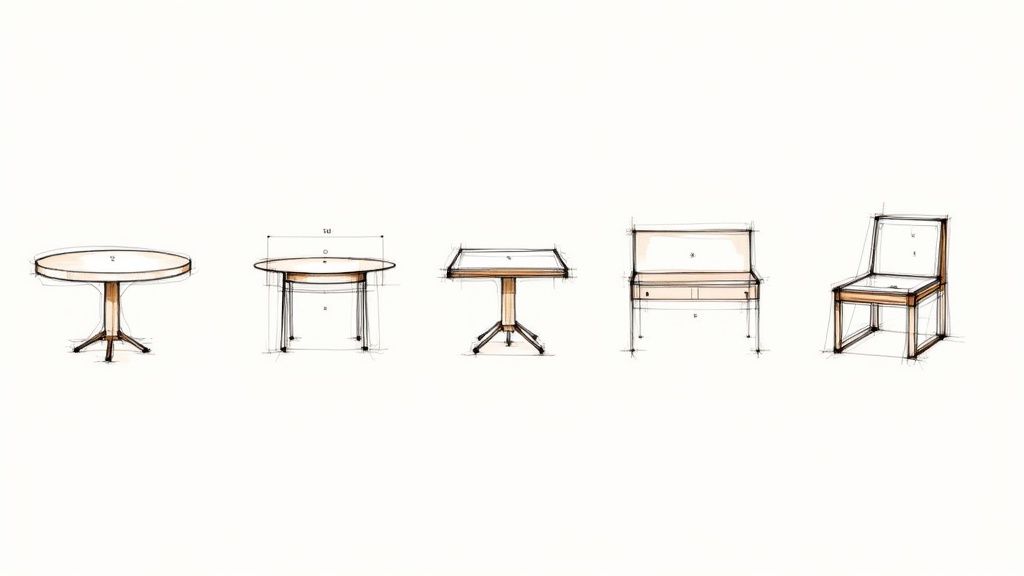
Picking the right table is all about balancing its shape, size, and how you’ll use it. To go a bit deeper, here’s our guide on the 5 key steps to picking the perfect dining table to help you make the best choice.
Smart Seating Solutions
Don’t forget about the chairs—they’re just as important as the table. The right seating can make your small dining area feel open and breezy, while the wrong choice can make it feel instantly cramped.
Your goal is to choose seating that either disappears visually or tucks away completely. This one strategy will ensure your dining nook feels spacious and functional, even when it’s not mealtime.
Here are a few clever options to consider:
-
Benches: A dining bench is a small-space powerhouse. It can usually seat more people than individual chairs would in the same amount of space. The best part? When you're done eating, you can tuck it completely under the table, which instantly clears a walkway and makes the room look tidier. The Amelia Parsons Bench is a perfect example of a piece that offers style and utility.
-
Acrylic 'Ghost' Chairs: These are a designer's secret weapon. Because they’re transparent, they take up almost zero visual weight. Light passes right through them, and they don’t block sightlines, creating an illusion of openness that makes any room feel bigger than it is.
-
Stackable or Folding Chairs: Never underestimate the utility of chairs you can put away. If you only entertain occasionally and don't need extra seats out all the time, having a few stylish folding or stackable chairs stashed in a closet is the perfect, practical solution.
Comparing Space-Saving Dining Furniture Solutions
To help you decide, here’s a quick comparison of the key features, benefits, and best-use scenarios for these different furniture heroes. This should help you pinpoint the right solution for your home.
| Furniture Type | Primary Benefit | Best For | Considerations |
|---|---|---|---|
| Round Pedestal Table | Maximizes legroom and improves traffic flow. | Square rooms, tight corners, and breakfast nooks. | Limited surface area compared to rectangular tables. |
| Drop-Leaf Table | Extreme versatility and minimal footprint when not in use. | Multi-purpose areas and very narrow spaces. | Requires clear wall space to function as a console. |
| Dining Bench | High seating capacity and tucks away neatly. | Families with kids or accommodating extra guests. | Can be less comfortable for long periods than chairs. |
| 'Ghost' Chairs | Reduces visual clutter and creates an airy feel. | Visually busy rooms or modern aesthetics. | May show scratches more easily than wood chairs. |
By thoughtfully weighing these options, you're not just buying furniture; you're designing a dining area that is stylish, comfortable, and incredibly functional. You have all the tools you need to conquer your spatial challenges and create a dining nook that works perfectly for the way you live.
Styling Tricks That Create an Illusion of Space
Once you’ve found the right-sized dining furniture, it’s time for the fun part. A few clever styling choices can completely transform your small dining nook, making it feel so much larger and more inviting than it actually is. These aren't complicated overhauls—they're the same simple tricks designers use to play with perception and empower a room.
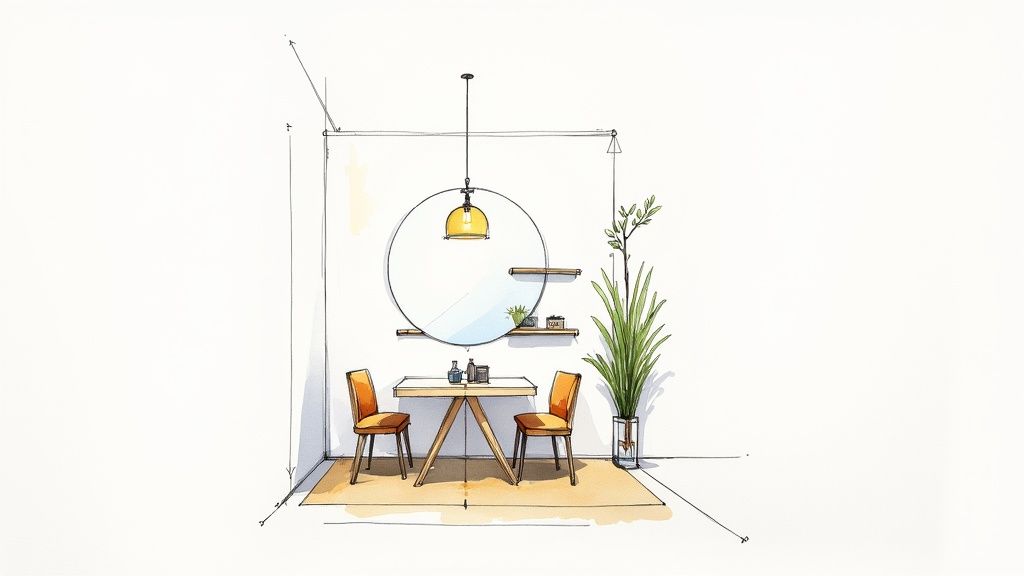
It all starts with light. If you do nothing else, focus on maximizing both natural and artificial light. Think of it as your secret weapon against feeling boxed in.
Harness the Power of Reflection
There's a reason a well-placed mirror is a classic designer trick: it just works. Hanging a large mirror on a wall next to your dining set can instantly double the room's visual depth. It bounces light all over the place, making the entire zone feel brighter and way more open.
For the biggest impact, hang the mirror where it can reflect a window or a nice view. This does more than just amplify light; it brings a bit of the outdoors inside, which always helps a small space feel less confined.
Mirrors are more than just decorative accents; they are architectural tools. In a small dining area, a mirror acts like a window, creating depth and reflecting light to make the space feel boundless.
Elevate Your Lighting
Floor lamps and chunky table lamps are space hogs in a tight spot. A much better approach is to draw the eye upward with overhead lighting. A single, stylish pendant lamp hanging right over the center of your table is the perfect solution.
This one move accomplishes a few things all at once:
- Defines the Zone: It clearly marks the dining area, especially in an open-concept layout, without needing walls or dividers.
- Saves Floor Space: Your floor stays clear and uncluttered, making it easier to walk around.
- Adds a Focal Point: A beautiful fixture adds personality and serves as a stunning centerpiece for the area.
Just be sure to pick a fixture that’s visually light. Think glass, open metalwork, or something with a slim profile. A heavy, solid fixture can make the ceiling feel lower, which is the last thing you want.
Anchor the Space with the Right Rug
A rug can pull your dining set together beautifully, but getting the size wrong will make the room feel even smaller. The key is to pick a rug that's big enough for all the chair legs to stay on it—even when people pull them out to sit down.
If your chairs are constantly falling off the edge of the rug, the whole setup will look cramped and disjointed. A good rule of thumb is to have the rug extend at least 24 inches past the edge of your table on all sides. Following this one guideline will make the space feel balanced and intentional. For more general tips, you can explore our advice on how to decorate small spaces and create a home that flows.
Use Color to Create Height
Finally, don't underestimate the power of paint. Using a light, cohesive color palette for your walls, trim, and even the ceiling blurs the hard lines of the room, making it feel taller and more open. Soft whites, pale grays, and other muted pastels are fantastic because they reflect light so well.
If you’re craving a bit of color, bring it in through your chairs, artwork, or a vase on the table. This adds visual interest without overwhelming the space with dark, heavy tones. By putting a few of these tricks into practice, you can create a dining area that’s not just functional, but feels wonderfully spacious and chic.
Smart Materials and Multifunctional Designs
It's not just about clever layouts and styling tricks. The furniture itself—what it's made of and what it can do—can completely change the feel of a small dining area. Think of it as making your home work smarter, not just harder. By choosing pieces with the right materials and dual-purpose designs, you're gaining powerful tools to solve those everyday space crunches.
The materials you pick have a huge impact on how open your dining space feels. While heavy, dark woods can be beautiful, they often feel visually dense. Lighter options, on the other hand, can create an immediate sense of airiness and calm.
Materials That Minimize Visual Weight
Here's how you can choose materials based on "visual weight"—how much space a piece seems to take up. In a tight spot, your goal is to reduce this weight, and certain materials are absolute masters of illusion.
- Glass and Acrylic: You can't beat transparent surfaces. A glass-topped dining table or those sleek acrylic "ghost" chairs literally let you see right through them. This keeps the line of sight open, preventing the furniture from acting like a visual roadblock and making the whole room feel bigger.
- Light-Toned Woods: Finishes like light oak, ash, or birch are fantastic because they reflect more light than their darker cousins. They bring in a natural, organic warmth without making the space feel heavy or closed-in.
This push for smarter, more efficient furniture isn't just a trend; it's a major shift in the industry. The global dining table market was valued at USD 8.68 billion in 2025 and is projected to hit USD 13.71 billion by 2032. A huge driver behind this growth is the demand for sustainable, space-saving designs that actually solve the problems modern homeowners face.
Furniture That Works Overtime
In a small home, every single piece needs to earn its keep. This is where multifunctional designs become the unsung heroes of compact living. They offer hidden utility that adds incredible value without claiming any extra square footage.
Great design isn't just about how something looks; it's about how it solves a real-world problem. Multifunctional furniture embodies this idea, transforming a single piece into a versatile tool for everyday life.
Think about adding one of these hardworking pieces to your dining nook:
- Dining Tables with Hidden Storage: Keep an eye out for tables with built-in drawers or a hollow pedestal base. It's the perfect spot to stash placemats, napkins, or silverware, which frees up precious cabinet space you need for other things.
- Benches with Lift-Top Seats: A storage bench is a brilliant two-for-one. It gives you plenty of seating and a secret compartment for seasonal linens, board games, or extra cushions. The Amelia Parsons Bench is a great example of a simple, elegant piece that works beautifully.
- Nesting Tables: These are incredibly flexible. You can pull them out as side tables for drinks when guests are over, then tuck them away neatly when you're done. They offer extra surface area on demand without a permanent footprint.
When you combine smart materials with dual-purpose designs, you create a dining area that’s not just beautiful but exceptionally functional. For a deeper dive into smart solutions, check out our guide on finding the best furniture for small spaces.
Feeling inspired to find the perfect multifunctional pieces for your home? Schedule a consultation with one of our design experts today, and let us help you select furniture that solves your unique spatial challenges with style and intelligence.
Bringing It All Together
So there you have it. You’ve walked through the entire process, from getting your measurements just right to picking out furniture that works hard and styling your space to feel bigger and brighter. You are now equipped to turn that awkward, unused corner into your favorite spot in the house.
This isn't about just cramming furniture into a room. It's about you being thoughtful and creative with what you have. Every choice—whether it’s opting for a sleek pedestal table that saves on legroom or hanging a mirror to bounce light around—is a step toward making your home truly fit your life. Think of a small space not as a limitation, but as a fantastic reason to get creative.
Your dream dining nook isn’t some far-off idea; it’s a project you can start today. You have the know-how and the inspiration. It’s time to roll up your sleeves and create a space you'll love.
The core ideas are simple: measure twice, choose smart pieces that multitask, and use styling tricks to create a sense of openness. A piece like the versatile Amelia Parsons Bench can offer seating and hidden storage, while the right pendant light can perfectly define the area. Each detail adds up to tell your home's story.
Your perfect dining area is right there, waiting for you. It’s a place for quiet morning coffee, cozy dinners, and making memories. You’ve got all the tools you need to make it a reality.
Ready to find those final pieces to complete the puzzle? Schedule a complimentary design consultation with our experts today. We can help you navigate the options and find the perfect dining room furniture for small spaces that will bring your vision to life.
Common Questions & Expert Answers
People often ask what the best table shape is for a smaller dining area, and the answer is almost always the same: go with a round or oval table. They just work better. Without sharp corners, you can move around the space much more freely, and it feels less cramped.
If you can find one with a central pedestal base, that’s even better. It opens up a ton of legroom and makes it way easier to pull up an extra chair when company drops by unexpectedly.
A round table is a natural gathering spot. It encourages conversation and makes even the tightest corner feel more welcoming.
What If I Don’t Have a Dining Room?
No dedicated dining room? No problem. The key is to carve out a distinct zone for eating. You can do this beautifully by placing a slim console or a drop-leaf table against a wall. This setup is incredibly versatile—it can be a buffet, a small workspace, or a dining spot in an instant.
Another great trick is to use a bench instead of chairs on one side, pushed right up against the wall. It saves a ton of floor space. To really define your new dining nook, hang a pendant light overhead or place a small area rug underneath the table. It’s a simple visual cue that makes the space feel intentional.
A Look at What Buyers Are Saying
We're always looking at the data, and we've noticed an interesting trend. In early 2025, searches for "dining sets for small spaces" jumped by 9.38%, but actual sales went down. Why the disconnect? When surveyed, buyers pointed to two major issues: 16.2% struggled with assembly, and 9.5% said the furniture didn't fit their space once it arrived.
This tells us that people are desperate for better, easier, and more accurately sized solutions. You can dive deeper into this research in Accio’s 2025 dining furniture study.
Quick Guide to Table Shapes
| Shape | Why It Works in a Small Space |
|---|---|
| Round/Oval | Creates a smooth traffic flow and feels more intimate. |
| Pedestal | A single central leg means more room for your legs and chairs. |
Can I Use Dark Wood Furniture in a Small Room?
Absolutely! A dark wood dining set can feel incredibly rich and sophisticated, even in a compact room. The secret is all about balance.
To pull it off, paint your walls a lighter, contrasting color to make the furniture pop. A large mirror on one wall will do wonders for bouncing light around and creating an illusion of depth. For seating, pick chairs with slender legs, open backs, or light-colored upholstery to keep the overall look from feeling too heavy.
Quick Tips for Choosing Your Furniture
Here are a few final thoughts to keep in mind:
- Measure everything twice. Your room, your doorways, and the furniture itself. It saves so much frustration later.
- Look for adaptable pieces. An extendable or drop-leaf table is your best friend when you need to host more people.
- Go for "ghost" chairs. Clear acrylic or lucite chairs are fantastic because they take up zero visual space.
- Think about benches. They can seat more people than chairs and tuck neatly under the table when you're done.
Putting these ideas into practice can turn any tight spot into a charming and functional dining area.
Our design team is here to help.
Ready to find the perfect pieces? Explore space-saving dining furniture at Miller Waldrop Furniture & Decor and get expert design support today: https://www.millerwaldrop.com