

10 Smart Design Ideas for Small Living Rooms to Maximize Your Space

A small living room isn't a limitation; it's an opportunity for clever, intentional design. Many homeowners in West Texas and Southeastern New Mexico feel constrained by compact spaces, but with the right strategies, you can create a living room that feels expansive, stylish, and highly functional. This guide is about empowering you. Consider yourself the hero of your home's story, and these are the tools you need to conquer the challenge of a small footprint. We move beyond generic advice to provide specific, actionable design ideas for small living rooms that solve common problems.
You'll discover how to select the perfect multi-functional furniture, master visual flow with smart layouts, and use lighting to create an illusion of space. Each tip is designed to give you the confidence and expertise to transform your living room into a place that perfectly reflects your family’s needs and lifestyle. Here’s how you can choose the perfect sofa to maximize both comfort and square footage for your family’s needs. Let's begin crafting a room that works as hard as you do.
1. Multi-Functional Furniture & Space-Saving Solutions
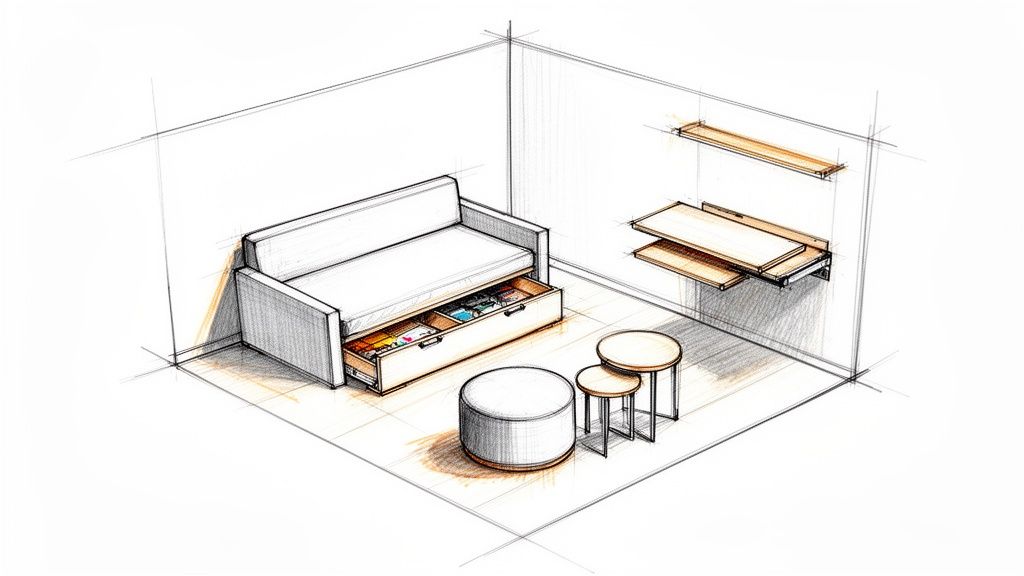
One of the most effective design ideas for small living rooms is to invest in multi-functional furniture. This strategy involves selecting pieces that serve more than one purpose, allowing you to maximize every square inch without cluttering your space. For homeowners in West Texas and New Mexico, where efficient use of space is key, this approach transforms a compact room into a versatile, comfortable hub for daily life.
Why It Works for Small Spaces
Multi-functional pieces reduce the total number of items needed in a room. For example, a quality sleeper sofa provides comfortable seating by day and a guest bed by night, eliminating the need for a separate guest room. Similarly, a sectional with a storage chaise offers a hidden spot to tuck away blankets, remotes, and magazines, keeping surfaces clear and creating an illusion of more space. This dual-purpose design is the cornerstone of smart, small-space living.
How to Implement This Idea
Follow these practical steps to choose the right pieces for your home:
- Prioritize Your Needs: Identify the primary functions your living room must serve. Do you need a workspace, extra storage, or a place for overnight guests?
- Measure Everything: Before you shop, measure your living room, doorways, and hallways. This ensures your new furniture will fit perfectly on delivery day.
- Test in Person: A piece's functionality is just as important as its appearance. Visit a Miller Waldrop showroom to test a power recliner’s storage compartments or feel the mechanism of a sleeper sofa.
- Consider Color: Lighter, neutral-colored furniture can make a small room feel larger and more open.
By selecting smart, dual-purpose furniture, you equip yourself with the tools to create a living room that is both stylish and highly functional. Discover more options and find the perfect pieces by exploring our guide to the best furniture for small spaces on millerwaldrop.com.
2. Light Color Palettes & Strategic Lighting Design
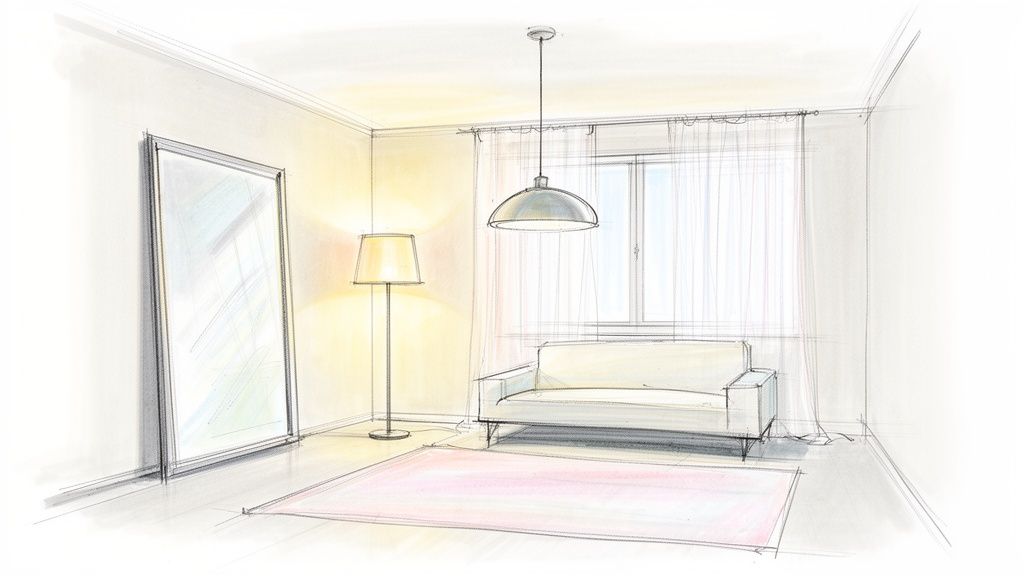
Another foundational design idea for small living rooms is harnessing the power of light, both in color choice and illumination. A light color palette using whites, creams, and soft grays makes a room feel more open and airy. When combined with strategic lighting, this approach creates visual depth and fights the claustrophobic feeling that small spaces can sometimes have, a crucial consideration for making homes in West Texas and New Mexico feel expansive.
Why It Works for Small Spaces
Light colors reflect more light, creating an illusion of space and pushing the walls back visually. Strategic lighting complements this by eliminating dark corners and adding layers of brightness. For instance, a light gray sectional paired with cream accent chairs becomes the bright, welcoming centerpiece of the room. Adding ambient overhead lights, a floor lamp for task lighting, and accent lights to highlight artwork ensures the room feels bright and inviting at any time of day.
How to Implement This Idea
Follow these steps to brighten your small living room effectively:
- Apply the 60-30-10 Rule: Use a light neutral like off-white for 60% of your room (walls), a secondary color for 30% (furniture), and a vibrant accent for 10% (décor).
- Layer Your Lighting: Combine ambient (ceiling fixtures), task (reading lamps), and accent (picture lights) lighting. Install dimmers for ultimate control over the mood.
- Choose Light-Colored Furniture: Select durable, light-colored upholstery from quality brands that can withstand daily use while brightening the space.
- Amplify Natural Light: Place mirrors opposite windows to reflect sunlight and double the sense of openness in the room.
Beyond just walls, understanding how to choose the right flooring color is essential to create a bright, cohesive look from the ground up. By mastering light and color, you give yourself the power to transform a cramped room into a spacious sanctuary.
3. Vertical Storage & Wall-Mounted Solutions
One of the most impactful design ideas for small living rooms is to think vertically. This strategy involves using your wall space for storage and display, which keeps your floor clear and makes the room feel larger. For homes in West Texas and New Mexico, where maximizing living space is a common goal, drawing the eye upward creates an open, airy atmosphere while providing essential storage.
Why It Works for Small Spaces
Vertical storage moves clutter off the floor and onto the walls, freeing up valuable square footage. Tall, narrow bookcases make ceilings appear higher. Wall-mounted solutions, such as a floating TV console, eliminate the need for bulky media stands and create a clean, minimalist look. This approach transforms unused vertical surfaces into functional, stylish assets.
How to Implement This Idea
Follow these practical steps to use your walls for smart storage:
- Assess Wall Space: Identify which walls can support shelving or mounted furniture. Consider the space around windows, doors, and above your sofa.
- Balance Open and Closed Storage: Mix open shelves for displaying decor with cabinets or drawers to hide clutter. This creates visual balance and keeps the space feeling organized.
- Measure for Height: Choose pieces that are tall and slim rather than short and wide. A tall bookcase draws the eye up more effectively than a low, long one.
- Keep It Cohesive: Use baskets and decorative boxes on open shelves to group small items. This prevents a cluttered look and maintains a clean aesthetic.
By leveraging your vertical space, you can add personality and function without sacrificing an inch of floor space. To find the perfect pieces and plan your layout, book a complimentary design consultation with our experts at Miller Waldrop.
4. Sectional & Modular Sofa Configurations
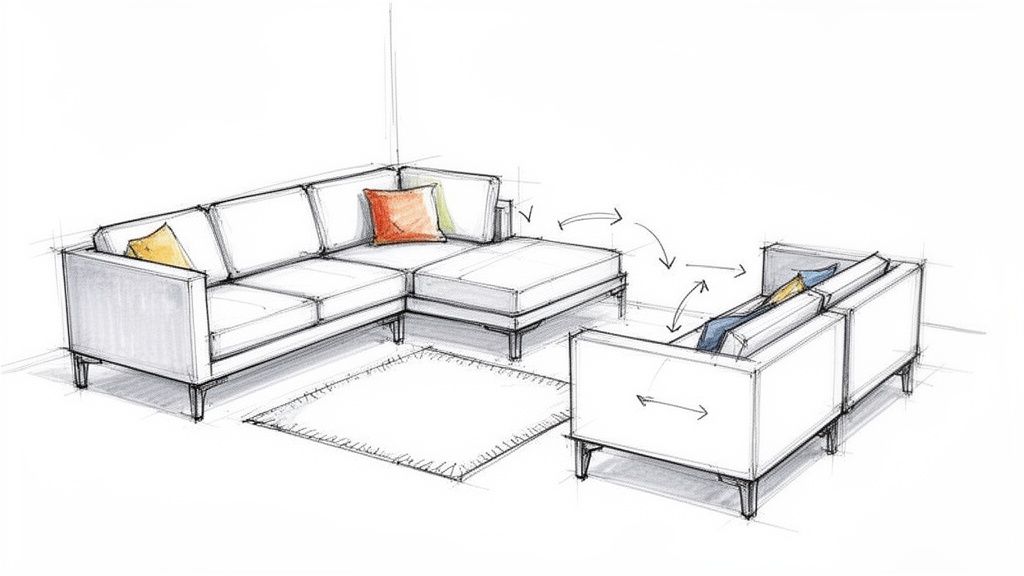
One of the smartest design ideas for small living rooms is utilizing sectional and modular sofas. Unlike traditional sofas that come in a fixed shape, these pieces can be customized to fit unique layouts and maximize seating in tight corners. For homeowners looking to make the most of their space, this flexibility allows you to create a comfortable, inviting living area without feeling cramped.
Why It Works for Small Spaces
Sectionals are perfect for maximizing corner space that often goes unused, offering more seating than a separate sofa and chair. Modular sofas take this a step further, allowing you to add, remove, or rearrange individual pieces as your needs change. Quality brands offer modular sectionals with built-in power recliners, while others provide compact sectionals under 100 inches, proving that you don’t need a large room to enjoy expansive comfort.
How to Implement This Idea
Follow these steps to choose the perfect sectional for your home:
- Measure Your Space: Before shopping, carefully measure your room, doorways, and hallways to ensure a smooth delivery.
- Focus on Depth: Look for sectionals with a shallower depth, around 34-36 inches, to save valuable floor space.
- Create Visual Lightness: Choose a model with exposed legs, which allows you to see the floor underneath and makes the room feel more open.
- Consult the Experts: Our Miller Waldrop design team can help you plan the perfect configuration and explore custom fabric options to match your decor.
By choosing the right configuration, you can transform your small living room into a spacious and functional hub. Find the ideal fit by exploring our guide to the best sectionals for small spaces on millerwaldrop.com.
5. Minimalist & Decluttered Design Approach
Adopting a minimalist design philosophy is one of the most powerful design ideas for small living rooms. This approach champions the idea of "less is more," focusing on quality over quantity to create a space that feels intentional, open, and calm. For residents in West Texas and New Mexico, where creating a peaceful retreat from the vast landscape is desirable, minimalism prevents visual clutter and transforms a compact room into a serene, sophisticated haven.
Why It Works for Small Spaces
Minimalism naturally creates the illusion of a larger area by maximizing negative space-the empty areas around and between furniture. By selecting only essential, high-quality pieces, you reduce physical and visual weight, allowing the room to breathe. For example, a single, beautifully crafted sofa becomes a deliberate focal point rather than just another seat. This intentional curation makes a small room feel organized, expansive, and thoughtfully designed.
How to Implement This Idea
Follow these steps to bring a minimalist aesthetic into your living room:
- Select Essential Pieces: Start by identifying the 3-5 furniture items your living room absolutely needs. This might be a sofa, a coffee table, and an accent chair.
- Invest in Quality: Choose well-made furniture with clean lines that will stand the test of time. A sleek, modern La-Z-Boy power recliner can provide ultimate comfort without adding bulk.
- Declutter Deliberately: Keep surfaces clear and display only a few meaningful decorative items. Practice the "one-touch" rule: put items away immediately after use.
- Curate with Professional Help: A minimalist look is carefully curated. Use Miller Waldrop's design services to help you select a cohesive collection of pieces that fit your space and lifestyle perfectly.
By embracing a minimalist approach, you empower yourself to create a living room that is not just functional but also a true sanctuary of calm and style.
6. Smart Use of Mirrors & Glass Elements
One of the most transformative design ideas for small living rooms involves the strategic use of mirrors and glass. These reflective and transparent surfaces work wonders to create the illusion of depth and openness, making a compact room feel significantly larger and brighter. For homeowners in West Texas and New Mexico, where capturing and amplifying natural light is a priority, this technique is both practical and stylish.
Why It Works for Small Spaces
Mirrors visually expand a room by reflecting light and the space itself, effectively doubling the perceived area. A large mirror placed above a compact sectional can make the ceiling feel higher and the room wider. Glass furniture, like a coffee or console table, occupies space without adding visual weight. This transparency prevents the room from feeling crowded and allows light to pass through, maintaining a sense of airiness.
How to Implement This Idea
Follow these steps to incorporate mirrors and glass effectively:
- Strategic Placement: Position a large mirror opposite a window to maximize light reflection and bring the outdoors in. Avoid placing it where it will reflect clutter or a television screen.
- Create a Focal Point: Use an oversized or ornately framed mirror as a statement piece above a sofa or fireplace. This draws the eye and adds a touch of elegance.
- Choose Transparent Furniture: Opt for a glass coffee table or chrome and glass side tables to accompany your sofa. These pieces provide function without visual bulk.
- Explore Options: To make your small living room feel larger and brighter, smart use of mirrors and glass elements is key; you can explore various mirrors and specialty glass styles to find the perfect fit for your home’s aesthetic.
By thoughtfully integrating these elements, you can craft a living room that feels open, bright, and far more spacious than its measurements suggest.
7. Compact Power Recliners & Comfort-Focused Seating
Embracing comfort in a small living room doesn't mean sacrificing space. The solution lies in compact power recliners and other ergonomic seating options designed with smaller footprints. Modern recliners offer luxurious comfort without the bulk of traditional models, making them one of the best design ideas for small living rooms. For residents in West Texas and New Mexico, this means you can enjoy the relaxing features of a recliner while maintaining an open, uncluttered floor plan.
Why It Works for Small Spaces
Compact recliners, especially wall-hugger models, are engineered to recline forward, requiring only a few inches of clearance from the wall. This maximizes usable floor space. A sleek power recliner can provide full-body support and relaxation without overwhelming the room. Similarly, a contemporary recliner offers a slim profile and modern aesthetic, proving that comfort and compact design can go hand-in-hand. This approach allows you to prioritize well-being without compromising on style or square footage.
How to Implement This Idea
Follow these steps to find the perfect comfort-focused seating for your space:
- Measure Reclining Depth: Before buying, measure the space needed for the recliner when fully extended to ensure it fits comfortably.
- Choose Wall-Hugger Models: These are specifically designed for tight spaces and are the most efficient option for small living rooms.
- Test for Comfort: Functionality is key. Visit a Miller Waldrop showroom to personally test the support and mechanisms of various models.
- Consider Added Features: Look for recliners with built-in storage compartments or USB ports to enhance functionality without adding extra furniture.
By choosing a well-designed compact recliner, you can create a personal oasis of comfort. Explore our collection and find the ideal fit by browsing our selection of stylish recliners online.
8. Open Floor Plans & Visual Flow Management
Creating visual flow is one of the most impactful design ideas for small living rooms because it makes the space feel larger and more cohesive. This principle involves strategically placing furniture to maintain open sightlines and clear pathways, preventing the room from feeling cramped. For apartments and modern homes in West Texas and New Mexico, managing this flow transforms a compact area into an inviting and accessible environment.
Why It Works for Small Spaces
A well-managed floor plan prevents visual blockages that can make a room feel smaller than it is. When your eye can travel uninterrupted from one end of the room to the other, it creates an illusion of spaciousness. Furniture with exposed legs, like a mid-century modern sofa, enhances this effect by allowing you to see the floor underneath, which maintains a sense of openness. This approach is less about the furniture you choose and more about how you arrange it to promote movement and light.
How to Implement This Idea
Use these steps to create a clear and functional layout in your living room:
- Float Your Furniture: If space allows, pull your sofa and chairs away from the walls. Creating even a few inches of space behind a large piece can make the room feel wider.
- Define Zones with Rugs: Use an area rug to anchor a conversation area. This defines the space without putting up physical barriers, maintaining the open feel.
- Prioritize Pathways: Ensure there are clear, unobstructed walking paths through the room. A good rule of thumb is to allow for at least 30 inches for major traffic routes.
- Keep Sightlines Open: Arrange furniture so it doesn't block windows or doorways. A low-profile sectional, for instance, won't obstruct a beautiful view.
Mastering your room’s layout is key to maximizing its potential. You can find more expert tips and visual guides by reading about how to arrange living room furniture on millerwaldrop.com.
9. Accent Colors & Strategic Pop Elements
While a neutral color scheme is a trusted strategy for small spaces, one of the most dynamic design ideas for small living rooms involves adding personality with strategic pops of color. This approach uses a calm, light background as a canvas for carefully chosen accent colors, creating visual interest without overwhelming the room. For homeowners in West Texas and New Mexico, this technique allows you to infuse your space with character while maintaining an open, airy feel.
Why It Works for Small Spaces
Accent colors guide the eye, creating focal points and adding depth to a compact room. A bold piece of art or a vibrant rug can draw attention away from the room's small dimensions and towards its stylish elements. This method prevents the space from feeling bland or one-dimensional, which can sometimes happen with all-neutral palettes. The key is restraint; a few well-placed colorful items make a bigger impact than a room full of competing hues.
How to Implement This Idea
Follow these steps to effectively introduce accent colors into your living room:
- Follow the 60-30-10 Rule: Dedicate 60% of your room to a dominant neutral color (walls, sofa), 30% to a secondary color (accent chair, rug), and 10% to a bold accent color (pillows, decor).
- Choose Your Accents: Select two or three complementary accent colors. For example, pair a neutral sectional with throw pillows in burnt orange and deep navy.
- Start with Changeable Items: Introduce color through accessories like art, vases, or throws. These are easy and affordable to swap out as your tastes change.
- Create a Focal Point: Use an accent color to highlight a specific feature, like a beautiful piece of artwork above the sofa or a stylish accent chair in a corner.
By using color intentionally, you can craft a living room that feels both expansive and uniquely yours. To find the perfect neutral foundation or a colorful accent piece, schedule a complimentary design consultation with our experts.
10. Flexible & Moveable Furniture Arrangements
Static furniture layouts can make a small living room feel restrictive. Embracing flexible and moveable arrangements is one of the most dynamic design ideas for small living rooms, allowing your space to adapt to your changing needs. This strategy involves choosing lightweight or wheeled pieces that can be easily reconfigured, transforming your room from a quiet reading nook to an entertaining hub in minutes.
Why It Works for Small Spaces
A flexible layout empowers you to maximize functionality without overcrowding the room. Instead of committing to one fixed arrangement, you can shift pieces to open up floor space for a gathering, create a temporary workspace, or simply refresh the look. For example, a set of nesting tables can be separated to serve guests or combined to save space. Similarly, lightweight accent chairs can be pulled into a conversation circle and then moved back against a wall.
How to Implement This Idea
Follow these steps to create an adaptable living space:
- Look for Lightweight Materials: Choose furniture crafted from lighter materials like wood, aluminum, or rattan that are easier to move.
- Embrace Casters and Sliders: Select pieces like ottomans or small tables with built-in casters for smooth mobility. For heavier items like sofas, use furniture sliders to protect your floors and make repositioning effortless.
- Go Modular: Modular sectionals and ottomans can be separated or combined to fit different activities. A quality modular sectional offers incredible versatility.
- Test Mobility in Person: When you visit a Miller Waldrop showroom, test how easily you can move an accent chair or glide a nesting table. This ensures the pieces you choose will truly serve your flexible living goals.
By choosing adaptable furniture, you give yourself the freedom to design a living room that works for you every day. Explore our collection of versatile accent tables and chairs to find the perfect moveable pieces for your home.
10-Point Comparison: Small Living Room Design Ideas
| Item | Complexity 🔄 | Resources & Cost 💡 | Expected Outcomes ⭐📊 | Ideal Use Cases | Key Advantages ⚡ |
|---|---|---|---|---|---|
| Multi-Functional Furniture & Space-Saving Solutions | Medium — measuring & possible custom work 🔄 | Moderate–High — quality pieces/upfront cost 💡 | High — maximizes usable space, reduces clutter ⭐⭐⭐📊 | Small apartments, renters, guest-ready rooms | Versatility + integrated storage, flexible layouts ⚡ |
| Light Color Palettes & Strategic Lighting Design | Low — paint + layered lighting plan 🔄 | Low–Moderate — paint, fixtures, bulbs 💡 | High — visually larger, brighter, improved mood ⭐⭐⭐📊 | Any small room needing brightness and calm | Quick visual expansion, easy updates ⚡ |
| Vertical Storage & Wall-Mounted Solutions | Medium — anchors and installation required 🔄 | Moderate — shelving, possible pro install 💡 | High — frees floor space, makes ceilings feel higher ⭐⭐⭐📊 | Tight floor plans, display-heavy spaces | Maximizes vertical space, ample storage ⚡ |
| Sectional & Modular Sofa Configurations | Medium–High — precise measuring & delivery logistics 🔄 | Moderate–High — custom options can be costly 💡 | High — maximizes seating, configurable layouts ⭐⭐⭐📊 | Corner rooms, flexible seating needs, evolving households | Highly customizable seating, scalable footprint ⚡ |
| Minimalist & Decluttered Design Approach | Low–Medium — curation and discipline 🔄 | Low–Moderate — fewer pieces, invest in quality 💡 | High — calm, spacious, low-maintenance aesthetic ⭐⭐⭐📊 | Small, busy homes; those favoring simplicity | Timeless look, easier upkeep, cost-efficient long-term ⚡ |
| Smart Use of Mirrors & Glass Elements | Low — placement and selection decisions 🔄 | Low–Moderate — mirrors, glass accents 💡 | High — perceived doubled space, amplified light ⭐⭐⭐📊 | Low-light rooms, narrow layouts, rentals (non-permanent) | Affordable visual expansion, elegant finish ⚡ |
| Compact Power Recliners & Comfort-Focused Seating | Medium — electrical/access and measuring 🔄 | Moderate–High — power features, outlets needed 💡 | High — premium comfort with smaller footprint ⭐⭐⭐📊 | Accessibility needs, comfort-first small living rooms | Ergonomic support, convenience, space-saving mechanisms ⚡ |
| Open Floor Plans & Visual Flow Management | High — layout planning and possible changes 🔄 | Moderate — reconfiguration, flooring or pro advice 💡 | Very High — feels significantly more open and functional ⭐⭐⭐⭐📊 | Multi-use small spaces, improving circulation | Superior flow, better usability, intentional layouts ⚡ |
| Accent Colors & Strategic Pop Elements | Low — limited paint/accessory updates 🔄 | Low — pillows, art, small furniture 💡 | Moderate–High — personality without clutter ⭐⭐📊 | Neutral rooms needing character; seasonal updates | Low-cost refreshes, focused focal points ⚡ |
| Flexible & Moveable Furniture Arrangements | Low–Medium — selecting lightweight/modular pieces 🔄 | Low–Moderate — casters, modular units, sliders 💡 | High — rapid reconfiguration, multi-use adaptability ⭐⭐⭐📊 | Renters, hosts, rooms with changing functions | Fast layout changes, adaptable and experimental ⚡ |
Ready to Design the Living Room You Deserve?
You now have a powerful toolkit of design ideas for small living rooms, each one a strategy to transform your space from cramped to curated. You've learned how the right choices in furniture quality, function, and style can make a profound difference, proving that limited square footage doesn't have to limit your family's comfort or lifestyle. The key is that every element should work together, serving a purpose while reflecting your personal taste.
Remember the core principles we discussed: creating the illusion of space is just as important as maximizing the physical area. By embracing lighter color palettes, leveraging the reflective power of mirrors, and drawing the eye upward with vertical storage, you can make your room feel open and airy. This strategic approach to visual perception is one of the most effective tools at your disposal.
From Ideas to Implementation
The true magic happens when you pair these visual strategies with smart, functional furniture. You've seen how multi-functional pieces like storage ottomans and modular sectionals can adapt to your needs, providing flexibility and eliminating clutter. This isn't about simply filling a room; it's about choosing pieces that actively solve spatial challenges.
Consider the impact of a single, well-chosen item. A compact yet comfortable seat like the La-Z-Boy Pinnacle Power Rocking Recliner can offer luxurious relaxation without the bulky footprint of a traditional recliner, making it a perfect fit for a cozier layout. This highlights a crucial point: you never have to sacrifice comfort for space.
Your Space, Your Life
Ultimately, the goal is to create a living room that supports your life, whether you're entertaining guests, relaxing after a long day, or enjoying family time. The design ideas for small living rooms we've covered are your roadmap to achieving that. By decluttering with a minimalist mindset and using accent colors to inject personality, you craft a space that is not only functional but also a true reflection of you.
You don't have to navigate this journey alone. With over 70 years of experience helping families in Lubbock, Hobbs, and Ruidoso, our team understands the unique challenges and opportunities of homes in our community. We are here to be your trusted partner, helping you measure, plan, and find the perfect pieces that bring your vision to life. Your dream living room is within reach, and the right furniture is the key to unlocking its full potential. Let's build it together.
Ready to put these ideas into action? Visit a Miller Waldrop Furniture & Decor showroom to see how our curated selection of space-saving and stylish furniture can transform your home. Our expert design consultants are ready to help you find the perfect solutions for your small living room today.