

How to Decorate Small Spaces Like a Pro

Decorating a small space isn't about accepting limitations; it's about making smart, intentional choices that actually elevate how you live. The secret is to start with a clear plan, figure out what each room is really for, and keep only the things you truly love and need. Getting this mindset right from the beginning is your most powerful tool.
Rethinking Your Space Before You Start
Before you pick out a single throw pillow or swipe a paintbrush, the most important thing you can do is change how you see your home. This isn't about "making do" with less. It's an opportunity to unlock the unique potential of living in a more compact, efficient way.
There's a huge shift happening in how people view their homes. The global interior design market was valued at around USD 136 billion in 2023 and is expected to hit USD 228 billion by 2033. This growth is fueled by more people living in cities and wanting personalized, highly functional spaces. You can explore these interior design market trends here.
Adopting this new perspective gives you the confidence to make decisions that will turn your small space into a sanctuary that's both beautiful and works for you.
Define Your Room’s True Purpose
Start with a simple question for every area: "What do I need this space to do?" Is your living room meant to be a quiet reading corner or the go-to spot for game nights with friends? Is that spare nook a home office or a place to roll out your yoga mat?
Answering this honestly is the key to prioritizing what you actually need. You can't just decorate your way out of a layout that doesn't fit your daily life.
The goal is to make your space align with your lifestyle. When a room has a clear job, choosing the right furniture and decor becomes intuitive, not a stressful puzzle.
Curate with Intention
The next critical step is to declutter, but with a clear purpose. This isn't just about freeing up floor space; it’s about carefully curating a home filled only with things you genuinely love and use. It’s less about subtraction and more about intentional selection.
Here’s a simple way to think about it:
- Keep What Serves You: Every single item should either have a function or bring you real joy.
- Release What Doesn’t: Let go of the things that are just taking up room.
- Create Breathing Room: In a small home, empty space is a luxury. It makes everything feel calmer and more open.
This thoughtful editing is the heart of creating a personalized home that doesn't feel suffocating. If you need more help with this, our guide on mastering minimalism to personalize your space without feeling cluttered is a great place to start.
By figuring out your needs and curating your possessions first, you build a solid foundation. This is how you take control of your home's design story, armed with the clarity to make every choice count.
Designing a Layout for Flow and Function
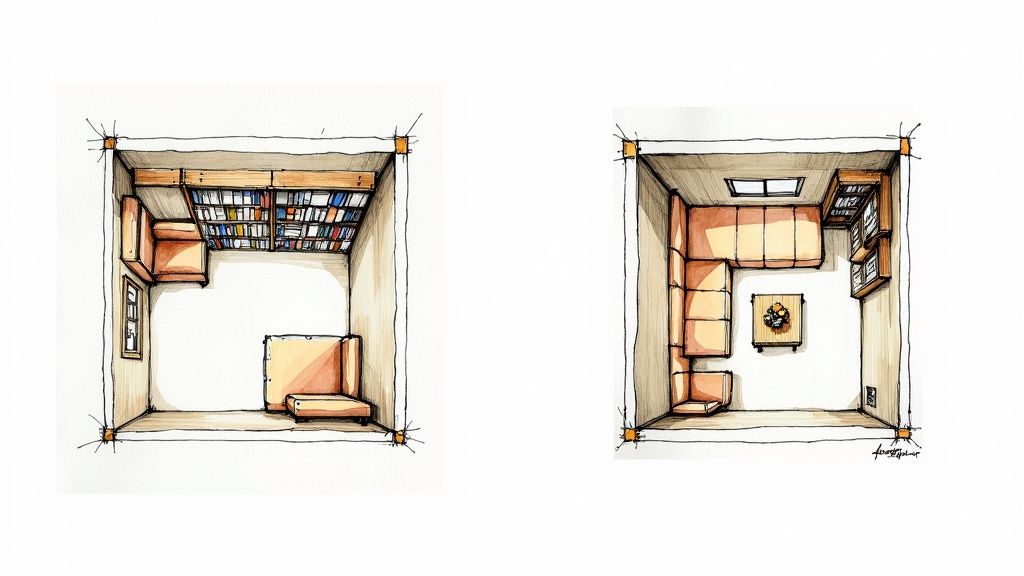
The right layout is the secret weapon for making a small room feel open, intuitive, and way bigger than it actually is. Before you even think about decor, you get to be the architect of your own space. It's all about crafting a floor plan that just works for your daily life.
One of the most common mistakes you might face is pushing all your furniture right up against the walls. It seems like the logical way to open up the middle of the room, right? But it often has the opposite effect, making the space feel cramped and static.
Instead, try "floating" your main pieces, like the sofa, even just a few inches off the wall. This tiny gap creates a bit of breathing room and an illusion of depth that can instantly make the whole area feel more expansive.
Create Distinct Functional Zones
Even in a tiny studio, you can get that separate-room feeling by setting up distinct zones. You don't need walls; smart furniture placement is your best friend here. Just think about everything you need to do in that one room—live, work, dine—and give each activity its own dedicated spot.
Area rugs are absolutely brilliant for this. A well-placed rug under your seating area visually fences it off from your dining nook or workspace, giving it a clear purpose. Another trick is to place a slim console table behind a floating sofa. It acts as a subtle divider while also giving you a handy surface for a lamp or your books.
This infographic gives a great example of how you might allocate your floor area to create these dedicated zones.
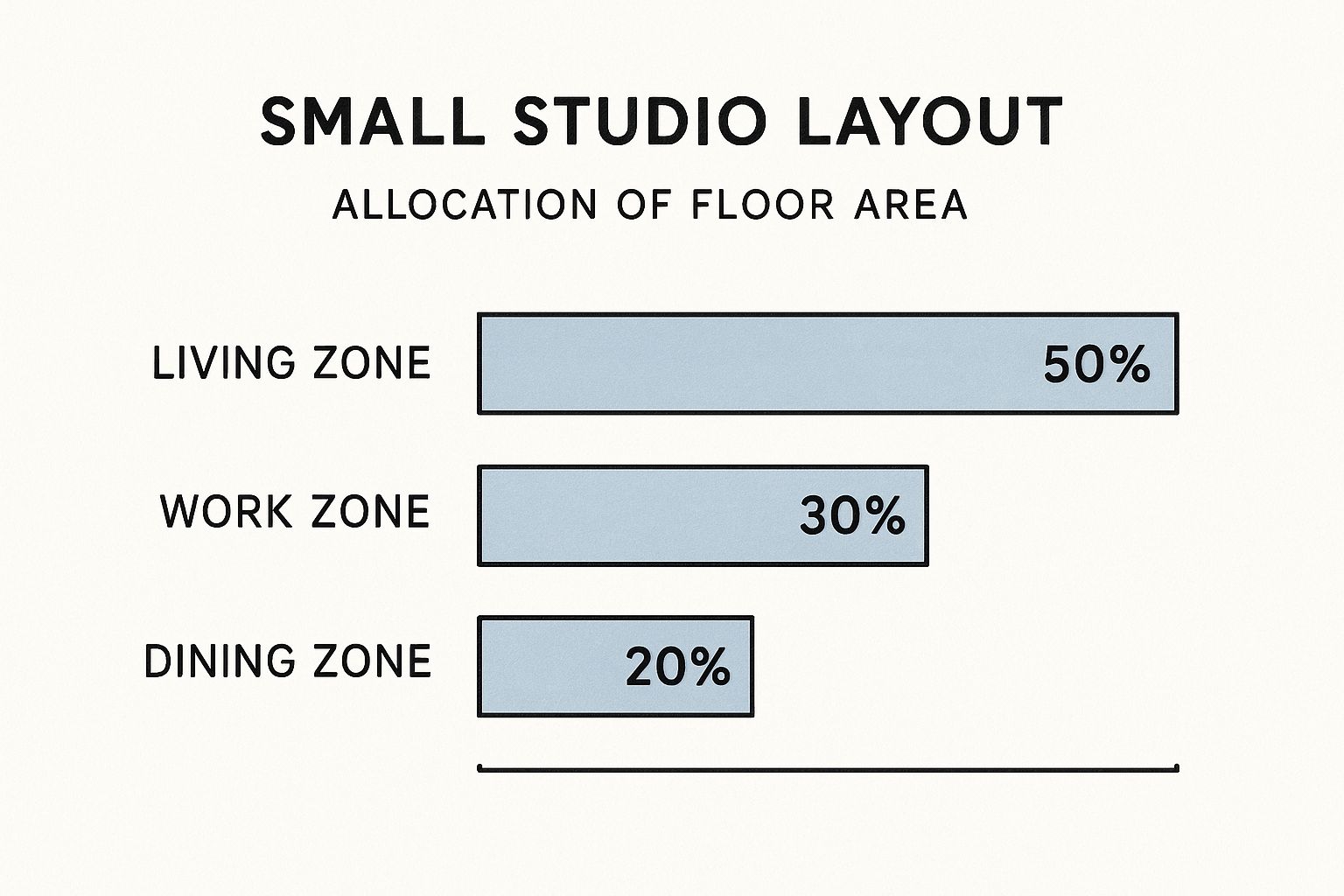
As you can see, dedicating specific percentages to your core activities—even with limited square footage—is the key to a highly organized and functional home.
Establish Clear Pathways
Once your zones are mapped out, the next step is to ensure you have clear, easy-to-navigate pathways. You should be able to walk from one end of the room to the other without having to sidestep a coffee table or squeeze past a chair. That effortless movement is what makes a space feel calm and well-designed.
Your home’s layout should feel like an intuitive guide, leading you and your guests through the space without a second thought. Good flow is invisible but makes a world of difference in how a room feels.
A good rule of thumb is to aim for at least 30 to 36 inches of walking space for your main walkways. Of course, this starts with finding furniture that’s scaled correctly for your room. Here’s how you can choose the perfect sofa for your family's needs: explore our collection of beautiful and comfortable sofas and sectionals from Flexsteel and La-Z-Boy, featuring options designed to fit all kinds of room sizes and layouts.
By putting zones and pathways first, you’re doing more than just arranging furniture—you’re engineering a better living experience. If you're feeling a bit stuck, our design experts are always here to help you map out a floor plan that truly unlocks your home’s potential.
Choosing Furniture That Works Smarter
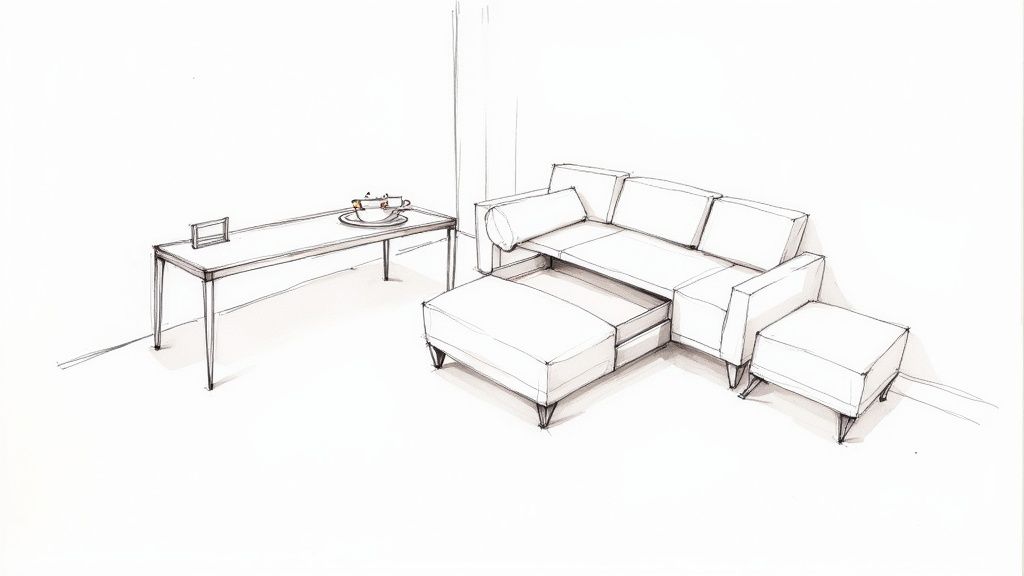
When you're working with limited square footage, every piece of furniture has to pull its weight. It's less about filling a room and more about curating a collection of smart, hardworking items that solve real problems. Think of your furniture as active team members, each with a specific job—and maybe even a side hustle.
This isn't just about finding a futon. The world of multifunctional furniture is full of clever designs meant to help you live large in a small home.
Think Beyond a Single Purpose
Your furniture should work as hard as you do. Why settle for a coffee table that just holds drinks? A lift-top version can double as a dining surface or a comfortable desk for those work-from-home days. That stylish ottoman at the foot of your bed? It’s the perfect hiding spot for extra blankets or out-of-season clothes.
These dual-purpose pieces are the unsung heroes of compact living, giving you more function without eating up more floor space.
Some of my favorite examples include:
- Storage Benches: Drop one in an entryway or at the dining table. It offers extra seating while discreetly stashing away shoes, bags, or board games.
- Nesting Tables: These are brilliant. You get multiple surfaces when you need them for guests, and they tuck neatly into a single footprint when you don't.
- Expandable Dining Tables: If you love to host but don't have room for a massive table, an extendable one is a must. It stays compact for daily meals and easily expands for dinner parties.
It's no surprise that minimalist, highly functional design has become so popular. The global minimalist furniture market was valued at a staggering USD 49.66 billion in 2023 and is only expected to grow. People everywhere are craving simplicity and smarter function, especially when space is at a premium.
Choosing Your Small Space Furniture Hero
Not all multifunctional pieces are created equal. The right one for you depends entirely on what problem you're trying to solve. This table breaks down some of the most popular options to help you find your perfect match.
| Furniture Type | Primary Function | Secondary Function(s) | Best For |
|---|---|---|---|
| Lift-Top Coffee Table | Surface for drinks/décor | Work desk, dining surface, hidden storage | Living rooms that double as a home office or dining area. |
| Storage Ottoman | Footrest, extra seating | Hidden storage for blankets, games, or pillows | Bedrooms and living rooms that need clutter control. |
| Sleeper Sofa/Sofa Bed | Seating | Guest bed | Apartments or homes without a dedicated guest room. |
| Nesting Tables | Side table/coffee table | Extra surfaces for entertaining, can be spread out | Anyone who hosts guests frequently but is tight on space. |
| Extendable Dining Table | Dining surface | Console table (when small), larger dining for guests | Small dining rooms or eat-in kitchens for avid entertainers. |
Ultimately, the goal is to choose a piece that addresses your most pressing need, whether that's more storage, a place for guests to sleep, or a flexible workspace.
Lighten the Visual Load
Beyond what a piece of furniture does, you have to consider how it feels in the room. This is what designers call visual weight. Bulky, solid furniture can feel like it's sucking all the air out of a room, while pieces that feel lighter create an open, breezy atmosphere.
You can instantly make a room feel bigger by choosing furniture with:
- Exposed Legs: Sofas, chairs, and consoles raised on slender legs are a game-changer. Seeing the floor underneath creates an immediate illusion of more space.
- Slender Profiles: Look for clean lines and thin frames. Avoid anything with heavy, ornate details or thick, chunky construction.
- Reflective or Transparent Materials: A glass-topped coffee table or a mirrored side table takes up almost no visual space. They do their job without making the room feel crowded.
It's all about finding that sweet spot between form, function, and scale. The right furniture doesn't just serve a purpose; it actively contributes to a feeling of spaciousness and calm.
By focusing on pieces that are both multifunctional and visually light, you can build a home that's not just organized, but feels genuinely expansive and welcoming. For more ideas, you can always check out our guide on the best furniture for small spaces.
Pushing Back the Walls with Color and Light
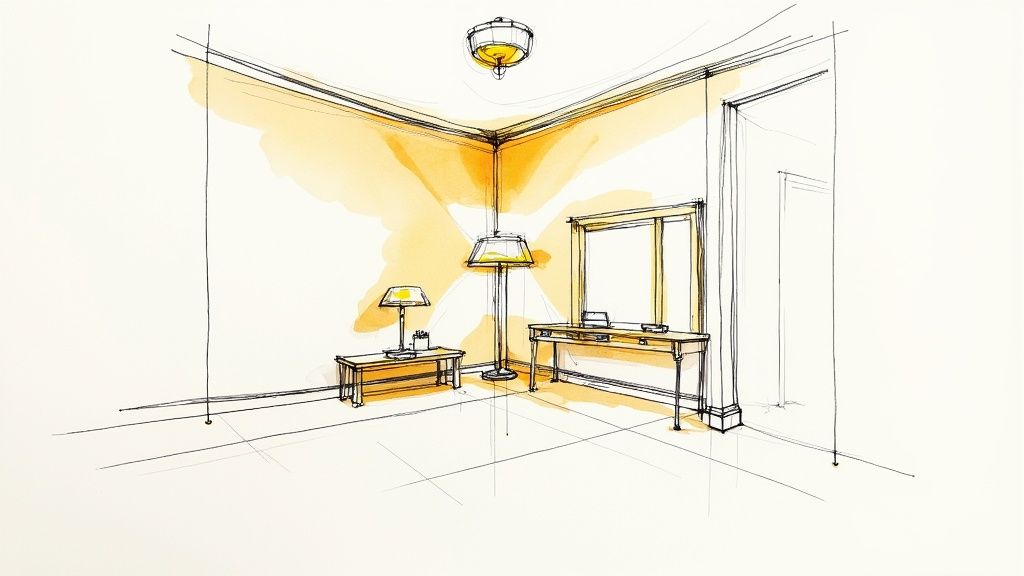
Once your layout is locked in and your furniture is chosen, it’s time to work some real magic. This is where you get to play with color and light—two of the most powerful (and cost-effective) tools in your design kit.
Used correctly, they can create an incredible illusion of space, pushing walls outward, lifting ceilings, and turning a cramped room into an open, airy retreat. This isn’t just about making a room functional; it's about shaping how it feels.
Harnessing the Magic of a Cohesive Color Palette
You've probably heard it a thousand times: light colors make a room feel bigger. It's a classic for a reason. Soft whites, pale grays, and warm beiges are fantastic at reflecting light, which immediately creates a sense of spaciousness.
But that doesn't mean your space has to be sterile or boring. A brilliant technique you can use is color drenching. This involves painting the walls, trim, and even the ceiling in the exact same light shade. Doing this erases the visual boundaries of the room, so your eye sees one continuous, expansive surface. It’s a surprisingly simple trick that makes a small room feel grand.
Color psychology is your best friend here. Lighter shades naturally bring a sense of calm and openness, but don't be afraid of a single, bold accent. It can create a focal point that draws the eye and gives the room some much-needed personality and depth.
If you're stuck on finding the right shade, our guide to picking the perfect paint color for your home can help you discover a palette that feels just right.
Layering Light to Create Depth and Warmth
A single ceiling light just won't cut it. To truly open up a small room, you need to think in layers. A well-lit space banishes shadows from corners and adds a dynamic warmth that feels instantly more welcoming and spacious.
Here is a three-layer strategy you can use to master your lighting:
- Ambient Light: This is your room’s foundation of light. Think recessed lighting or a sleek, flush-mount ceiling fixture that provides general illumination.
- Task Light: This is your focused, functional lighting. A beautiful floor lamp next to a reading chair or some under-cabinet strips in the kitchen are perfect examples of light that serves a purpose.
- Accent Light: This is the fun part. Accent lighting adds personality and draws attention to the things you love, like a picture light over artwork or a small, sculptural lamp on a bookshelf.
When you combine these three sources, the room comes alive. You create pools of light that add dimension and make the space feel thoughtfully designed.
And a final pro tip you can use? Never, ever underestimate the power of a mirror. Placing a large mirror on the wall opposite a window is a game-changer. It will literally double the natural light and create a stunning illusion of depth, making your room feel bigger and brighter in an instant.
Decorating and Storing with Intention
Decorating a small space is all about striking that perfect balance between showing off your personality and keeping things feeling calm and uncluttered. This is the fun part—where you make smart choices that add character, turning a place you just live in into a home that feels like you.
When floor space is tight, the best advice you can use is to look up. Your walls are your greatest untapped resource. By drawing the eye upward with things like tall, skinny bookshelves or a neat stack of floating shelves, you create the illusion of a higher ceiling and a more open room. It’s a simple trick, but it can completely change the vibe, making a cramped space feel surprisingly grand.
Mastering the Art of Concealed Storage
Let's be honest: clutter is the number one enemy of a small, peaceful home. The secret isn't necessarily about owning less stuff (though a good declutter never hurts!), but making sure everything has a place to live, preferably out of sight.
This is your chance to get creative with storage that actually looks like part of your decor.
- Stylish Baskets: Woven baskets are perfect for tucking away extra blankets, magazines, or kids' toys, and they bring a wonderful, natural texture to the room.
- Decorative Boxes: Find some beautiful boxes you love and use them on shelves or under a console table. They're perfect for hiding all that visual noise—mail, charging cables, and other random odds and ends.
- Furniture with a Secret: An ottoman with a lift-off top or a bed frame with built-in drawers is a game-changer. You get a massive amount of storage without sacrificing a single extra inch of floor space.
This kind of integrated, clever storage isn't just a niche idea anymore; it's a huge part of modern home design. With more people flocking to cities, the small space furniture market is set to grow significantly between 2025 and 2035. It's all driven by new designs that make living in a smaller footprint more comfortable and stylish. You can explore more about this growing market for space-efficient furniture to see where the industry is headed.
Choosing Decor That Makes an Impact
In a small room, everything you display has an impact, so you have to be selective. A great rule of thumb? Less is almost always more.
Instead of a gallery wall with a dozen small frames, which can make a wall feel chaotic, go for one large, fantastic piece of art. A single, captivating piece creates a strong focal point and immediately makes the entire room feel more intentional and upscale.
Your decor should be a reflection of you, but edited for impact. Select a few key pieces that you absolutely love and let them shine. This approach proves that even the smallest spaces can be big on style and personality.
Plants are another brilliant way to add life and color without taking up precious real estate. A few well-placed plants on a windowsill, a high shelf, or even hanging from the ceiling can inject so much energy into a space. The goal is to make every single item count.
When you combine smart, hidden storage with a few carefully chosen decorative pieces, you create a home that works beautifully and looks amazing. If you're ready to find those perfect pieces, our design experts can walk you through our collections and help you decorate with true intention.
Now, It's Your Turn to Create Something Wonderful
You've got the playbook and plenty of inspiration. The next step is the most exciting one: turning all these ideas into a home that feels uniquely yours.
Let's quickly recap the core ideas. Always start with a solid layout plan. Hunt for those smart, multi-functional furniture pieces. Play with light and color to open up your space, and never forget to decorate with intention.
This whole process is about you and your home. There's absolutely no need to rush and try to do everything at once. Some of the best, most satisfying makeovers come together gradually, one thoughtful choice at a time.
Think of your home as an ongoing story that reflects who you are. Start small—maybe just one corner or a single room—to see what works and build from there. The key is just to begin.
Feeling inspired to find the right pieces for your project? Dive into our handpicked collection of small-space solutions and discover furniture designed to fit your life.
And if you’d like a helping hand, our design experts are always here to help you map out a personalized plan. That dream home you've been imagining? It's closer than you think, and we'd love to help you bring it to life.
Here are a few common questions you might have when tackling your small spaces. Let's clear up some of those tricky spots.
What's the Single Biggest Mistake People Make?
Hands down, the most frequent misstep is picking furniture that's just too big for the room. You’ve seen it before: a massive, overstuffed sofa gets crammed into a small living room, and suddenly the whole space feels suffocating.
Another classic mistake is "hugging the walls"—pushing every single piece of furniture right up against the perimeter. It sounds like it should create more space, but it actually makes the room feel static and even smaller. A much better approach is to choose pieces with a smaller footprint and what designers call less "visual weight." Think of a sofa with slim arms and raised legs. Just being able to see the floor underneath creates a surprisingly powerful illusion of openness.
Is It True I Can't Use Dark Colors in a Small Room?
Not at all! This is one of the best myths to bust. While it's true that light colors are a safe bet for making a room feel bright and airy, dark colors can be your secret weapon for creating a space that feels incredibly cozy, dramatic, and sophisticated. The trick is to be smart about it.
Painting a single accent wall in a dark, moody shade is a fantastic way to create a sense of depth. It tricks the eye, making the room feel longer and far more interesting than if all the walls were a plain, flat white.
If you go for a dark wall, just be sure to balance it out. Use lighter-colored furniture, hang a large mirror to bounce light around, and layer in plenty of good lighting from lamps and fixtures. Done right, your room will feel like a chic, intentional retreat, not a dark cave.
How Do I Make My Space Feel Like Me Without It Looking Cluttered?
This is where the art of editing comes in. The mantra here is "fewer, but better." You want every piece to count.
- Go Big with Art: Instead of a busy gallery wall with dozens of small frames, try one large, impactful piece of statement art. It focuses the eye and feels much less chaotic.
- Make Your Decor Functional: Let everyday items pull double duty. A beautiful stack of your favorite coffee table books or a stylish throw blanket draped over a chair adds tons of character while still serving a purpose.
- Look Up!: Get things off your surfaces by using vertical space. Floating shelves are perfect for displaying a small, curated collection of your favorite objects without cluttering up your tables.
This approach ensures that everything you choose to display has a reason to be there, making your home feel thoughtfully curated and uniquely yours.
At Miller Waldrop Furniture & Decor, we believe your home should be a source of joy, no matter its size. If you're ready to find the perfect, thoughtfully scaled pieces that bring your vision to life, we invite you to explore our curated collections online or visit our design experts in one of our showrooms.