

Unlocking the Potential of Your Home: A Guide to the Best Furniture for Small Spaces

When you're working with a small space, choosing the right furniture isn't just about filling a room—it's about empowering your home to do more. Your best choices are always the ones that blend function with a lighter footprint. Think multi-functional, visually lightweight, and perfectly scaled. With tools like sleeper sofas, storage ottomans, clever nesting tables, and wall-mounted shelves, you can make the most of every square inch without making the room feel crowded.
Your Guide to Furnishing Small Spaces with Confidence
Living in a smaller home isn't a setback; it's a fantastic opportunity to become the hero of your own design story. The real secret is picking furniture that works harder for you. This guide is your playbook for turning any cozy corner into a stylish and highly functional home you'll absolutely love.
Forget generic advice. You're about to discover practical, real-world strategies that will give you the confidence to choose pieces that solve everyday challenges and truly reflect your style.
Why Smart Furniture Choices Matter
In a compact home, every item needs to earn its keep. You’re not just decorating; you're engineering an environment that fits your life perfectly. It’s no surprise that the demand for smart, compact furniture is on the rise. As more of us embrace city living or simply downsize, the need for intelligent design has exploded.
The global market for small space furniture was valued at around USD 23.4 billion in 2023 and is expected to soar to USD 41.2 billion by 2032. This isn't just a trend; it's a major shift in how we think about our homes. People want maximum utility without sacrificing style, and the market is responding. You can find more details on this growing trend over at Dataintelo.
Your goal is to find pieces that are as hardworking as they are beautiful. Imagine a storage ottoman that moonlights as a coffee table, or a slim console that can pinch-hit as a workspace. These are the kinds of solutions that make small-space living not just manageable, but genuinely enjoyable.
What You Will Learn
This guide is designed to empower you to find furniture that doesn't just fit your floor plan, but actually makes your day-to-day life better. We’ll walk through how you can:
- Measure and plan your space like a pro to avoid those "it won't fit through the door" moments.
- Spot the multi-functional "hero" pieces that save space and add incredible versatility.
- Use visual tricks with color, light, and scale to make any room feel more open and airy.
Ready to find the perfect tools for your home? Let's get started. A great first step is to explore our curated collection of living room furniture that works beautifully in any floor plan.
Mastering Your Floor Plan Before You Buy
The biggest mistake you can make with a small room isn't about style—it's about scale. A gorgeous sofa that blocks a walkway or a dining table that forces you to squeeze past a doorway can make a room feel suffocating, no matter how beautiful the furniture is.
The real secret is to get the floor plan right before you even think about adding items to your cart. This isn't just about measuring; it's about creating a strategic blueprint that ensures every piece you choose will truly work in your home.
Start by grabbing a tape measure. You'll want to go beyond the basic length and width of the room. Jot down wall heights, the width of every doorway, and the dimensions of any tight corners, hallways, or staircases your new furniture will have to navigate on its way in. If you want a foolproof method, our guide on how to measure furniture walks you through it step-by-step.
Visualize Your Space for Better Flow
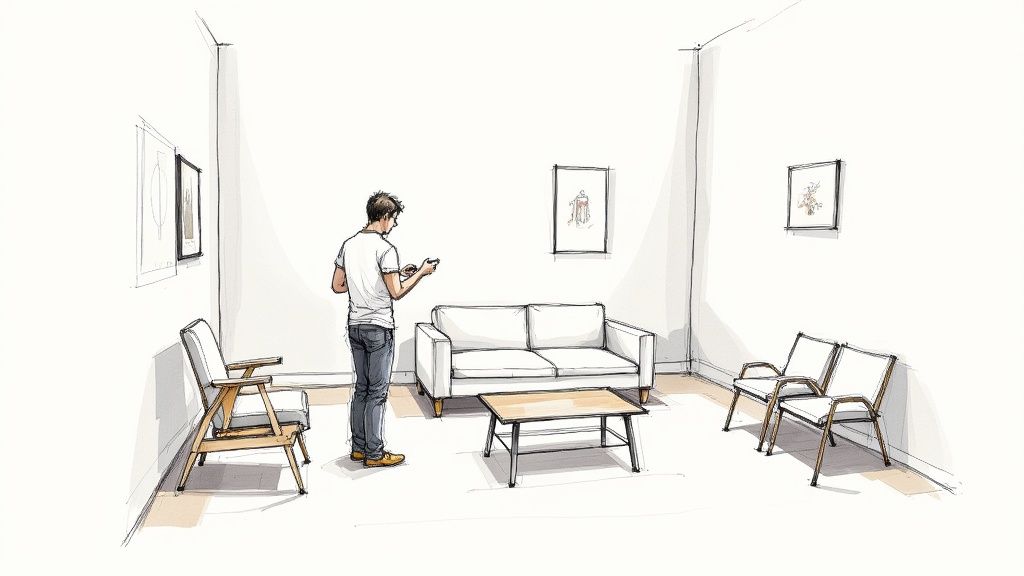
With your measurements in hand, it's time to sketch out the room. You don’t need any fancy software for this; a simple drawing on graph paper works perfectly. This visual map is your key to spotting potential traffic jams before you spend a dime.
Think about how you naturally move through the space. Where are the main pathways? From the door to the window? From the sofa to the kitchen?
Your primary goal is to keep these pathways clear and open. A good rule of thumb to follow is to aim for furniture to occupy no more than 40% of your total floor area. Any more than that, and the room starts to feel crowded rather than cozy.
This infographic breaks down some of the key measurements to consider for a layout that feels just right.
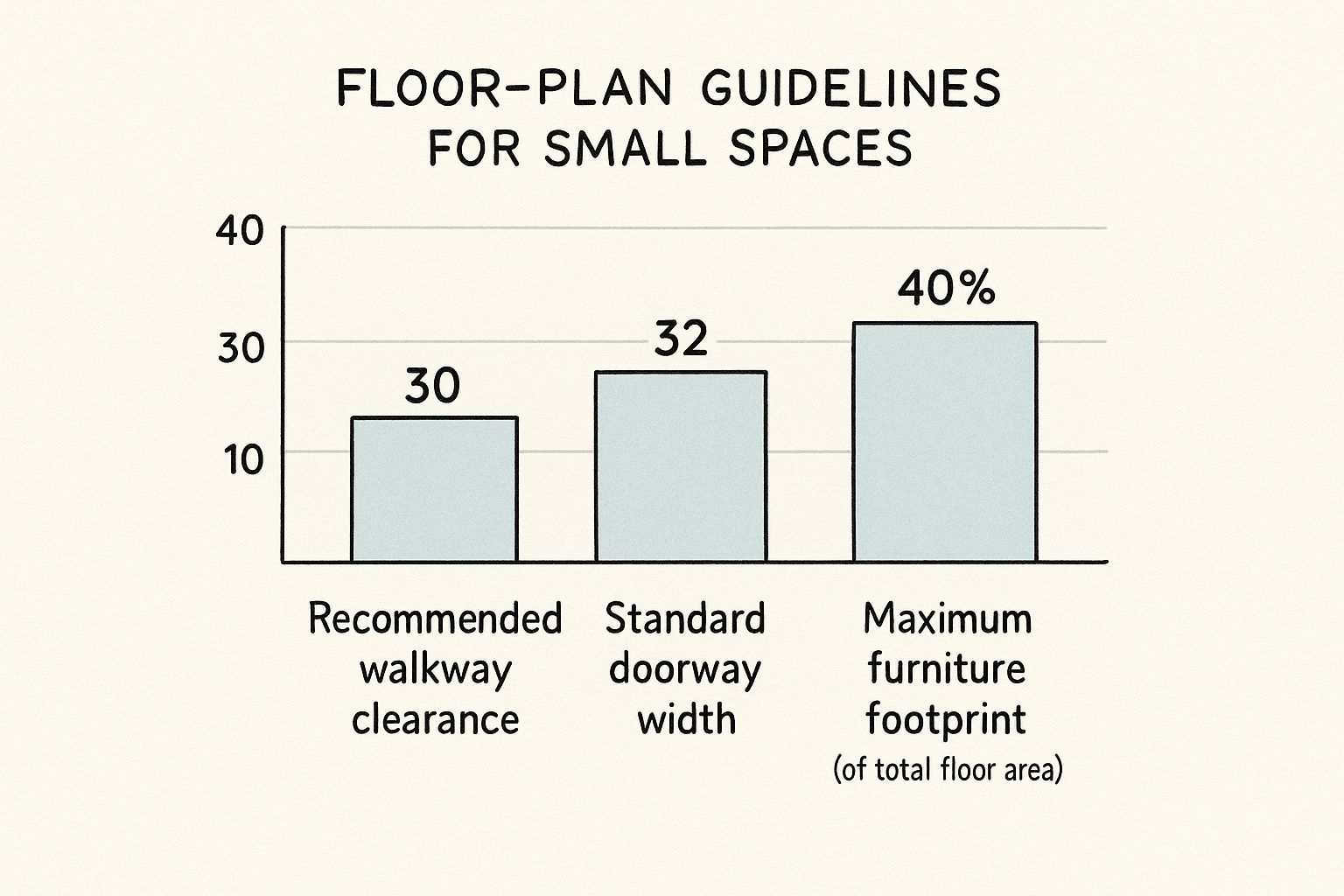
As you can see, leaving at least 30 inches for walkways is absolutely essential. That's about the width of a standard interior door, and it makes all the difference for comfortable, everyday movement.
Applying Your Blueprint to Real-World Scenarios
Now, let's put that floor plan to work.
Imagine you're dealing with a long, narrow living room. To create a sense of width, place your largest piece—likely your sofa—against the longest wall. Then, introduce "leggy" furniture, like armchairs or side tables with visible space underneath them. This simple trick makes the room feel much more open and airy.
Or what about a studio apartment? Your floor plan can help you carve out distinct "zones" for living, sleeping, and working. An area rug can instantly define a living space, while a slim console table placed behind your sofa can act as a subtle, stylish divider that doubles as a desk.
Think of your floor plan as the script for your home's story. By defining the scenes and directing the flow of traffic, you ensure every character—and every piece of furniture—plays its part perfectly.
Taking the time for this planning phase is truly the most powerful thing you can do. It turns furniture shopping from a stressful guessing game into a precise, successful mission.
Finding Your Multi-Functional Hero Pieces
With your floor plan mapped out, it's time for the fun part: finding the furniture that will work overtime for you. In a small home, every single piece needs to earn its keep. You’re looking for smart, versatile furniture that makes your life easier and your home feel bigger.
Think of yourself as the hero of your own design story, and these pieces are your essential gear.
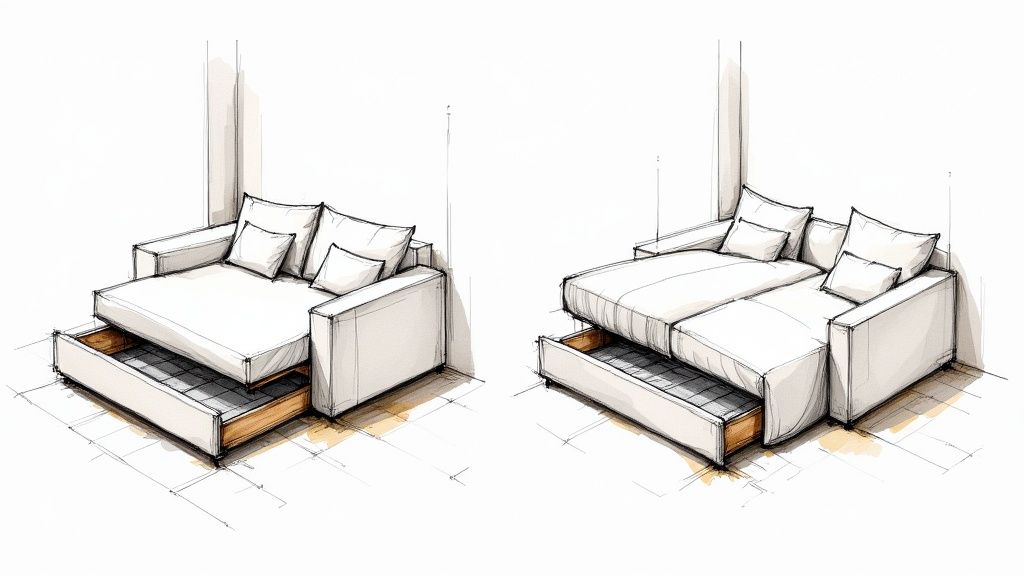
Go Beyond the Obvious With a Modern Sleeper Sofa
Here’s how you can choose the perfect anchor piece for your living room: the sleeper sofa. A high-quality sleeper is so much more than a place for guests to crash. It serves as a stylish foundation for your living room by day and transforms into a comfortable, welcoming bed at night.
This dual purpose completely eliminates the need for a dedicated guest room. Just like that, you've freed up an entire room for a home office, a workout zone, or a creative studio. It's like finding square footage you never knew you had. You can explore options like the Jackson Furniture Catnapper Ramsey Sleeper Sofa to see how style and function can come together.
Unlock Hidden Potential With Storage Ottomans and Benches
Now, let's talk about the unsung heroes of multi-functional design. A storage ottoman is genuinely one of the most hardworking tools you can bring into your home.
Here’s just a handful of roles it can play:
- A coffee table: Just add a decorative tray on top for stability.
- Extra seating: Perfect for when you have company over.
- A footrest: Kick your feet up after a long day.
- Hidden storage: The best place to stash blankets, board games, and remotes.
In the same vein, a sleek storage bench in an entryway or at the foot of your bed offers a place to sit while neatly corralling shoes, bags, and other clutter before it takes over your space.
Adaptable Solutions for Modern Living
The demand for furniture that can adapt to our changing lives is higher than ever, especially in cities where every inch counts. In fact, a major driver in the U.S. furniture market is the consumer shift toward multi-functional and modular pieces designed for exactly these kinds of compact living situations. It's a clear reflection of our need for flexible, smart solutions.
To help you get started, here's a quick look at some of the most valuable multi-functional pieces you can equip your home with.
Your Multi-Functional Furniture Toolkit
| Furniture Piece | Primary Function | Secondary Functions | Best For |
|---|---|---|---|
| Sleeper Sofa | Living Room Seating | Guest Bed | Living rooms, studio apartments |
| Storage Ottoman | Footrest / Coffee Table | Seating, Hidden Storage | Living rooms, bedrooms |
| Nesting Tables | End Table / Coffee Table | Can be separated for guests | Any room needing flexible surfaces |
| Extendable Dining Table | Small Dining Table | Expands for entertaining | Kitchens, dining areas |
| Modular Shelving | Bookcase / Display | Room Divider, Reconfigurable | Living rooms, home offices |
These are the kinds of pieces that give you options, making your home feel more dynamic and responsive to your needs.
Your goal is to find furniture that can evolve with you. Modular shelving that can be reconfigured or nesting tables that tuck away neatly are perfect examples of adaptable design.
This forward-thinking mindset is also crucial for creating a workspace at home. For a deeper dive into that, check out our ultimate guide to multi-functional home office furniture.
Choosing these hero pieces is all about being strategic. Stop asking, "What furniture do I need?" and start asking, "What problems do I need my furniture to solve?" That simple shift in perspective will lead you straight to the smart, versatile solutions that will completely transform your home.
Creating the Illusion of More Space
You’ve found your hero pieces—now it's time to arrange them in a way that makes your room feel open, bright, and way bigger than its actual footprint. This is where you get to play illusionist, using smart design strategies to trick the eye and create a sense of depth and height.
It’s not about following a rigid set of rules. Instead, it’s about understanding how you perceive a space and then gently guiding that perception to make your home feel as expansive and welcoming as possible.
Draw the Eye Upward
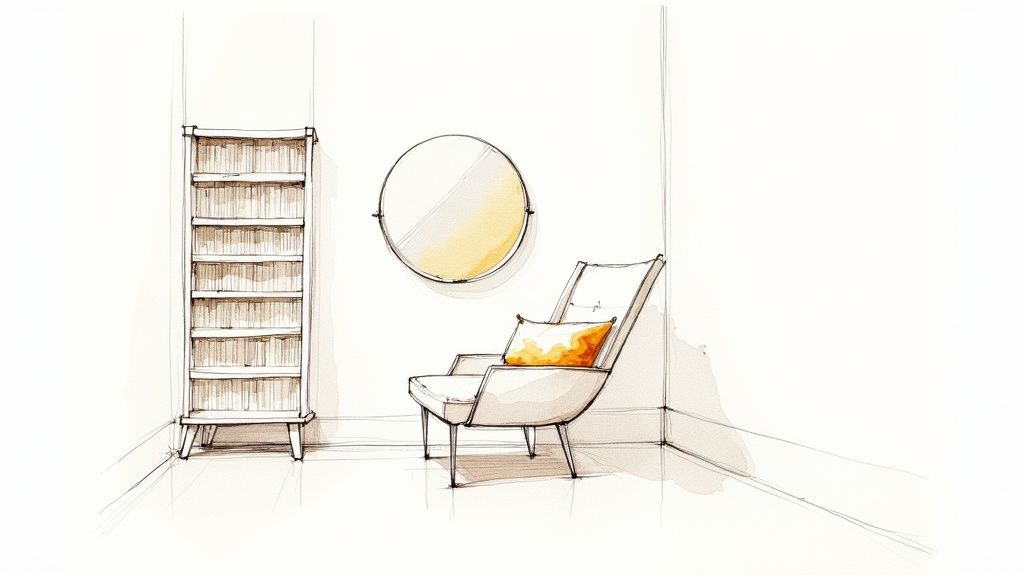
One of the most effective strategies you can use in a small room is to emphasize its vertical space. When you encourage people's eyes to travel upward, the room instantly feels taller and more grand.
Tall, narrow bookcases are fantastic for this. They offer a ton of storage without eating up precious floor space, and their height naturally pulls the gaze up. The same thing happens with floor-to-ceiling curtains or even a tall, slender floor lamp tucked neatly into a corner.
Let There Be Light and Reflection
In a small room, light is your best friend. Always try to maximize natural light, but you can take it a step further by amplifying its effect with a few clever placements.
A large mirror is a classic tool for a reason—it works. When you place one opposite a window, it can practically double the amount of light in the room while creating a powerful illusion of depth. It's almost like adding a whole new window.
Furniture with reflective surfaces can do the same thing on a smaller scale:
- A glass coffee table keeps sightlines clear.
- A side table with a polished metal frame adds a bit of sparkle.
- A media console with a glossy finish bounces light around.
These pieces help light dance around the room, making the whole atmosphere feel brighter and airier.
Choose a Lighter Touch
The "visual weight" of your furniture makes a huge difference in how spacious a room feels. Lighter color palettes for your biggest items, like the sofa or an area rug, prevent the room from feeling bogged down and crowded.
This doesn't mean your space has to be boring or all-white! It just means your foundational pieces should act as a bright, neutral canvas. From there, you can layer in all the color you want with pillows, art, and accessories.
A powerful pro tip is to choose "leggy" furniture. Pieces that are elevated on slender legs—think of a mid-century modern armchair or a delicate console table—let you see the floor underneath. That little glimpse of extra floor space is a powerful trick that makes the brain perceive a larger, more open area.
Putting these small but mighty techniques together can completely transform your home. If you want to dive even deeper, our guide on how to make a small room feel big is packed with more of our best advice.
By combining the right furniture with thoughtful placement, you can create a home that feels exactly how you want it to—spacious, stylish, and perfectly you. Ready to find that perfect leggy sofa or reflective accent table? Our design experts are here to help you select the ideal pieces to bring your vision to life.
Ready to Bring Your Small Space Vision to Life?
Now you have the tools and the designer's mindset to tackle your small space with confidence. The real goal here isn't just to fill a room, but to create a home that truly reflects how you live—where every single piece pulls its weight and makes your day-to-day life a little better. Remember, a tight floor plan is a creative challenge, not a design dead-end.
Think of it this way: you’re the one directing the story of your home. The right furniture is just the supporting cast that helps you build a beautiful, functional space that genuinely works for you. Every choice you make, whether it’s a clever sleeper sofa or a slim, leggy side table, is a deliberate step toward a home that feels intentional and completely yours.
A well-designed small space isn't about how much furniture you can cram in. It's about how much life you can fit around it. Focus on flow, function, and pieces you absolutely love.
Your Next Step to a Perfect Space
The journey from a blank slate to a finished room is the most exciting part. You’ve learned how to measure like a pro, spot those versatile "hero" pieces, and use smart design tricks to make your space feel open and airy. With that knowledge, you're more than ready to make choices that will completely change the feel of your home.
When you're ready to find those perfect items to kick off the transformation, we're here to help you get it right. You’ve got the vision, and we’ve got the pieces to make it a reality. Let’s create a space that doesn’t just look great, but feels right.
Take that next step with confidence. You can start by browsing our handpicked collection of stylish living room furniture that's perfect for compact layouts. Or, if you want some personalized guidance to make sure every selection is spot-on, schedule a one-on-one design consultation with our experts. We're excited to help you bring your vision to life.
A Few Common Questions We Hear
When you're working with a smaller footprint, a few questions always seem to pop up. Our designers have been helping people navigate these challenges for years, so we’ve put together some of the most common ones—along with real, practical answers.
What’s the single most important piece of furniture for a tiny living room?
Hands down, a multi-functional sofa or a thoughtfully scaled sectional is your biggest player. This piece isn't just a place to sit; it's the anchor that dictates the feel of the entire room. Getting this choice right is everything.
Here’s how you can choose the perfect sofa for your family’s needs: Think about sofas with hidden storage under the cushions, a pull-out bed for overnight guests, or a reversible chaise that can adapt to your layout. Always look for a slim profile and visible legs—seeing the floor underneath creates an immediate illusion of more space.
How do I add storage to a small bedroom without making it feel cramped?
The trick here is to go vertical and find those overlooked nooks and crannies. A bed frame with built-in drawers is an absolute game-changer. It’s the perfect spot to tuck away extra bedding, shoes, or off-season clothes without taking up an inch of visible space.
Also, always opt for tall, narrow bookcases instead of wide, short ones. This simple switch draws the eye upward, making the ceiling feel higher. Don’t forget about wall-mounted shelves, either. They’re fantastic for showing off a few favorite objects or keeping books accessible without eating up precious floor space. A storage headboard can also be a slick solution for corralling bedside clutter.
Are dark colors a total no-go for a small room?
Not at all! It’s a common myth. While it’s true that light colors are a safe bet for making a room feel bigger, dark colors can create a space that feels incredibly cozy, sophisticated, and full of drama. It all comes down to balance.
If you paint a wall a deep, rich hue, you just need to balance it out. Pair it with lighter furniture, add a few mirrors to bounce light around, and make sure you have good, layered lighting. This keeps the room from feeling like a cave. Imagine a deep navy accent wall behind a crisp, light gray sofa—it adds stunning depth without making the room feel smaller.
"Using a dark color can be a bold, empowering choice. It’s about creating a mood. When you pair it with smart lighting and reflective accents, you’re not making the room smaller; you’re making it more interesting."
What's the rule of thumb for rug size in a tight space?
One of the most common mistakes people make is choosing a rug that’s too small. It ends up looking like a postage stamp in the middle of the floor, which visually breaks up the space and makes it feel even more disjointed.
The goal is to get a rug big enough so that at least the front legs of your main furniture—the sofa, the armchairs—are sitting on it. This simple move pulls everything together, cleanly defines the seating area, and gives the illusion of a larger, more unified space. The same idea works in a small dining nook; you want the rug to be large enough that the chairs stay on it even when you pull them out to sit down.
With these insights, you're ready to tackle any design challenge your home throws at you. You're in charge of your home's story, and the right furniture is what helps you tell it. At Miller Waldrop Furniture & Decor, we're here with the quality pieces and design know-how to help you make it happen.
Ready to find that perfect, space-saving piece? Come explore our incredible selection of living room furniture and start your transformation today.